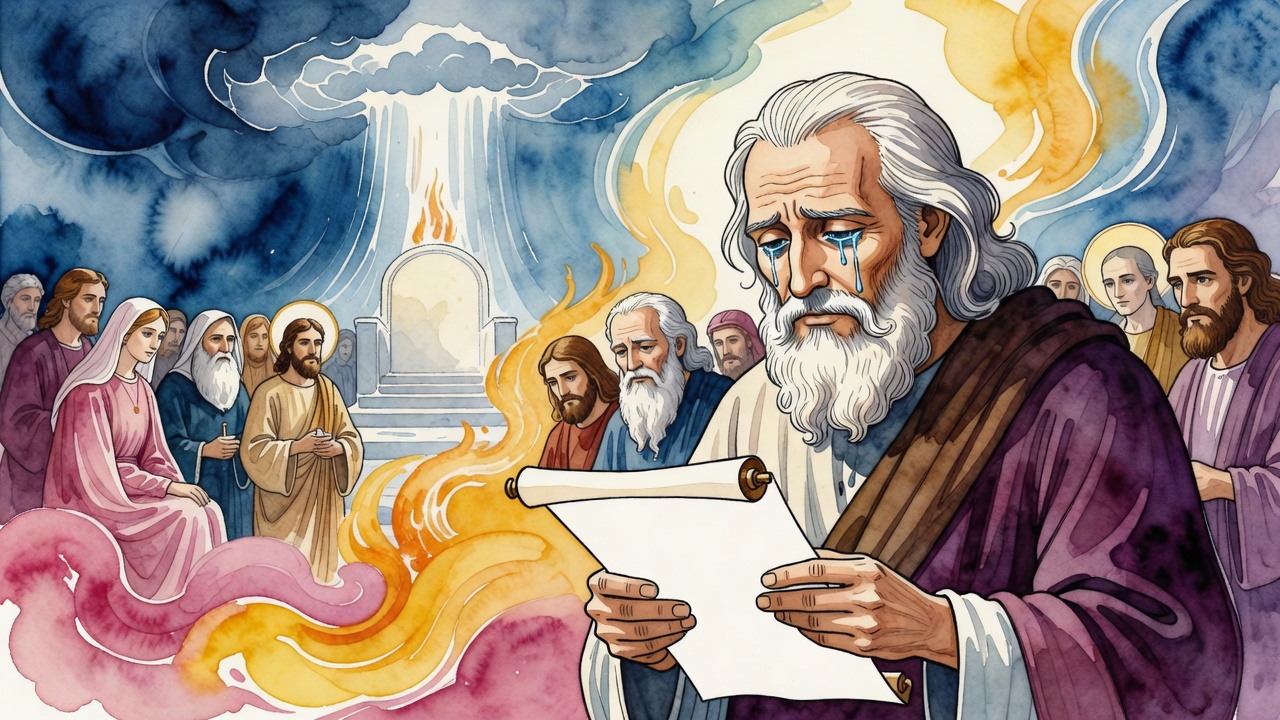
Parshat Vayigash6 min read

Judah Drew Near Joseph for Benjamin's Life

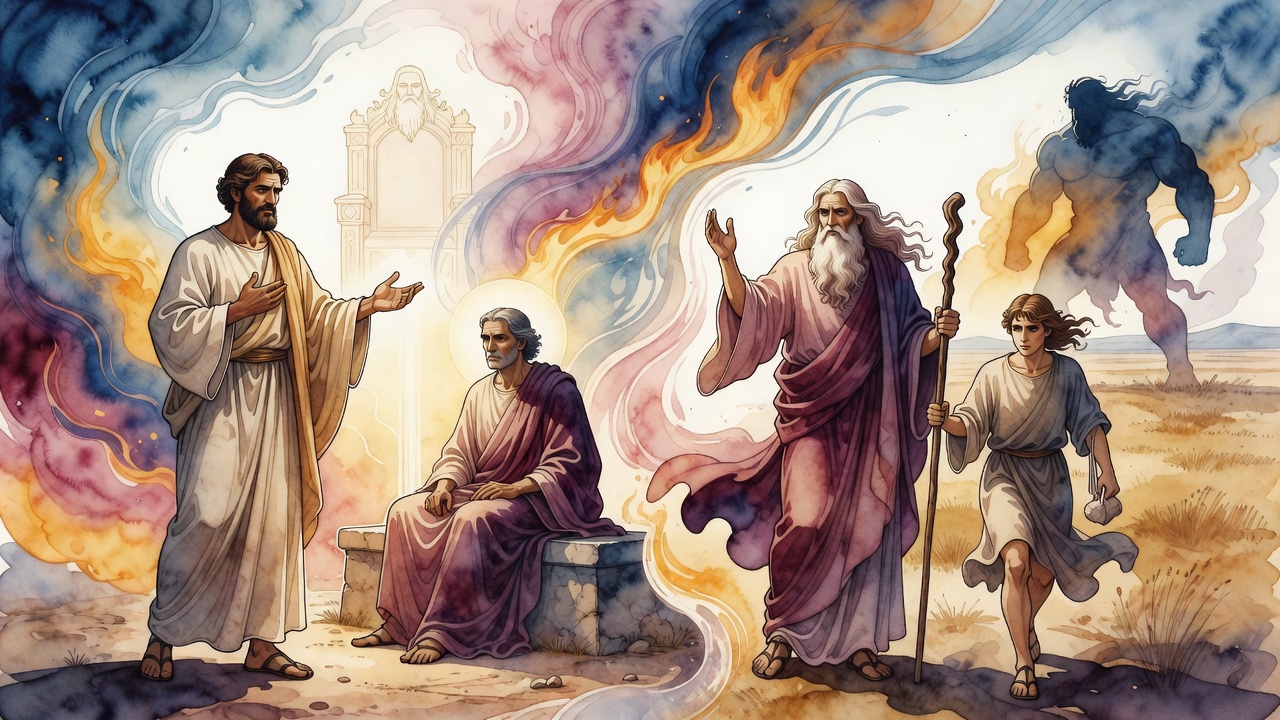
Judah stepped toward the Egyptian lord with Benjamin's life in his throat, ready to wreck markets or die before he returned to Jacob without the boy.

Curated by Arthur · Told by Maggid ·
Table of Contents
  1. The Cup and the Old Rope
  2. Count the Markets
  3. Who Takes the Dead
  4. The Time That Cannot Be Moved

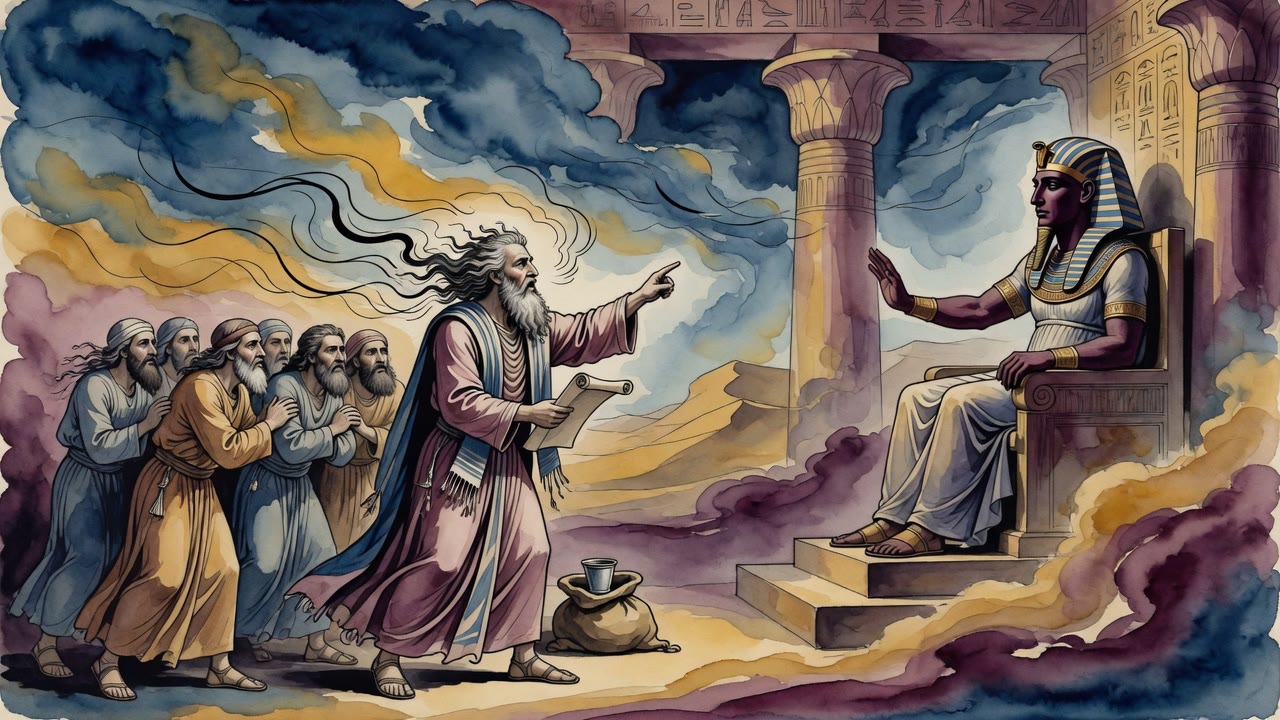
Judah drew near. He came close enough to speak into the Egyptian lord's ear, voice husky, words both harsh and gentle. "Oh my lord, do not transgress the laws of justice because of us. Let thy servant speak a word in my lord's ear" (Genesis 44:18). It would have been more fitting to say "in the presence of my lord." He chose the ear instead, as if the whole court could wait while one man heard the pressure in another man's throat.
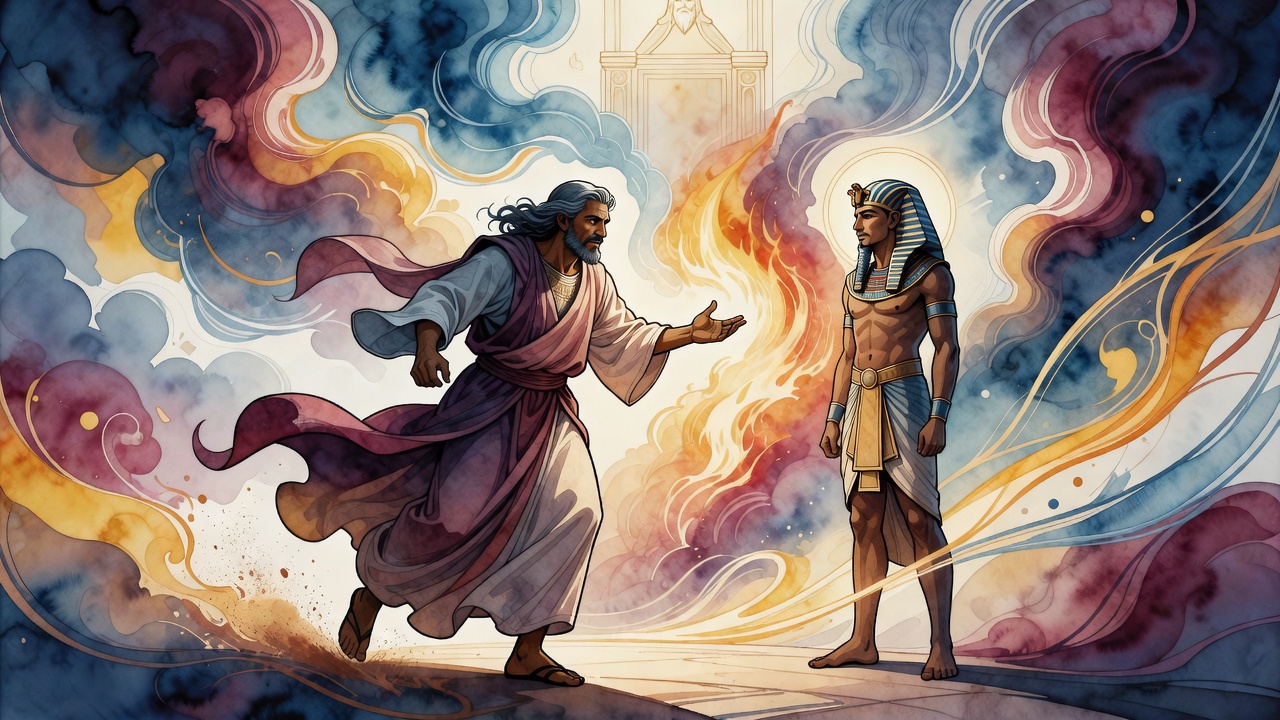
Judah Drew Near Joseph for Benjamin's Life Click for full size

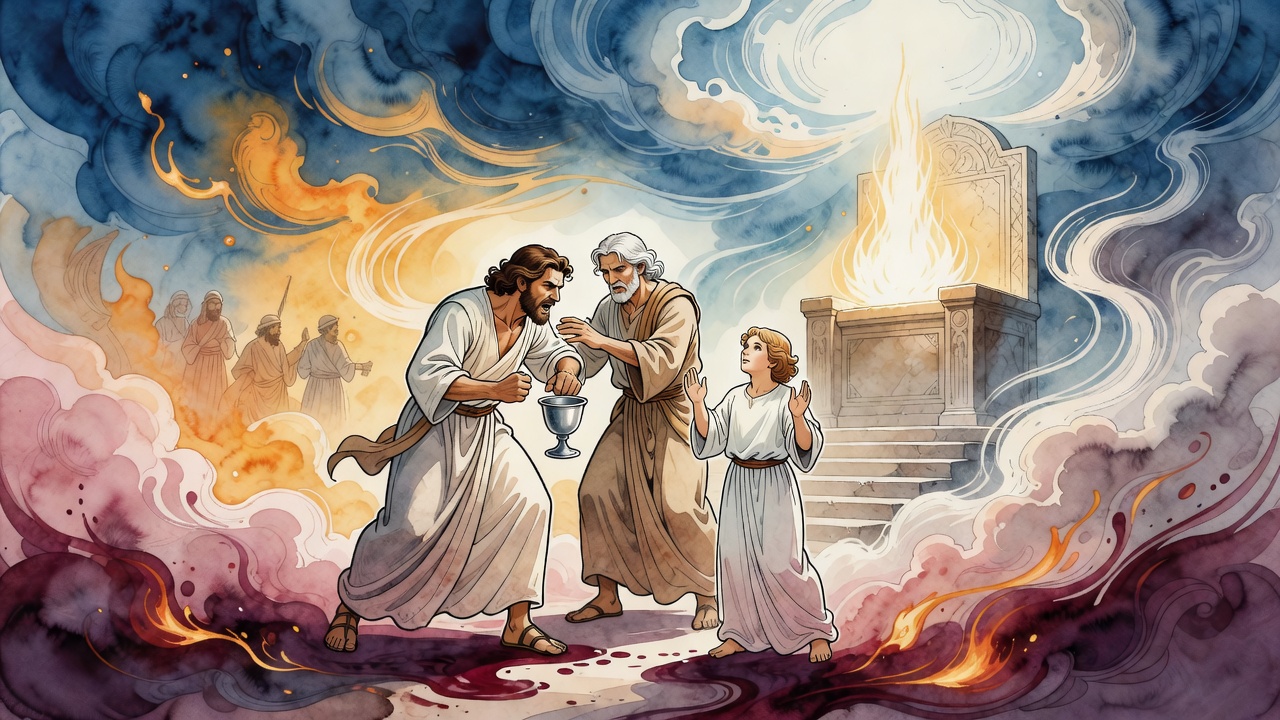
Benjamin stood behind him under guard, the silver cup hanging in the air between accusation and doom. Judah had pledged himself as surety for the boy before Jacob in Canaan. He would not walk back north without him. The road home without Benjamin was a road he refused to take.

"For thou art even as Pharaoh," Judah said. The line cut more than one way: equal power where each man lived, and a blade about desire. You wanted Benjamin when you saw how handsome he was, the way your master loves to take what catches his eye. The chamber went still around that insult dressed as honor.

The Cup and the Old Rope

"My lord asked his servants," Judah went on. From the outset you practiced subterfuge. Men come to Egypt from many provinces to buy grain, and you do not ask them if they came to marry your daughters or wed your sisters. We withheld nothing from you, and still you hunted us with questions no other buyers faced.

Joseph, still hidden behind Egyptian power, struck back. Why speak for all your brothers? The cup has shown me you have older brothers, and you are a garrulous creature. Judah answered that what the cup showed was true, but he was compelled to speak because he had pledged himself for the boy. The surety owned his mouth now.

Then Joseph drove the knife into the old wound. Why were you not surety when you sold your brother to the Midianites for twenty pieces of silver? Why did you distress your father with "Joseph is without doubt torn to pieces" (Genesis 37:33)? Joseph did you no evil, but this one sinned in stealing the goblet. Go tell your father: the rope has followed after the bucket.

Judah cried out bitterly, loud enough to shake the chamber. "How shall I go up to my father if the lad be not with me? Lest I look upon the evil that shall come on my father" (Genesis 44:34). He would rather die in Egypt than carry that evil home in his eyes.

Count the Markets

Joseph said, "Come, let us consider the matter between us. Tell me what you think and present your arguments." Judah turned to Naphtali. "Go and count the number of central markets in Egypt." Naphtali ran through the streets and returned with dust on his heels. Twelve markets.

Judah told his brothers: "I will destroy three of them, and each of you will destroy another. Do not permit a single soul to survive." His brothers answered hard: "Judah, Egypt is not Shechem. If you devastate Egypt, you destroy the entire world by doing that." They remembered walls that had fallen under their hands once, and they also remembered the size of this land under Pharaoh's hand.

From that moment Joseph could no longer restrain himself. He had placed himself in a precarious position. If his brothers truly moved as they threatened, the hidden lord of Egypt would meet the same house that once emptied a city. The mask of power cracked under a man who would rather burn markets than return empty to Jacob. War and confession stood one breath apart in the same room.

Who Takes the Dead

Far from that chamber, another quarrel once held the world still after Egypt's army drowned. The sea churned with corpses and told the earth to take her children back, for dust they were and to dust they would return (Genesis 3:19). The earth refused. Receive your slain, she answered. Neither wanted the dead. The earth feared testimony on the Day of Judgment, blood crying out the way Abel's blood once cried from the ground (Genesis 4:10).

God inclined His right hand over the earth and swore that the drowned would not testify against her. Only then did the earth open her mouth and swallow them (Exodus 15:12). Responsibility had to be forced by oath before either realm would hold what it feared. The dead hung between sea and soil until heaven made someone take them.

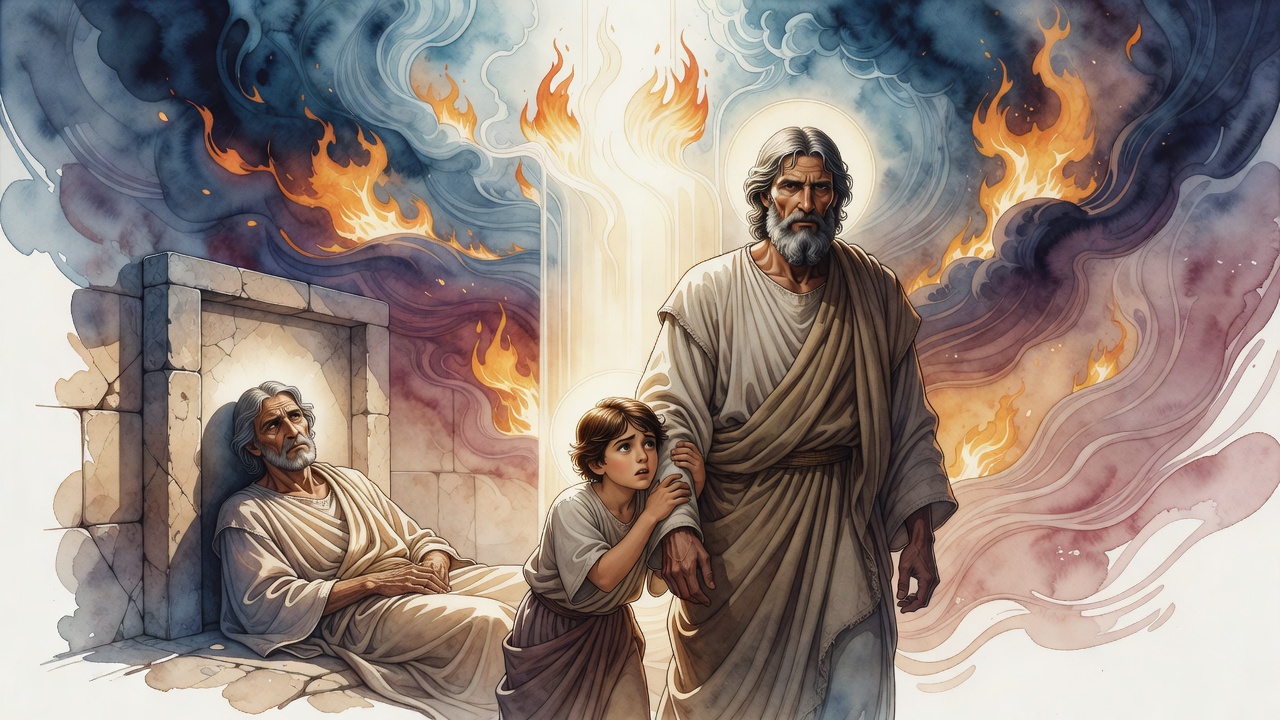
Judah would not play that quarrel with Benjamin. He would not leave the boy between sea and earth, between Egypt and Canaan, while brothers and lords argued who should bear the cost. He stepped forward to take the weight himself. Surety meant a body under the load, not a standoff over who must swallow the loss. He offered his own life, his own service, his own throat, before he would leave the lad unclaimed.

The Time That Cannot Be Moved

In later ages Israel would learn appointed times that do not bend for convenience: the Scroll of Esther read on fixed days of Adar, advanced only for known needs of market villages and the fast that precedes the feast, never read whenever a man simply prefers. Law holds a calendar so a people does not invent its own season for every fear. Some hours arrive and must be met as they are.

Judah faced a different kind of fixed hour. The hour of return to Jacob without Benjamin was not a day he would accept or delay into a softer month. He could not reschedule a father's grief. He could only refuse to cause it. So he drew near, husky and armed with threat and plea in the same breath, until the Egyptian lord's restraint broke and the brothers of the pit stood face to face with the brother they had sold.

Benjamin still stood in the room. Judah still stood between him and the rope. The markets of Egypt still stood, unburned, because Joseph's weeping ended the war before Judah's count became fire. What changed for good was already spoken: a brother who once sold a brother now offered his own life and a kingdom's peace for the youngest, and the hidden one could not hold the mask any longer.


← All myths
From the tradition

Sources

3 sources

The texts behind this telling. Some cards carry a translation of the source; others are our own retelling of it, and each card says which. Every card links out to the original.

Midrash Tanchuma, Vayigash 5Midrash Tanchuma

Translation of the source text.Midrash Tanchuma -- Torat Emet · Public Domain

Another interpretation: "And Judah drew near to him" (Genesis 44:18), for he drew near with rebukes. "By me, my lord": let not the attribute of strict justice pass over us. "Let your servant speak a word in the ears of my lord": it should have said "before my lord," but rather this teaches that he was speaking one harsh word and one soft word.

"For you are like Pharaoh": just as Pharaoh your master loves women and covets them, so you have seen that Benjamin is handsome in form, and you covet him to have him for yourself as a slave.

Another interpretation: "For you are like Pharaoh": just as you and Pharaoh are great in your place, so we are great in our place.

"My lord asked his servants" (Genesis 44:19): he said to him: From the outset you came against us with a false pretext. From how many provinces did people come down to Egypt to buy food, yet you asked none of them, "Have we come to take your daughter, or do you intend to marry our sister?" Even so, we hid nothing from you.

Joseph said to him: Judah, why are you the spokesman more than all your brothers, when I see in the goblet that there are among your brothers those greater than you, yet you are the talker? He said to him: All of this that you see is because of the surety by which I pledged myself for him. He said to him: Why did you not pledge yourself for your brother when you sold him to the Ishmaelites for twenty pieces of silver, and you distressed your aged father and said to him, "Joseph has surely been torn to pieces," when he had not sinned against you? But this one, who has sinned and stolen the goblet, say to your father: The rope has gone after the bucket.

When Judah heard this, he cried out and wept with a loud voice and in bitterness of soul. He said: "For how shall I go up to my father if the lad is not with me, etc." (Genesis 44:34). Joseph said to him: Come, let the two of us argue it out; state your case and set forth your judgment.

Immediately Judah said to Naphtali: Go and see how many marketplaces there are in Egypt. He leaped and returned, and said to him: Twelve. Judah said to his brothers: I will destroy three of them, and let each one of you take one, and we will not leave a single man among them. His brothers said to him: Judah, Egypt is not like Shechem. If you destroy Egypt, you will destroy the entire world. At that hour, "And Joseph could not restrain himself" (Genesis 45:1).

Rabbi Shmuel bar Nachman said: Joseph went down into great danger, for if his brothers had killed him, no creature in the world would have recognized him. And why did he say, "Send everyone away from me" (Genesis 45:1)? Rather, thus said Joseph in his heart: Better that I be killed and not shame my brothers before the Egyptians.

Judah said to Joseph: Know that from the outset you came against us only with false pretexts. At first you said to us, "You are spies." Second, you said, "You came to see the nakedness of the land." Third, "You stole my goblet." I swear by the life of my father the righteous, while you have sworn by the life of Pharaoh the wicked. If I draw my sword from its sheath, I will fill all Egypt with the slain. Joseph said to him: If you draw a sword from its sheath, I will wind it around your neck. Judah said to him: If I open my mouth I will swallow you. Joseph said to him: If you open your mouth I will stop it with a stone. Judah said to Joseph: What shall we say to father? He said to him: Say to your father, The rope has gone after the bucket.

Judah said to him: You judge us with a false judgment. Joseph said to him: You have no false judgment like the selling of your brother. Judah said to him: The fire of Shechem burns in my heart. Joseph said to him: The fire of Tamar your daughter-in-law I will extinguish. Judah said to him: I am in a rage, and there is none to restrain me. Joseph said to him: Your rage I will break. Judah said to him: Now I will go out and dye all the marketplaces of Egypt with blood. Joseph said to him: You have been dyers all your days, for you dyed your brother's tunic in blood and said to your father, "He has surely been torn to pieces."

When Joseph saw that they had resolved to destroy Egypt, Joseph said in his heart: Better that I make myself known to them so that they will not destroy Egypt. Joseph said to them: Did you not say that this one's brother is dead? I bought him; I will call him, and he will come to you. He began calling: Joseph son of Jacob, come to me; Joseph son of Jacob, come to me and speak with your brothers who sold you. And they were casting their eyes into the four corners of the house. Joseph said to them: Why are you looking here and there? I am Joseph your brother. Immediately their souls flew from them and they could not answer him.

Rabbi Yochanan said: Woe to us from the day of judgment, woe to us from the day of rebuke! If, when Joseph said to his brothers, "I am Joseph," their souls flew from them, when the Holy One, blessed be He, arises for judgment, of whom it is written, "And who can endure the day of His coming, and who can stand when He appears?" (Malachi 3:2), of whom it is written, "For no man shall see Me and live" (Exodus 33:20), how much more so. And if these, his brothers, were terrified before him, when the Holy One, blessed be He, comes to demand recompense for the slighting of the commandments and the transgression of the Torah, how much more so.

The Holy One, blessed be He, performed a miracle for them and their souls returned. Joseph said to them: "And behold, your eyes see, and the eyes of my brother Benjamin, that it is my mouth that speaks to you" (Genesis 45:12), that I speak in the holy tongue. And they did not believe him, until he uncovered himself and showed them the sign of the covenant. And why all this? Because he had departed from them without the growth of a beard, and now he stood as a king with the growth of a beard.

When they recognized him, they sought to kill him. An angel came down and scattered them into the four corners of the house. At that hour Judah cried out with a loud voice, and all the walls in Egypt fell, and they cast down all the beasts in Egypt, and Joseph fell from his throne, and Pharaoh came down from his throne, and their teeth fell out. And all the mighty men who were standing before Joseph, their faces were turned backward and they did not return [to normal] until the day of their death, as it is said: "The roaring of the lion and the voice of the fierce lion, and the teeth of the young lions, are broken" (Job 4:10). Therefore it says, "And the sound was heard in Pharaoh's house" (Genesis 45:16). And this sound is none other than the voice of Judah, as it is said: "Hear, O LORD, the voice of Judah" (Deuteronomy 33:7).

When Joseph saw that they were in great shame, he said to them: "Come near to me, please," and they came near. And each and every one he kissed and wept over him, as it is said: "And he kissed all his brothers and wept over them" (Genesis 45:15). And just as Joseph appeased his brothers only through weeping, so when the Holy One, blessed be He, redeems Israel, He redeems them through weeping, as it is said: "With weeping they shall come, and with supplications I will lead them; I will guide them to streams of water, by a straight way in which they shall not stumble; for I have become a father to Israel, and Ephraim is My firstborn" (Jeremiah 31:8).

Full source
Tanchuma, Beshalach 10Midrash Tanchuma

Translation of the source text.Midrash Tanchuma -- Torat Emet · CC-BY

And lift thou up thy rod (Exod. 14:16). Ten miracles were performed in their behalf at the sea. The sea was split asunder for them, and became a kind of vault, as it is said: Thou hast struck through with his own rods the heads, etc. (Hab. 3:14). It was divided into twelve paths, as it is said: And stretch out thy hand over the sea and divide it (Exod. 14:16). It was turned into dry land, as it is said: And the children of Israel walked upon dry land the midst of the sea (ibid., v. 29). It was converted into a kind of clay, as is said: Thou hast trodden the sea with thy horses, the mud of mighty waters (Hab. 3:15). The water was made into pieces, as it is said: Thou didst break the sea into pieces by Thy strength (Ps. 74:13). It was changed into rocks, as is said: Thou didst shatter the heads of the sea monsters in the waters (ibid.). It was torn asunder, as it is said: To him who divided the Red Sea asunder (ibid. 136:13). It was piled up into stacks, as it is said: And with the blast of Thy nostrils, the waters were piled up (Exod. 15:8). It was made into a heap, as is said: Stood upright like a heap (ibid.). Barrels of sweet water flowed out of the salt water for them, and the sea congealed and became like a glass vessel, as it is said: The deeps were congealed (ibid.).

R. Judah declared: These ten verses are derived from various sources. It may be compared to a man traveling over a road, preceded by his son. If robbers approach from the front to seize the lad, he places him behind himself. If a wolf comes from behind to snatch him, he puts the lad in front of him. If he sees robbers behind him and the wolf before him, he takes his son in his arms. The Holy One, blessed be He, did likewise for Israel. When the sea was before them and the Egyptians behind, He bore them in His arms. When Israel began to suffer from the sun, He spread His cloak over them, as it is said: He spread a cloud for a screen (Ps. 105:39). When Israel became hungry, He gave them bread, as is stated: Behold, I will cause to rain bread from heaven for you (Exod. 16:4). When they became thirsty He gave them water, for He brought streams also out of the rock (Ps. 78:15).

The Israelites sang ten songs because of the ten miracles performed in their behalf. The first was in Egypt, as is said: You shall have a song as in the night when a feast is hallowed (Isa. 30:29). The second was at the Red Sea, as it is said: Then Moses sang (Exod. 15:1). The third was at the well: Then Israel sang this song (Num. 21:16). The fourth took place when Moses said: And it came to pass when Moses had made an end of writing (Deut. 31:24). The fifth: Then spoke Joshua to the Lord (Josh. 10:12). The sixth: Then sang Deborah and Barak the son of Abinoam (Judg. 5:6); the seventh: And David spoke unto the Lord the words of this song (II Sam. 22:1); the eight: A song at the dedication of the House; of David (Ps. 30:1). Did David actually dedicate the House (Temple)? The fact is that Solomon dedicated it, but inasmuch as David had set his heart upon erecting it, the song of dedication was ascribed to him. A similar example is contained in the verse And his sister stood far off (Exod. 2:4). Was she not the sister of both of them? Indeed she was, but inasmuch as she had devoted herself to Moses’ welfare, she is referred to by his name. Another instance of this is contained in the verse And the two sons of Jacob, Simeon and Levi, Dinah’s brothers took (Gen. 34:25). Was she not the sister of each of the tribal ancestors? She was indeed, but because these two had devoted themselves to her welfare, she is mentioned with their names. Another illustration is contained in the verse Cozbi the daughter of the chief of Midian, their sister (Num. 26:18). Was she actually a sister to all of them? (Hardly!) She was called their sister because she was deeply devoted to her people.

Then sang Moses (Exod. 15:1). They had faith in God (ibid. 14:31) and therefore merited acquiring the land. You find that because of his faith in God, our patriarch Abraham inherited both this world and the world-to-come, as is written: And he believed in the Lord; and He counted it to him for righteousness (Gen. 15:6). Similarly, because the people believed (Exod. 4:31), it is written: The Lord preserveth the faithful and plentifully repayeth him that acteth haughtily (Ps. 31:24). Similarly, with reference to Moses it says: And his hands were steady (faithful) until the going down of the sun (Exod. 17:12).

Scripture states: This is the gate of the Lord, the righteous shall enter into it (Ps. 118:20). Who are the righteous ones that will enter? The faithful ones, as it is said: Open ye the gates, that the righteous nation that keepeth faithfulness may enter in (Isa. 26:2). This is the gate that the faithful enter, as it is said: It is a good thing to give thanks unto the Lord, and to sing praises unto Thy name, O Most High, to declare Thy loving-kindness in the morning (Ps. 92:2). What is written after that? For Thou hast made me glad. What makes us glad? It is the faith which our fathers professed in this world, which is all night, as it is written: And thy faithfulness in the night seasons (ibid., v. 3). And it is also written: But the righteous shall live by his faith (Hab. 2:4), and They are new every morning, great is thy faithfulness (Lam. 3:23).

In the future exiles will not be redeemed except as a reward for faithfulness, as it is said: Come with me from Lebanon, my bride, with me from Lebanon; look from the top of Amana (Song 4:8). It says likewise: And I will betroth thee unto Me in faithfulness (Hos. 2:28). Thus you learn that faith is powerful, for in reward for faith, the Shekhinah hovered over them and they sang the song, as it is said: And they believed in the Lord … and Moses sang (Exod. 14:31–15:1), and it says also: Then believed they his words; they sang his praise (Ps. 106:12).

Then sang Moses. At times the word then refers to events that happened in the past, and at other times it refers to events that are to transpire in the future. The word then refers to past events in the following verses: Then began man to call upon the name of the Lord (Gen. 4:26), Then she said: “A bridegroom of blood” (Exod. 4:26), Then sang Israel this song (Num. 21:17), Then Solomon spoke (I Kings 18:12). All of these refer to past events. Instances in which the word then alludes to future events are: Then thou shalt see (Isa. 60:5), Then shall thy light break forth (ibid. 58:8), Then shall the lame man leap as a hart (ibid. 35:6), Then the eyes of the blind shall be opened (ibid., v. 5), Then shall the virgin rejoice (Jer. 31:13), Then was our mouth filled with laughter, and our tongue with singing (Ps. 126:2), and Then said they among the nations (ibid.). All these allude to future events. From this we learn that the concept of the resurrection of the dead is derived from the Torah.

Moses and the children of Israel (Exod. 15:1). This verse implies that Moses was equal to all the Israelites. Another explanation of Moses and the children of Israel is that Moses sang the song before the children of Israel did.

This song. Is there only one song? Was it not stated previously that there were ten songs? The eighth song is A psalm, a song at the dedication of the house, of David (Ps. 30:1). The fact is that Solomon was the one who dedicated it, as it is said: So the king and all the children of Israel dedicated the house of the Lord (I Kings 8:63). However, because David had set his heart upon dedicating it, the song was ascribed to him. Similarly, it says: Lord, remember unto David all his afflictions; how he swore unto the Lord, and vowed unto the Mighty One of Jacob: “Surely I will not come into the tent of my house, nor go up into the bed that is spread for me … until I find out a place for the Lord, a dwelling-place for the Mighty One of Jacob.” Lo, we heard it as being in Ephrath; we found it in the field of the wood (Ps. 132:1–6). Observe that it is written concerning it: Now see to this house, O David (I Kings 12:16). Hence you learn that because David desired with all his soul to build the Temple, it was called by his name.

Similarly, because Moses yearned for the Torah, it is called by his name. Whence do we know that he yearned for the Torah? It is said: And Moses was in the mount forty days and forty nights (Exod. 24:18). Where do we find that it is called by his name? It is written: Remember ye the law of Moses My servant (Mal. 3:22). Because he offered to sacrifice his life for Israel, Yet now if thou wilt forgive their sin (Exod. 32:33), they were called by his name: And his people remembered the days of old, the days of Moses (Isa. 63:11). And it is also written: Go, get thee down; for thy people have dealt corruptly (Exod. 32:7). Since He risked his life for the sake of justice, as it is written: Wherefore smitest thou thy fellow? (Exod. 2:13), he fled because of justice and returned because of justice. He executed righteousness, Lord, and his ordinances with Israel (Deut. 33:21). Does not justice, however, belong to God? Indeed! But since he devoted his life to justice, it is called by his name.

Similarly, it is written concerning Jehoshaphat: And when he had taken counsel with the people, he appointed them that should sing unto the Lord, and praise in the beauty of holiness, as they went out before the army, and say: “Give thanks unto the Lord, for His mercy endureth forever” (II Chron. 20:21). What is the difference between this song of praise and others found in the Torah? In all the other songs, For He is good is added, but in this instance For He is good is omitted, since there can be no rejoicing before Him on High over the destruction of the wicked. And since there could be no rejoicing before Him over the destruction of the wicked, surely there could be no joy at the destruction of the righteous, a single one of whom is equal to all the world in His sight. Hence it is said: But the righteous is an everlasting foundation (Prov. 10:25). The ninth song is the Song of Songs of Solomon. The tenth song is the song of the future: A psalm, O sing unto the Lord a new song; for He hath done marvelous things (Ps. 98:1).

Full source
Midrash Tanchuma, Bereshit 3Midrash Tanchuma

Retold in our words. Read the original at the link below.Townsend 1989 translation of Midrash Tanhuma, S. Buber Recension · CC-BY

A response to an inquiry from the Academy. They asked: It was taught that the Scroll of Esther may be read on the eleventh, twelfth, thirteenth, fourteenth, and fifteenth days of Adar, but not before or after those days.

R. Judah qualified this statement: When was this rule in effect? This rule was in effect during the period in which the calendar was fixed by the Beth Din, and when Israel dwelt on its own land. Now that the exact date of Purim is predetermined, the Purim Scroll is read only at the appointed time (the fourteenth or fifteenth of Adar).

Is the law for the reading of the Scroll of Esther in accordance with the first teacher in the Mishnah or with R. Judah? They answered: The first teacher/opinion in the Mishnah and R. Judah are in agreement that the Scroll of Esther should be read only at the appointed time.

The first teacher of the Mishnah meant to convey that in cities fortified with walls since Joshua’s time, the Scroll was to be read on the fifteenth of Adar, that in villages and large cities it was to be read on the fourteenth day, and that in rural villages the reading was to be advanced to the market day preceding Purim.

What is implied, then, by the statement that the Scroll of Esther may be read on either the eleventh, twelfth, thirteenth, fourteenth, or fifteenth day of Adar? This statement indicates that the Scroll could be read in advance of the appointed day because of the fast that precedes Purim, as is explained at the conclusion of Mishnah Megillah, and that it could also be read in advance by the people who lived in rural villages; that is, on the market day before Purim.

What is the day of assembly? It was said: The thirteenth of the month of Adar is the day of assembly, as it is written: On the thirteenth day the Jews assembled in their cities (Est. 9:1–2). That is, they assembled on that day and decreed that the thirteenth day of Adar should be a fast-day, However, they designated the fourteenth day of Adar as a festive day, as it is written: And on the fourteenth day they rested and made it a day of feasting and gladness (ibid., v. 17).

In Shushan they read the Scroll on the fifteenth day. Hence the Scroll of Esther is to be read in Shushan and in other fortified cities on the fifteenth day, and that day is designated as a festive day. We learn all this from the words of the Mishnah: “The Scroll of Esther may be read on the eleventh, twelfth, thirteenth, fourteenth, and fifteenth,” etc.

The day on which the Scroll of Esther may be read varies because of the fast that precedes Purim. Inasmuch as it is forbidden to fast on the Sabbath, which would be the situation if the fourteenth day of Adar fell on the first day of the week, and since it is forbidden likewise to fast on the eve of the Sabbath because the Sabbath would then be disturbed, they advance the fast to Thursday, which is the eleventh of Adar.

Similarly, when the fourteenth day of Adar falls on the Sabbath, the reading is advanced, for it is forbidden to fast on Friday, the eve of the Sabbath, since that would impair the Sabbath. Inasmuch as the primary reason for fasting is to recite penitential prayers, one would be deterred from honoring the Sabbath, and honoring the Sabbath is more important than a thousand fasts. Honoring the Sabbath is a biblical commandment, while fasting is only a rabbinic decree; therefore honoring the Sabbath takes precedence over the fast. Hence the fast is advanced to Thursday, that is, the twelfth day of Adar. When the fourteenth day of Adar falls on Friday, we naturally fast on Thursday, on the thirteenth day.

This entire subject is discussed in Mishnah Megillah: If the fourteenth day of Adar falls on a Monday, they read the Scroll in towns and large cities on that day, but in cities fortified since Joshua’s time, they read it on the following day. However, if the fourteenth day of Adar falls on the Sabbath or on the first day of the week, they advance the reading in the rural villages to the day of assembly in the market place, Thursday.

Conversely, if the fast of the ninth of Ab falls on the Sabbath, we postpone the fast to the day following the Sabbath, and never advance the fast-day. This is so because the ninth day of Ab was imposed upon Israel as a punishment, and the fast is therefore postponed and not advanced.

From this discussion we learn that one may not fast on Friday in voluntary self-affliction, either privately or with the community. And that is the law.

Full source