David Hoarded Ornaments and Lost the Right to Build
Jesse's outcast son fed lambs the tender grass first. Years later a famine walked Israel, and the Temple gold stayed locked while people starved.
Table of Contents
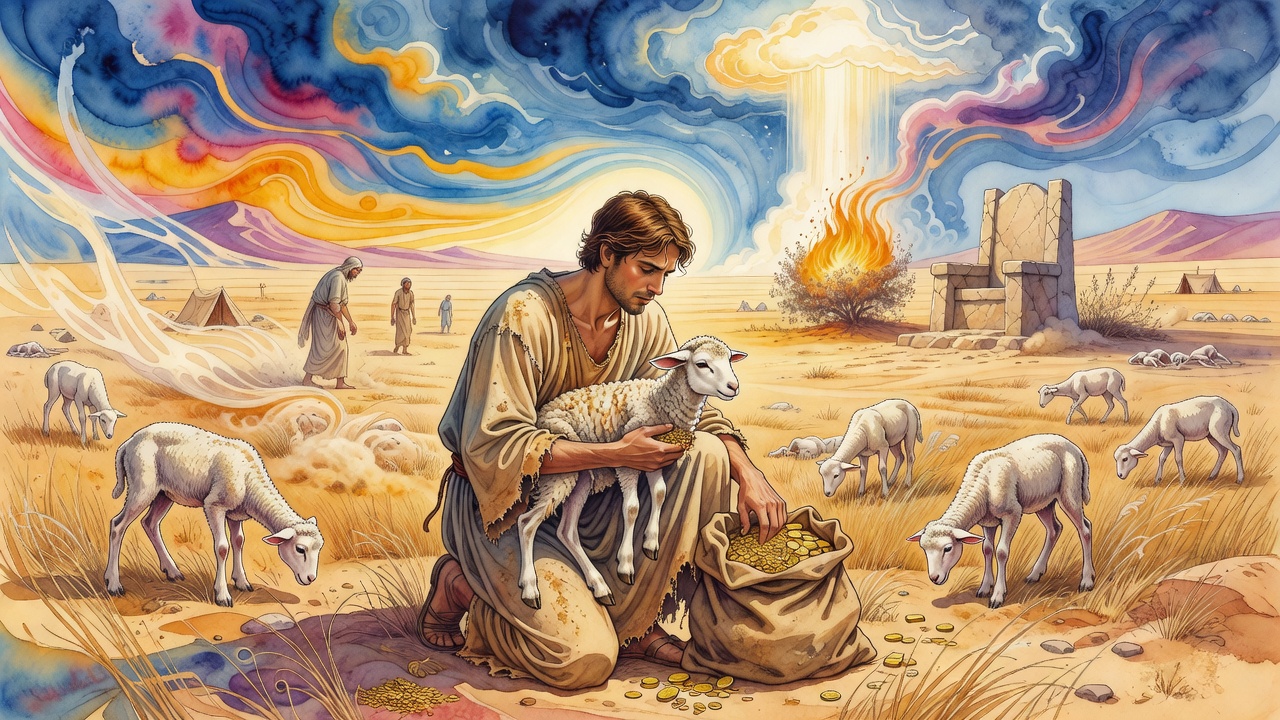
They sent the boy they called a slave's son into the desert with the flocks. Beauty and talent had not bought David a place at Jesse's table. The whispers were enough. He was pushed out from among his brothers and given the wilderness for a house. Sheep became his first subjects.
 Click for full size
He did not treat the flock as one mouth. Young lambs went to tender grass. Older sheep took the less juicy herbs. Sturdy rams got the tough weeds. The pasture was graded by need. God watched the sorting and spoke a verdict over a boy no brother wanted. "David knows how to tend sheep, therefore he shall be the shepherd of my flock Israel."
No crown yet. Only a staff, and the knowledge that a leader who feeds the wrong mouth first will lose lambs before he loses a throne.
The Women Poured Gold After Goliath
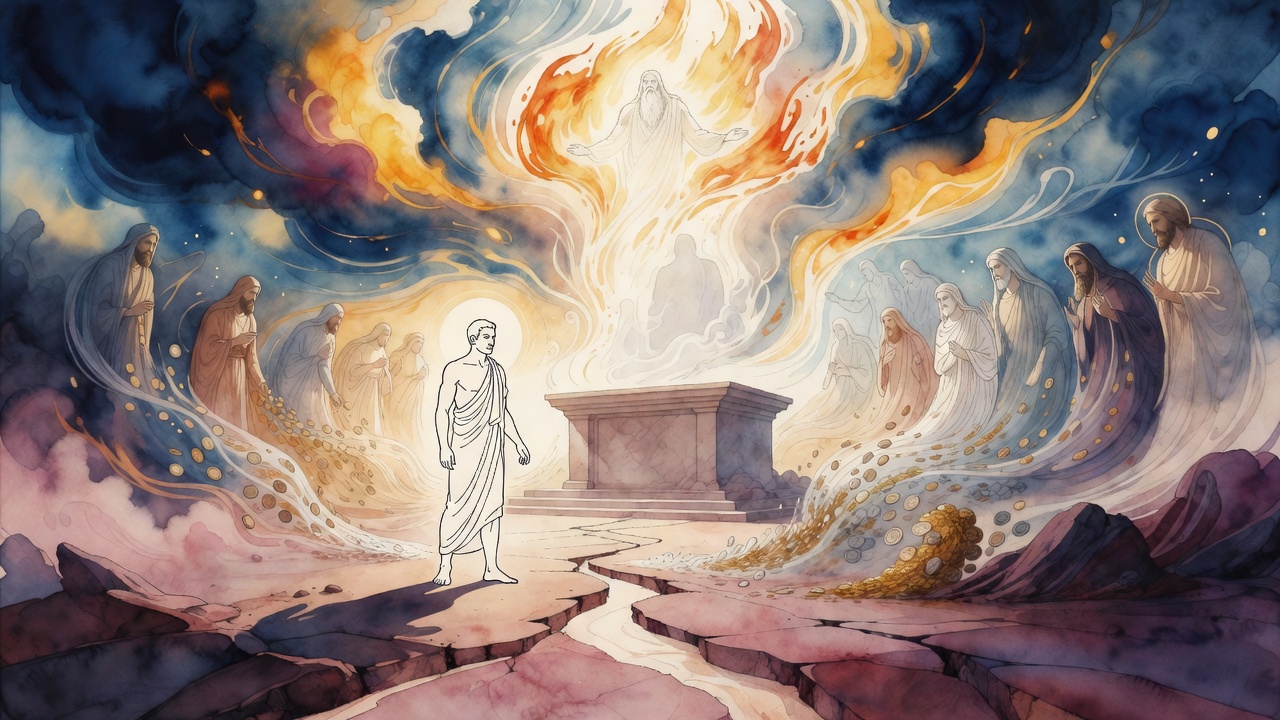
When David returned from combat with Goliath, the women of Israel poured their gold and silver ornaments into his hands. Victory jewelry. Love gifts of a nation that had watched a boy fell a giant. David did not melt the metal for a feast. He set it aside for a future House. A Temple fund. Stones and beams still far off. Treasure already counted sacred.
He kept that store through years of war and years of rule. He slept light. He prayed much. He sat at the feet of teachers even after the crown fit. The ornaments waited. The people sang. The fund grew holy in his mind until it became untouchable. He hoarded the ornaments the way a man hoards a vow.
Three Years of Empty Fields
Then famine walked the land for three years. Hunger is not a riddle. It is ribs and graves and children who stop running. David held private wealth that could have bought grain, hired labor, opened storehouses. He did not spend the Temple ornaments on human lives. The money stayed sealed for a building not yet begun while breath left bodies that already existed.
Heaven measured the choice without poetry. God said, "You held back from rescuing human beings from death in order to save your money for the Temple. The Temple shall not be built by you, but by Solomon."
The fund that was meant to honor God became the reason God refused the builder. The boy who once gave tender grass to lambs had, as king, saved bright metal for walls while the flock of Israel thinned. He lost the right to build in the same breath that he kept the gold.
The House Went to Another Hand
Solomon would raise the House. David would prepare plans, songs, and the blood of wars that made peace possible. He would not set the final stone. The ornaments from Goliath's day would still serve the building, but the builder's name on the lintel would belong to the son.
Outcast, shepherd, giant-slayer, king, man barred from his own dream of wood and gold. The desert training had not been canceled. It had been waiting for a harder test than wolves. The test was whether a man who could grade pasture could also grade a treasury when death was the price of thrift. He failed that grade. The sentence was not loss of the throne. It was loss of the chisel and the cornerstone.
David kept the plans. He would not cut the stone. The lambs in the old pasture had eaten first. The people in the famine had not.
The Staff Remembered What the Crown Forgot
In the years between the pasture and the famine, David fled Saul. He gathered broken men. He refused to cut the skirt of a sleeping king more deeply than a warning. He danced before the Ark and took Michal's scorn. Through all of it the shepherd's grammar waited under the royal grammar, ready to be used or betrayed.
When the ornaments came after Goliath, they felt like the land itself saying thank you. A boy who had been called a slave's son held the jewelry of free women. Setting that metal aside for a future House was devotion that did not yet know it could become a locked door. Devotion without a valve for present suffering hardens into a vault.
The three years of famine pressed every valve. A king who once graded grass by the age of the ewe now graded treasure by the future of a building. The lambs of Israel went to tougher ground while gold slept. Heaven's sentence named the trade. Human lives against Temple money. Solomon would build. David would sing about a House he must not finish.
Later ages would still call him the sweet singer of Israel. The outcast who fed lambs first became the monarch who fed a fund first, and the fund won the argument until God took the building rights away. The lambs still stand in that first pasture, chewing soft grass, as a warning to every later year when the grass is coin and the lambs are a nation.
← All myths