Hadrian Stared at the Sun and Could Not See God
Storm-driven sages poured ocean water that never overflowed, and Rabbi Yehoshua told Hadrian to look at noon light he could not bear.
Table of Contents
 Click for full size
Storm on the Mediterranean
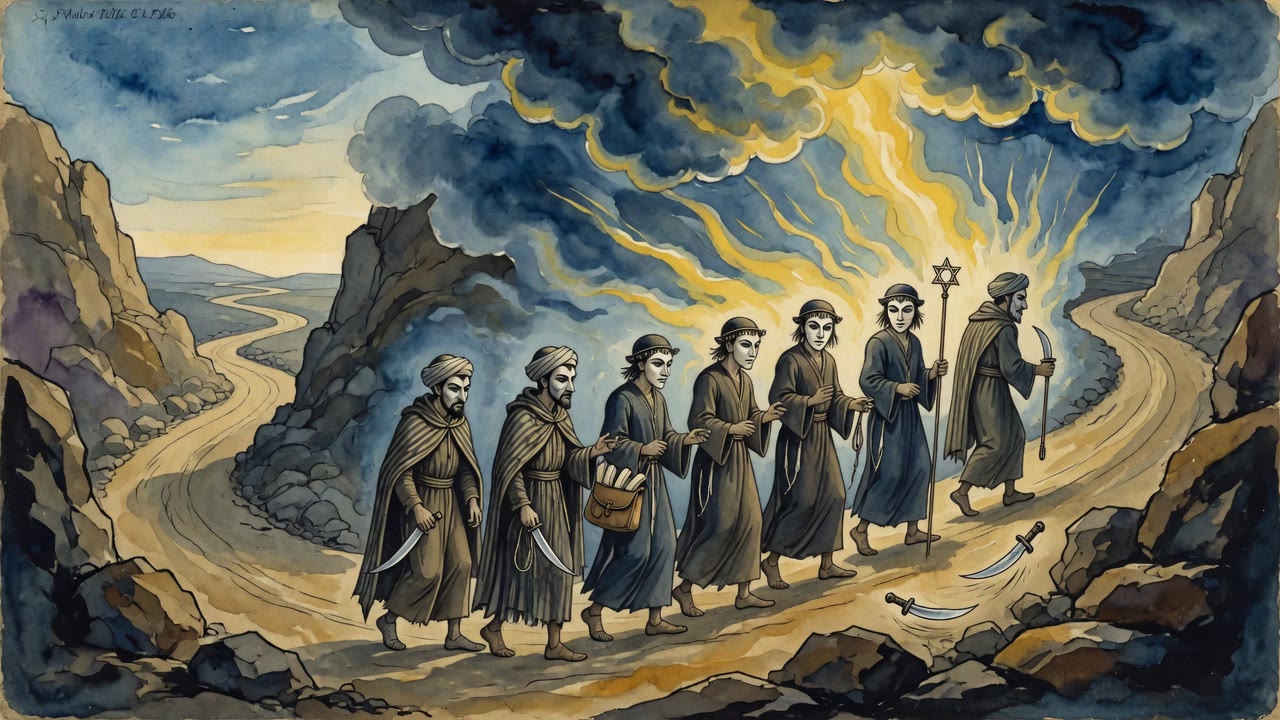
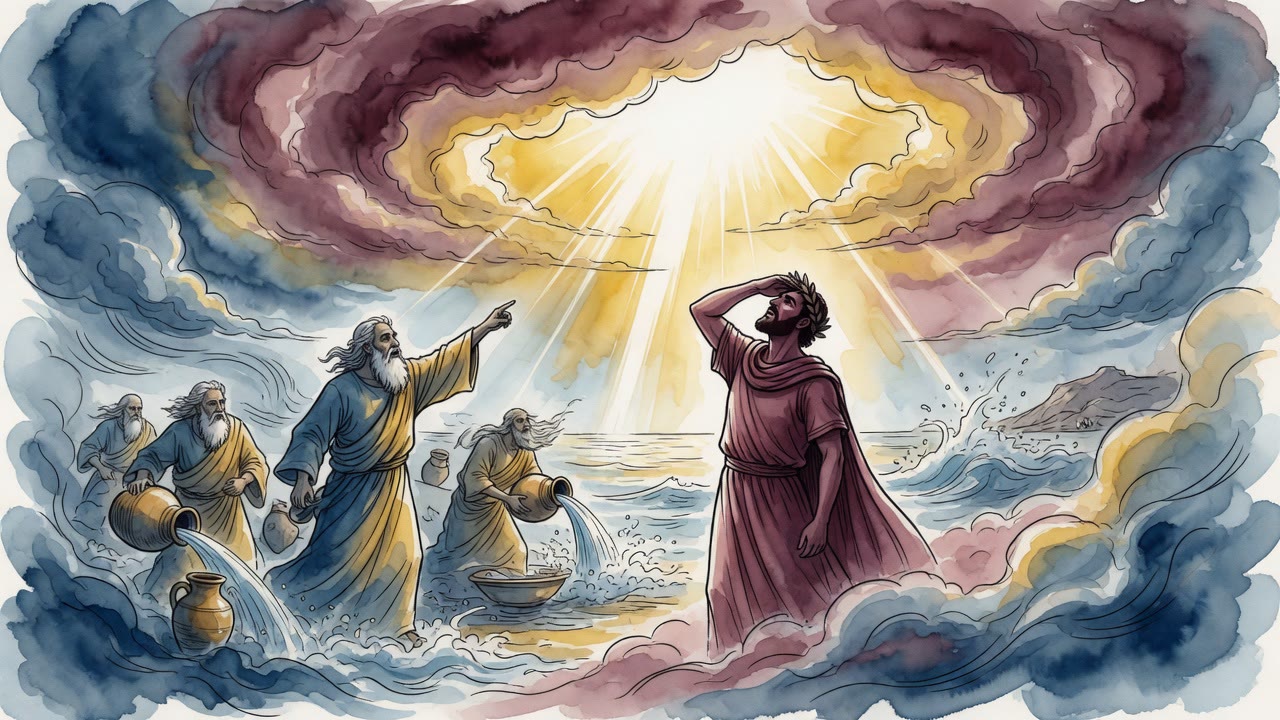
Rabbi Eliezer and Rabbi Yehoshua were crossing the Mediterranean when the storm took their ship. Winds howled. Waves crashed the deck. The vessel drove far off course into open water no Jewish sage had charted. Rather than despair, Eliezer said they had been driven here for a reason. God does not send His servants into the deep without purpose. They filled a cask with ocean water, a sample of the sea that had swallowed their route.
The storm was not only weather. It was a classroom with wet floors. Whatever question waited for them in Rome, they would answer it with something taken from the place where they almost drowned.
The Cask That Would Not Overflow
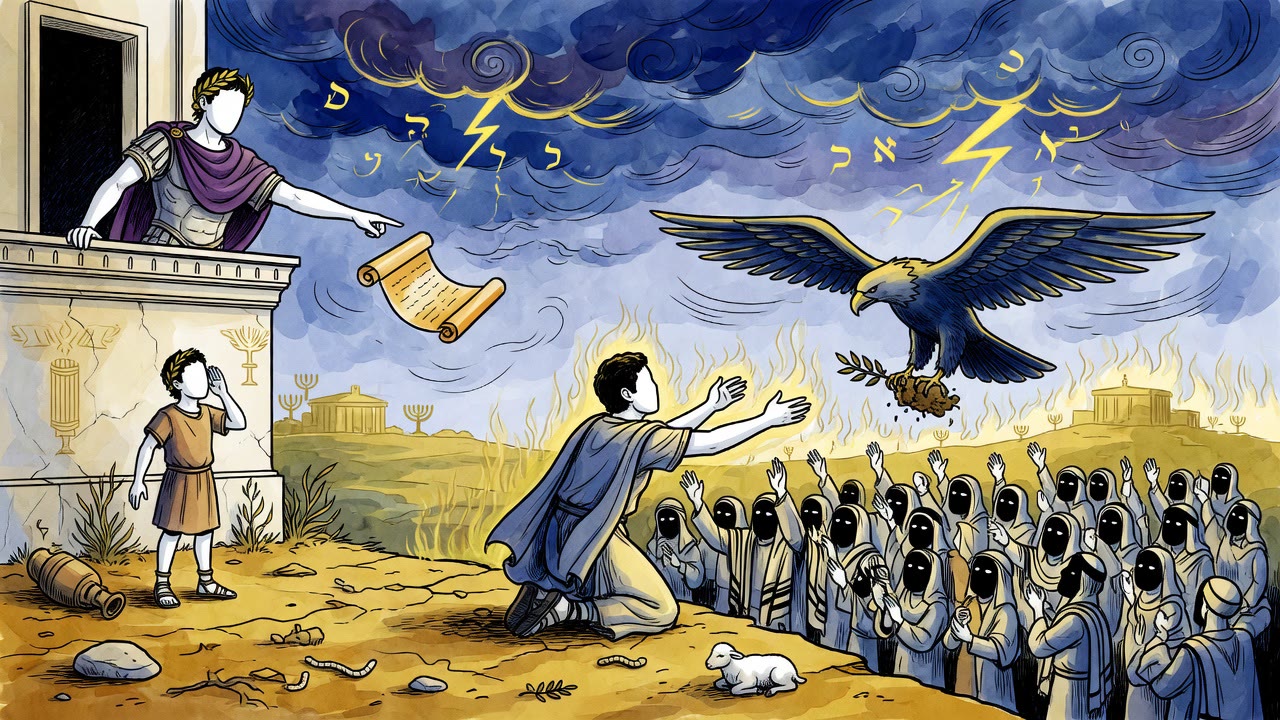
When they stood before Hadrian, the emperor asked why the ocean never overflows. Rivers pour into it without end. Rain falls on it without rest. Still it keeps its banks. Eliezer brought the cask. He poured fresh water into ocean water and poured again. The cask did not overflow. It drank what was added as if it had no bottom.
The emperor watched. The sages had brought proof from the ocean itself: waters ever-swallowing, a vessel that receives without limit. The implication rode close behind. Torah holds wisdom the way the sea holds rivers. A mind that opens itself can take more than it thought it could hold. The storm's sample became the argument.
Look at the Sun
Another challenge from the same throne pressed harder. Hadrian conceded that the world must have an Owner who made heaven and earth. Then he asked why God does not appear publicly twice a year so everyone trembles. Rabbi Yehoshua answered that the world cannot withstand the Divine radiance. No human can see God and live.
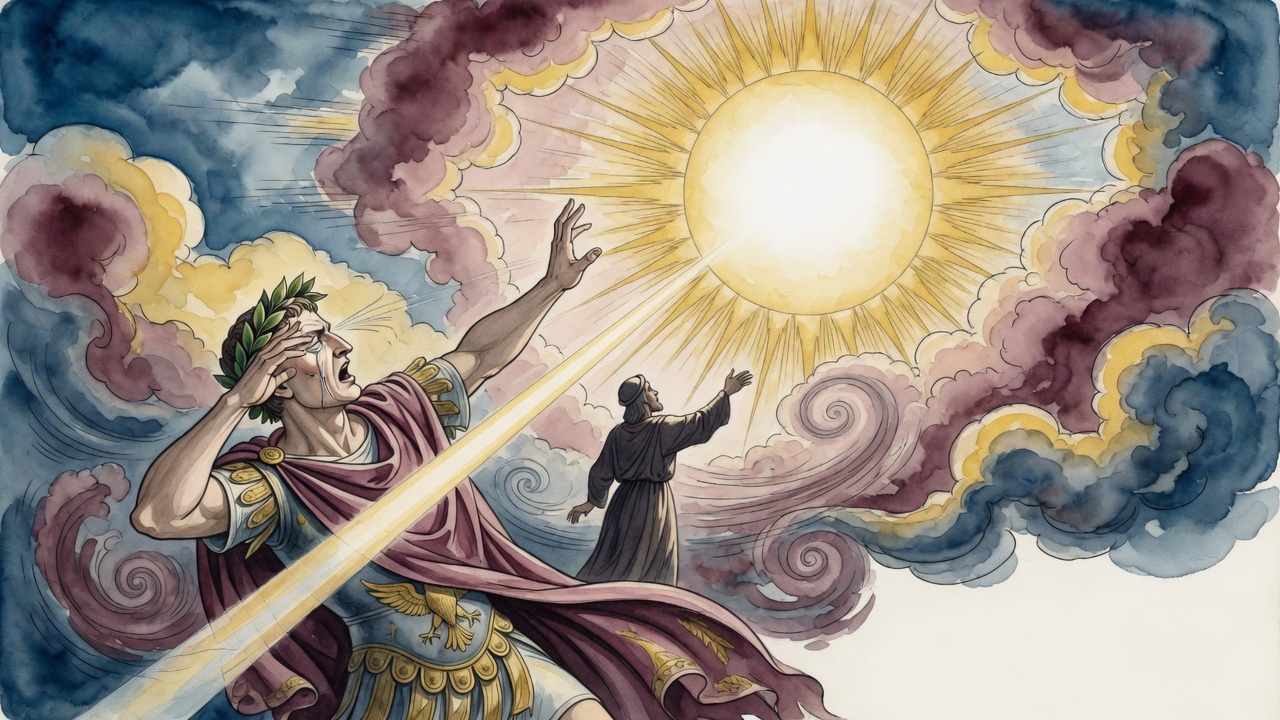
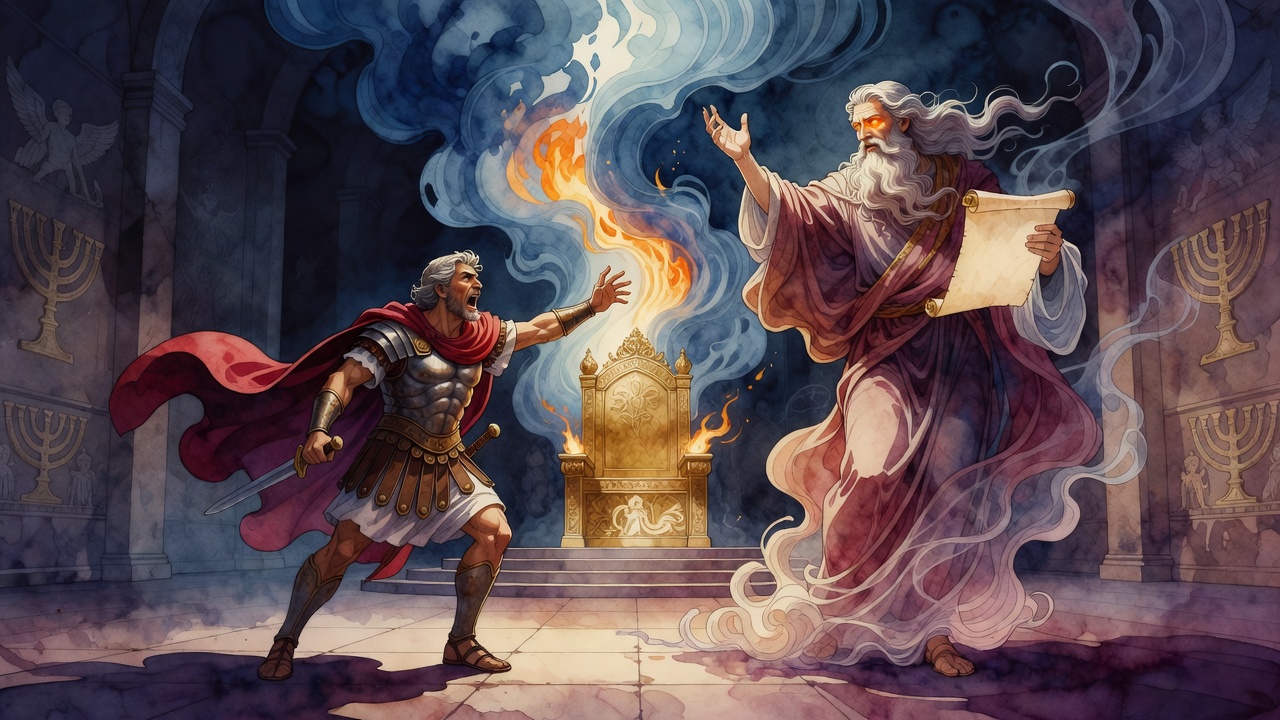
Hadrian demanded proof. Yehoshua stood him outside at high noon and told him to look straight at the sun. The emperor protested that no one can stare into that fire. That was the point. If you cannot gaze at one servant among countless myriads that serve before God, how could you bear the One whose glory fills the world?
Glory Deferred and Glory at the End
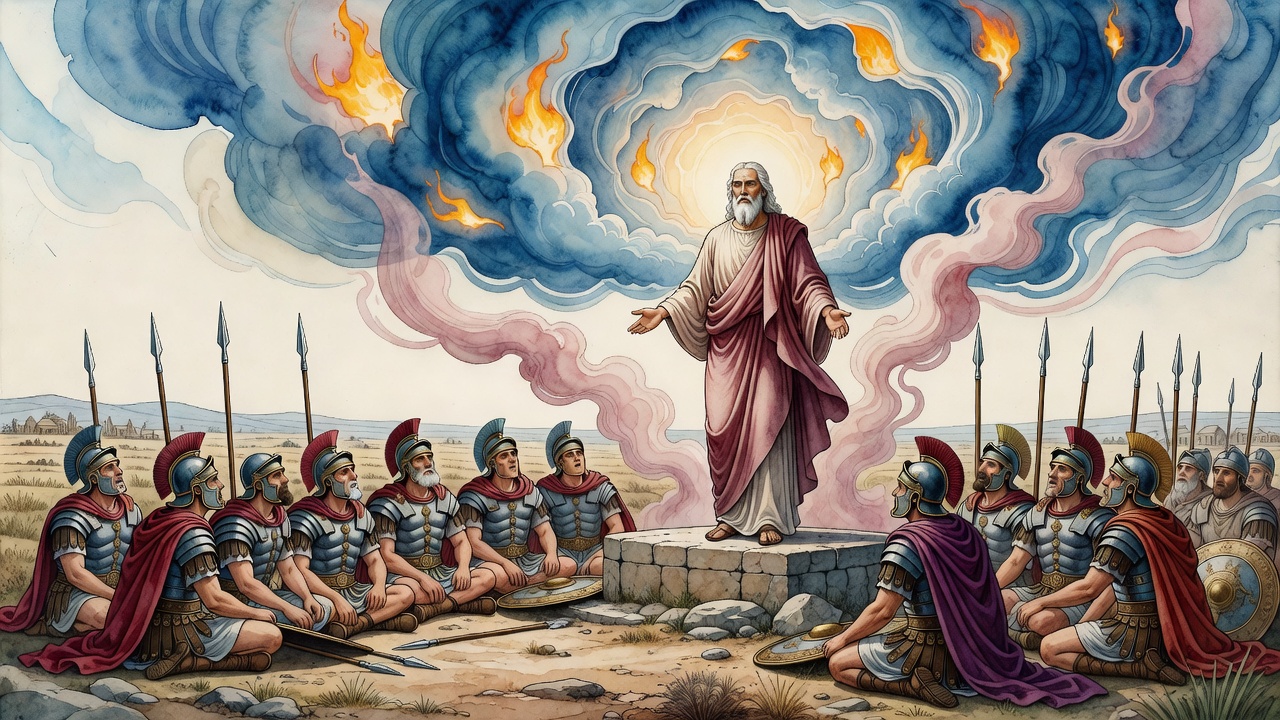
The sage did not leave the emperor only with a scold. A day is coming, he said, when idols vanish and God alone is exalted, and His glory will be revealed for all to see. Until then there is one moment when every person beholds the Divine face: at death, when the soul leaves the body. The verse that warns you cannot see God and live is read tenderly: the vision comes precisely as life ends.
Between the unending sea and the unbearable sun, Rome's questions meet the same wall. Creation already shows more than a human eye can take. The demand for a louder God is a demand to be destroyed by light. The sages answer with water that drinks forever and noon that blinds, and they leave the emperor without a third request.
Empire likes proofs that fit a parade. Twice a year, Hadrian imagines, the God of Israel could stage Himself and settle the argument. The sages answer with physics the emperor already fears: noon light, deep water, limits written into the eye and the hull of a ship. Rome can conquer provinces. It cannot conquer the terms of seeing.
Two Exhibits for One Throne
Set the cask and the noon sun on the same table in the mind. One proves that creation already contains a vessel that refuses to flood. The other proves that creation already contains a light no emperor can face. Hadrian wants a third proof, a public theophany on a schedule he can announce with trumpets. The sages keep handing him back the world he already rules and cannot master.
Eliezer's calm on the storm deck matters here. He does not treat the wind as chaos. He treats it as assignment. Fill the cask. Carry the deep to the palace. When the question comes, pour. Yehoshua's calm in the courtyard matters the same way. He does not invent a new miracle. He points at the servant light that burns every day above Rome and Judea alike. If that servant blinds you, stop demanding the King's face as entertainment.
The final tenderness of Yehoshua's teaching softens what could have been only a rebuke. Everyone will see, at the end, when the soul slips free. The verse that forbids seeing God and living becomes a map of timing, not a taunt. Until that hour, the empire can study water and sun. The ocean will keep drinking. The noon will keep refusing the stare. Torah will keep holding more than a ledger's worth of answers in a cask that does not spill.
The ship that almost sank becomes, in memory, the first half of a single argument. Water that can take more water without rising answers the emperor's first curiosity. Light that can blind without being God answers the second. Between them Hadrian is left with a world that already testifies too loudly for comfort and still refuses to become a circus on command.
← All myths