Hadrian Banned Fire for Three Days and Smoke Still Rose
A living emperor told a rabbi he outranked Moses. Then a sick governor needed hot water, and the ban lasted one night.
Table of Contents
 Click for full size
A Living Dog and a Dead Lion
Hadrian, may his bones be crushed, sat with Rabbi Yehoshua ben Hananya and put a verse in his mouth like a weapon he had borrowed without weighing it, because he wanted rank more than he wanted meaning.
"As a living dog is better than a dead lion" (Ecclesiastes 9:4). Then he made the boast. "I am better than Moses your master, because I breathe and he does not."
Rabbi Yehoshua did not trade insults with a man who could end him. He asked a practical question instead. Could Hadrian decree that no person kindle a fire for three days? Imperial confidence is a kind of theater, but Hadrian agreed and issued the ban as if the air itself would obey a seal.
Smoke on the First Night
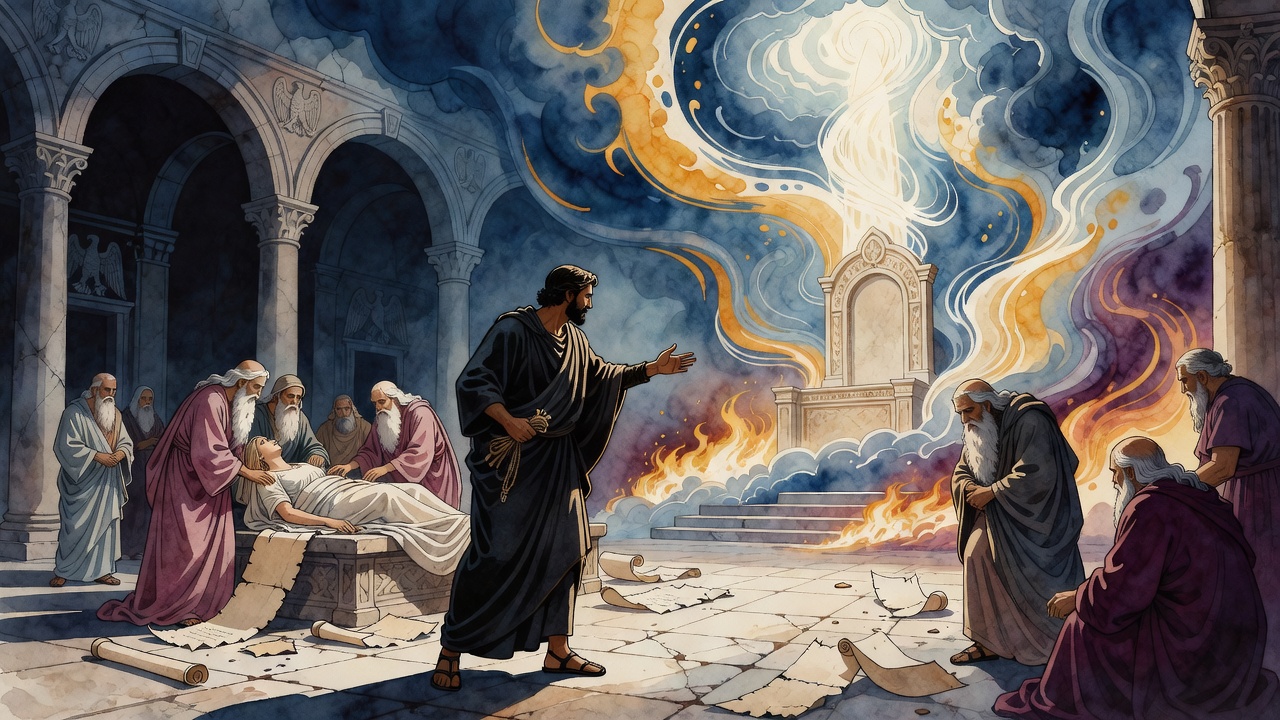
At nightfall of the first day they climbed to the palace roof, and smoke rose in the distance, a thin column that should not have been there if the seal still held.
"What is that?" the rabbi asked.
"A governor is ill," Hadrian said. "The doctor ordered hot water." Fire had been lit for medicine, for comfort, for the ordinary panic of a body in trouble. The ban was still wet on the wax, but a sickhouse had already voided it.
"Let despair come upon him," Rabbi Yehoshua said. "Even while you are still alive, your decree is voided." Moses had said, "You shall not kindle fire in all your dwellings on the Sabbath day" (Exodus 35:3). Jews still keep that line, and years upon years have not voided it, because a people can hold a hearth when an emperor cannot. Hadrian could not hold three days against one sick official and one anxious doctor.
The Dead Teacher Still Rules the Hearth
The emperor's logic was blunt, because breath was the only rank he understood. The rabbi answered with a kitchen. A command that shapes hearths across centuries outranks a command that dies at the first fever in a provincial house.
Shabbat does not need Hadrian's soldiers. It needs a people who treat a dead prophet's word as hotter than an emperor's breath. Smoke on the roof was not an accident. It was evidence, so the argument could end on the roof instead of in a debate. Power that cannot police a hearth for three days has no standing to lecture a people who police a hearth every seventh day without imperial overtime.
Hadrian's living body sat beside a failure of his living will, but Moses' dead body, long buried, still governed flame. The living dog had barked, but the dead lion still held the fire.
A Letter That Mocked the Wrong God
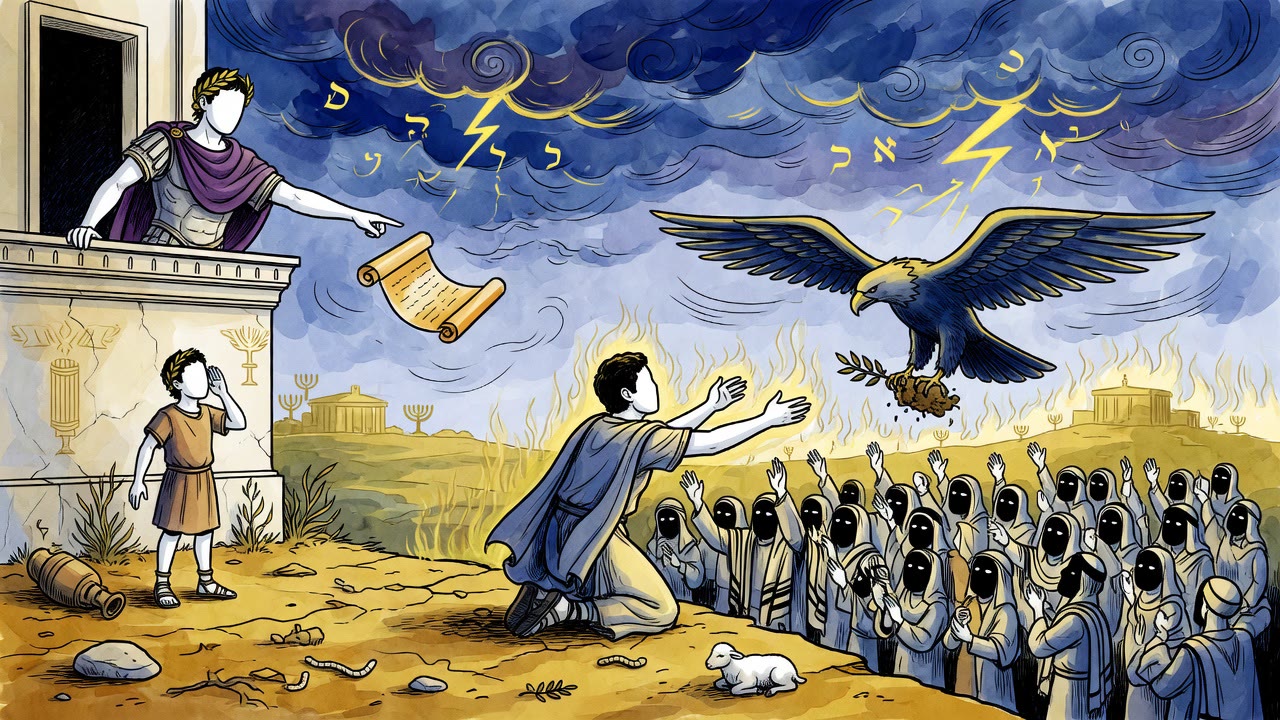
Another Roman, Hadrakitilios, wrote Hadrian a letter sneering at the Jews. Your Majesty evidently hates them, he wrote, because they refuse to conform. They will not be like this nation or that one. They insist on their own marks and their own seventh day, though the court would rather they dissolved into the rest of the empire. The letter meant mockery, as if difference itself were a crime.
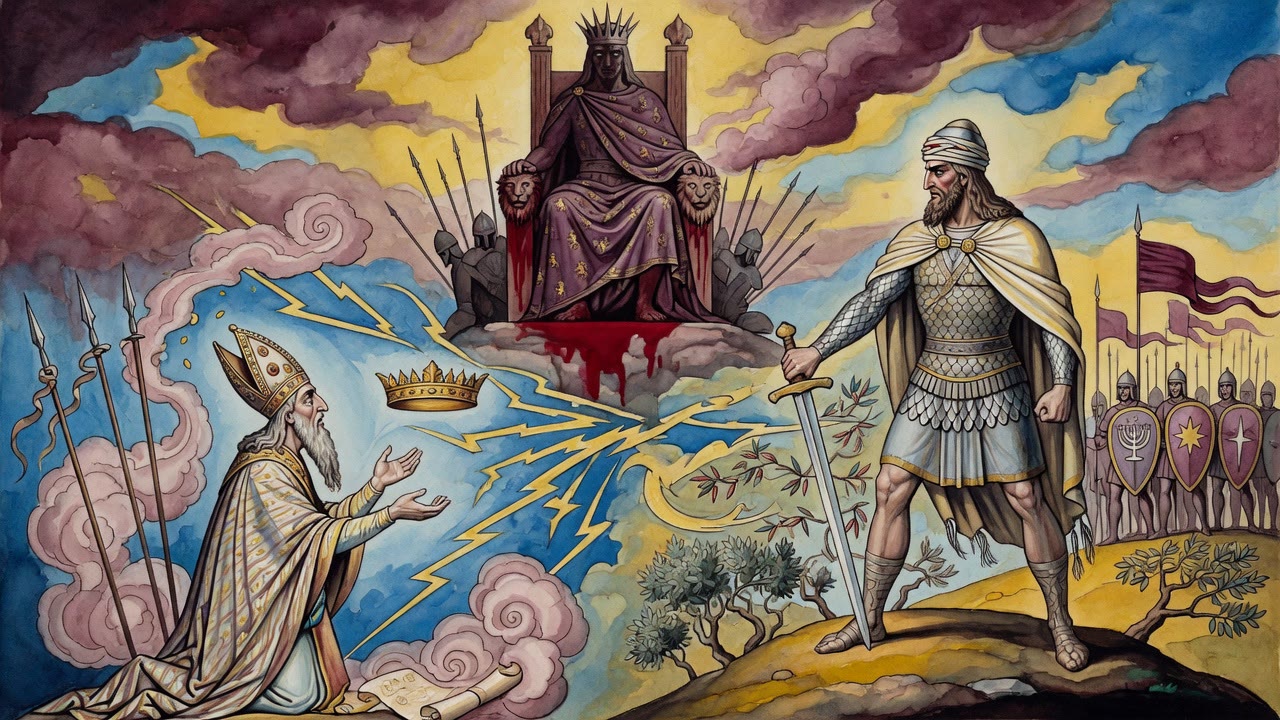
Hadrian, whatever else he was, wrote back with a line that chilled the mocker. "Let the God of the Jews be revenged on this man." He did not aim it at the Jews. He aimed it at the letter-writer, because even a hard court knew that treating another people's God as sport was dangerous business.
From that hour Hadrakitilios's work failed. His household's ventures collapsed. His wife traded and took no profit, until the emperor called death a mercy and ended him. The curse he had drawn by his mouth followed him home more faithfully than any ally, so the joke he had sent as a memo came back as a ruin.
Two Failures of Empire
The two scenes bite the same way. Hadrian cannot police fire for three days, but Hadrakitilios cannot mock Heaven without burning his own hands. Power that looks total from the forum looks thin from a Jewish kitchen on Friday afternoon, and thinner from a curse that follows a man through failed deals and a ruined house.
Rabbi Yehoshua's move was not magic. It was observation. Look at the smoke, look at the decree, and look at Moses still obeyed in houses the emperor will never enter. Hadrakitilios's ruin was observation of another kind, because a mouth that treats God as a joke for career advancement does not get to keep its luck.
Rome can break bodies, but it has more trouble breaking habits of holiness, and more trouble surviving open contempt for the Holy One of Israel. A living emperor is not better than a dead Moses in the market of binding words. The roof knew, and the smoke knew, so the rabbi only had to point, and the smoke still rose.
← All myths