Reuben Disguises Himself as a Roman to Save the Sabbath
The counselor's robe was not his. Under it he argued that Sabbath, the knife, and purity were injuries Rome should keep.
Table of Contents
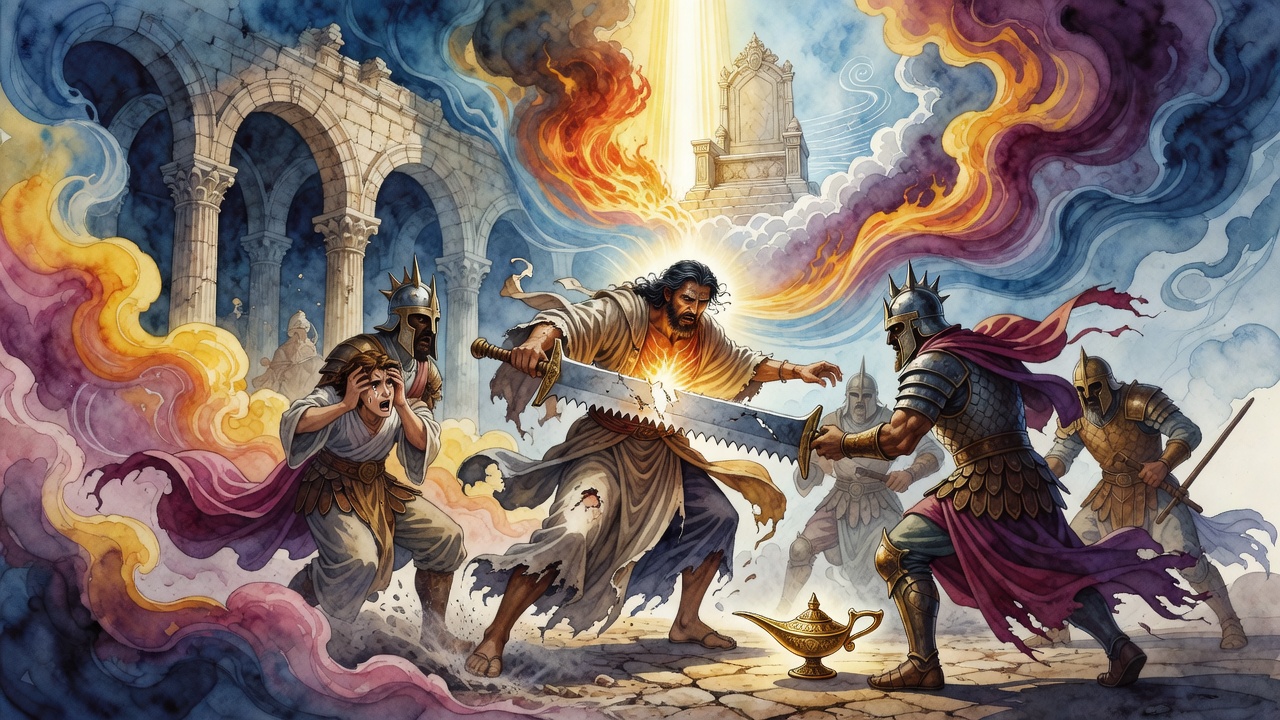
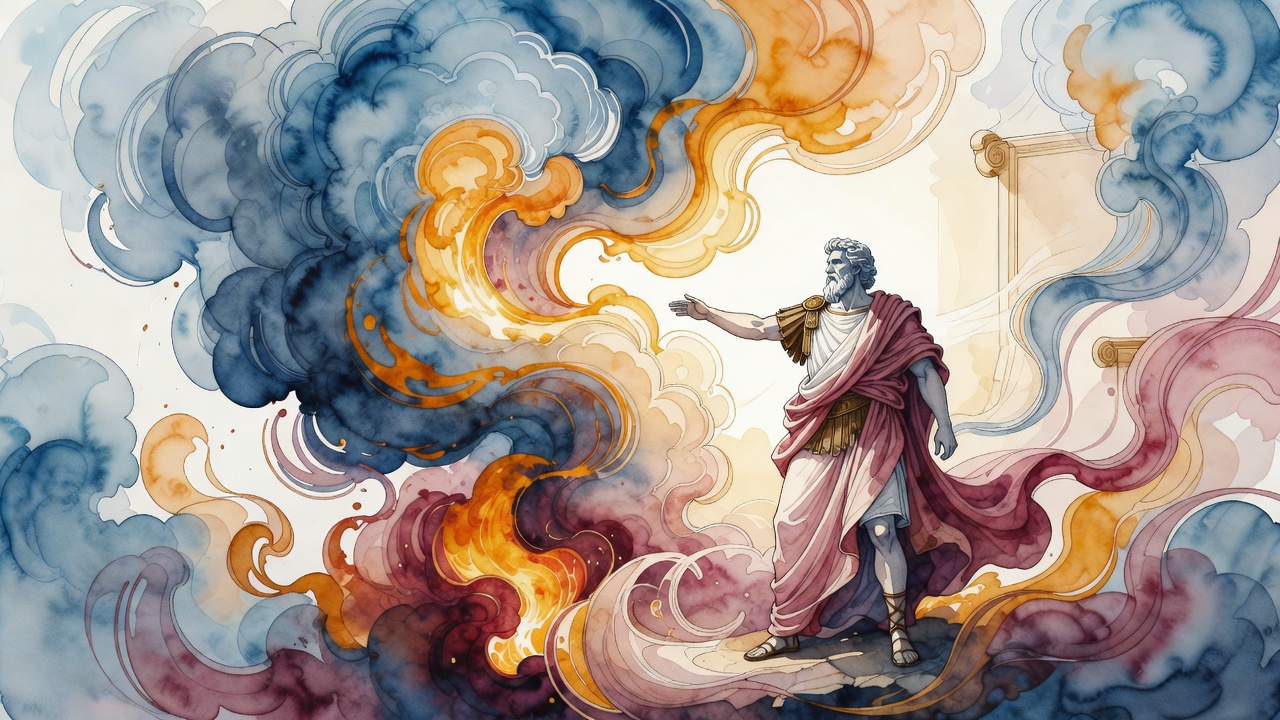
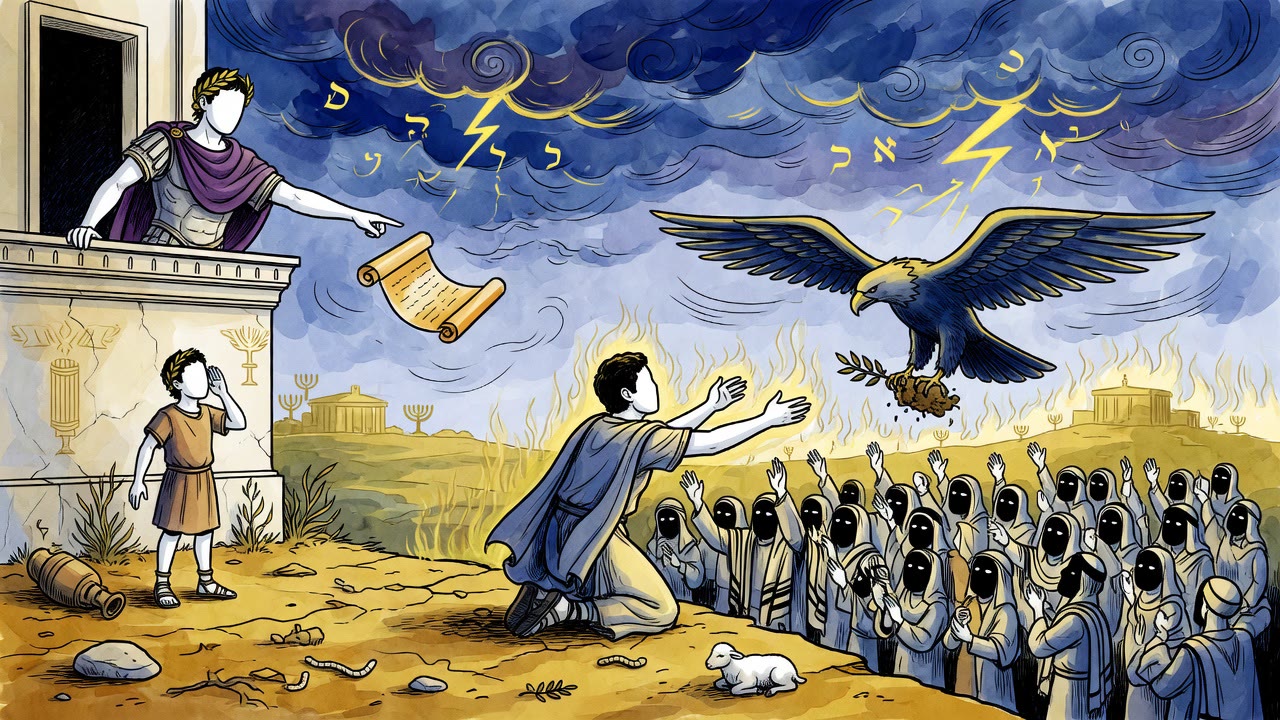
Adrianus stood in front of his own army and told the men to worship him. Then he told them what the next three years would hold. He would take the Temple.
 Click for full size
Three Philosophers in the Ranks
Three philosophers came forward before the ranks broke up.
The first asked how a new king gets himself recognized inside the house of the king already sitting there. "Go out of God's house first," he said. "Then ask for a throne." The house he meant was the world, and the emperor was standing in the middle of it.
The second asked for a heaven and an earth. Not the ones already made. New ones, made now, in front of everybody.
The third named a ship that had gone down in deep water years before and asked him to bring it up.
The emperor did not make a heaven. He did not raise the ship. He did not walk out of the world.
Give Back the Breath
His wife finished it. She came to him with the smallest demand of the four.
"Give back what was left with you," she said. "The soul. It was put into you, and it will be taken out of you, and you had no say in either. Hand it over now, on your own authority, and I will call you a god."
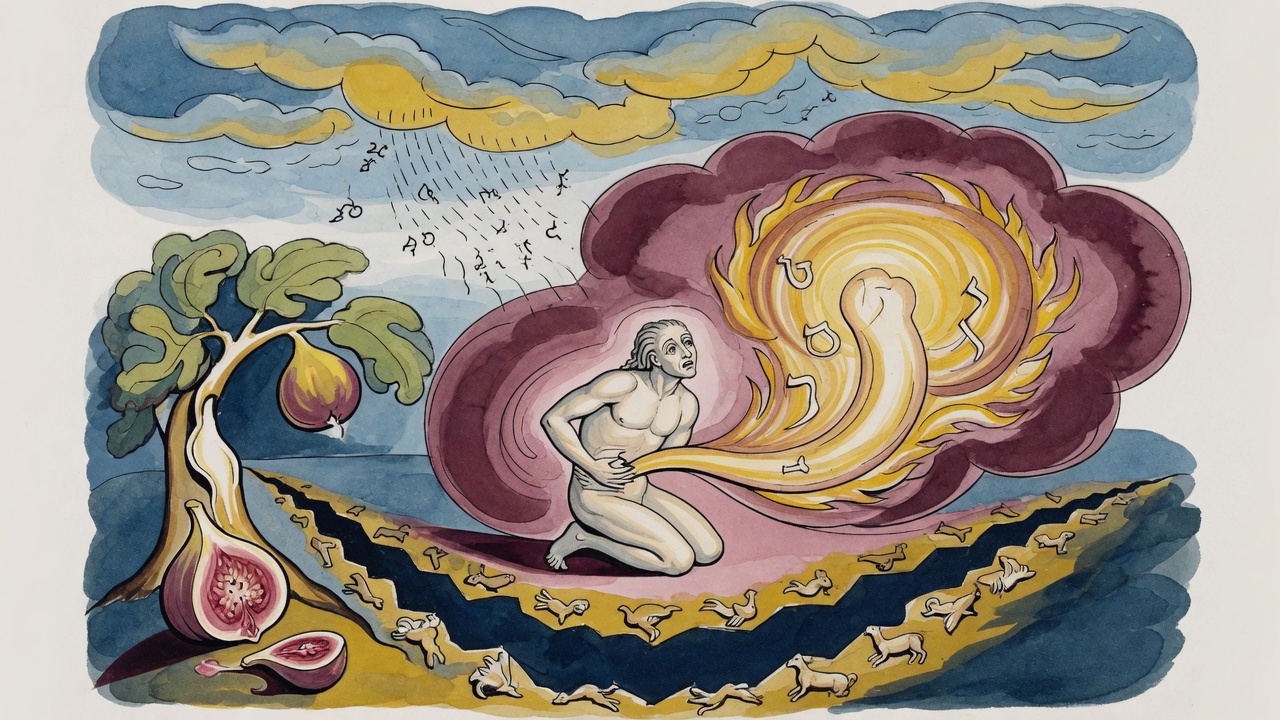
He opened his hand and found only borrowed air in it. A man who wants worship has to give up the breath in his chest on his own authority. Every breath he had ever taken was on loan. He let the design go.
Three Laws Struck From the Books
The same kingdom came back at Israel later with a clerk's list instead of a claim to godhood. Three commandments went off the books. No Sabbath. No circumcision. No laws of purity.
Clerks posted the list. Workshops were to stay open on the seventh day. The knife for the eighth day was to stay in its cloth. Households were told their months were no longer their own.
Rest one day in seven and a people is not a tool. Cut the mark into a son and an older covenant sits on his body than any the empire can offer. Keep the purity laws and a household refuses to be common property. Take the three away and there is, after enough years, nothing left to point at and call a Jew.
The Counselor Who Was Not a Roman
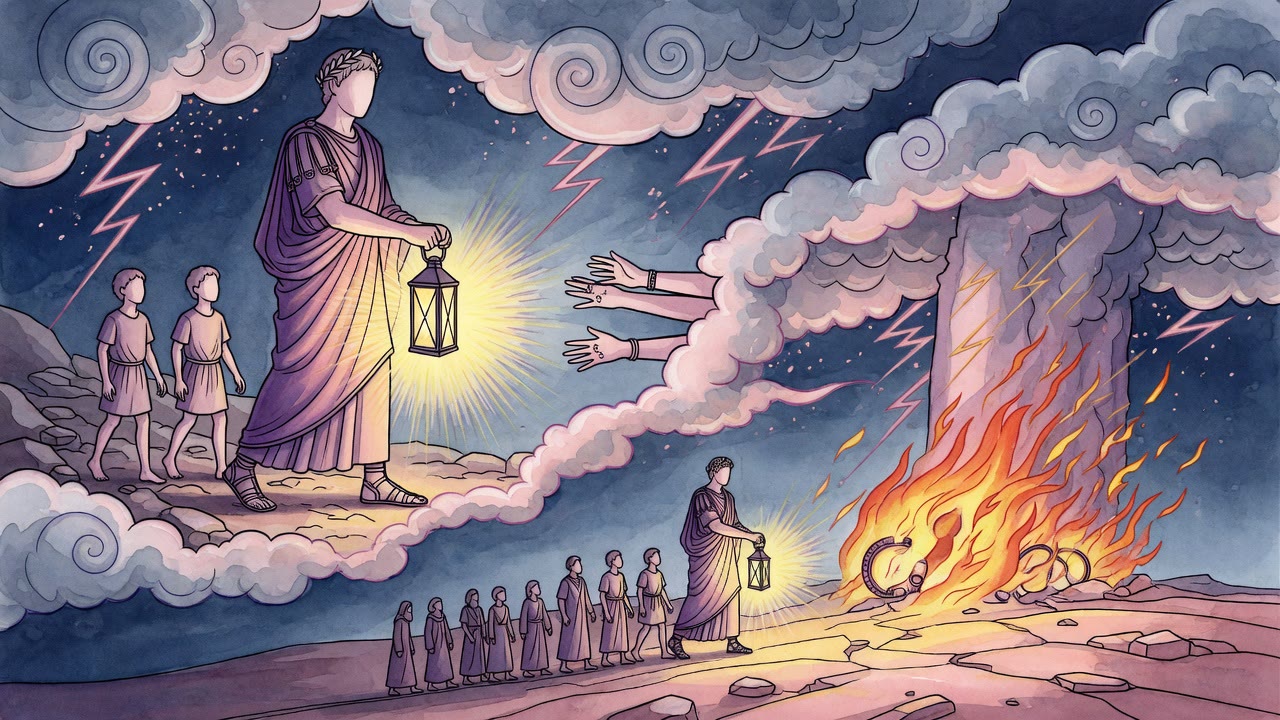
Reuben the son of Astrobolus put on the robe of a Roman counselor, walked into the hall, and spoke to the men in power in the only language they trusted, which was their own advantage.
"You want them poor," he said. "Then let them keep the Sabbath. One day in seven with the workshops shut and the fields idle. Count the wages they will lose."
"You want them weak. Then let them circumcise the infants. Take the strength out of the boys in the first week of their lives."
"You want them few. Then let them keep the laws of purity, which keep husbands from wives for half of every month. Count the children that will not be born."
Every commandment he handed them as an injury. They wrote the permission and were pleased with themselves for the cruelty of it. For a while the lamps went up on Friday evenings again, and the knives came out on the eighth day, and the households ordered their months as they always had.
Then somebody in the hall learned that the counselor was a Jew. The decree came back, and it came back harder, because a court that has been made a fool of does not forgive quickly. The robe had been enough to save the Sabbath for a while. It was not enough to keep it.
They Tore the Paper in the Palace
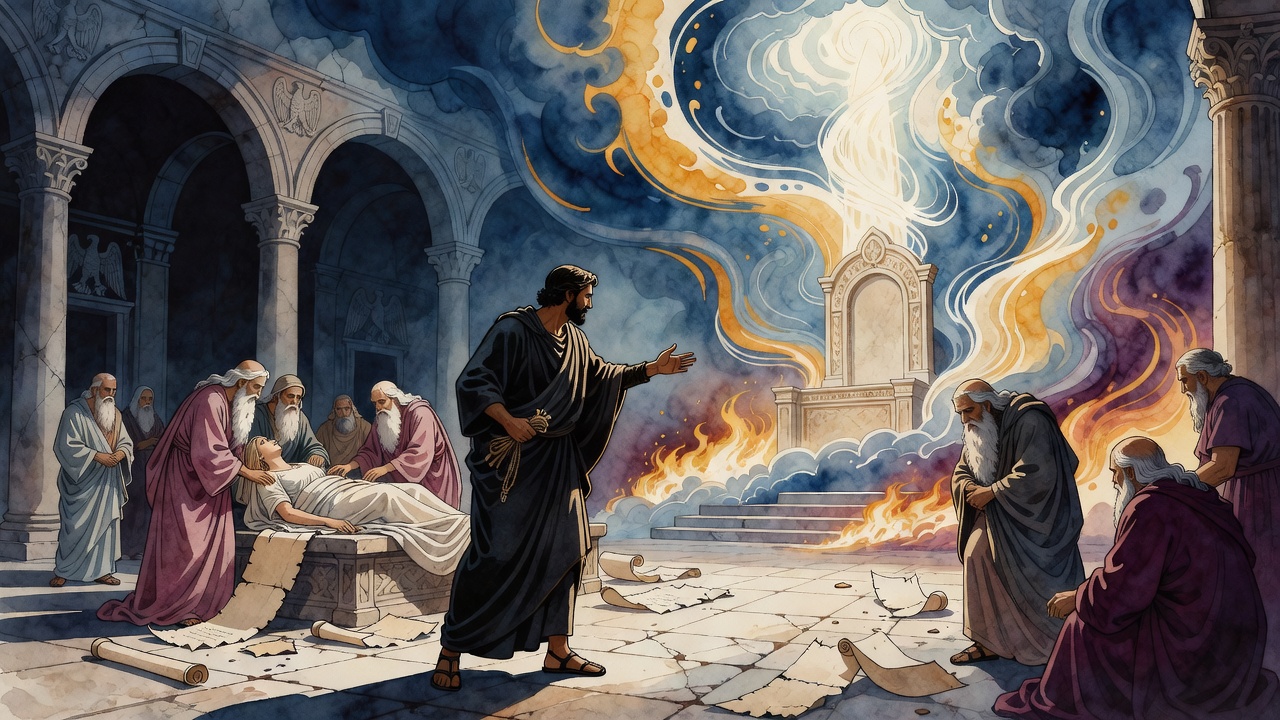
Two men went up as messengers, Eleazar the son of Joseph and Simon bar Temalion, and they arrived at a palace with a crisis inside it. A demon had entered the emperor's daughter. She was screaming in a room the physicians could not help her in.
The sages spoke to it and it came out of her. The girl stood up quiet. Her father had nothing to pay them with that they wanted.
So they asked for the decree.
It was brought out to them, and they took it in their hands in the middle of the palace and tore it. The sound was almost nothing. Paper coming apart in a quiet room, while the men who had written it stood and watched, and the Sabbath went back into Jewish houses without a disguise on it.
← All myths