5 min read

Josef Meshita Refuses a Second Trip into the Temple

They sent him in first because he knew the rooms. He carried out a golden candlestick and they took it from him at once. Then they told him to go back in.

Curated by Arthur · Told by Maggid ·
Table of Contents
  1. First Through the Breach
  2. The Horse and the Stake
  3. What a Second Step Costs
  4. Decrees That Aimed at the Body of Israel
  5. Two Roads Out of Shame
Josef Meshita Refuses a Second Trip into the Temple Click for full size

First Through the Breach

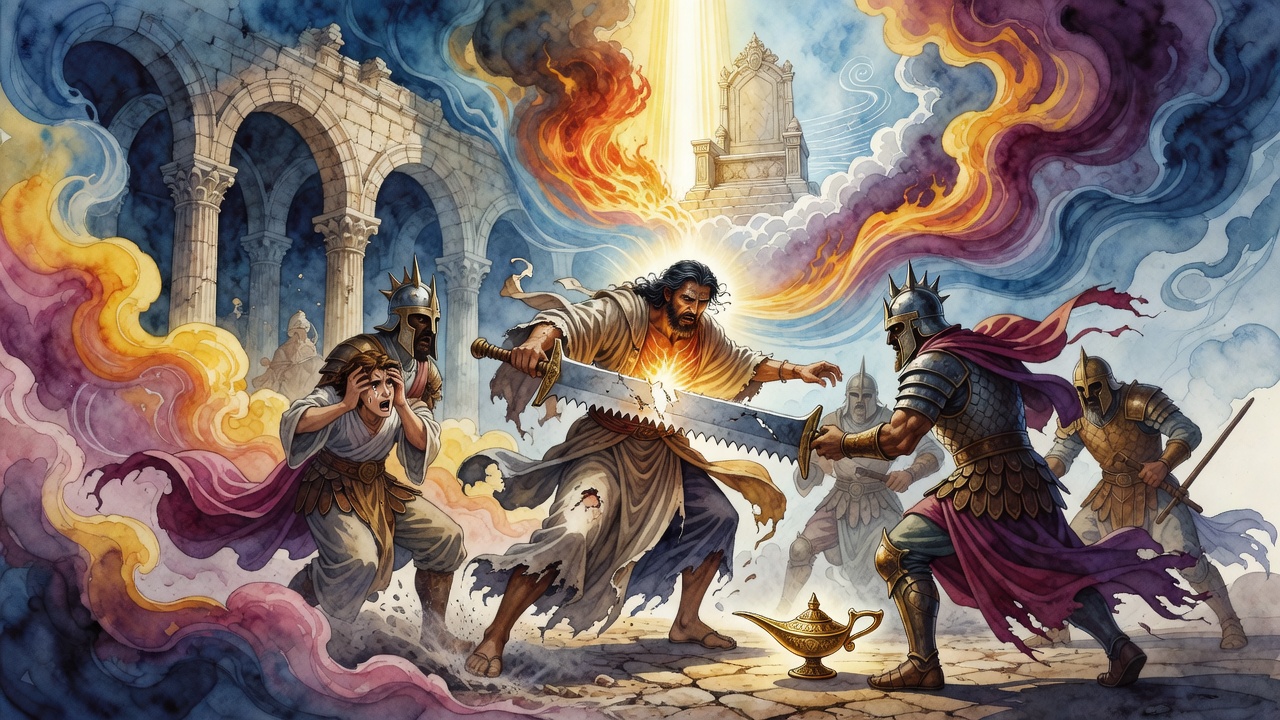
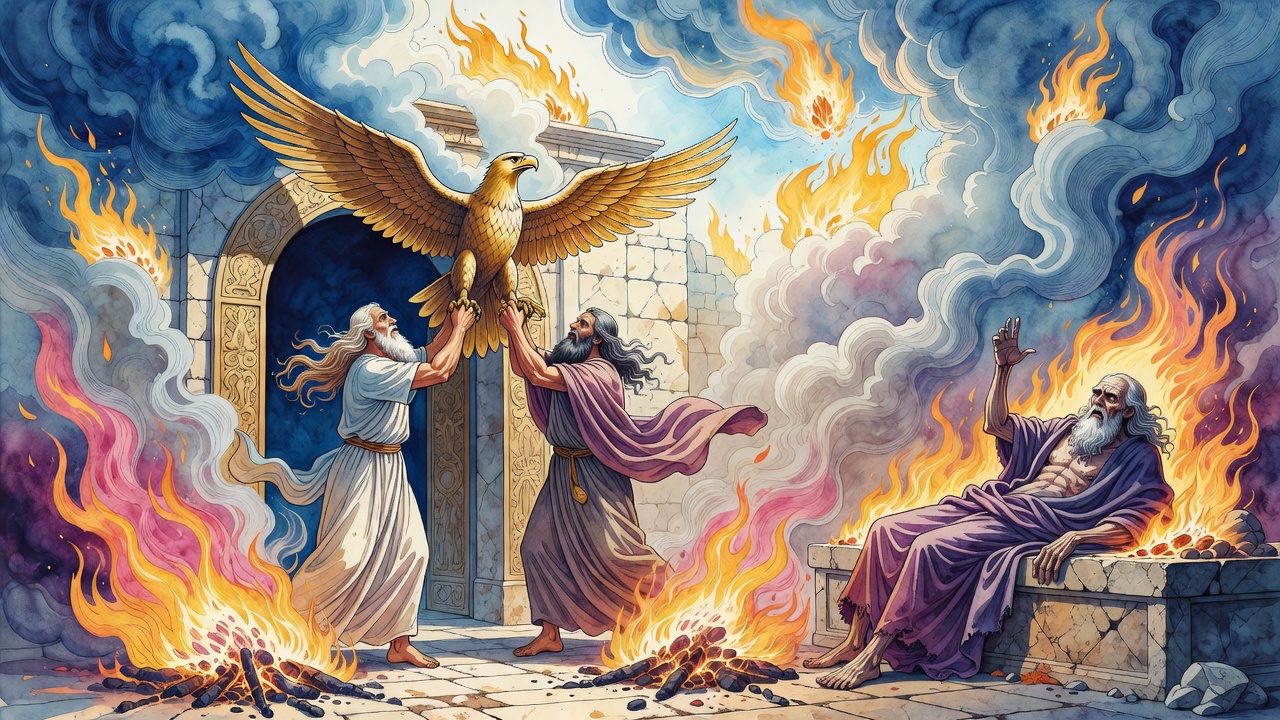
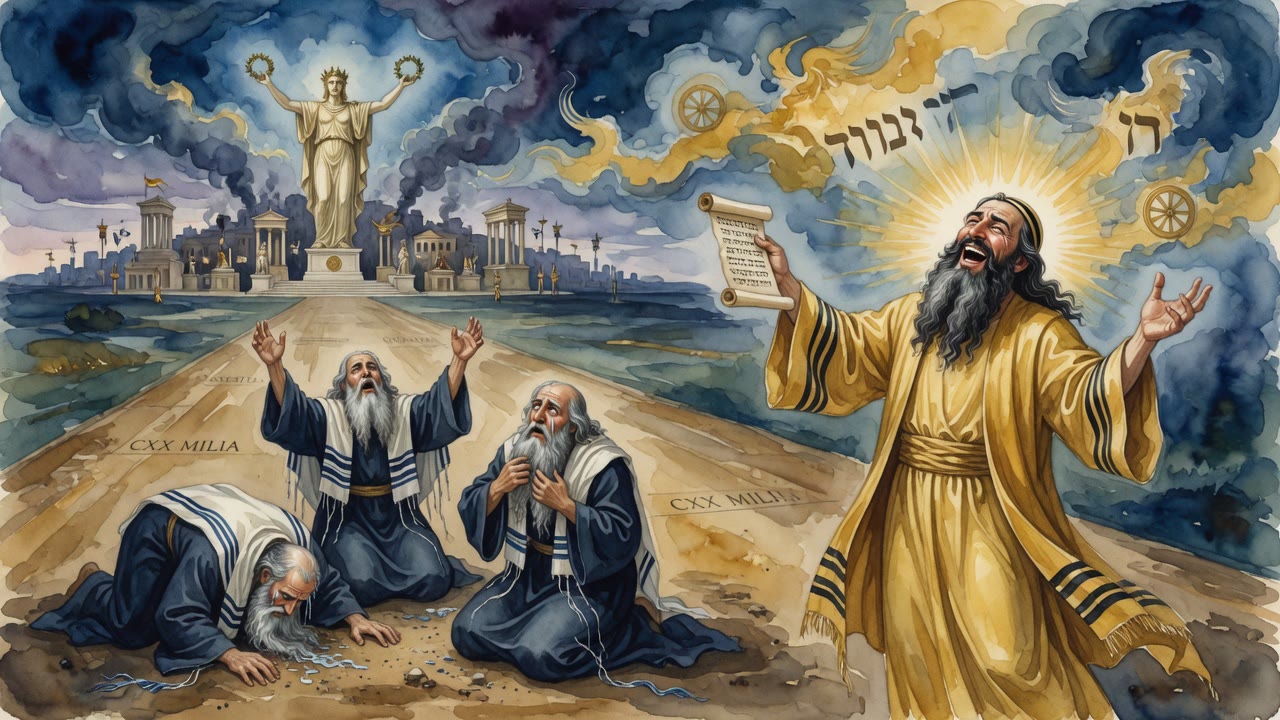
The heathen who broke the Temple needed a man who knew the rooms. They found Josef Meshita and pushed him in first with a bargain that sounded like mercy. Whatever you carry out is yours. Gold glittered in the smoke. His hands closed on a candlestick heavy enough to buy a life, and he came back into the light of conquest holding it like a prize.

They took it from him at once. A private person, they said, has no right to such a thing. The bargain had been a leash. Send him in again, they ordered. More rooms. More vessels. More of what had been holy turned into pay. Josef stood at the threshold a second time and would not move. Bribes stacked at his feet. He still would not move. The conquerors answered refusal the only way an empire answers a man who has seen too clearly. They sawed him in two.

The Horse and the Stake

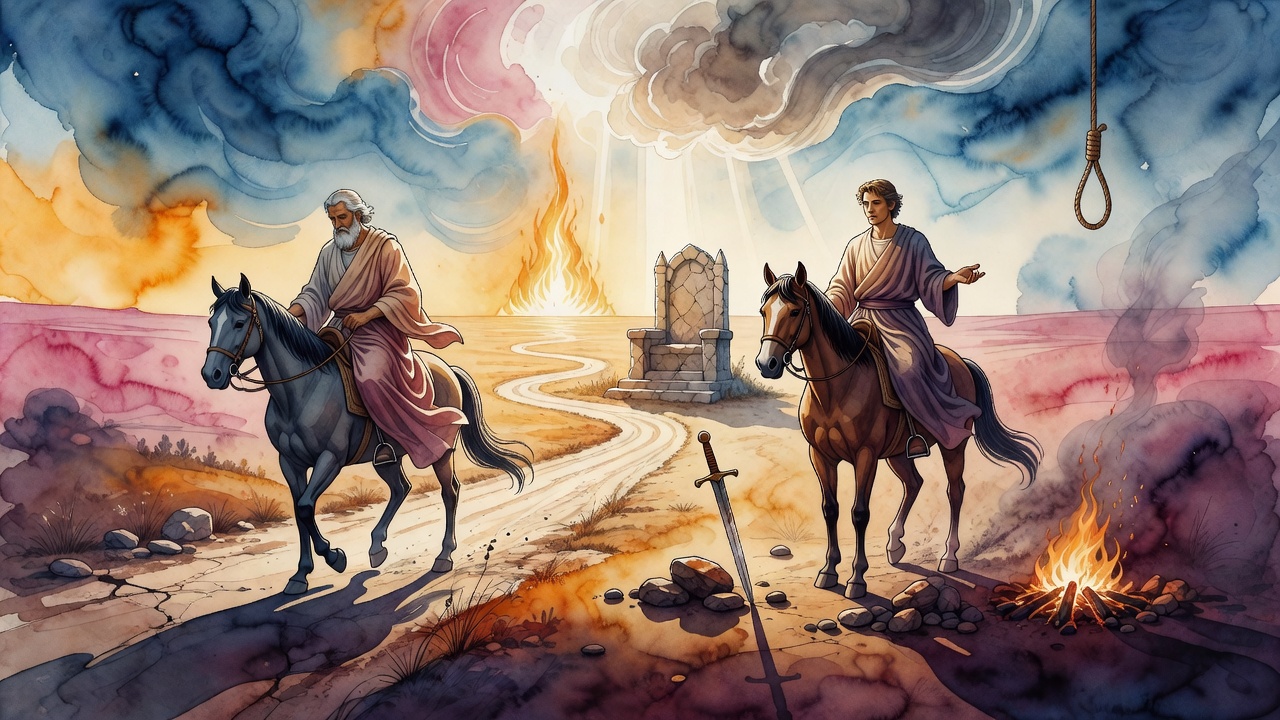
On another road, Yakim Ish Serodot, nephew of Jose ben Yoezer, rode a fine horse while his uncle was led out to die. He pointed with the arrogance of the living. "Behold my horse and behold thine." Jose looked from the animal to the stake and answered without panic. "If this is a reward for those who anger the Lord, how much greater will be the reward for those who fear Him?"

Yakim laughed the easy laugh of a man who thinks history has already chosen him. "Has there ever been anyone more God-fearing than you, and look at your reward." Jose turned the knife. "If this is a punishment for those who fear Him, how much greater will be the punishment for those who anger Him." The horse suddenly felt less steady. Yakim's certainty cracked. He dismounted into terror and chose a fourfold death for himself, stoning, burning, beheading, and strangling, as if only an extreme exit could buy him back into the book of the forgiven.

What a Second Step Costs

Josef's first step into the ruined courts was greed dressed as survival. His second step never happened. Between those two moments something in him finished turning. The candlestick had already taught him the empire's arithmetic. Enter as a partner. Exit as a tool. Die as a warning. He preferred the saw to the second theft.

The tradition does not pretend he was pure from the start. It honors the refusal that came late and cost everything. A man may begin as the first thief through a holy door and still die as someone who would not go in again. Late courage is still courage when the blade is already warm.

Decrees That Aimed at the Body of Israel

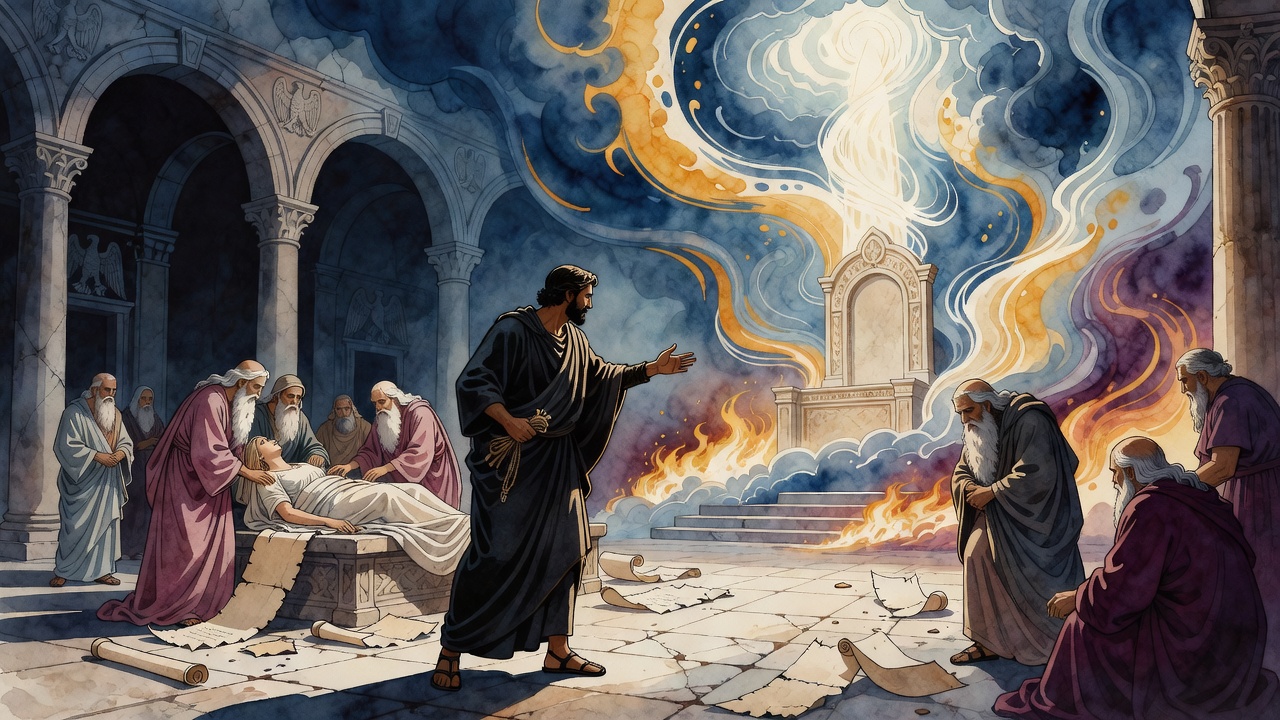
The same wicked kingdom that smashed sanctuaries also wrote law against the living marks of the covenant. No Sabbath. No circumcision. No laws of purity. Three strokes meant to erase a people into the ordinary mass of empire. Reuben son of Astrobolus once answered that decree with cunning, dressing as a Roman counselor and arguing that the empire should want Jews poor, weak, and few, and therefore should leave those "hardships" in place. Later the disguise failed. Later two sages healed an emperor's daughter and tore the decree with their own hands.

Josef and Yakim stand inside that wider war. One dies for refusing to finish looting what Rome had already broken. One dies, in a different way, for waking too late to the meaning of his uncle's stake. The empire could saw a body and raise a gallows. It could not make every Jewish mouth agree that the conqueror's horse was the true reward.

Two Roads Out of Shame

Josef's shame was the candlestick in his hands. Yakim's shame was the horse under him while a righteous man walked to death. Both men met a moment when comfort became intolerable. Josef stopped at the door. Yakim got down from the saddle. One was murdered for the stop. One killed himself into repentance for the dismount. The stories sit side by side because conquest makes many kinds of collaborators, and Heaven watches which ones finally refuse the next order.

The Temple's gold did not save Josef. The horse did not save Yakim. What remains is the line each man drew when the easy path was still open and he closed it with his life.

Conquest multiplies doorways. Some lead to loot. Some lead to a saddle above a martyr's walk. Some lead back to a decree hall where a people is told to stop looking like itself. The men who finally refuse those doorways do not always refuse them early. The tradition still writes their late no in full, because a late no under a saw or under a self-chosen death is still a no Rome could not purchase.


← All myths

From the tradition

Sources

2 sources

The texts behind this telling. Some cards carry a translation of the source; others are our own retelling of it, and each card says which. Every card links out to the original.

Exempla of the Rabbis, No. 23Exempla of the Rabbis (Gaster, 1924)

Retold in our words. Read the original at the link below.The Exempla of the Rabbis, Moses Gaster (1924) · Public Domain

When the heathen conquered the Temple Josef Meshita was asked to go in first. He was told that whatever he brought out should be his. He carried out a golden candlestick, which was taken from him as not fit for a private person. Sent in a second time he refused to go. They offered him many bribes, but he still refused and he was then sawn in two by these people.

24. Yakim-Ish-Serodot the nephew of Jose Ben. Yoezer was riding on his horse when the latter was led to execution and he said to him, "Behold my horse and behold thine.” Yoezer replied: "If this is a reward for those who anger the Lord, how much greater will be the reward for those who fear Him?” Yakim answered: "Has there ever been anyone more God-fearing than thou, and look at thy reward (execution on a Roman stake).” Jose replied "If this is a punishment for those who fear Him, how much greater will be the punishment for those who anger Him.” Yakim was deeply

5» -

moved and submitted himself to a four-fold death, stoning, burning, beheading and strangling, and he thus obtained forgiveness.

Full source
Exempla of the Rabbis, No. 19Exempla of the Rabbis (Gaster, 1924)

Retold in our words. Read the original at the link below.The Exempla of the Rabbis, Moses Gaster (1924) · Public Domain

The wicked kingdom, the Roman authority that crushed Judea after the Temple's fall, once decreed that the Jews should not keep the Sabbath, nor circumcise their children, nor keep the laws of ritual purity according to the Torah. These three commandments were no accident of choice. They were among the practices that most clearly marked Israel as a distinct and covenanted people, and so the empire aimed to erase them.

Reuben the son of Astrobolus, disguised as a Roman counsellor, frustrated the decree by speaking in the empire's own self-interest. He argued that the rulers should want the Jews to grow poor, so they should let them rest one day a week and lose their wages; that they should want them weak, so they should let their children be circumcised; and that they should want them few, so they should let them keep the laws of purity. By framing each mitzvah as a hardship, he won permission for the very practices the decree had banned. After a time the Romans recognized that he had been a Jew, and they renewed the decree.

Then two sages went as messengers, Eleazar the son of Joseph and Simon bar Temalion. A demon entered the daughter of the Emperor, and at the bidding of the sages it departed and she was healed. As their reward they were permitted to tear up the decree with their own hands. The tale teaches that Israel's survival often came through cunning advocacy and through sages whose holiness commanded respect even in the halls of a hostile empire.

Full source