5 min read

Abraham Sat While God Stood After Circumcision

A father with two boys, one born Friday and one on the Sabbath, cuts the wrong son on the wrong day. Neighbors hear a child cry on the Sabbath.

Curated by Arthur · Told by Maggid ·
Table of Contents
  1. Blood That Equals Sacrifice
  2. When the Knife Hits the Wrong Day
  3. Blessing Without Toil of Grief
  4. Ears Opened, Decrees Sealed
Abraham Sat While God Stood After Circumcision Click for full size

Blood That Equals Sacrifice

Circumcision is so weighty that it overrides the Sabbath when the eighth day falls on the seventh. A seed is not counted among the generations before the cut. "A seed shall serve him; he shall be counted by the Lord unto the next generation" (Psalms 22:31). Serve, says Rabbi Isaac, is the language of offering and the language of brit. Blood from the covenant is as precious before the Holy One as blood from the altar.

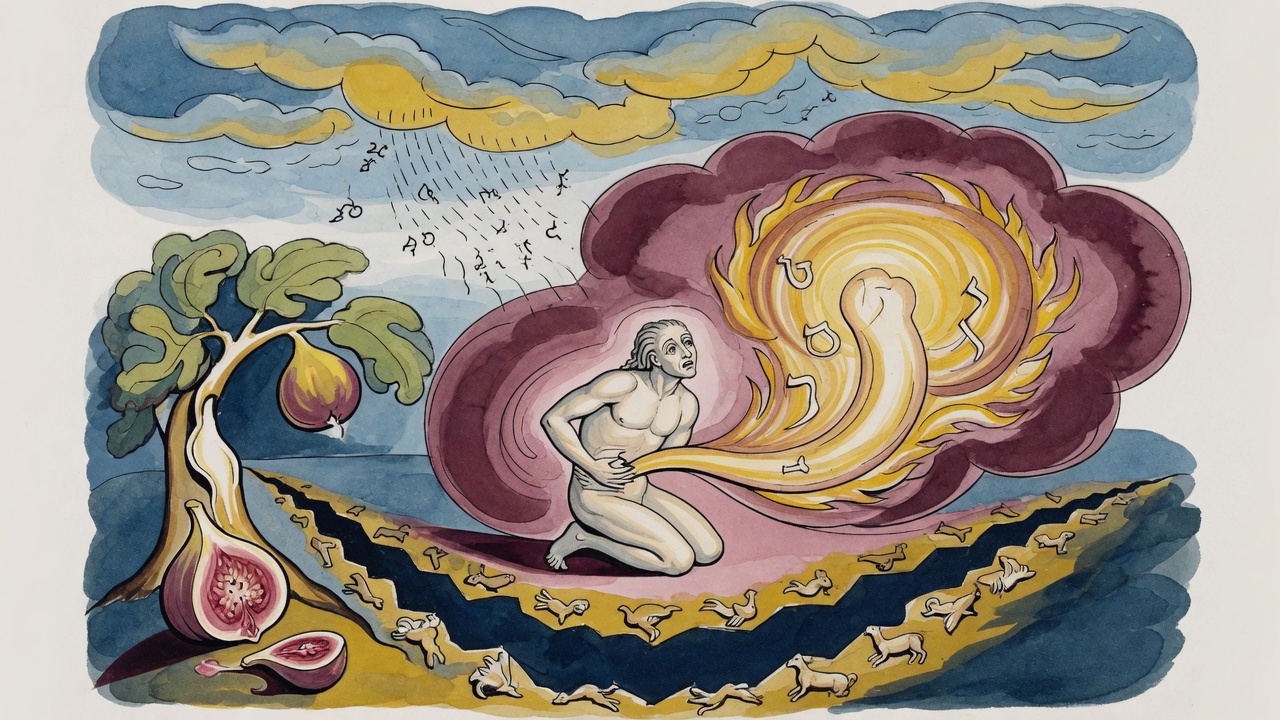
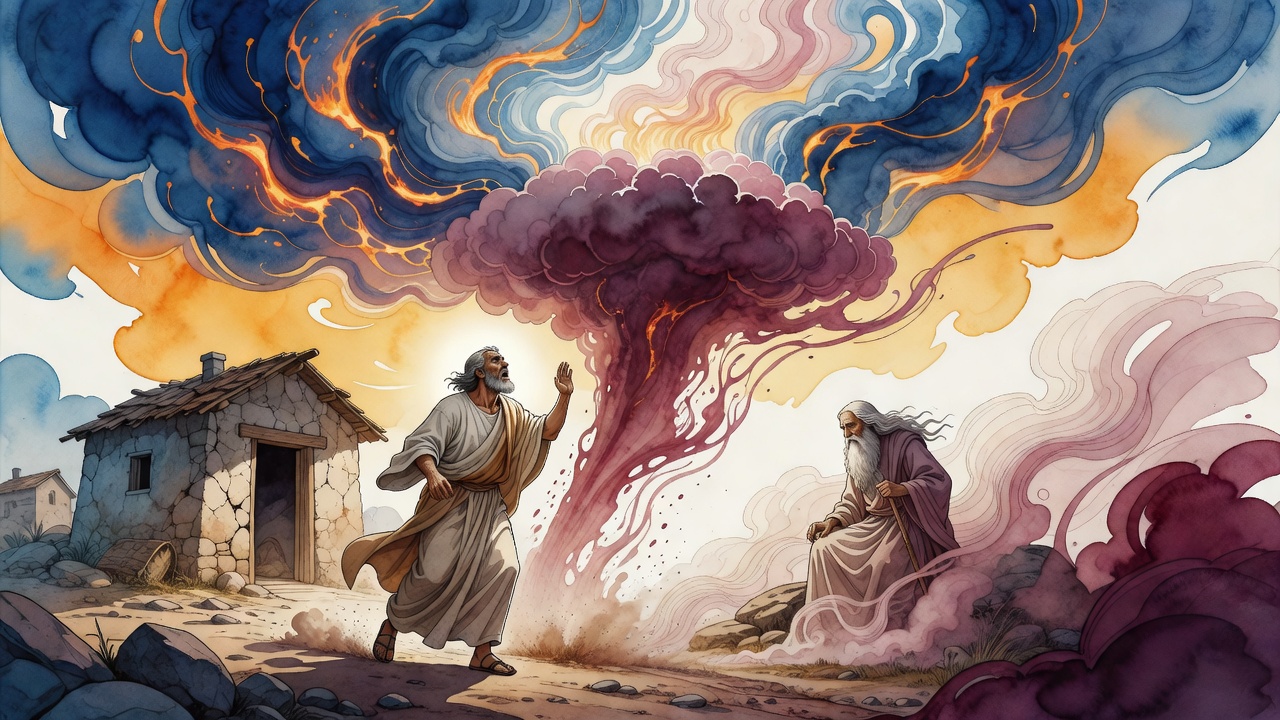
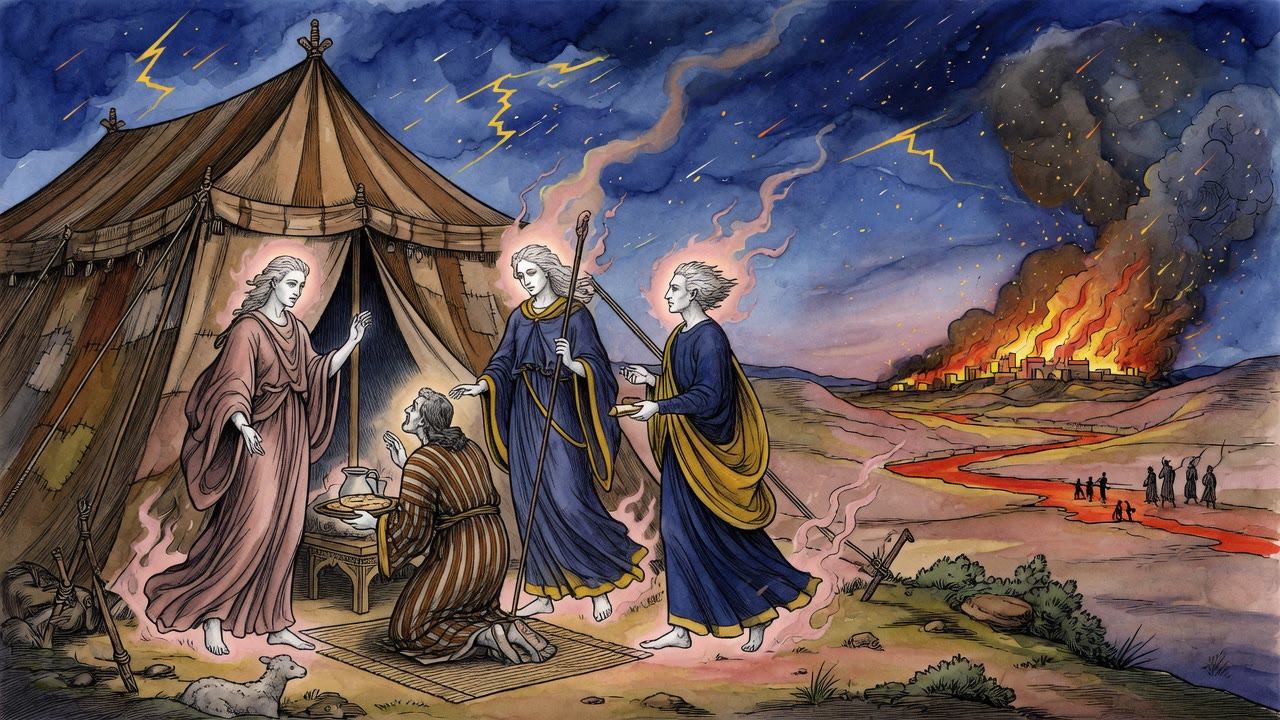
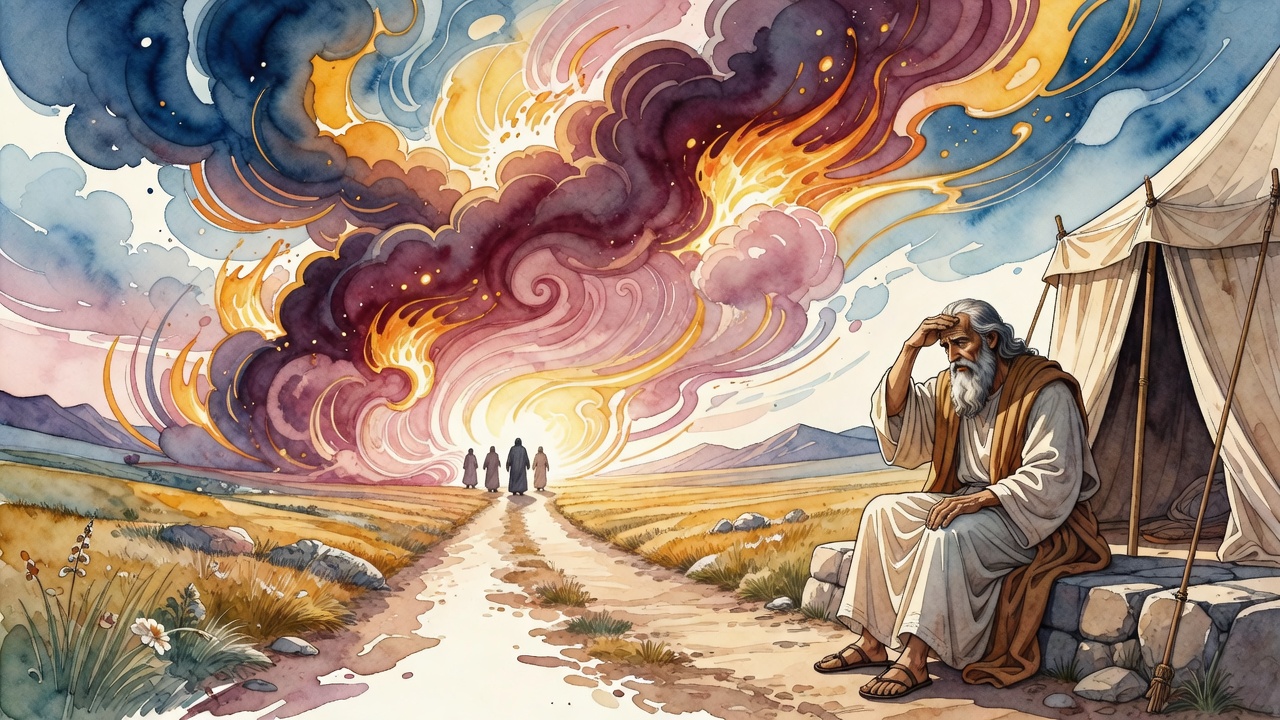
After Abraham circumcised himself, the Holy One appeared to him as He appears for sacrifice. Before the cut, Abraham fell on his face when God spoke (Genesis 17:3). After the cut, "the Lord appeared unto him by the terebinths of Mamre as he sat in the tent door" (Genesis 18:1). God stands. Abraham sits. The merit of the blood rearranges the posture of heaven and earth.

Only because of that merit does God disclose the plan against Sodom. "Shall I hide from Abraham?" The covenant opens the ear of the friend. The uncircumcised man bowed. The circumcised man receives standing Presence while remaining in his chair.

When the Knife Hits the Wrong Day

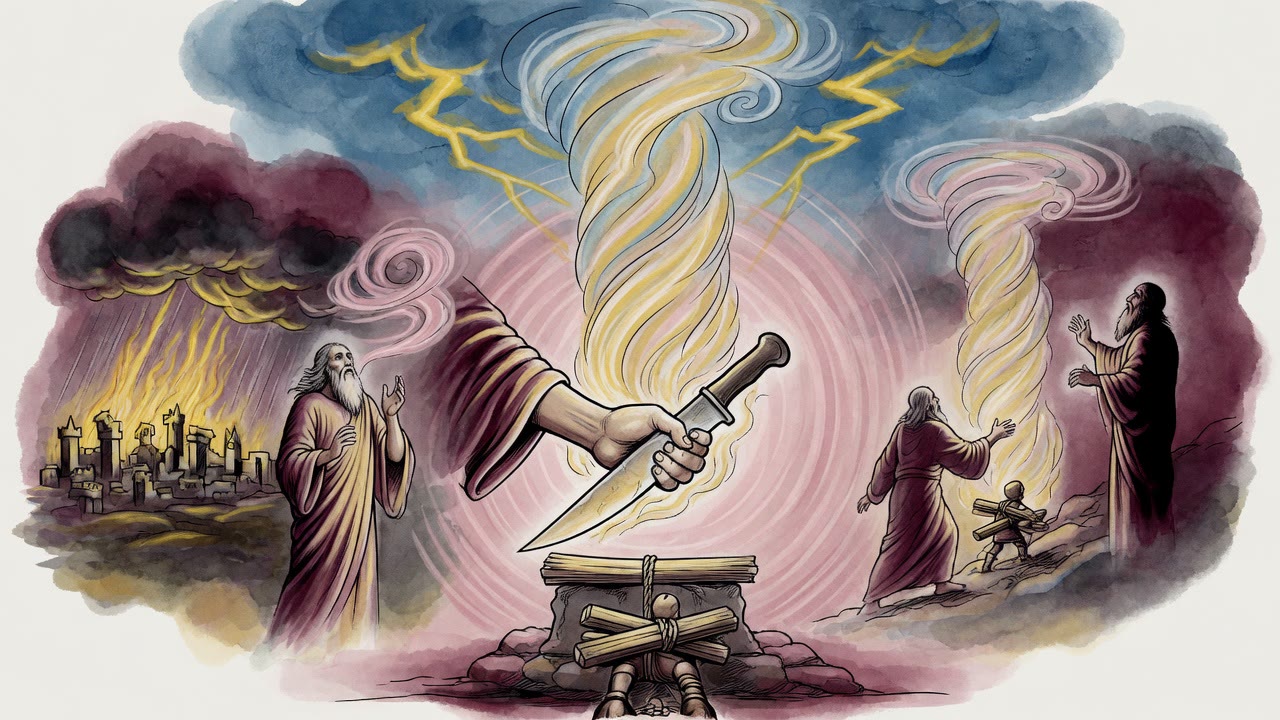
The sages pose a house with two sons. One is born on Friday. One is born on the Sabbath. The father errs. He circumcises the Friday child on the Sabbath, or the Sabbath child on Friday. Is he guilty of Sabbath violation?

He is culpable. Why? Because he profaned the Sabbath without the shield of the true eighth day. "And in the eighth day the flesh of his foreskin should be circumcised" (Leviticus 12:3). The override is surgical. It is not a free license for holy knives whenever a man feels pious. Wrong son, wrong day, and the day of rest is wounded by a hand that meant well.

Drama lives in the courtyard. Neighbors hear a child cry on Sabbath. Heaven counts whether the cry was the cry of a lawful eighth day or the cry of a mistake. Intention does not erase the calendar. The calendar can be bent only by the exact mitzvah (a commandment) that outranks it.

Blessing Without Toil of Grief

"God blessed the seventh day and sanctified it" (Genesis 2:3). Bereshit Rabbah hears in that blessing the line from Proverbs. "The blessing of the Lord, it will enrich, without adding toil with it" (Proverbs 10:22). Sabbath is enrichment that arrives when striving stops. The word for toil, etzev, is also the word of grief. David grieved over his son with that root. Mourning is labor of the soul. On Sabbath that labor is set down.

So the day that yields to a true brit is not a cheap day. It is a day so full of blessing that ordinary work and even public mourning step aside. When circumcision rightly overrides it, one holiness outranks another. When a mistaken cut violates it, a man has stolen from a blessing, not from a mere schedule.

Rest and covenant meet at the knife. One protects the world from endless toil. The other writes Israel's body into the count of generations. Neither is small.

Ears Opened, Decrees Sealed

From Abraham's sitting the midrash branches. God opens ears and seals decrees. Abimelech and Pharaoh are struck in the organs of generation because of Sarah. Daniel is told to seal the book. Jacob wishes to reveal the end of days and finds his lips closed. Samuel is told to rise and anoint David rather than leave the anointed standing while the prophet sits.

Posture keeps returning. Abraham sits before a standing God after brit. Samuel must stand before the future king. Heaven cares who sits and who stands when covenant blood and royal oil are in the room. The mistaken Sabbath circumciser also learns posture. He stands guilty before a day he treated as flexible.

Sodom's decree is sealed when no righteous man is found. Abraham hears the counsel because he is friend and circumcised partner. The world of Vayera is a world of openings and closings, of cuts that save and cuts that condemn.

Two holinesses meet and one must yield. Sabbath yields to the exact eighth day. It does not yield to zeal, fear, or a father's confused love for the wrong calendar. Abraham's sitting is the prize of a cut done right. The guilty father of the mistaken pair of sons learns the cost of a cut done wrong. Between them stands the whole discipline of Israel, body and time braided under one God.

Mamre's trees still throw shade on a tent door. Somewhere a father counts to eight with care. Somewhere a Sabbath holds its blessing while a lawful knife, and only a lawful knife, is allowed to sing over it.


← All myths
From the tradition

Sources

2 sources

The texts behind this telling. Some cards carry a translation of the source; others are our own retelling of it, and each card says which. Every card links out to the original.

Midrash Tanchuma, Vayera 6Midrash Tanchuma

Retold in our words. Read the original at the link below.Townsend 1989 translation of Midrash Tanhuma, S. Buber Recension · CC-BY

May it please our master to teach us: If one of two sons is born to a man on Friday and the other on the Sabbath, and he mistakenly circumcises the son born on Friday on the Sabbath, or the one born on the Sabbath on Friday, is he guilty of violating the Sabbath? Thus do our masters teach us: If one child is born on Friday and the other on the Sabbath, and he mistakenly circumcises the one born on Friday on the Sabbath or vice versa, he is considered culpable. Why? Because he profaned the Sabbath. It is written: And in the eighth day, the flesh of his foreskin should be circumcised (Lev. 12:3). As a result, he has transgressed a decree of the Torah by violating the Sabbath.

Circumcision is so very important that it takes precedence over the Sabbath. Similarly, circumcision is so important that no child is included in the reckoning of generations until he has been circumcised, as it is said: A seed shall serve him; he shall be counted by the Lord unto the next generation (Ps. 22:31).

R. Isaac stated: The word serve is employed with the rites of circumcision and sacrifice. And just as the word serve in the rite of the sacrificial offering results in the letting of blood, so must the word serve in the rite of circumcision entail the letting of blood. Whence is this derived? For it says in reference to circumcision, A seed shall serve him.

When a man causes a drop of his blood to flow (through circumcision), it is as precious to the Holy One, blessed be He, as the sacrifices. The Holy One, blessed be He, appeared to Abraham after he circumcised himself, just as he did when he offered sacrifices, as it is said: And an ox and a ram for a peace-offering to sacrifice before the Lord…. for today the Lord appeareth unto you (Lev. 9:4).

The Holy One, blessed be He, said to Abraham: Before your circumcision you prostrated yourself when you addressed Me, as is said: And Abraham fell on his face; and God talked with him (Gen. 17:3); but after he was circumcised, the Holy One, blessed be He, stood while Abraham remained seated, as it is said: And the Lord appeared unto him by the terebinths of Mamre as he sat in the tent door (ibid. 18:1). The Holy One, blessed be He, disclosed to Abraham His decision to destroy the five cities of Sodom only because of that merit (of the circumcision), as is said: And the Lord said: Shall I hide from Abraham?

Another explanation of And the Lord said: Shall I hide from Abraham?: Scripture states elsewhere in reference to this verse: Then he opened the ears of men, and by their chastisement sealeth the decree (Job 33:16). This verse refers to Abimelech and Pharaoh, since the Holy One, blessed be He, opened their ears, as is said: And God came to Abimelech in a dream at night (Gen. 20:3) and the Lord came and plagued Pharaoh and his house with great plagues because of Sarai (ibid. 12:17). What is meant by the words By their chastisement sealeth the decree? They mean that He afflicted Abimelech by sealing up his organs, as it is said: For the Lord had fast sealed up all the wombs of the house of Abimelech, because of Sarah, Abraham’s wife (ibid. 20:18). And He punished Pharaoh in the same way. In reference to Abimelech, Scripture states: Because of Sarah. Just as the words because of indicate that Abimelech’s sexual organs were sealed up, so the words because of signify that Pharaoh’s sexual organs were sealed up. Hence, it says: By their chastisement sealeth the decree.

Another comment on Then He openeth the ears of men: This verse alludes to Daniel, to whom the Holy One, blessed be He, revealed the time of redemption. By their chastisement sealeth the decree similarly refers to Daniel, for He said to him: And thou, Daniel, shut up the words and seal the book (Dan. 12:4). Another comment on Then He openeth the ears of men: This verse refers to our patriarch Jacob, to whom the Holy One, blessed be He, revealed the time of redemption. Jacob indicated that he wished to disclose this information to his sons, when he said to them: Gather yourselves together, so that I may tell you that which shall befall you in the end of days (Gen. 49:1). However, the Holy One, blessed be He, sealed up his lips to restrain him from doing so. Hence, it says: Their chastisement sealeth the decree.

Another explanation of Then He opened the ears of man: This alludes to Samuel, as is said: Now the Lord had revealed unto Samuel a day before Saul came, saying: Tomorrow about this time I will send thee a man out of the land of Benjamin, and thou shalt anoint him to be prince over My people Israel (I Sam. 9:15–16). After Samuel set out to anoint David, he encountered Eliab, and he said to himself: Surely the Lord’s anointed is before Him. But the Lord said unto Samuel: “Look not on his countenance nor on the height of his stature, for I have rejected him” (ibid. 16:7). When David approached, the Holy One, blessed be He, said to Samuel: Arise, anoint him; for this is he (ibid., v. 12); that is, the Holy One, blessed be He, said to him: Shall My anointed stand while you sit? Arise, anoint him.

Another explanation of Then he openeth the ears of men: This alludes to Abraham, for it is said: And God said: Shall I hide from Abraham?, and By their chastisement sealeth the decree (Job 33:16) refers to the Sodomites, against whom He sealed the decree when a single righteous man could not be found amongst them. Another comment on And the Lord said: Shall I hide from Abraham? Scripture states elsewhere in allusion to this verse: For the Lord will do nothing, but He revealeth His counsel unto His servants, the prophets (Amos 3:7). In the beginning the Holy One, blessed be He, used to reveal His secrets to those who feared Him, as it is said: The counsel of the Lord is with them that fear Him (Ps. 25:14). Then He made His secrets known to the righteous, as is said: In the council of the upright and in the congregation (Ps. 111:1); and finally He revealed it only to the prophets, as it is said: But He revealeth His counsel unto His servants, the prophets. After Israel transgressed at the time of Achan, the Holy One, blessed be He, informed Joshua, as it is said: Israel hath sinned (Josh. 7:11). When Eli’s sons sinned, the Holy One, blessed be He, disclosed it to Samuel, as is said: And the Lord called Samuel (I Sam. 3:4). When the Sodomites sinned, the Holy One, blessed be He, revealed it to Abraham, as is said: Shall I hide from Abraham?

Full source
Bereshit Rabbah 11:1Bereshit Rabbah

Retold in our words. Read the original at the link below.The Sefaria Midrash Rabbah, 2022 · CC-BY

The verse in question? (Genesis 2:3): "God blessed the seventh day and sanctified it, because on it He rested from all His labor that God created to make."

What does it mean that God "blessed" the seventh day? What kind of blessing are we talking about here?

Bereshit Rabbah doesn't leave us hanging. It connects this blessing to (Proverbs 10:22): "The blessing of the Lord, it will enrich, without adding toil with it." The Sages see a direct link. "The blessing of the Lord, it will enrich" – this, they say, is Shabbat (the Sabbath). for a second. Shabbat, the day of rest, is not just about stopping work. It's about receiving a blessing, an enrichment that comes specifically because we cease our striving. It's like opening a valve to a different kind of energy, a divine flow that's always there, waiting for us to quiet down enough to notice it.

Here's where it gets really interesting.

The verse in Proverbs continues, "without adding toil [etzev] with it.” Now, etzev is a powerful word. In this context, the Rabbis associate etzev with… mourning. They draw a parallel to II (Samuel 19:3), where we read, "The king is in grief [ne’etzav] over his son.”

So, what's the connection? The commentary highlights the prohibition of mourning the dead on Shabbat.

Why? Because Shabbat is a day of blessing, a day of enrichment without toil. Mourning, by its very nature, is a form of toil, a painful labor of the soul. It’s a necessary part of life, of course, but it’s not meant to overshadow the unique holiness of Shabbat.

On Shabbat, we intentionally step away from the ordinary struggles, from the etzev, to receive the divine blessing. It's a radical act of trust, a belief that pausing our efforts allows a different kind of abundance to flow into our lives.

So, the next time Saturday rolls around, consider this: are you simply taking a day off, or are you actively entering into a space of blessing, a space where toil gives way to a deeper, richer kind of being?

Maybe, just maybe, that's the secret to why Saturday feels so… different.

Full source