Three Strangers at Abraham's Tent and the Fire After
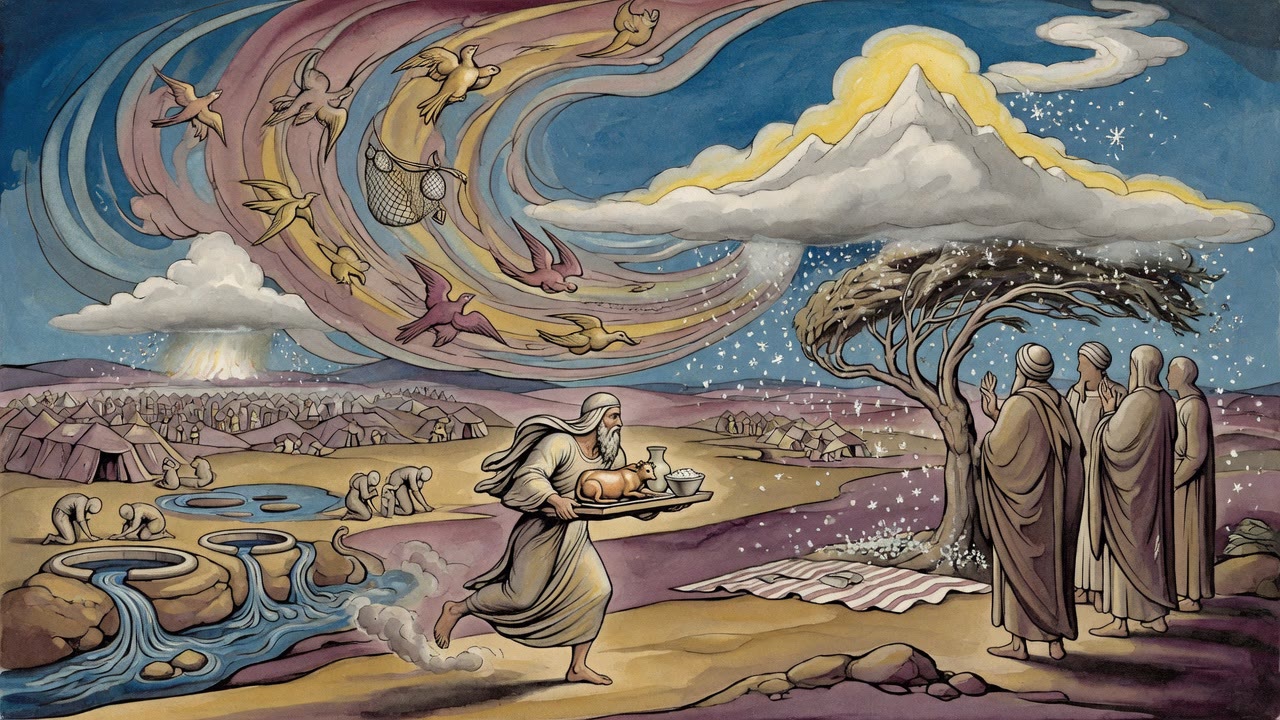
Abraham was ninety-nine and three days past his own circumcision, sitting in the midday heat. He got up and ran to fetch butter, milk, and a tender calf.
Table of Contents
 Click for full size
The Afternoon at Mamre
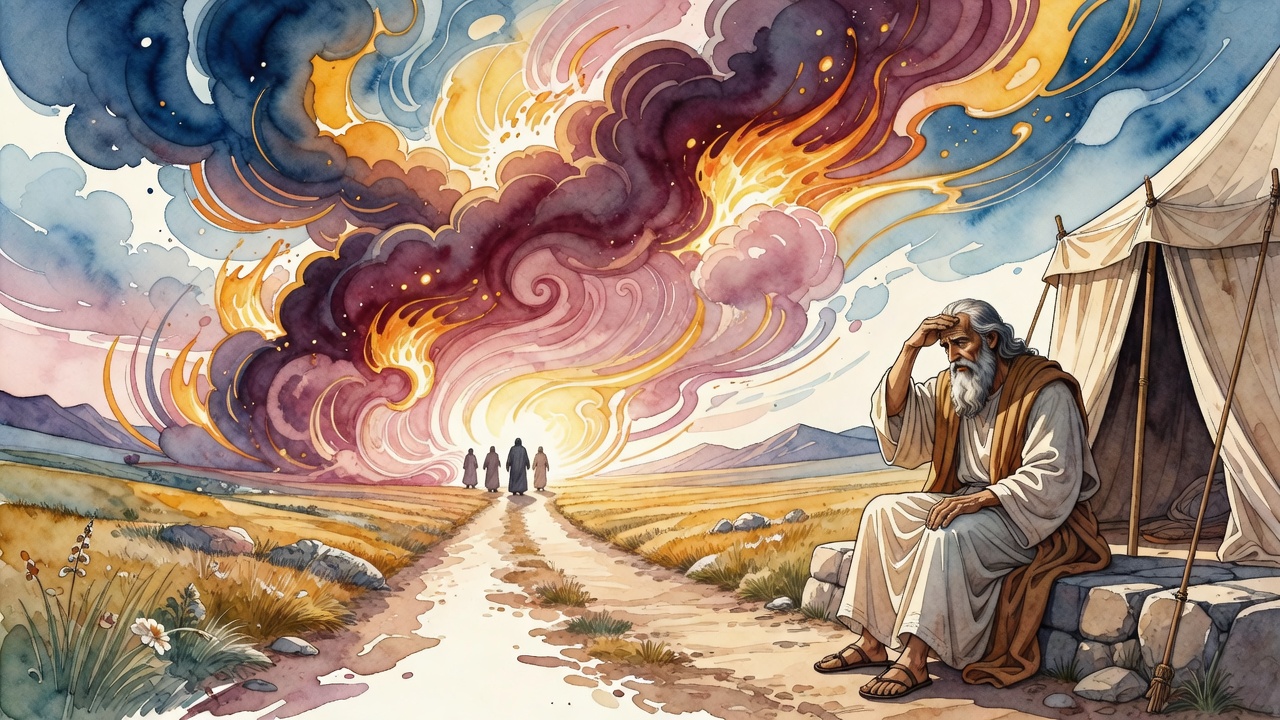
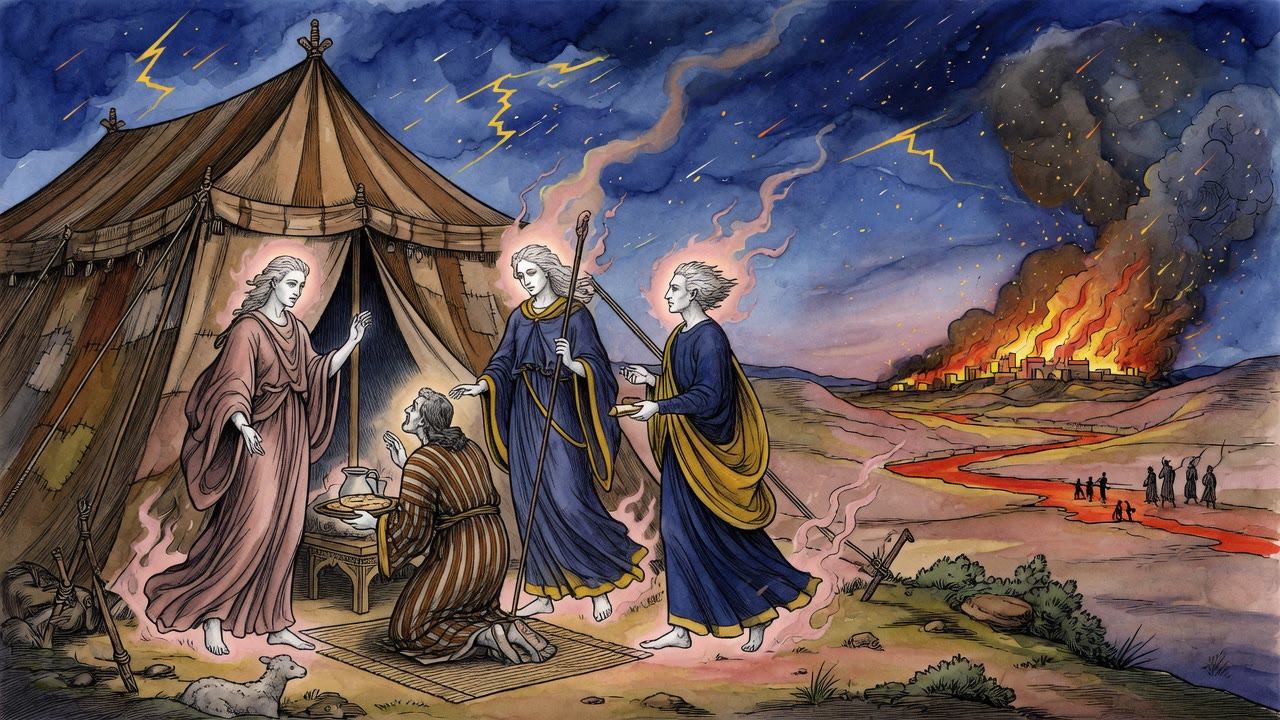
Three men appeared at the entrance of the tent. That is all the Torah says at first: three men, the heat of the day, Abraham sitting at the oaks of Mamre, three days past his own circumcision at the age of ninety-nine. He did not know who they were. He ran to meet them anyway.
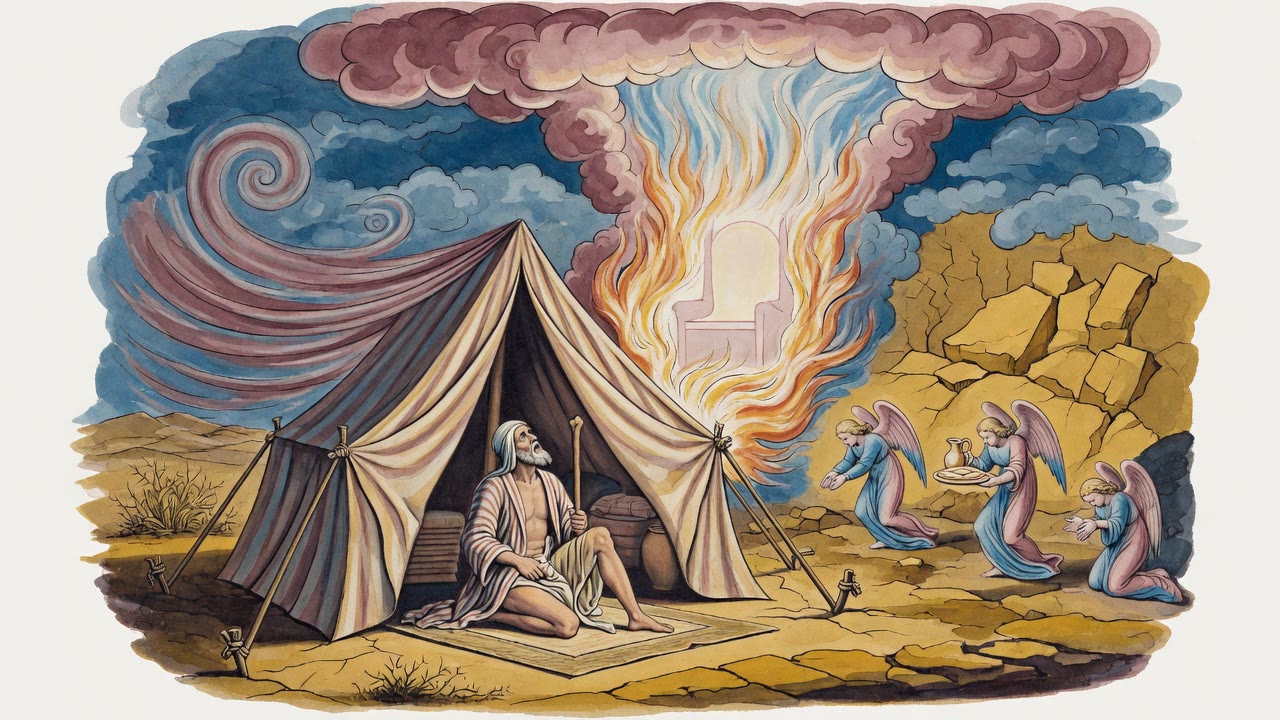
He bowed to the ground. He begged them to stay, to rest, to let him bring water and bread before they continued on their way. He ran to the herd and chose a tender calf himself. He fetched butter and milk. He stood over them under the tree while they ate, serving them, the founder of the covenant of the one God waiting tables for strangers on a hot afternoon.
The greatest act of hospitality in the Torah did not look like greatness while it was happening. It looked like a man running back and forth, fetching things, sweating in the midday sun, making sure his guests had what they needed.
The God Who Does Not Move
The Hebrew Bible says God appeared to Abraham at the oaks of Mamre. Targum Onkelos, the authoritative Aramaic translation of the Torah produced in the Land of Israel during the early centuries CE and used in synagogue alongside the Hebrew, will not allow the word appeared. He writes instead: God became revealed. The difference is not a matter of style. It is a statement about divine nature.
Appearing implies a visible form arriving from somewhere else. Becoming revealed implies a shift in perception. God was already at Mamre. God was already everywhere. What happened on that hot afternoon was not that God traveled to Abraham's tent. It was that Abraham, through three days of recovery from circumcision, through the faithfulness that had marked his entire life, had become capable of perceiving what was already present. The three strangers came not from elsewhere but from within the always-present divine reality that Abraham had finally opened himself to receive.
This is Onkelos's most consequential translation choice in the entire Genesis text. What it does to the scene is not diminish it but deepen it: Abraham's hospitality was not given to visitors who happened to arrive. It was given in a moment when the divine presence was accessible, when Abraham's readiness and God's revelation met in the same afternoon.
What Abraham Said About Sodom
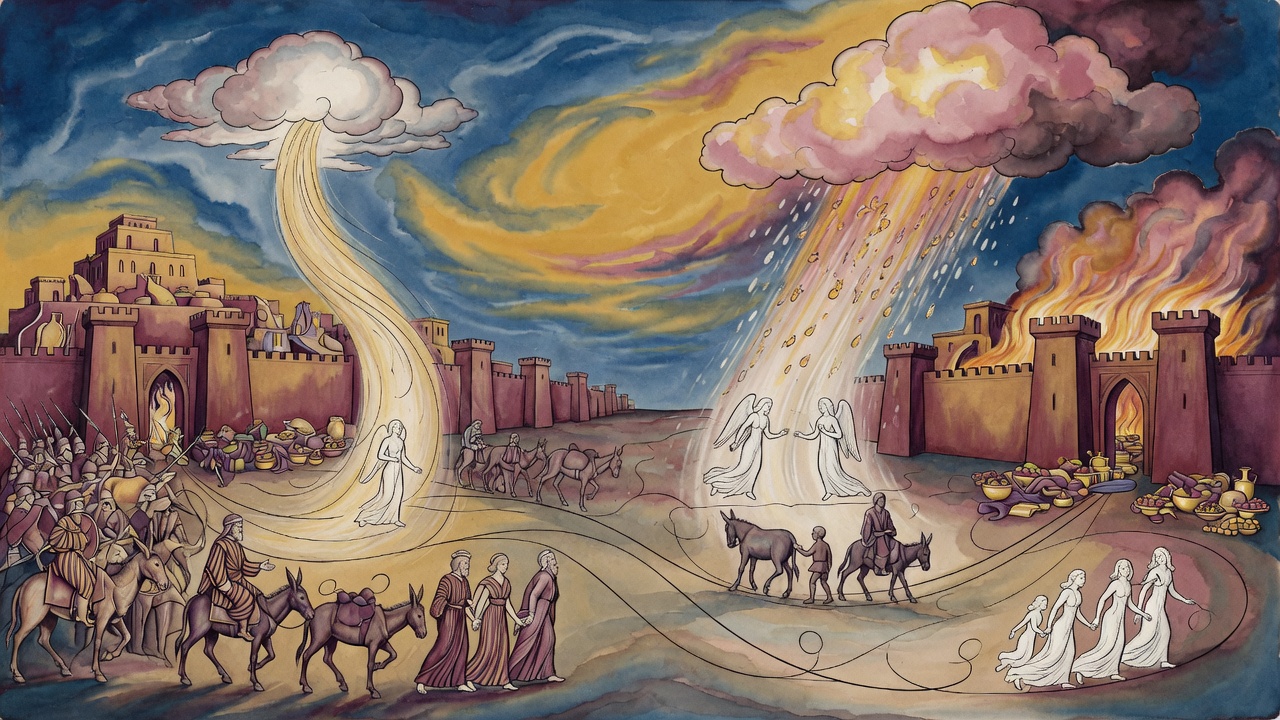
Two of the three visitors left for Sodom. God disclosed to Abraham what was coming: the outcry against the cities was great, and the destruction had been decided. Abraham stood where God had left him and he argued.
He did not petition. He did not plead submissively. He pressed. Will you sweep away the righteous with the wicked? What if there are fifty righteous in the city? Will you not spare it for fifty? And then forty-five. And then forty. And then thirty. And twenty. And ten. Each number a new negotiation, each negotiation requiring Abraham to press against the divine decision a little harder.
Aggadat Bereshit, the Palestinian midrashic collection compiled between roughly the 9th and 11th centuries CE, finds in this exchange the founding act of a Jewish moral tradition. Abraham was not diminishing God by arguing. He was demonstrating what moral seriousness looks like when practiced at the highest possible level. Far be it from you to do such a thing, to kill the righteous with the wicked, far be it from you. Shall not the Judge of all the earth do justice?
Hell Has Seven Names and One Purpose
Aggadat Bereshit, treating the promise in Malachi that a coming day will burn like an oven, supplies the geography of what waited for Sodom. Hell has seven names: Sheol, Abaddon, Death, Pit, the Awful, the Underworld, Gehinnom. Seven chambers. Seven levels. The rabbis did not flinch from the geography of punishment. But they were, as the Midrash makes clear, more interested in contrast than in punishment itself: the judgment of the wicked was the context for understanding what righteousness meant.
Israel complained to God, Aggadat Bereshit records: you say the coming day will burn the wicked, but we have been oppressed for years. The answer from the prophet is that the fire burns without ceasing, and its smoke rises forever. But what is being prepared for those who wait, who remain faithful through oppression, surpasses anything the eye has seen. Isaiah promises: you shall see and your heart shall rejoice. The heart sees two things and is glad: the good prepared for the righteous, and the relief of not being among the wicked.
What the Righteous Can See at the End of Days
Malachi promises that at the end of days, you will be able to tell the righteous from the wicked at a glance. Aggadat Bereshit was fascinated not by the judgment itself but by the seeing: the moment when the distinction between faithful and faithless is visible to the naked eye without error or confusion. And Isaiah adds the interior: when your heart sees that distinction, it will rejoice.
Abraham argued for Sodom because he understood this. If the righteous were destroyed alongside the wicked, the visible distinction between them collapsed. The whole moral structure of the universe depended on the Judge of all the earth doing justice, not merely power. He was not arguing against punishment. He was arguing for the legibility of righteousness. He was insisting that the distinction matter in practice, not just in theory. On that afternoon at Mamre, in the middle of serving lunch to strangers, Abraham had perceived the divine presence. That perception required him to hold it accountable to its own nature.
← All myths