5 min read

Moses Nearly Died for an Unopened Covenant

At a roadside inn the LORD met Moses to kill him, while Abraham at ninety-nine had learned that only the cut made a man whole before God.

Curated by Arthur · Told by Maggid ·
Table of Contents
  1. Abraham Trembled First
  2. Why Ninety-Nine
  3. Mamre's Counsel
  4. One Hour's Delay

The inn door was still open when heaven closed on Moses.
Moses Nearly Died for an Unopened Covenant Click for full size

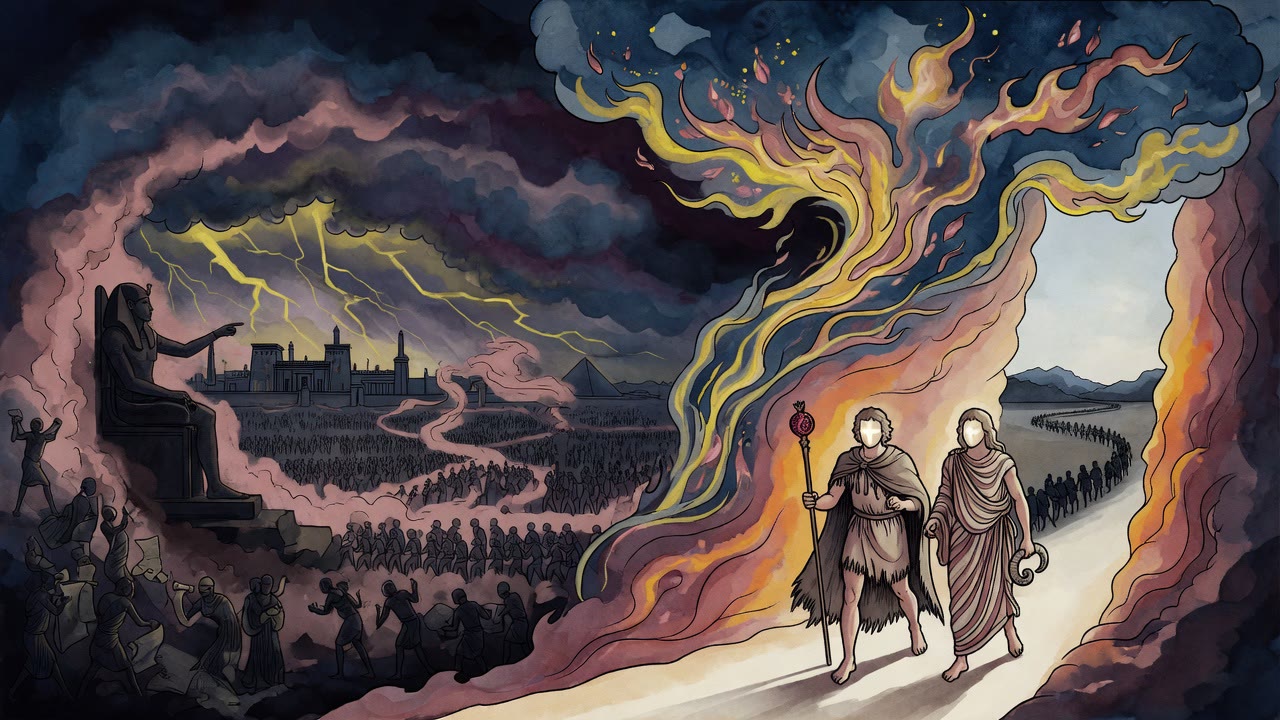
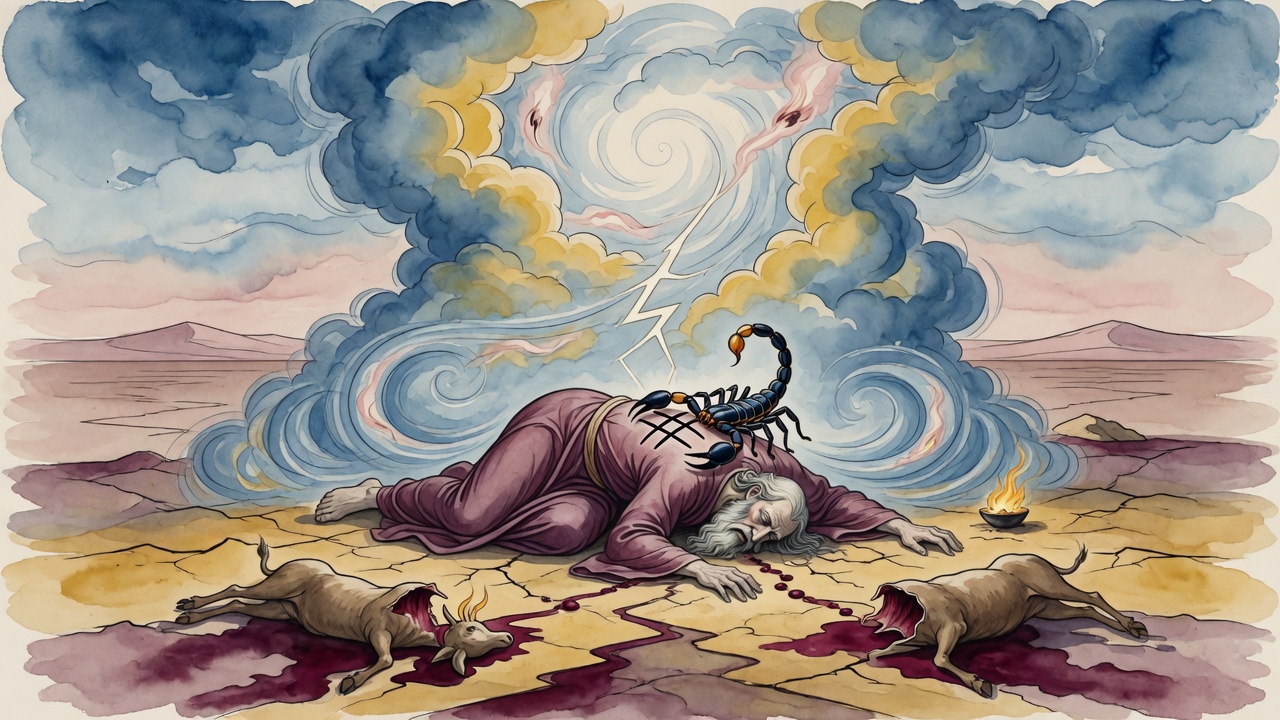
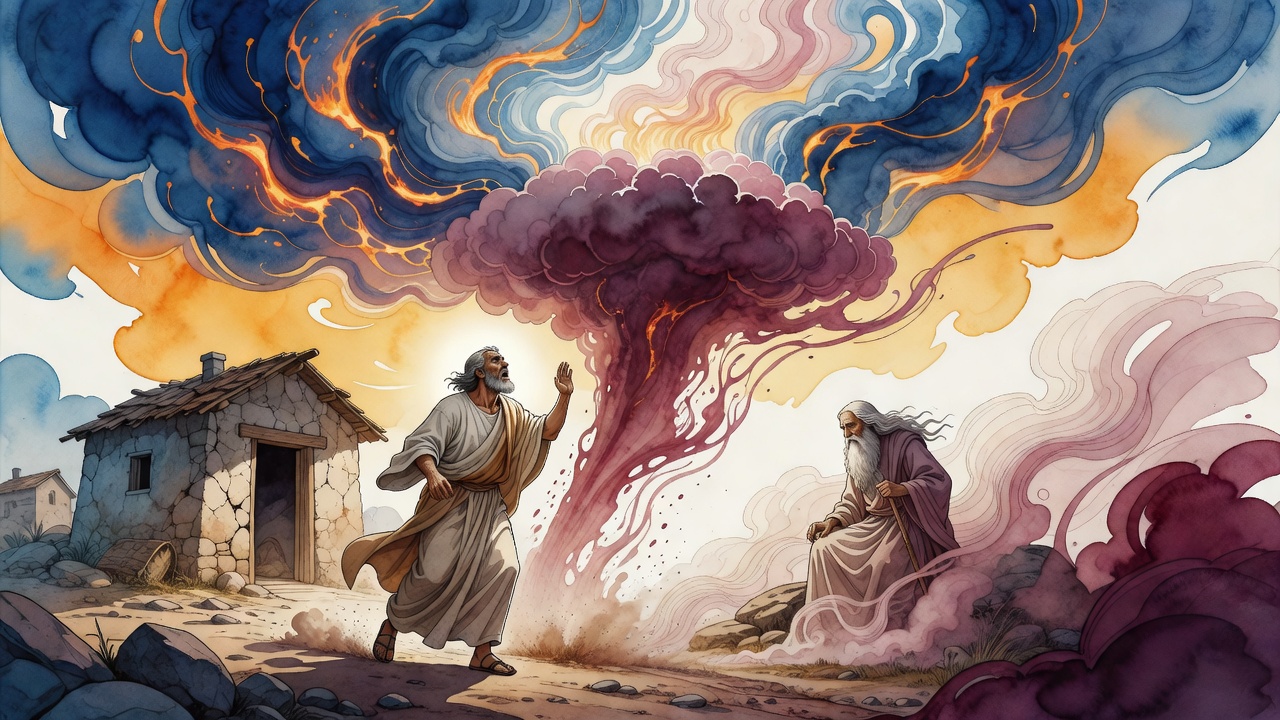
He was on the road back to Egypt with a living son and an unopened covenant. The staff of signs was in his hand. The words of mission were still new in his mouth. None of that mattered at the threshold. The LORD met him there and sought to kill him. Not for the staff. Not for the speech. For the delay around the flesh of the boy.

Zipporah moved faster than the angel. Stone met skin. Blood met the ground. She touched his feet with the blood and called him a bridegroom of blood. The prophet lived because a wife refused to let the lodging matter more than the cut.

Abraham Trembled First

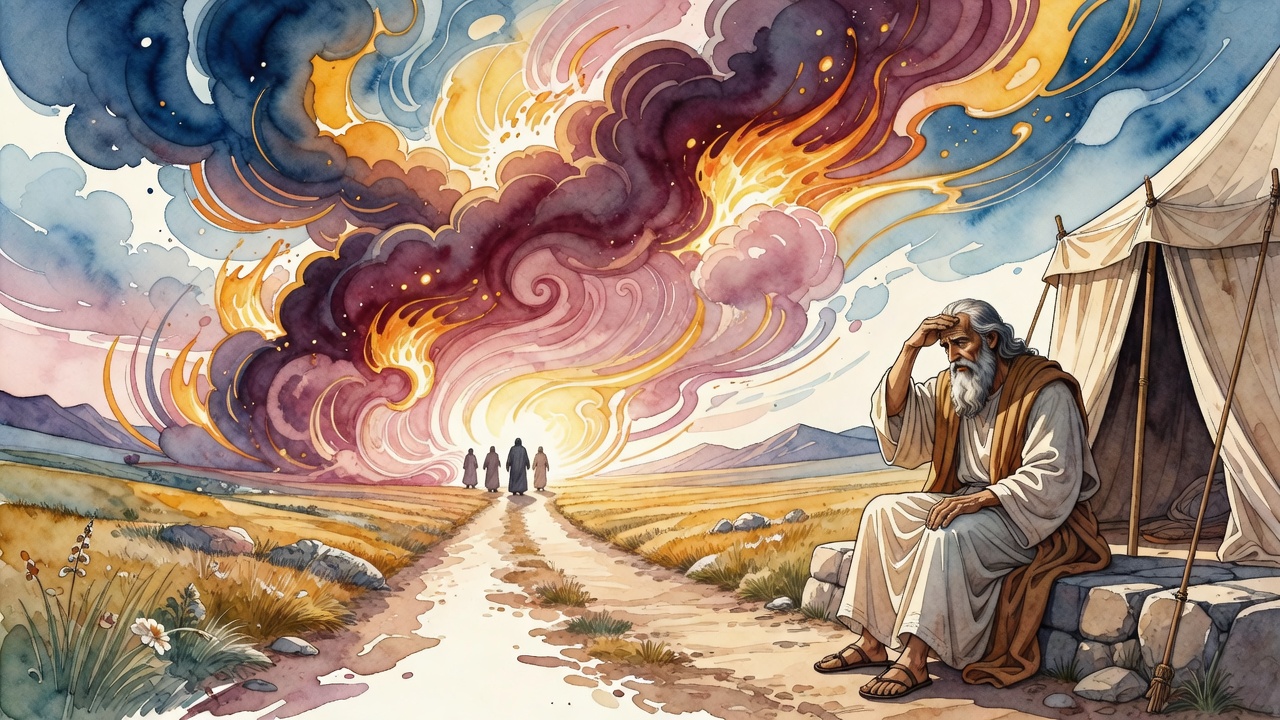
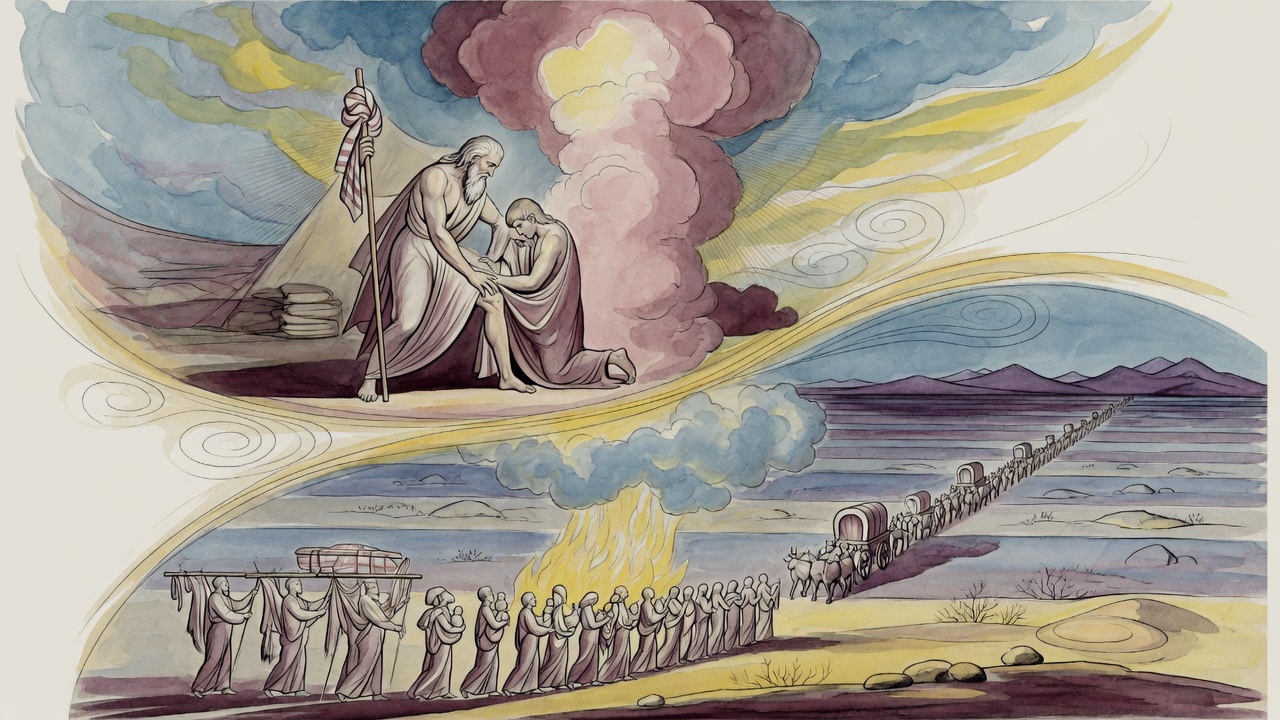
Long before that inn, Abraham heard, "Walk before Me and be whole" (Genesis 17:1), and he trembled. Of all the commandments he kept, he was never called whole until he was circumcised. He feared some shameful flaw lay hidden in him, some crack he could not see in his own house. Only when God added the promise of a covenant did his heart grow calm.

Thirteen covenants, said Rabbi Yishmael, were cut over this one act. It overrides the Sabbath. It overrides even the laws of plague-marks. One sage taught that without this covenant the Holy One would not have created His world at all, so tightly is the mark bound to the ordinances of day and night. Whole is not a compliment. Whole is a status that waits for blood.

Why Ninety-Nine

Hosea compared the patriarchs to the first ripe fruit on a fig tree. A fig is gathered slowly, one fruit, then two, then three, until baskets fill. So Israel began: Abraham alone, then Abraham and Isaac, then the three patriarchs, until the family swarmed into a people. The fig has one bit of waste, its stem. Pluck it and the blemish is gone. Walk before Me and be whole, for nothing in you is wasteful except the foreskin. Remove it and the flaw disappears.

Why wait until ninety-nine? Not at forty-eight, when Abraham first recognized his Creator, lest the door shut on late converts who come to faith after a long life of other gods. Not only at seventy, at the pieces, so that Isaac might be born from a sanctified beginning. Abraham worried seekers would stay away once he was marked, as if the covenant would empty his inn of guests. Heaven answered that patronage is enough. The God of all the world does not need a smoother market for faith.

He is compared to cinnamon that yields more the more it is tended. Age did not retire him from the knife. Age made the cut a public sermon that no one is too late, and that the first fruit can still be gathered when the tree is old.

Mamre's Counsel

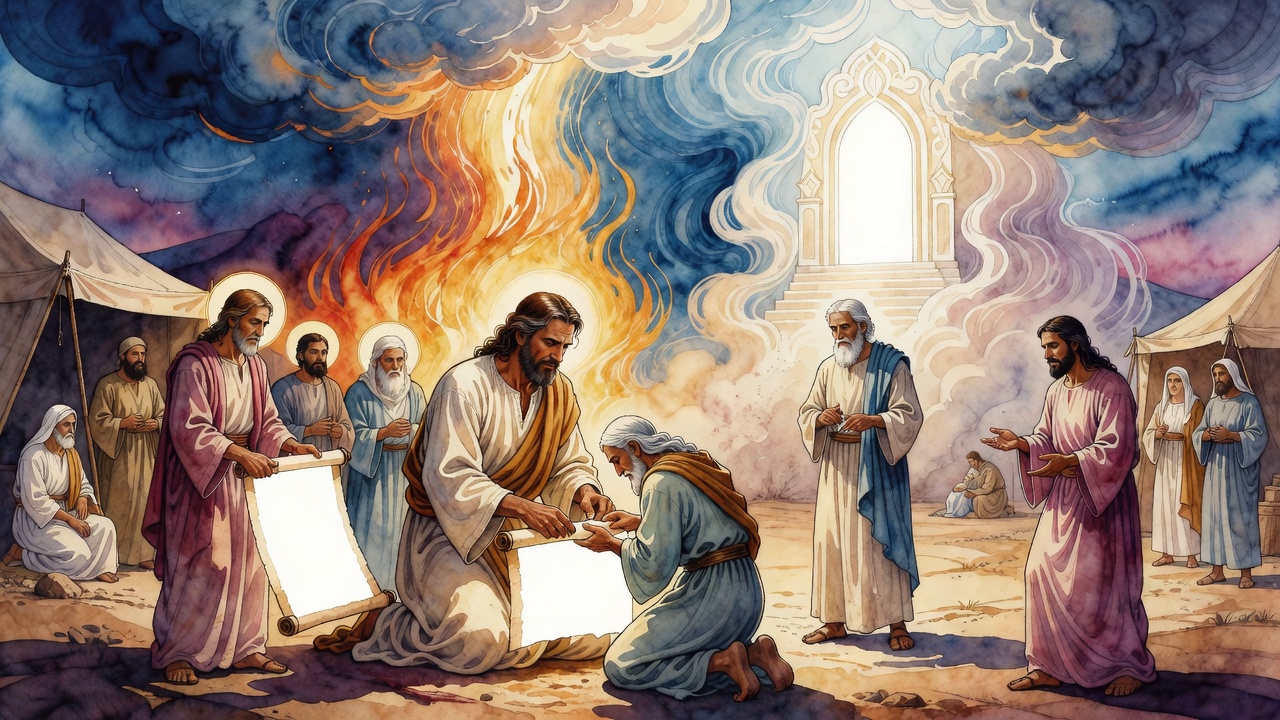
When the command came, Abraham took counsel with his friends. Aner and Eshkol warned him off. Only Mamre said to obey. For that advice Mamre earned the honor of having the oaks named for him, the place where the covenant story roots itself in ground and friendship. Standing as ha-Ivri, the Hebrew, on one side while the world stood on the other, Abraham still asked men he trusted before he put the knife to his own house.

The minority of one against an age of idolatry still wanted a second voice that said yes. Mamre gave it. The oaks keep the name of the man who would not talk a patriarch out of becoming whole.

One Hour's Delay

Rabbi Yehoshua ben Korcha said not even a single hour's delay was permitted. Rabbi Yosei defended Moses. The prophet was not careless. Circumcise and set out at once and endanger the child on the road. Wait three days for healing and defy the command to return to Egypt. His real fault was smaller and stranger. He stopped to arrange lodging before he attended to the covenant, and for that order of priorities he was nearly lost.

The inn becomes a courtroom. Comfort first, covenant second, and the angel of death draws near. Zipporah's knife reorders the world in a few strokes of blood. Egypt can wait one more hour. The mark cannot.

Zipporah did not wait for a debate. She saw the prophet's life leaving him at a threshold that should have been only a stop for water and sleep. The stone in her hand finished the work the delay had left open. When the blood marked him, the angel stepped back, and the road to Egypt opened again under a sky that had nearly closed for good.

From Abraham's late cut to Moses' late night, the tradition refuses to treat brit milah as a small ritual tucked under larger missions. Whole or not whole. Living or nearly dead. The difference is a delay measured in hours and a faithfulness measured in flesh that will not be postponed for a soft bed.

The greatness of circumcision is measured here not in praise alone but in near death. Abraham became whole at ninety-nine. Moses almost ended at an inn because a child still waited for the cut while the beds were being arranged. Between those two nights stands the whole argument of the midrash: the covenant is not furniture in a larger mission. It is the door the mission must pass through, or the mission dies on the mat.


← All myths
From the tradition

Sources

3 sources

The texts behind this telling. Some cards carry a translation of the source; others are our own retelling of it, and each card says which. Every card links out to the original.

Yalkut Shimoni on Torah 81:3Yalkut Shimoni on Torah

Translation of the source text.Torat Emet (Yalkut Shimoni) · CC-BY-NC

Rabbi says: great is circumcision, for of all the commandments that Abraham our father performed, he was not called whole until he was circumcised, as it is said, "Walk before Me and be whole." (Genesis 17:2-4) Rav Yehuda said in the name of Rav: when the Holy One, blessed be He, said to Abraham, "Walk before Me and be whole," trembling seized him. He said: perhaps there is something disgraceful in me. Once He said to him, "And I will set My covenant between Me and you," his mind was immediately set at ease.

Rabbi Hoshaya said: whoever makes himself whole, the hour stands by him, as it is said, "Walk before Me and be whole, and you shall be a father of a multitude of nations." Rabbi Elazar ben Azaryah says: loathsome is the foreskin, by which the wicked are disgraced, as it is said, "for all the nations are uncircumcised." Rabbi Yishmael says: great is circumcision, for thirteen covenants were cut over it. Rabbi Yosei the Galilean says: great is circumcision, for it overrides the stringent Sabbath. Rabbi Yehoshua ben Korcha says: great is circumcision, for Moses our teacher was not granted even a single hour's delay over it. Rabbi Nechemiah says: great is circumcision, for it overrides the laws of plague-marks. Great is circumcision, for without it the Holy One, blessed be He, would not have created His world, as it is said, "Were it not for My covenant day and night, I would not have set the ordinances of heaven" (Jeremiah 33:25).

Rabbi Yehoshua ben Korcha says: great is circumcision, for all the merits that Moses our teacher had accrued did not protect him in the hour that he was lax about the circumcision, as it is said, "And the LORD met him and sought to kill him" (Exodus 4:24). Rabbi Yosei said: heaven forbid that Moses our teacher was lax about the circumcision. Rather he said: shall I circumcise and set out? It is a danger, as it is said, "And it came to pass on the third day, when they were in pain" (Genesis 34:25). Shall I delay three days? The Holy One, blessed be He, said to me, "Return to Egypt." Then why was he punished? Because he busied himself first with lodging, as it is said, "And it came to pass on the way, at the lodging place" (Exodus 4:24).

Full source
Yalkut Shimoni on Torah 80:3Yalkut Shimoni on Torah

Translation of the source text.Torat Emet (Yalkut Shimoni) · CC-BY-NC

"Like grapes in the wilderness I found Israel; like the first-ripe fruit on a fig tree in its first season I saw your fathers" (Hosea 9:10). This fig tree - at first they gather it one by one, and afterward two by two, and afterward three, until they gather it in baskets and with rakes. So too, at first "Abraham was one" (Ezekiel 33:24), and afterward two, Abraham and Isaac, and afterward Abraham, Isaac, and Jacob "were fruitful and swarmed," and so on. Just as this fig has no waste except its stem - remove it and the blemish is gone - so too "Walk before Me and be whole," there is no waste in you except the foreskin; remove it and the blemish is gone.

"To everything there is a season, and a time for every purpose." There was a set time for Abraham our father, when circumcision was given to him: "In the midst of this day Abraham was circumcised" (verse 26). There was a time when his sons would be circumcised: "for all the people who came out were circumcised" (Joshua 5:5). Should he have been circumcised at forty-eight, when he recognized his Creator? Rather, so as not to lock the door before converts. And should you say, let him be circumcised at seventy, when He spoke with him at the covenant between the pieces? Rather, so that Isaac might come from a holy drop. Let him be circumcised at eighty-six, when Ishmael was born. The Holy One, blessed be He, said: like cinnamon I establish you in the world; just as this cinnamon, as long as you fertilize and hoe it, it produces fruit, so too Abraham, from when his blood was bound, from when his impulse ceased, from when his desire ceased.

He said: if circumcision is so beloved, why was it not given to the first man? The Holy One, blessed be He, said to him: Abraham, it is enough that I and you are in the world; and if you do not take it upon yourself to be circumcised, it is enough for My world until here. He said: until I was circumcised, they would come and join with me; perhaps now that I am circumcised, will they come and join with me? The Holy One, blessed be He, said to him: it is enough for you that I am your patron; and not for you alone, but it is enough for the world that I am its God, that I am its patron.

Full source
Yalkut Shimoni on Torah 73:1Yalkut Shimoni on Torah

Translation of the source text.Torat Emet (Yalkut Shimoni) · CC-BY-NC

"And it was told to Abram the Hebrew (ha-Ivri)." Rabbi Yehudah says: The whole world was on one side (ever), and he was on the other side. And Rabbi Nechemyah says: He was of the descendants of Eber. And the Rabbis say: That he came from across (me-ever) the river, and that he spoke in the Hebrew (Ivri) tongue. "And he was dwelling in the oaks of Mamre." Rabbi Yehudah says: In the plain of Mamre. Rabbi Nechemyah says: In the palace of Mamre. According to the opinion of Rabbi Yehudah, it is a place whose name is Mamre; and according to the opinion of Rabbi Nechemyah, it is a man whose name is Mamre. And why was his name called Mamre? Because he defied (himrah) Abraham to his face at the time when the Holy One, blessed be He, said to him to circumcise himself; he went and took counsel with his three friends. Aner said to him: You are already a hundred years old, and you go and afflict yourself! Eshkol said to him: Why do you go and mutilate yourself [another version: and mark yourself] among your enemies? Mamre said to him: Did not your God stand by you in the fiery furnace, in the famine, and against the kings? And this thing that He says to you, to circumcise yourself, you do not heed it? The Holy One, blessed be He, said to him: You gave him counsel; by your life, I will not reveal Myself to him in the palace of Aner, nor in the palace of Eshkol, but only in your palace. This is what is written (Genesis 18:1), "And the LORD appeared to him in the oaks of Mamre."

Full source