Hadrian Blasphemed in the Holy of Holies and David Pleaded Against Him
Hadrian strides into the Holy of Holies to revile God to His face, and a king dead a thousand years rises from the psalms to answer him.
Table of Contents
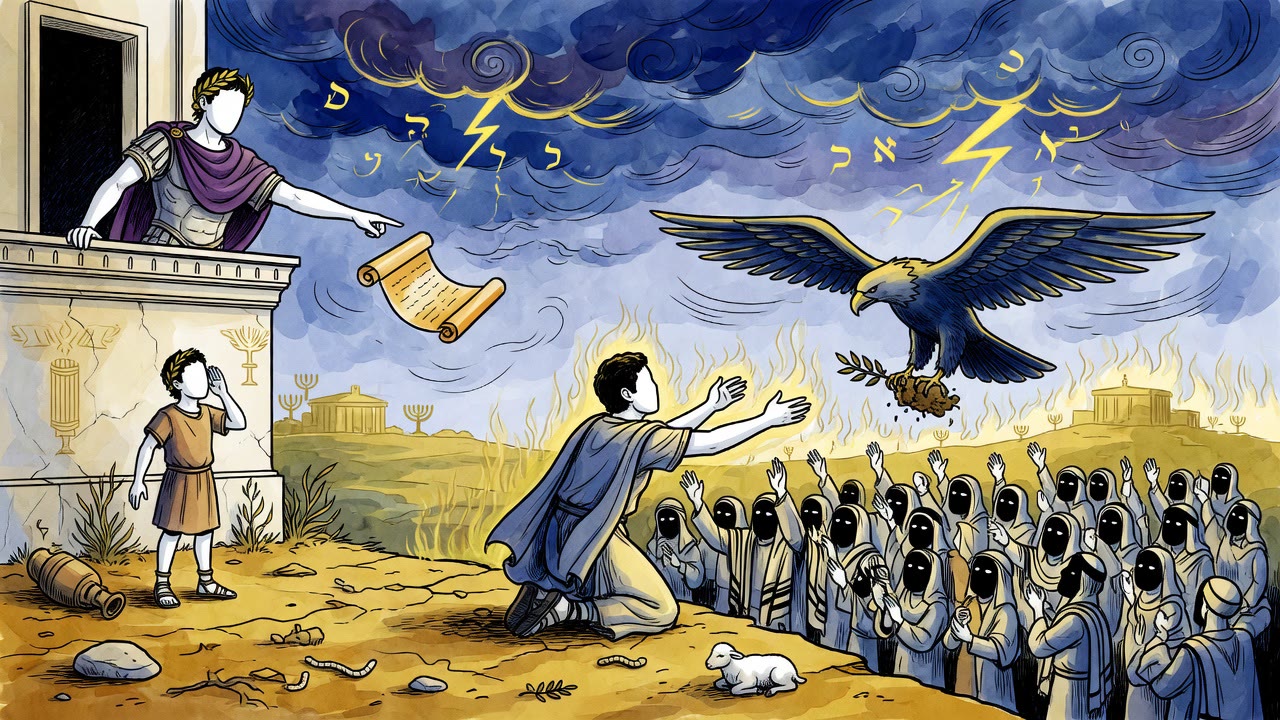
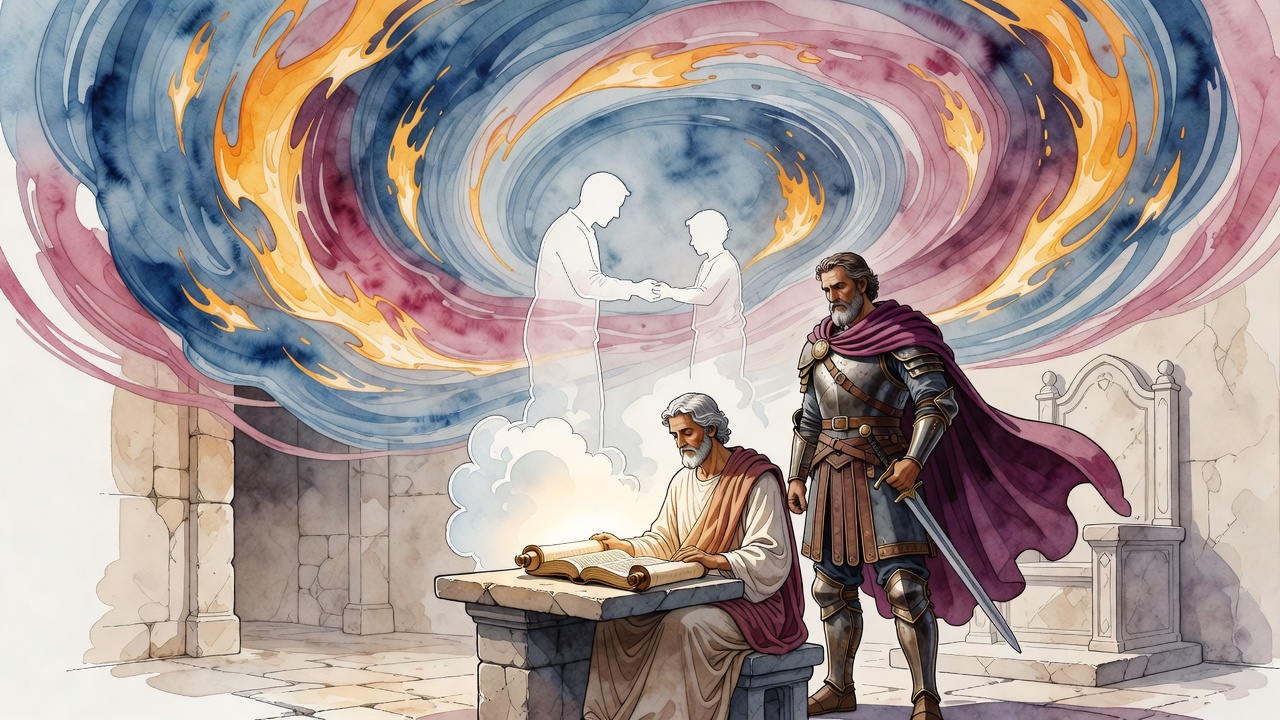
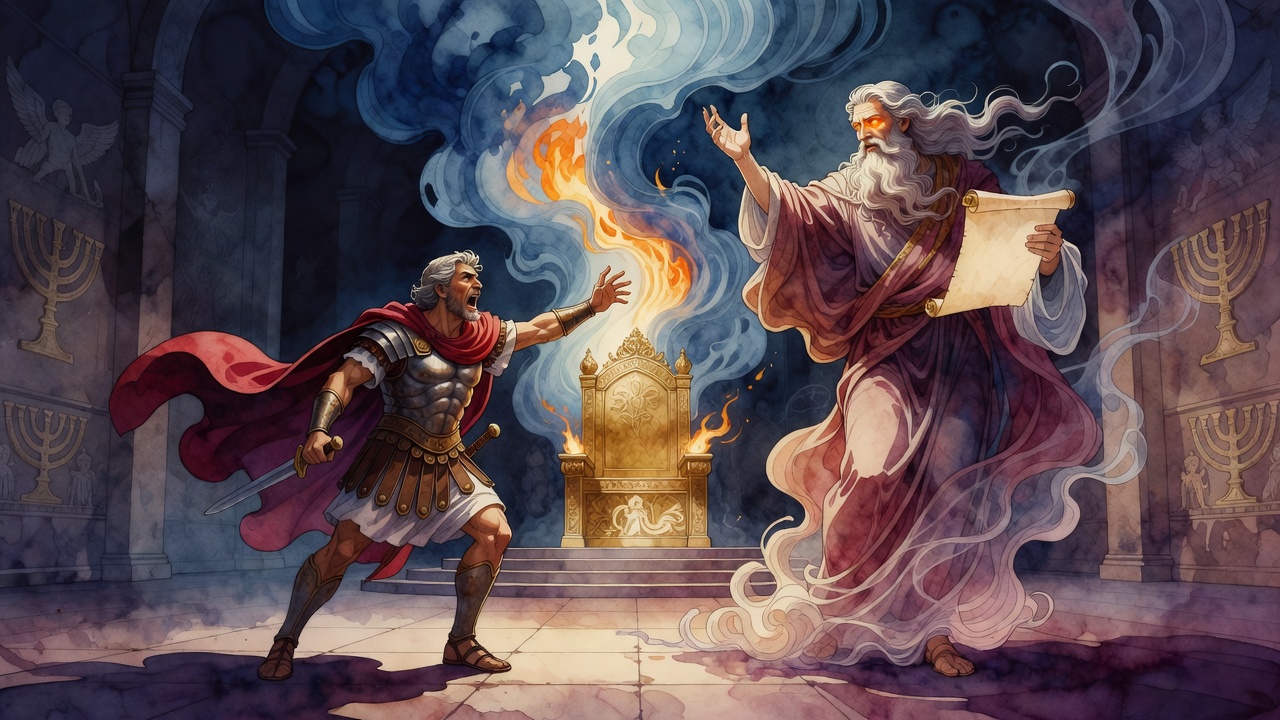
The emperor walked where no foreign foot had ever fallen. Past the outer court, past the screen that had hidden the inmost room from every eye but one priest's on one day of the year, Hadrian stepped into the Holy of Holies and stood inside the empty chamber as though he owned it. He had taken the city. He had broken the walls. Now he tilted his head back toward the dark above the ark's vanished place and spoke against the One who had been worshiped there. Not a whisper. A boast, loud enough to fill the room.
 Click for full size
The Foot That Crossed the Threshold
No fire came down. No hand wrote on the wall. The emperor reviled the Holy One inside His own sanctuary and the sanctuary held its silence, and that silence was its own kind of horror. Hadrian had expected resistance and met none. So he pressed further, certain now that the God of this ruined people was a God who could be insulted to His face and do nothing.
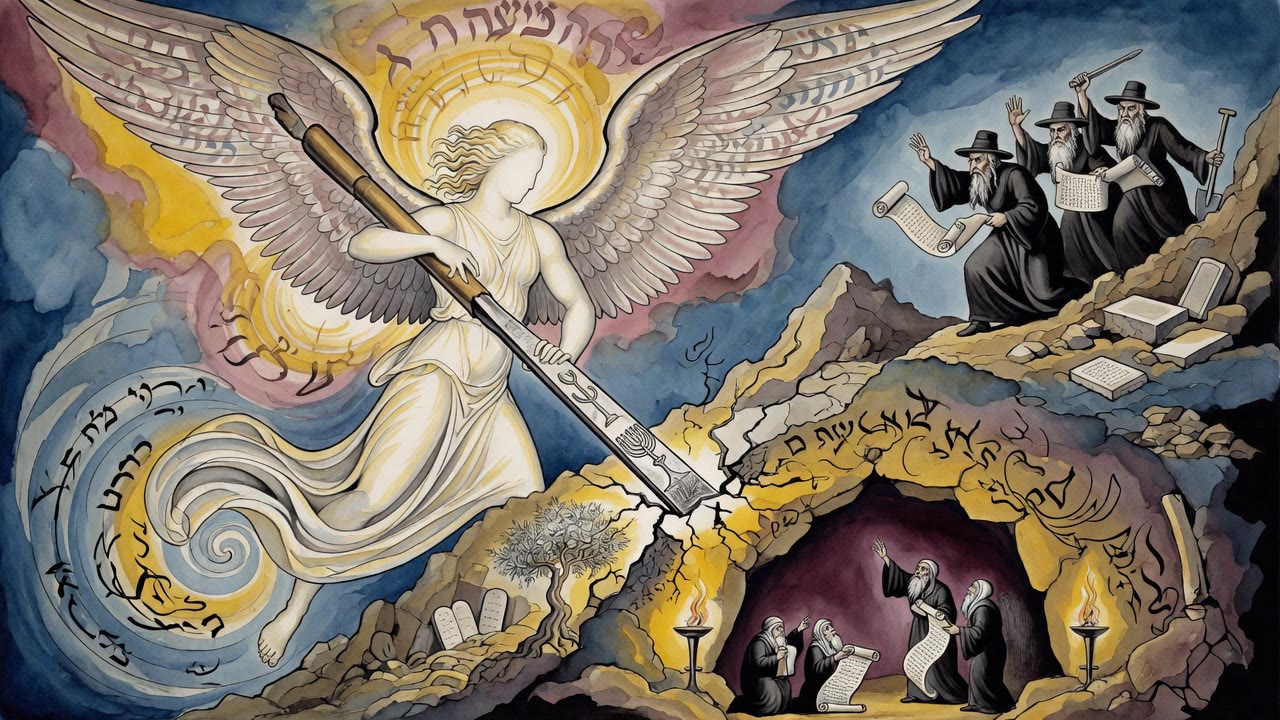
Rabbi Simeon ben Yochai, who carried the account into the study house, would not let the emperor's confidence stand unanswered. He reached for a parable of a king who built a palace for his only daughter and set it in the middle of seven other palaces, then made one decree over all of them. "Anyone who approaches my daughter is counted as approaching me." The daughter was the Torah. The palace at the center was the room Hadrian had just defiled. And the king had already ruled what it meant to disparage what lived inside.
A Dead King Hears the Blasphemy
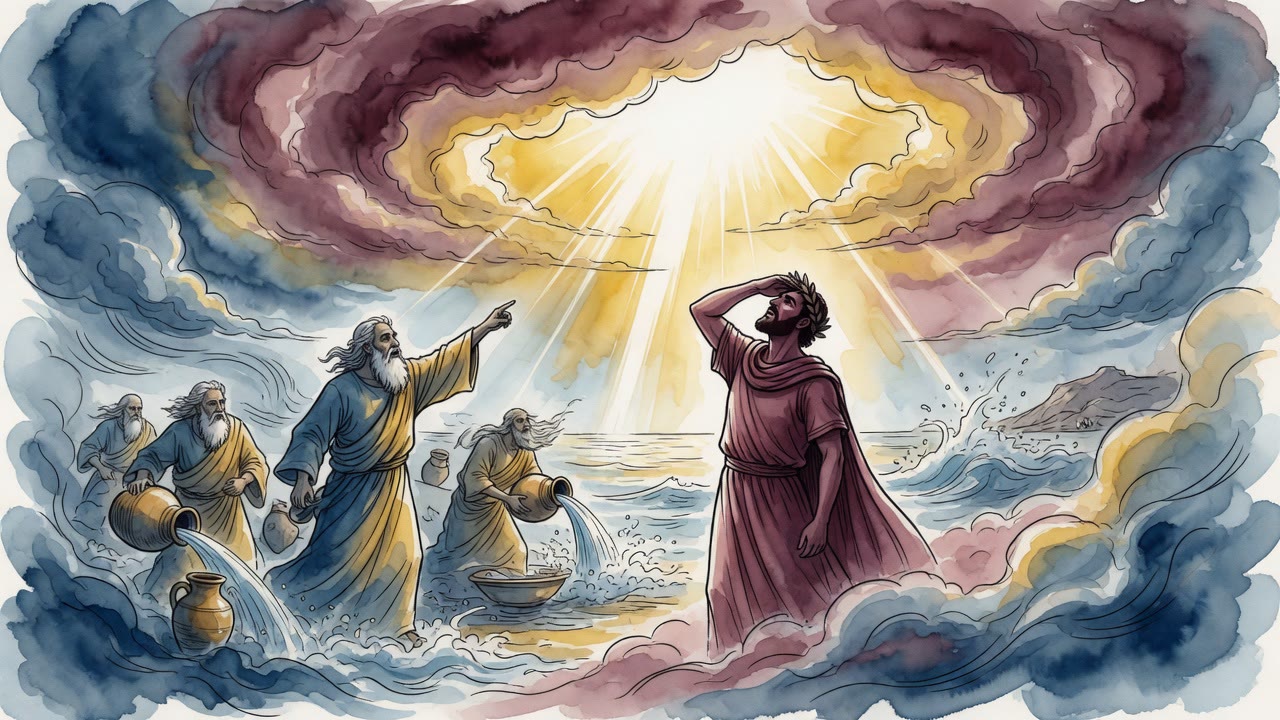
Heaven did not answer with thunder. It answered with a voice that had been dead for a thousand years. David, who had longed to build the house Hadrian now mocked, who had bought its threshing floor and sung over its stones, rose to plead before the Holy One. The conqueror was alive and shouting. The king was a memory in a grave on Zion. And it was the memory who spoke.
"Master of the world," David said, "let it be counted against them as though they had done worse." He laid out the charge as a prosecutor lays out intent. If these nations had been able to hew cedars and lash them into ladders and climb the rungs into the firmament to make war on heaven itself, they would have climbed. He pointed to the verse that had become his own lament, the one about men who wield axes upward into a thicket of trees. They wanted the sky. They wanted to reach the Throne and pull it down.
The Charge That Rose From the Psalms
"But they cannot reach You," David went on. The firmament has no ladder. No cedar grows tall enough. So the rage that had no target above turned and found a target below. "Since they are unable, they leave You and turn back against us." He gave the Holy One the next verse, the cry that had outlived the First Temple and now fit the Second just as well. "O God, the nations have entered into Your inheritance. They have defiled Your holy Temple."
That was the whole accusation. Hadrian's blasphemy in the empty room was not a small man insulting a distant God. It was an assault on heaven that struck the earth instead, because earth was the only thing within the emperor's reach.
The Man Who Topples the Statue
Rabbi Hiyya sharpened the same point with a colder image. Picture a man who hates the king and means to rebel, he said, but knows he can never lay a hand on the king himself. So he goes to the king's statue in the square. He would smash the face if he dared, but he fears the king would kill him for it. So instead he takes an iron digging tool and wedges it under the base. He tells himself that if he weakens the footing, the whole figure will fall on its own, and no one will be able to name him the one who pushed it.
That was Rome. Unable to climb to God, it dug under Israel, the pledge God had left in the world, and waited for the statue to come down. One who cannot strike the king strikes his image. One who cannot smite the donkey lays the whip across the saddle. The emperor in the Holy of Holies was a man kicking at a statue's feet, swinging his iron at the only thing low enough to hit.
The Pledge Left in the World
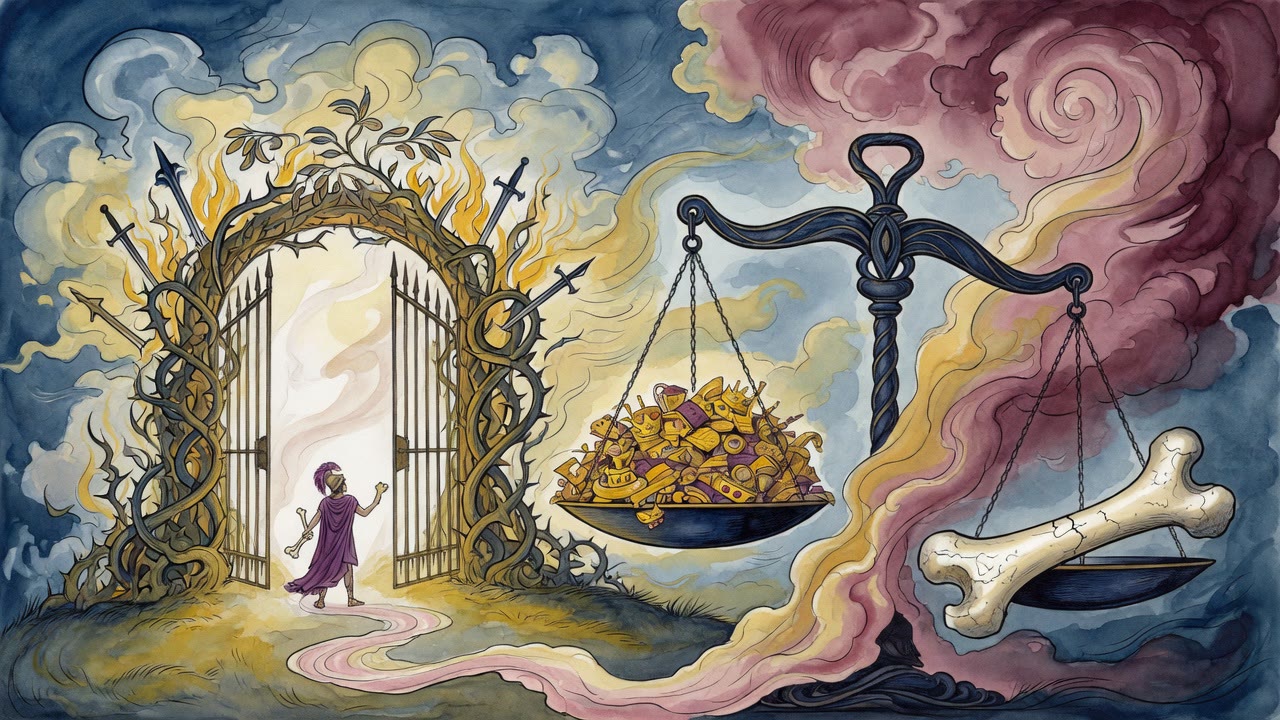
So the room stayed quiet, and the dead king kept speaking, and the verdict took shape without a single bolt of fire. The sanctuary had been seized because of Israel's own sins, the rabbis admitted plainly, and so the defense was not that Israel was spotless. The defense was about the heart of the man at the center of the room. Hadrian had not come to mourn or to wonder. He had come to swell with pride in a space built for trembling, and to spit his contempt at a God he could not see and could not reach.
David finished his plea and the ledger of heaven recorded it. The emperor would have his years. He would have his arches and his coins. But the charge had been entered against him by a king who had been dust for a thousand years, in the words of psalms the conqueror's own soldiers could not silence, and that account would not be closed when Hadrian's bones were laid in their tomb. The blasphemy in the empty room had been heard. It had simply been heard by the only ear that mattered, and answered by the one voice the empire could never kill.
← All myths