Israel's Soldiers Hurled Joab Over the Wall of Kinsari
His own men flung Joab over the enemy wall, his sword snapped against their armor, and the blood of the slain glued the next blade to his hand.
Table of Contents
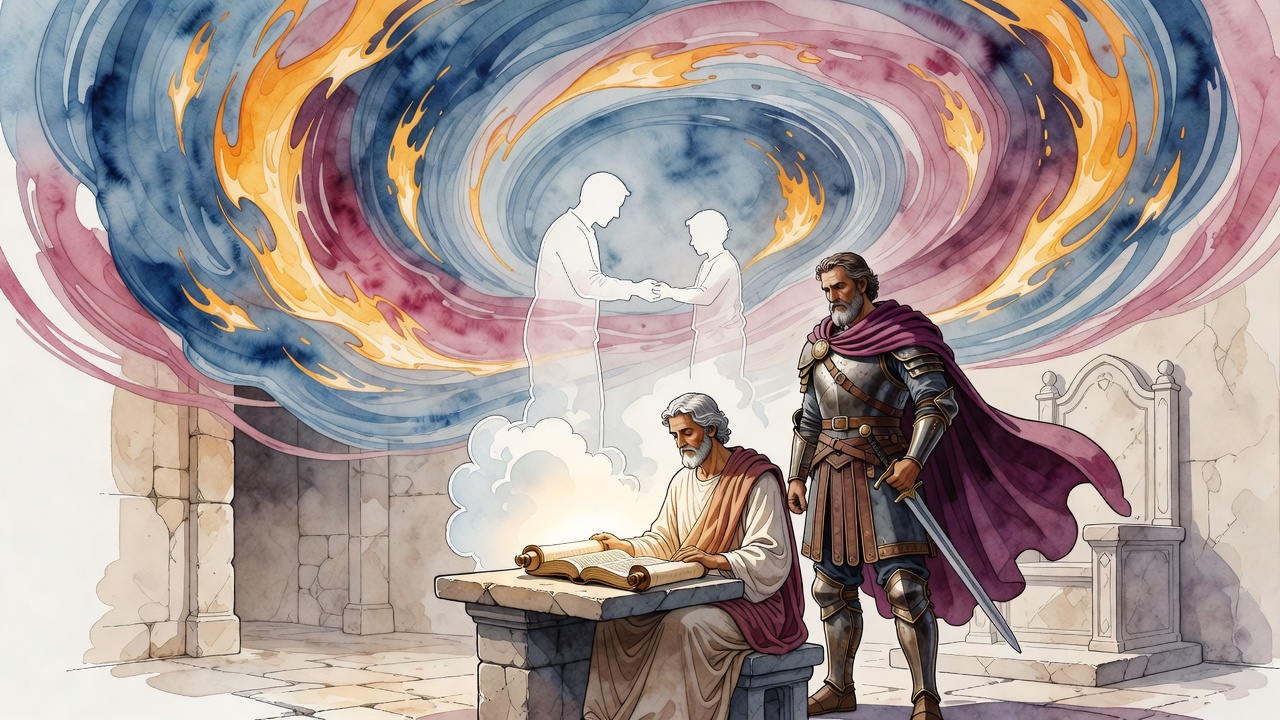
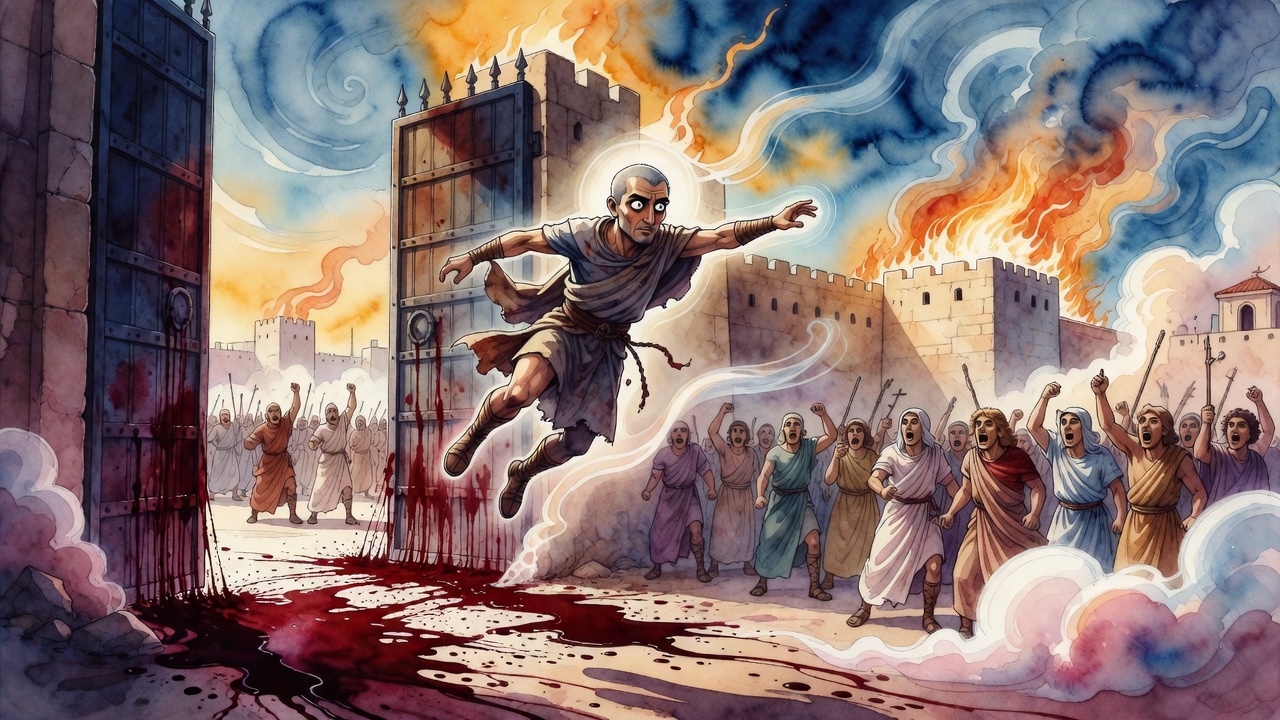
The walls of Kinsari were too high to climb and too thick to break, so the Israelites did the only thing left to them. They took hold of Joab, the commander of David's army, and they hurled him over.
 Click for full size
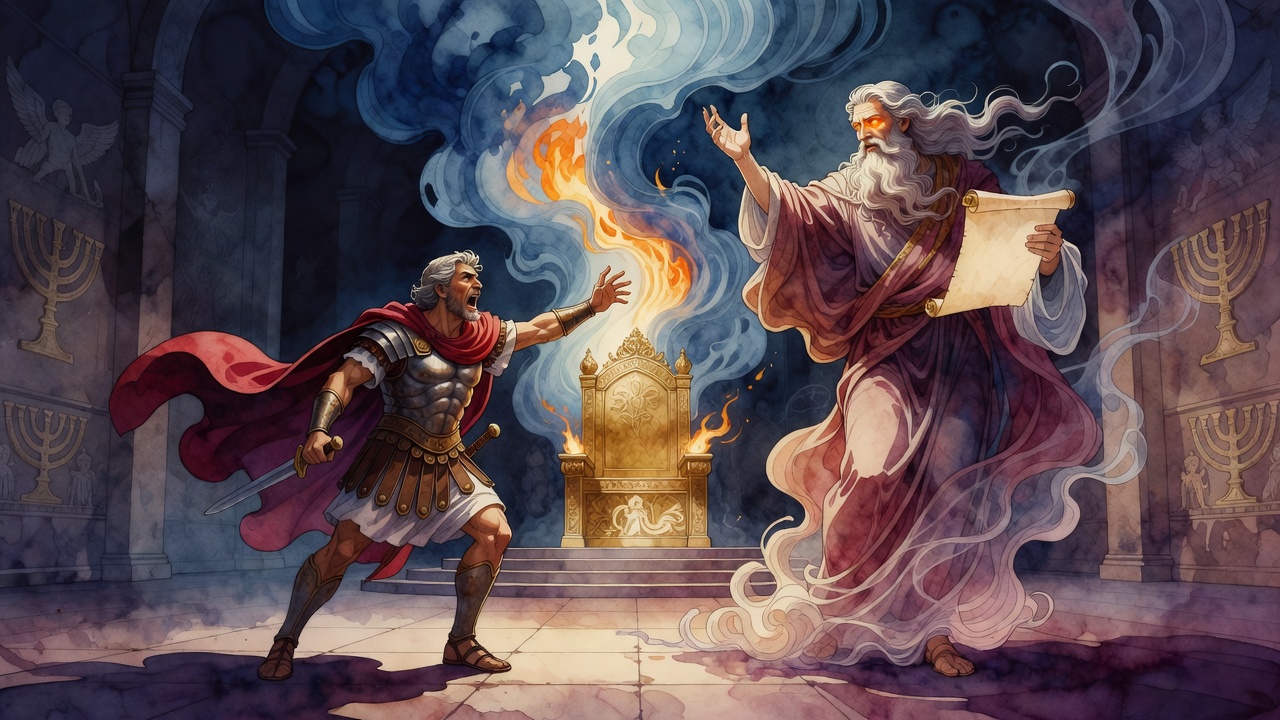
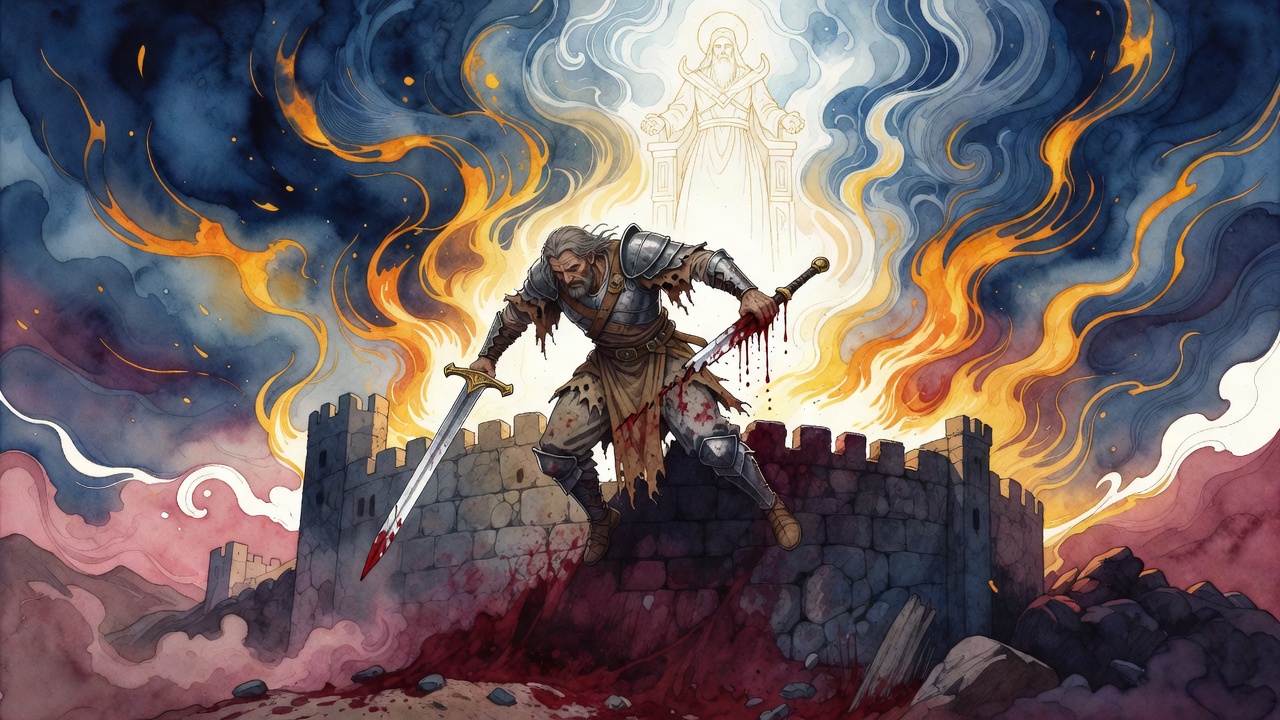
He came down inside the city alone. No ladder behind him, no column at his back, only the noise of a garrison turning toward the man who had dropped out of the sky. Joab drew his sword and met the first of them. The blade rang once against their armor and the breaking iron snapped off in his fist. He stood in the open with a hilt and a stub of iron and a city closing in.
The Smith Who Forged Three Blades
There was a smith in Kinsari, a captive of the city's own guild, bound to its forges. Joab seized him and put the work before him plainly. Make me a sword. The smith bent over coal and anvil and brought out a blade, and Joab tried it against his own strength and broke it. The smith made a second. That one failed too, snapping where the first had snapped.
The third held. Joab swung it, and the iron did not bend or shatter, and he turned the new edge on the man who had made it and cut the smith in two. Then he turned to the soldiers of Kinsari.
The Blood That Glued the Hilt
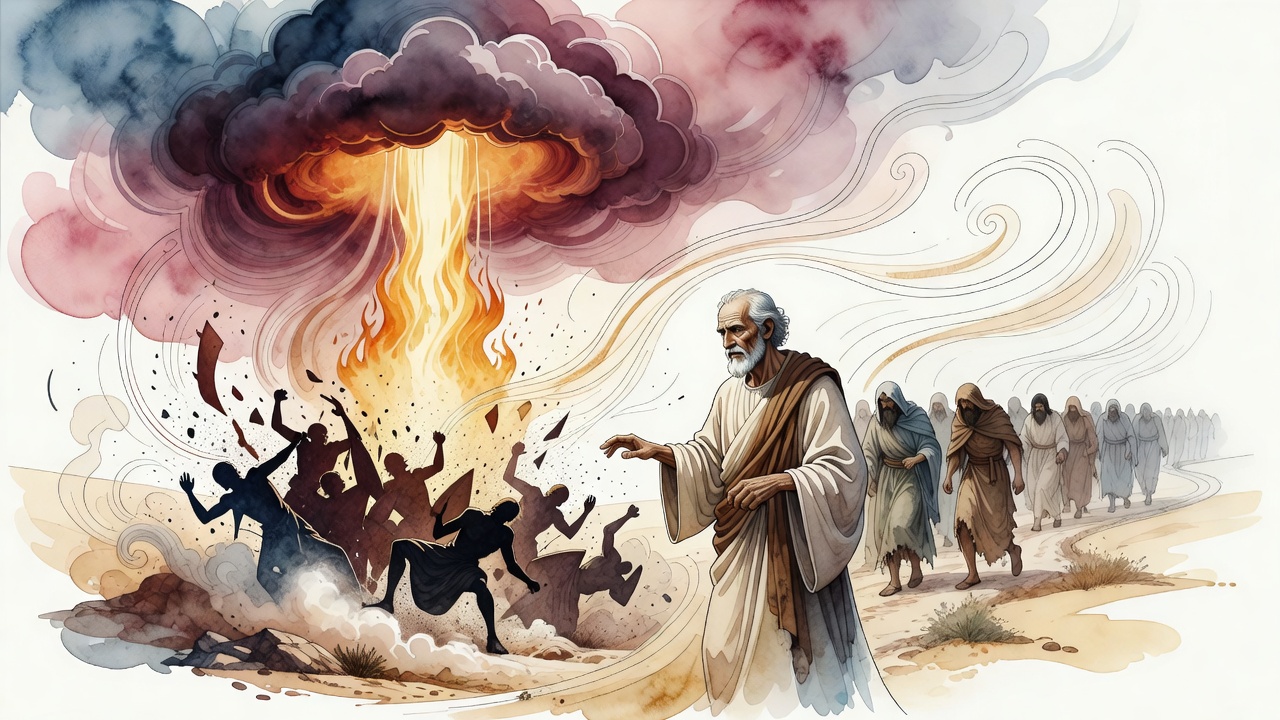
What followed was not a battle so much as a harvest. Joab moved through the garrison and the garrison fell, and the blood ran down over his wrist and dried there, and dried again over that, layer on layer, until the work itself sealed his hand shut around the hilt. The sword and the fist had become one piece of iron and flesh. He could not open his fingers. He could not set the weapon down.
The people of the city watched this thing they could not stop, and even the beaten will speak to a man who cannot lower his arm. They told him what to do. Dip the hand and the blade together into the warm blood of the freshly killed, and the heat of it would soften the crust and loosen the grip without taking the arm off at the wrist.
Joab obeyed his enemies. He pushed hand and sword down into the steaming red, and the clotted bond gave way, and the hilt released, and the fingers came open. That day he took Kinsari, and he gave it to the tribes of Israel.
The Woman at the Gate
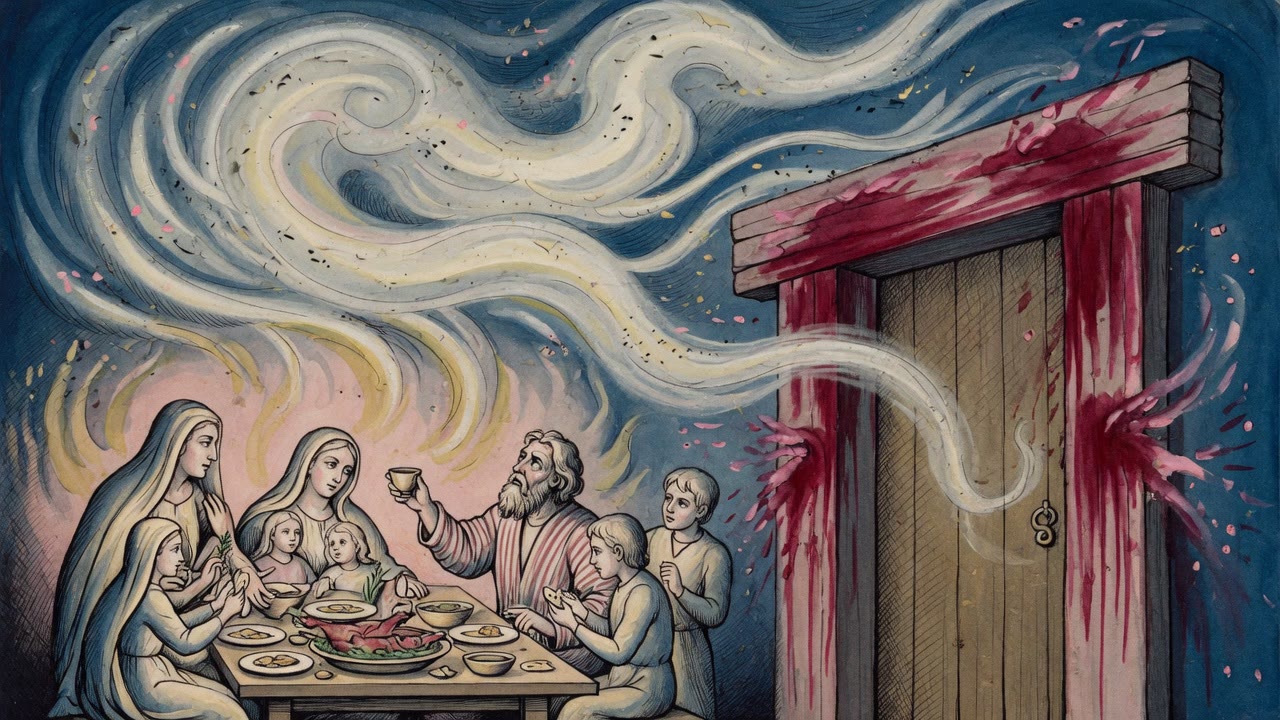
In another telling the loosening came harder, and it came with a name attached. When Joab had first fallen into the city he had not fallen entirely friendless. A woman of Kinsari had taken him in, had set food and drink before the stranger, had hidden the soldier of David under her roof.
Now he came back through her street with the sword fused to his hand, hunting hot water to melt the bond, and she stood in his way and saw whose blood was on him. She cried out so the city could hear it. "You eat and drink with us, yet you slay our warriors!" The shelter was over. His purpose was known. The woman who had saved his life had just thrown it away by naming him.
Joab silenced her. He struck her down in the street, and the instant his blade touched her the iron came free of his hand on its own. The grip released. The fingers moved. He had needed no warm blood and no enemy's advice, because this woman was carrying a child, and the blood of the unborn life inside her was what loosed the sword.
What the Iron Cost
So the bond forged in slaughter was broken by slaughter, and the hand that had shed a city's blood came free only over the body of a pregnant woman and the child she would never bear. Joab walked out of Kinsari a conqueror with the town in his fist and that death on his account.
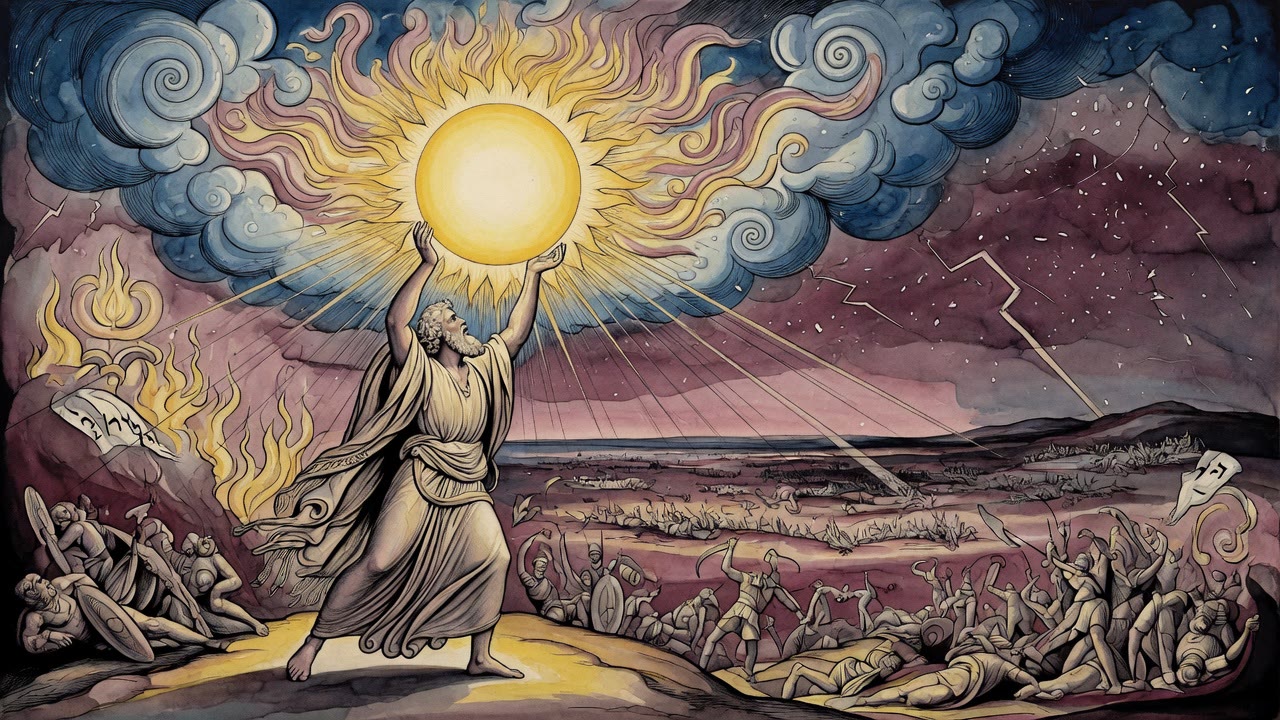
He was the indispensable one. Without his arm David could not have held the kingdom, and the legends say it was Joab's wars that bought David the quiet to sit and study Torah. He kept an open house, fed whoever came, was reckoned learned and pious, sat as head of the Sanhedrin (Israel's high court of sages). And still the sages could never quite close their hands around him, because the same man who guarded the king's peace was the man who did the terrible things the king would not name out loud. He killed Abner. He killed Amasa. He killed the woman at the gate of Kinsari. The blade that broke against the wall was easy to replace. The hand it left behind was not.
← All myths