Translation of the source text.OYW · CC0
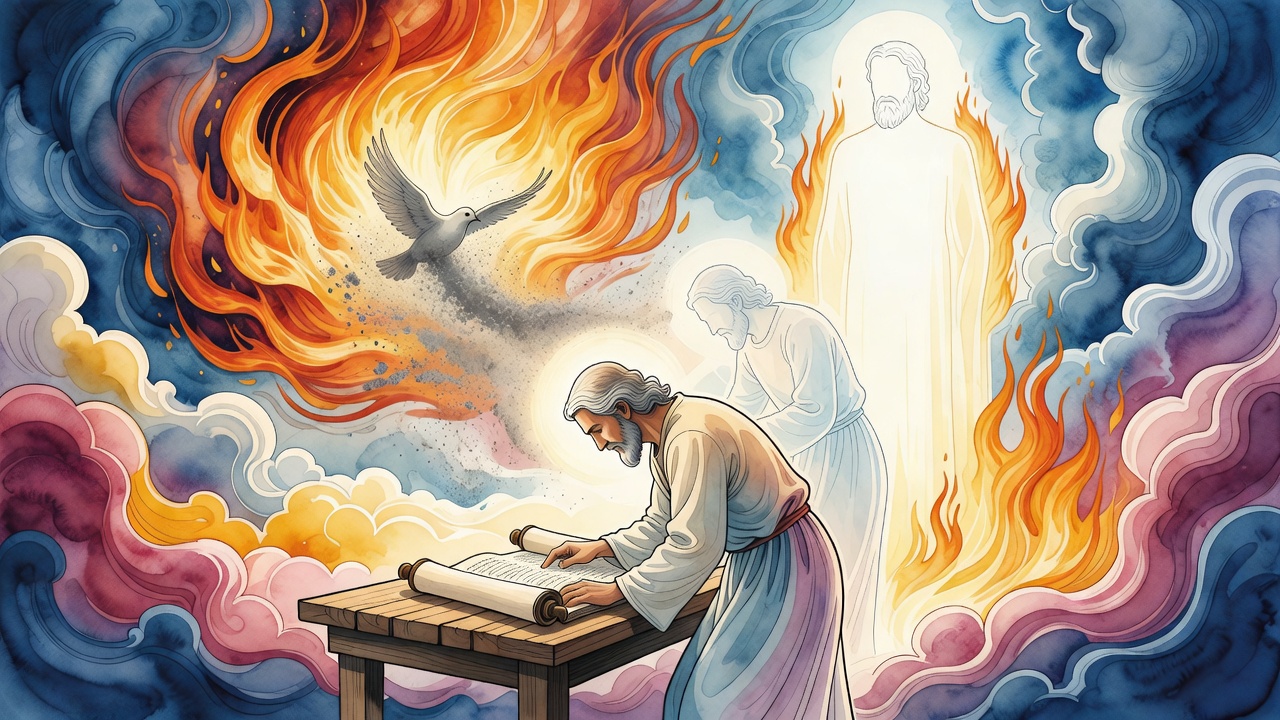
A Psalm of David. The earth and its fullness belong to the Lord. As it is written (Job 29:14), "I clothed myself with righteousness, and it clothed me." Rabbi Chanina said, "There are those whose clothing is becoming, but they are not becoming to their clothing. And there are those whose clothing is not becoming, but their clothing is becoming to them." There are those who are rich, but their name does not match their wealth. And there are those who are poor, but their name does not match their poverty. Similarly, Solomon said (Proverbs 13:7), "One man pretends to be rich, yet has nothing; another pretends to be poor, yet has great wealth." There are those who are strong, but their name does not match their strength. And there are those who are weak, but their name does not match their weakness. There are those whose wife is ugly, despised, and treated like dirt, and people ask, "Who is her husband?" And they say, "It is him." And when they see him, a handsome young man, they say, "This young man has been lost to this woman." And if the bride is beautiful and her husband is ugly, people say, "This bride has been lost to this man." Job said, "I am not like that. Rather, I am becoming to righteousness, and righteousness is becoming to me." And so it says, "I clothed myself with righteousness, and it clothed me." And similarly, David is becoming to his psalm, and his psalm is becoming to him. What is written above this matter? "The Lord is my shepherd, I shall not want." And what is a psalm of David? When he asked for the Divine Presence to dwell upon him, he would demand a psalm from David. And when it came to David from his own accord, it was a psalm....
"Another interpretation of 'The earth is the Lord's, and everything in it' is a parable of a king who had a son in a city, and the people of the city honored him by saying that he was the king's son, and the king honored him as well. Eventually, the king sold his city to another. The criminals began to commit offenses against the king's son. He went to the king for help. After some time, the king returned to his city, and his son was honored as the king's son again. He told them, 'Now I am his son.' The king in this parable is God, and the city is his land. The son is David. All the days that the land belonged to God, they honored David because he went out and came before them. But what did God do? He sold his land, as it says in Ezekiel 30:12, 'And I will make the rivers dry, and sell the land into the hand of the wicked.' The criminals began to commit offenses against the king's son, as it says in 1 Kings 12:16, 'And the people returned the word to the king, saying, "What share have we in David?"' But when God buys back his land for his son, they will return to God and seek their king David, as it says in Hosea 3:5, 'Afterward the children of Israel shall return, and seek the Lord their God and David their king.' Therefore it is said, 'The earth is the Lord's, and everything in it.' Another interpretation is that there is a man who has a ship, but the cargo inside it is not his. If the cargo is his, the ship is not his. But God is not like this; the earth and everything in it belong to him." Another thing, you have a person who has a ship, but the cargo inside it does not belong to him. And if the cargo belongs to him, the ship does not. But the Holy One, blessed be He, does indeed own the earth and all its fullness. Flesh and blood build a house fifty cubits wide, but when it is large, one hundred cubits, it is like three cubits. But the Holy One, blessed be He, did not create the earth and then fill it; rather, He filled it as it was created. As it says, "The whole earth is full of His glory" (Isaiah 6:3). Our sages taught that Rabbi Eliezer says, "Every section that David said about himself, he said on behalf of all Israel. The statement in the singular was said on his own behalf, and the statement in the plural was said on behalf of all Israel." And wherever it says "For the conductor, with instruments," it refers only to the future. And wherever it says "A psalm of David," he would play first, and then the Holy Spirit would rest upon him. Regarding David, a skillful musician, by means of a translator. And the Divine Presence does not rest because of sadness, laziness, foolishness, or trivial matters. Rather, it rests because of joy, as it says, "Now bring me a musician," and when the musician played, the Lord's hand came upon him (2 Kings 3:15).
Another matter is that the earth and all its fullness belong to the Lord. This is what the verse says: "You alone are the Lord. You made the heavens, even the highest heavens, and all their starry host, the earth and all that is on it, the seas and all that is in them. You give life to everything, and the multitudes of heaven worship you" (Nehemiah 9:6) When were the angels created? Rabbi Yochanan said they were created on the second day, as it says: "The waters above the heavens" (Psalms 148:4), and it is also written: "He makes his angels spirits" (Psalms 104:4). Resh Lakish said they were created on the fifth day, as it says: "And let birds fly above the earth" (Genesis 1:20), and it is written concerning angels: "With two wings they covered their faces" (Isaiah 6:2). Rabbi Luliani said: "Why were the angels not created on the first day? So that people would not say that Michael was stretching from the east and Gabriel from the west while God was measuring in the middle. But it says: 'I am the Lord, who has made all things, who alone stretched out the heavens, who spread out the earth by myself' (Isaiah 44:24). Who was with me? Who was my partner in the creation of the world?" David said before God: "Since you created the heavens and the earth for your name's sake, I call them the Lord's earth and its fullness" (Psalms 24:1). Rabbi Azariah, Rabbi Nehemiah, and Rabbi Baruchya said: "It is like a king who had two stewards, one responsible for what was in the house and one responsible for what was in the fields. The one responsible for the house knew everything that was in the house and everything that was in the fields, but the one responsible for the fields only knew what was in the fields. Similarly, when Moses ascended to the heavens, he knew both the upper and lower realms and rebuked God for not taking care of them. As it says: 'Indeed, to the Lord your God belong the heavens, even the highest heavens, the earth and everything in it' (Deuteronomy 10:14). But David, who did not ascend to the heavens, praised God for what he knew, as it says: 'The earth is the Lord's, and everything in it' (Psalms 24:1)." Rabbi Pinchas said: "A king of flesh and blood may have sheep but no pasture, or pasture but no sheep. But the Holy One, blessed be He, fills both the upper and lower realms, as it says: 'Praise him, you highest heavens and you waters above the skies. Let them praise the name of the Lord, for he commanded and they were created' (Psalms 148:4-5). And it says (Jeremiah 23:24), "Do I not fill the heavens and the earth?" He has flesh and blood, but he has no flock to shepherd. He has a flock, but he has no pasture for them. But the Holy One, blessed be He, is not so; He has a flock and He has pasture. The flock is Israel, as it is said (Ezekiel 34:31), "And you, My flock, the flock of My pasture." And He has pasture for them in the land and its fullness, and He knows how to shepherd them, as it is said (Ezekiel 34:15), "I will feed My flock, and I will cause them to lie down." And He knows good pasture for them, as it is said (Ezekiel 34:14), "I will feed them in a good pasture." Woe to the land and its fullness for the sake of God.
"For He founded it upon the seas, and established it upon the rivers. This refers to the Land of Israel, which rests upon seven seas: the Great Sea, the Sea of Tiberias, the Sea of Sodom, the Sea of Sivkhin, the Sea of Chultha, the Sea of the Arabah, and the Sea of Aspamia. And the Land of Israel is situated in the heat of the sun. The Holy One, blessed be He, restrains the rivers, and makes them flow, as it is written: 'He established it upon the rivers'. The Jordan, the Pishon, the Gihon, and the Euphrates all flow out from Eden. And it is written, 'and it is seen upon the face of the desert' (Numbers 21:20). Rabbi Abba bar Ḥiyya said, 'Whoever ascends to Mount Nebo sees a likeness of a ship in the Sea of Tiberias, and it is the well of Miriam'."
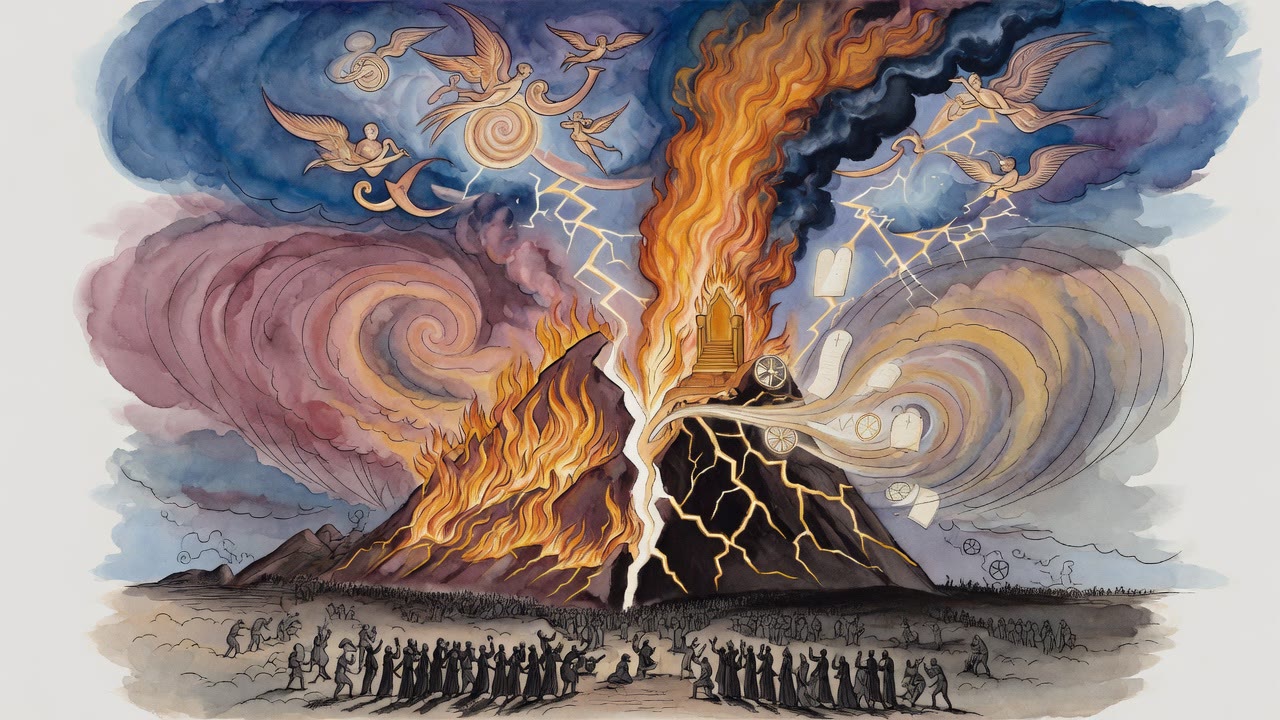
"Who shall ascend the mountain of the Lord? This is Moses, as it says (Exodus 19:3), 'And Moses went up to God.' And who shall stand in His holy place? This is Moses, as it says (Deuteronomy 5:28), 'But as for you, stand here with Me.' Clean of hands, this is Moses, as it says (Numbers 16:15), 'I have not taken a donkey from them.' And pure of heart, this is Moses, who clarified his mission at the moment when God told him to go on His behalf, as it says (Exodus 3:11), 'Who am I that I should go to Pharaoh and bring the Israelites out of Egypt?' He took no pride in his soul. This is Moses, who took the life of the Egyptian, as it says (Exodus 2:12), 'He looked this way and that and saw that there was no one, and he struck down the Egyptian.' He saw the angels and prevailed against them, and he killed them with justice. And he did not swear falsely to his neighbor. This is Moses, as it says (1 Samuel 14:24), 'And Saul adjured the people.'"
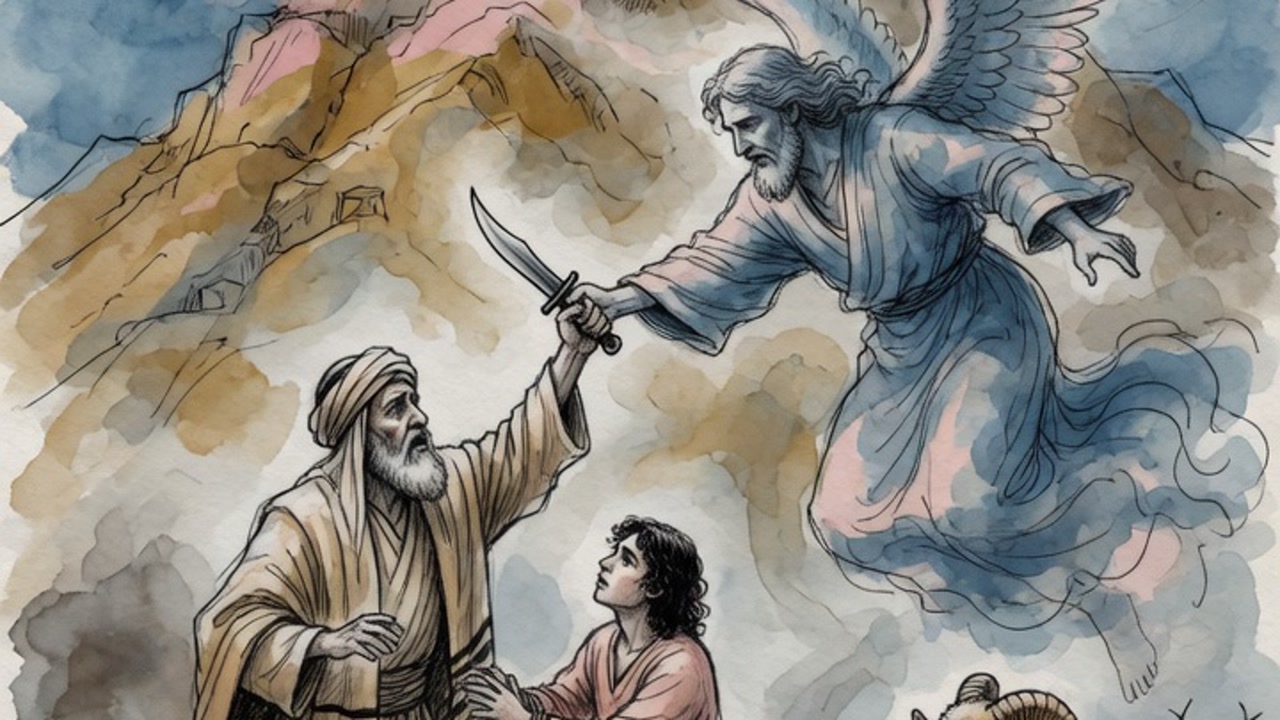
Another interpretation: "Who will ascend the mountain of the Lord?" This is our father Abraham, as it is written of him, "Go for yourself to the land of Moriah" (Genesis 22:2). "And who will stand in His holy place?" This is Abraham, as it is said, "And Abraham rose early in the morning" (Genesis 19:27). "Clean of hands." This is Abraham, as it is said, "From a thread to a shoe strap" (Genesis 14:23). "And pure of heart." This is Abraham, as it is written, "And you found his heart faithful before You" (Nehemiah 9:8). And it is said, "And he believed in the Lord, and it was counted to him as righteousness" (Genesis 15:6). "Who did not lift up his soul in vain." This was before Nimrod, and he did not swear falsely, as it is said, "I have lifted up my hand to the Lord, God Most High" (Genesis 14:22). He shall receive blessing from the Lord, as it is said, "And the Lord blessed Abraham with everything" (Genesis 24:1).
Another interpretation: Who will ascend? This refers to our father Jacob, as it is said (Genesis 35:1), "Arise, go up to Bethel and dwell there." Who will stand? This refers to Jacob, as it is said (Genesis 28:11), "And he encountered the place." Clean of hands. This refers to Jacob, as it is said (Genesis 31:38), "I worked for you for fourteen years." And with a pure heart. This refers to Jacob, as it is said (Genesis 37:3), "For he was the son of his old age." "Who did not lift up my soul in vain." This refers to Laban. And he did not swear to deceive, as it is said (Genesis 31:53), "And Jacob swore by the fear of his father Isaac." He will receive a blessing from the Lord, as it is said (Genesis 35:9-10), "And God appeared to Jacob and blessed him."
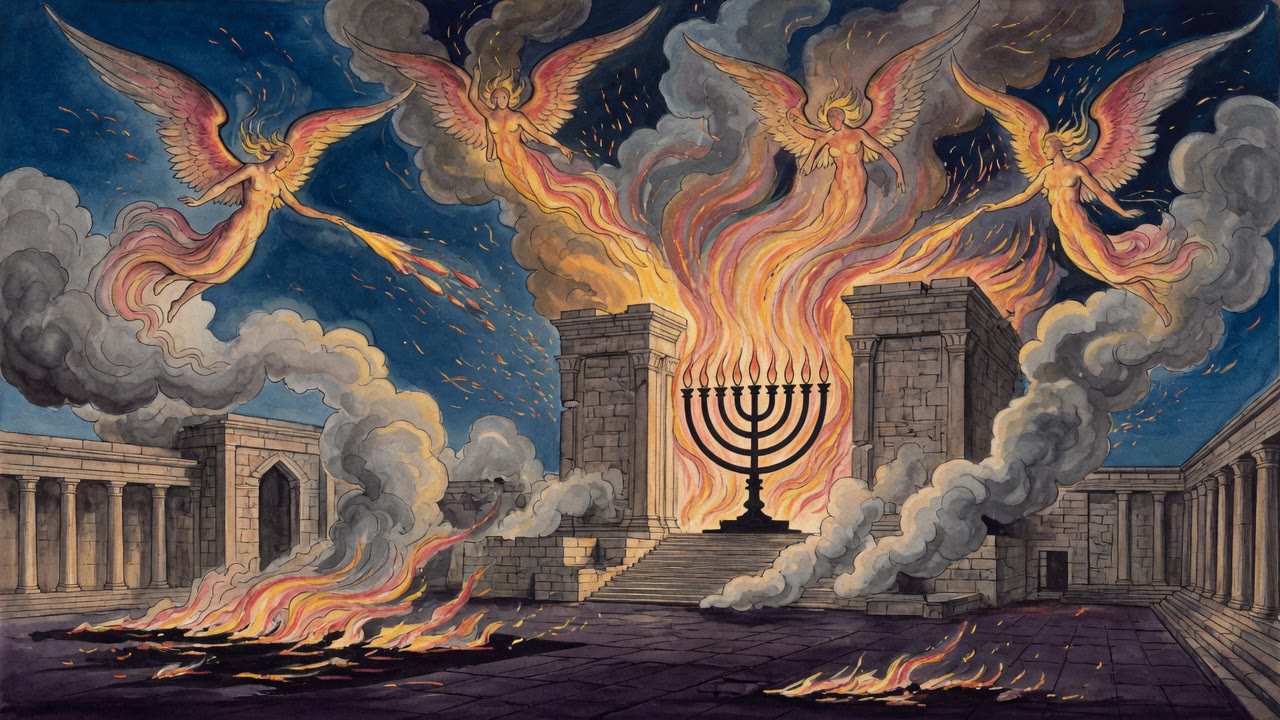
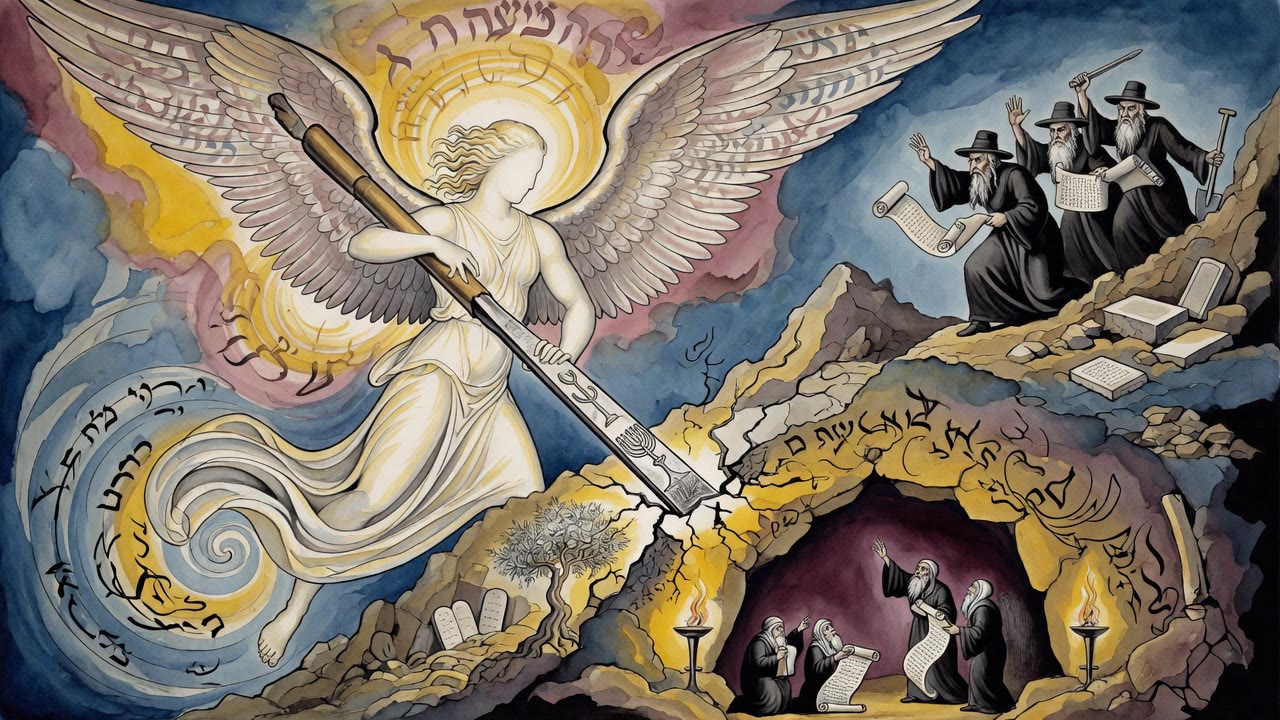
Lift up your heads, O gates! When Solomon built the Temple, he wanted to bring in the Ark, but the gate was only five cubits long and two and a half cubits wide, while the Ark was two and a half cubits long and a cubit and a half wide. Could half a cubit fit inside two and a half cubits? At that moment, the gates stuck together, and Solomon said twenty-four praises, but he was not answered. He then said, "Lift up your heads, O gates!" but still, there was no answer. Once he said, "O Lord, God, do not turn away the face of your anointed one! Remember the mercies of your servant David." Immediately, the gates opened, and the Ark entered, and fire descended from heaven. Why was Solomon so troubled? Because he boasted, "I have built a house of habitation for You, a settled place for You to dwell in forever." Rabbi Jacob, the son of Rabbi Judah, said, "I built a house of habitation for You." Rabbi Hiyya said in the name of Rabbi Yosei, "All help the King of Kings, even the winds, the demons, and even the ministering angels." Rabbi Berechiah said, "It is written, 'And the house was built when it was built.' It was built by itself." "The stone of Solomon's travels" teaches that the stone moved itself and was placed on the top of the dais. Rabbi Abbahu said, "Do not be amazed, for it is written, 'I saw a single stone, and it was set in place by the side of the great mountain.'" "Are there stones in Babylon?" But you arose from the land of Israel, came and settled by the well. Rabbi Huna said: "An angel descended at that time and appeared in the form of a stone lion, and sat by the well." This is what is written (Jeremiah 49:19): "Behold, one will come up like a lion from the thickets of the Jordan." For the honor of flesh and blood, a single stone is moved and placed; how much more so for the honor of the King of Kings, the Holy One, blessed be He, over whom all must be done! Who is the King of Glory? Rabbi Simon said: "Who is the King who gives honor to His servants? The Lord of Hosts is the King of Glory." Rabbi Simon said: "And the people did not move until Miriam was gathered." This teaches us that the Shechinah was delayed because of her. Rabbi Luliani said in the name of Rabbi Yitzchak: "It is written 'Moses shall speak, and God will answer him with a voice.' It is not written here that God will speak and Moses will answer, but rather 'Moses shall speak, and God will answer him with a voice.'" Rabbi Berechiah said in the name of Rabbi Simon: "It is written (Genesis 39:1) 'And Joseph was brought down to Egypt,' and it is written (Genesis 39:2) 'And the Lord was with Joseph.' Rabbi Yudan said in the name of Rabbi Ibo: "I have only learned that in times of quiet the Lord sees all with clarity, but in times of trouble, from where do we know? As it is said (Genesis 39:23) 'No one in the prison house saw anything in his hand.' All the vessels in the Temple were made of the skin of the tachash on top, and in the ark it is written (Numbers 4:6) 'And they shall spread over it a cloth of blue.' Why? So that the Ark would come in a specific manner. Let the King of Glory come in! Rabbi Hezekiah said: "Why is blue different from all other colors? Because blue is similar to grass, grass is similar to water, water is similar to the sky, the sky is similar to the rainbow, the rainbow is similar to the cloud, the cloud is similar to the throne, and the throne is similar to the Glory of God, as it is written (Ezekiel 1:28) 'As the appearance of the rainbow that is in the cloud on the day of rain, so was the appearance of the brightness all around.' And from His Glory, He gives honor to His servants. This is the blue. As it is said (Numbers 15:38), 'And they shall make for themselves fringes.'" Who is the King of Glory? Who gives honor to His servants? The Lord of Hosts is the King of Glory.

 Click for full size