Parshat Devarim6 min read

Joab Bought David's Peace and Tested a Father's Love

David studied Torah in peace because Joab held the borders, ran the Sanhedrin, and once bought a poor man's child to test a verse.

Curated by Arthur · Told by Maggid ·
Table of Contents
  1. The War That Stopped at an Old Oath
  2. The Brothers He Was Forbidden to Strike
  3. The Verse That Sent Him to a Poor Man's House
  4. Fourteen Portions and One Empty Place

Joab kept the borders quiet so that the king could read. While David bent over the scrolls of the Torah, his commander rode against the nations and came home with victory, with prosperity, even with luxuries for the people. The kingdom slept because one man did not.
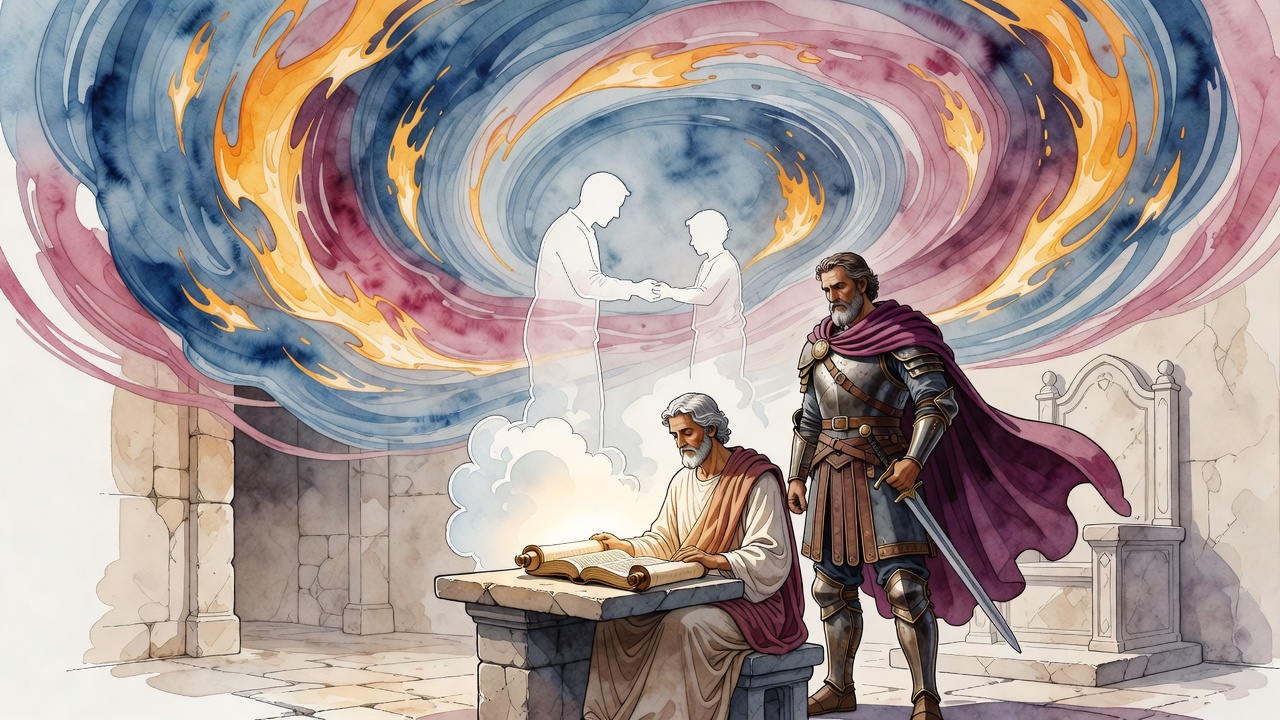
And he was no mere blade. His door stood open to any traveler who needed bread or a bed. He fought for the people, never for himself. He sat as head of the Sanhedrin, the high court of the law, the wisest man in the seat of judgment, with only David above him in wisdom. A general who governed the court of Torah, while Ahithophel schemed with words in its shadows. Joab held it together with his hands.

The War That Stopped at an Old Oath

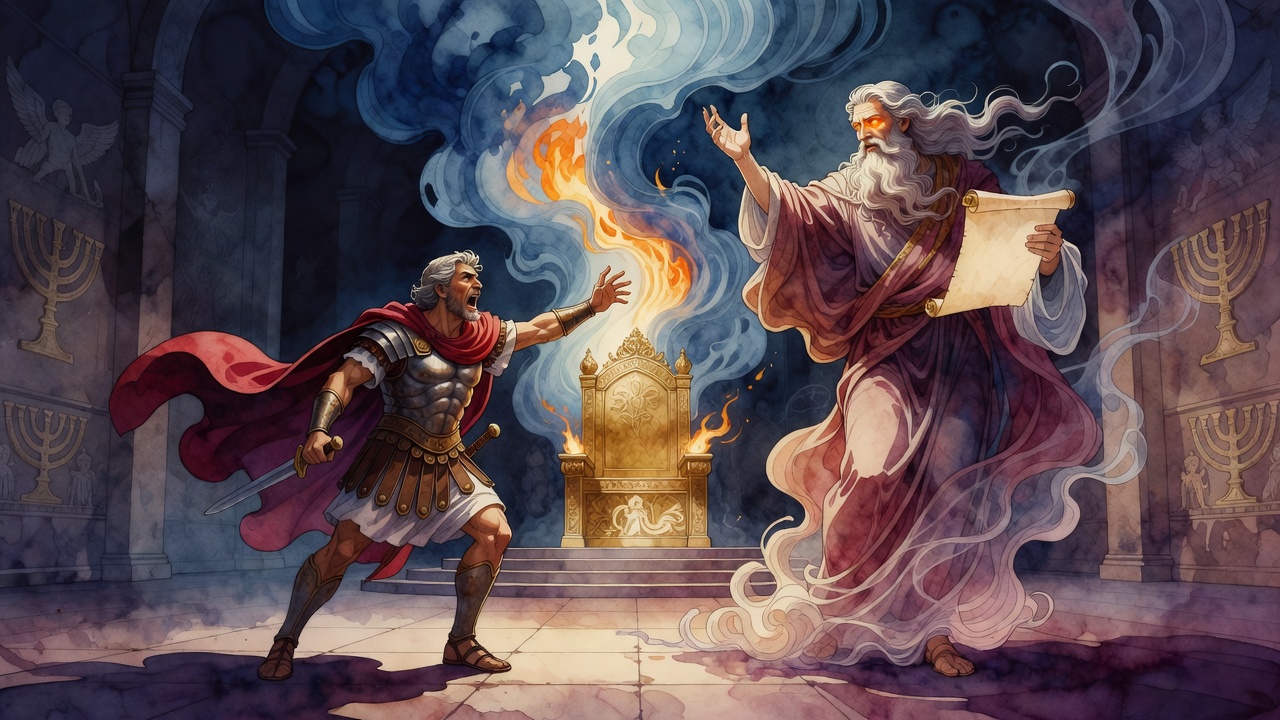
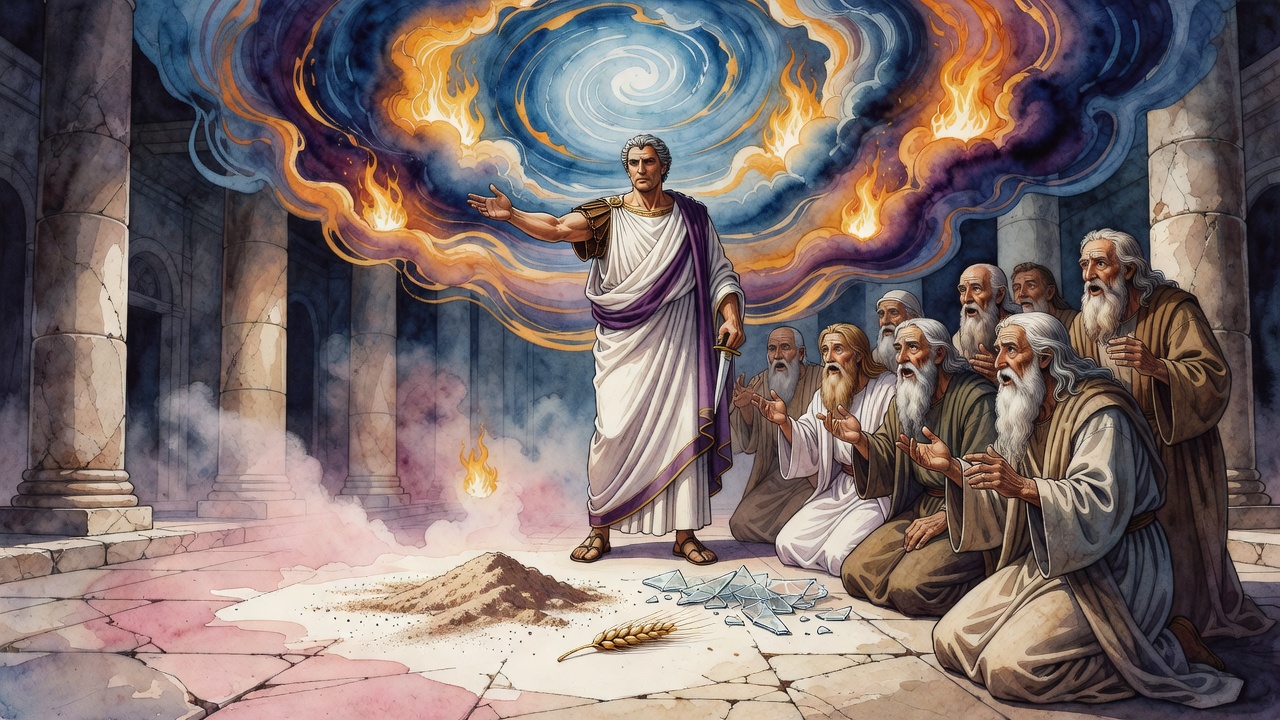
The order came to march on Aram-Naharaim, and Joab marched. But when his army reached the field, the men of Aram came out to meet him and did not lift a sword. They spoke instead. "You are the children of the sons of Jacob," they said, "and we are the children of the sons of Laban. There is a pact between our fathers. The heap of stones is a witness. Jacob swore he would not cross it to do us harm."

Joab lowered his weapon. An oath was an oath, and the oath belonged to Jacob himself. He turned his army around and rode back to David. "What do you say to this?" he asked. "Their claim is the oath of Jacob our father."

David did not answer from his own head. He seated the Sanhedrin, the court hedged about like a garden of lilies, and let the law speak. The sages searched the record and gave their ruling. The pact had held once, yes. But Laban's children had broken it first. Balaam came from Aram to curse Israel for Balak of Moab. Cushan-Rishathaim of Aram had enslaved Israel for eight years. Two crimes, both unanswered. The oath was void on their side long before Joab arrived.

The court ruled, and the ruling went back to the field. Joab turned again toward Aram, and this time he struck.

The Brothers He Was Forbidden to Strike

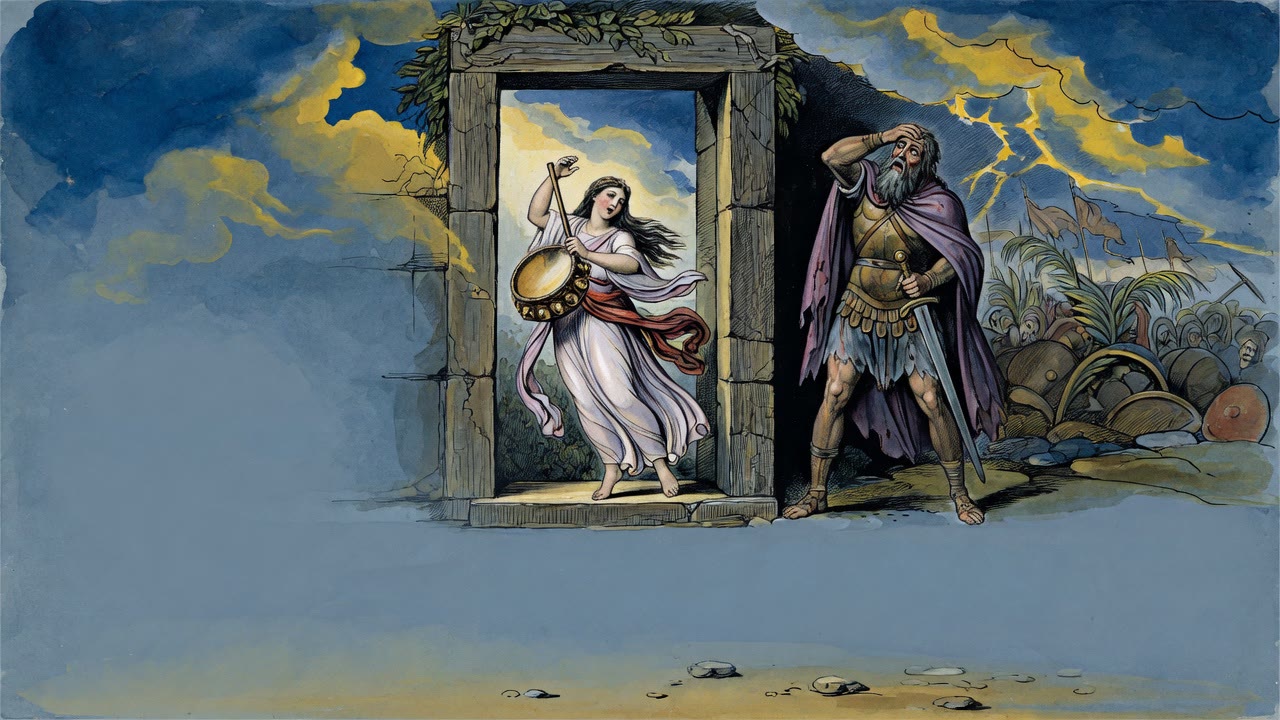
On the way stood Edom, the children of Esau, and they barred the road. "Did your God not command you," they said, "do not provoke us?" Joab threw their own scripture back at them. "And did He not say we are passing through the territory of our brethren, the children of Esau? Let us pass." They would not let him pass.

Joab made a soldier's calculation. To destroy Edom now would leave his army with no food and water on the road home. So he left them standing and pressed on against Aram, planning to wheel back after the greater enemy fell. He did exactly that, returning to smite Edom in the Valley of Salt. Six months he stayed there, cutting them down.

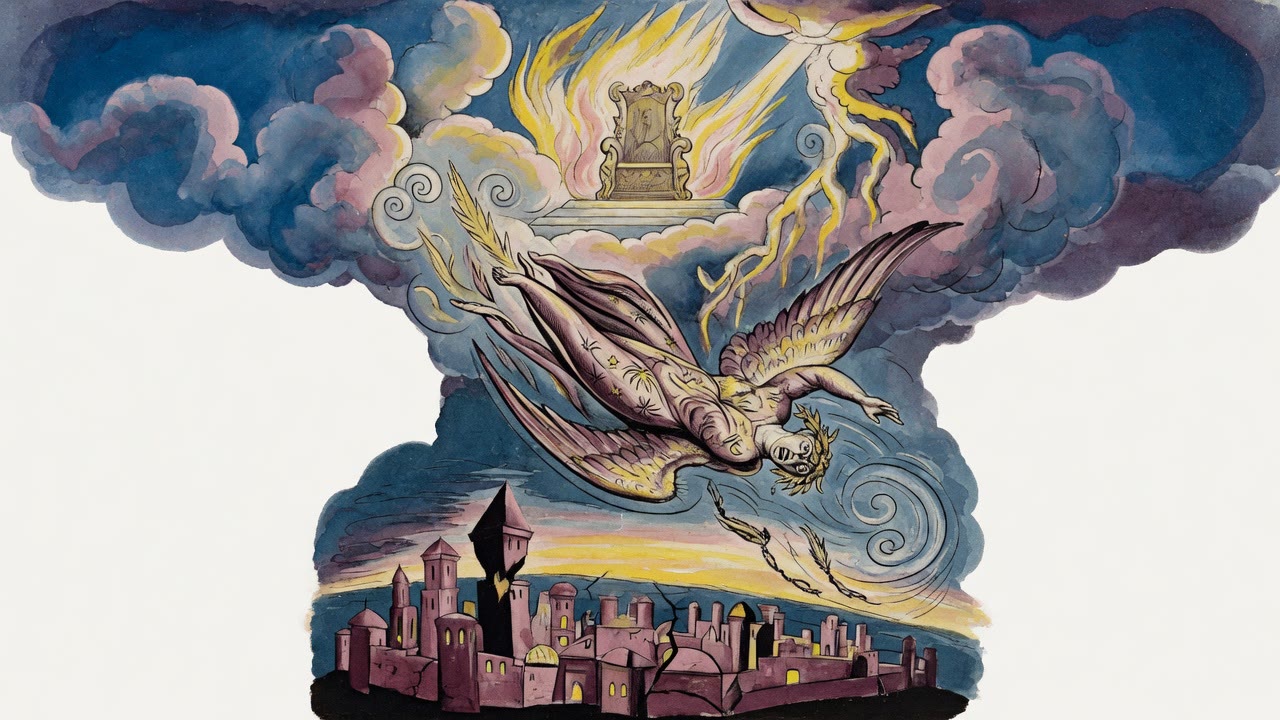
And a voice answered his haste from above. Destroy Edom little by little, God said. The full end is not yours to bring. When the time comes, saviors will go up on Mount Zion to judge the mountain of Esau, and the kingdom will belong to the Lord. Joab could wound Edom. Only heaven would finish it.

The Verse That Sent Him to a Poor Man's House

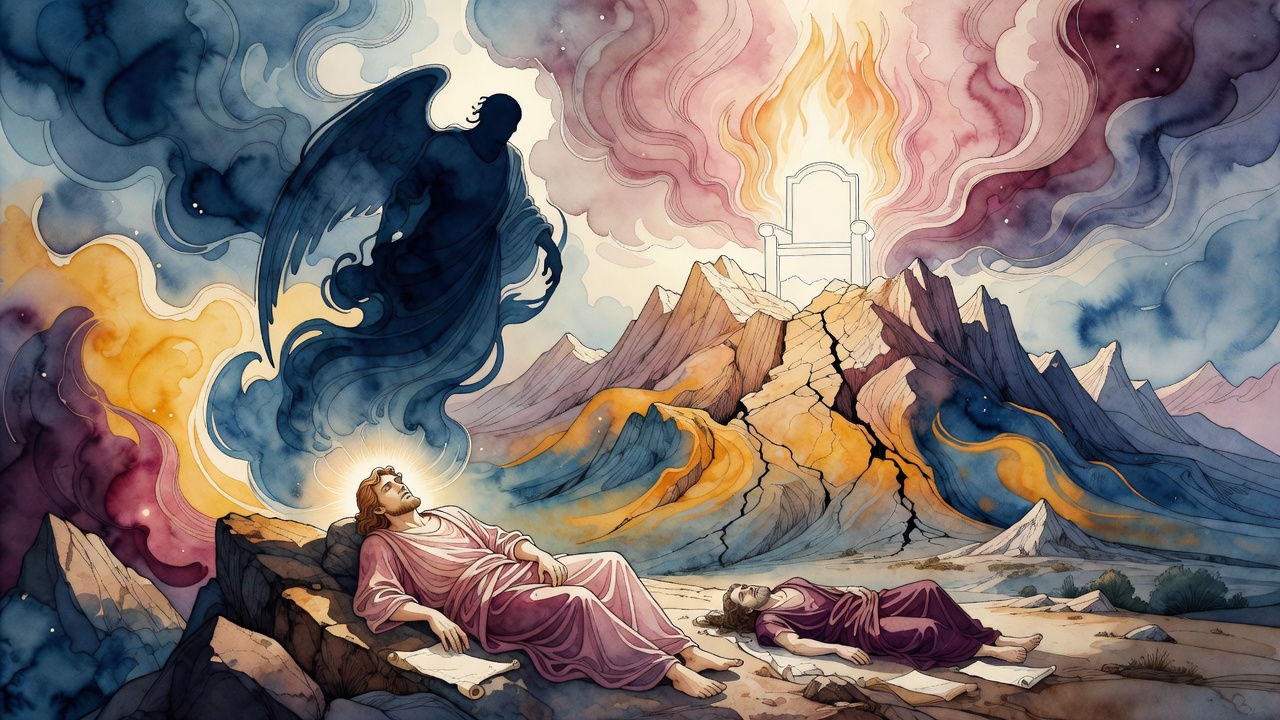
One day Joab overheard the king at his prayers. "Like as a father pitieth his children, so the Lord pitieth them that fear him," David recited. The line caught Joab and would not let go. A father's pity? Everyone knew a mother's love ran deeper, fiercer, more selfless. Why had David reached for the weaker comparison to describe the mercy of God?

Joab was a man who liked to know how people truly thought, and he did not trust a verse he could not test. So he went looking for a father to weigh.

He found a poor old man with twelve children, who broke his back to put thin bread on the table. Joab offered to buy one child from him. The burden would lighten, he said, the money would feed the other eleven. The father refused before the words were finished.

So Joab went to the mother. He laid out a hundred gold denarii for one child. She resisted. Then the coins did their work, and she agreed.

Fourteen Portions and One Empty Place

That evening the father came home and did what he did every night. He cut the bread into fourteen pieces, one for each soul under his roof. He counted the portions against the faces at the table. One face was missing.

He demanded to know where the child had gone. The mother confessed the sale. The father set down the bread and would not eat. He would not drink. He sat in the dark with his loss until morning, then rose and went to find Joab, the money already in his fist to throw back, murder in his eyes if it came to that.

He found the commander and did not bow to his rank. He argued. He threatened. He swore he would kill the man who had taken his son. Joab, who had broken armies, gave way to one furious father and handed the boy back.

And as the child ran to his father's arms, Joab understood his own answer. "David was right," he said. "This poor man with twelve mouths to feed was ready to fight me to the death for one of them. And the mother, sitting calm at home, sold that same child for a price." The verse held. A father's pity was the right mirror for the mercy of God, and Joab had crossed a kingdom and shaken a household to prove it.


← All myths
From the tradition

Sources

3 sources

The texts this telling draws on, in full. Open a card to read inline, or expand it for a wider, quieter read.

Legends of the Jews 4:40Legends of the Jews

In the stories of King David, we find a fascinating foil to the brilliant but ultimately tragic figure of Ahithophel: Joab, the warrior. While Ahithophel was known for his sharp intellect and political acumen, Joab was David's rock, his steadfast commander in chief. He was David's right hand.

In legends, David's success wasn't just about his own skills. The Talmud tells us that David was a great scholar and king, but it was Joab’s military prowess that allowed David the peace and quiet he needed to study the Torah, the sacred Jewish teachings.

Joab wasn't just a soldier, though. He was, in many ways, the ideal Jewish hero. He was known for his learning, his piety, and his inherent goodness. Ginzberg, in Legends of the Jews, paints a picture of a man whose home was always open, welcoming anyone who needed shelter or aid.

His military campaigns, unlike some driven by personal ambition, were always for the benefit of the people. He brought them not just victory, but prosperity. He even brought them luxuries, says the tradition!

But here’s where it gets really interesting. Joab, the fearsome general, was also deeply invested in the intellectual and spiritual well-being of his community. According to tradition, he was the president of the Sanhedrin, the high court of Jewish law! A warrior-scholar leading the highest legal body? It’s a surprising combination, isn't it?

So, what does Joab teach us? Perhaps that true heroism isn't just about battlefield glory, but about creating a society where both material and spiritual needs are met. It's about using your strength to protect and uplift, and about recognizing that even the fiercest warrior has a responsibility to nurture wisdom and justice.

It makes you wonder, doesn't it? What kind of hero do we aspire to be?

Full source
Legends of the Jews 4:41Legends of the Jews

The Talmud is filled with intricate legal discussions, but nestled within its pages and in other Jewish texts are fascinating stories about human nature. And sometimes, these stories challenge our assumptions about even the most fundamental bonds, like the love between parent and child.

The story I'm about to share comes from Ginzberg's Legends of the Jews, a masterful compilation of Midrashic (rabbinic interpretive commentary) and Talmudic lore. It centers on Joab, a prominent figure in King David's court – a military leader known for his keen observations and, let's say, unconventional methods. Joab was a man who liked to understand how people thought.

One day, Joab overheard King David reciting the verse, "Like as a father pitieth his children, so the Lord pitieth them that fear him" (Psalm 103:13). This comparison gave Joab pause. Why, he wondered, did David compare God's compassion to a father's love, when everyone knows that a mother's love is typically considered the stronger, more selfless bond?

Intrigued, Joab decided to put David's assertion to the test. He embarked on a journey, determined to observe firsthand the dynamics of parental love. As we find in Legends of the Jews, Joab wasn't afraid to get his hands dirty, so to speak.

He came across a poor, elderly man with twelve children. This man, through sheer hard work, managed to provide for his large family, however meagerly. Joab, ever the pragmatist, saw an opportunity. He proposed to the father that he buy one of his children, thus easing the man's burden and providing funds to better care for the remaining eleven.

The father, understandably, rejected the offer outright.

But Joab wasn't one to give up easily. He then approached the mother, offering her a hundred gold denarii (ancient Roman coins) for one of her children. At first, she resisted. The temptation of wealth, however, eventually overcame her maternal instincts, and she agreed to the deal.

Can you imagine the scene?

When the father returned home that evening, he began his usual routine of dividing the bread into fourteen portions – one for each member of his family. It was then that he noticed a child was missing. He demanded to know what had happened. The mother confessed her actions.

The father, heartbroken and enraged, refused to eat or drink. The next morning, he set out to find Joab, determined to return the money and reclaim his child. He was even prepared to kill Joab if necessary. After much arguing and the father's relentless threats, Joab relented and returned the child.

This is the pivotal moment.

As he handed the child back, Joab exclaimed, "Yes, David was right when he compared God's love for men to a father's love for his child! This poor fellow, who has twelve children to support, was prepared to fight me to the death for one of them, which the mother, who calmly stayed at home, had sold to me for a price."

What are we to make of this rather unsettling tale? It's not an endorsement of selling children, that’s for sure!

Perhaps the story is not about devaluing maternal love, but rather about highlighting a particular kind of paternal protectiveness. The father's willingness to sacrifice everything, even his own life, for his child embodies a fierce devotion. Joab's "experiment," while ethically questionable, served to illustrate this point. It seems to be saying that both paternal and maternal love have different expressions, and King David was highlighting a specific aspect of a father's love that mirrored divine compassion.

The story reminds us that love, in all its forms, is complex and many-sided. And even in ancient texts, we see a willingness to question assumptions and explore the nuances of human relationships.

Full source
Midrash Tanchuma Buber, Devarim 3:1Midrash Tanchuma Buber, Devarim

"And the LORD spoke to me, saying: You have circled this mountain long enough; turn northward. And command the people, saying" (Deuteronomy 2:2-4). This is what Scripture says: "For the leader; upon Shushan Eduth; a Mikhtam of David, to teach" (Psalms 60:1). When? "When he strove with Aram-Naharaim and with Aram-Zobah" (ibid. 60:2). But was it not already said, "[And he smote every male in Edom,] for six months Joab remained there" (1 Kings 11:16), and afterward it says, "And Joab returned and smote Edom in the Valley of Salt" (Psalms 60:2)? This is what Scripture says: "He who vindicates me is near; who will contend with me? Let us stand together" (Isaiah 50:8). The Holy One, blessed be He, gave the Torah to Israel so that through it they might prevail over all the nations.

You find that Joab was head of the Sanhedrin, as it is said, "[And] these are the names of the mighty men whom David had: he who sat in the seat, wise, chief [of the three]" (2 Samuel 23:8), this is Joab; and David was wiser than all, as it is said, "And my lord is wise [like the wisdom of an angel of God]" (ibid. 14:20). And they would do nothing except by the word of the Sanhedrin, as it is said, "For the leader; upon Shushan Eduth; a Mikhtam of David" (Psalms 60:1). "Shushan Eduth", these are the Sanhedrin, as it is said, "hedged about with lilies (shoshanim)" (Song of Songs 7:3). "Eduth" (Testimony) is on account of the Torah, which is called Testimony. "Mikhtam", this is David, who made himself lowly (makh) and whole (tam), because he walked in wholeness with his Maker.

When? "When he strove with Aram-Naharaim." How so? When Joab went to make war with Aram-Naharaim, they came out to meet him and said to him: You are of the children of the sons of Jacob, and we are of the children of the sons of Laban, and behold, their pact [stands], as it is written, "This heap is a witness" (Genesis 31:52). When Joab heard this, he returned to David. He said to him: What do you say? Behold, their pact is the oath of Jacob our father. Immediately he seated the Sanhedrin, "Shushan Eduth, [to teach]." They taught him and said: In truth it was so, but they transgressed it first. Balaam the wicked, why did he transgress it? Did he not say so, "From Aram Balak brought me, the king of Moab" (Numbers 23:7)? And did not Cushan-Rishathaim enslave us, as it is said, "And the children of Israel served Cushan-Rishathaim eight years" (Judges 3:8)? They committed two wicked acts against us. When the court had instructed him, immediately he turned back against them and slew them, as it is said, "When he strove with Aram-Naharaim" (Psalms 60:2).

Did he not make war with Aram? What is "And he smote Edom" (ibid.)? It should have said "Aram" and not "Edom"! Rather, when Joab came to make war with Aram, the children of Edom stood against him and said to him: Did not the Holy One, blessed be He, say to you, "Do not provoke them" (Deuteronomy 2:5)? Joab answered them: Did He not say to us, "You are passing through the territory of your brethren, the children of Esau" (ibid. 2:4)? Let us pass through, but they were unwilling. Joab said: If we destroy Edom now, on our return we will find neither food nor drink; rather, let us leave them be until we smite Aram, and then we will turn back upon them. Therefore it is said, "And Joab returned and smote Edom" (Psalms 60:2). The Holy One, blessed be He, said: You, destroy Edom little by little; when the time comes, I will consume and destroy it, as it is said, "And they shall possess the Negev, [the mountain of] Esau" (Obadiah 1:19). And it says, "And the exiles of this host" (ibid. 1:20). And it says, "And saviors shall go up on Mount Zion to judge the mountain of Esau" (ibid. 1:21). At that hour, "and the kingdom shall be the LORD's" (ibid.).

Full source