Hadrian Watched a Sage Stretch Out Creation
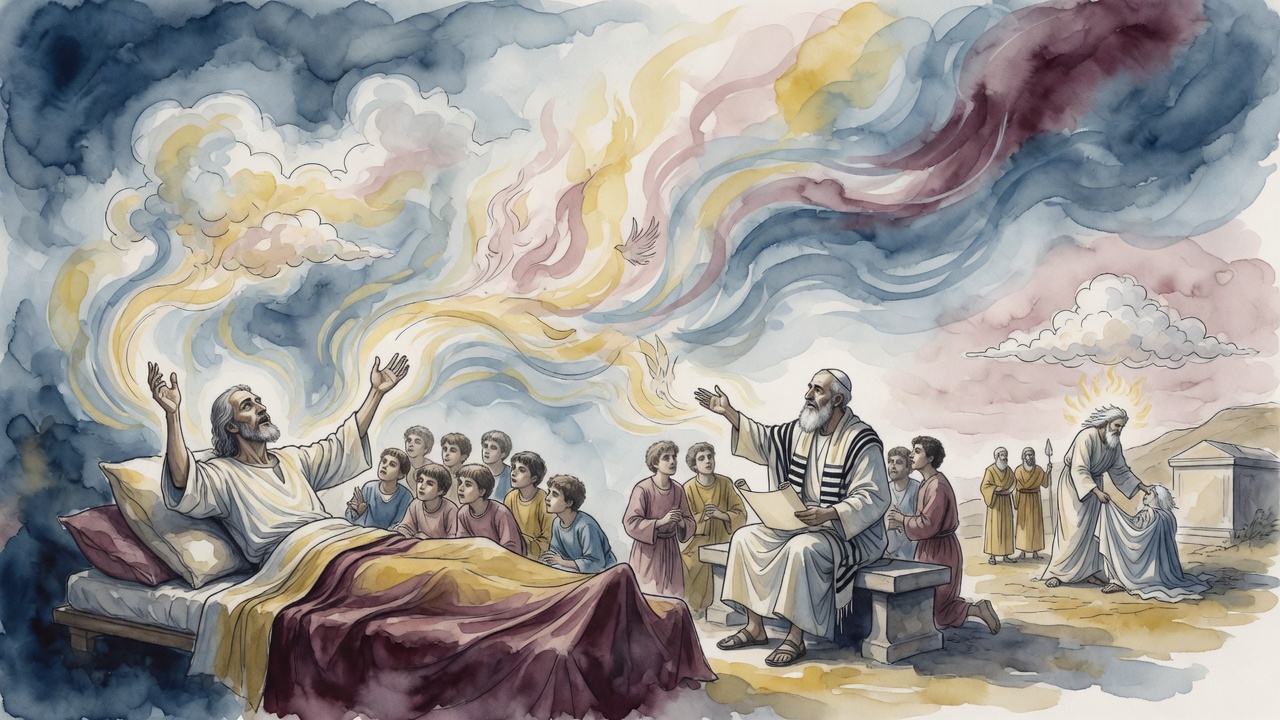
The emperor wanted to know how the world was made. Rabbi Yehoshua took him into a small house and told him to point east, west, north, and south.
Table of Contents
Hadrian, may his bones be crushed, asked Rabbi Yehoshua bar Hananya how the Holy One created the world. The question came from an emperor's mouth and expected either magic or surrender. The sage answered with a teaching that already lived among the rabbis. God took materials for the directions and built a world large enough to shame a small imagination.
 Click for full size
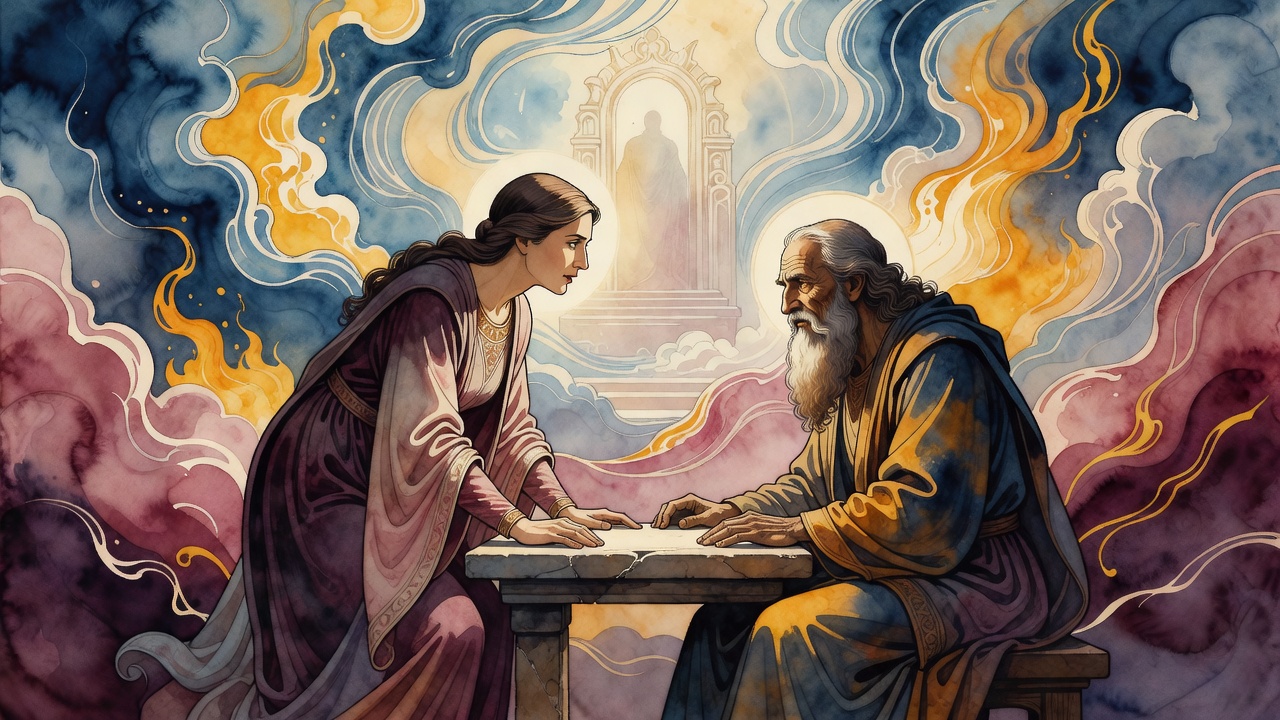
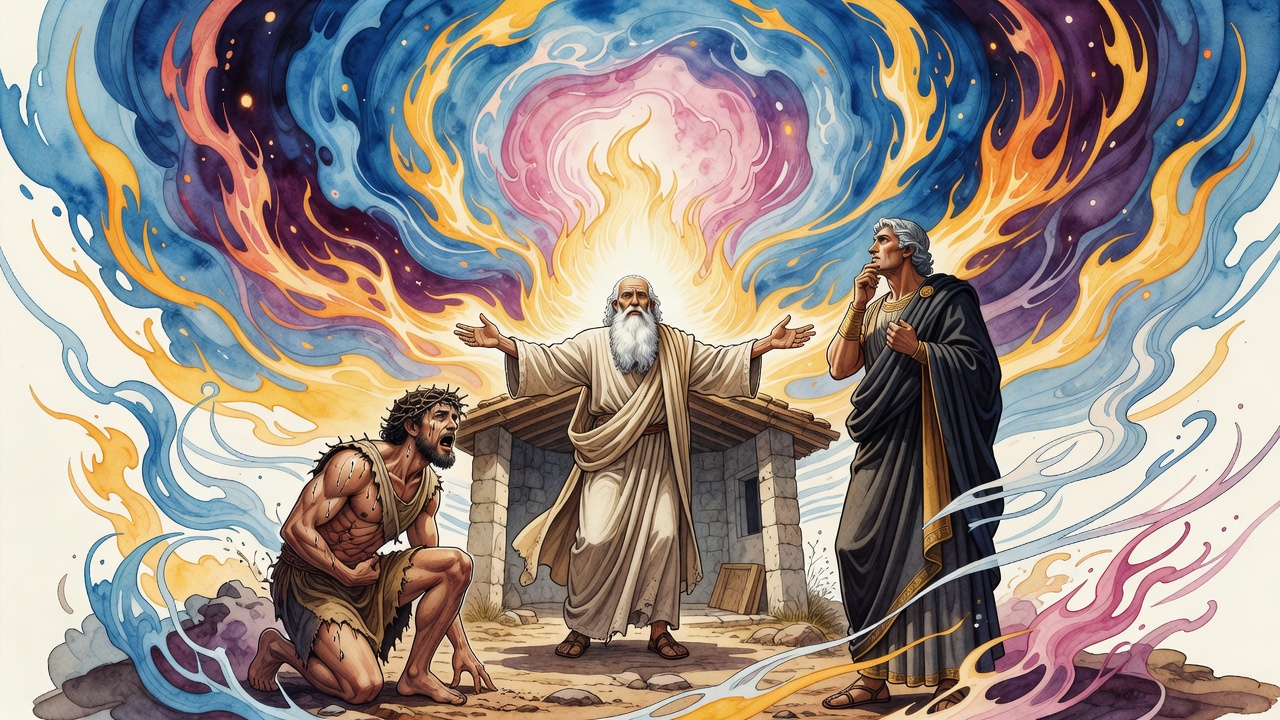
Hadrian pressed. Is it possible it was so? Rabbi Yehoshua did not write a scroll for him. He took him into a small house and said, "Extend your hand to east, west, north, and south." That, he said, was the action done by the Holy One. Empire met a room and a gesture.
Fire, Snow, and Six Directions
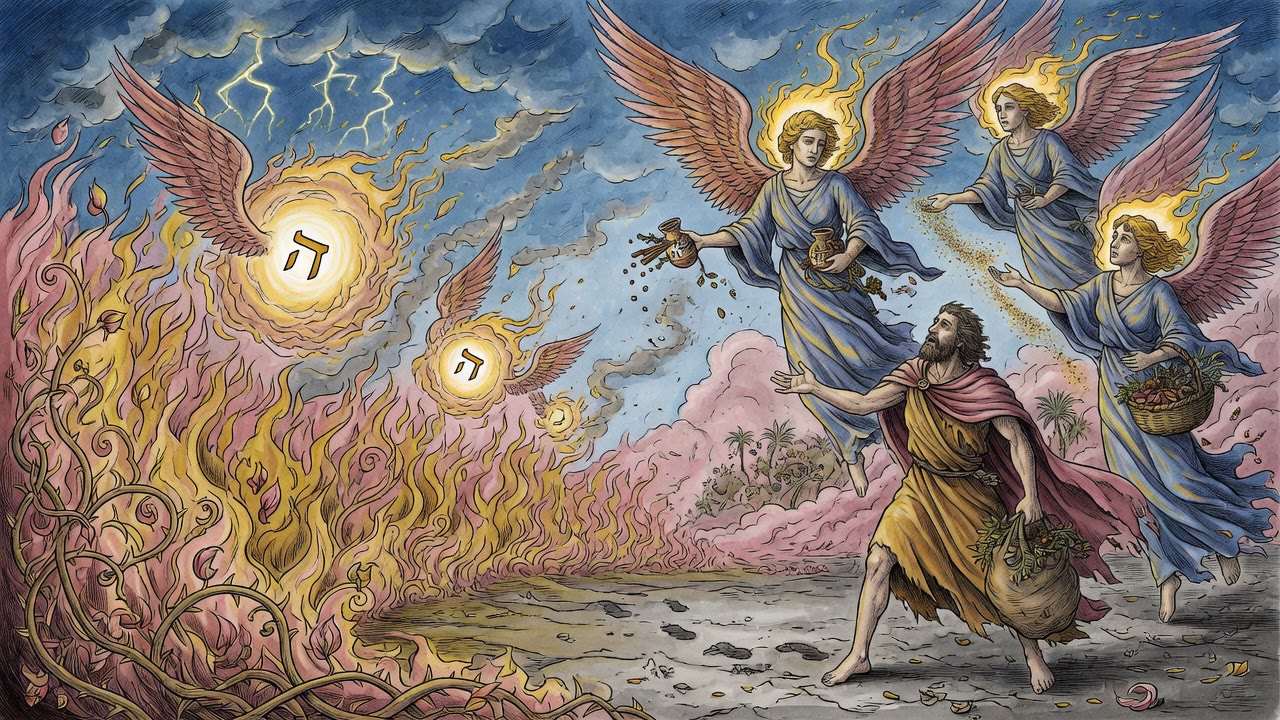
How did the Holy One create His world? Rabbi Yohanan said God took two skeins, one of fire and one of snow, mixed them, and from them the world was created. Rabbi Hanina said four, for the four directions. Rabbi Hama bar Hanina said six, four for the sides and one for above and one for below.
The numbers argue without canceling the heat. Fire and snow should refuse each other. In the teaching they accept a mixing under command. Directions are not empty compass points. They are skeins pulled tight until a world can stand.
Hadrian's bones are cursed in the same breath that preserves his question. The midrash will use a tyrant as a foil and still answer him. Knowledge is not his reward. The answer is for Israel watching a sage refuse panic in a small house.
Hands Toward Every Wind
Inside the house the emperor had to perform the teaching with his own arms. East. West. North. South. No legion helped. No architect translated. The body became the diagram. Creation, in that moment, was not a rumor from barbarian priests. It was a stretch any man could attempt and no man could complete as God completes it.
"Such was the action done by the Holy One," Rabbi Yehoshua said. The sentence is almost dry. Dry sentences can carry more voltage than palace poetry. Hadrian had asked for mechanism. He received participation that still left him outside the true act.
A small house can defeat a large crown when the question is how reality began. The sage did not need the Temple's height for this proof. He needed four walls and a student who thought power meant knowing.
The Villager Who Smashed the Goblets
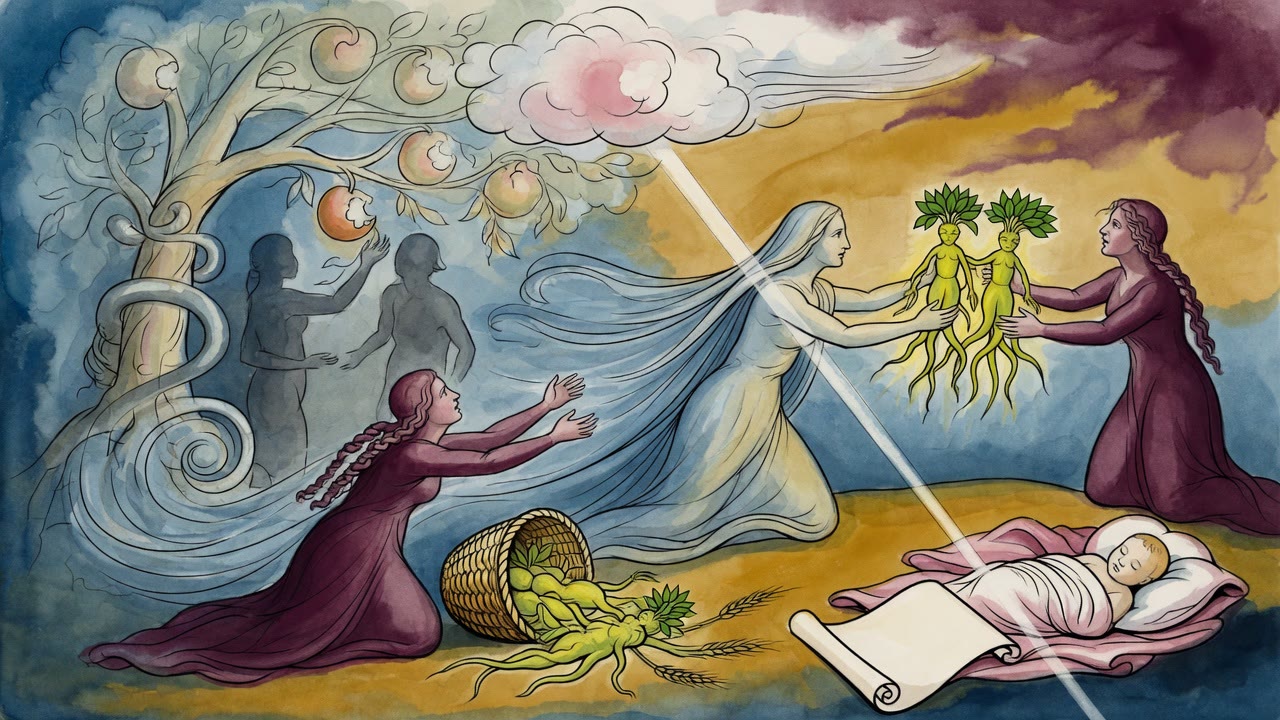
Far older than Hadrian, Adam and Eve opened their eyes after the fruit and knew they were naked. Had they been blind before? The sages say the opening was not first light but first inventory of damage. A villager once passed a glazier's shop, smashed a basket of goblets with his cane, and had no money to pay. The glazier dragged him inside. "I know I will get no benefit from you, but come see how much goodness you destroyed."
So God showed the first pair how many generations their sin had shattered. Eyes opened onto broken futures. They knew they were naked of even the one commandment they had received. They sewed fig leaves, the leaf that brought grief, and made themselves loincloths of many straps, as if belts could replace obedience.
"You have ruined your handiwork," the teaching hears God say in effect. "Take a thread and sew." Repair after ruin is still commanded. Knowledge of the smash does not excuse sitting in the glass.
Thorns, Sweat, and Bread
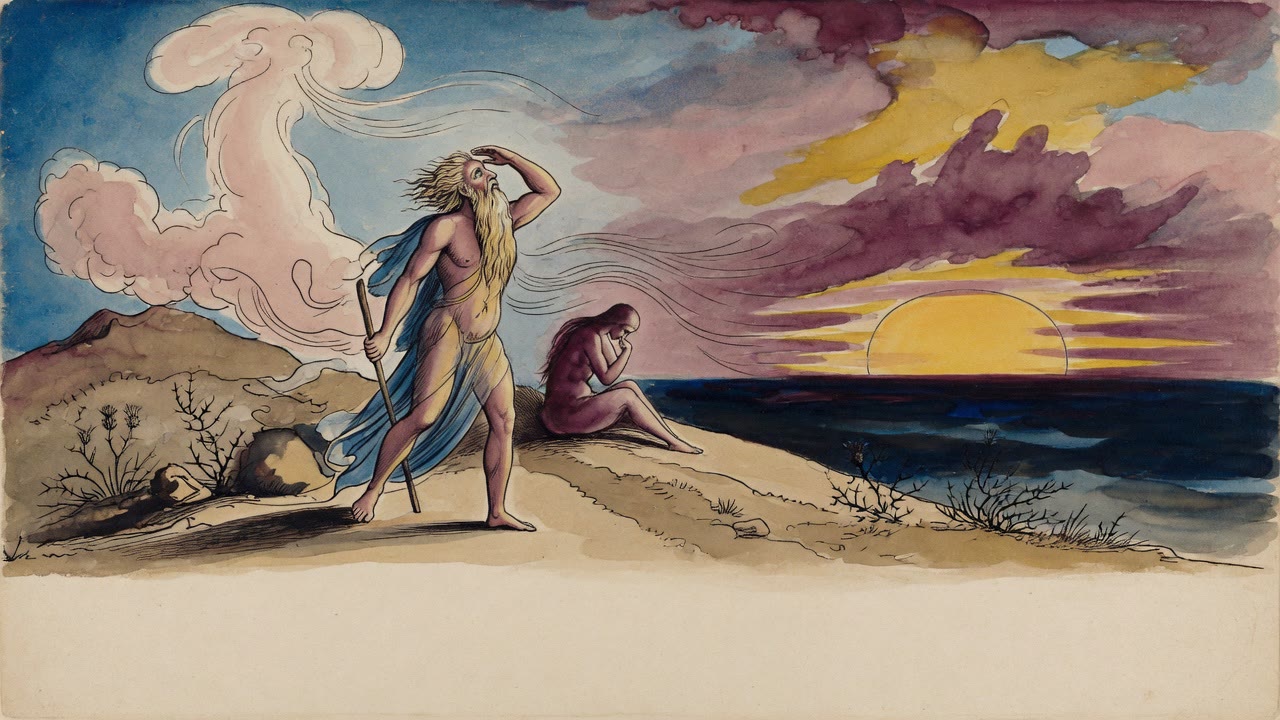
The ground would grow thorns and thistles, artichoke and cardoon in the sages' plant list. "Had you merited," Rabbi Yehuda said, speaking God's charge to Adam, "the garden's trees would have grown for you. Now thorns." "Had you merited," Rabbi Nehemya said, "garden plants would have tasted of every delicacy. Now field vegetation without that gift."
When Adam heard he would eat the vegetation of the field, his face perspired. "Am I to be tied to a trough like an animal?" Because his face sweated, God answered that he would eat bread by the sweat of his brow. Rabbi Levi said it might have been better had he remained with the first curse. Bread costs more labor than raw plants.
Perspiration, the midrash notes among other signs, can be a good omen for the ill. The same wet face that marked Adam's horror marks a body turning back toward life. Curse and symptom share a temperature.
From a Tyrant's Question to a First Sweat
Hadrian wanted the recipe of worlds. Adam wanted not to live like a beast at a trough. Rabbi Yehoshua answered with stretched hands. God answered Adam with bread that must be earned in heat. Both scenes refuse cheap knowing. One blocks imperial curiosity with a gesture. One blocks paradise nostalgia with thorns and sweat.
The first humans saw generations smash like goblets. The emperor saw only a house and four directions he could point to without owning. Between them the midrash keeps a single claim. Creation is God's act. Repair, labor, and refused arrogance are the human share that remains after the glass breaks.
Evening in that small house would have smelled of dust and lamp oil. Evening outside Eden smelled of first thorns. The sage and the first man never met, yet both learned that a hand extended into mystery does not become the equal of the One who mixed fire with snow.
← All myths