6 min read

Samlai Answered the Heretics With One Verb

Heretics demand how many gods made the world. Rabbi Samlai walks them through singular verbs, then faces students who want the real answer.

Curated by Arthur · Told by Maggid ·
Table of Contents
  1. How Many Made the World
  2. A Plural Name and a Single Verb
  3. A Reed Is Not a Pillar
  4. Two Went Up and Seven Came Down
  5. I Have Acquired a Man With the Lord
Samlai Answered the Heretics With One Verb Click for full size

How Many Made the World

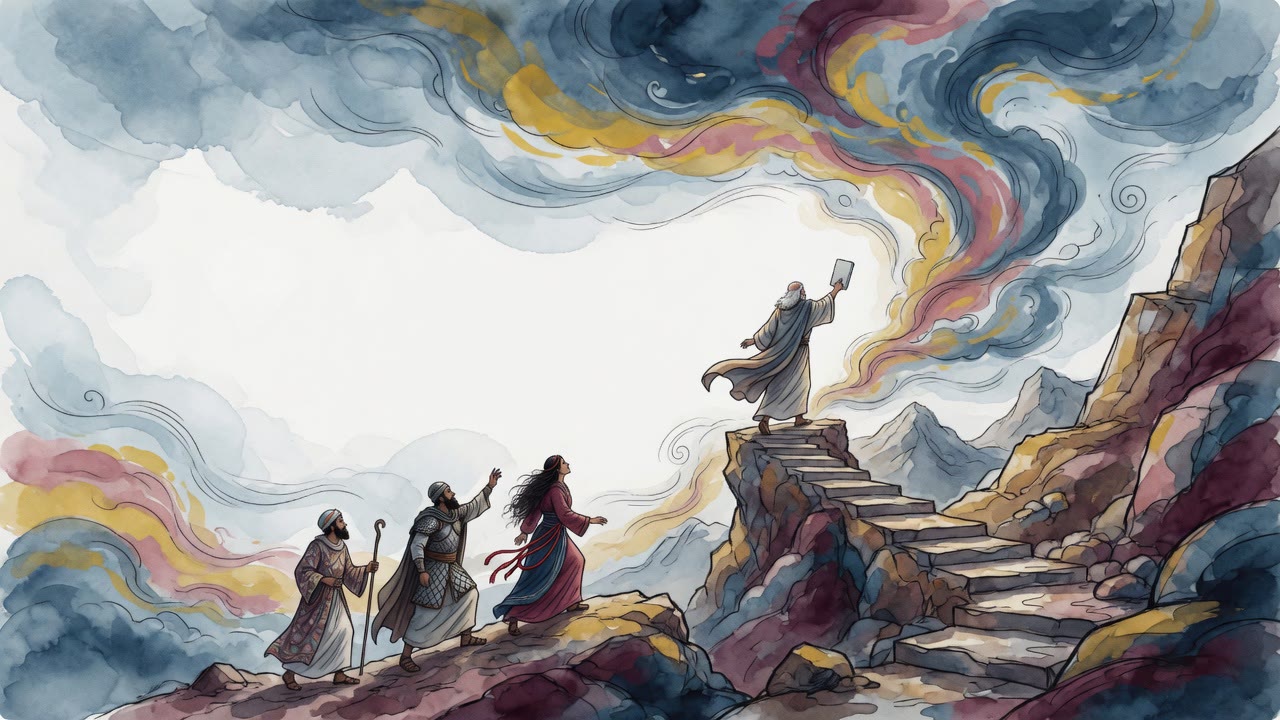
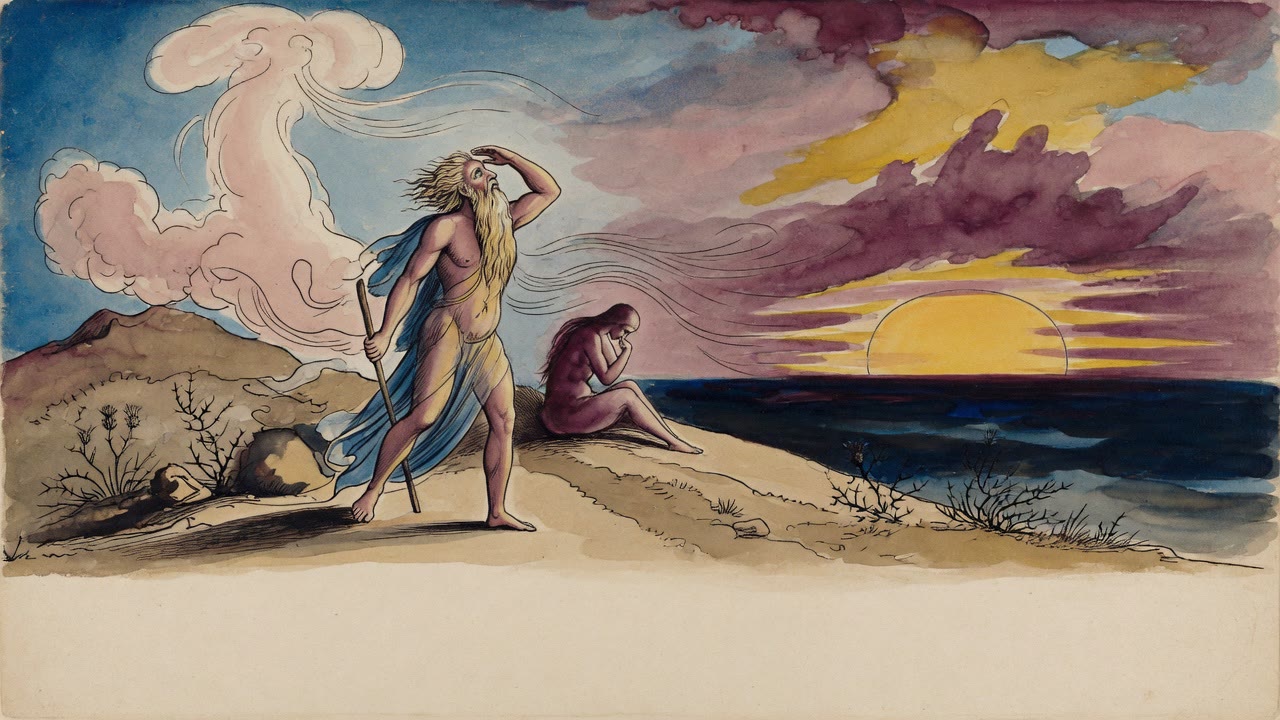
They came in without greeting anyone. Rabbi Samlai was sitting where he always sat, and the heretics walked the length of the room and put the question down in front of him like a stone. "How many deities created the world?"

The students along the wall stopped writing. Samlai did not stand and he did not raise his voice. "Let you and I inquire into the early days," he said, and he took them back to the verse that tells a man to ask about the day God created humankind upon the earth. The verb sitting in that verse is singular. One subject, one act, and no room in the grammar for a second pair of hands.

The heretics had come with more than one verse.

A Plural Name and a Single Verb

They opened at the beginning. "In the beginning God created." Elohim, they said, and let the word stand there, because Elohim wears a plural shape the way a crowd wears one name, and if the name is a crowd then the dark was shaped by a committee.

Samlai went nowhere near their poetry. He went at the verb. Baru Elohim is not written there, he told them, but bara Elohim, one verb, singular, doing the entire work of creation under a name that only sounds like many. A plural hat does not put a second head under it.

Then they brought the line that still takes the air out of a study house. "Let us make man in our image, after our likeness." Us. Our. Seats enough at that table for several thrones.

"Read what is written thereafter," Samlai said. And God created man in His image. Vayivra, singular, and His image, singular, so the verse that opens with consultation shuts with one craftsman alone. The heretics took that answer and carried it out the door, and the scrape of their sandals on the threshold was the last thing anybody in the room enjoyed.

A Reed Is Not a Pillar

The students were on him before the door had finished swinging.

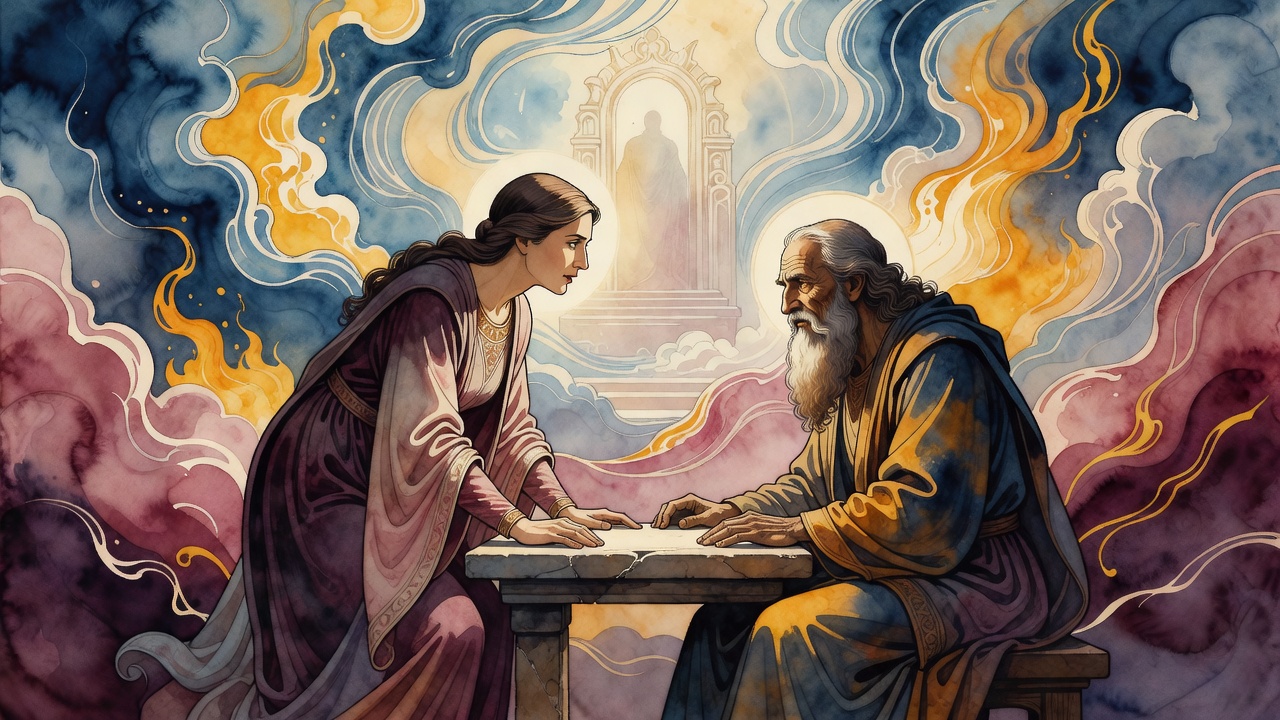
"Rabbi, you pushed those men off with a reed." The one who said it was not being clever. He had watched the whole exchange and had counted the same verbs his teacher counted, and he knew that a grammar point clears a room without holding a roof up. "What will you answer us?"

Samlai looked at him for a while. He could have said the answer was good enough for the men it was aimed at, which was true, and he could have sent the boy back to his bench, which he had every right to do. Instead he pulled the scroll back toward himself, because the question was better than the one the heretics had brought, and it had earned the thing he was not willing to spend in front of enemies.

Two Went Up and Seven Came Down

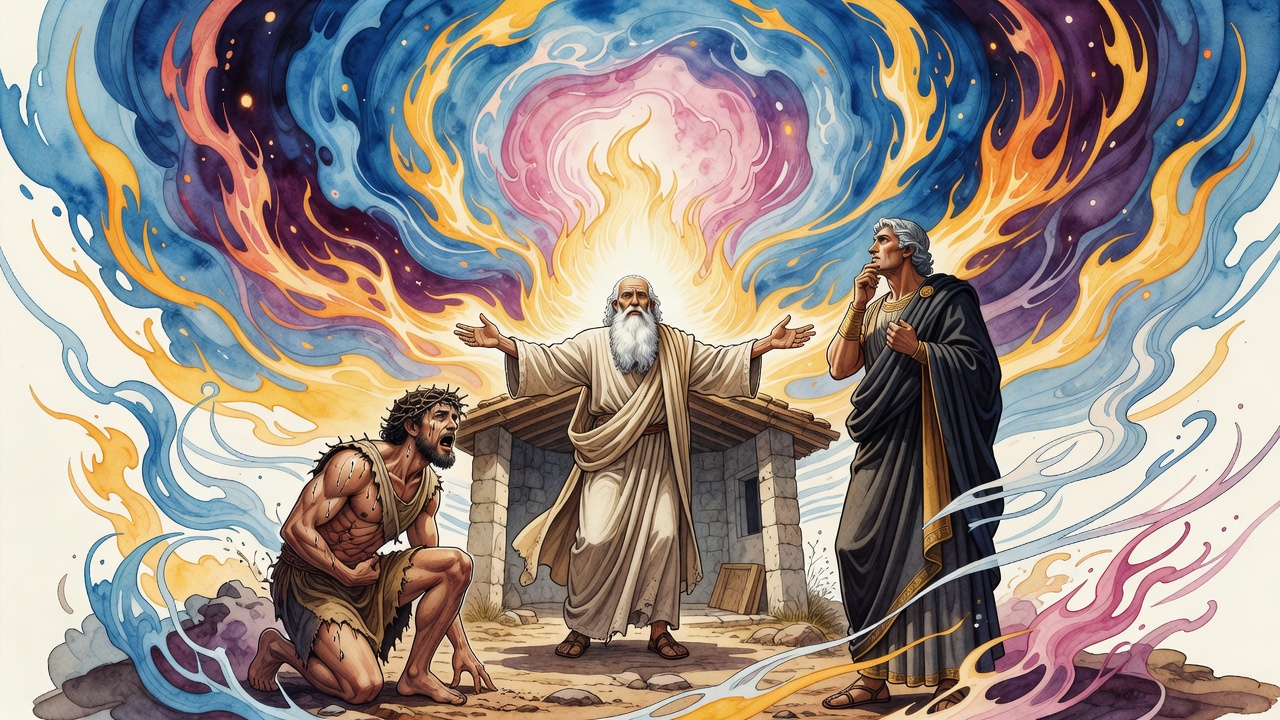
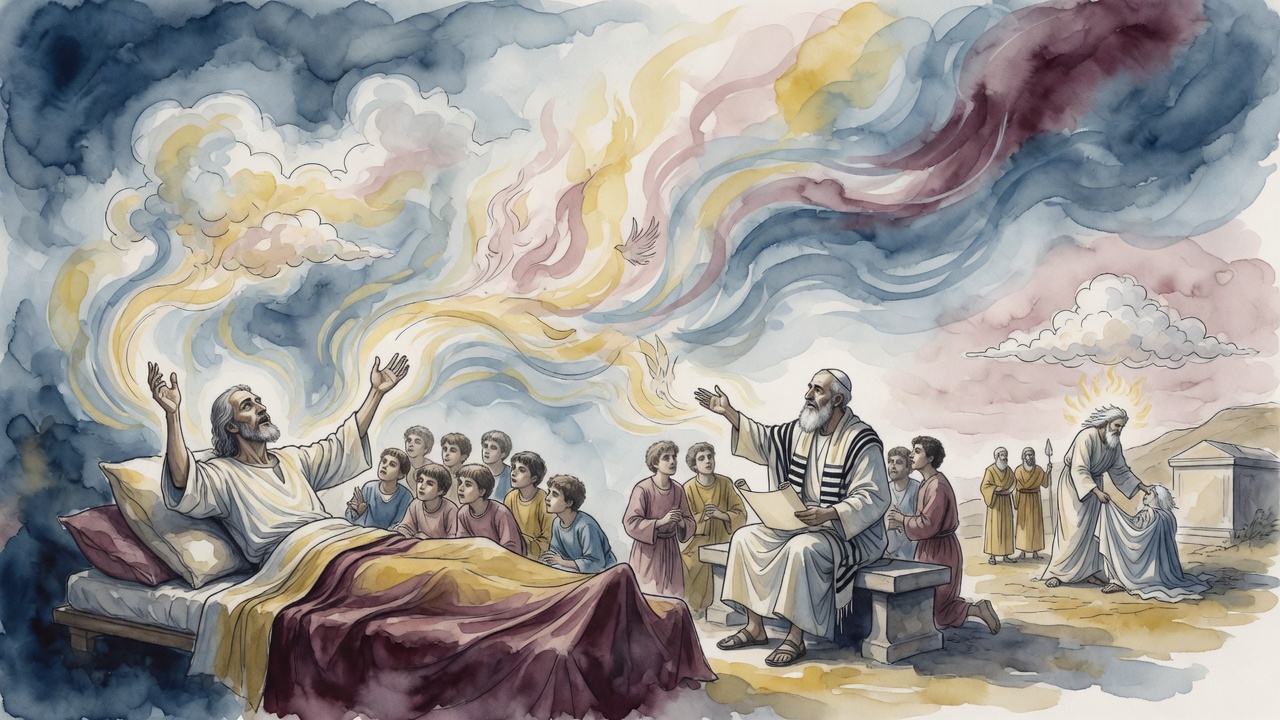
The "us" is not a council of gods, he told them. It is the arrangement the world has run on ever since. Adam was made out of earth and Eve was made out of Adam, but nobody has been made either of those ways since. A man does not bring a child into the world without a woman, and a woman does not without a man, and neither of them does it without the Divine Presence standing in the room. Three parties to every birth. One of them God, and the other two dust with names on it.

Then he took the students out of the garden to watch it happen. And the man knew Eve his wife. Nothing alive had known cohabitation before Adam, so he was the first at it, and he taught the rest of the world how it was done. The word for knowing does double work in that verse, since what Adam knew that day was also what he had lost, the quiet of the garden and the gate shut behind him, and what his wife had done to get them both put out. Rav Aha, generations later, leaned across the centuries to say it to her face. "The serpent was your serpent, and you were Adam's."

Rabbi Elazar ben Azarya counted three miracles crowded into that one day, creation still warm, then cohabitation, then a child. Rabbi Yehoshua ben Korha counted heads instead. Two went up into the bed and seven came down: Cain with a twin sister, Abel with two of them.

I Have Acquired a Man With the Lord

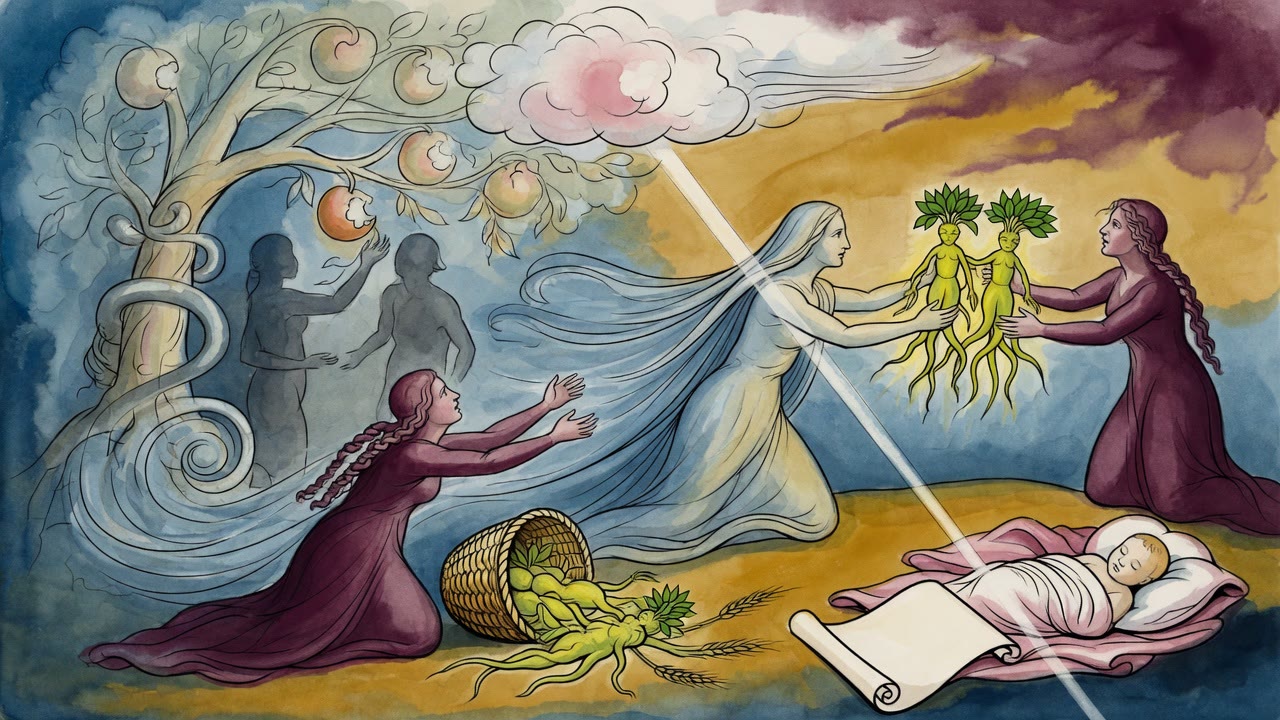
Eve did the naming, and she put the entire argument into one sentence without being asked for it. "I have acquired a man with the Lord."

Rabbi Akiva heard the small word et (את) in there as a fence. In Hebrew, et marks a verb's object and often vanishes in English; he read it here to stop the sentence sounding as if she had acquired God Himself. Rabbi Yishmael would not take that. "If a word looks empty to you," he said, "the emptiness is yours." Adam came from earth and Eve came from Adam, but this one came the new way, through a man and a woman and the Presence between them, and et means with. She had acquired a man with the Lord, since there was no other way left to acquire one.

The lamps were low by then. Somewhere on the road the heretics had one verb to show for their evening, and the students were still in their seats, looking at a woman sitting outside a locked garden with a newborn on her arm, counting up the three who had made him and getting the number right.


← All myths
From the tradition

Sources

2 sources

The texts behind this telling. Some cards carry a translation of the source; others are our own retelling of it, and each card says which. Every card links out to the original.

Bereshit Rabbah 8:9Bereshit Rabbah

Retold in our words. Read the original at the link below.The Sefaria Midrash Rabbah, 2022 · CC-BY

The story centers on Rabbi Samlai, a sage known for his sharp wit and insightful responses. He found himself confronted by "heretics" – likely members of sectarian or sectarian groups – who sought to challenge the core tenet of Judaism: the absolute oneness of God. Their questions were pointed, designed to expose perceived contradictions within the Torah itself.

"How many deities created the world?" they asked Rabbi Samlai, cutting right to the chase.

Rabbi Samlai wasn't one to shy away from a good intellectual sparring match. He parried their question with a clever invitation: "Let you and I inquire into the early days." He then directed their attention to (Deuteronomy 4:32), which speaks of God creating humankind. But he draws attention to a subtlety: the verse uses the singular verb bara ("created") rather than the plural baru. It's a tiny grammatical point, but one loaded with theological significance.

The heretics weren't deterred. They pointed to (Genesis 1:1): "In the beginning God [Elohim] created…" Elohim, they argued, looks like a plural term. Surely, this implied multiple creators?

Rabbi Samlai was ready. "Baru Elohim is not written here," he countered, "but rather, bara Elohim." Again, he highlighted the singular verb bara used with the seemingly plural name Elohim. This subtle dance between singular and plural forms becomes a key element in his defense of monotheism.

Then came the big one: "Let us make Man in our image, in our likeness" (Genesis 1:26). Doesn’t the "us" and "our" suggest a divine committee at work?

"Read what is written thereafter," Rabbi Samlai urged. "God created [vayivra] man in His image." He emphasized that the verse (Genesis 1:27) immediately shifts to the singular: "vayivra" (He created) and "His image." Problem solved. Well, maybe not entirely. After the heretics left, Rabbi Samlai's students, perhaps a little bewildered, pressed him. "Rabbi," they said, "you pushed those men off with a reed! You gave them a facile response. What would you really say to us?"

Rabbi Samlai, recognizing the need for a deeper explanation, offered a more profound interpretation. He explained that the "us" in "Let us make man" refers not only to God but also to the partnership between a man, a woman, and the Divine Presence in creating new life. Adam was created from earth, and Eve from Adam, but now, procreation requires all three. As he put it, "a man will not [produce offspring] without a woman, nor will a woman without a man, nor both of them without the Divine Presence." It’s a beautiful illustration of how God's creative power is manifested in the union of two individuals.

The students persisted, bringing up another tricky verse, (Joshua 22:22): "God [El], God [Elohim], the Lord [Hashem]…" Doesn't this list of divine names imply multiple deities?

Again, Rabbi Samlai pointed to the grammar: "’They know’ is not written here, but rather, ‘He knows.’" The verse concludes with a singular verb, indicating that all these names refer to the same single God.

Still not satisfied, the students sought a clearer analogy. Rabbi Samlai responded, "All three of them are names of God, as when a person says: Basilias Augustus Caesar." He drew a parallel to a king known by different titles, all referring to the same individual.

Finally, the students presented one last challenge: "For He is a holy [kedoshim] God" (Joshua 24:19). Kedoshim, like Elohim, appears to be a plural form.

Rabbi Samlai, ever consistent, replied: "'They are holy' is not written, but rather, 'he is holy.'" The singular adjective overrides the plural form of the noun.

It’s not just about winning an argument. It's about confronting complex theological concepts and finding ways to articulate the core beliefs of Judaism in a way that resonates, even in the face of skepticism. Rabbi Samlai's responses, while rooted in careful textual analysis, also point to a deeper understanding of God's many-sided nature and the importance of human partnership in the ongoing act of creation.

Full source
Bereshit Rabbah 22:2Bereshit Rabbah

Retold in our words. Read the original at the link below.The Sefaria Midrash Rabbah, 2022 · CC-BY

The Torah touches on this in the story of Adam and Eve, and the Rabbis of the Midrash (rabbinic interpretive commentary) have some fascinating things to say about it.

In Bereshit Rabbah, a collection of rabbinic homilies on the Book of Genesis, we find a discussion about the verse “And the man was intimate [vehaadam yada]” (Genesis 4:1). Rabbi Huna and Rabbi Yaakov bar Avin, citing Rabbi Abba bar Kahana, make a bold claim: Before Adam, no creature engaged in cohabitation! The text emphasizes, "vehaadam yada Eve his wife", notice that Adam is mentioned before the verb. This, they say, indicates that Adam was the first. He, in a way, taught the means of intimacy to all.

There's more to unpack here. The word "yada," meaning "to know," is used again when the text says, “[He banished the man…] and the man was intimate [yada] [with Eve [ḥava]]” (Genesis 3:23–4:1). This second usage isn't just about physical intimacy. It's about Adam realizing what he had lost – the tranquility of the Garden of Eden. He also realized what Eve had done.

Rav Aḥa adds a stinging jab directed at Eve: "The serpent was your serpent, and you were Adam's serpent [ḥivia]." Harsh. Essentially, the serpent caused Eve's downfall, and Eve, in turn, caused Adam's. It's a blame game echoing through the ages.

Then comes the birth of Cain. "She conceived and gave birth to Cain," and Rabbi Elazar ben Azarya points out something remarkable: Three miracles occurred on that very day. Creation, cohabitation, and procreation, all in one fell swoop! Talk about a busy day.

Rabbi Yehoshua ben Korḥa offers an even wilder image: Two people went up into the bed, and seven descended! He's referring to Cain and his twin sister, and Abel with his two twin sisters. Twins all around!

And what about Eve's declaration, "I have acquired a man with [et] the Lord"? What does that little word "et" even mean?

Rabbi Yishmael asks Rabbi Akiva about it, referencing the teachings of Naḥum of Gam Zo, who taught that "et" and "gam" are inclusive expressions. Why is it included here? Rabbi Akiva explains that had it been written “Kaniti ish Hashem” (I have acquired a man of God), it might have implied that she had acquired God Himself! So, the "et" is there to clarify "with God," not of God.

But Rabbi Yishmael isn't satisfied. He challenges Rabbi Akiva, quoting (Deuteronomy 32:47), "For it is not an empty matter for you [mikem]" – meaning, if it seems empty, it’s because of your own lack of understanding! He then offers his own interpretation: Previously, Adam was created from earth, and Eve from Adam. But now, offspring will come about in our image and likeness. A man can't produce offspring without a woman, nor a woman without a man, nor can either do it without the Divine Presence. In other words, "Kaniti ish et Hashem" means: I have acquired this child through a man and through God.

So, what do we take away from all this? The story of Adam and Eve isn't just a simple tale of creation and transgression. It's a complex exploration of intimacy, responsibility, and the role of the Divine in the creation of life.

Full source