5 min read

When the Lions Refused to Eat Rabbi Tanchum

Caesar invites the Jews to become one people. Rabbi Tanchum answers with circumcision, is thrown to lions, and the beasts refuse to eat him.

Curated by Arthur · Told by Maggid ·
Table of Contents
  1. The net of many gods
  2. One people, two bodies
  3. Plural words, singular Actor
  4. What the students still needed

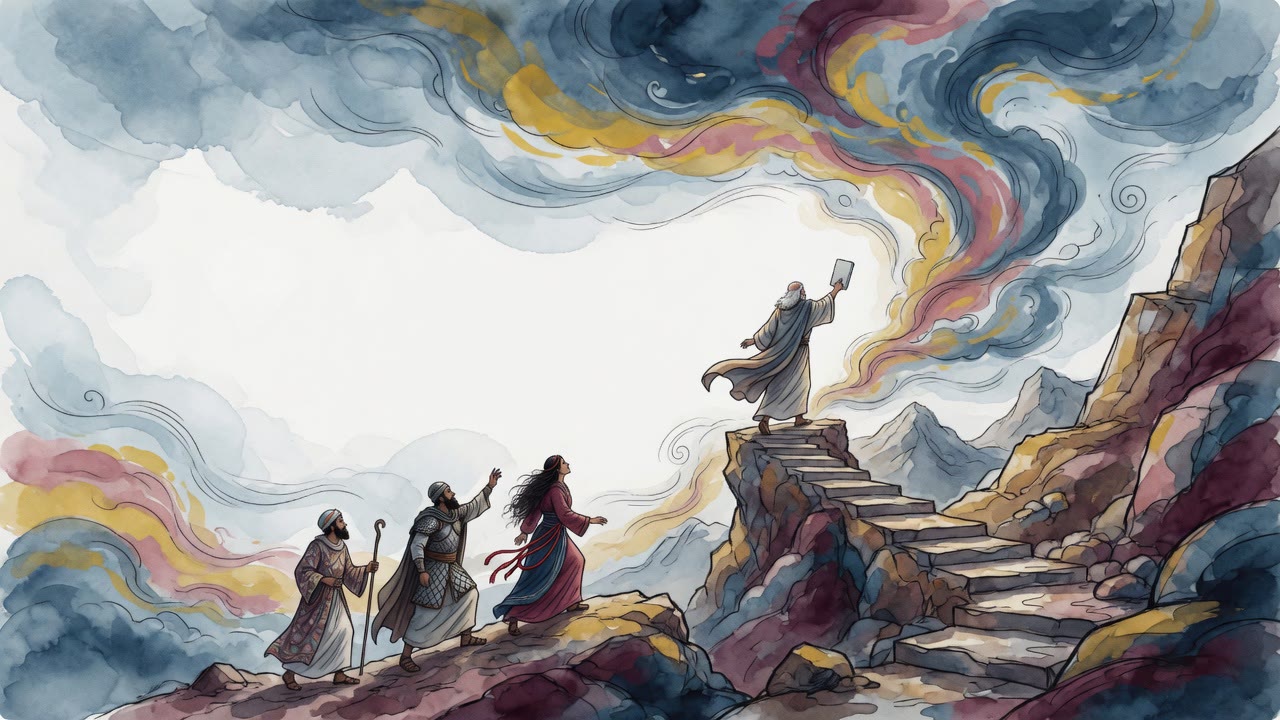
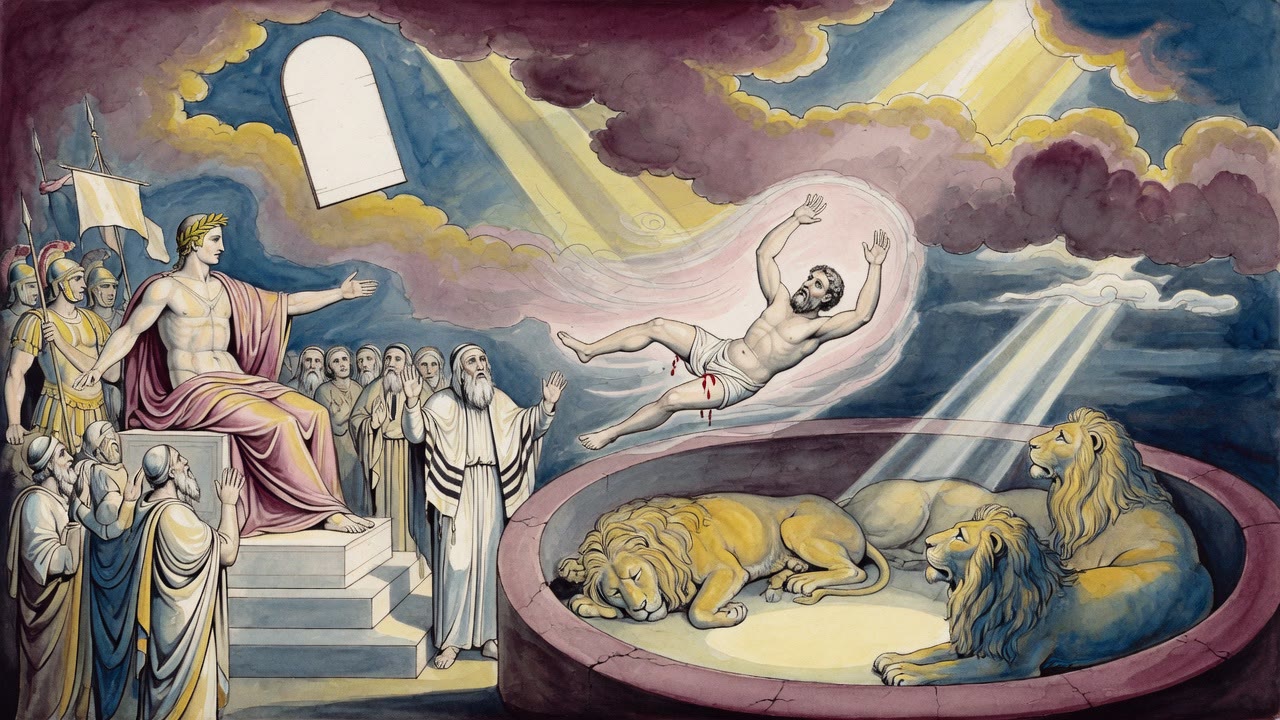
Caesar's words fell into the room like a net. "Come," he said to Rabbi Tanchum, "let us become one people." The rabbi did not raise his voice. He did not beg. He answered as if the emperor had asked a practical question of carpentry. "Very well. We are circumcised, and we cannot simply become as you are. If you agree to be circumcised yourselves, then we would be alike, and we could be one people."
When the Lions Refused to Eat Rabbi Tanchum Click for full size

The emperor paused, then admitted the answer was reasonable. Roman law, he added, still required that anyone who silenced his ruler in argument be cast to the lions. At a word, Tanchum was flung into the den. The lions would not touch him. A heretic watching from the rail scoffed that the beasts were simply not hungry. They threw him in next. The lions ate him at once.

The net of many gods

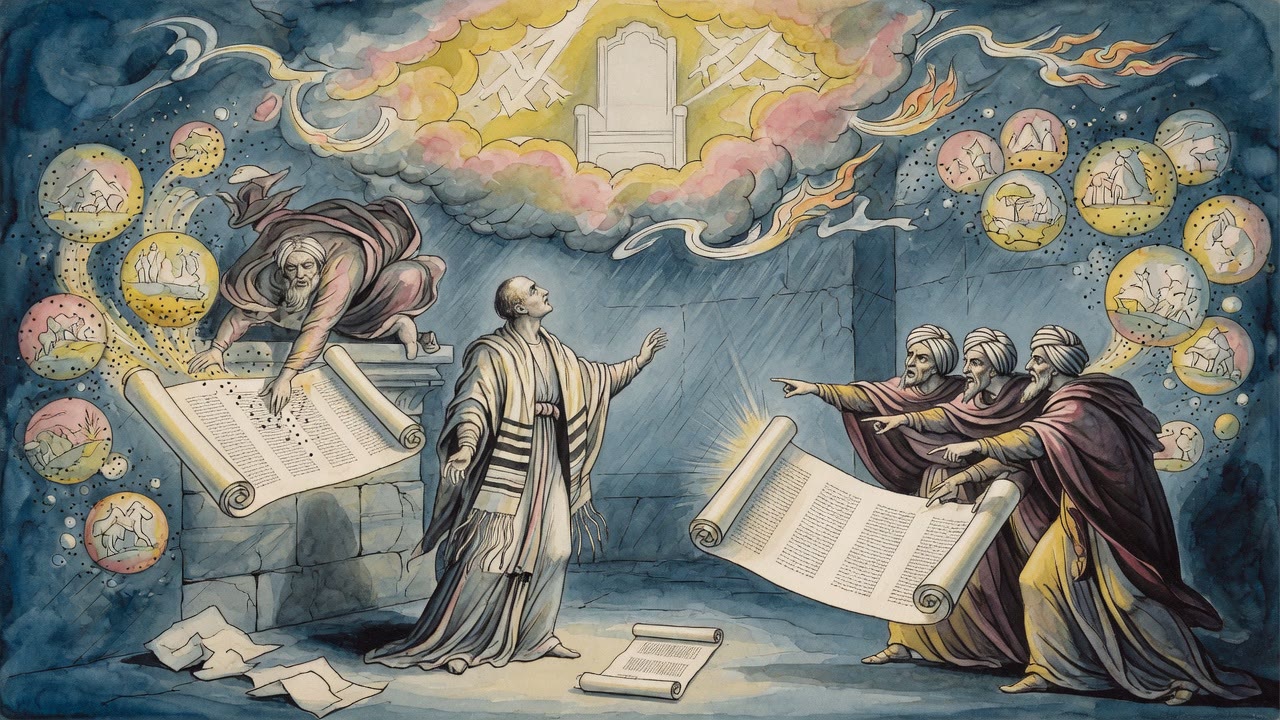
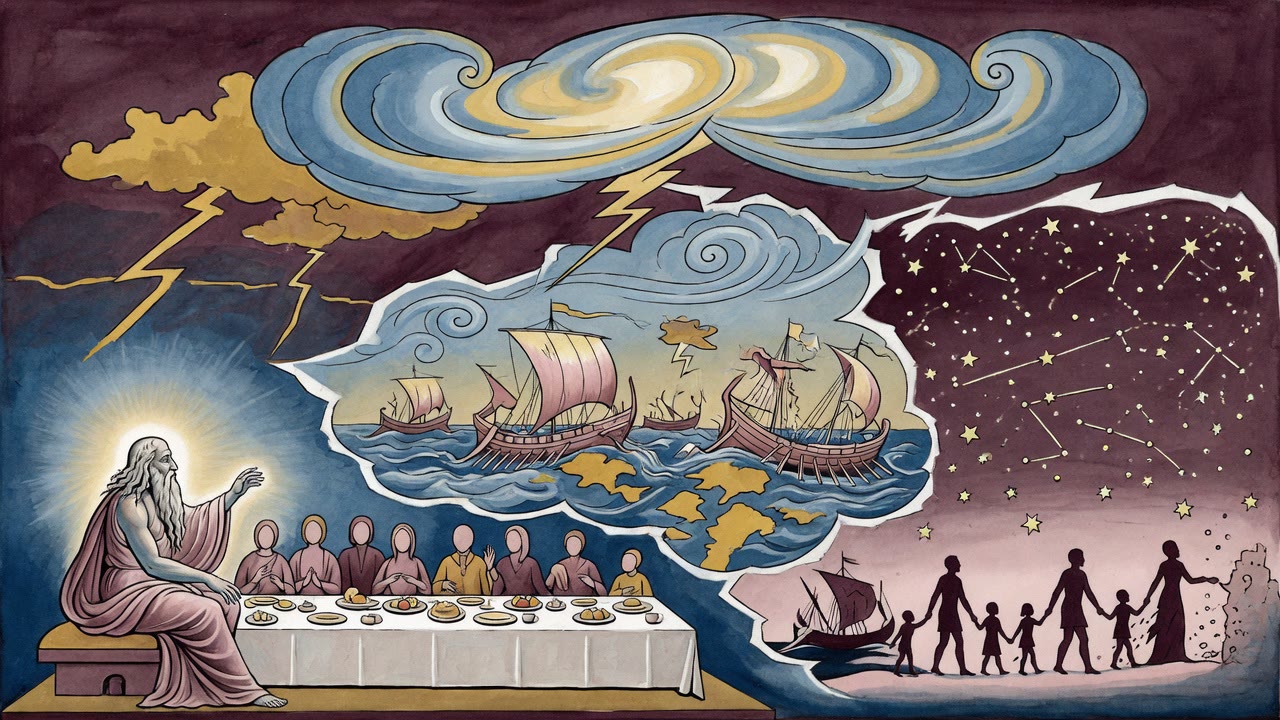
Long before that den, another sage faced a different net. Rabbi Samlai, also called Simlai in parallel tellings, stood before heretics who tried to multiply the Creator from the grammar of Scripture. "How many deities created the world?" they asked, pointing to the plural-looking name Elohim, to "Let us make man," to Joshua's "holy gods." Samlai answered with verbs. The Torah says bara, He created, not a plural act. After "Let us make," it says God created man in His image, singular. After the list of divine names, it says He knows, not they know. After "holy" in the plural form, it says He is holy.

His students, when the heretics left, pressed him: you pushed them off with a reed. Give us the deeper answer. Samlai opened the "us" of creation into partnership: man, woman, and the Divine Presence together in the making of life. The plural forms of holiness, he and his colleagues taught, are modes, not numbers. God is holy in every register at once, not many gods in a quarrel over a single throne.

One people, two bodies

Caesar's invitation looked generous. One empire, one customs house, one public face. Tanchum heard the cost. To become "one people" on Rome's terms meant erasing the mark that set Israel apart in the flesh. His counter-offer was not mockery. It was the same seriousness Samlai brought to grammar. If unity requires a change of body, let the change be shared. Rome would not share it. Rome answered with lions, as if teeth could settle a covenant question.

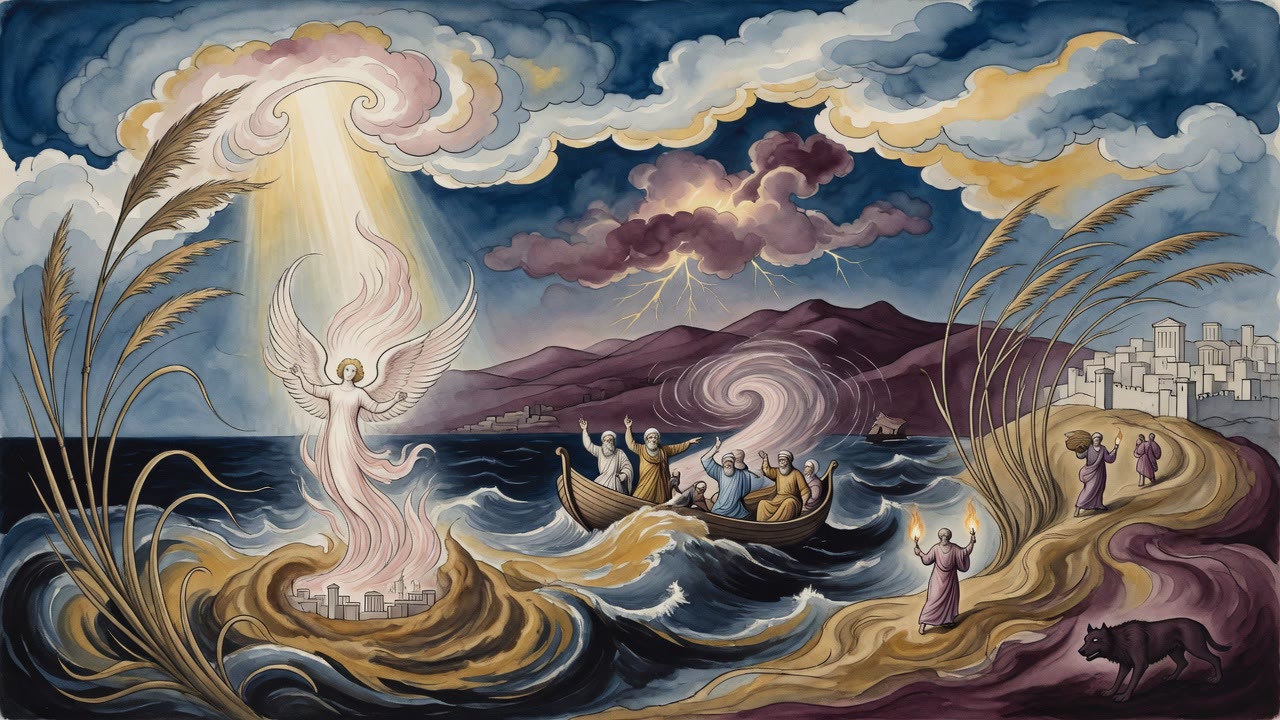
The den becomes the second half of the argument. Heaven does not always send fire from the sky. Sometimes Heaven simply withholds appetite from beasts. The heretic who needs a natural explanation walks into the same jaws and finds nature working the other way. The story does not claim that every sage survives every arena. It claims that this particular silence of the lions matches the particular firmness of the answer given in the throne room.

Plural words, singular Actor

Joshua said God is holy in a plural-sounding phrase, and the minim seized it. Simlai told them to finish the verse: the subject remains He. Rabbi Aha bar Hanina unfolded the plural as six modes of holiness drawn from the Psalms and the Song at the Sea: way, processions, vision, speech, arm, beauty. One God, many registers. The same defense that holds in a study house holds in an emperor's court. Israel will not trade the One for a political merger that multiplies masters while calling the result peace.

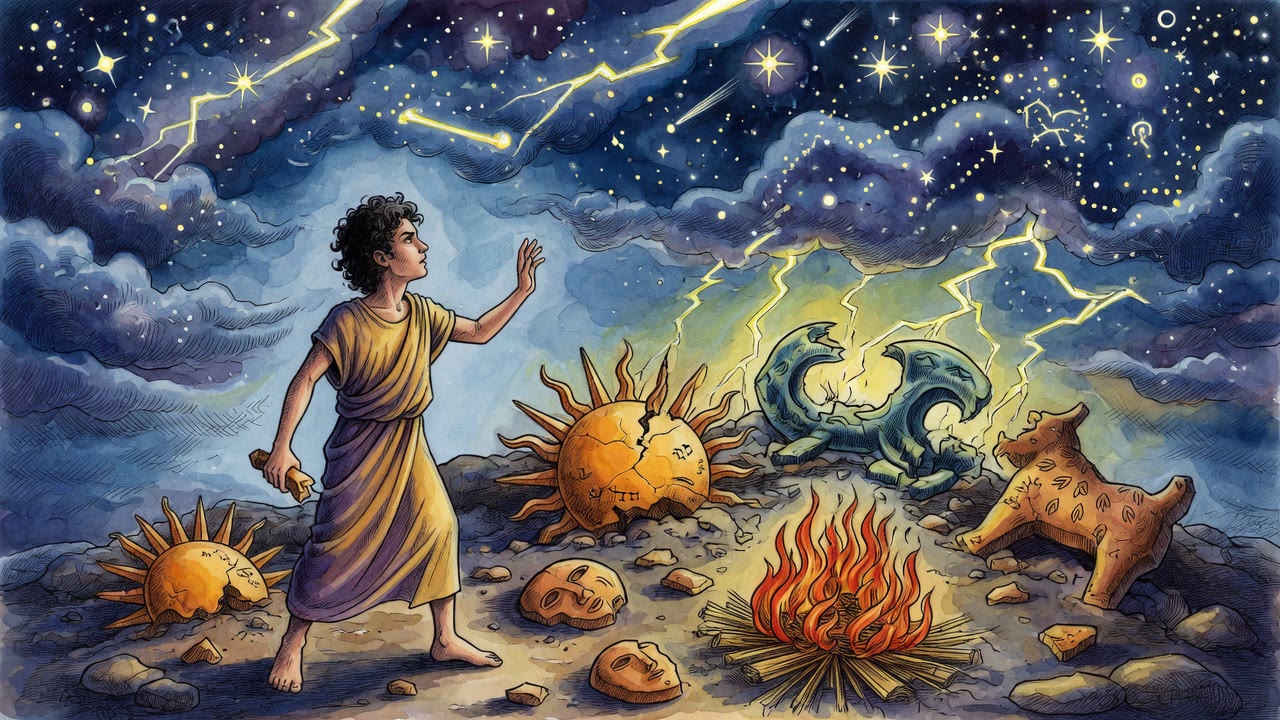
Tanchum's circumcision answer and Samlai's grammar answer are the same courage in different rooms. One refuses a false unity of peoples. One refuses a false plurality of gods. Both leave a man standing where power expected him to kneel, and both insist that language and body are not toys for empire or for sectarian word games.

What the students still needed

After the heretics left Samlai, the students were not finished. They brought Joshua's stacked names, El, Elohim, Hashem, and heard the singular verb again. They asked for a likeness they could hold. Samlai compared the three names to a king called by several titles, Basilias, Augustus, Caesar, still one man. The classroom and the lion den share that patience: do not let a plural-looking surface stampede you into bad theology or bad politics. Read to the end of the verse. Read to the end of the offer. See who still stands.

When the lions refuse Tanchum and accept the scoffer, the midrash is not writing a circus trick. It is writing a verdict on two kinds of speech: the speech that guards the One, and the speech that empties miracles into cheap doubt. The emperor wanted one people. Heaven answered with one survivor and one meal for the beasts who know, somehow, which argument still has blood that should not be spilled.


← All myths

From the tradition

Sources

3 sources

The texts behind this telling. Some cards carry a translation of the source; others are our own retelling of it, and each card says which. Every card links out to the original.

Sanhedrin 39aHebraic Literature (1901)

Retold in our words. Read the original at the link below.Project Gutenberg eBook #14368, Hebraic Literature · PD-US-pre-1929

Caesar once said to Rabbi Tanchum, "Come, let us become one people."

The rabbi answered calmly. "Very well. But we are circumcised, and we cannot simply become as you are. If, however, you agree to be circumcised yourselves, then we would be alike in that regard, and we could be one people."

The emperor paused and then admitted, "You have answered reasonably. But Roman law decrees that anyone who silences his ruler in argument shall be cast to the lions."

At a word, Rabbi Tanchum was flung into the lions' den. The lions, the tradition reports, would not touch him. A heretic watching the scene scoffed that the beasts simply were not hungry. To test the claim, he was thrown in next, and the lions devoured him at once (Sanhedrin 39a).

The emperor sought a political merger. The rabbi answered with the Torah's own boundary mark, and Heaven answered with the lions.

Full source
Bereshit Rabbah 8:9Bereshit Rabbah

Retold in our words. Read the original at the link below.The Sefaria Midrash Rabbah, 2022 · CC-BY

The story centers on Rabbi Samlai, a sage known for his sharp wit and insightful responses. He found himself confronted by "heretics" – likely members of sectarian or sectarian groups – who sought to challenge the core tenet of Judaism: the absolute oneness of God. Their questions were pointed, designed to expose perceived contradictions within the Torah itself.

"How many deities created the world?" they asked Rabbi Samlai, cutting right to the chase.

Rabbi Samlai wasn't one to shy away from a good intellectual sparring match. He parried their question with a clever invitation: "Let you and I inquire into the early days." He then directed their attention to (Deuteronomy 4:32), which speaks of God creating humankind. But he draws attention to a subtlety: the verse uses the singular verb bara ("created") rather than the plural baru. It's a tiny grammatical point, but one loaded with theological significance.

The heretics weren't deterred. They pointed to (Genesis 1:1): "In the beginning God [Elohim] created…" Elohim, they argued, looks like a plural term. Surely, this implied multiple creators?

Rabbi Samlai was ready. "Baru Elohim is not written here," he countered, "but rather, bara Elohim." Again, he highlighted the singular verb bara used with the seemingly plural name Elohim. This subtle dance between singular and plural forms becomes a key element in his defense of monotheism.

Then came the big one: "Let us make Man in our image, in our likeness" (Genesis 1:26). Doesn’t the "us" and "our" suggest a divine committee at work?

"Read what is written thereafter," Rabbi Samlai urged. "God created [vayivra] man in His image." He emphasized that the verse (Genesis 1:27) immediately shifts to the singular: "vayivra" (He created) and "His image." Problem solved. Well, maybe not entirely. After the heretics left, Rabbi Samlai's students, perhaps a little bewildered, pressed him. "Rabbi," they said, "you pushed those men off with a reed! You gave them a facile response. What would you really say to us?"

Rabbi Samlai, recognizing the need for a deeper explanation, offered a more profound interpretation. He explained that the "us" in "Let us make man" refers not only to God but also to the partnership between a man, a woman, and the Divine Presence in creating new life. Adam was created from earth, and Eve from Adam, but now, procreation requires all three. As he put it, "a man will not [produce offspring] without a woman, nor will a woman without a man, nor both of them without the Divine Presence." It’s a beautiful illustration of how God's creative power is manifested in the union of two individuals.

The students persisted, bringing up another tricky verse, (Joshua 22:22): "God [El], God [Elohim], the Lord [Hashem]…" Doesn't this list of divine names imply multiple deities?

Again, Rabbi Samlai pointed to the grammar: "’They know’ is not written here, but rather, ‘He knows.’" The verse concludes with a singular verb, indicating that all these names refer to the same single God.

Still not satisfied, the students sought a clearer analogy. Rabbi Samlai responded, "All three of them are names of God, as when a person says: Basilias Augustus Caesar." He drew a parallel to a king known by different titles, all referring to the same individual.

Finally, the students presented one last challenge: "For He is a holy [kedoshim] God" (Joshua 24:19). Kedoshim, like Elohim, appears to be a plural form.

Rabbi Samlai, ever consistent, replied: "'They are holy' is not written, but rather, 'he is holy.'" The singular adjective overrides the plural form of the noun.

It’s not just about winning an argument. It's about confronting complex theological concepts and finding ways to articulate the core beliefs of Judaism in a way that resonates, even in the face of skepticism. Rabbi Samlai's responses, while rooted in careful textual analysis, also point to a deeper understanding of God's many-sided nature and the importance of human partnership in the ongoing act of creation.

Full source
Midrash Tanchuma Buber, Bereshit 7:1Midrash Tanchuma Buber, Bereshit

Retold in our words. Read the original at the link below.Midrash Tanhuma, S. Buber Recension, trans. John T. Townsend (1989) · CC-BY

Heretics once cornered R. Simlai, a third-century sage of the land of Israel, and tried to trap him on a grammatical point. Midrash Tanchuma Buber, Bereshit 7:1 records the exchange. "How many deities created the world?" they asked.

The proof text they thought they had

The heretics pointed to (Joshua 24:19), which reads, in literal Hebrew: "For He is holy gods." The word Elohim is plural, and here the adjective kedoshim (holy) is plural too. Two plurals in a row. Proof, they claimed, of multiple divine powers.

R. Simlai's response was immediate. "Read the rest of the verse. It does not say 'they.' It says 'He.'" The subject of the sentence is singular even when the nouns describing Him are plural.

The holiness in all its modes

R. Simlai did not stop at grammar. He turned the plural from a problem into a theology. Why, he asked, does Joshua call the Holy One "holy" in the plural form? Because God is holy in every category of holiness at once.

R. Aha bar Hanina then unfolded the list. God's way is in holiness (Psalms 77:14, in the holy Temple). God's processions are in holiness (Psalms 68:25). God is seen in holiness (Psalms 63:3). God speaks in holiness (Psalms 60:8). God's arm is uncovered in holiness (Isaiah 52:10). God is beautiful and glorious in holiness (Exodus 15:11).

Six different modes. Six different verses. One God, who operates in every register of sanctity simultaneously. The plural form is not numerical, it is qualitative.

The (Genesis 1:1) challenge

The heretics tried one more angle. "But (Genesis 1:1) says Bereshit bara Elohim, in the beginning God (plural) created."

R. Simlai countered: "The verb bara is singular. It does not say bar'u. One subject, one action. The plural noun agrees with the singular verb only because the subject itself is singular." Hebrew grammar resolves the dispute. A plural word governed by a singular verb points to a single actor.

Why this argument mattered

R. Simlai's battles with heretics (minim) are preserved across the midrashic literature, Jerusalem Talmud Berakhot 9:1 has a parallel, as does Genesis Rabbah 8:9. He was defending a foundational Jewish claim: the unity of God. Every time a sectarian group pointed to a plural noun to suggest plurality in the Godhead, R. Simlai answered with the verb. The action is always singular. Therefore the Actor is always singular.

The takeaway: Jewish monotheism is not naive. It reads the plural forms in Hebrew scripture with care, and finds in them not evidence of many gods but evidence of one God whose holiness operates in many registers at once.

Full source