5 min read

Abraham Reasoned Past Fire, Water, Earth, and Sun

Before God called Abraham, Abraham was already thinking. He worked through fire, water, earth, and the sun one by one until he found what none of them could be.

Curated by Arthur · Told by Maggid ·
Table of Contents
  1. The Man Who Argued His Way to God
  2. The Argument from Fire
  3. The Sun and the Moon and the Night
  4. What Came After the Reasoning

The Man Who Argued His Way to God

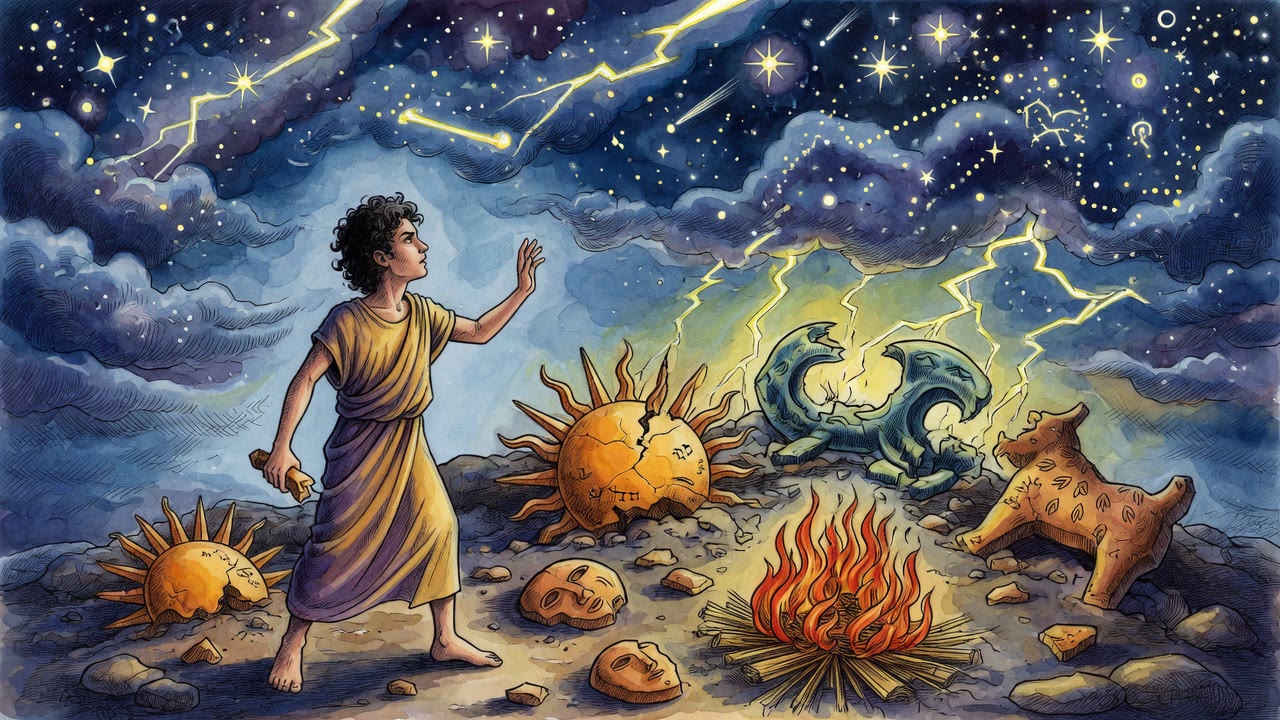
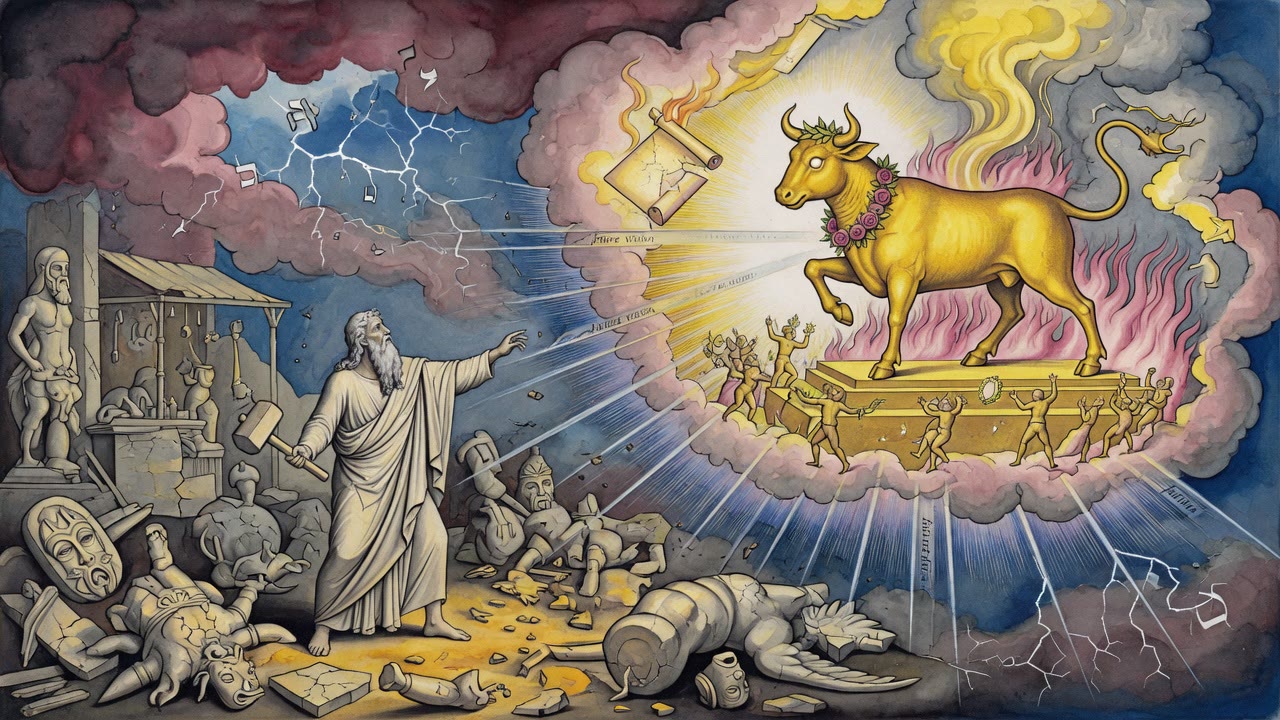
He had already dealt with the idols. He had grown up in his father Terah's workshop, surrounded by carved figures of wood and stone and metal, and he had seen through them early. Idols were made by human hands; what is made by human hands cannot be worshipped by those same hands without absurdity. He smashed them, or arranged for them to smash each other, and he walked away from his father's business.

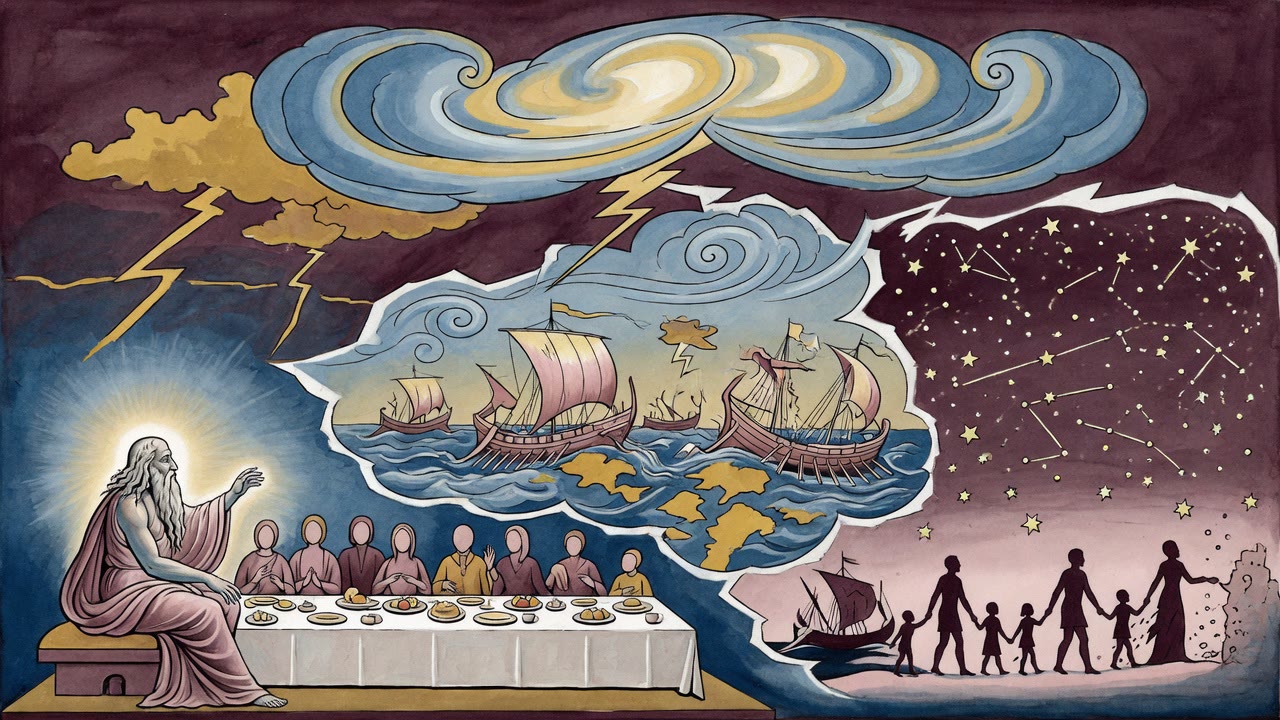
But the idol question was the easy one. The harder question was what came after the idols. If the carved figures were not gods, was anything? The great natural forces that surrounded him, the fire that consumed everything it touched, the water that quenched fire and nourished the earth, the earth itself that held everything up, the sun that lit the whole world from one end to the other: were any of these the thing he was looking for?

Abraham sat with the question. He worked through it systematically, one element at a time, applying the same logic to each. The Apocalypse of Abraham, composed around 70-150 CE from a lost Hebrew or Aramaic original, preserved what that reasoning looked like from the inside.

The Argument from Fire

Fire first. He looked at what fire could do: it consumed everything it touched, even things that resisted it were eventually overcome, and the things that were easily destroyed were mocked by its power. Fire seemed like a candidate for the supreme principle.

Then he pushed the argument. Fire is conquered by water. What fire is subjected to is greater than fire. So fire cannot be God.

Water. Water conquers fire. Water satisfies the earth, nourishing everything that grows. Water seemed stronger than fire.

Then: water is subjected to the earth. Water flows beneath the earth, is held within it, sinks into it. The earth contains the water. So water cannot be God either.

The earth. It overpowers the nature and fullness of the water. The earth is the container of water, the foundation beneath everything, the thing that holds. Surely this is close.

But the earth is dried up by the sun. The earth tilts toward the sun and away from it, the seasons are governed by the sun's position, the productivity of the earth depends on light and warmth that come from outside it. The earth serves the sun. So the earth is not the highest thing.

The Sun and the Moon and the Night

The sun lights the whole world with its rays. Abraham had a strong feeling about this one. Everything that lives depends on the sun. The sun warms, nourishes, sets the rhythms of growth and rest. If anything in the visible world deserved to be called the supreme principle, the sun had the best claim.

Then night came.

The sun set. The light withdrew. The sky darkened. And in the darkness, a multitude of stars appeared that the sun's light had been hiding. They were there all along, invisible in the day.

Abraham looked at the stars and thought: what sets is not supreme. What depends on timing is not the ground of everything. The sun ruled by day and disappeared. The moon ruled by night and waned. Both of them were moved by something else, governed by something they did not control. They were the most powerful things in his sky, and they were not free.

What Came After the Reasoning

He had eliminated fire, water, earth, sun, moon, and stars. He had worked through the entire visible order and found that each thing in it was subject to something else. The chain of dependence went all the way up but never stopped anywhere he could point to and say: here it rests.

He concluded: there is one who moves all of these but is moved by none of them. There is a governor of the governors. This is what I am looking for.

And then, having reached the conclusion through his own reasoning, he received confirmation from outside himself. A voice from above called to him. Not the conclusion of his logic, which he had already arrived at, but something beyond logic, an address, a summons. You have searched. Now I will show you what you searched for.

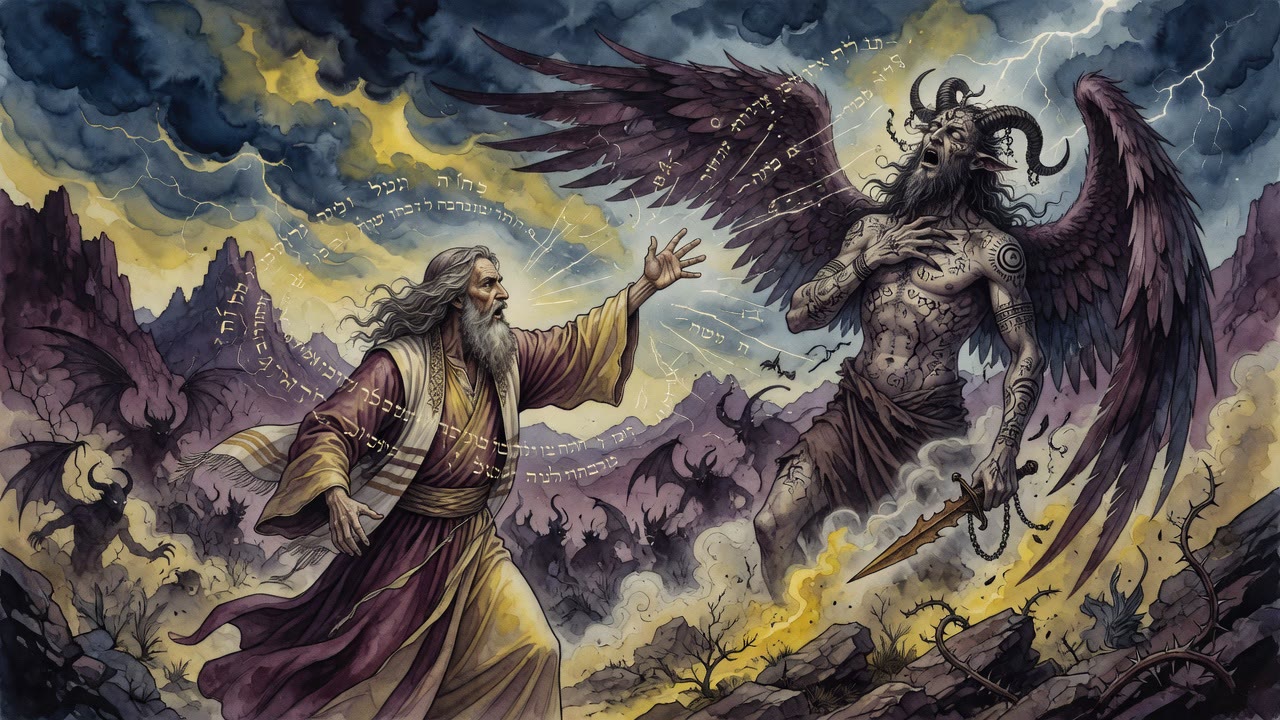
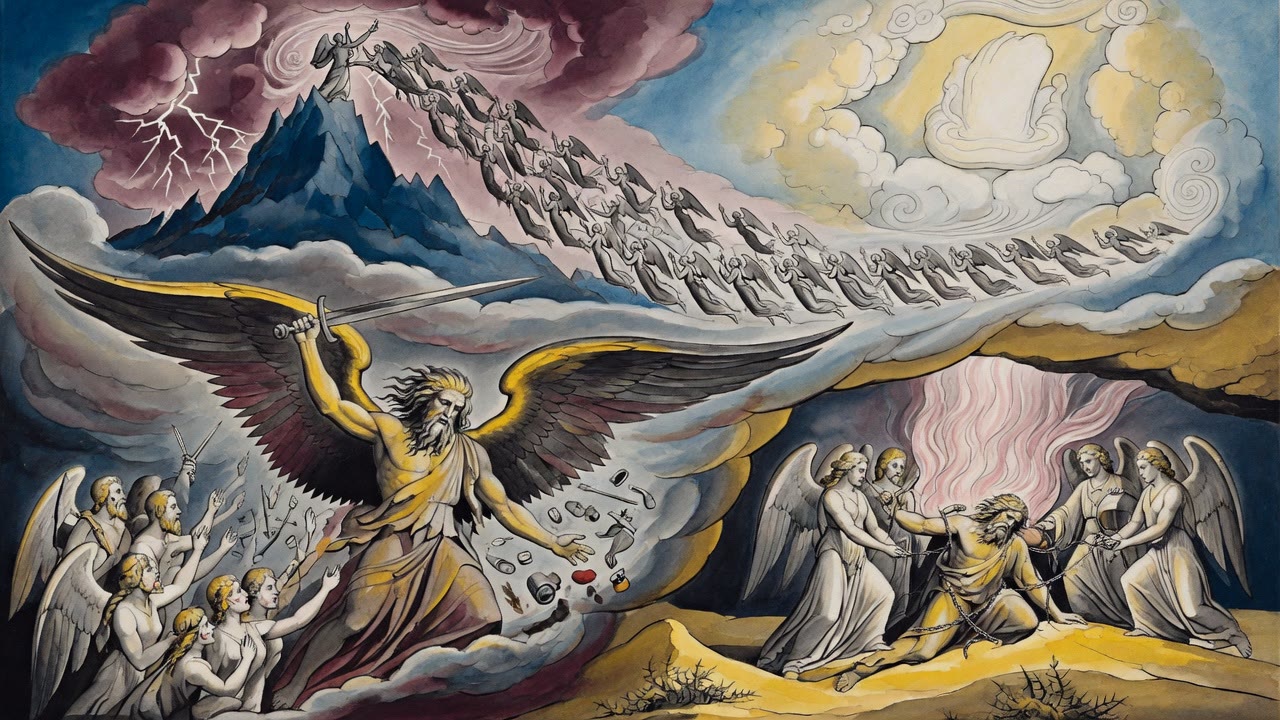
The Apocalypse then carries Abraham up through the heavens, through the encounter with Azazel who tries to stop him, through the terrifying presence of the angel Iaoel, through the fire that nearly unmade him. But the reasoning came first. The ascent was granted to a man who had already, by the effort of his own mind, worked his way to the threshold.


← All myths
From the tradition

Sources

4 sources

The texts this telling draws on, in full. Open a card to read inline, or expand it for a wider, quieter read.

Apocalypse of Abraham VIIApocalypse of Abraham

Abraham had demolished the idols. Now he turned his mind to the elements themselves.

"Fire is more worthy of honor than all things formed," he reasoned, "because even that which is not subjected to it is subjected unto it, and things easily destroyed are mocked by its flames."

Then: "Water is even more worthy, because it conquers fire and satisfies the earth." Yet he would not call water God either, because water is subjected to the earth, flowing beneath it, held within it.

"The earth is more worthy still, because it overpowers the nature and fullness of the water." But the earth, too, is dried up by the sun and given to man to till. So the earth is not God.

"The sun illuminates the whole world with its rays." A strong candidate. But at night, and behind clouds, its course is obscured. Not God.

The moon? The stars? "They also in their season obscure their light at night." Not God.

Abraham had climbed through every candidate in creation: idols, fire, water, earth, sun, moon, stars. Each one ruled by something above it. Each one insufficient.

He turned to his father with a question that contained its own answer: "Hear this, Terah my father. I will make known to you the God who made everything, not these we consider as gods. Who is He? What is He?"

And then Abraham spoke a poem that trembled on the edge of revelation:

Who has crimsoned the heavens and made the sun golden,
And the moon lustrous, and with it the stars;
And made the earth dry in the midst of many waters?

"Yet may God reveal Himself to us through Himself!" Abraham cried. He had followed the chain of being to its end. Now he waited for the One at the top of it to speak.

Full source
Apocalypse of Abraham XIVApocalypse of Abraham

The angel turned back to Abraham. "Know from this moment that the Eternal One has chosen you. Be of good courage and use this authority, as far as I bid you, against him who slanders truth."

Then Iaoel put words of power into Abraham's mouth, words meant to condemn Azazel to his fate:

"Say to him: 'Be the burning coal of the Furnace of the earth! Go, Azazel, into the inaccessible parts of the earth! Your heritage is over those who exist with you, those born with the stars and clouds, the men whose portion you are, and who through your being exist. Your enmity is your own justification. By your perdition, disappear from me.'"

Abraham spoke the words exactly as the angel had taught him. The sentence was absolute. Azazel was not merely banished. He was condemned to be the fire of punishment itself, carrying the furnace of the underworld wherever he went. A walking prison of flame.

But Azazel did not leave quietly. He kept speaking, kept trying to engage Abraham in conversation. The angel warned: "Answer him not, for God has given him power over those who answer him. However much he speaks to you, do not respond, so that his will may have no course in you."

Abraham obeyed. However much Azazel spoke, Abraham answered nothing whatsoever.

Silence was the weapon. The Watcher's power depended on dialogue, on getting a response, on drawing the righteous into conversation. Abraham shut the door. He said not a single word. And Azazel's voice faded into nothing.

Full source
Apocalypse of Abraham XVIApocalypse of Abraham

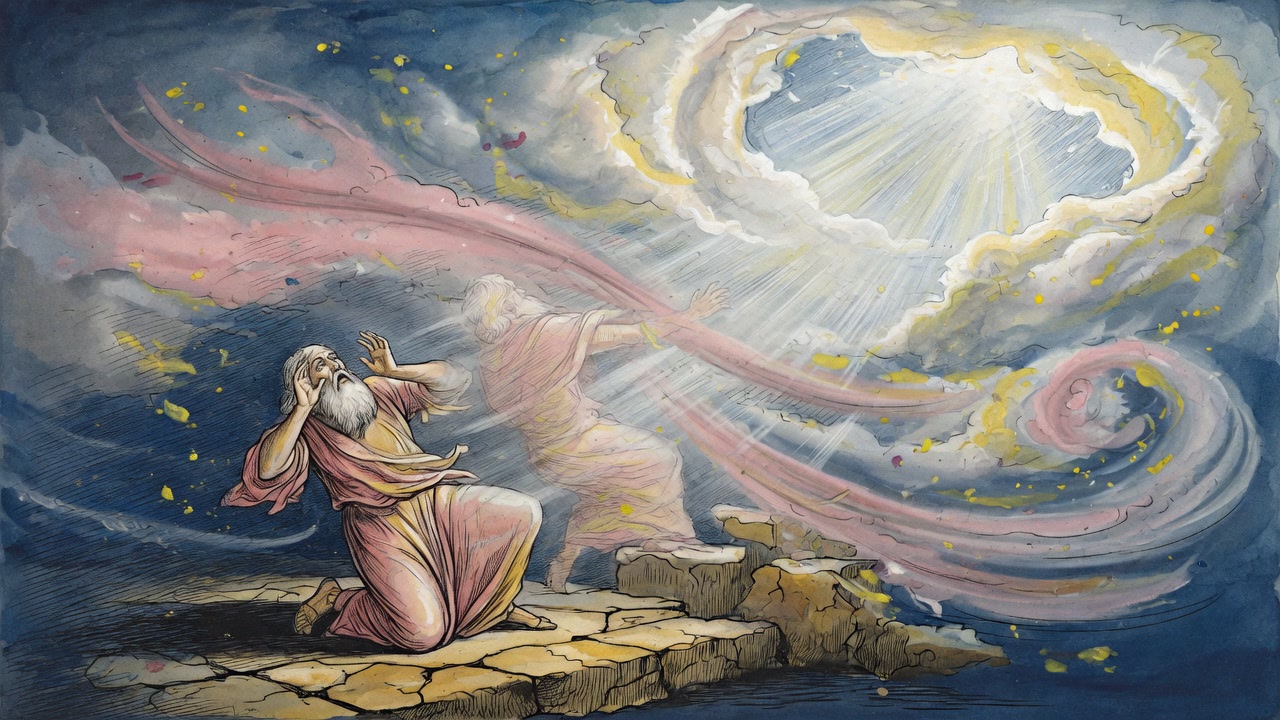
Abraham turned to the angel in distress. "Why have you brought me up here? I cannot see anymore. I am already grown weak, and my spirit is departing from me."

The mortal body was failing. The heavenly light was too intense, too pure for human eyes. The same tradition teaches that Adam, before his transgression, could see by this primordial light from one end of the world to the other. But after the fall, it was withdrawn. Now Abraham, a man born into a diminished world, was staring directly into the withdrawn radiance, and it was breaking him.

Iaoel steadied him. "Remain by me. Fear not. He whom you see coming straight toward us with a great voice of holiness, that is the Eternal One who loves you. But Himself you cannot see."

The God of the universe was approaching. Not as a visible form, for no mortal can see God and live, but as a presence, a voice, a force of holiness so overwhelming that even the approach made Abraham's spirit drain from his body.

"Do not let your spirit grow faint on account of the loud crying," Iaoel said. "I am with you, strengthening you."

Abraham stood at the boundary between what flesh can endure and what only spirit can survive. The angel was the only thing keeping him on his feet.

Full source
Apocalypse of Abraham XIXApocalypse of Abraham

A voice came from the midst of the fire. "Abraham, Abraham!"

"Here I am."

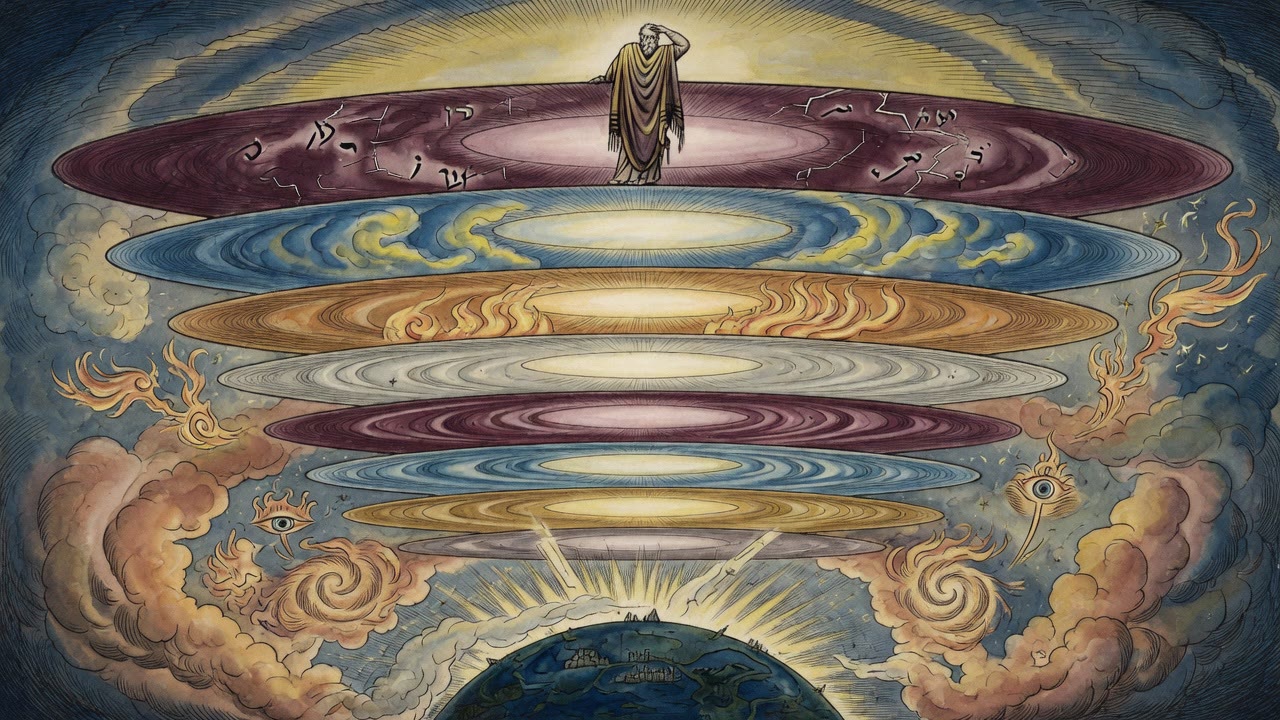
"Consider the expanses beneath the firmament on which you are now placed, and see that on no single expanse is there any other but He whom you have sought, the One who has loved you."

While God was still speaking, the expanses opened beneath Abraham's feet, and the heavens unfolded below him.

He stood upon the seventh firmament and saw a fire widely extended, and light, and dew, and a multitude of angels, and a power of invisible glory hovering over the living creatures. But no other being was there. Only God's presence, alone and absolute.

He looked downward to the sixth firmament and saw a multitude of pure spirits without bodies, carrying out the commands of the fiery angels on the firmament above. These were the ministering angels, bodiless servants executing heaven's will.

God commanded the sixth firmament to be removed. Beneath it, on the fifth firmament, Abraham saw the powers of the stars carrying out their appointed commands, and the elements of the earth obeying them.

Layer by layer, the architecture of creation was being peeled back for Abraham to see. Seven heavens stacked like veils over the earth, each one populated by its own order of beings, each one governed by the one above it, and all of them answering ultimately to the voice from the fire.

The tradition records what dwells in each heaven. The seventh contains judgment, righteousness, the treasures of life, peace, and blessing, the souls of the departed righteous, the spirits and souls yet unborn, the dew with which God will awaken the dead, and God Himself on the Throne of Glory. Abraham was seeing it all from the top down.

Full source