Abraham Stood at the Top and Looked Down Through Heaven
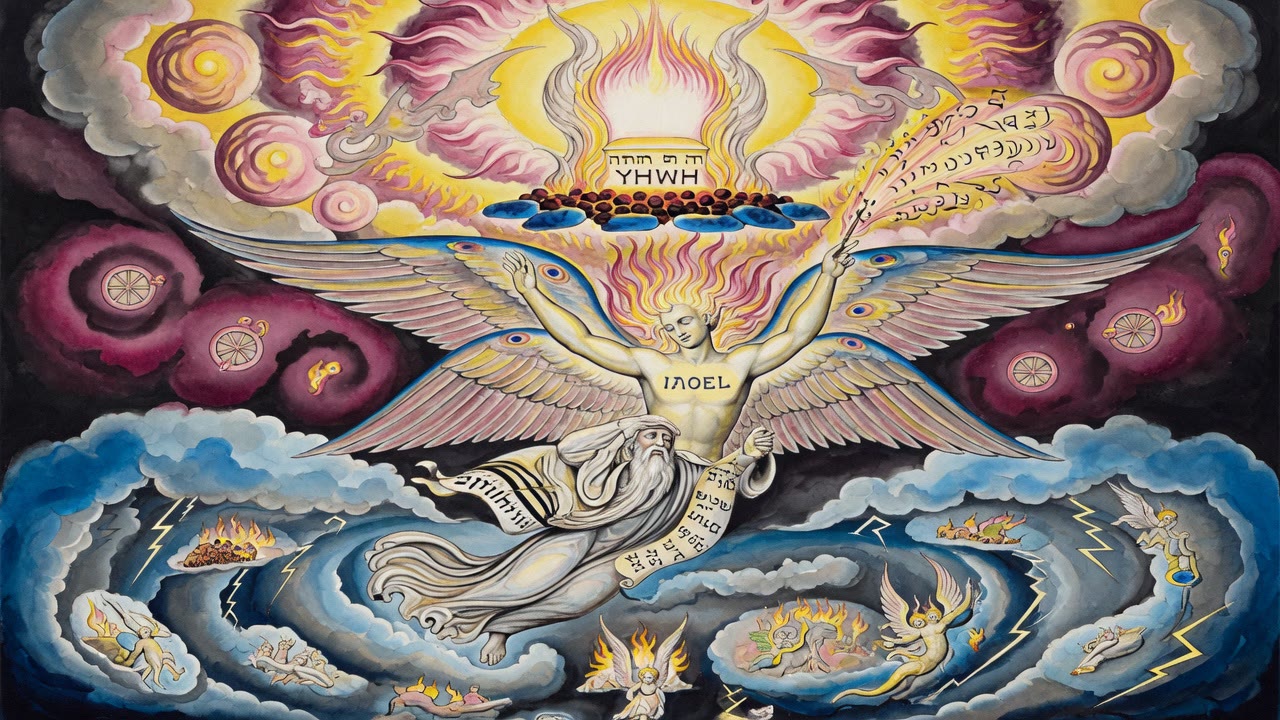
Abraham could not see. The angel held him upright. Then a voice from the fire told him to look down through the floors of heaven.
Table of Contents
 Click for full size
The Fire Came Straight Toward Him
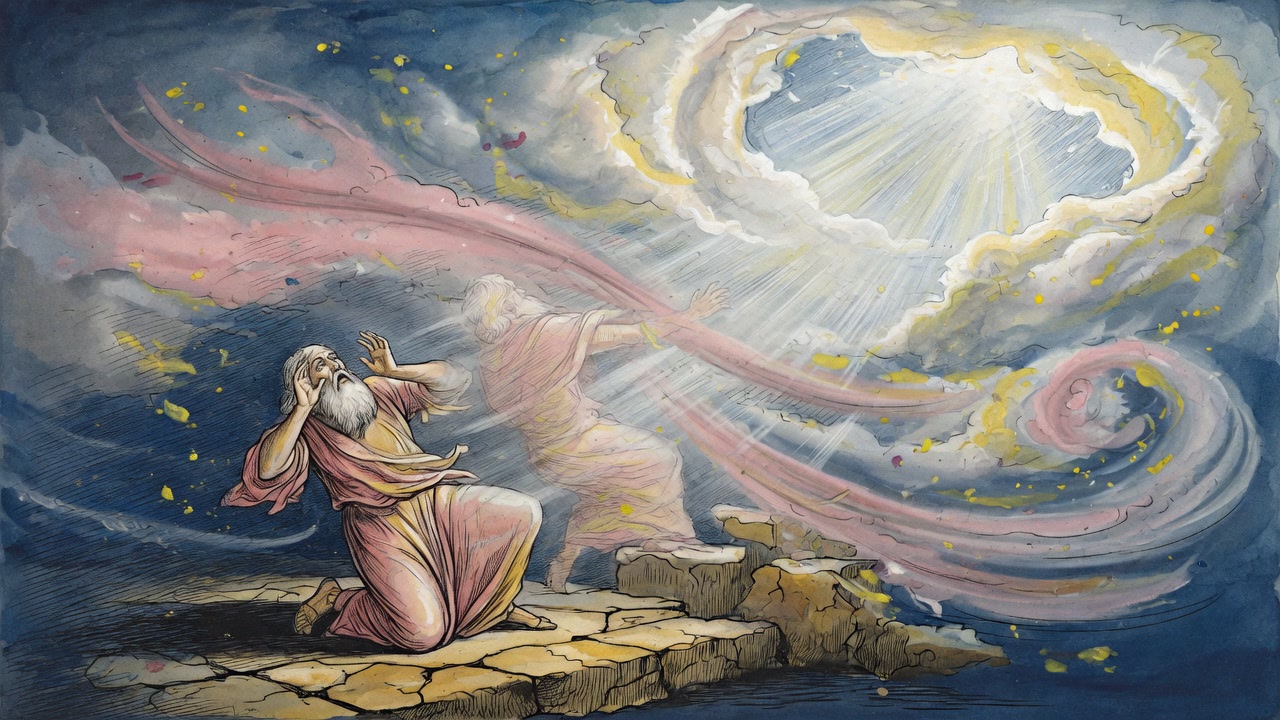
Abraham turned to the angel because he could not see. "Why have you brought me up here? I cannot see anymore. I am already grown weak, and my spirit is departing from me."
The light was too much for a body born after Eden. Iaoel steadied him with a hand. "Remain by me. Fear not. He whom you see coming straight toward us with a great voice of holiness, that is the Eternal One who loves you. But Himself you cannot see."
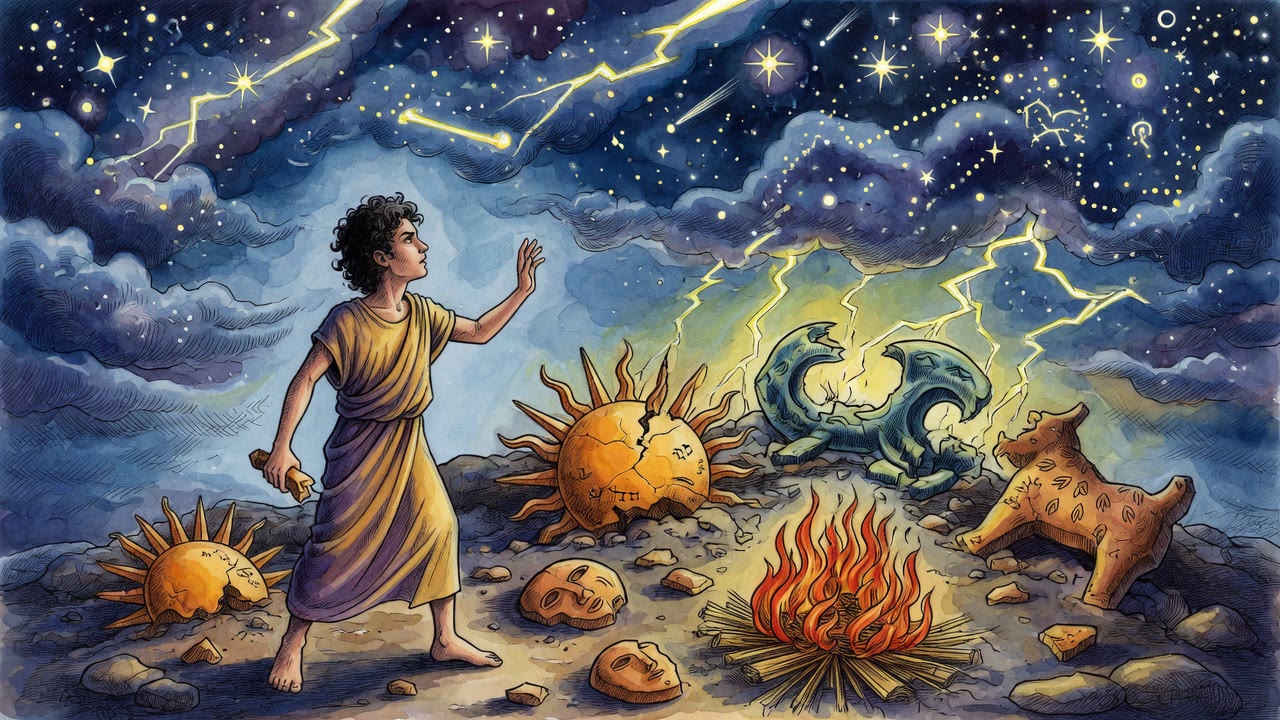
The presence came as fire and voice, not as a face. Abraham shook. He had already smashed his father's idols. He had already reasoned past fire, water, earth, sun, moon, and stars, and refused to call any of them God. Now the One he had sought was approaching, and the seeking was breaking him.
Then the voice came, not the approach-sound but words, from the fire all around them.
"Abraham, Abraham."
"Here I am."
Look Down, Not Up
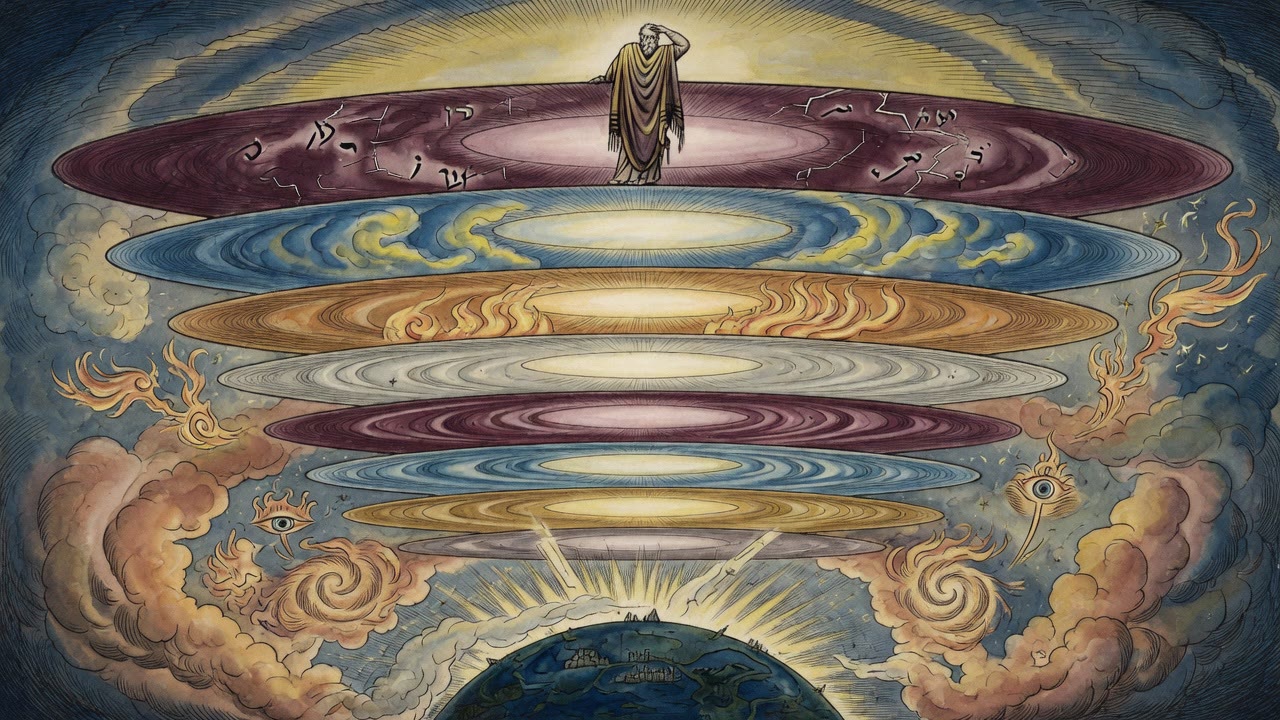
"Consider the expanses beneath the firmament on which you are now placed, and see that on no single expanse is there any other but He whom you have sought, the One who has loved you."
The instruction was unusual. He was not told to look up. He was told to look down. He was already at the top, placed on the seventh firmament, the highest layer of creation, the place where the divine throne rests and where the fire of the divine presence extends in every direction. The seven heavens did not rise above him. They fell away beneath him.
Abraham stood on that floor and took stock. Fire, widely extended. Light. Dew. A multitude of angels. A power of invisible glory hovering over the living creatures, those four-faced beings Ezekiel had seen at the river Chebar, here standing at the foundation of the highest heaven. No other presence. No other throne. No other claimant. Only God's presence, alone, filling the seventh heaven the way light fills a room.
He looked down from there.
The Heavens Peeled Back
While God was still speaking, the expanses opened beneath Abraham's feet. The sixth firmament held pure spirits without bodies, an army of them, carrying out the commands of the fiery angels above them. They were not the commanding angels. They were the executing ones, the will moving downward through the chain.
God commanded the sixth firmament to be removed. Abraham watched it go. Beneath it, on the fifth, he saw the powers of the stars carrying out their appointed commands, and the elements of the earth obeying them. Layer by layer the floors came away. He stood at the top of a tower and looked down through successive stories. The whole building was visible from above, which it never is from below.
On the seventh floor he had already seen more than a man can hold: judgment, righteousness, the treasures of life, peace, blessing, the souls of the departed righteous, the spirits and souls yet unborn, the dew with which God will awaken the dead, and God Himself on the Throne of Glory. Abraham did not climb toward that. He had been set on it and told to look away, down, through everything that was not God, to prove that nothing else sat on a throne.
The Earth Opened Under His Feet
Once Abraham had seen the architecture of heaven from the top, God opened the earth below it. Seas and rivers. Mountains and plains. Populations distributed across the land. Then the history. Not only what had already happened. What was going to happen.
He saw the future of his descendants, the covenant people, the generations that would proceed from the son who had not yet been born. He saw the descent into Egypt and the years of slavery and the going out. He saw the wilderness. He saw the land.
His knees were still the knees of a man who had almost fainted in the fire. Now those knees had to hold a map of centuries. Iaoel did not let him fall. The voice from the fire did not soften. The gift of the view was the weight of the view.
An Idol Stood in the Temple
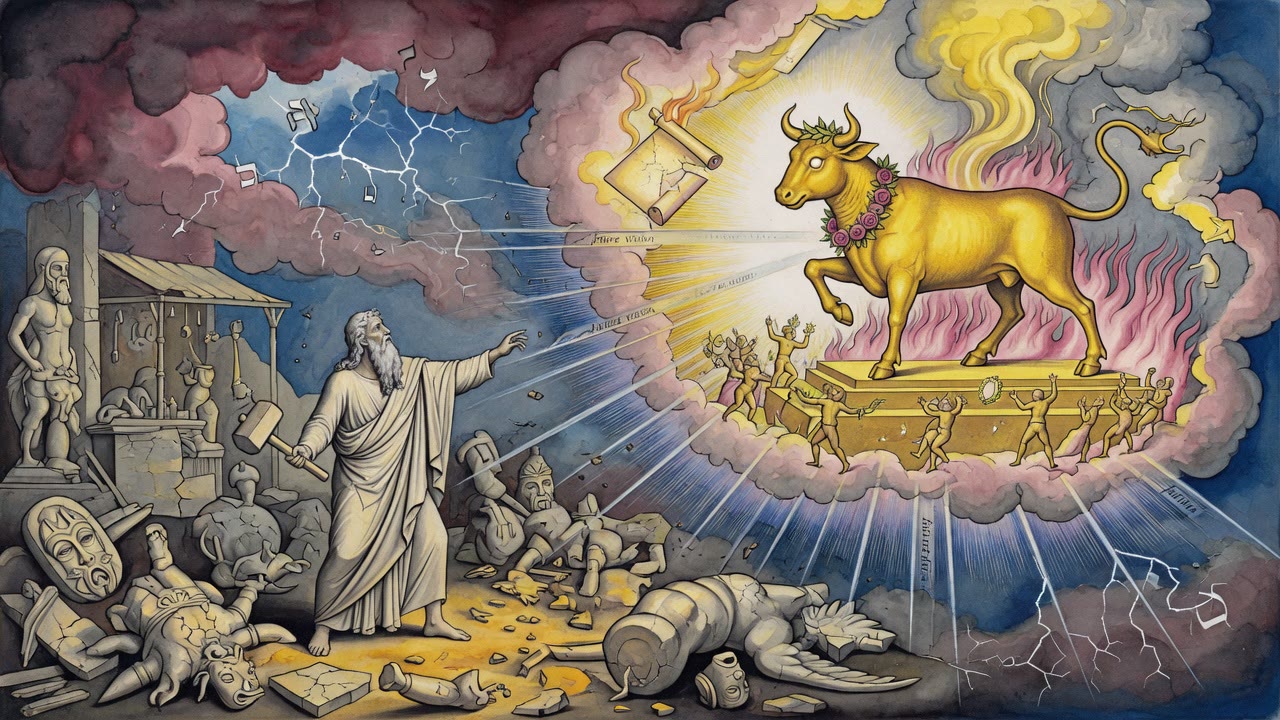
Then he saw something he had not expected and could not have prepared for. Inside the beauty of the Temple he saw an idol standing.
The heavens had just taught him that no expanse held any other god. The earth now showed him a house built for the One he had sought, and a statue standing in it as if the lesson had never been given. Abraham had smashed Terah's idols with his own hands. He looked down through six opened heavens and found the same insult waiting in a sanctuary that did not yet exist.
He stood at the top and looked down. The heavens opened beneath his feet like a book. The last page was not comfort. It was a witness's burden: the promise, the land, the Temple, and the breach already visible from the seventh floor.
He did not look away. God had told him to consider the expanses. He considered them. The fire stayed around him. The angel's hand stayed on him. Below, an idol stood in a house that had not yet been built, and Abraham, who had refused to call the sun God, had to see that his children would not always refuse with him.
← All myths