God Showed Abraham the Idol His People Would Build
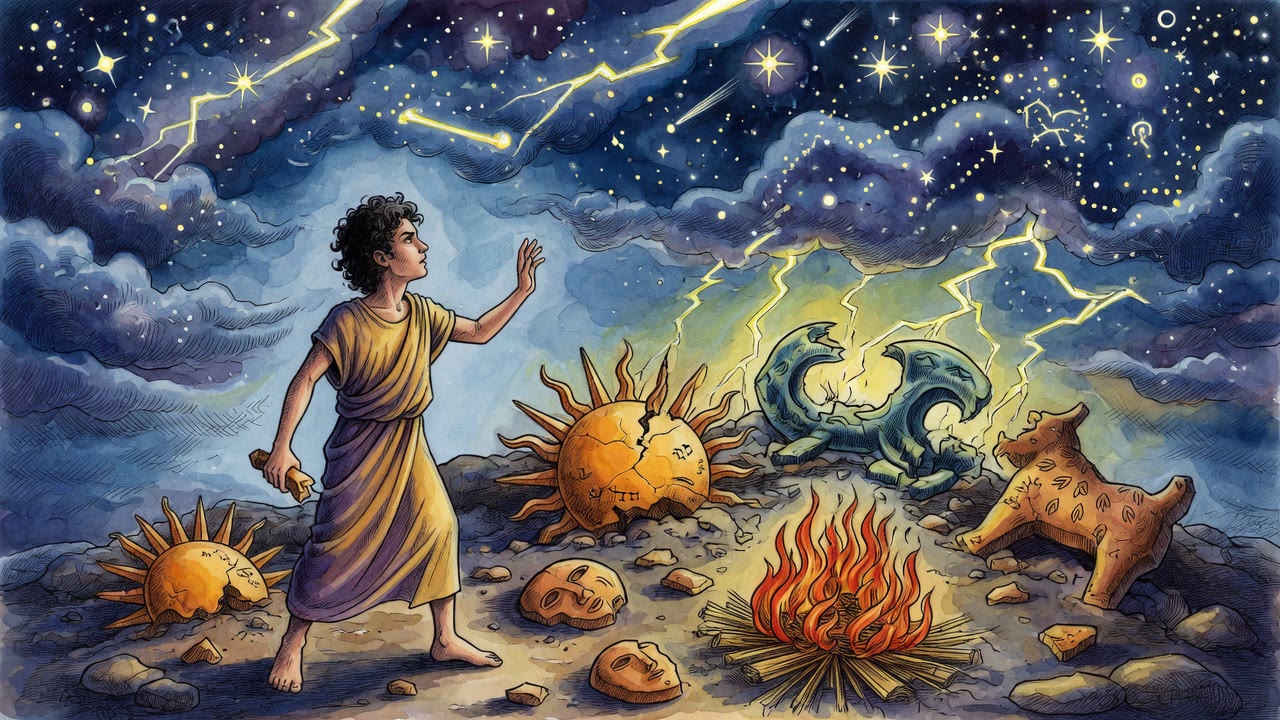
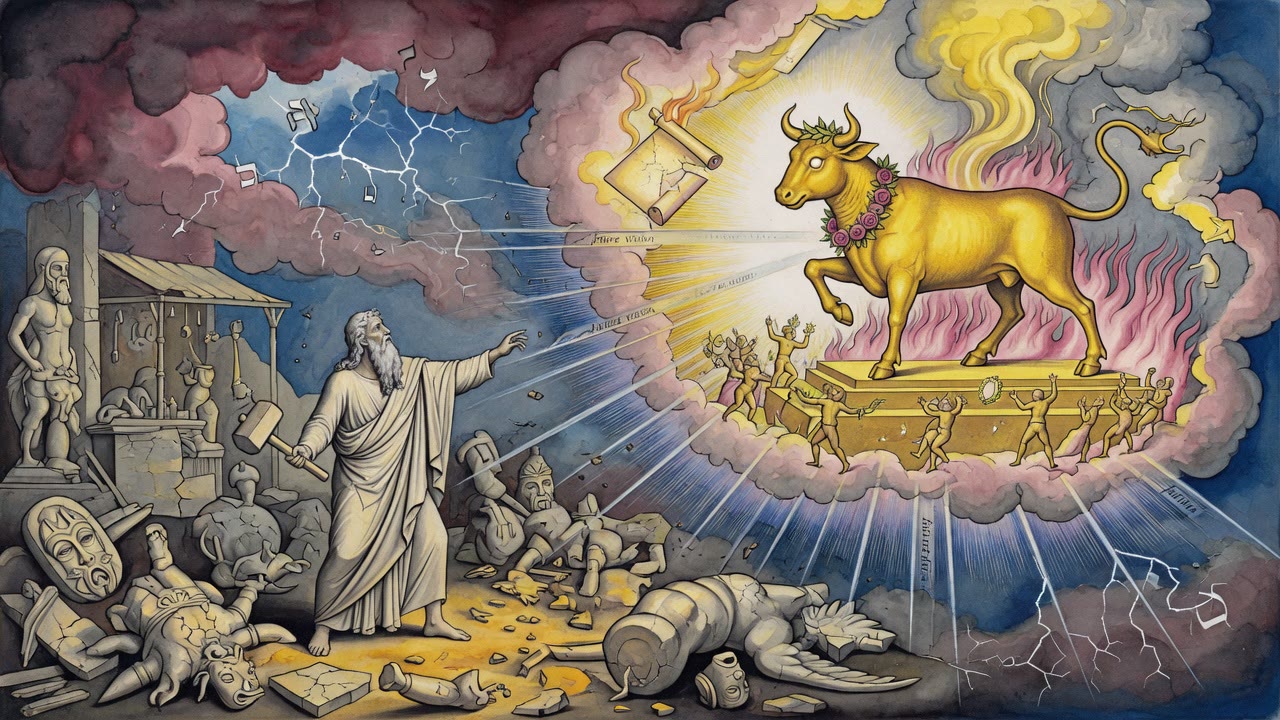
Abraham smashed his father's idols his whole life. Then God showed him a vision of an idol standing inside the Temple his descendants would one day build.
Table of Contents
 Click for full size
What He Saw in the Temple
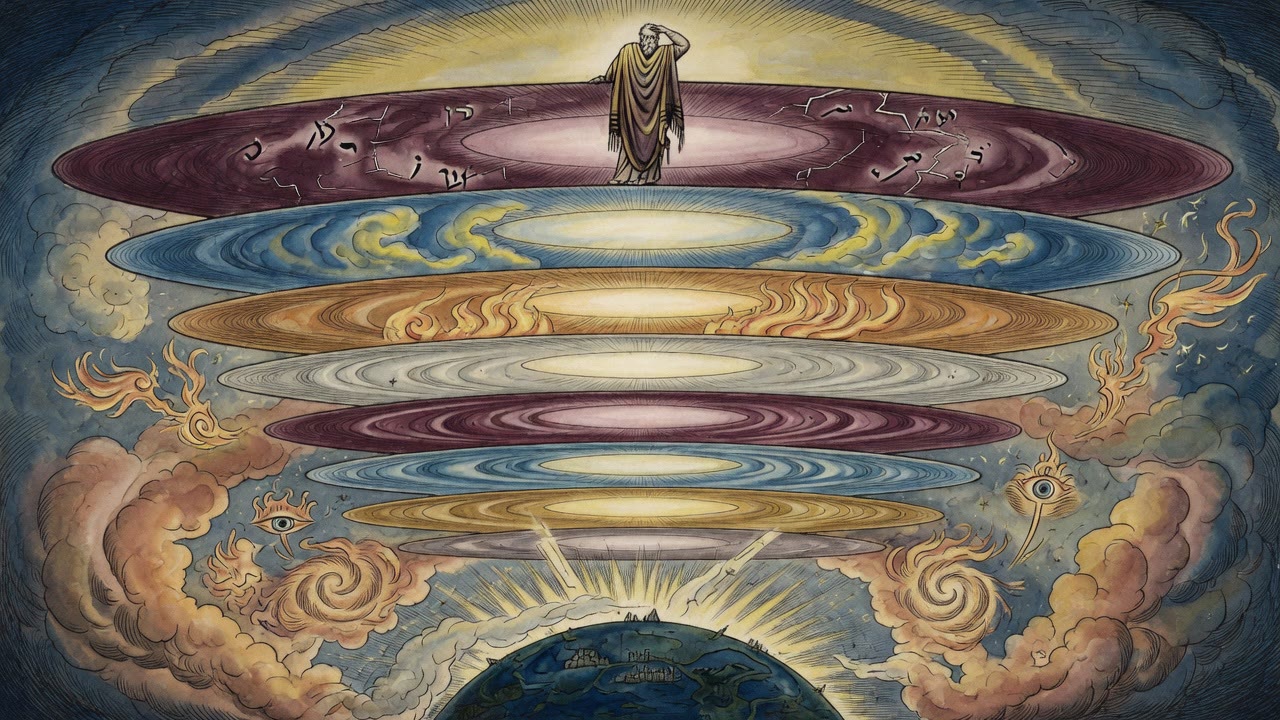
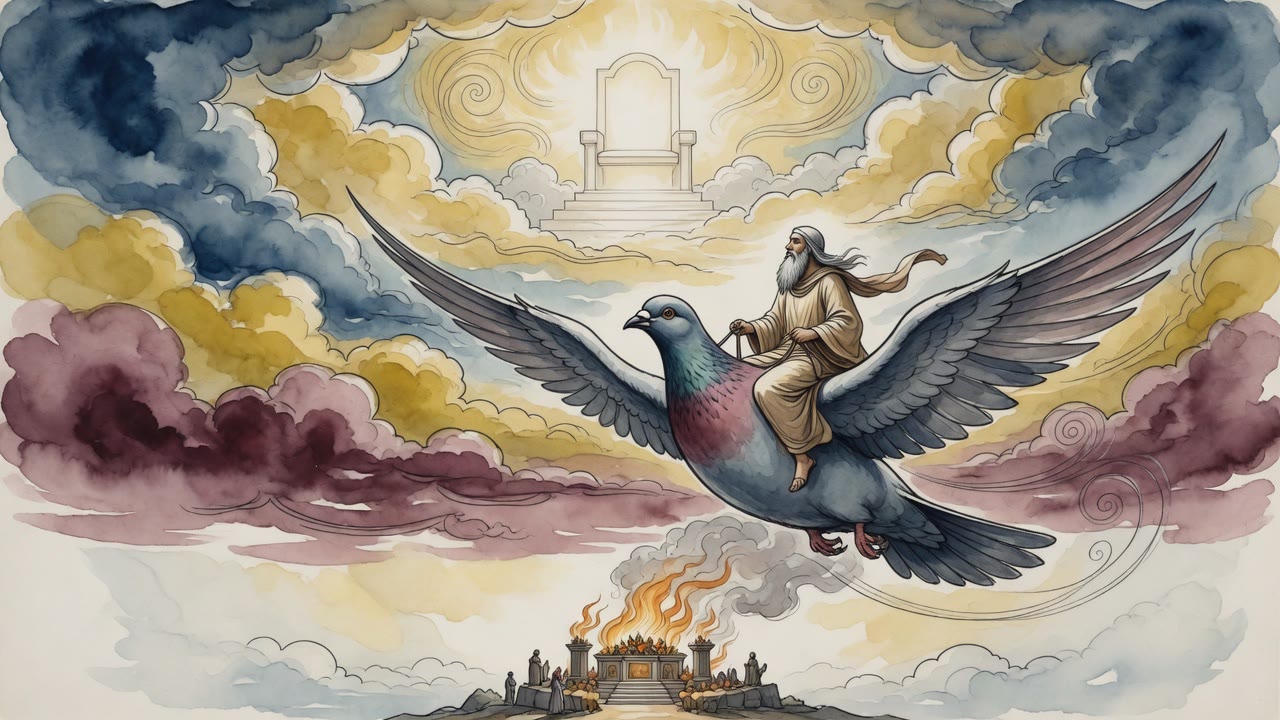
He had spent his whole life destroying idols. He had worked through the logic of idolatry and found it empty before he was old enough to have a beard. He had smashed his father's inventory. He had been thrown into Nimrod's furnace for refusing to bow. And now, high above the earth in his vision, after the seven firmaments had unfolded below his feet and the architecture of heaven had been revealed to him, God showed him a Temple.
It was beautiful. Designed with the precision of something God had conceived for himself. The light around it had the quality of the divine throne. Abraham recognized in its radiance something like the presence he had been moving toward since the journey began.
Then he saw the idol.
It stood inside the Temple. Bronze body, glittering in the sacred light. Its form was familiar: this was the kind of workmanship his father Terah used to make. Abraham had grown up with objects that looked exactly like this. He had moved past them. He had refused them. And here one stood in the innermost place of the sanctuary God was showing him.
Who Was Worshipping It
Before the idol stood a man, worshipping. In front of the worshipper was an altar, and upon the altar was a slaughtered boy, killed in the presence of the idol.
Abraham cried out. Not in theological objection but in genuine shock, the shock of someone who has seen a desecration of something they love. "What is this idol? What is the altar? Who are the ones being sacrificed? Who is the sacrificer? And what is this Temple that I see, beautiful in its design, its glory like the radiance beneath Your throne?"
He did not ask why this was being shown to him. He asked what it was he was seeing. The first need was to understand it.
What God Told Him
God answered each part of the question in order. The Temple, its design, its beauty, its glory: that is God's own plan for the place where his name would dwell. It is a real place and a real design. The Temple is not the problem.
The idol of jealousy standing inside it, that is what would be put there by people from within the covenant. Not by foreigners, not by enemies, not by the nations that worshipped other gods and had never known anything else. By the descendants of Abraham himself. By the people who would receive the Torah. By the priests who would know exactly what they were doing.
The man worshipping the idol: that is someone from among the chosen people who will turn away. The slaughtered boy: that is what idolatry demands from the children of the covenant. This is the outcome of the transgression that the altar represents.
The Grief of Recognition
This vision cut harder than the cosmic ones because of the familiarity of what he saw. Abraham could look at the heavenly hierarchy, the fire and the angels and the living creatures, as wonders outside his experience. He had no prior relationship with the architecture of the upper worlds. But the idol inside the Temple he recognized in his body before he recognized it in his mind. He knew what that bronze workmanship was. He had grown up beside it.
And the man worshipping it was not a stranger but a descendant. Not a hypothetical, in the way prophecy can sometimes feel hypothetical, but a specific future person from his own line. God was showing him not what the world did but what his people would do, what his covenant would produce alongside its holiness.
The vision corresponding to Ezekiel 8:3-5, where the prophet is lifted to Jerusalem and shown the image of jealousy at the Temple's north gate, gives Abraham that same moment centuries before the Temple is built. The founding patriarch is given the crime of the descendants as part of the revelation, not withheld from it, not protected from it, but made a witness to it from the beginning.
The Question That Remained
Abraham asked: why? If this is what your people will do, if this is what the covenant will produce alongside its blessing, why establish the covenant? Why give the Temple? Why all of this?
God did not answer the why. What God showed Abraham instead was the full picture: the transgression and the punishment and what comes after the punishment. The exile that the idol in the Temple would cause. And after the exile, the return. The covenant was not invalidated by the breach. The Temple would be destroyed and the people would be scattered and they would come back. The blessing and the breach were both part of what was given to Abraham to see from the top of the seventh heaven.
He had smashed idols his whole life. God showed him he would have to keep doing it, through his descendants, across every generation.
← All myths