5 min read

Abraham Silenced Azazel with Words He Was Given

On the way to heaven, Azazel appeared and tried to turn Abraham back. The angel Iaoel gave Abraham the only words that would work.

Curated by Arthur · Told by Maggid ·
Table of Contents
  1. The Figure That Appeared in the Fire
  2. What the Angel Said About Him
  3. The Words That Were Placed in Abraham's Mouth
  4. What Azazel Could Not Answer

The Figure That Appeared in the Fire

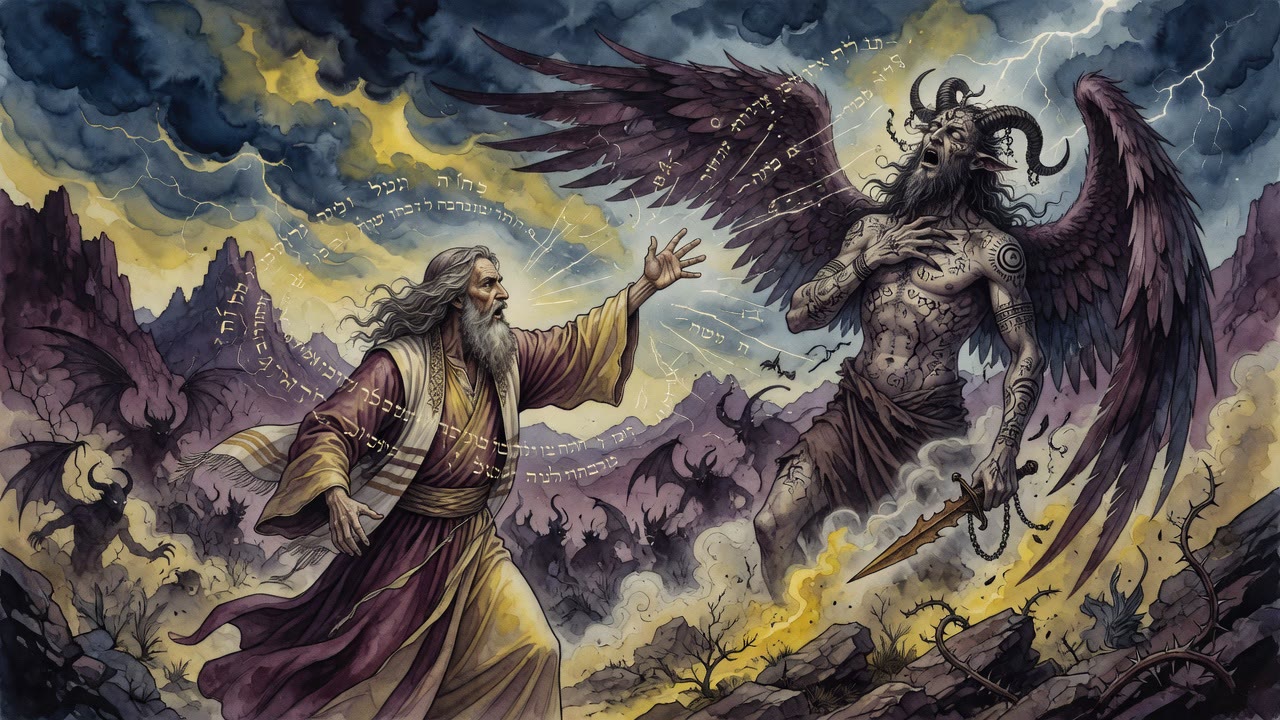
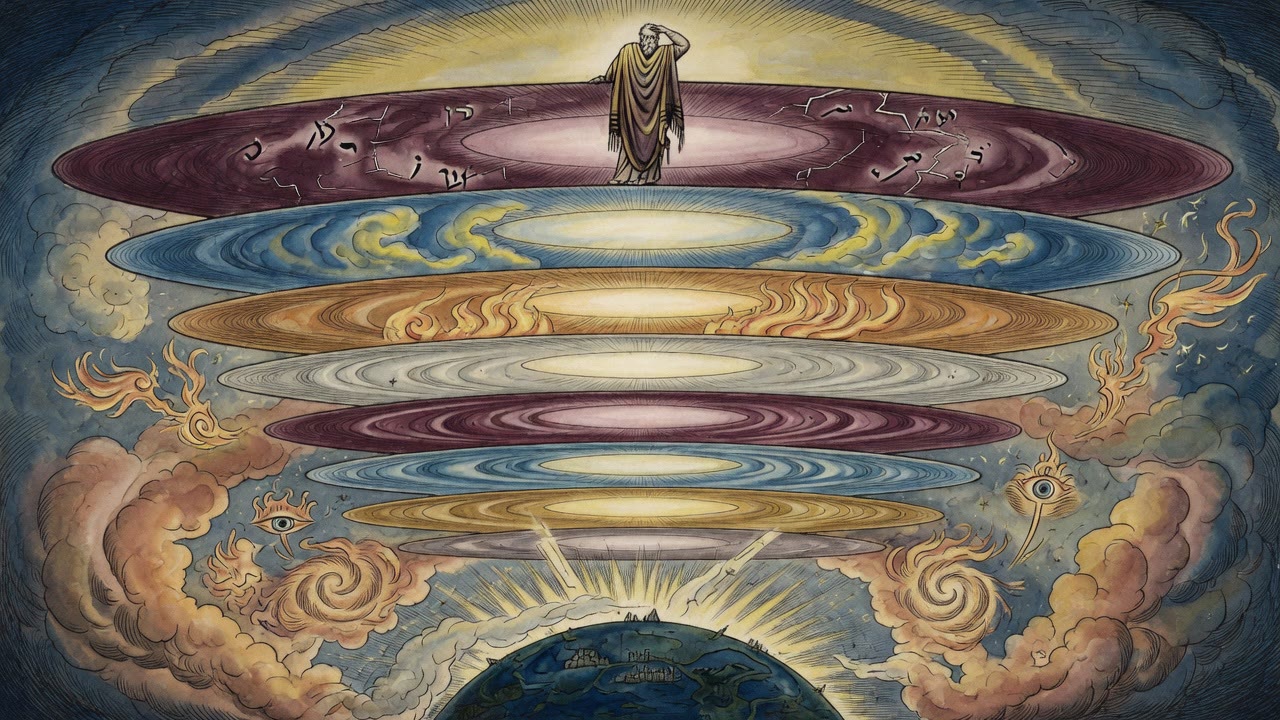
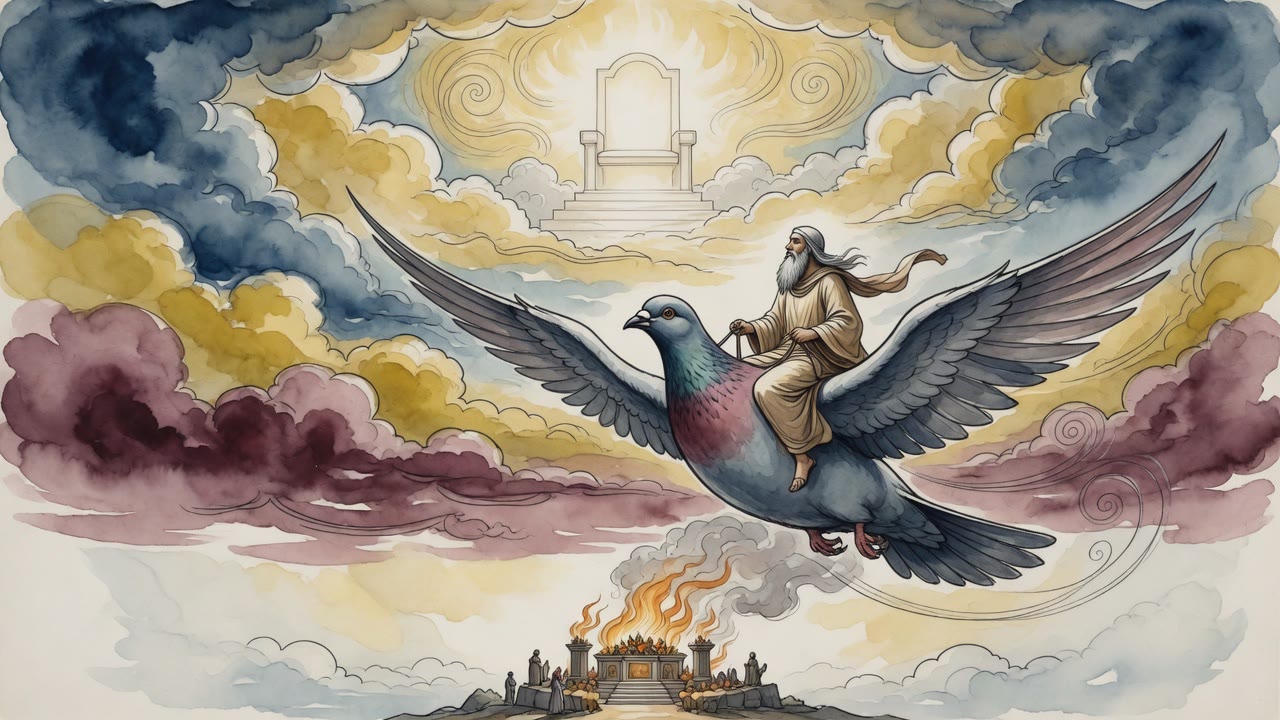
Abraham had been ascending. The angel Iaoel, whose name encodes the divine name YHVH and who serves as God's direct voice and representative, had been guiding him upward through the heavens. They were somewhere above the earth, in the fire that surrounds the highest places, when something appeared out of the smoke and addressed them.

It called itself. It spoke to Abraham directly. "Where are you going, Abraham? Leave this man who is with you and come with me. I am the one who was here before your guide. What you seek is not up there. Come down with me and I will show you something better."

The voice was persuasive. This was Azazel's particular skill, not force but suggestion, the insinuating argument that the thing you are looking for is available in a different direction, at a lower cost, without the terrifying fire above you.

What the Angel Said About Him

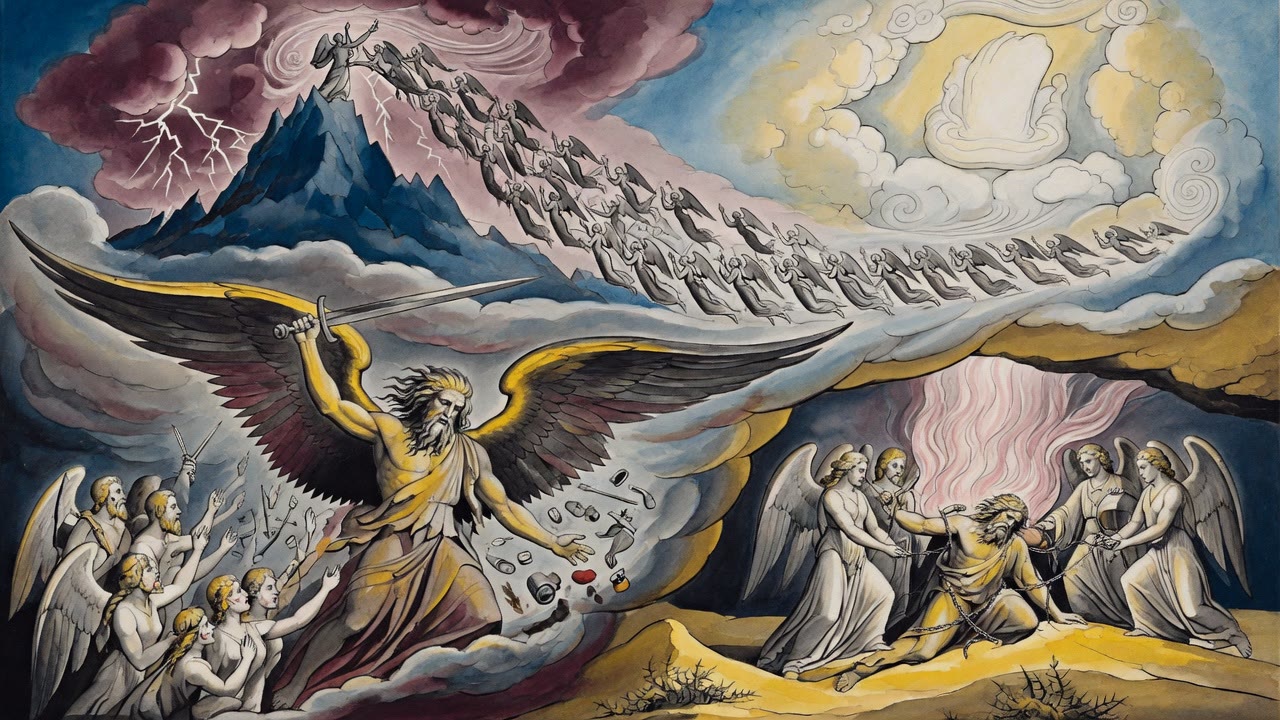
Iaoel turned to Abraham and explained what they were dealing with. Azazel had scattered over the earth the secrets of heaven. In the generation before the Flood, he had descended to the earth with the other Watchers, the angels assigned to observe and guard humanity, and instead of guarding had corrupted. He taught men to forge weapons. He taught women the arts that arouse desire. He distributed to ordinary human beings the forbidden knowledge that was supposed to stay above them.

The result was the world that made the Flood necessary. A world so saturated with violence and corruption that God looked at it and said: this cannot continue.

Azazel's crime was not disobedience in the ordinary sense. It was a kind of theft: taking what belonged to the heavenly order and handing it to creatures who could not handle it. The consequences were catastrophic, and Azazel was condemned for them. He was sentenced to the desert of Dudael, bound beneath the earth in darkness. But the sentence had not yet been fully executed. He was still here, in the smoke, making his offer.

The Words That Were Placed in Abraham's Mouth

Iaoel did not tell Abraham to argue with Azazel. He told Abraham to speak specific words, words that the angel composed and placed directly into Abraham's mouth, words that functioned as a legal sentence more than a counterargument.

"Be the burning coal of the Furnace of the earth! Go, Azazel, into the inaccessible parts of the earth! Your heritage is over those who exist with you, those born with the stars and clouds, the men whose portion you are and who through your being exist. Your enmity is your own justification. By your perdition, disappear from me."

The structure is precise: a verdict, then a banishment, then a definition of his territory, then a final dismissal. Azazel was not being defeated in debate. He was being sentenced. The words did not engage with his argument at all. They did not answer his suggestion that the upward journey was misguided or that something better was available below. They declared him condemned and defined exactly where his domain ended.

What Azazel Could Not Answer

Azazel tried once more. He spoke to Abraham again, appealing now not to his desire but to his mercy: "Abraham, why are you being so hard? Look, you have me in the fire. You are supposed to be the man of hospitality, the man of welcome. Let me have some of your piety. A little. Just some of it. Share it with me."

The text records Abraham's response as silence followed by the words Iaoel had given him, spoken again. The request for piety was not answered with an explanation of why Azazel did not deserve piety. It was answered by repeating the sentence.

This was the correct move. The Apocalypse understands Azazel as a figure who operates through engagement. Every exchange with him is a trap because he is better at argument than almost anyone he encounters. His weapon is conversation. The way to defeat him is to refuse to have the conversation, to substitute a verdict for a discussion, to speak the words that close the matter rather than opening it further.

Abraham had been chosen because he could reason. He had worked through fire, water, earth, sun, moon, and stars in his own mind without any angelic help, and arrived at the conclusion of monotheism. But this particular enemy was not vulnerable to reason. He was vulnerable only to authority, and the authority had to be received, not generated. Abraham spoke what he had been given to speak, and Azazel fell silent.


← All myths
From the tradition

Sources

3 sources

The texts this telling draws on, in full. Open a card to read inline, or expand it for a wider, quieter read.

Apocalypse of Abraham XIVApocalypse of Abraham

The angel turned back to Abraham. "Know from this moment that the Eternal One has chosen you. Be of good courage and use this authority, as far as I bid you, against him who slanders truth."

Then Iaoel put words of power into Abraham's mouth, words meant to condemn Azazel to his fate:

"Say to him: 'Be the burning coal of the Furnace of the earth! Go, Azazel, into the inaccessible parts of the earth! Your heritage is over those who exist with you, those born with the stars and clouds, the men whose portion you are, and who through your being exist. Your enmity is your own justification. By your perdition, disappear from me.'"

Abraham spoke the words exactly as the angel had taught him. The sentence was absolute. Azazel was not merely banished. He was condemned to be the fire of punishment itself, carrying the furnace of the underworld wherever he went. A walking prison of flame.

But Azazel did not leave quietly. He kept speaking, kept trying to engage Abraham in conversation. The angel warned: "Answer him not, for God has given him power over those who answer him. However much he speaks to you, do not respond, so that his will may have no course in you."

Abraham obeyed. However much Azazel spoke, Abraham answered nothing whatsoever.

Silence was the weapon. The Watcher's power depended on dialogue, on getting a response, on drawing the righteous into conversation. Abraham shut the door. He said not a single word. And Azazel's voice faded into nothing.

Full source
Apocalypse of Abraham VIIApocalypse of Abraham

Abraham had demolished the idols. Now he turned his mind to the elements themselves.

"Fire is more worthy of honor than all things formed," he reasoned, "because even that which is not subjected to it is subjected unto it, and things easily destroyed are mocked by its flames."

Then: "Water is even more worthy, because it conquers fire and satisfies the earth." Yet he would not call water God either, because water is subjected to the earth, flowing beneath it, held within it.

"The earth is more worthy still, because it overpowers the nature and fullness of the water." But the earth, too, is dried up by the sun and given to man to till. So the earth is not God.

"The sun illuminates the whole world with its rays." A strong candidate. But at night, and behind clouds, its course is obscured. Not God.

The moon? The stars? "They also in their season obscure their light at night." Not God.

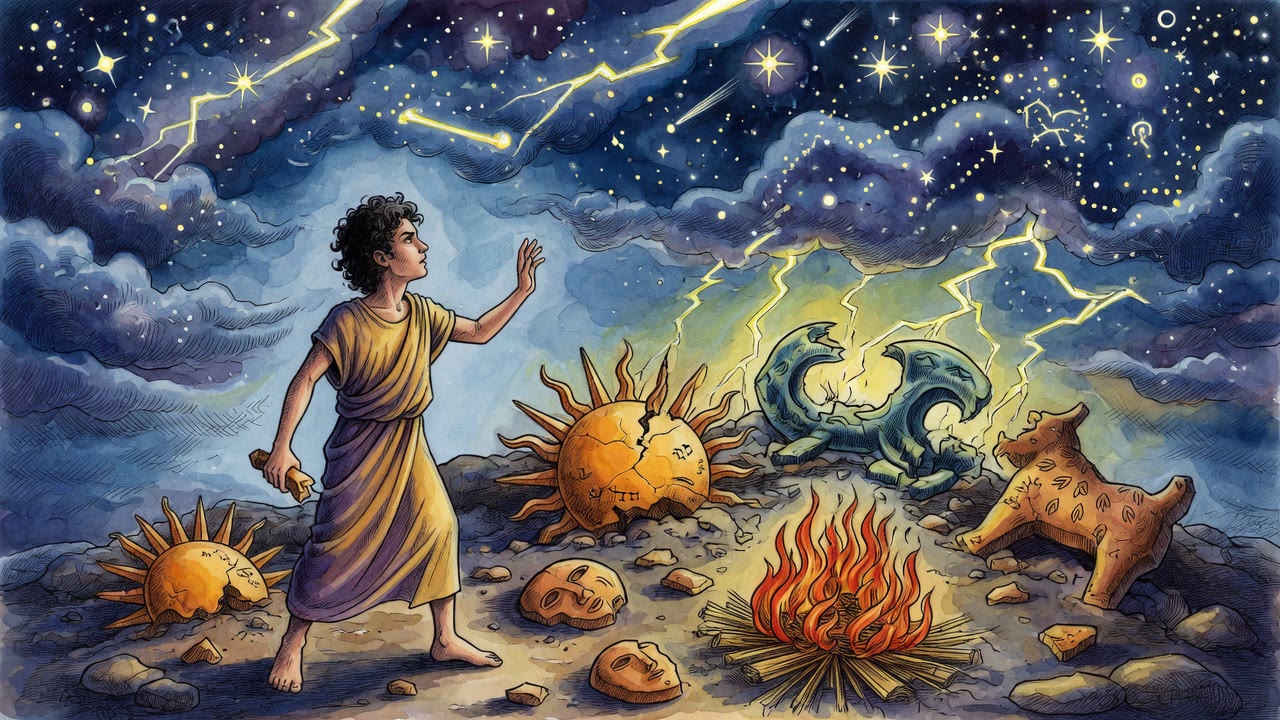
Abraham had climbed through every candidate in creation: idols, fire, water, earth, sun, moon, stars. Each one ruled by something above it. Each one insufficient.

He turned to his father with a question that contained its own answer: "Hear this, Terah my father. I will make known to you the God who made everything, not these we consider as gods. Who is He? What is He?"

And then Abraham spoke a poem that trembled on the edge of revelation:

Who has crimsoned the heavens and made the sun golden,
And the moon lustrous, and with it the stars;
And made the earth dry in the midst of many waters?

"Yet may God reveal Himself to us through Himself!" Abraham cried. He had followed the chain of being to its end. Now he waited for the One at the top of it to speak.

Full source
Apocalypse of Abraham XVIApocalypse of Abraham

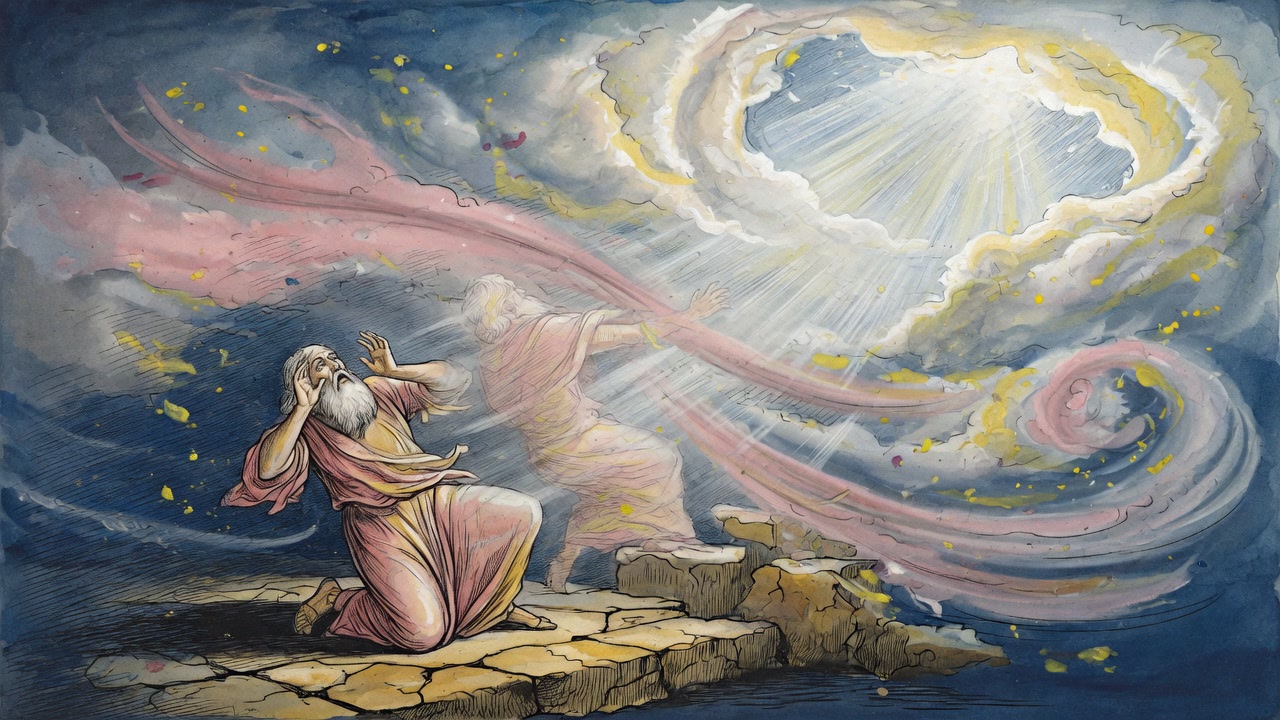
Abraham turned to the angel in distress. "Why have you brought me up here? I cannot see anymore. I am already grown weak, and my spirit is departing from me."

The mortal body was failing. The heavenly light was too intense, too pure for human eyes. The same tradition teaches that Adam, before his transgression, could see by this primordial light from one end of the world to the other. But after the fall, it was withdrawn. Now Abraham, a man born into a diminished world, was staring directly into the withdrawn radiance, and it was breaking him.

Iaoel steadied him. "Remain by me. Fear not. He whom you see coming straight toward us with a great voice of holiness, that is the Eternal One who loves you. But Himself you cannot see."

The God of the universe was approaching. Not as a visible form, for no mortal can see God and live, but as a presence, a voice, a force of holiness so overwhelming that even the approach made Abraham's spirit drain from his body.

"Do not let your spirit grow faint on account of the loud crying," Iaoel said. "I am with you, strengthening you."

Abraham stood at the boundary between what flesh can endure and what only spirit can survive. The angel was the only thing keeping him on his feet.

Full source