Haman Dressed Mordechai and His Daughter Threw the Pot on Him
Mordechai told his students to run. They stayed. Haman came not with a rope, but with the king's clothes and a horse.
Table of Contents
 Click for full size
The Students Would Not Run
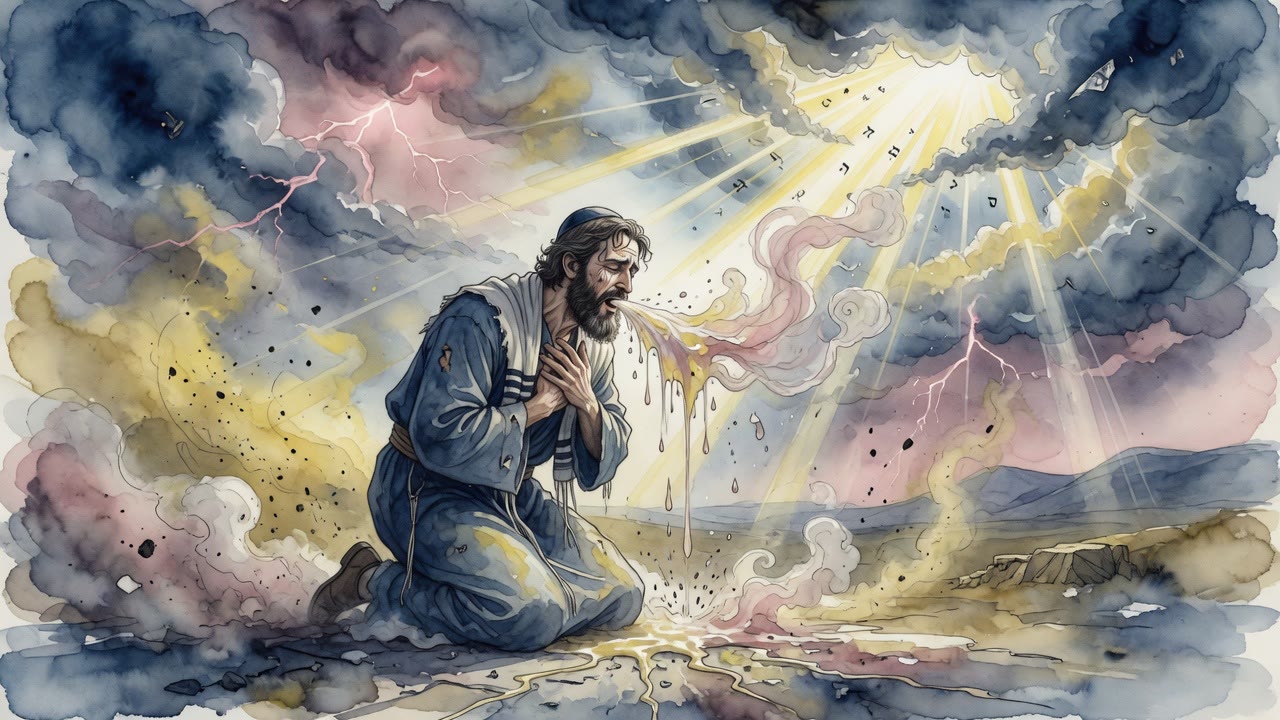
Mordechai sat in sackcloth with his students around him when the word came that Haman was in the street. He told them to run. "My children, get away from here, so you are not burned with my coal. The wicked Haman is coming to kill me."
They refused. "If you die, we will die with you."
So he said, "If so, let us stand in prayer and pass away while praying." They finished their prayers and sat down to the laws of the omer. It was the sixteenth of Nisan, the day the barley offering used to go up when the Temple still stood. They were taking a handful of barley in the air when Haman came through the door with royal garments over his arm.
"What are you engaged in?" he asked.
"The commandment of the omer," they said.
"This omer, what is it? Gold? Silver?"
"Not gold and not silver and not wheat. Barley."
"What is its value? Ten talents?"
"It goes for ten small coins."
Haman said, "Rise. Your ten coins have vanquished my ten thousand talents of silver." He had paid that sum to the king for the destruction of the Jews. A handful of barley had beaten it.
Haman Fetched the Water
"Put on these royal garments," Haman said, once Mordechai had finished praying.
Mordechai looked at him. "Why are you dishonoring the monarchy? Is there any man who would put on royal garments without bathing?"
Haman went looking for a bath attendant and could not find one. He girded his loins and went in and bathed Mordechai himself. When Mordechai came out, Haman held up the crown.
"Take this."
"Why are you dishonoring the monarchy? Is there any man who would put on a royal crown without a haircut?"
Haman went looking for a barber and did not find one. He went home, brought scissors, sat down, and cut Mordechai's hair. He began to sigh.
"Why are you sighing?"
"Woe to this man's father. He has been removed from being a high official and made a bath attendant and a barber."
Mordechai said, "That is why I asked you. Do I not know that the father of that man was a bath attendant and a barber in Kefar Karyanus, and you have found his tools?"
He Bent His Back for the Horse
"Arise and ride this horse," Haman said.
"I have not the strength to mount it. I am old."
"Am I not an old man?"
"Was it not you who brought it on yourself?"
Haman bent down. "Get up. I will bend my back for support. Step on me and ride, to fulfill what is written: And you shall tread on their high places" (Deuteronomy 33:29).
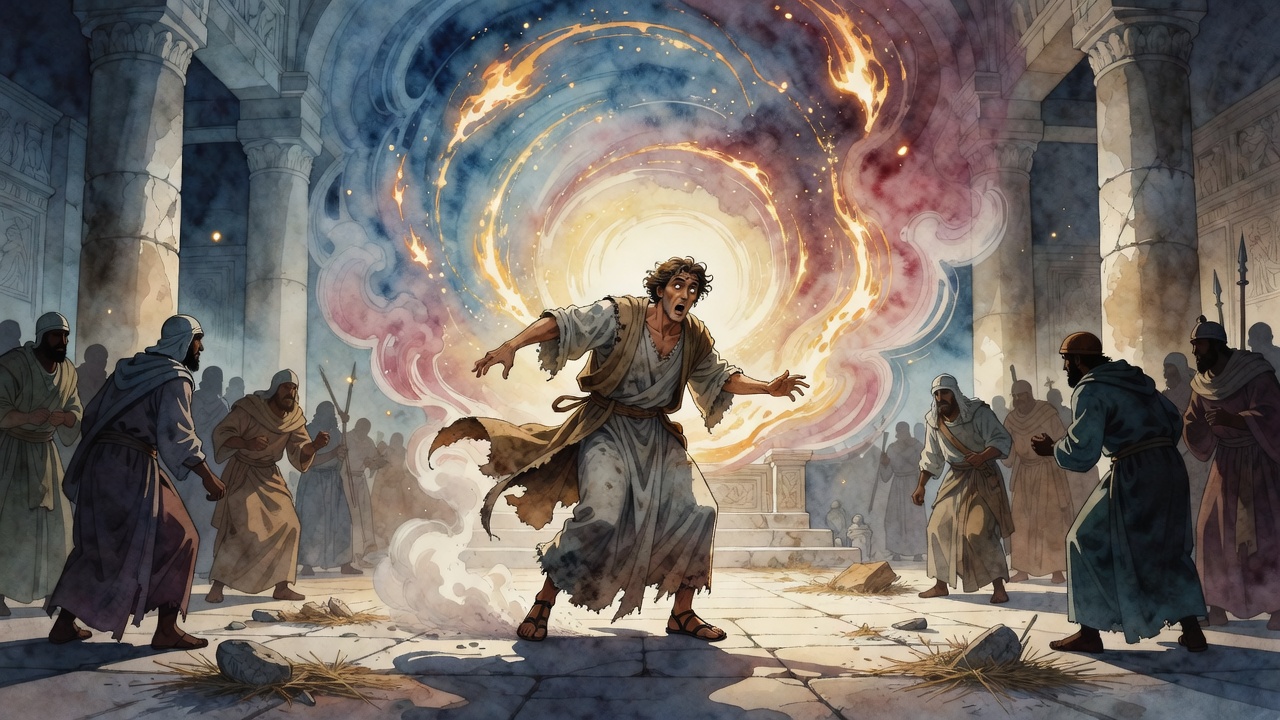
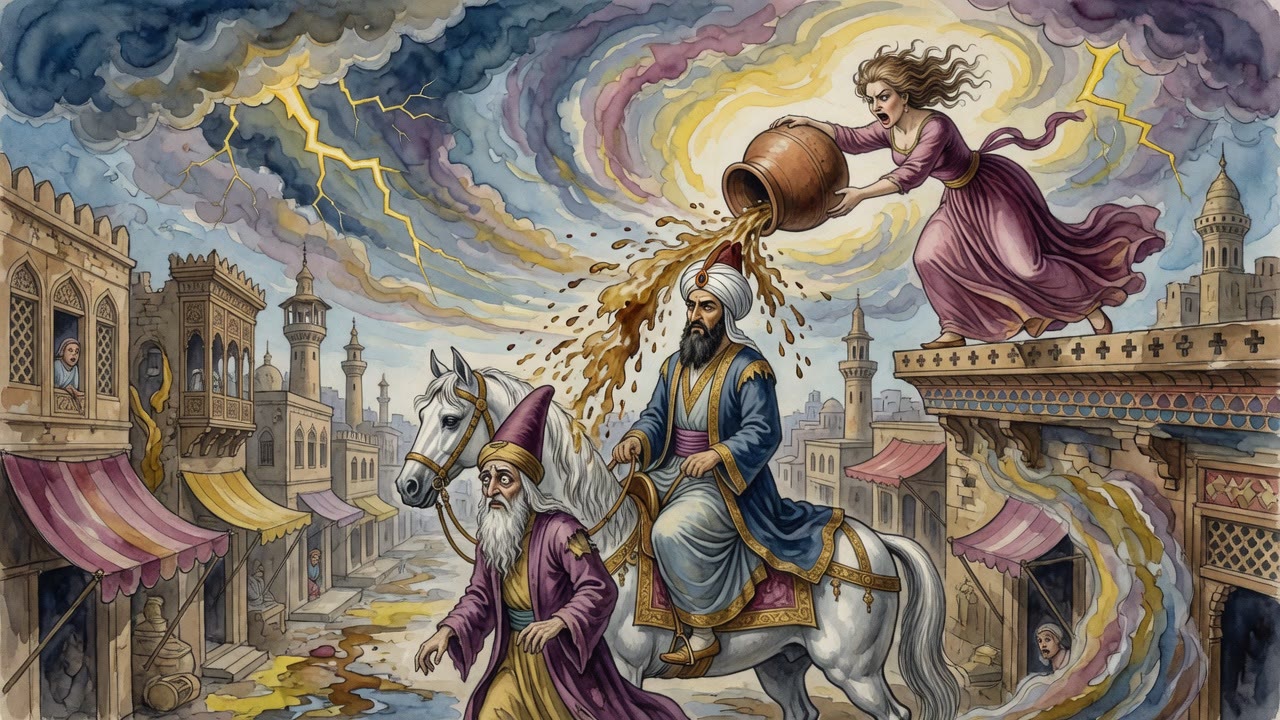
Mordechai climbed onto Haman's back and from there onto the horse. Haman dressed him in the king's clothes. He took the bridle. He led.
Under the public proclamation another sentence ran in Haman's mouth. Last night I was arranging a gallows for this man, and the Holy One was arranging a crown. I had ropes and nails. He had royal garments. I went to the king to hang him. The king told me to put him on a horse.
Psalms in Two Mouths
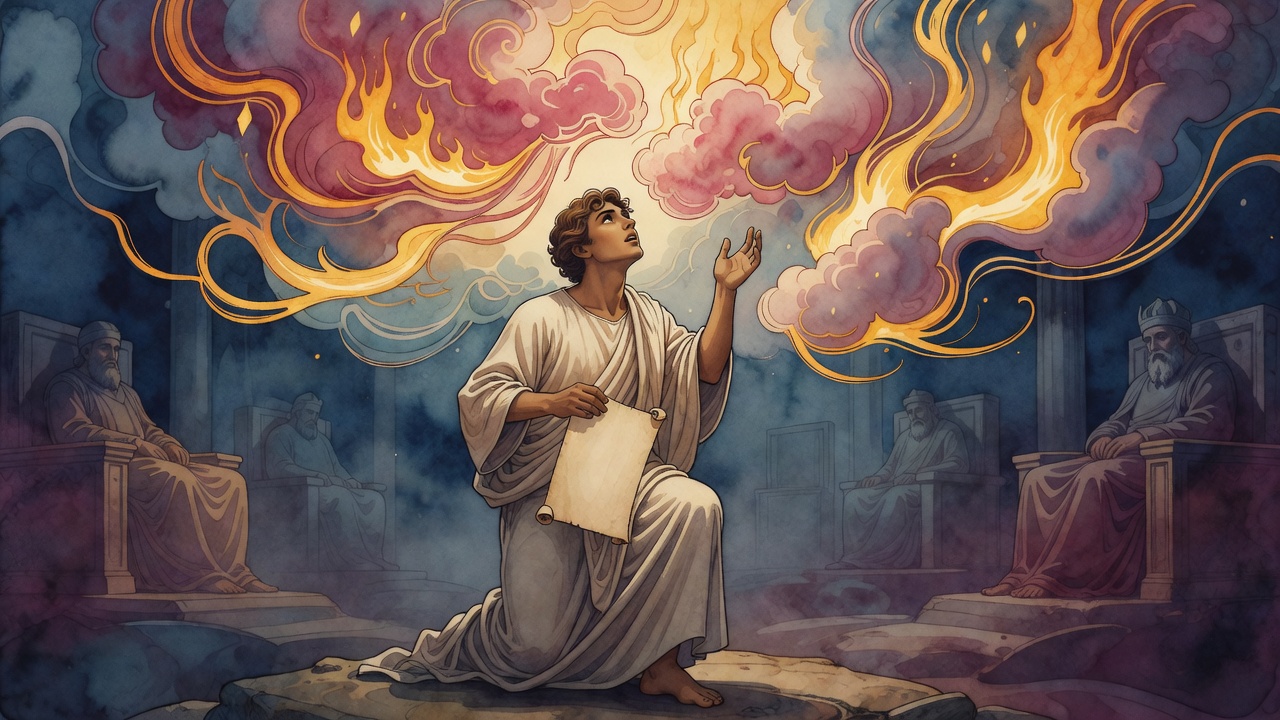
Mordechai rode. He began to praise. "I will exalt You, O Lord, for You have lifted me up and have not caused my enemies to rejoice over me" (Psalms 30:2). His students walking behind sang the next lines: in the evening one may lie down weeping, and in the morning, joy. Haman, leading, had his own verse. You hid Your face, I became terrified.
The city square filled. People who had watched Mordechai sit in ash outside the palace gate now watched him ride. Haman called out the king's words before the people of Israel: so shall be done for the man the king wishes to honor. He omitted nothing. The king had ordered him not to omit anything.
The Daughter Threw the Pot
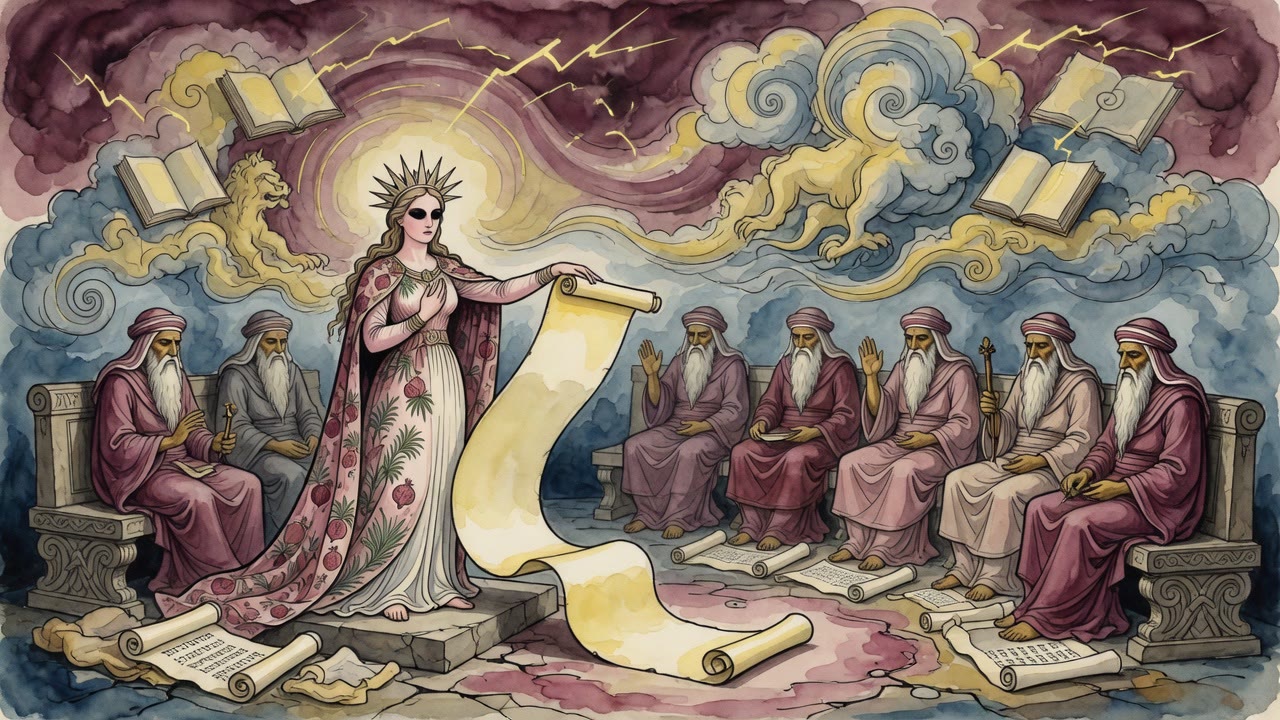
The procession passed Haman's house. His daughter was looking out of the window. She saw a man in royal garments on the horse and a figure bent over in the leading place. She took the rider for her father and the leader for Mordechai. She had prepared a vessel of offal for that degraded man. She raised it. She threw the pot.
It landed on Haman's head.
The vessel had barely left her hand when she understood. She threw herself from the window and lay crushed on the street below.
Haman arrived home covered in filth, his head bowed. The first news in that house was that his daughter had died. His wife Zeresh and his advisers told him plainly: if Mordechai is of Jewish seed, you will fall before him and you will not prevail. You have begun to fall and you will not stop.
He had almost no time. The king's servants were already at the door to take him to Esther's banquet.
Mordechai, once the procession was over, put off the royal robes, covered himself again with sackcloth, and prayed until night fell. He ended the day as he had begun it.
← All myths