5 min read

Haman Weighed Every Chance and Still Lost to Esther

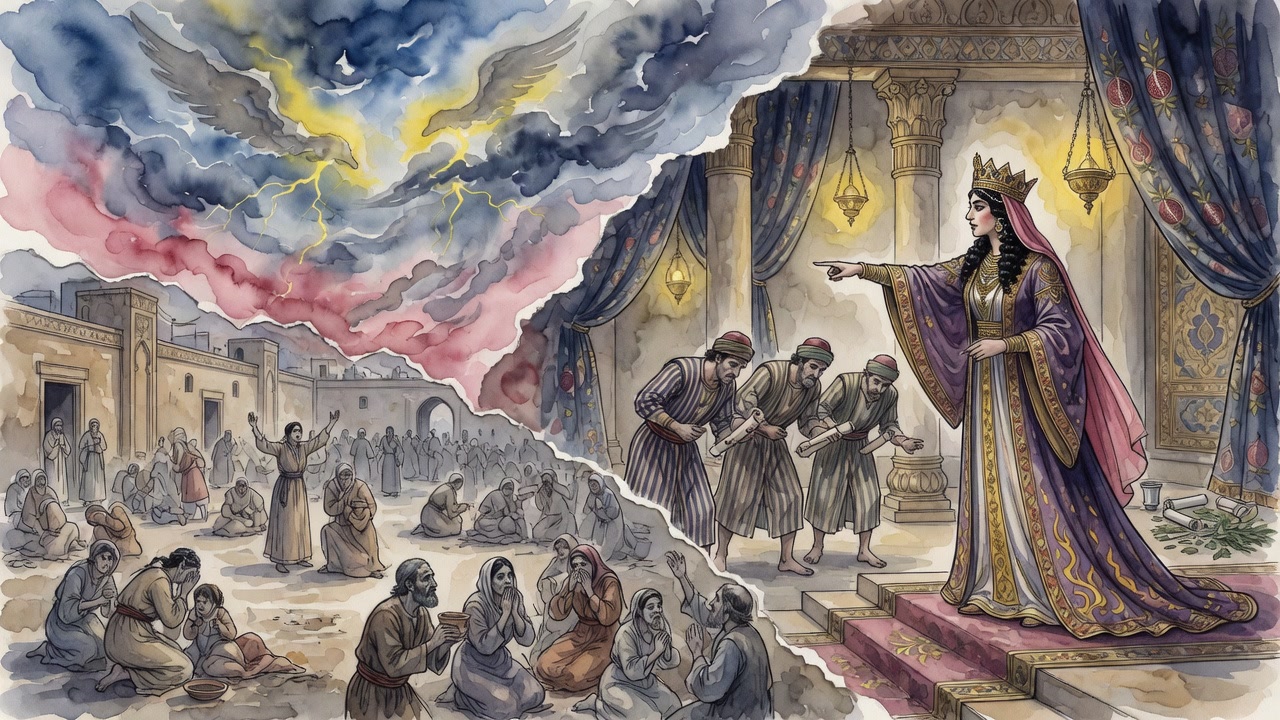
Haman tallied kinship, nations, and the hidden queen. Every line of his ledger said the Jews would fall. Esther kept her secret until his math burned.

Curated by Arthur · Told by Maggid ·
Table of Contents
  1. The Tablet After the Feast
  2. Folly That Laughs at Sin
  3. The Secret Esther Kept
  4. When the Ledger Burned

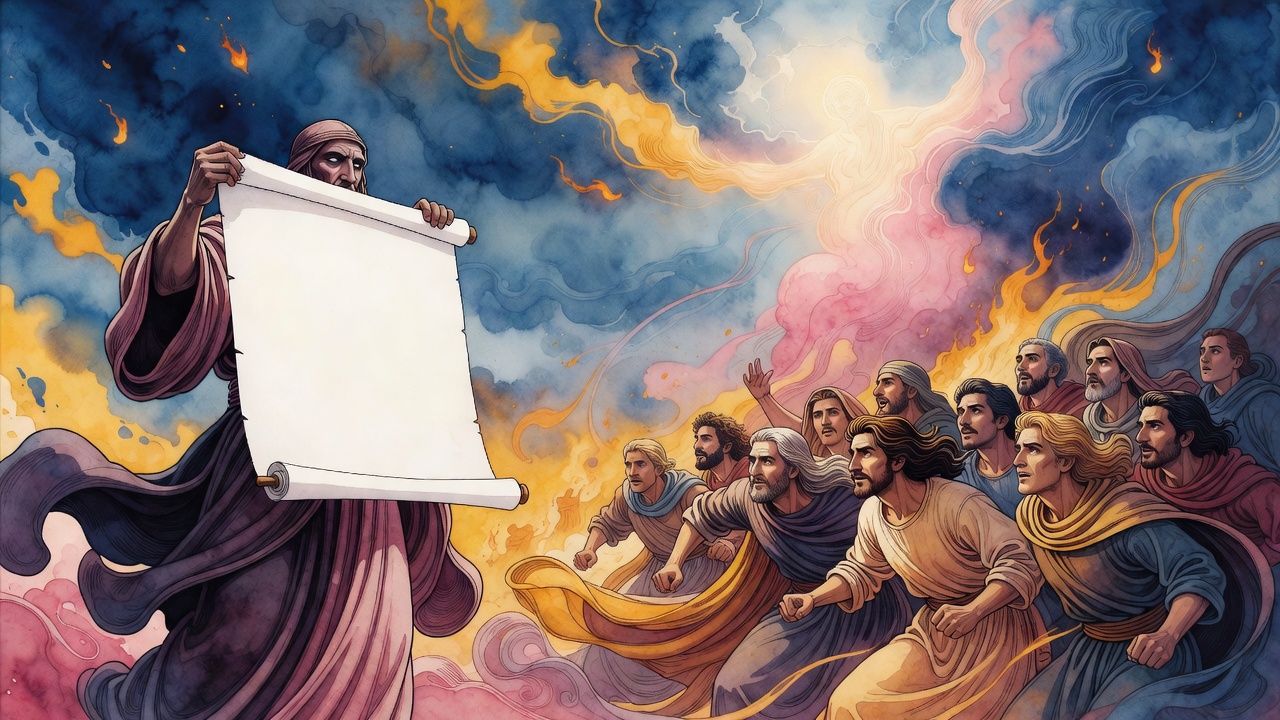
Haman sat with a tablet and a stylus while the palace still smelled of wine from the last feast. The king had lifted him above the other ministers. Promotion needed a plan, and Haman loved plans more than sleep.
Haman Weighed Every Chance and Still Lost to Esther Click for full size

He did not pray. He calculated.

The Tablet After the Feast

"After these matters," the court chronicles would say, and Haman treated those matters as reckonings on his own tablet. Who was reckoning? He was. He lined up every risk the way a merchant lines up weights on a scale, shifting grains until the beam hung still.

First the new queen. Esther had come from nowhere and kept her people off her tongue. If she was a Jewess, Haman told himself, then she was almost his kin. He traced his pride back through Agag to Esau, and Esau had been a brother to Jacob. The prophet had said as much: "Isn't Esau a brother to Jacob" (Malachi 1:2). A hidden sister of Jacob would still feel the old blood-tie and would not dare oppose a man who sat so close to the throne.

If she was a gentile, better still. Then every nation would stand with him against the Jews, the way wolves stand together against a single flock. Either way the queen was no obstacle. He set down the sum and smiled at the neatness of it. The stylus left a clean mark. In his mind the decree was already half written.

He walked the garden paths repeating the logic until it felt like law. Servants bowed. He counted their bows as more proof that the world had already agreed with him.

Folly That Laughs at Sin

The palace fools laughed when the weak were marked for death. Their laughter was loud and empty, the kind of joy that covers a hard heart. Heaven despises that laughter. Even piles of sin can be wiped by repentance, but a fool who mocks the fallen hardens the path under his own feet until he cannot find the way back.

Haman's joy was that kind. He did not tremble at the decree he was writing. He counted houses and months and silver as if human lives were columns that would always add up for him. When a courtier asked whether he feared the quiet queen, he laughed the way those fools laughed, short and bright and without wisdom.

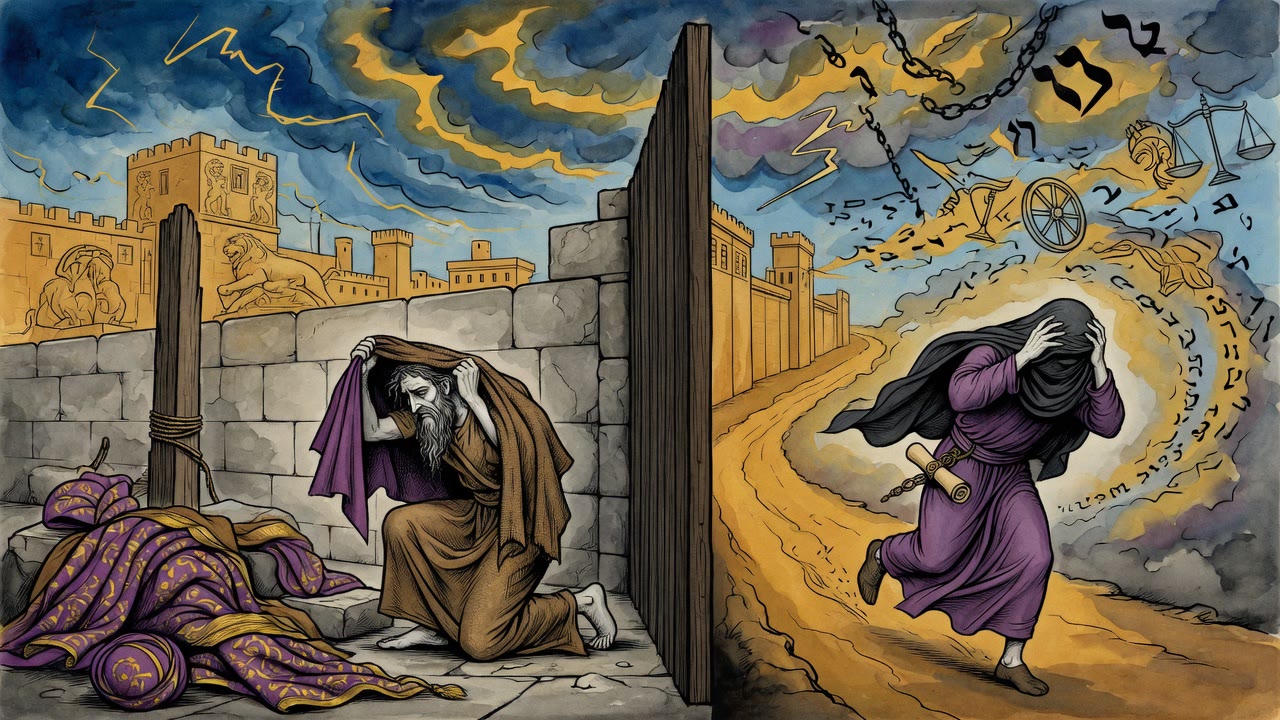
He revealed his hate too freely. A later proverb warned, reveal your secret to one out of a thousand, even if well-wishers crowd your door. Haman told his pride to anyone who would flatter him. He told it over wine. He told it in the gate. The more he spoke, the thinner the wall around his plot became. A sealed plan can live. A plan that boasts begins to die in public.

There are men who confess their worst desire to a child and still think themselves clever. Haman confessed his worst desire to a kingdom.

The Secret Esther Kept

Esther had learned a different arithmetic. She held her people like a sealed letter under the royal seal. Mordecai walked the courtyard in sackcloth and ash. She stayed inside the silence of the throne room, counting days, not odds, fasting while the palace ate.

When the moment came, she opened the letter at the table where Haman sat as guest of honor. The king heard her name for her people. The brotherhood Haman had banked on snapped the other way. Jacob's daughter did not protect Esau's heir. She named him as enemy with the cup still in his hand.

Haman's hands went to the couch. The tablet in his mind cracked down the middle. Kinship had not bought him safety. Nations had not locked ranks. The queen he had dismissed as either kin or nothing proved to be the only number that mattered, and she had been adding in secret while he added in the open.

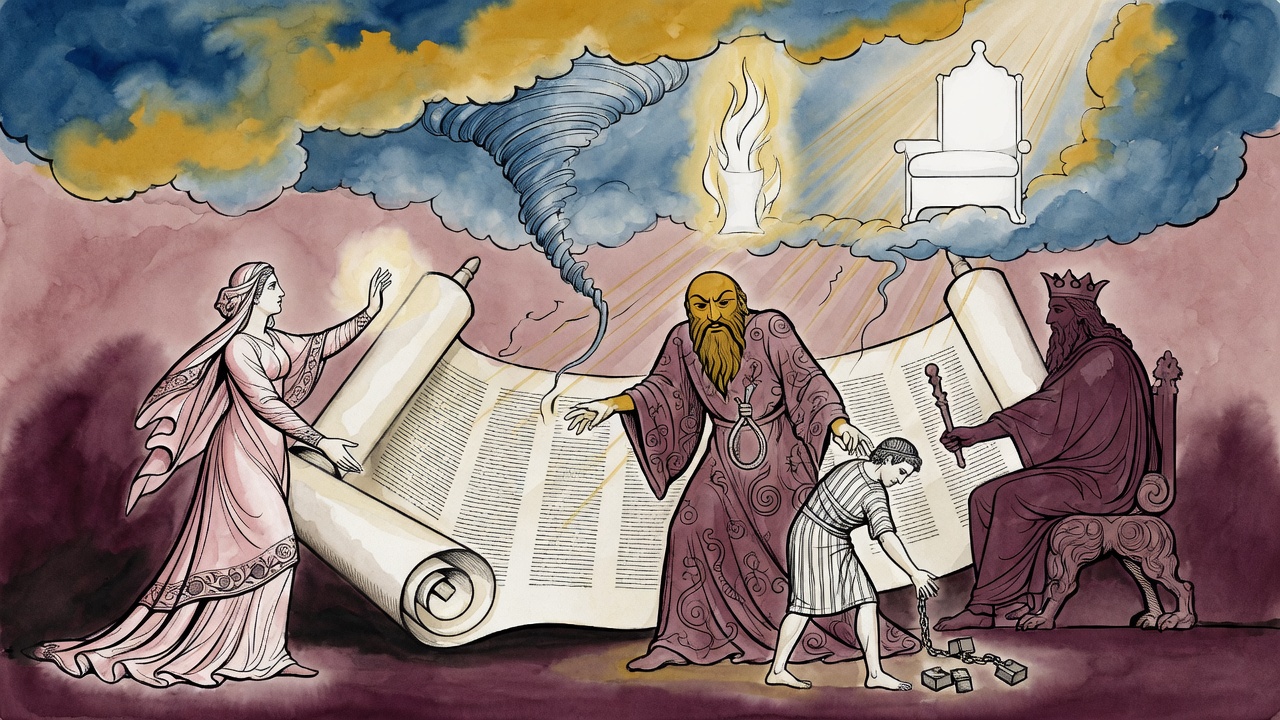
He begged. The king walked the garden and returned with a face like iron. The tree Haman had raised for another man already waited with empty rope.

When the Ledger Burned

They led him out while the city still whispered the old promotion. The same precision that once pleased him now chased him step for step. He had weighed every chance except the one heaven had already written in a woman who knew how to keep a secret through feast after feast.

In the street the fools still laughed at other people's ruin. Their laughter did not save them either. Esther walked back into the house of the king with the decree unfinished and the night still dangerous, but the first column of Haman's math was already ash on the wind.

He had trusted a ledger. She had trusted a sealed name. Only one of those holds when the king asks who you are and waits for an answer that costs a life.

The stylus lay somewhere in a room that no longer belonged to him. The tablet of his reckonings would never be found complete. The book of the chronicles would remember a different set of matters, the kind that begin after pride finishes speaking.


← All myths
From the tradition

Sources

3 sources

The texts behind this telling. Some cards carry a translation of the source; others are our own retelling of it, and each card says which. Every card links out to the original.

Esther Rabbah 7:4Esther Rabbah

Retold in our words. Read the original at the link below.The Sefaria Midrash Rabbah, 2022 · CC-BY

This teaching from Esther Rabbah probes a small phrase in the Purim narrative: “After these matters, King Ahashverosh promoted Haman” (Esther 3:1). The midrash hears in the word “matters” the sense of reckonings or calculations, and asks: who was doing the calculating? Rabbi Yehuda answers that it was Haman himself, weighing the odds before launching his plot against the Jews.

The reasoning the midrash places in Haman’s mouth is chilling in its thoroughness. He considers Esther, the new queen whose origins remain hidden from the court. If she is a Jewess, Haman reasons, then she is actually his own kinswoman, for he traces his line to Esau, and Esau and Jacob were brothers. To support this, the midrash cites the prophet: “Isn’t Esau a brother to Jacob” (Malachi 1:2). On that account he assumes a hidden queen of Israelite stock would still feel some tie to him.

And if she is a gentile, Haman reasons further, then he has nothing to fear at all, since in his view all the nations are bound to one another by common cause against the Jews. Either way, by his calculation, the queen poses no obstacle to his scheme. The midrash exposes the arrogance of the villain’s logic: Haman believed he had accounted for every possibility, yet the very kinship of Jacob and Esau that he invoked would prove the ground of his undoing, as Esther the Jewess turned his careful reckonings against him.

Full source
Midrash Tehillim 5:6Midrash Tehillim

Retold in our words. Read the original at the link below.Rabbi Mike Feuer, Jerusalem Anthology · CC-BY

The midrash (interpretive storytelling) starts by painting a picture of "fools." These aren't just silly people; they're those whose hearts are filled with folly. They bring lamentation to the world and cause confusion. The text even quotes (Ecclesiastes 2:2), “I said of laughter, ‘It is mad,’” suggesting that even seeming joy can be a mask for something foolish.

Rabbi Yissachar offers a comforting thought: even if a person amasses "piles of sins," God allows repentance. And through repentance, it's as if the sins never happened! He bases this on (Job 11:11), "For He knows men of falsehood; He sees iniquity without investigating it." It suggests a profound level of divine understanding and forgiveness.

Then, the midrash turns to two challenging biblical figures: Ishmael and Jeroboam.

Rabbi Simon interprets (Genesis 21:19), "Then God opened her eyes," regarding Hagar and her son, Ishmael, in the desert. He says God reveals the truth to those willing to see it. But the ministering angels raise a tough question: "Master of the Universe, if a person is destined to kill Your children out of thirst, why do You give him a well?" This refers to the traditional understanding that Ishmael's descendants would later be enemies of the Jewish people. The text even alludes to this antagonism, quoting (Isaiah 21:13), "A burden upon Arabia."

God's response is striking. He asks the angels, "Is this person righteous or wicked?" They reply, "Righteous." God then declares, "I judge a person based on his actions at that moment." This is supported by (Genesis 21:17), "For God has heard the cry of the lad where he is." God focuses on the present good, not a predetermined future of potential harm. He gives water to a thirsty child, regardless of what that child might become.

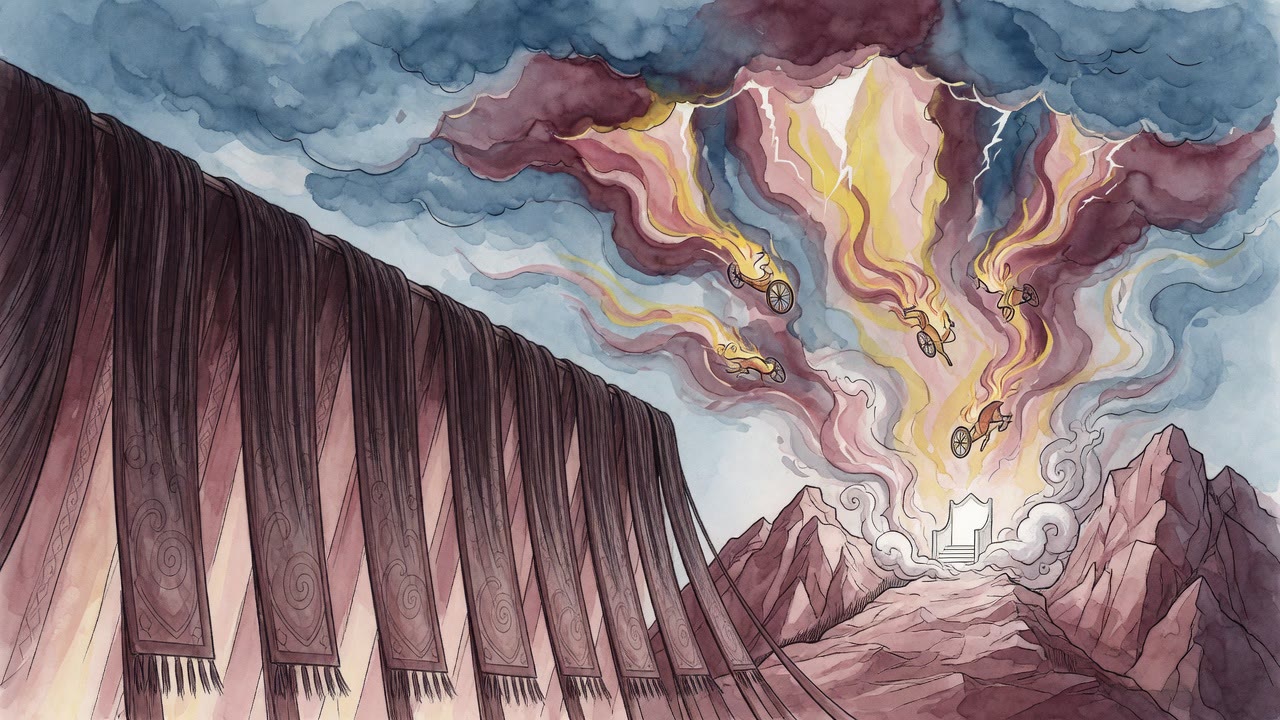
A similar dilemma is presented with Jeroboam, who later becomes the first king of the Northern Kingdom of Israel and leads the people into idolatry. Rabbi Chanina bar Papa interprets (1 (Kings 11:2)9), "And they two alone in the field," to mean that Jeroboam's sin would eventually be as great as that of Ahijah the Shilonite, the prophet who initially supported him. They both sat together, studying the secrets of the Merkavah (Divine Chariot), a central mystical concept in Judaism. The angels again protest: "If a person is destined to set up two calves for worship, why do You show him the order of the Divine Chariot?" Why reveal profound divine secrets to someone who will later misuse that knowledge?

And again, God's answer echoes the first. He asks, "And now, what is he?" They reply, "Righteous." And God says, "I judge a person based on his actions at that moment."

The midrash suggests that God operates within the present. He sees potential, yes, but he judges actions as they occur. He offers chances for repentance, and values the immediate good even when the future is uncertain. It’s a challenging and ultimately compassionate perspective, reminding us that even those who stumble are worthy of grace, and that the present moment holds immense power. It forces us to consider: how do we judge others? And perhaps more importantly, how do we judge ourselves? Are we willing to see the potential for good in ourselves and others, even when the future seems unclear?

Full source
Alphabet of Ben Sira, Letter GimelAlphabet of Ben Sira

Retold in our words. Read the original at the link below.Sefaria Community Translation · CC0

For the letter Gimel, Ben Sira offers a proverb about trust:

"Reveal your secret to one out of a thousand, even if you have many well-wishers."

One out of a thousand. That's the ratio of trustworthy confidants to everyone else, according to this medieval Jewish wisdom text composed between 700 and 1000 CE. The saying echoes (Ecclesiastes 7:28): "One man in a thousand I found." And it lands with particular force here, because the educator has already been spilling his secrets to a child he's known for about five minutes.

The teacher pauses. He thinks it over. "I have revealed my secret to you, but to no other," he says, as if that makes it acceptable. Then, apparently deciding this infant is now his personal therapist, he goes further: "Advise me based on what I tell you. I want to divorce my wife, because there is in my neighborhood an extremely beautiful woman."

There it is. The real confession. This isn't just idle worry about an ugly wife, the man is actively considering leaving her for the beauty next door. He's asking a child prodigy for relationship advice, and he doesn't even see the absurdity of the situation. The Alphabet of Ben Sira loves this kind of comedy: the adult authority figure who can't stop revealing his weaknesses to the very student he's supposed to be teaching. Each letter peels back another layer. Ben Sira says nothing about the confession. He simply asks for the next letter.

Full source