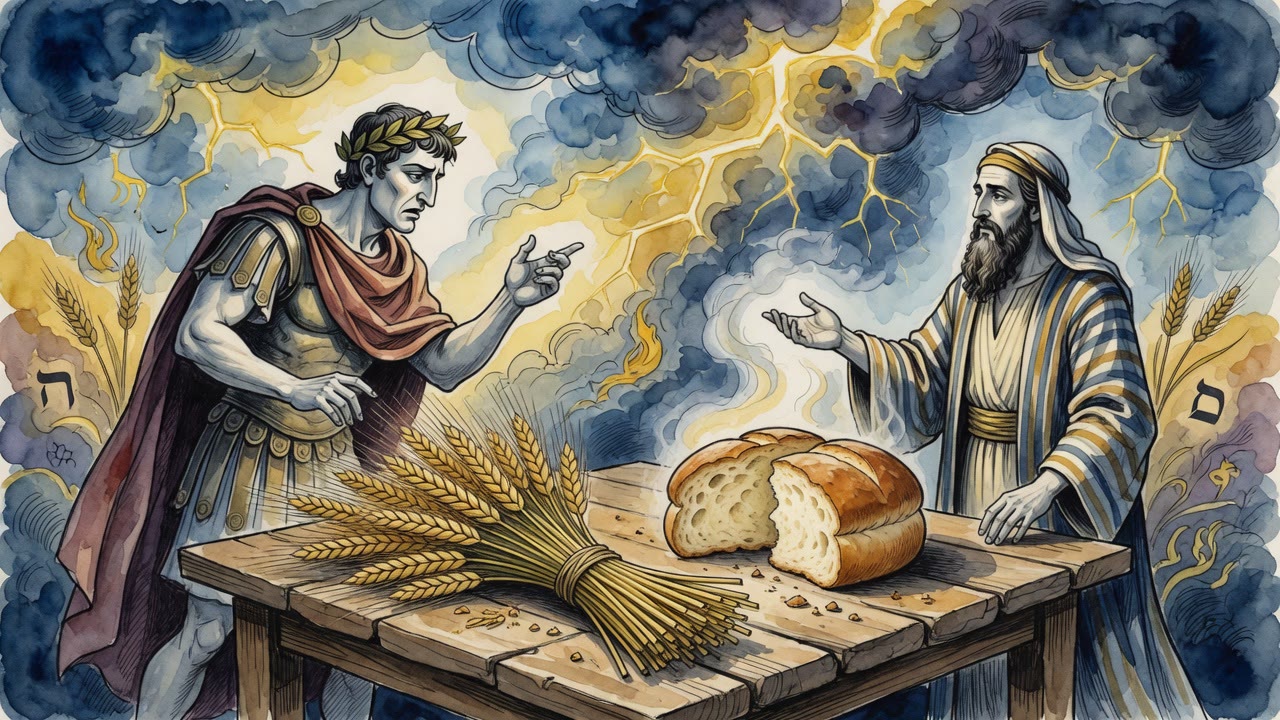
He Gave Away Ten Shekels Then Sailed with Etrogs
Across the sea a king lay sick, dreaming of citrons the Jews pray with on Hoshanah Rabbah. His officers found a poor man sitting on a sack of them.
Table of Contents
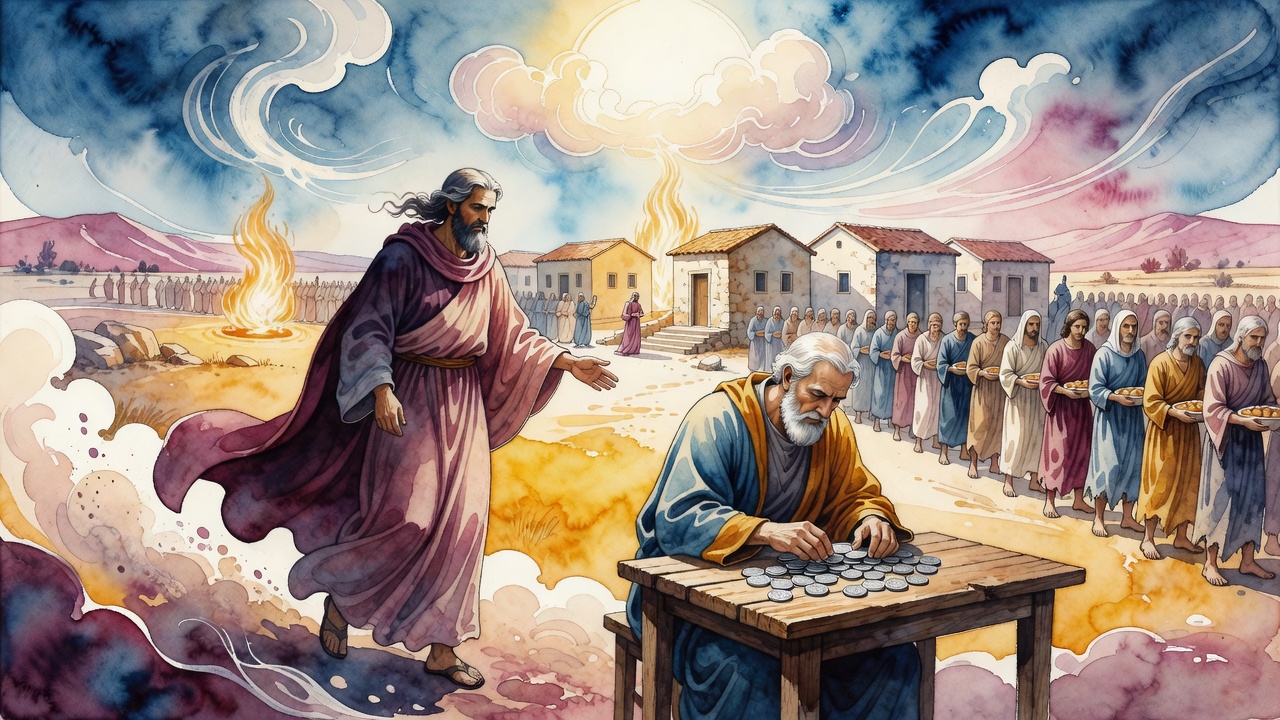
His wife pressed ten shekels into his palm on Hoshanah Rabbah and told him to buy something for the children. The market was close. The coins were warm. He made it halfway.
 Click for full size
Charity collectors spotted him and shouted the name that had ruined him and saved him in the same breath. "Here comes the master of mitzvot (commandments)!"
The Son Who Sold Everything
He was one of two sons. The other kept his property. This one gave until the house itself thinned. He sold what he owned for the sake of giving, until he was nearly penniless and still could not pass a needy hand without opening his own.
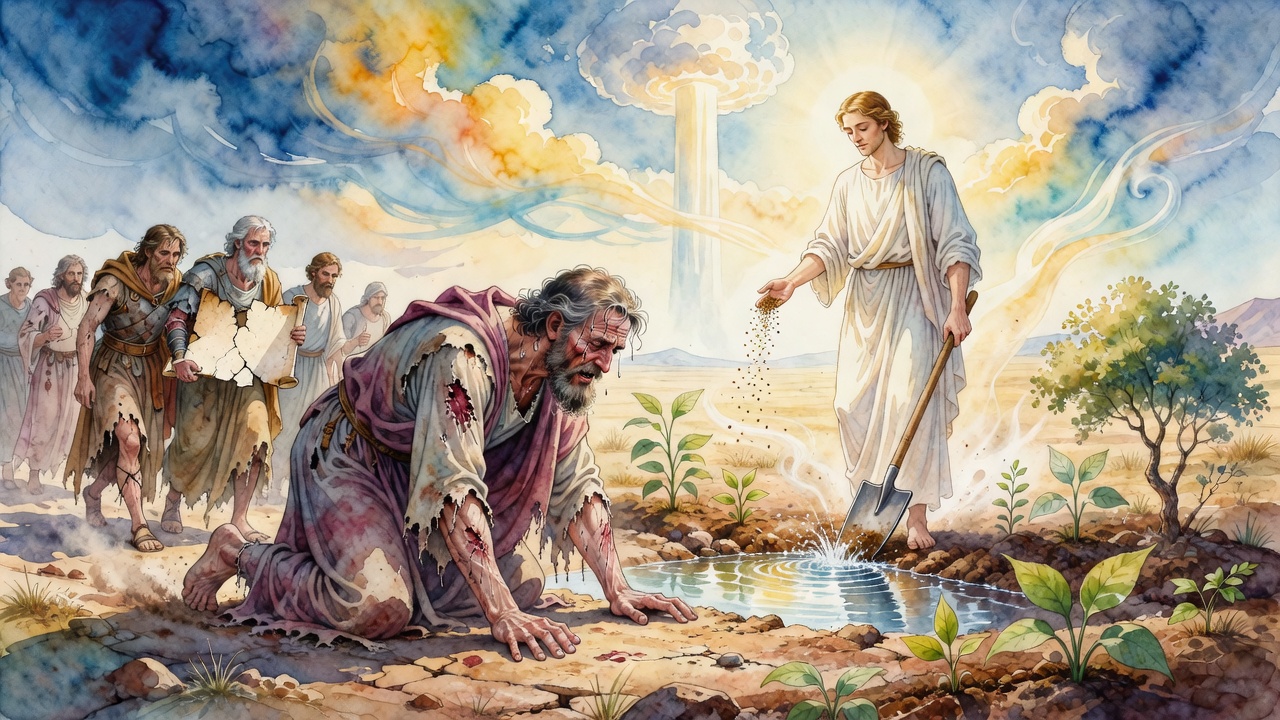
The collectors were raising a coat for an orphan girl. He looked at the ten shekels meant for his own children and felt the old pull. He could not refuse. The coins left his hand. The market became impossible. Shame walked him homeward and then turned him aside toward the synagogue, empty-handed and full of dread.
Discarded Citrons
In the synagogue the Hoshanah Rabbah service had ended. Children had tossed the used etrogim, the citrons of the festival, the way children do when a mitzvah object has finished its hour. The Mishnah in Sukkah knows that habit. He gathered what others had dropped.
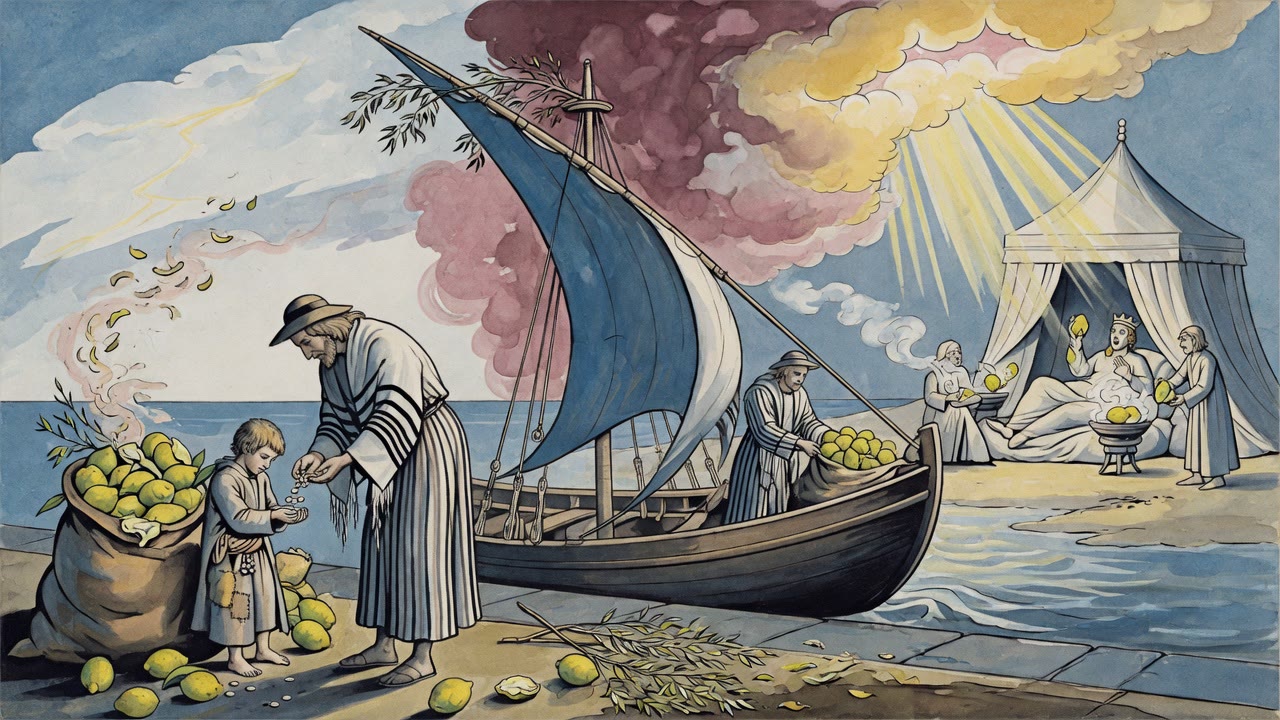
He filled a sack with battered fruit that smelled of myrtle and prayer. He did not know yet that a foreign king would dream of exactly this. He only knew he could not face his wife with empty hands and a full reputation for charity that left his own table bare.
So he took a ship.
The King's Dream and the Sack
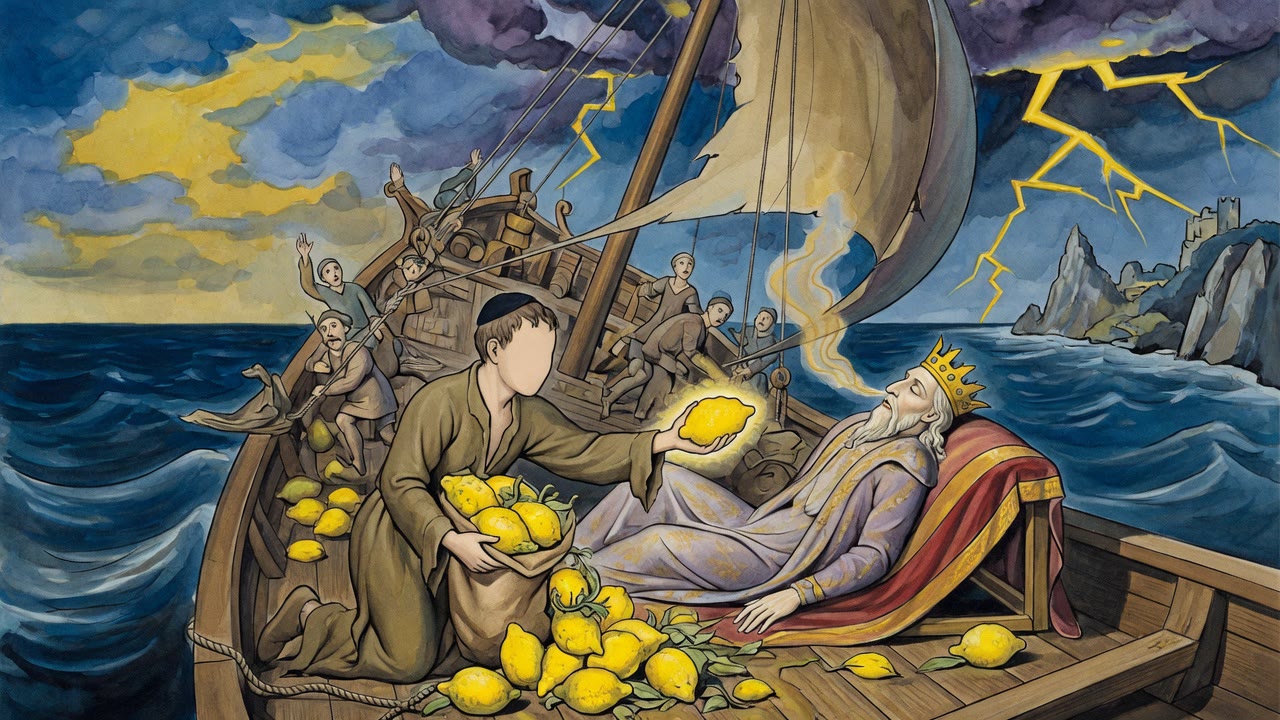
Across the sea a king lay sick with an intestinal illness no royal doctor could name. A dream ordered him to eat citrons with which the Jews pray on the day of Hoshanah. Ships were searched. Provinces were scoured. Officials found a poor man sitting on a sack and claiming he had nothing to sell.
They opened the sack. The man explained the fruit. "From those with which the Jews pray on the day of the Hoshanah." The king ate. The illness broke. Joy filled the palace like a second festival.
The king loaded the sack with dinars and asked what else he desired. The man asked for his properties restored and a grand welcome when he returned home. Both were granted. When he arrived, the brother who had kept his money watched the procession and learned, too late, which merchandise does not rot on the road.
How Fair You Are in Kindness
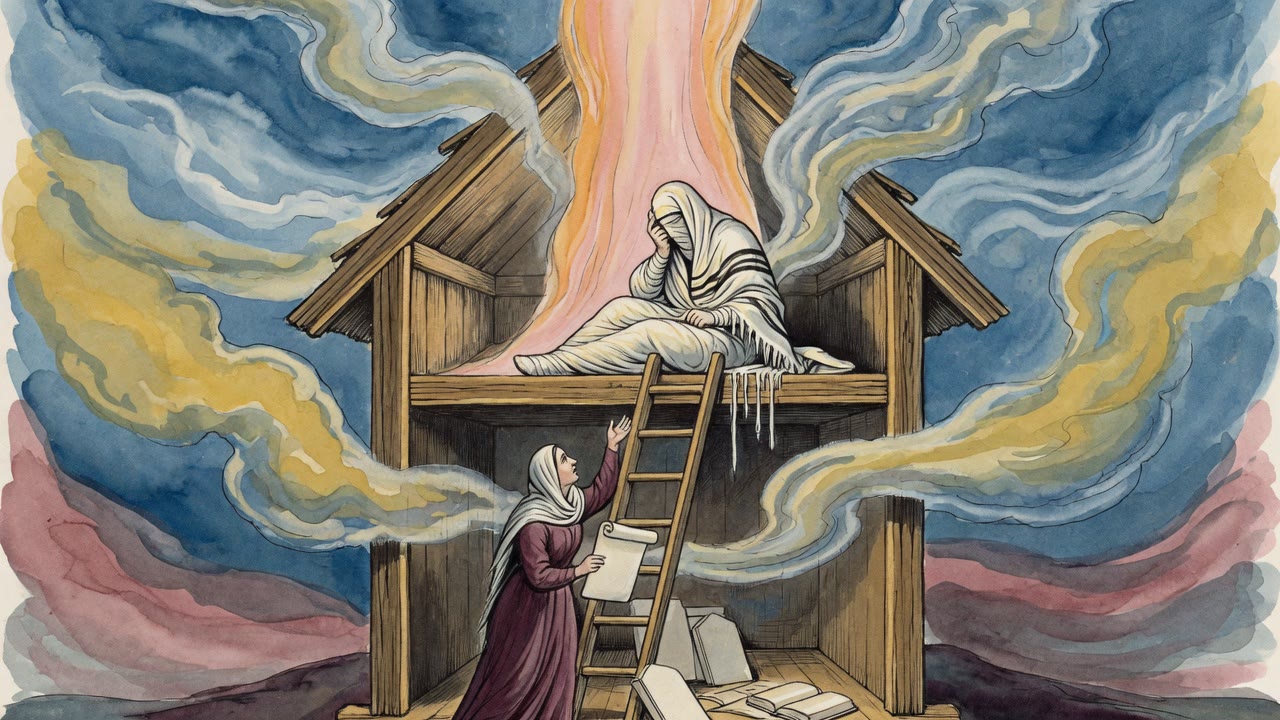
Shir HaShirim Rabbah hears "How fair you are and how pleasant you are, love, in delights" (Song of Songs 7:7) and refuses pure romance. How fair in mitzvot. How pleasant in acts of kindness. Fair in the positive commands, pleasant in the restraints. Fair in the house with terumah and tithes, pleasant in the field with gleanings, forgotten sheaves, and the corner left for the poor.
Beauty, in that reading, is not a face. It is a habit of the hand.
Merchandise That Cannot Fail
A merchant borrows, buys goods, and rides out. Some days the road repays him. Other days it ruins him. Torah, the sages say, never works that way. A person learns one chapter here, another there, and those portions sustain him for life. Scripture calls it a good acquisition (Proverbs 4:2).
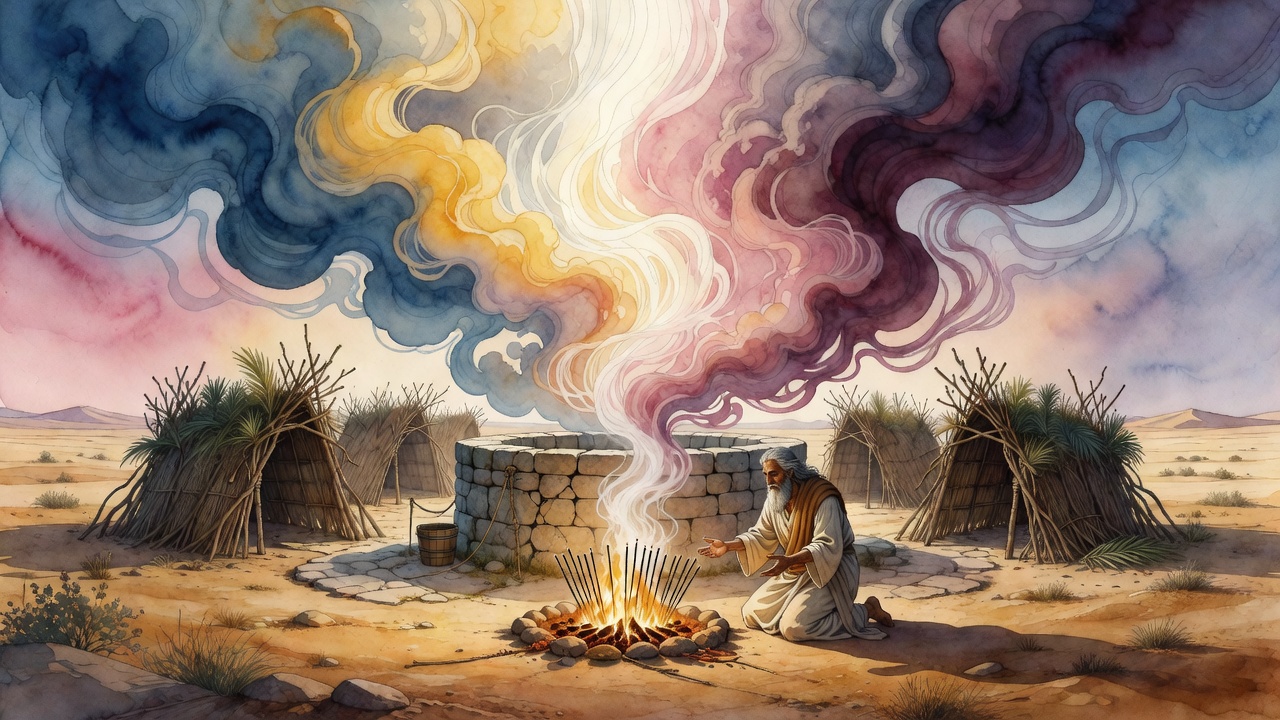
God adds a tender claim. "The Torah was Mine, and you took it from Me. So take Me along with it." Giving becomes a way of holding onto God Himself.
The master of mitzvot returned with more than dinars. He returned with proof that the road of giving can turn discarded citrons into a king's cure, and that a life emptied for kindness is not empty at all.
His children would ask later what happened to the market money. He would have no clean answer except the orphan's coat and the empty palm. Shame is a teacher with a hard hand. It drove him into the synagogue where the festival debris still littered the floor like a battlefield after joy.
He turned the citrons in his hands. Some were bruised. Some still held the green of a blessing spoken that morning. He thought of his wife counting coins by the door. He thought of the collectors' praise that always arrived just in time to empty him. He chose the sack over the apology he did not yet know how to give.
On the ship the fruit began to dry. Sailors laughed at a man guarding garbage. He slept with one arm over the sack as if it were treasure, because for him it was the only treasure left that still smelled like a mitzvah.
When the king's men shook him awake, he almost denied the etrogim a second time. Poverty had taught him to hide. The dream had taught the king to search. Between those two forces the cure was forced into the open. The man who could not keep ten shekels kept enough faith in discarded holiness to carry it across a sea.
Homecoming with a restored house is a midrash's happy ending, but the center of the tale is earlier: the moment the master of mitzvot chose an orphan's coat over his own children's supper and did not die of that choice. Kindness looked like ruin until the road paid him in a currency he could not have planned.
← All myths