Akiva Answers Rufus With Wheat and Bread
Tyrannus Rufus mocked circumcision as marring God's work. Rabbi Akiva set wheat beside white bread and let the table settle the argument.
Table of Contents
 Click for full size
The Wrong Answer, Given on Purpose
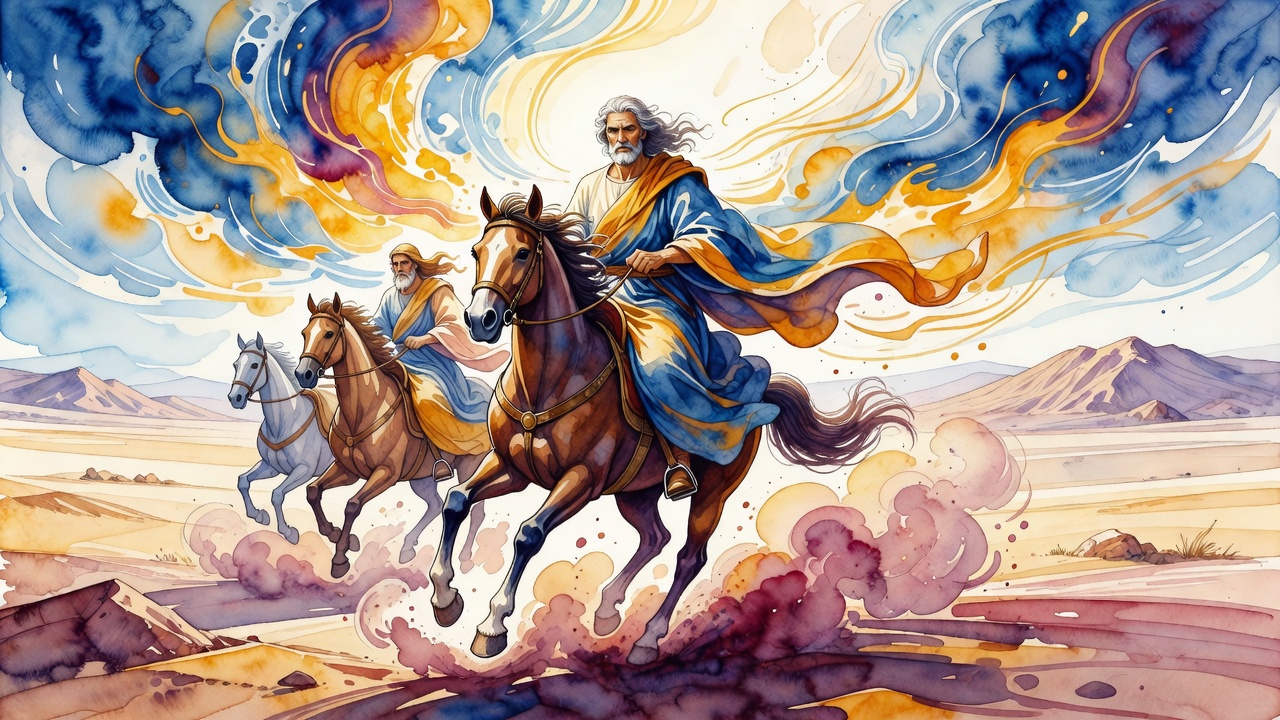
Rabbi Akiva gave the governor the wrong answer on purpose. Tyrannus Rufus had asked which works were more beautiful, the works of the Holy One or the works of flesh and blood, and every man in the room could hear the pit dug under the question. Akiva said that the works of flesh and blood were more beautiful.
Rufus moved on it at once. He put a hand out toward the sky above the courtyard and then toward the stone under their feet, heaven and earth in one gesture, and asked whether Akiva could make anything like them. That was the whole case in a sentence, because a man who cannot raise a sky has no standing to improve one.
But Akiva would not fight there. "Do not talk to me about something high above mortals, things over which they have no control," he said. "Talk about the things that are usual among people."
So the argument came down out of the air and settled onto the table between them.
The Question He Had Already Answered
"Why do you circumcise?" Rufus asked.
The charge inside the question was plain: a people who say their God finished the world, and who then take a knife to the one piece of that world handed to them, and who then spend on the eighth day more than the household can spare, as though the correction called for a feast. Every Jew in the province carried the evidence on his body.
"I knew you were going to say this to me," Akiva said. "So I answered it before you asked. That is why I told you a work of flesh and blood is more beautiful than a work of the Holy One."
Rufus went back over the last minute in his head. The insult he thought he had drawn out of the Jew had been set in front of him, freely, before he had asked for anything. He had spent the whole exchange walking toward a table that was already laid.
Wheat Spikes and White Bread
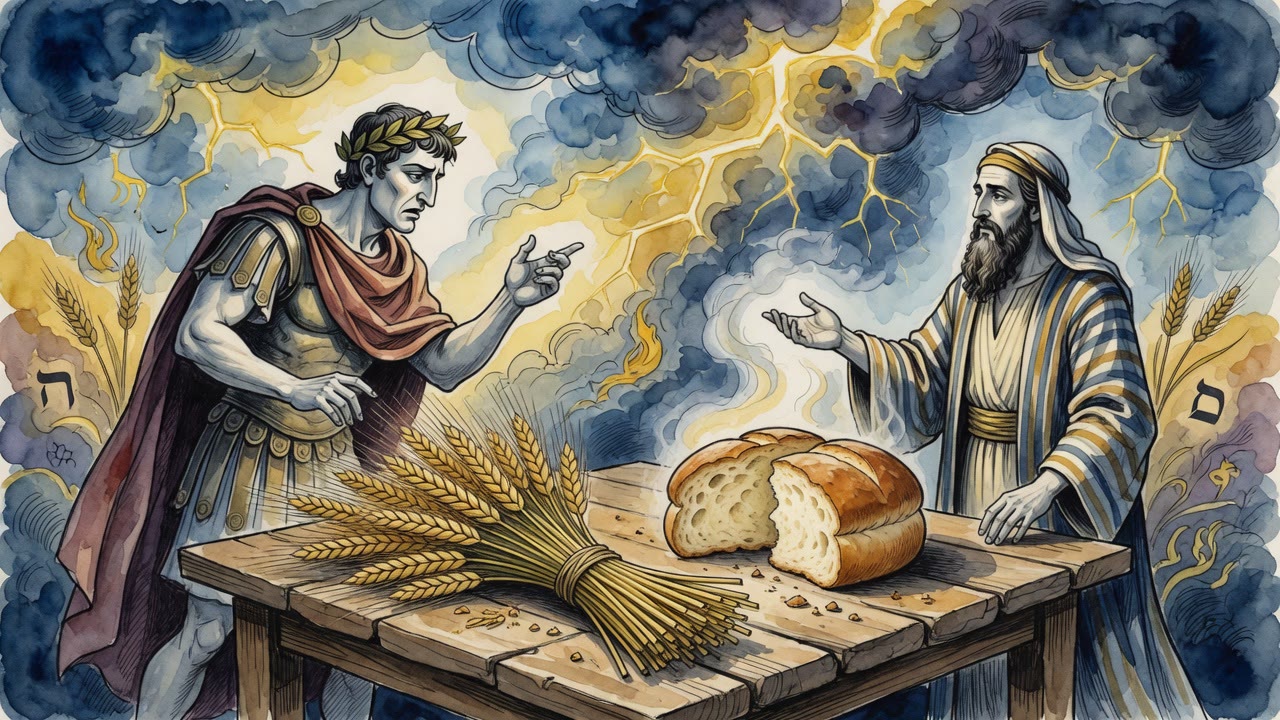
"Bring me wheat spikes and white bread," Akiva said.
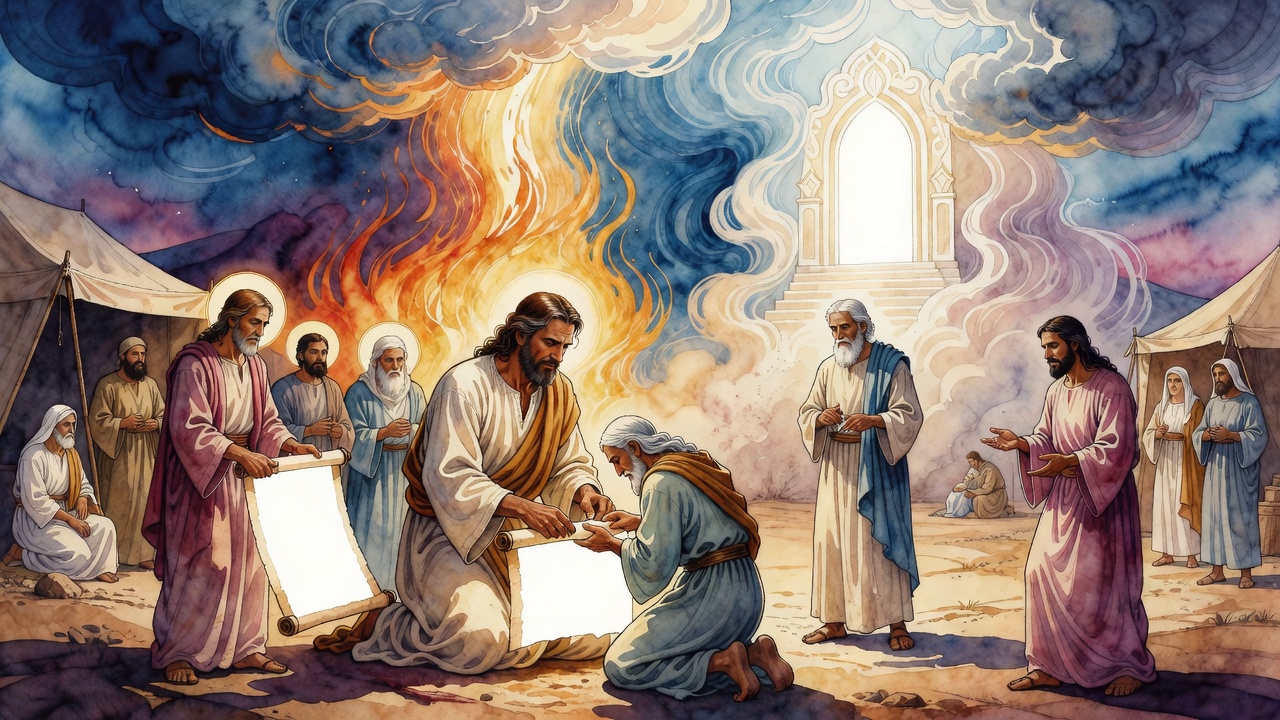
Someone went out and came back with both, and they were put down side by side. The spikes arrived still in their husks, dry beards and chaff, seed that has to be threshed and winnowed and ground and wetted and heated before it feeds anybody. Next to them lay a white loaf.
"The first is the work of the Holy One," Akiva said. "The second is the work of flesh and blood. Is the second not more beautiful?"
Nobody in that room was going to eat a fistful of raw spikes, though God had grown every grain in them. Between the field and the loaf stand a threshing floor, a millstone, water, a fire, and a pair of hands. By Akiva's reckoning circumcision belongs on the table with the bread and not with the spikes.
The Cord His Mother Cut
Rufus had one move left. "Since He takes such pleasure in circumcision, why does nobody come out of his mother's belly circumcised?"
"And why does the child come out with his cord still on him?" Akiva said. "Does his mother not cut the cord?"
Rufus had entered the world the same way as every child in the province he governed, tied to his mother, and somebody had leaned over him with a blade before he was an hour old. No one had called that an improvement on the Creator. The commandments were given to Israel in order to purify them, Akiva said, and he finished where David finished: "The word of the Lord is pure."
The spikes stayed where they had been set down, in their husks. Nobody at that table reached for them.
What Solomon Sat Down to Solve
The argument was won at the table, but Israel had never waited for it to be won. Centuries before Rufus ever came to the province, the wisest man who ever ruled them put down everything he was doing and sat with four plants in front of him.
Solomon could not work them out. If the fruit of a beautiful tree meant the ethrog, every tree bears fruit. A palm has branches, and the commandment takes only the heart of it. Boughs of dense trees, and who says that is the myrtle, since the same scripture lists myrtle and dense trees apart when the people go out to build their booths? Willows of the brook, and every tree in the country grows near water. The proverb keeps his defeat: "Three things are too difficult for me, and four I do not understand."
In the market the men who could not answer a word of it were already running. Each one wanted his own palm, his own ethrog, a myrtle, a willow, so that he could give praise with them and be found acceptable and have his sins covered. Four things tiny on the earth, and wiser than the wise.
Solomon stayed where he was, the four of them laid out in front of him. Outside, before evening, the market ran out of myrtle.
← All myths