6 min read

Abimelech Drags Himself to Isaac for Peace

Robbers and sores empty Abimelech's pride. He comes to Isaac with captains and half a peace, while Isaac sows charity, digs living water, and outgrows Gerar.

Curated by Arthur · Told by Maggid ·
Table of Contents
  1. Dragged From Gerar
  2. A Hundred Gates From Seed
  3. Only
  4. Living Water in the Valley
  5. What Gerar Could Not Keep
Abimelech Drags Himself to Isaac for Peace Click for full size

Dragged From Gerar

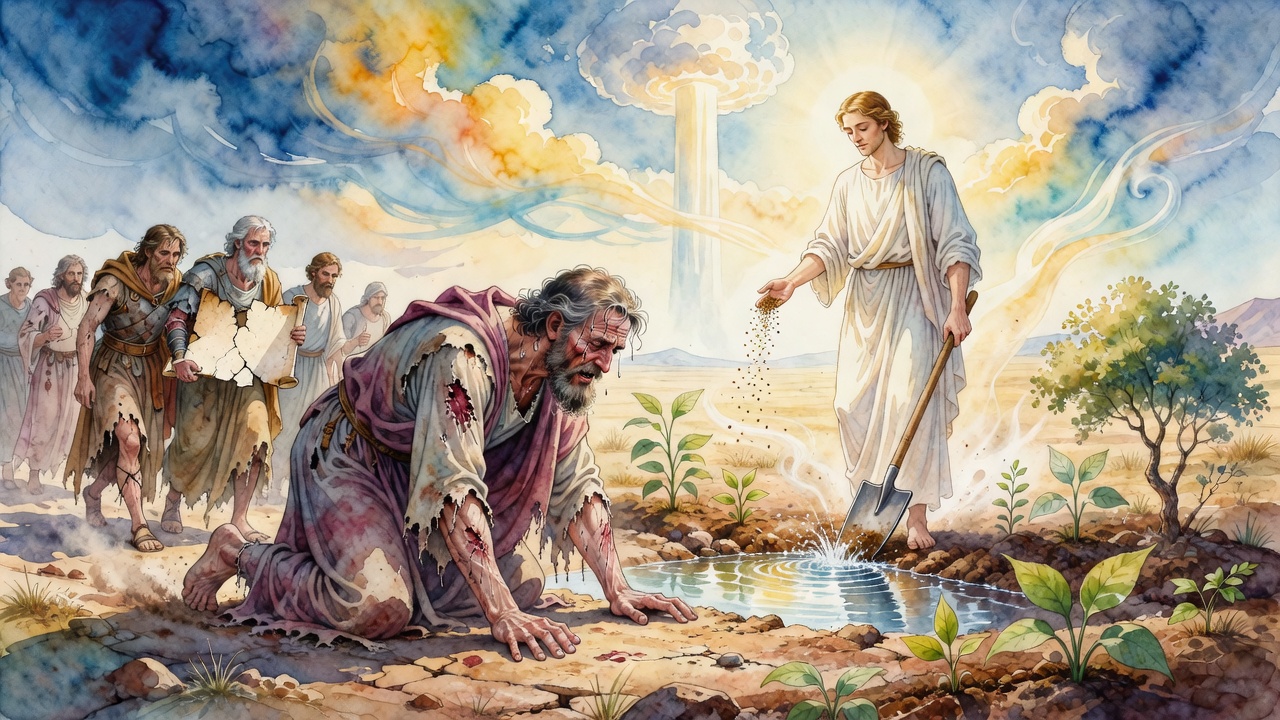
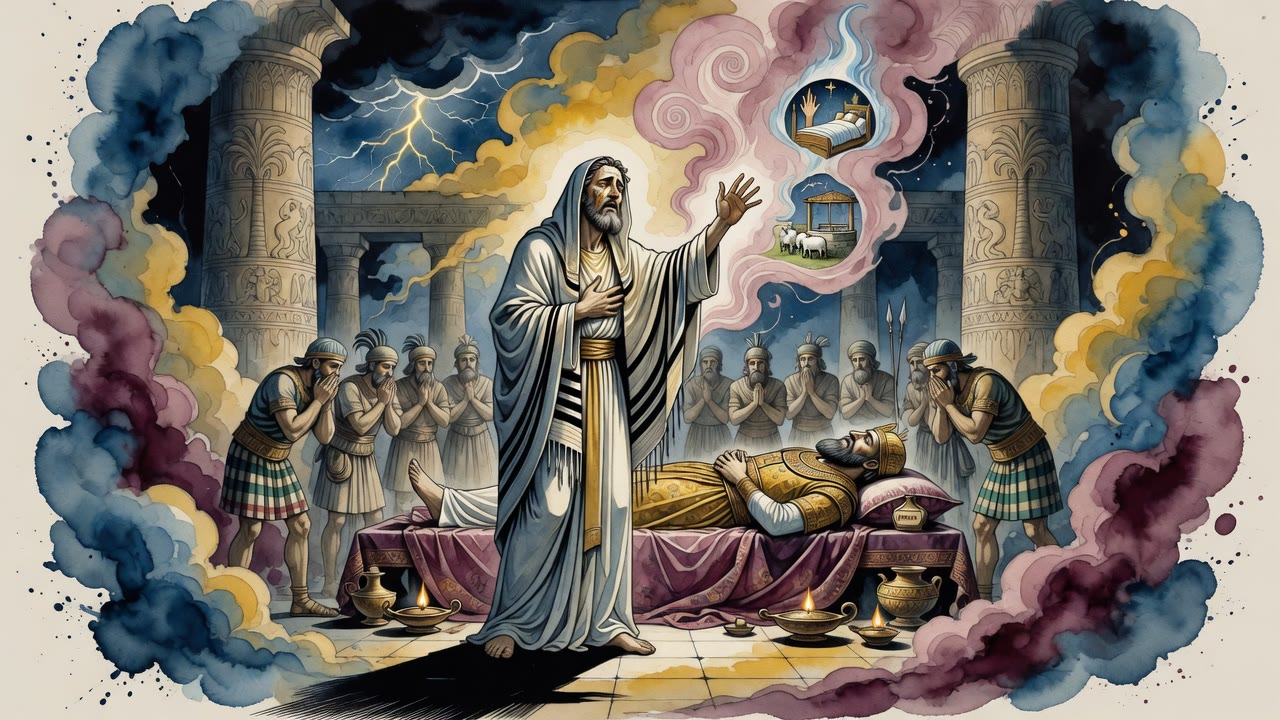
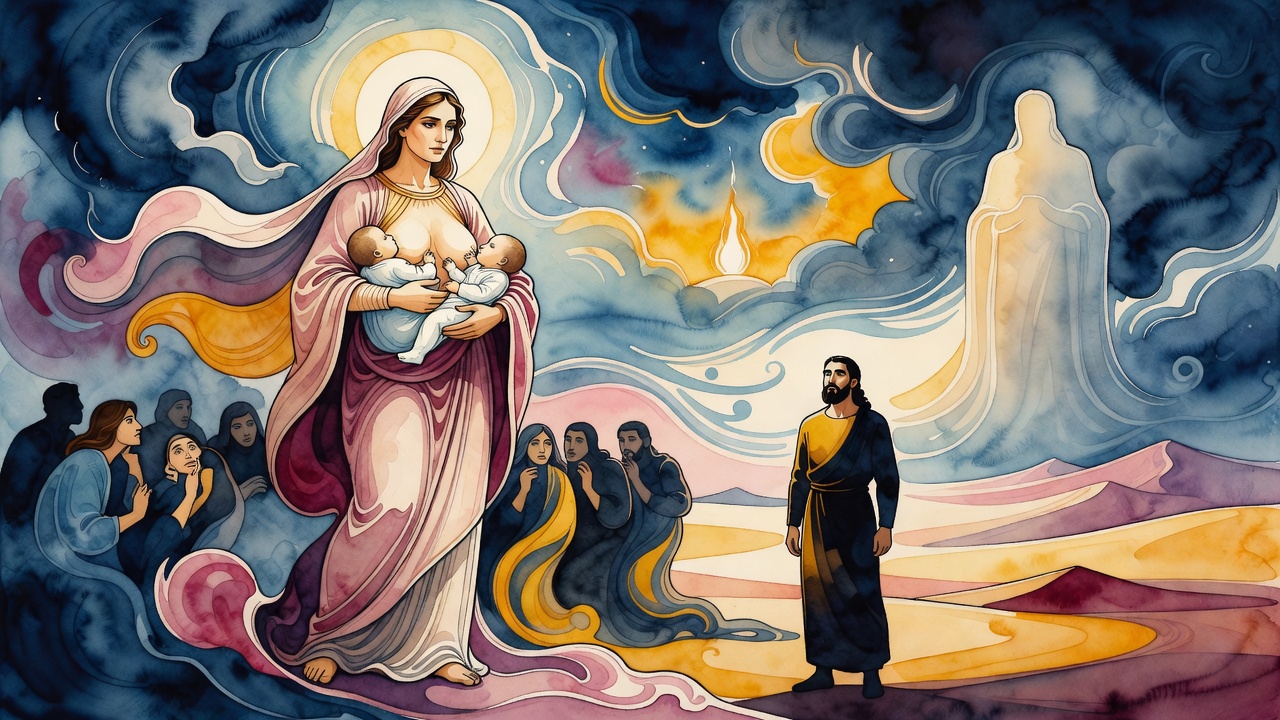
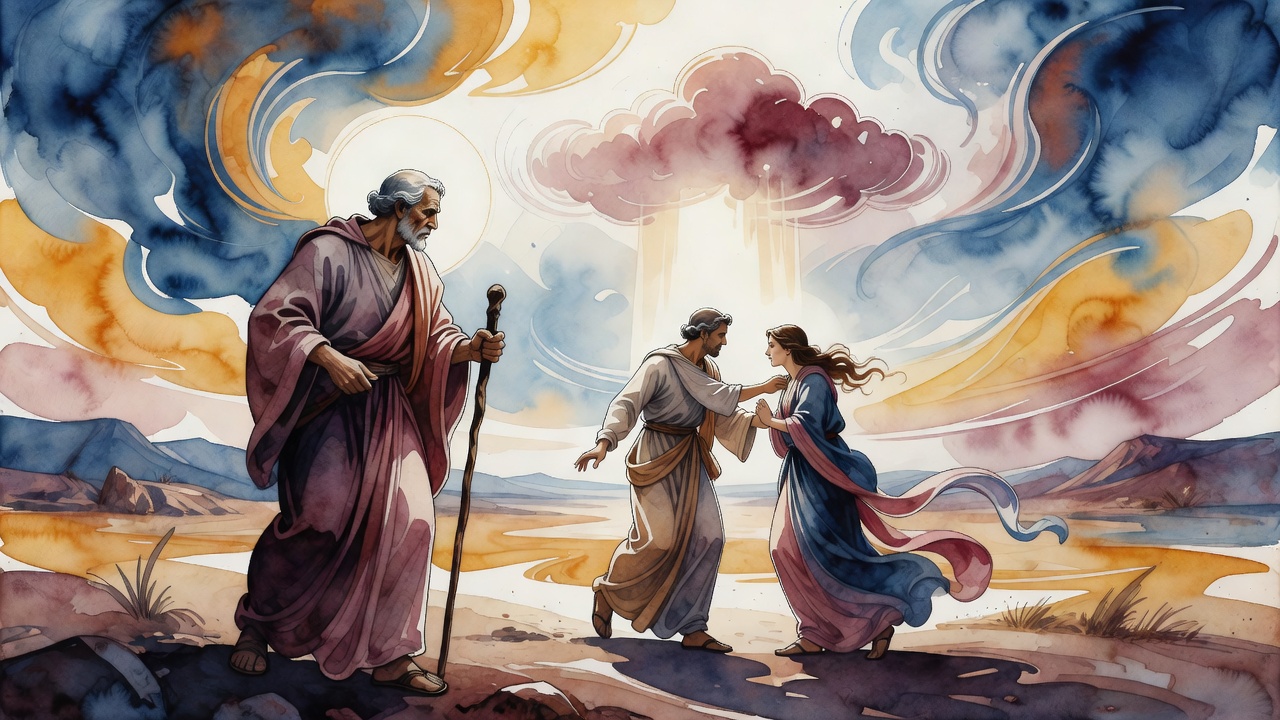
Abimelech did not stroll toward Isaac. The verse says he went from Gerar; read the consonants harder and he was dragged. Robbers had broken into his house and spent the night braying and clamoring until sleep died. Another reading heard sores scabbing his skin. The proud king arrived scraped raw by misfortune and by his own flesh, a man who needed a blessing from the neighbor he had once expelled.

He brought company to hold up what dignity he had left. Ahuzzath his friend, or a band of companions who loved him, depending on the ear that hears the name. Phicol captain of the army, or the mouth all troops obey, a title broken into parts by sages who refuse to leave a word unturned. Either way, the power of Gerar came humbled to the man they had sent away when his greatness stung them.

The escorts stood a little too carefully. The king tried to look like a king. The body told another story.

A Hundred Gates From Seed

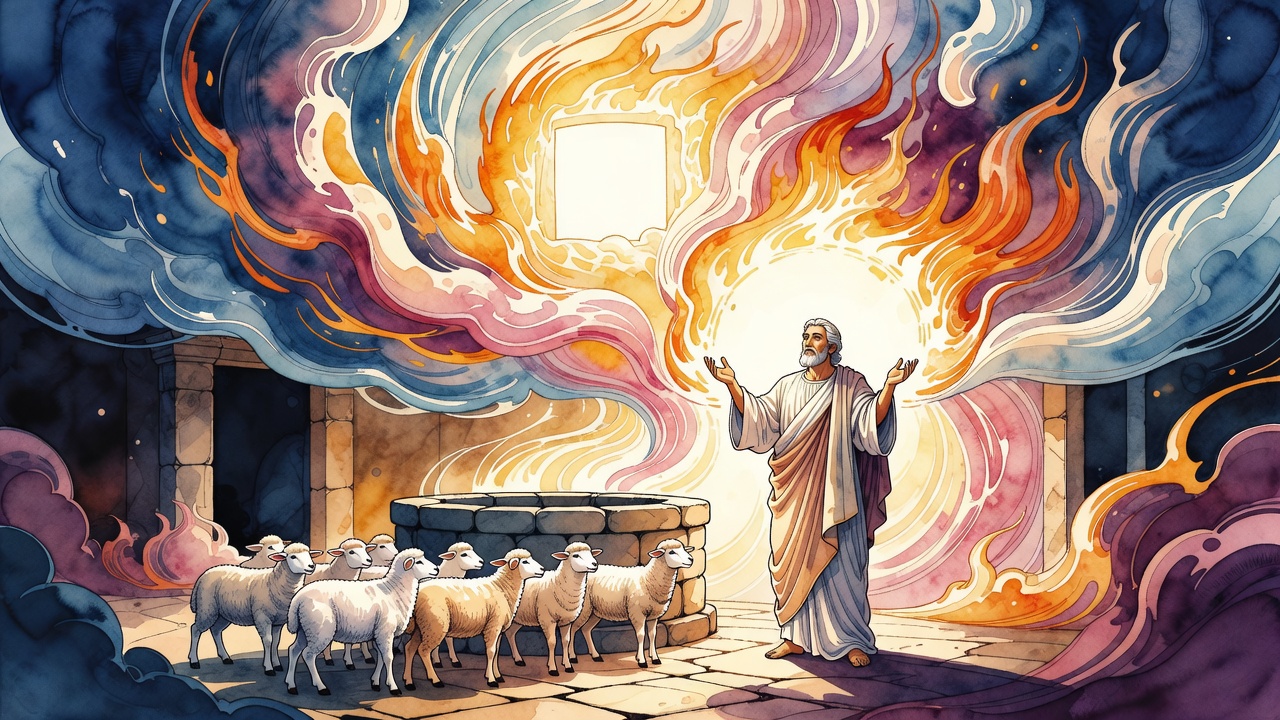
Isaac had sown in the land and found a hundredfold in one year (Genesis 26:12). Under the wheat another harvest ran. He took the full tithe of his wealth and scattered it among the poor, sowing silver the way a farmer sows grain. Hosea's line about sowing according to charity found a body in him. For every measure set aside, a hundred gates of blessing opened.

He grew great, and went on growing, until he became very great (Genesis 26:13). People preferred the dung of Isaac's mules to Abimelech's silver and gold. The saying must have burned in Gerar's markets. Abundance still demanded labor. Unless a man makes himself a servant to his property, tending and guarding it, he never truly owns it. The verse's word for his holdings can be heard as servitude. Wealth that is not served slips away.

Envy spoke in the king's mouth. Leave us, for you have grown mightier than we. Isaac's silent answer was that the strength had come from their own soil. One small flask had become many. They resented the fruit of the ground they had shared and then revoked.

Only

Abimelech and his men said they had surely seen that God was with Isaac, so let there be an oath that he would do them no harm (Genesis 26:28-29). A small word, only, sat inside the flattery and betrayed them. Their peace was never whole. They wanted his blessing and feared his strength, but they would not love him fully. Protection without affection. Treaty without trust.

Centuries later another empire would promise a rebuilt Temple, then shift the site by five cubits or demand a change that made the project collapse. Jews flooded roads from Acco to Antioch while Pappus and Lulianus set tables of charity for returnees. Then whispers reached the throne about lost tribute, and hope was rewritten into impossibility. Crowds wept in the valley of Beth Rimmon, ready to revolt.

They called for a wise man. Rabbi Joshua ben Hananiah told them of a lion with a bone in its throat. A long-beaked heron pulled the bone free and asked for pay. The lion laughed: your reward is that you put your head in my mouth and drew it out alive. Enter in peace and leave in peace. That itself is the gift. The people heard him and dispersed without rebellion. Half-peace from the strong is still a kind of survival, and a kind of warning that fits Abimelech's "only" as tightly as it fits Rome.

Living Water in the Valley

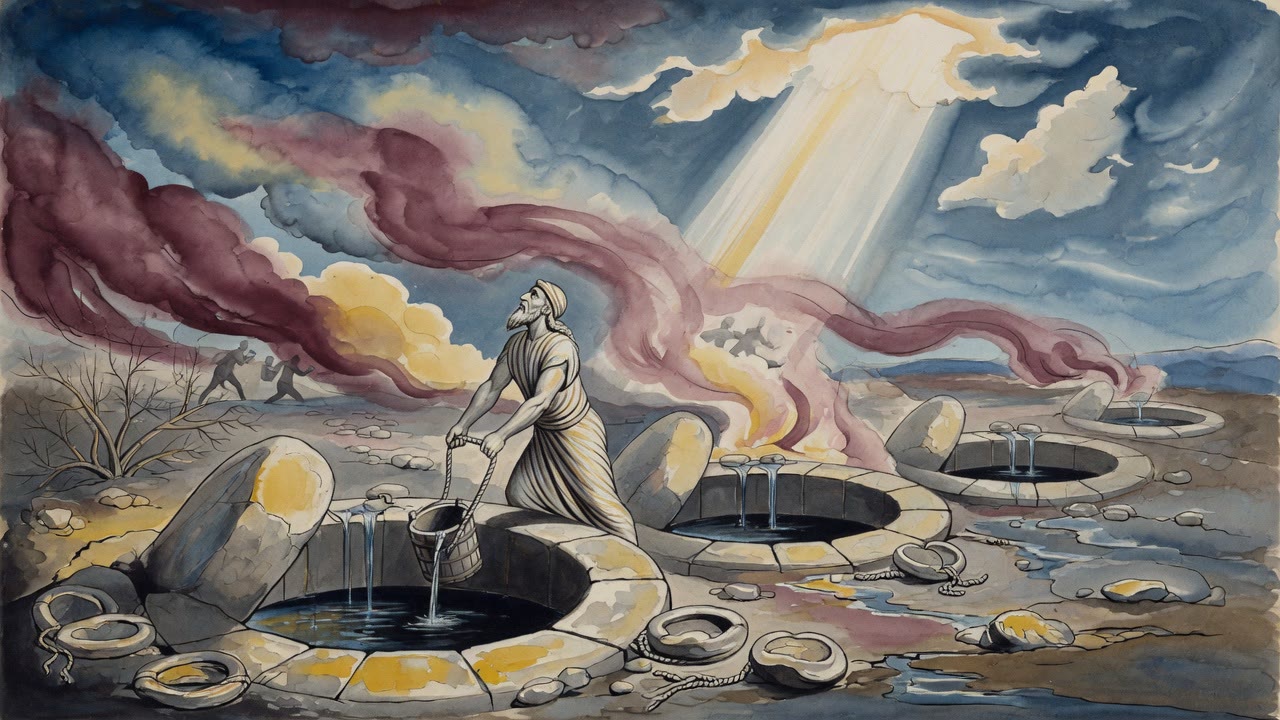
Isaac's servants dug in the valley and struck living water (Genesis 26:19). A well seen in a dream means peace, says one teacher. Torah, says another, for whoever finds her finds life. Life itself, says a third. Rise early and claim that verse before a darker image claims the night first.

Abimelech had once warned that anyone who so much as touched Isaac or Rebekah would die; Rabbi Aibo pressed the word until even a pebble thrown their way was forbidden. The hedge of protection around a visibly blessed man was that strict. Now the same king came asking for an oath the other direction, that Isaac would not harm him.

The king who came dragged from Gerar left with a treaty that still said only. Isaac stayed with wells, with charity still seeding the ground, and with a greatness Gerar could name but not share. Living water does not ask a king's permission to rise under a servant's spade.

What Gerar Could Not Keep

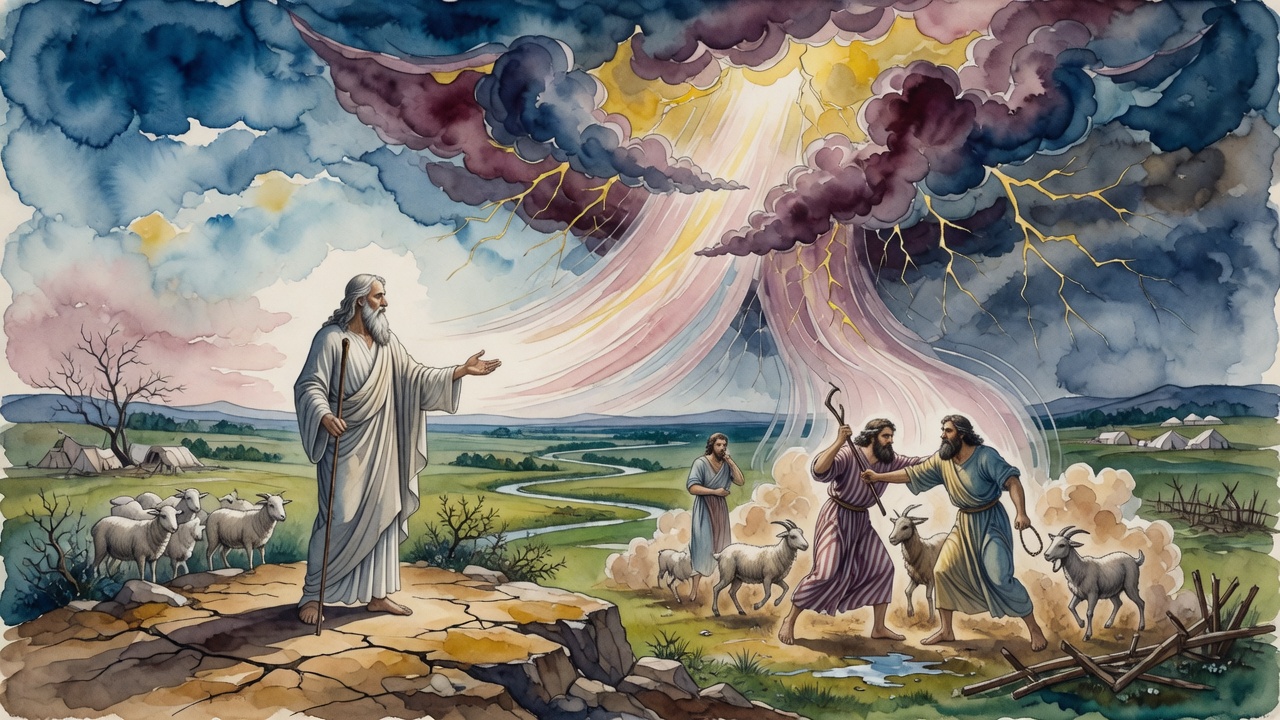
Isaac reopened wells his father had dug, wells the Philistines had stopped with earth after Abraham died (Genesis 26:18). Envy works that way: fill the water, then wonder why the land feels poorer. When Isaac's servants struck living water in the valley, the quarrel over names and claims followed as surely as flies follow a trough.

Abimelech's visit did not restore friendship so much as admit a balance of power. The king who had said go from us now said swear you will not harm us. The "only" in his speech kept a door open for future coldness. Isaac accepted the treaty without needing the king to become a brother. Charity still left his hand toward the poor. The hundred gates did not depend on Gerar's affection.

When the heron later stood for Jews who leave a lion's mouth alive, the parable was already latent in this older scene. Survival under a partial peace is not the same as love. It is still better than a bone left in the throat.


← All myths
From the tradition

Sources

4 sources

The texts behind this telling. Some cards carry a translation of the source; others are our own retelling of it, and each card says which. Every card links out to the original.

Yalkut Shimoni on Torah 111:14Yalkut Shimoni on Torah

Translation of the source text.Torat Emet (Yalkut Shimoni) · CC-BY-NC

"And Abimelech went to him from Gerar" (Genesis 26:26) [the word "mi-Gerar" is read as] "mi-gorer" [dragged / scraped]: this teaches that robbers entered his house and were braying [or making noise] at him all night. Another interpretation of "mi-Gerar": "megorar" [scabbed over] that growths [sores] had come up upon him.

"And Ahuzzath his friend [me-re'ehu]" Rav Yehudah says: Ahuzzath of his friend was his name. Rabbi Nechemiah said: [it means] a band of his companions [a company of those who loved him].

"And Phicol the captain of his army" Rav Yehudah says: Phicol was his name. Rabbi Nechemiah says: [it means] "the mouth that all his hosts" kiss [obey] upon his command [pi, mouth, plus kol, all].

Full source
Yalkut Shimoni on Torah 111:15Yalkut Shimoni on Torah

Translation of the source text.Torat Emet (Yalkut Shimoni) · CC-BY-NC

(Genesis 26:28-29) "And they said: We have indeed seen that the LORD has been with you... and we said: Let there now be an oath between us... that you will do us no harm." The word "only" [in their speech] teaches that they did not deal with him in complete goodness, but only in part. In the days of Rabbi Joshua ben Hananiah, the [Roman] empire decreed that the Temple should be rebuilt. Pappus and Lulianus set up money-tables from Acco to Antioch and supplied the needs of those coming up from the exile. The Cutheans [Samaritans] went and said to the emperor: "Let it be known to the king that if this city is rebuilt and its walls completed, they will pay no tribute, no toll, and no land-tax." "Tribute" is the king's portion; "toll" is the poll-money; "land-tax" is the corvee. He said to them: "But what shall I do, for I have already decreed [that it be built]?" They said to him: "Send and tell them either to move it from its place, or to add five cubits to it, or to subtract five cubits from it, and of their own accord they will withdraw from the project."

The congregations were gathered in the valley of Beth Rimmon. When the [new] letters arrived they began to weep, and they wanted to rebel against the empire. They said: "Let a wise man go up and persuade the people." They said: "Let Rabbi Joshua ben Hananiah go up, for he is a master of the Torah." He went up and expounded: A lion was tearing its prey, and a bone stuck in its throat. It said: "Whoever comes and removes it, I will give him his reward." An Egyptian heron, whose beak is long, came, put in its head, and drew it out. It said to the lion: "Give me my reward." The lion answered: "Go and boast that you entered a lion's mouth in peace and came out in peace, and there is no greater reward for you than this." So too for us: it is enough that we entered under this nation in peace and came out in peace.

(Genesis 26:32) "And the servants of Isaac came and told him." We do not know whether they had found [water] or not, but from what is written (above, verse 20) "And they found there a well of living water," you learn that they indeed found living water.

Full source
Yalkut Shimoni on Torah 111:12Yalkut Shimoni on Torah

Translation of the source text.Torat Emet (Yalkut Shimoni) · CC-BY-NC

"And the man grew great, and went on growing greater [until he became very great]" (Genesis 26:13) until they would say, the dung of Isaac's mules, and not the silver and gold of Abimelech [is preferable].

"And he had possessions of flocks and possessions of herds and a great household [avuddah]" (Genesis 26:14). It is written "avuddah" [labor / servitude]: if a man does not make himself like a servant to it [his property], he does not acquire it.

"Go from us, for you have become far mightier than we" (Genesis 26:16). He said to him: all the might you have grown was it not from us? In the past you had one little flask [kukya]; now you have many flasks.

"[And Isaac's servants dug in the valley and found there a well of living water]" (Genesis 26:18-22). Rabbi Chanina said: one who sees a well in a dream sees peace, as it is said, "and Isaac's servants dug in the valley and found there a well of living water." Rabbi Natan says: he has found Torah, as it is said, "whoever finds me finds life" (Proverbs 8:35). Rava said: literally life. One who sees a well in a dream should rise early and recite "and Isaac's servants dug in the valley," before another verse precedes it [a verse of ill omen]: "as a cistern wells up its waters" (Jeremiah 6:7).

Full source
Yalkut Shimoni on Torah 111:11Yalkut Shimoni on Torah

Translation of the source text.Torat Emet (Yalkut Shimoni) · CC-BY-NC

"And Isaac sowed [in that land and found in that year a hundredfold]" (Genesis 26:12). He took all the tithe from his wealth and sowed [it as] charity for the poor, just as you say, "sow for yourselves according to charity" (Hosea 10:13). And for each and every thing that he tithed, the Holy One, blessed be He, gave him a hundred gates of blessings.

"And Abimelech charged all the people, saying: he that touches [this man or his wife shall surely be put to death]" (Genesis 26:11). Rabbi Aibo said: [it was forbidden] that a man should not even throw a pebble at him.

Full source