Heaven Chose Hillel for Naming Shammai First
For three years two schools locked horns over the law, until a voice from heaven chose Hillel, not for sharper logic, but for gentler teaching.
Table of Contents
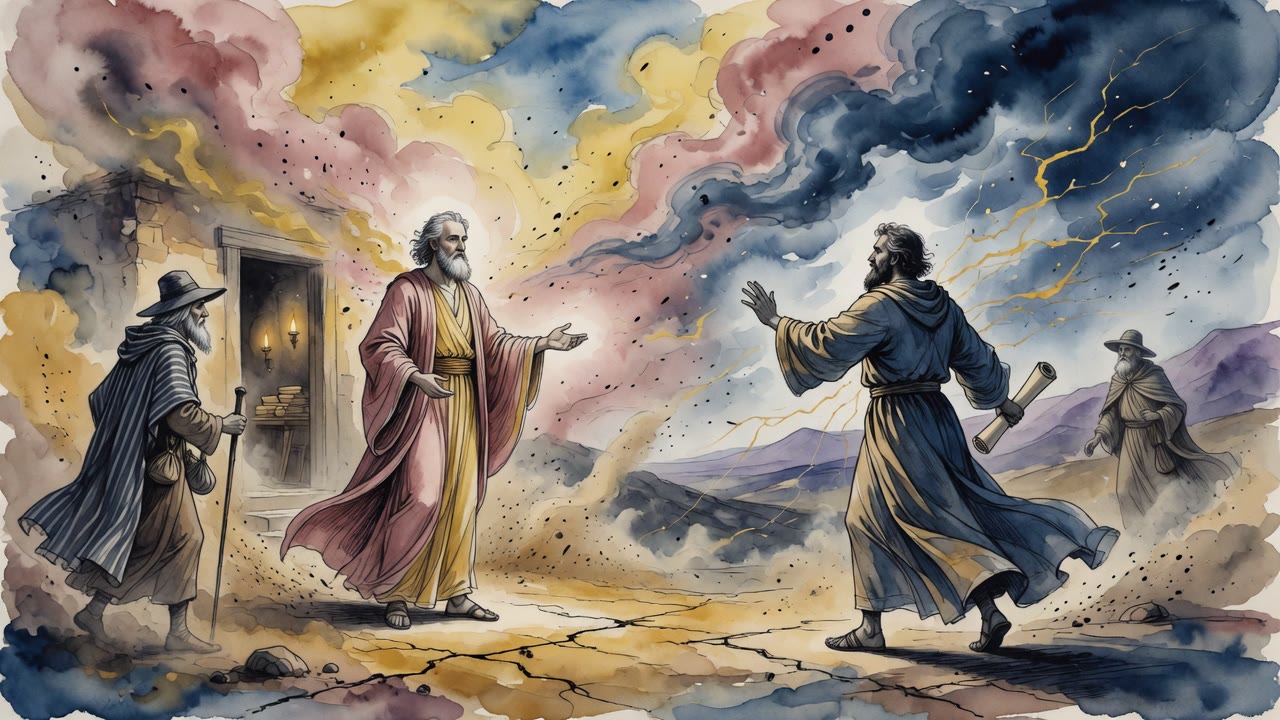
For three years the house of Shammai and the house of Hillel stood locked in argument. Each claimed the law. Both schools were sharp. Both were pious. Both had masters whose logic could fell a cedar in the courtyard if a proof needed a sound the neighbors would remember.
 Click for full size
Then a voice came down from Heaven. "Both these and those," it declared, "are the words of the living God. But the halacha (Jewish law) follows the house of Hillel."
The room did not empty. Cloaks stayed on shoulders. The scholars waited for the reason, because a voice that praises both sides and then picks one owes the study house an explanation that can be taught to the next cohort without shame.
Not the Sharper Knife
Why Hillel? Not because his reasoning was sharper. Not because his scholars were more numerous. Rabbi Abba, in the name of Shemuel, gives the reason that stuck to the wall: the disciples of Hillel were gentle and forbearing. They taught their own opinions. They also taught the opinions of Shammai. And they mentioned Shammai's view first, then their own.
This is how the sages understood humility. Not self-erasure. The willingness to carry your opponent's argument as carefully as your own, even when you believe he is wrong about the pot, the gate, or the marriage contract. The one who humbles himself, Heaven exalts. The one who chases greatness, greatness flees. The one who flees from greatness, greatness follows him home like a dog that knows its master at dusk.
Truth can live in two houses. The deciding vote goes to the kinder one.
Ervat Davar in the Study House
On another day the same two houses opened Deuteronomy 24:1. A man writes a bill of divorce because he has found some ervat davar in his wife. Nakedness of a thing. What does that phrase hold when a woman stands at a doorway with a folded document and a future that depends on a single reading of two Hebrew words?
Beth Shammai heard nakedness and held the line at sexual impropriety. Beth Hillel heard "a thing" and opened a wider gate. The exchange in Sifrei Devarim is a duel of hypotheticals, not of insults. If the verse said only nakedness, divorce would shrink to that alone. If it said only a thing, remarriage rules might split by cause. The verse says both. Each school presses the words it needs and answers the other with Scripture still warm from the last citation.
Even when the law between them cut into marriage and exit and the right to start again, they still argued like people who expected to share a town after the ruling, buy bread from the same oven, and send students to each other's doorways without a bodyguard walking behind.
The Gentle Hand on the Harder Case
Leniency is not softness of spine. Hillel's school could read a phrase more broadly and still lose sleep over the person the phrase would touch. Shammai's school could read more narrowly and still love the Torah that bound them both to the same mountain. Heaven's voice did not call one side false. It called both living words, then chose the house that had practiced saying the other side's name without sneering in the introduction.
In the marketplace a buyer might never know which school framed the rule that governed his measure of wine. In the study house the memory of who spoke first stayed like a chalk mark. Students of Hillel learned to put Shammai on the table before they set their own cup down. That habit traveled farther than any single decision about a courtyard eruv or a festival oven that stayed warm too long.
A generation later, when people said "the law is like Beit Hillel," they were also saying something about how to win without erasing the loser from the page of memory that children would learn by heart.
What the Voice Left Standing
Both these and those. The phrase outlived the three-year standoff. It became a way to hold disagreement without turning the other school into an enemy of God. The voice did not dissolve difference. It ranked practice for action while refusing to call half the room a waste of breath and ink and sleepless nights.
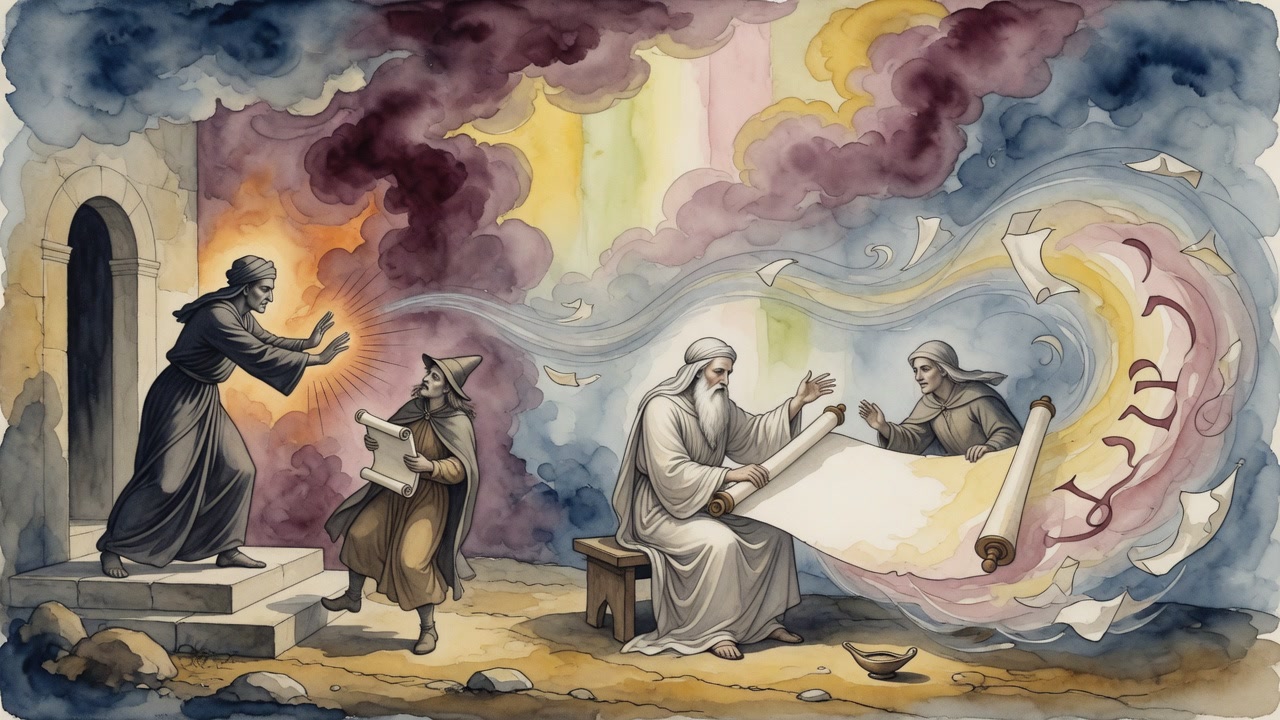
Hillel's disciples still taught their own conclusions with full force. They simply refused to pretend Shammai had never spoken a sentence worth repeating accurately in front of beginners. In a tradition that loves memory the way other peoples love monuments of stone, that refusal is a form of worship.
Somewhere a scribe copies both opinions into the same column. The ink for Shammai is as dark as the ink for Hillel. Heaven already knew which line the hand would follow in deed when a real case walked through the door. The page keeps both so that kindness remains part of how the law is learned, not only of how the law is applied when a life is on the table and the room is watching.
← All myths