One Sealed Flask Refused to Die on Schedule
Hasmonean searchers find one stamped jar of pure oil in a wrecked sanctuary, light the Menorah (the lampstand) anyway, and watch one day of fuel hold for eight.
Table of Contents
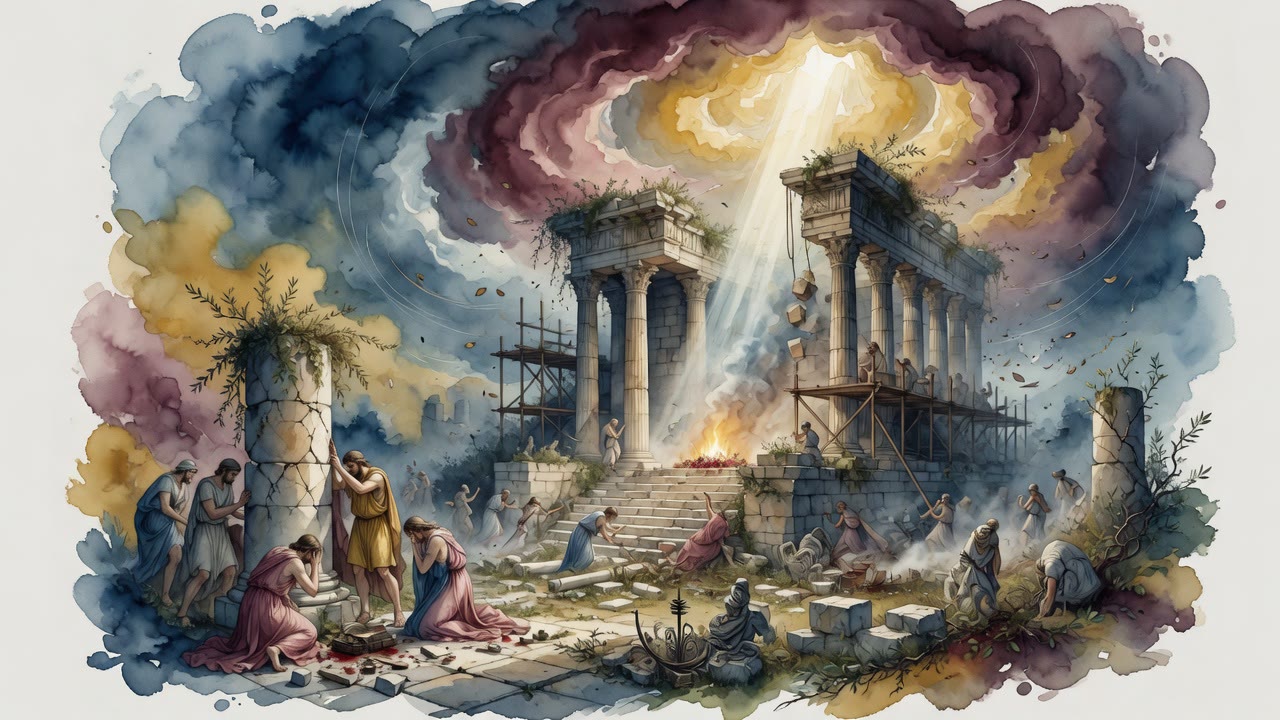
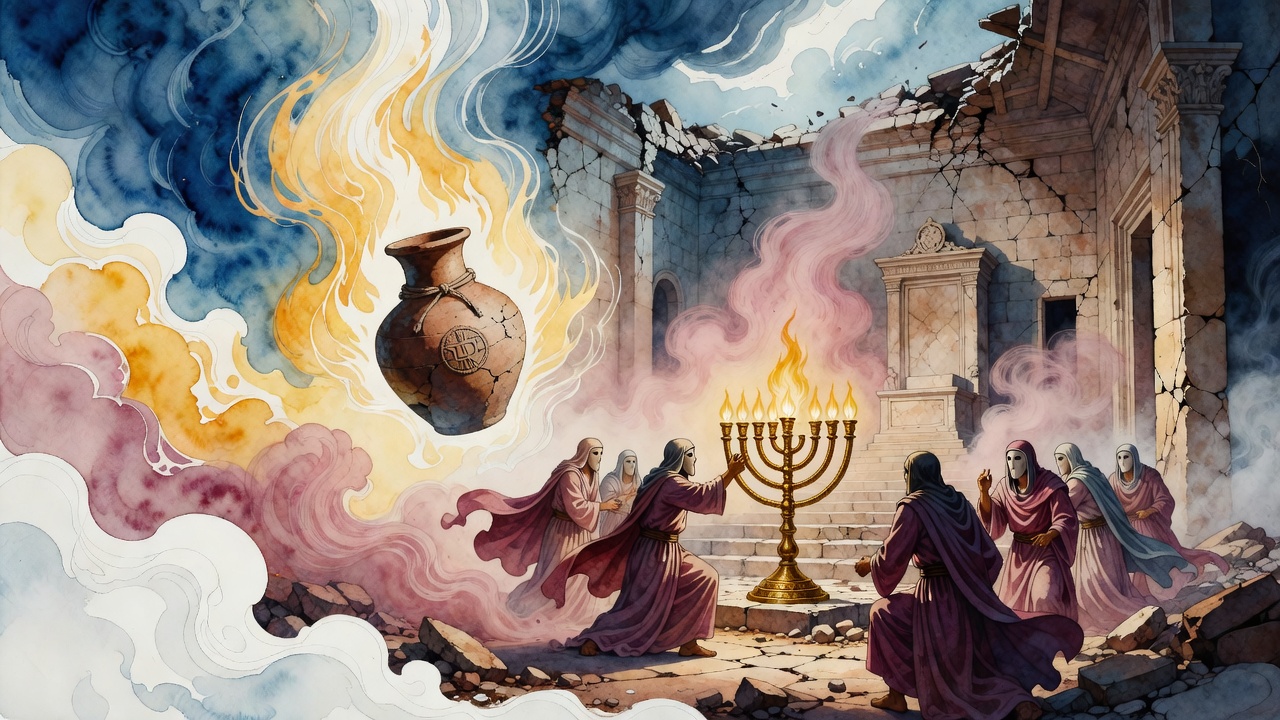
They found it deep in the wreckage, small enough to hide in a palm, still sealed with the stamp of the High Priest. Dust filmed the clay. Outside, every other jar the Greeks had reached lay open, used, or filthy. This one had kept its mouth closed through the whole occupation, as if clay could hold a vow.
 Click for full size
One jar. Enough consecrated oil for a single day of light. The Menorah (the lampstand) waited with empty cups like a mouth that had not spoken in too long. A soldier turned the flask in his fingers and felt the unbroken seal catch on his skin.
They Lit It Anyway
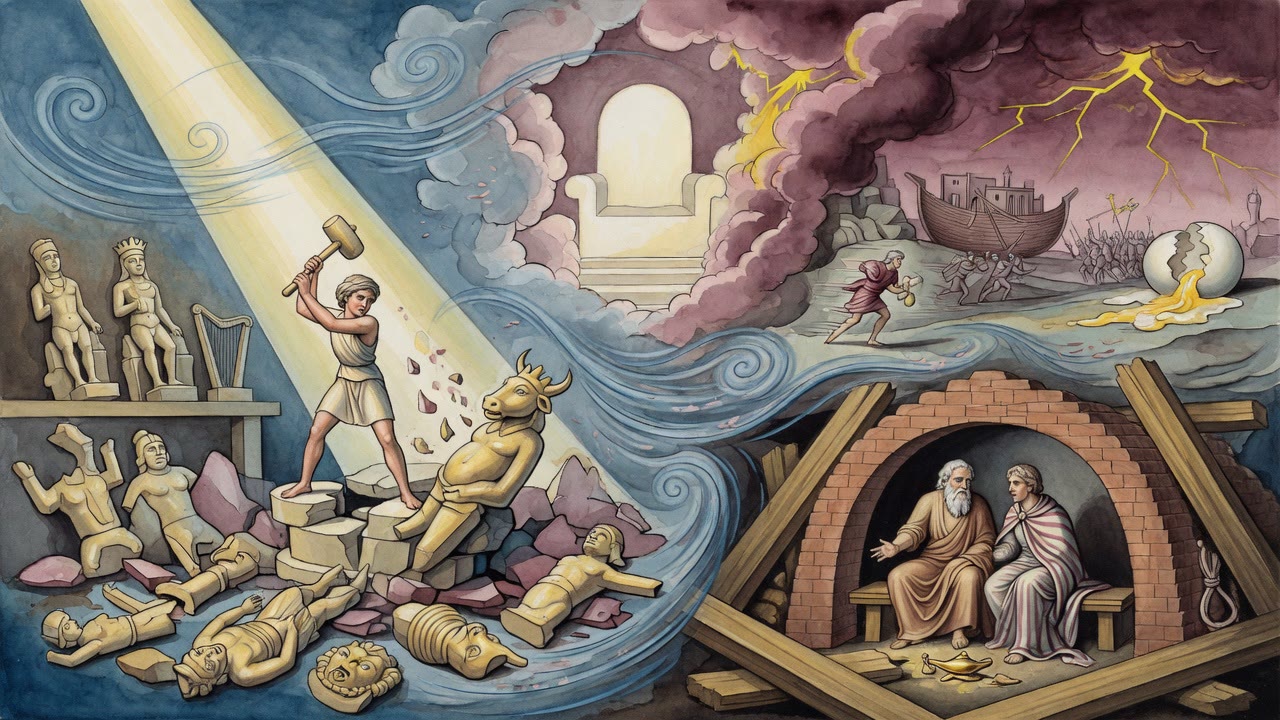
The Hasmoneans did not wait for a better inventory. Led by the priestly house of Judah Maccabee, they had already driven the Greek-Syrian force out in 164 BCE and set their first work as cleansing, not rest. The altar rose again under hands that still knew war grease. The courts lost their foreign stink. Timber that had served idols was dragged out and burned or cast aside. New vessels took the places of stolen ones.
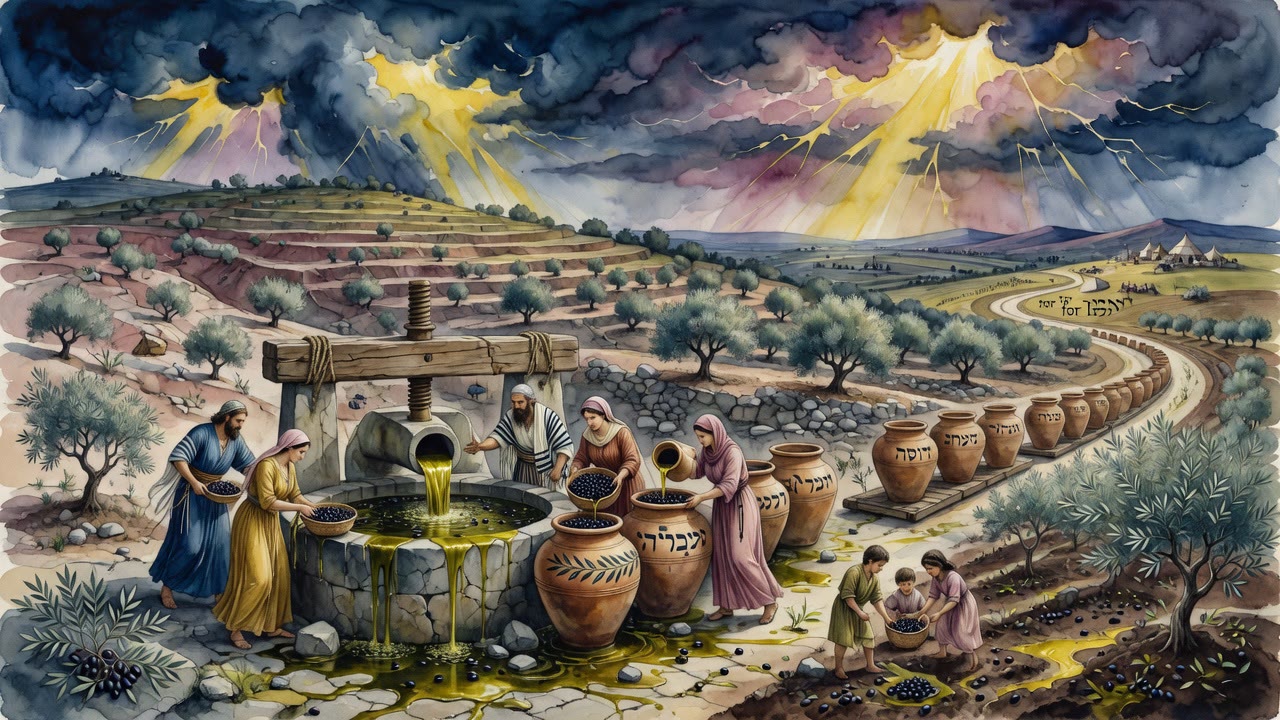
They poured the small store into the branches of the lampstand and lit the Menorah on the twenty-fifth of Kislev. The flame should have died with the next dusk's arithmetic. It did not. Night after night the light held while new oil was still a hope at the press, not a fact in the sanctuary. Eight days the single day's supply refused the schedule written on its size.
The soldier who had found the jar stood watch and watched the cups stay bright past the hour he had privately marked as the end. He did not cheer like a man at games. He stood still, because a miracle that overruns its measure is not entertainment. It is a correction of what the hand expects from clay and wick. On the third night he stopped counting down and started counting up. On the fifth he stopped counting at all and only watched.
Dedication With Iron Still in the Blood
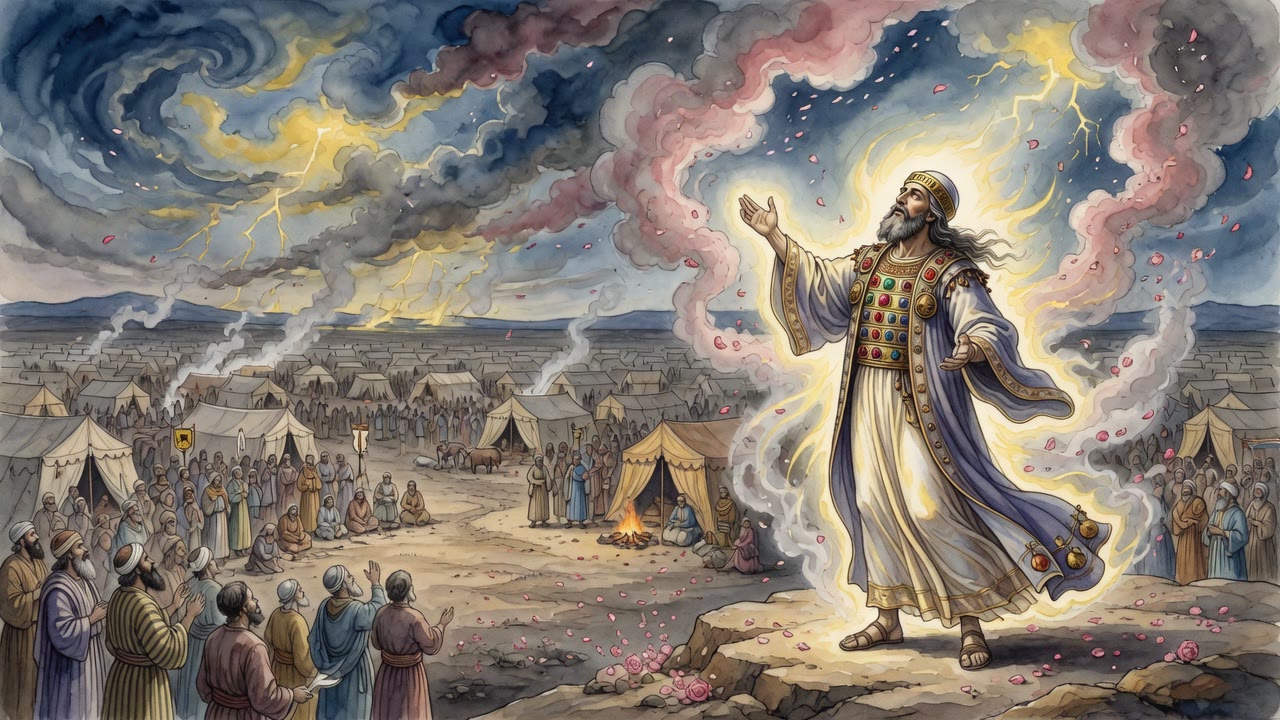
The days of Dedication, Chanukah, began with that refusal. No funeral oration was to cut the joy. No public fast was to be decreed across those eight days. The calendar itself put a fence around gladness so that grief would not colonize the week that proved the House could speak in fire again.
God, the sages later taught, has often broken the ordinary course of nature at the hour of greatest need, not for spectacle alone, but so a people will not grow comfortable attributing every rescue to the smooth run of the world. The same God who made the world from nothing can suspend the rules He set. The oil was that suspension in a small vessel, close enough to smell, close enough that a man with blood still under his nails could stand near it and know the war had not been the whole story.
Hymns of thanksgiving, the Hallel, rose in whole or in half across the eight days. Voices that had shouted in battle now had to learn the slower work of praise without a sword in hand. Some throats cracked on the first notes. The Menorah burned. The presses worked in the hills. The people watched the gap between one day's oil and eight days' light and learned what kind of story they were living in: not a story that ends when the stores end.
A woman who had hidden her children through the years of decrees came to the outer court and stood until her eyes watered from the brightness. She did not ask for a speech. The flame was the speech.
Eight Lights or One
Generations later the memory itself became a quarrel of schools. Shammai said begin with eight lights on the first night and remove one each evening, so the lamps wane as the holiday spends itself, a careful steward's count of dwindling store. Hillel said the opposite: begin with one and add a light each night, so the flame grows as the story unfolds.
Shammai measured remaining days the way a man measures a jar he can see emptying. Hillel measured increasing wonder the way a witness measures a fire that will not obey the jar. The world still follows Hillel. A miracle is not something a house rations downward while it remembers. A house adds another light.
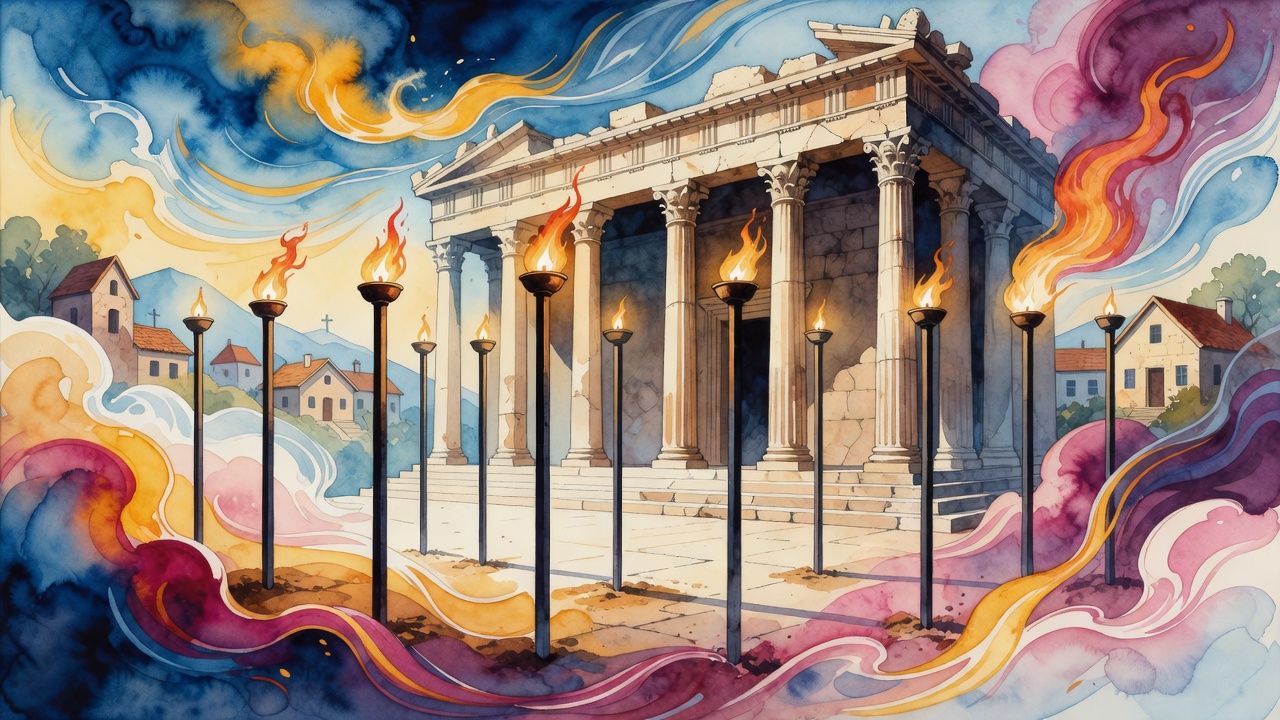
In a room on the first night the window holds almost nothing, one flame against the dark, a single answer to the hands that thought they had emptied holiness from every jar. By the eighth night the same window holds a row that looks like a verdict written in wick. The shape of the custom is the shape of recovery, not the shape of managed scarcity. Children learn the week as a climb. Elders who remember other shortages learn it as a refusal.
Shammai's reverse count remains a serious reading of stores that run out. The custom chose the other seriousness: the seriousness of a flame that grew when it should have died.
What the Stamp Still Meant
The High Priest's seal on that one flask had been a small clay fact in a ruined house. It meant someone, in the years of defilement, had failed to break this last closed mouth. It meant the searchers' fingers found resistance where they expected only loss. It meant the first pour into the Menorah was not a gesture of despair dressed as piety. It was a bet that pure oil still had a job to do, and Heaven took the bet and lengthened it.
The soldier who watched the first impossible nights grew old in a land that still argued about how to count the flames. He never forgot the weight of the sealed jar in his palm before it was opened, or the way the wick took and held when every ledger said it should not. Empire had counted the jars and found them wanting. Heaven had counted one jar and found it enough for a week and a day.
Each year when the first night's single light goes up, the story starts again at the thin end. Each year when the eighth night fills the sill, the story ends where the oil ended in the sanctuary: past the arithmetic, still burning, still refusing to die on schedule. A hand strikes a match in a dark room. The match is small. The argument it continues is not.
← All myths