5 min read

Hillel and Shammai Argued Whether Heaven or Earth Came First

Shammai and Hillel fought over which came first. God sealed light for the righteous, and after the flood He set seasons and the fear of man over beasts.

Curated by Arthur · Told by Maggid ·
Table of Contents
  1. Two Schools, One Beginning
  2. Light Sealed Away
  3. Seasons After the Flood
  4. Creation Bound by Conditions
  5. Order That Still Argues
Hillel and Shammai Argued Whether Heaven or Earth Came First Click for full size

Two Schools, One Beginning

The House of Hillel said heaven came first, because no builder raises an upper chamber before laying the house beneath it. Hands slap timber. Foundations take weight. The House of Shammai answered that no one fashions a footstool before the throne it serves. Honor the seat first, then the thing that holds a king's feet in the court of glory.

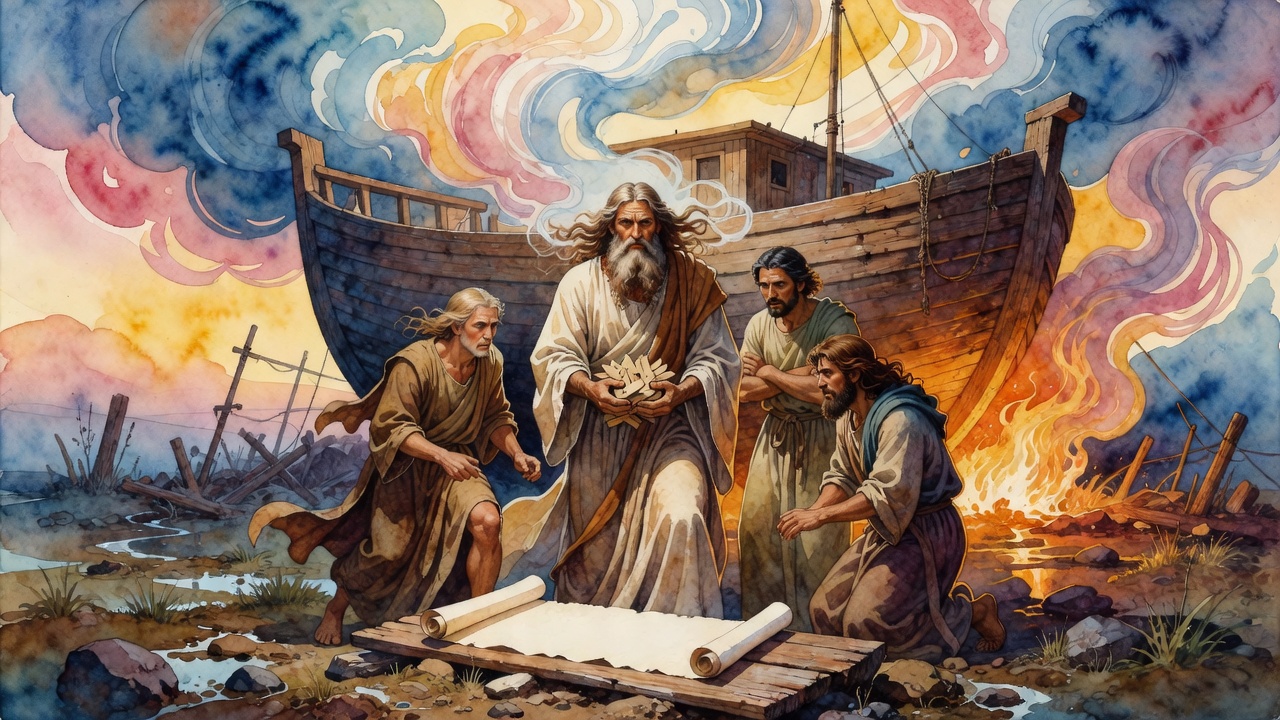
The Sages cut through the dispute with a third path drawn from the order of the verses and the work of the six days, refusing to let either school own the first morning alone. While they argued, the world already stood under a stranger mystery. Light had been created, and then light had been hidden from ordinary eyes.

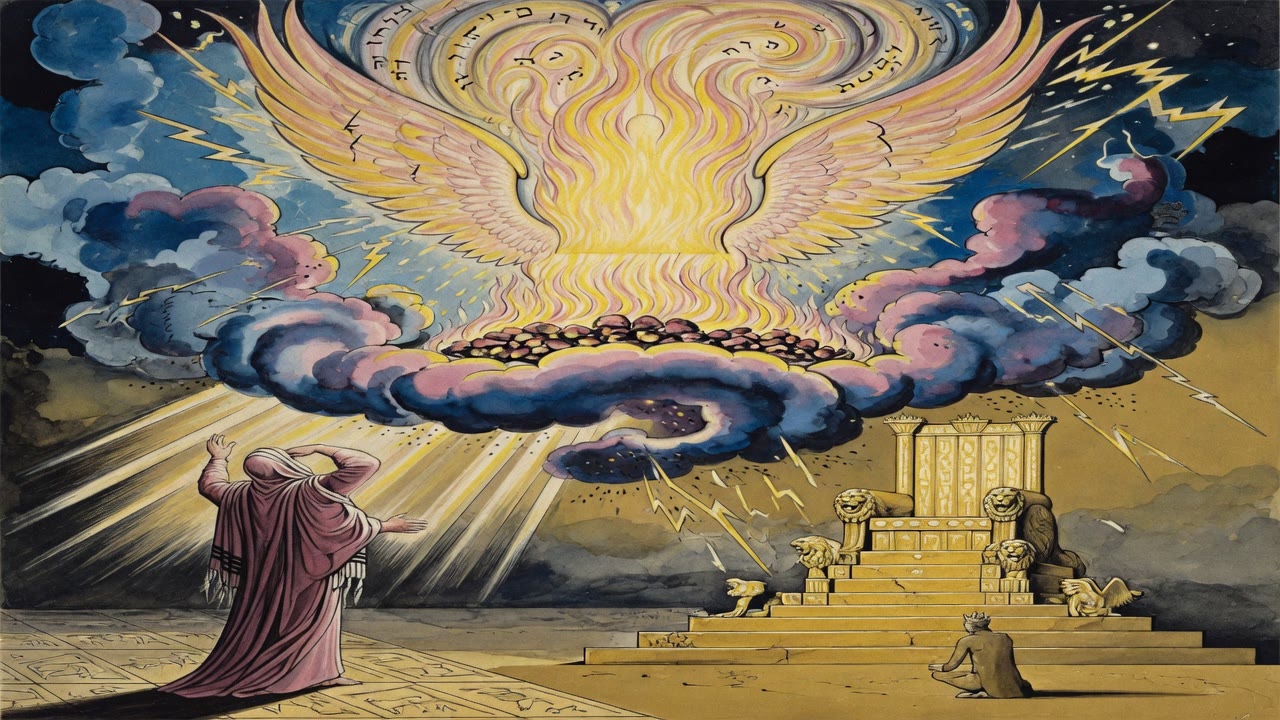
The first brilliance was too much for ordinary flesh to hold. God stored it for the righteous in time to come, and left the world with the sun and moon as working lamps. A student in the study house could feel both pressures at once. Which came first, sky or soil? And what happened to the light that no longer walks the day like a second sun over the fields?

Light Sealed Away

The hidden light is not a fairy tale for children. It is a claim that the first creation still outruns what eyes can bear. The righteous will one day walk in what Adam almost saw before the lamps were dimmed to human scale. Until then, ordinary day and night keep their posts like faithful servants who know they are not the whole story of brightness.

That sealing is mercy as much as mystery. A world flooded with unfiltered glory would leave no room for free choice or for the slow work of repentance and return. The lamps we have are enough for the journey and for the argument about upper and lower chambers. They are also enough for shame and for courage, which need shadows as well as noon to be real choices.

Someone looks at sunrise and thinks that is all light ever was. The midrash says no. Something brighter waits under seal for a day that is not yet on the calendar of kings.

Seasons After the Flood

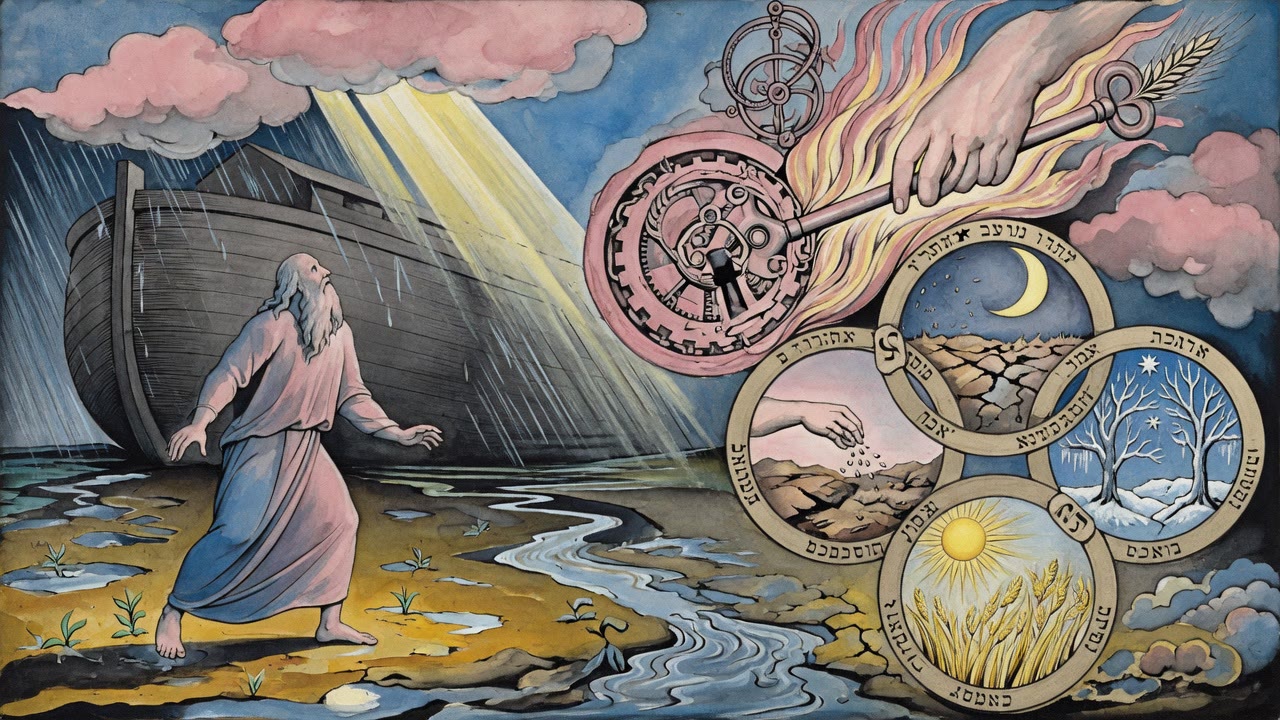
After the waters, God promised that while the earth remains, seedtime and harvest, cold and heat, summer and winter, day and night will not cease. Farmers trusted that promise with seed. Children trusted it with seasons of play and work. The Sages returned to that promise and read it as a covenant with a limit. It holds only as long as day and night keep turning in their posts.

When the prophet's strange day arrives, the one that is neither day nor night, the arrangement will be undone. Rav Yitzchak explained why the flood generation grew bold. They saw the seasons as a machine that would never stop, so they ignored the Judge who wound it and filled the earth with violence under a sky that still looked reliable from the window.

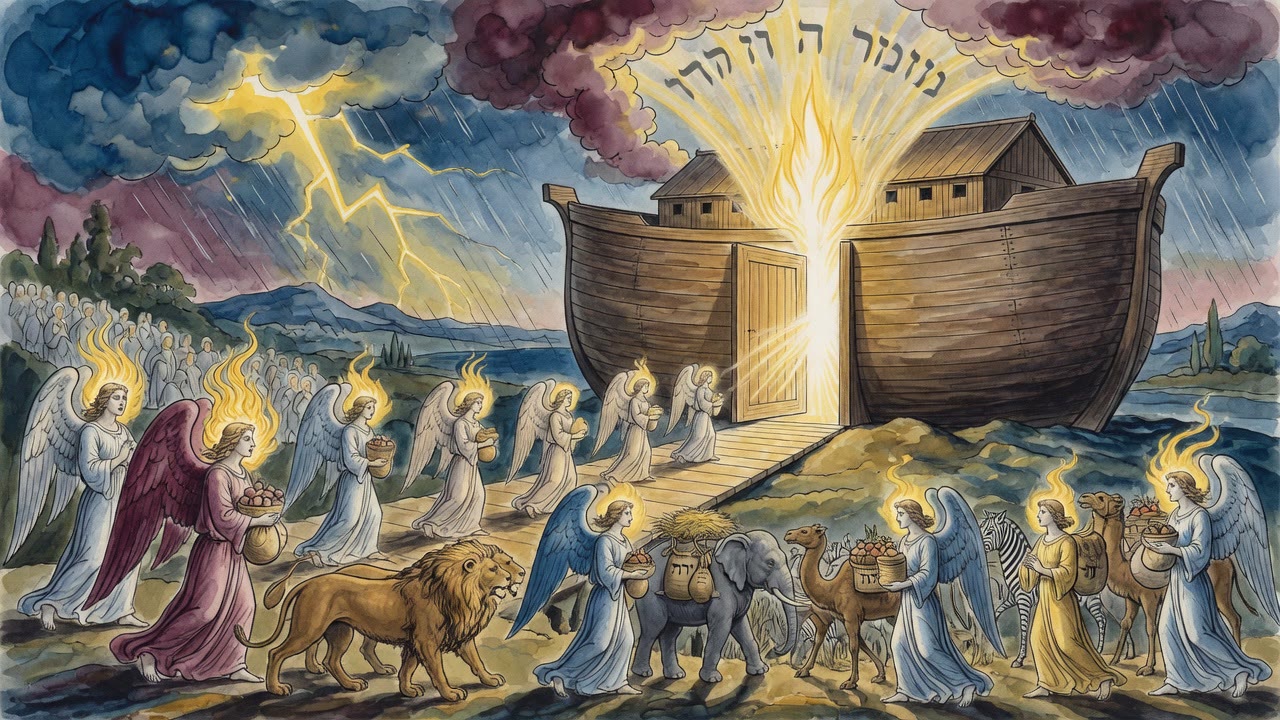
Fear of man over the beasts also belongs to this post-flood order. Animals once did not shrink from human hands the way they do now. After the waters, a new dread settled into their bones so that flesh and blood could rebuild without every field becoming a war with teeth and horn and claw.

Creation Bound by Conditions

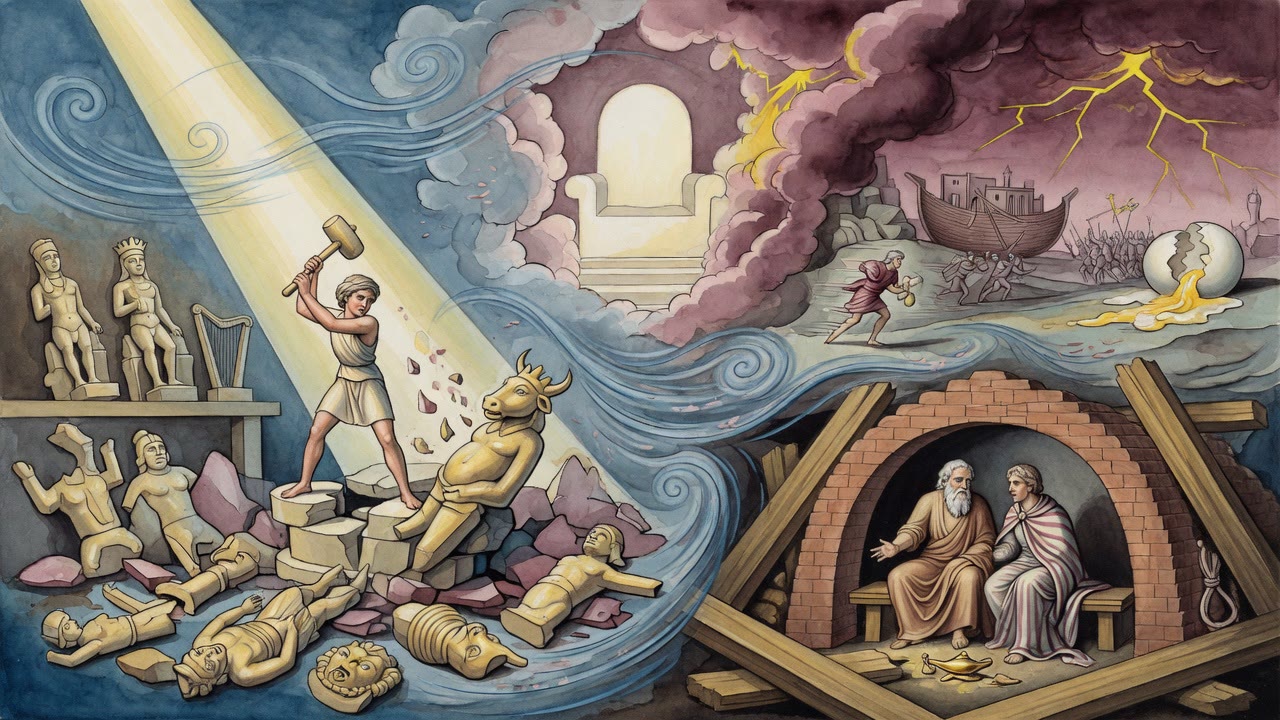
From the first six days, the midrash says, creation itself was bound by conditions. The sea would split for Israel when the hour came. The sun and moon would stand still for Joshua. Ravens would feed Elijah. The heavens would open for Ezekiel. The great fish would spit out Jonah when the prayer finished its work in the dark belly of the deep.

Every wonder was an order given long before, finally carried out at its appointed hour. The world was not a loose accident waiting for random magic. It was a contract written into water, sky, bird, and fish while the six days still smelled of newness and the first light still waited under seal.

At the sea the parable turns concrete. A dove flees a hawk into a king's hall. The king lets the dove escape through one window and bolts every other window shut, trapping the hawk to be struck with arrows. So it was when the last Israelite climbed out and the last Egyptian went under. The sea ran to meet the pursuer wherever he turned, because the water had been told its part long ago.

Order That Still Argues

Hillel's builder and Shammai's throne still quarrel in the mind. The hidden light still waits under seal. The seasons still turn under a promise that can be revoked when day and night themselves fail. Beasts still startle at a human step because the flood rewrote the terms of the field and the forest for a world that must rebuild without becoming the flood again.

A person who thinks the machine will never stop becomes the flood generation again, violence under a reliable sky. A person who remembers that miracles were conditions set in the six days walks through ordinary weather with less surprise and more readiness when the sea finally moves and the lamps of day are not the last light God ever made for the righteous.


← All myths
From the tradition

Sources

3 sources

The texts behind this telling. Some cards carry a translation of the source; others are our own retelling of it, and each card says which. Every card links out to the original.

Yalkut Shimoni on Torah 4:4Yalkut Shimoni on Torah

Translation of the source text.Torat Emet (Yalkut Shimoni) · CC-BY-NC

It was taught: The House of Hillel said to the House of Shammai, According to your words a person builds an upper story and only afterward builds the house, as it says (Amos 9:6), He who builds His upper chambers in the heavens and has founded His vault upon the earth. The House of Shammai said to the House of Hillel, According to your words a person makes a footstool and only afterward a throne, as it says (Isaiah 66:1), The heaven is My throne and the earth is My footstool. And the Sages say, This one and that one were created as one, as it says (Isaiah 48:13), My own hand founded the earth and My right hand spread out the heavens; I call to them, they stand together. And the other one [explains], This word together means that they do not separate from one another.

Rav Yehudah said in the name of Rav: Ten things were created on the first day: heaven, and earth, formlessness [tohu], and void [bohu], wind, water, light, darkness, the measure of day, and the measure of night. Heaven and earth, as it is written, In the beginning created, and so on. Formlessness and void, as it is written, And the earth was formlessness and void, and so on. Light, as it is written (verse 5), And there was evening and there was morning, one day. Formlessness [tohu] is the green line that surrounds the whole world, from which darkness comes forth. Void [bohu] is the slimy stones sunk in the deep, from which water comes forth. And light was created on the first day but set in place on the fourth day, as it says, And God placed them in the firmament of the heaven, and it is written (verse 19), And there was evening and there was morning, the fourth day.

Rabbi Elazar said: The light that the Holy One, blessed be He, created on the first day, Adam would gaze and look by it from one end of the world to the other. But when He looked upon the wicked whose deeds are corrupt, He arose and hid it away, as it says (Job 38:15), And from the wicked their light is withheld. And for whom did He hide it? For the righteous in the time to come, as it says, And God saw the light, that it was good, and good means only the righteous one, as it says, Say of the righteous one that it is good, and it is written (Psalms 97:11), Light is sown for the righteous (Proverbs 13:9), and the light of the righteous rejoices.

Full source
Yalkut Shimoni on Torah 61:3Yalkut Shimoni on Torah

Translation of the source text.Torat Emet (Yalkut Shimoni) · CC-BY-NC

Another interpretation: "While the earth remains" (Genesis 8:22). Rav Huna in the name of Rav Acha: What do the children of Noah suppose, that their covenant is sealed and stands forever? Thus did I say to them, "While the earth remains," and so forth - rather, only so long as day and night endure does their covenant endure. When that day comes of which it is written, "And there shall be one day which shall be known to the LORD, not day and not night" (Zechariah 14:7), in that hour, "And it was broken in that day" (see Zechariah 11:11).

Rav Yitzchak said: What caused them to rebel against Me? Was it not because they would sow and not reap? For Rav Yitzchak said: once in forty years they would sow, and they would walk from one end of the world to the other in a brief hour, uprooting the cedars of Lebanon as they went, and lions and leopards were reckoned by them as no more than a louse upon their flesh. How so? They had fine weather, as from Passover until Pentecost. As it is written, "the days of the earth, seedtime and harvest." Rabbi Shimon ben Elazar in the name of Rabbi Meir, and so too Rabbi Dosa would say according to his words: half of Tishrei, Marcheshvan, and half of Kislev are seedtime; half of Kislev, Tevet, and half of Shevat are winter; half of Shevat, Adar, and half of Nisan are cold; half of Nisan, Iyar, and half of Sivan are harvest; half of Sivan, Tammuz, and half of Av are summer; half of Av, Elul, and half of Tishrei are heat. Rabbi Yehuda counts from Tishrei; Rabbi Shimon counts from Marcheshvan, for Noah intercalated the year.

Rabbi Shimon ben Lakish says: A gentile who keeps the Sabbath is liable to death, as it is said, "and day and night they shall not cease" (Genesis 8:22). And the Master said: their warning is itself their death sentence. It is obvious. Rav Huna said: even on a Monday. But let it be counted among the seven commandments! When they are counted, those of "sit and do not act" are counted; "rise and act" are not counted. But behold, civil law is "rise and act," and it is counted! It is both "rise and act" and "sit and do not act."

"And the fear of you and the dread of you" (Genesis 9:2). It is taught: Rabbi Shimon ben Elazar says: a living day-old infant need not be guarded from the weasel or from the mice, as it is said, "And the fear of you and the dread of you shall be upon every beast of the earth" - so long as a person is alive, his dread is cast upon the creatures, but once a person dies, his dread is removed.

Full source
Yalkut Shimoni on Torah 237:1Yalkut Shimoni on Torah

Translation of the source text.Torat Emet (Yalkut Shimoni) · CC-BY-NC

Rabbi Yirmeyah ben Elazar said: not with the sea alone did the Holy One, blessed be He, make a condition, but with everything created during the six days of creation. This is what is written, "My hands stretched out the heavens, and all their host I commanded" (Isaiah 45:12). I commanded the sea to split before Israel. I commanded the heavens and the earth to be silent before Moses, as it is said, "Give ear, O heavens" (Deuteronomy 32:1). I commanded the sun and the moon to stand still before Joshua, as it is said, "Sun, stand still upon Gibeon, and moon in the valley of Aijalon" (Joshua 10:12). I commanded the ravens to feed Elijah, as it is said, "And I have commanded the ravens to feed you there" (1 Kings 17:4). I commanded the heavens to open before Ezekiel. I commanded the fish to vomit out Jonah, as it is said, "And the LORD spoke to the fish, and it vomited out Jonah" (Jonah 2:11). "And the sea returned at the turning of the morning to its strength [le-eitano]." Eitano means nothing but its might, as it is said, "Firm [eitan] is your dwelling place" (Numbers 24:21). Rabbi Natan says: eitan means nothing but a term of hardness, as it is said, "It is an enduring [eitan] nation" (Jeremiah 5:15). "And the Egyptians fled toward it" (Exodus 14:27). This teaches that wherever an Egyptian fled, the sea ran against him. They told a parable: to what is the matter like? To a dove that fled from a hawk and entered a hall. The king opened the eastern window; it went out and flew off. The hawk entered after it, and the king shut all the windows in its face and began to shoot arrows at it. So when the last of Israel came up from the sea, the last of Egypt went down into the midst of the sea, and the ministering angels began to hurl at them arrows and hailstones, fire and brimstone, as it is said, "And I will enter into judgment with him with pestilence and with blood, and an overflowing rain and great hailstones" (Ezekiel 38:22). "And the LORD overthrew [va-yena'er] the Egyptians" - like a man who shakes out a pot: the bottom goes up to the top and the top goes down to the bottom.

Full source