The Herb Swapped Their Eyes While the King Never Woke
Two men shared one road, one leading and one led. Then they ate the herbs of the field, and each was handed the other man's walk.
Table of Contents
 Click for full size
Two Sets of Footprints Going the Same Direction
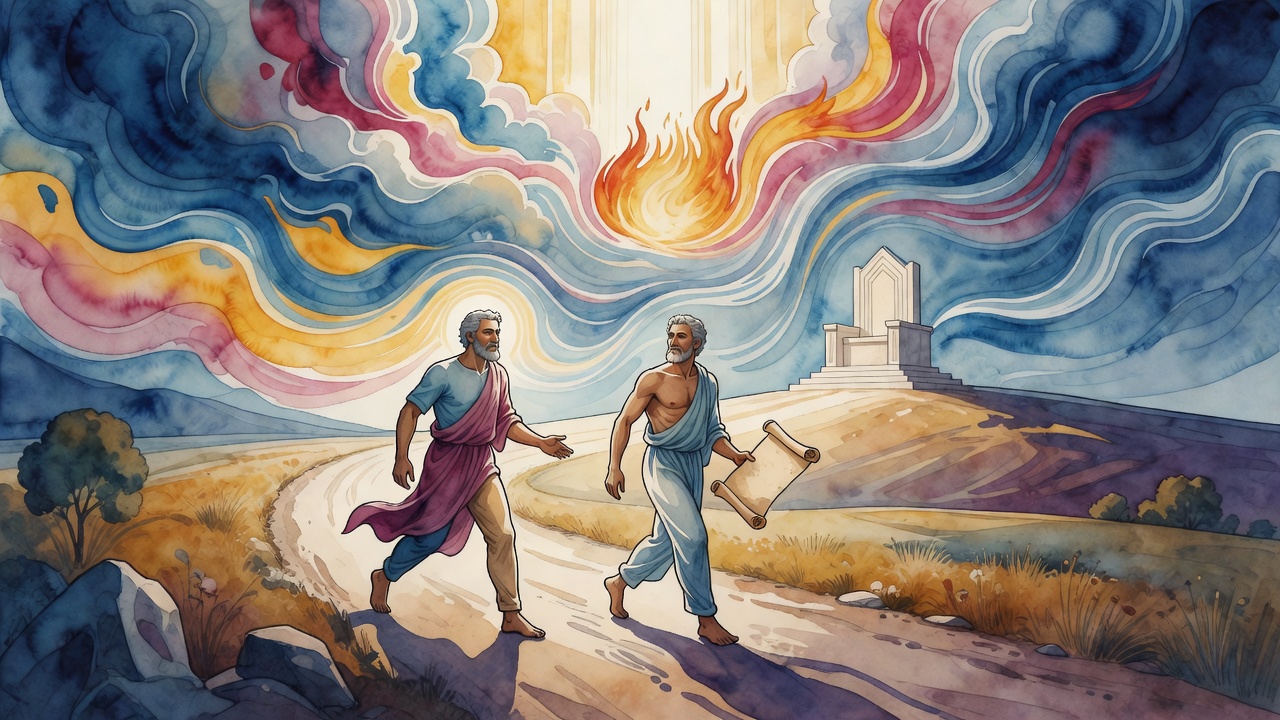
Before the heat came up, the blind man set his right hand on the shoulder in front of him and the two of them walked. The seeing man had guided him so long that his warnings had worn down to single words. "Stone." "Rut." "Dog." The hand tightened or eased, the feet adjusted, and the road went on under them both.
He had been the other man's eyes for years, and he had stopped being careful with them. He mentioned the wheat when it went yellow and skipped it when he was tired. The blind man walked half a step behind and took what he was given.
Around midday the dust ahead thickened into people. The whole province was out in the road, sweeping it, throwing branches down.
The King Enters the Province and Promises Tomorrow
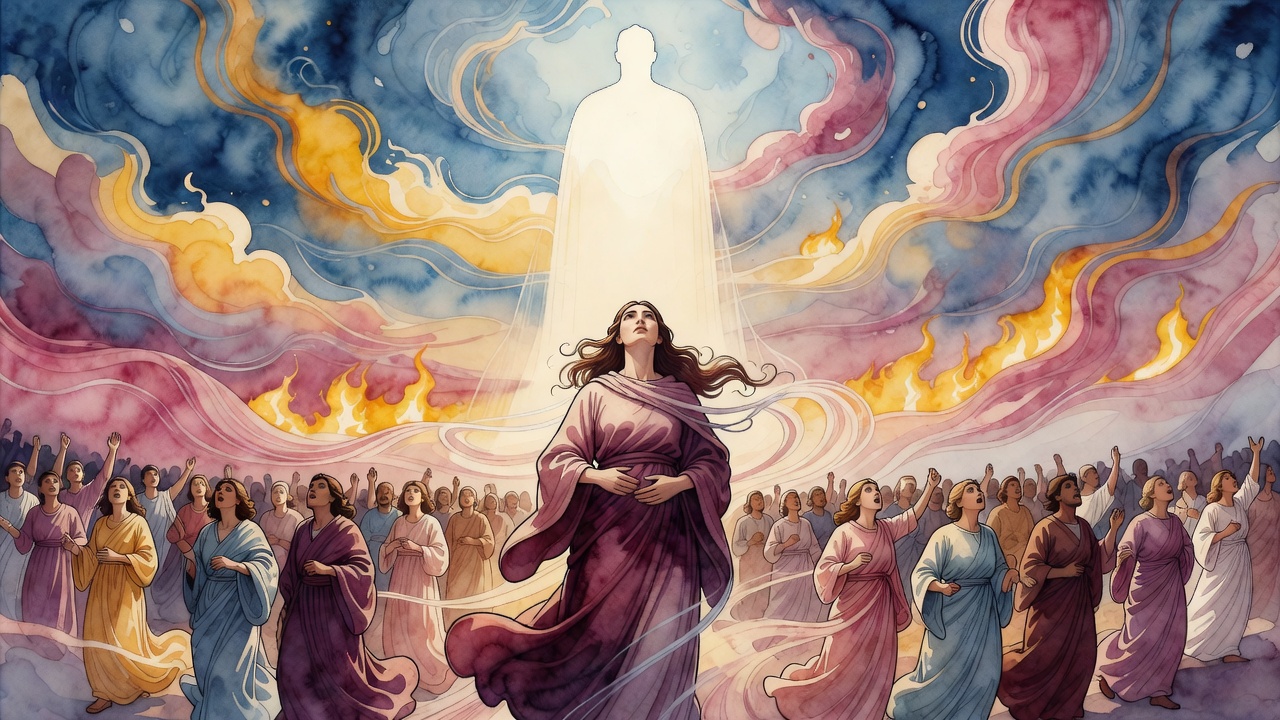
By the time they reached the gate, the king had ridden through it, riders on both sides, boots never once touching the mud. The inhabitants sang his name from the roofs and from under the feet of his horse, and the praise pleased him, and he let it run longer than he needed to.
Then he raised his hand and the singing stopped.
"Tomorrow I will build public buildings for you," he said. "Tomorrow I will build you bathhouses. Tomorrow I will bring in the aqueduct of water."
The noise off the walls was enormous. Before dark a surveyor was pacing the ground east of the wall with a rope, marking where the trench would run.
The blind man heard all of it and none of the man.
"What does he look like?" he asked.
"Young. Rings on three fingers. A horse that will not stand still."
"His voice," the blind man said, "sounds like a man who has said this in another province."
They Sat Down to Eat and Stretched Out Their Hands
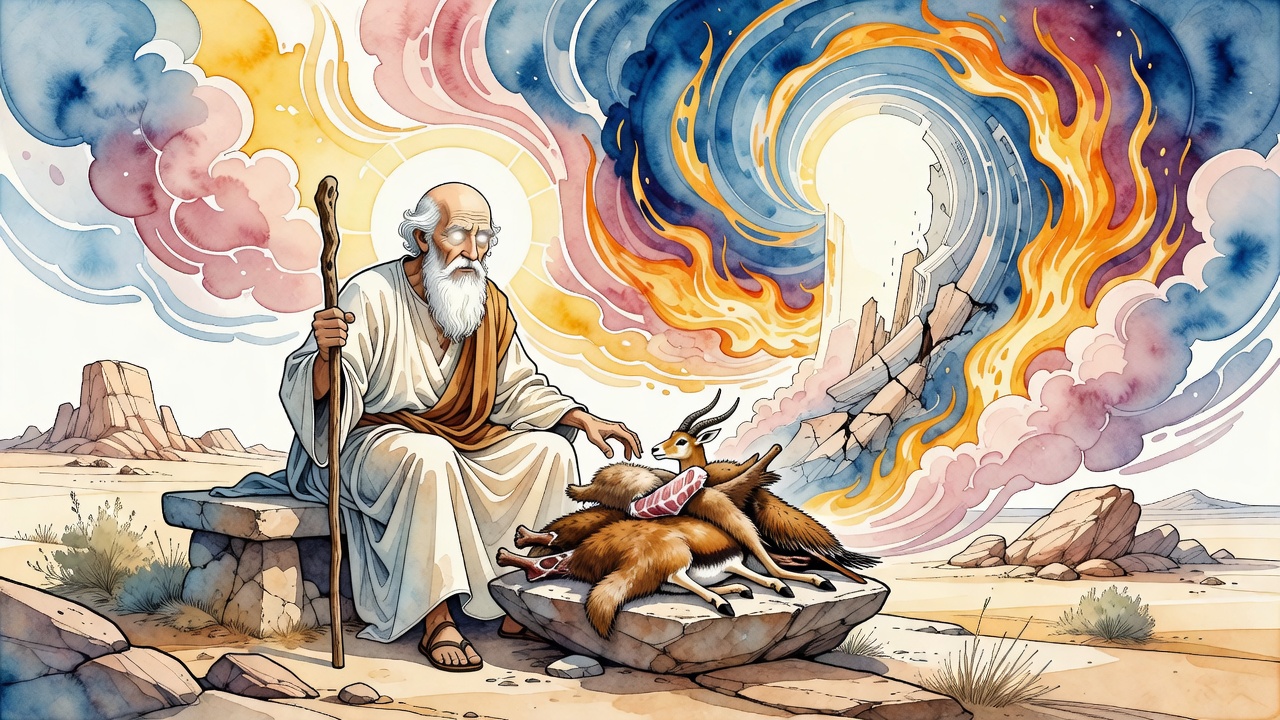
Outside the wall the bread ran out. They sat at the edge of a field and, because there was nothing else, pulled up the herbs growing there by the roots and ate them. The taste was green and bitter and closed the back of the throat.
"There is a hoopoe on the top course of the wall," the seeing man said, chewing, "and it keeps opening its crest like it wants someone to"
The wall went out. Not slowly. One moment there was a bird on a course of grey stone, then nothing in front of his face at all, and his own breath got very loud. He pressed his palms into his eyes and the dark did not move.
Beside him the other man made a noise like someone struck. Light had come into him. Not shapes at first, only a weight of brightness he had no word for, and then edges arriving out of it: dust, the shadow the wall threw across the barley, his own hands, and the face of the man he had followed for eleven years. Older than he had pictured. A white scar hooking under the left eye.
"Say something," the blinded man said.
"You have a scar under your eye. There are flies on the herbs we just ate."
Neither of Them Stirred From That Place
They did not move from that spot for a long time. The herb had swapped them in the time it took to swallow. The one who had led sat with his hands flat on the ground, and out of habit gave a warning anyway. "There is a rut ten paces on. Take the left of it." Then he stopped, because he had no idea whether there was a rut, or ten paces, or a left.
The other man stood up and walked into the barley and back, because he could. Then he crouched and held out his shoulder and waited.
The hand came down on it too hard.
"Not so hard."
"Then do not walk so fast."
Leading turned out to be a skill the new guide did not have. He forgot the low branch, and it opened a cut across the bridge of a nose that had never been cut before. They stood in the road while blood ran into a beard. By evening the warnings had shortened. "Stone." "Rut." "Dog." The same words in a new mouth.
The King Went to Sleep and Did Not Rise
They came back through the province after the barley was in. The gate was quiet, the branches long gone.
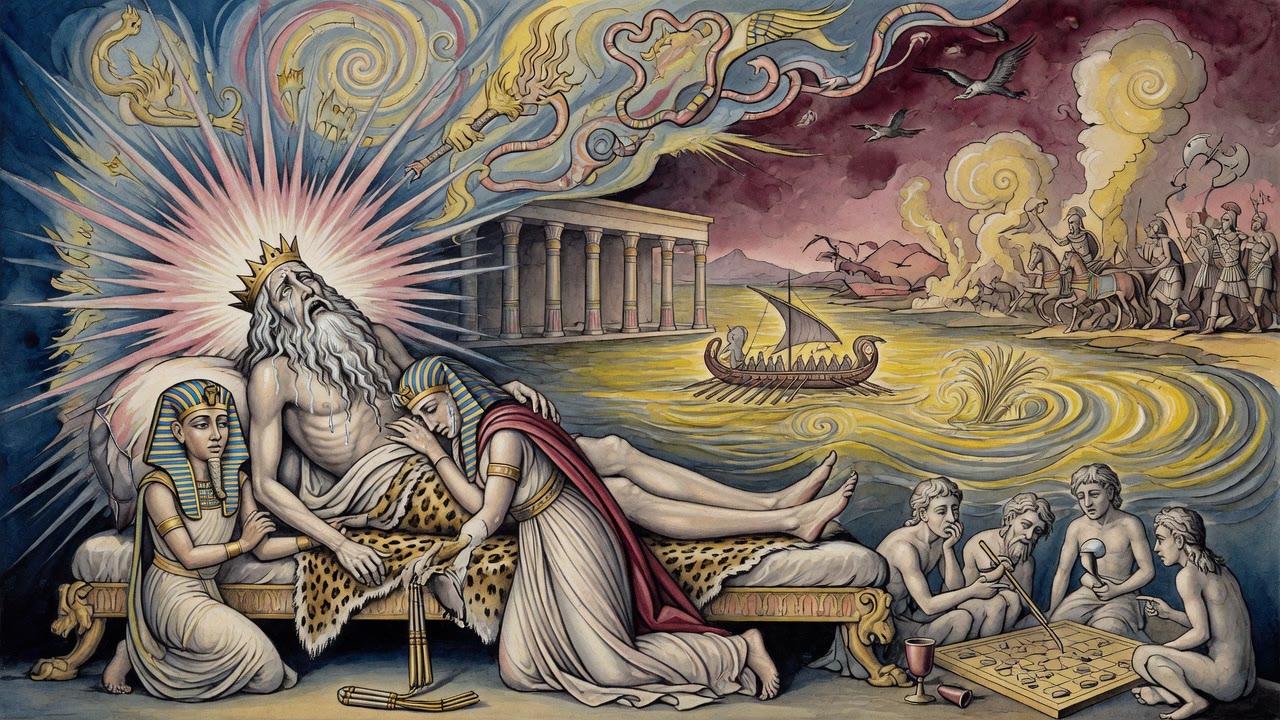
The king had lain down in the night and never woke. He was carried out with weeping and horns, and the weeping was real for about four days.
East of the wall the trench for the aqueduct still ran twenty cubits and stopped. Rain had put a foot of standing water in the bottom, and the water bred mosquitoes. The scaffolding had come down in the night, taken by people who needed timber. The bathhouse stones sat stacked where the surveyor left them.
An old woman was filling a jar at the standing water because the well line was long. She looked at the trench, and at the stones, and spat.
"Where is he," she said, "and where are his sayings?"
The man who could now see described the trench to the man who had once described the king, and kept to what he could stand behind. Twenty cubits. Water in the bottom, and no pipe anywhere.
Then they turned onto the road out, one hand on one shoulder.
"Stone," the man in front said. "Two steps."
The hand tightened. Two steps later a foot came down clear of the stone, and the road went on under them both.
← All myths