5 min read

Sarai and Hannah Had No Children Until God Answered Them

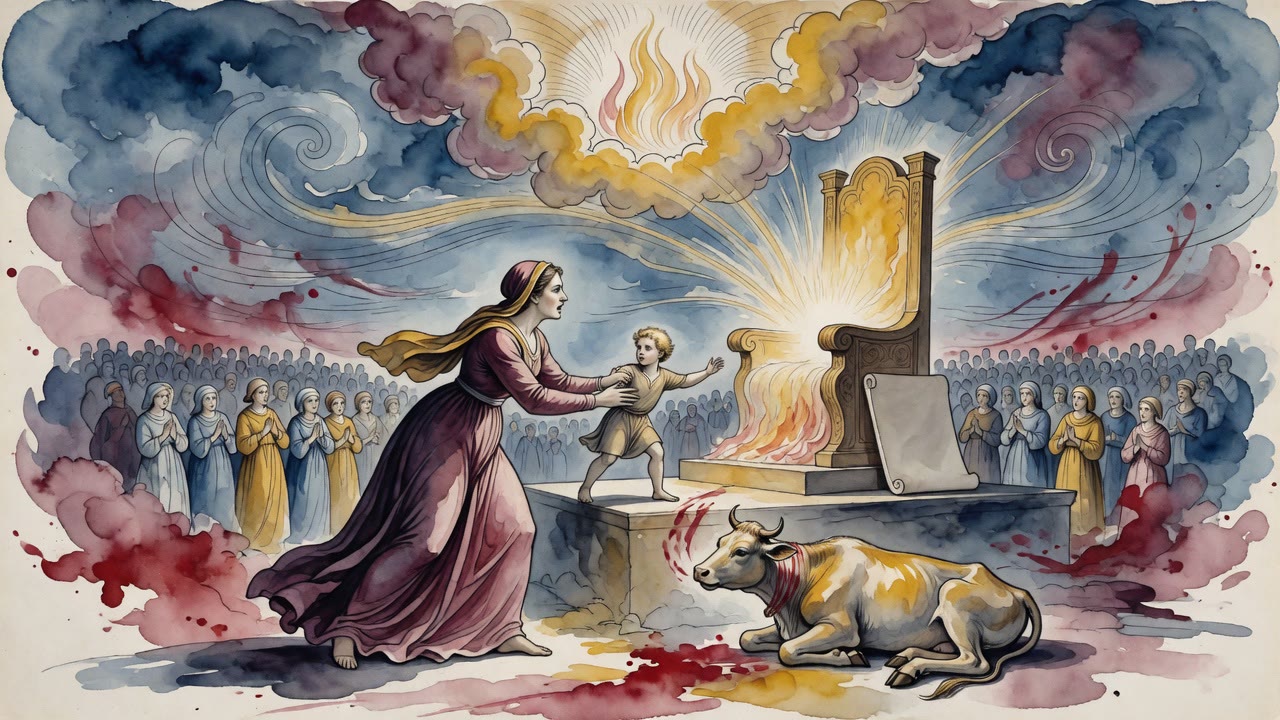
Eli watched a woman mouthing words at Shiloh and took her for a drunk. Hannah left the sanctuary lighter, and bore five more children after Samuel.

Curated by Arthur · Told by Maggid ·
Table of Contents
  1. Sarai's Empty Tent
  2. Hannah at Shiloh
  3. Zion Whom No One Seeks
  4. The Barren Woman Who Finally Sings
  5. What the Pattern Demands
Sarai and Hannah Had No Children Until God Answered Them Click for full size

Sarai's Empty Tent

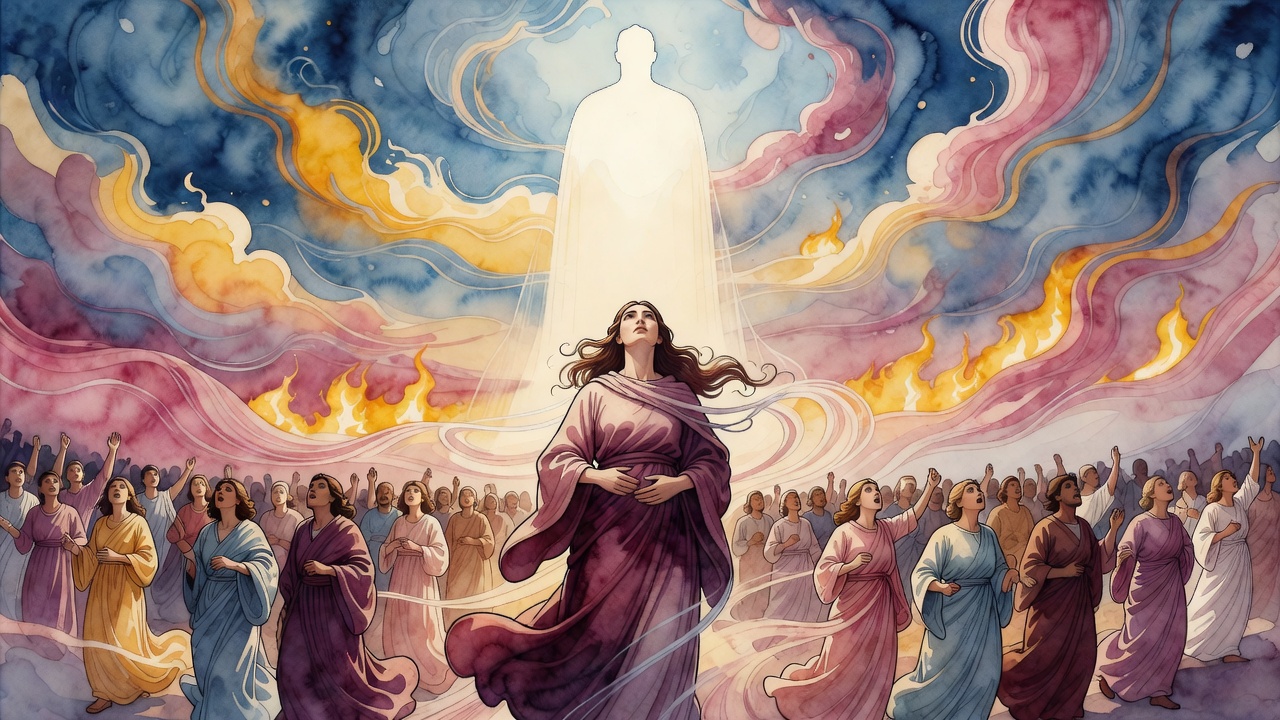
Sarai sat in a tent that knew every sound of waiting. Water poured. Bread baked. Guests came and went with blessings that did not include a child's cry. The years stacked without a cradle. When Scripture says she had no child, the sentence lands like a closed door. Then the Holy One remembered her, and the door was never only a door. It was a hinge.

Rabbi Levi found a pattern running through the books: whenever the text declares that a woman or a city "has none," no child, no one to seek her out, it is not a final verdict but a promise waiting to be reversed. The word of absence is, in God's mouth, the seed of fullness. Sarai becomes Sarah with a son laughing in her arms.

She does not know the midrash. She knows the ache. The pattern is written over her life like invisible ink that heat will later show.

Hannah at Shiloh

Hannah stood at Shiloh with lips moving and voice barely sound. Eli misread her mouth for wine. She was pouring out bitterness, not drink. Scripture says she had no children. Then the LORD visited Hannah, and she conceived and bore three sons and two daughters after Samuel. The empty sentence flipped.

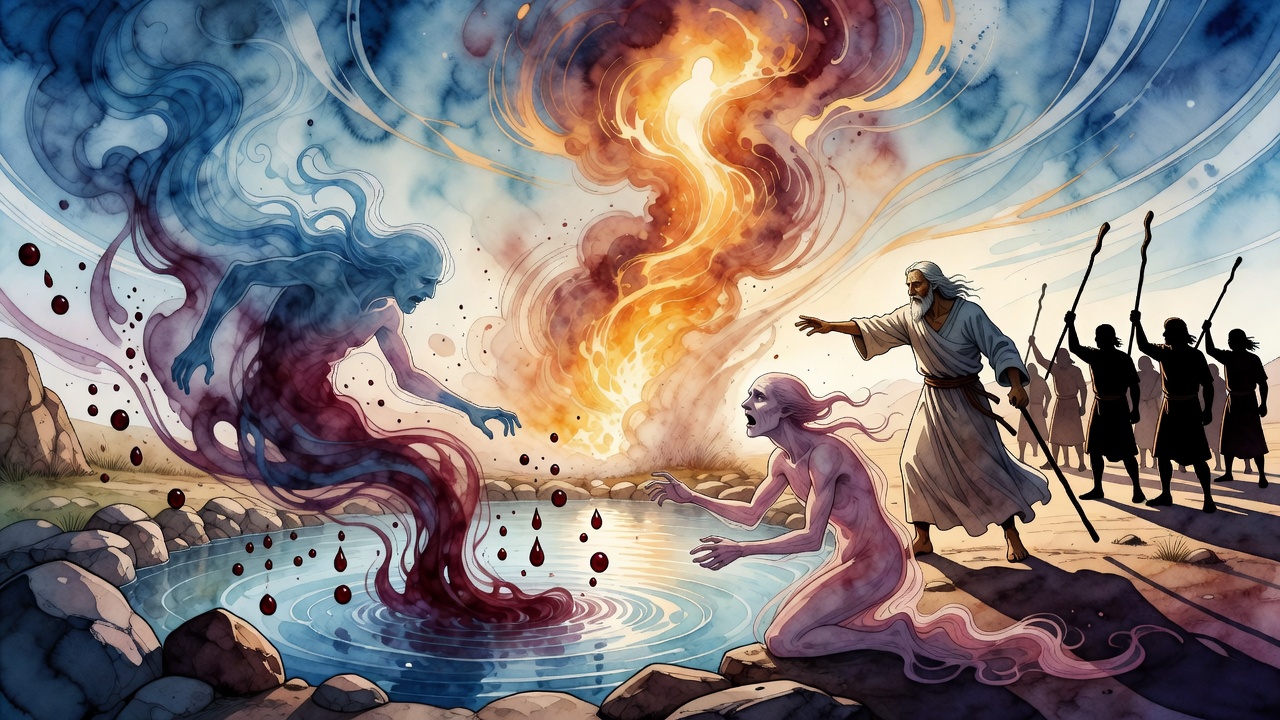
Resh Laqish, in Midrash Tanchuma on Nasso, lines up answers for those who mock heaven's power. If idolaters say God does not enliven the dead, point to Elijah of Gilead. If they say He does not receive the repentant, point to Manasseh restored to Jerusalem. If they say He does not attend to barren women, point to Elkanah of Mount Ephraim and Hannah, for the LORD visited her. If they say He does not rescue from fire, point to Hananiah and his friends of Judah. Each "Mine" in the psalm becomes a witness stand.

Hannah leaves the sanctuary lightened before the child arrives. Faith sometimes walks out pregnant with more than a body. It walks out pregnant with a reversed sentence.

Zion Whom No One Seeks

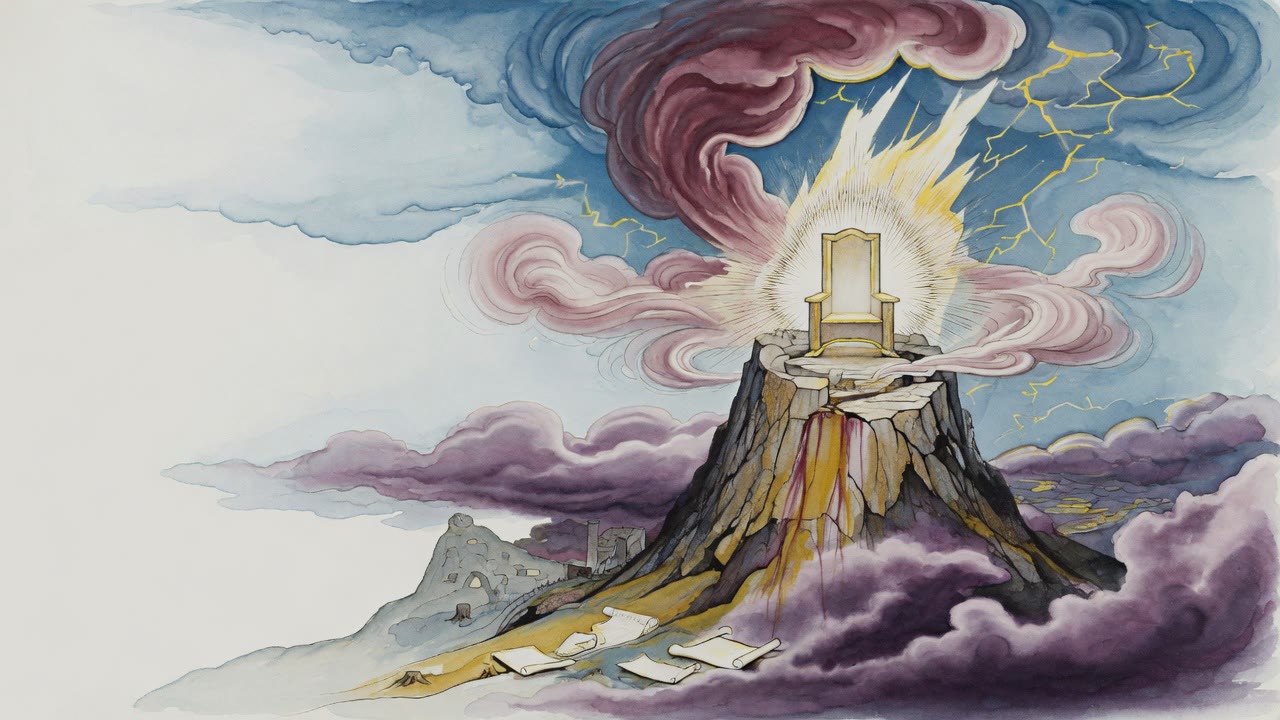
Zion is called the one whom no one seeks, and the prophets who say so go on to announce a redeemer at her gates. The city sits like Sarai's tent scaled to stone and wall. Markets thin. Songs quiet. Enemies count her as finished. Then the same mouth that named her unseught names her comforted. Rabbi Levi refuses to let "has none" be the last line of any chapter heaven still holds open.

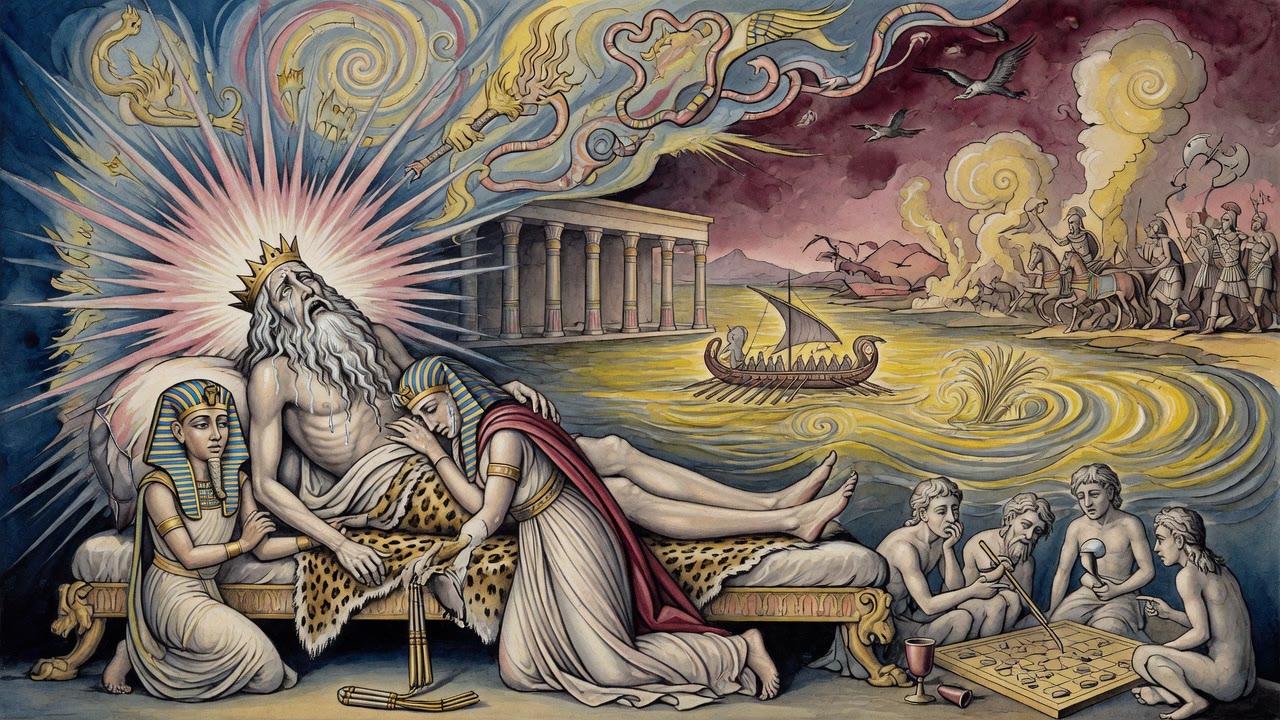
From the Flood to the Tower of Babel was three hundred and forty years, he notes, and from Jacob's birth to the song at the Sea was the same span. In the first stretch the world enjoyed ease and grew arrogant. In the second stretch Jacob's children lived as strangers and slaves, and out of that suffering they lifted their voices in song at the shore. That is why God chose them: not because other creatures are silent, but because Israel praises from inside hardship rather than abandoning Him in comfort.

The Barren Woman Who Finally Sings

The barren woman who finally sings, the enslaved people who finally cross the sea: these are the voices the Holy One calls sweet. Ease without praise breeds towers. Pain with praise breeds a Song. The midrash does not romanticize slavery. It refuses to let comfort be the only soil of faith. Sarai's laughter after long closed years and Israel's singing after long closed borders belong to one music.

A neighbor who watched Hannah year after year had already written her off. A nation that watched Zion's gates had already sold her future. Heaven keeps a different ledger. "Has none" is the setup, not the punch line, whenever the speaker is the One who opens wombs and seas.

What the Pattern Demands

The pattern does not tell a suffering person to enjoy the empty tent. It tells the mocker not to mistake a pause for a grave. It tells the community around Sarai and Hannah and Zion to stop treating absence as identity. Children will be born. A city will be sought. A people who learned bitterness in Egypt will taste joy that a stranger cannot fully share, as another midrash says of Jethro leaving before Sinai's peak hour. The joy belongs first to those who carried the bitter cup.

On a quiet afternoon Sarah holds Isaac and still remembers the years of "has none." The memory does not cancel the child. It seasons the laughter. That is how reversed sentences sound when they finally arrive: not as denial of the wait, but as the wait's strange harvest.

Hannah returns to Shiloh with a weaned boy and a song that names the God who kills and makes alive, who brings low and raises up. The women who once pitied her must rearrange their faces. Eli, who misread her lips, now sees the outcome of a prayer he almost interrupted. The pattern has a public cost for bystanders: they must admit they measured too soon.

Zion's turn is slower. Prophets still have to shout into ruins. The seed of "has none" can wait longer than a human pregnancy. Rabbi Levi's calendar math, three hundred forty years of ease breeding arrogance and three hundred forty years of hardship breeding song, is a warning to comfortable ages. The sweet voice heaven prefers is not the easy hymn of the full barn. It is the praise that climbs out of a throat that still remembers dust.


← All myths
From the tradition

Sources

2 sources

The texts behind this telling. Some cards carry a translation of the source; others are our own retelling of it, and each card says which. Every card links out to the original.

Yalkut Shimoni on Torah 62:18Yalkut Shimoni on Torah

Translation of the source text.Torat Emet (Yalkut Shimoni) · CC-BY-NC

Rabbi Levi said: Every place where it says "she has none" she came to have. As it is stated, "Now Sarai was barren; she had no child" yet she came to have one, "And the LORD remembered Sarah" (Genesis 21:1). "And Hannah had no children" yet she came to have them, "And she bore three sons." "Zion, she whom none seeks out" (Jeremiah 30:17) yet she will come to have one, "And a redeemer shall come to Zion" (Isaiah 59:20). From the birth of Jacob until his sons sang the song at the Sea was three hundred and forty years; from the Flood until the generation of the Dispersion was three hundred and forty years measure for measure. Because the world stood under blessing from the Flood until the Dispersion, yet out of that ease they rebelled against the Holy One, blessed be He, therefore from the birth of our father Jacob until his sons sang at the Sea they were strangers and sojourners and enslaved, and they gave thanks to the Holy One, blessed be He, out of the measure of suffering, and they sang before Him. For this He chose Jacob and his sons, who praise Him, as it is stated, "This people I formed for Myself" and the rest of the verse. Now do not all His creatures praise Him? Has it not already been said, "For from the rising of the sun to its setting" and the rest (Malachi 1:11)? From here we learn that none is sweet to Him but Israel, as it is stated, "the sweet singer of Israel," and it says, "Yet You are holy, enthroned" and the rest (Psalms 22:4), and it says, "For the LORD has chosen Jacob for Himself" and the rest (Psalms 135:4). But the nations are as nothing before Him, and it says, "Behold, the nations are as a drop from a bucket." And why are they in the world? So that the world should not lie desolate. But in the time to come, "I am my beloved's and my beloved is mine" (Song of Songs 6:3), and it says, "The LORD alone shall lead him" (Deuteronomy 32:12). In that hour, "and the nations shall be utterly laid waste" (Isaiah 60:12).

Full source
Midrash Tanchuma, Nasso 28Midrash Tanchuma

Retold in our words. Read the original at the link below.Townsend 1989 translation of Midrash Tanhuma, S. Buber Recension · CC-BY

(Numb. 7:48:) “On the seventh day it was the prince of the Children of Ephraim.” This text is related (to Ps. 60:9), “Gilead is Mine and Manasseh is Mine; Ephraim also is My chief stronghold; Judah is My scepter.” Resh Laqish said, “If the idolaters should say to you that the Holy One, blessed be He, does not enliven the dead, say to them, ‘See here, Elijah bears witness that I enlivened the dead through his hand.’ Ergo (in Ps. 60:9), ‘Gilead is mine,’ as Elijah was of the inhabitants of Gilead. (Ibid., cont.) ‘And Manasseh is Mine.’ If they should say to you that the Holy One, blessed be He, does not receive repentant sinners, say to them, ‘See here, Manasseh bears witness that I received him through repentance, since it is stated (in II Chron. 33:13), “When he (i.e., Manasseh) prayed unto him, He (i.e., the Holy One, blessed be He,) granted his request, heard his [entreaty,] and restored him to Jerusalem and to his kingdom […].”’ Ergo (in Ps. 60:9), ‘and Manasseh is Mine.’ (Ibid., cont.) ‘Ephraim also is My chief stronghold.’ And if they say to you that the Holy One, blessed be He, does not attend to (pqd) barren women, say to them, ‘See here, Elkanah of Mount Ephraim bears witness that I attended to (pqd) his wife Hannah, as stated (in I Sam. 2:21), “For the Lord visited (pqd) hannah; [so she conceived and bore three sons and two daughters].”’ (Ibid., cont.) ‘Judah is my scepter.’ If they say to you that the Holy One, blessed be He, does not rescue from the fire, say to them, ‘See here, Hananiah and his friends bear witness that I rescued them from the fire, as stated (in Dan. 1:6), “Now among those from the Children of Judah were Daniel, Hananiah, Mishael, and Azariah.”’ Ergo (in Ps. 60:9), ‘Judah is my scepter.’” Another interpretation (of Ps. 60:9), “Gilead is Mine”: If someone says to you, “Why did Elijah build an altar up on Mount Carmel and sacrifice on it, when the Temple existed at that time? For Moses has said (in Lev. 17:3–4), ‘If any single person from the house of Israel slaughters [an ox, a lamb or a goat in the camp]…, And does not bring it unto the entrance of the tent of meeting [to offer a sacrifice to the Lord before the Tabernacle of the Lord, blood guilt shall be imputed to that person],’” say to him, “Everything that Elijah did, he did for the name of the Holy One, blessed be He, and by divine command. It is so stated (in I (Kings 18:3)6), ‘And it came to pass at the time of the offering of the oblation (minhah), the prophet Elijah drew near and said […, and that I have done all these things at Your bidding].’” Ergo (in Ps. 60:9), “Gilead is Mine.” (Ibid., cont.) “And Manasseh is Mine.” If someone says to you, “Why did Gideon sacrifice in a high place (bamah); see here, it was forbidden because there was Shiloh in existence?” [In answer to this question,] R. Abba bar Lahana said, “Gideon did seven [unlawful] things: (1) He sacrificed a bull which had been worshipped, (2) a bull which had been set aside (for idolatry), (3) he built an altar, (4) he cut wood [for it] from the asherah, (5) he sacrificed at night, (6) without the high priest, and (7) he was among idol-serving priests. But whatever he did, he did by divine command. It is so stated (in Jud. 6:25-26), ‘And it came to pass during that night that the Lord said to him, “Take the bull ox that belongs to your father […]”’” Ergo (in Ps. 60:9), “and Manasseh is Mine.” (Ibid., cont.) “Judah is my scepter.” If someone says to you, “See here, David transgressed against a negative commandment,” the Holy One, blessed be He, said, “Say to him, ‘David taught the penitents, like a scribe teaching children.’” It is so stated (in Ps. 51:15), “Let me teach transgressors your ways and the sinners shall return unto You.” Ergo (in Ps. 60:9), “Judah is My scepter. (Ibid.) “Ephraim also is My chief stronghold.” If someone says to you, “Why did Joshua profane the Sabbath in Jericho,” say to him, “He acted on divine command.” It is so stated (in Joshua 6:2), “Then the Lord said unto Joshua, ‘See, I have given Jericho into your hand […].’” It is also written (in vss. 3-4), “So you shall go around the city […]; thus shall you do for six days. And seven priests […]; but on the seventh day you shall go around the city seven times, [and the priests shall blow on the shofars].’” And how is it shown that it was on the Sabbath? In that there are never seven days without a Sabbath. Ergo, “Ephraim also is My chief stronghold.” Now Joshua did yet another thing on his own initiative, which was not told to him. When Jericho was conquered, it was Sabbath. He said, “All of the Sabbath is holy, so whatever we conquer on the Sabbath will be holy to the Lord, as stated (in Josh. 6:19), “But all the silver and gold, and vessels of bronze and iron, are holy to the Lord […].” R. Berekhyah the Priest Berabbi said, “He treated it like a city condemned (for idolatry), and in the case of a city condemned (for idolatry) it is forbidden [to derive] benefit [from it]. Thus it is stated (in Deut. 13:17), ‘and you shall burn with fire the city with all its plunder, wholly for the Lord your God.’” R. Judah bar Shallum the Levite said, “[Joshua] taught Israel what the Holy One, blessed be He, said to Israel (in Numb. 15:20), ‘You shall set aside the first of your dough [as a hallah offering].’ Joshua said, ‘In as much as we conquered it first, we shall dedicate all its booty to the most high.’ The Holy One, blessed be He, said, ‘In as much as you have done so, see, your offering is supporting your tribe and overriding the Sabbath.’ Thus it is stated (in Numb. 7:48), ‘On the seventh day it was the prince of the Children of Ephraim (who made the offering).’” This text is related (to Eccl. 8:4–5), “For a king's word is supreme […]. Whoever observes a commandment shall not know anything evil.” And so it says (in II Sam. 23:3), “The God of Israel has spoken; the Rock of Israel has said to me, ‘One who governs over a person, who governs righteously the fear of God.” And who is the one who governs over his [evil] drive. One who does the will of the Omnipresent. And who is this? This was Joseph, the father of [Ephraim], the father of the father of Joshua ben Nun. What is written about him (in Gen. 39:7–8)? “And it came to pass after these things that his master's wife cast her eyes upon Joseph […]. But he refused […].” The Holy One, blessed be He, said to him, “You did not heed her. By your life, I am making you king over Egypt. Then they all shall obey you, as stated (in Gen. 41:55), “then Pharaoh said to all Egypt, ‘Go unto Joseph.’” It also says (in vs. 40), “You shall be over my house,” and the children of my palace shall do nothing without your consent. So it says (in Gen. 42:6), “Now Joseph was the governor over the land.” Because he governed his [evil] drive, he became governor over the land. (Gen. 39:2:) “And he was a successful man. It was only necessary to say "righteous man." Why is “successful man,” written? The Holy One, blessed be He, said to [Joseph], “You achieved what the first Adam did not achieve.” Successful (rt. tslh) simply means achievement. Thus it is stated (in II Sam. 19:18), “and they crossed (rt. tslh) the Jordan ahead of the king.” The Holy One, blessed be He, said to him, “No sacrifice by an individual overrides the Sabbath; yet by your life, the sacrifice by your son (Ephraim) will override the Sabbath, because of the good work (mitswah) that you did (in resisting temptation).” Ergo (in Numb. 7:48), “On the seventh day it was the prince of the Children of Ephraim, Elishama ben Ammihud.” R. Azariah said, “The Holy One, blessed be He, said to him, [i.e.] to Joseph, ‘You have kept the commandment (mitswah) (from Exod. 20:13 = Deut. 5:17), of “You shall not commit adultery.” So you have fulfilled the Torah before I gave it. By your life, no tribe shall come between your two sons with a sacrifice. Instead (according to Numb. 7:48) Ephraim [shall bring an offering] on the seventh day; and (according to Numb. 7:54) Manasseh, on the eighth day.’” R. Meir and R. Joshua ben Qorhah were interpreting the names, “Elishama [means], he (Joseph) heeded (shama') my God (Eli), and he did not heed his mistress. Ben Ammihud (‘MYHWD) means, His glory (HWDW) was with me (‘MY) and not with another. Similarly also in the case of (Numb. 7:54), Gamaliel ben Pedahzur [prince of the Children of Manasseh, means that] Joseph said, God (El) has recompensed (gamal) my people with a good recompense (gemulim).’ Ben pedahzur (pdhtswr) means, the Rock (tswr) redeemed (pdh) me from my distress of the prison. And so is it written (according to Ps. 18:21), ‘The Lord rewarded me according to my righteousness; according to the purity of my hands…’” R. Samuel bar Abba said, “What is the meaning of ‘according to the purity of my hands?’ According to the purity of my hands, because I was pure through good works.” (Ps. 18:21:) “The Lord rewarded me.” How? When someone is poor, he trusts in the Holy One, blessed be He; but when he [becomes] wealthy, he trusts in his wealth and has no fear of [God]. However, when Joseph was a slave, he feared the Lord. When his mistress enticed him with words, he said to her (in Gen. 39:9), “then how shall I do this great evil and sin against God?” Also when he became king he added [to his] fear [of the Holy One, blessed be He], as stated (in Gen. 42:18), “And Joseph said to them on the third day, ‘Do this and live, for I fear God.’” And when his brothers came down to him a second time (according to Gen. 43:16), “When Joseph saw Benjamin with them, [he said… ‘Slaughter and prepare (wehakhen) an animal, for the men will eat with me at noon].’” Now surely it is not customary for kings to prepare [food] one day ahead for the next. R. Johanan said, “It was the Sabbath, as stated (in Gen 42:16, ‘and prepare.’ And prepare only means [preparation for] the Sabbath, as stated (in Exod. 16:5), ‘And it shall come to pass on the sixth day, that when they prepare.’” The Holy One, blessed be He, said to him, “You have kept the Sabbath before it was given. By your life, I will have the son of your son offer [his sacrifice] on the Sabbath day, as stated (in Numb. 7:48), “On the seventh day it was the prince of the Children of Ephraim.”

Full source