Jose Drives a Spirit From the Village Spring
The spirit living in the spring had never hurt anyone. A stronger one came that wanted to, so the old one went looking for a rabbi.
Table of Contents
 Click for full size
The Spirit at the Spring Asked a Man for Help
The spring at the edge of the village had a tenant. Every household drew from that water, and for as far back as anyone could count, nobody who bent over the rim had come away hurt. Not at noon. Not at night. Not in the ordinary daylight, when a child leaned too far in and got hauled back by the collar.
Then a second spirit arrived from somewhere else and began pushing for the place.
The one that lived there went looking for a man. His name was Jose, he came from Zaythor, and the village counted him a hasid, which meant that when he said a thing was so, people set down whatever they were carrying. The spirit found him and made its case like a tenant with a lease.
"Rabbi, look how many years I have been settled here," it said. "Not at noon, not at night, not in the daytime have I ever wounded a single mortal. Now this other one has come at me from another place. He wants me out of here. He wants the water so he can do harm with it."
Jose heard it out. Then he asked the question that decided everything.
"What shall we do?"
Take Your Staves and Go Out at Noon
A righteous man of that village had just asked a spirit for a plan, and the spirit had one ready.
"Take your staves and your scythes," it said, "and go out against it at the noon hour. Then say, Ours has won. Ours is winning. And it will run."
Nothing in the instruction touched the water. No oil, no name, no ash, no circle drawn in the dust. Farm tools, a fixed hour, and a sentence said out loud in the plural. The spirit wanted a crowd that had already decided whose spring it was.
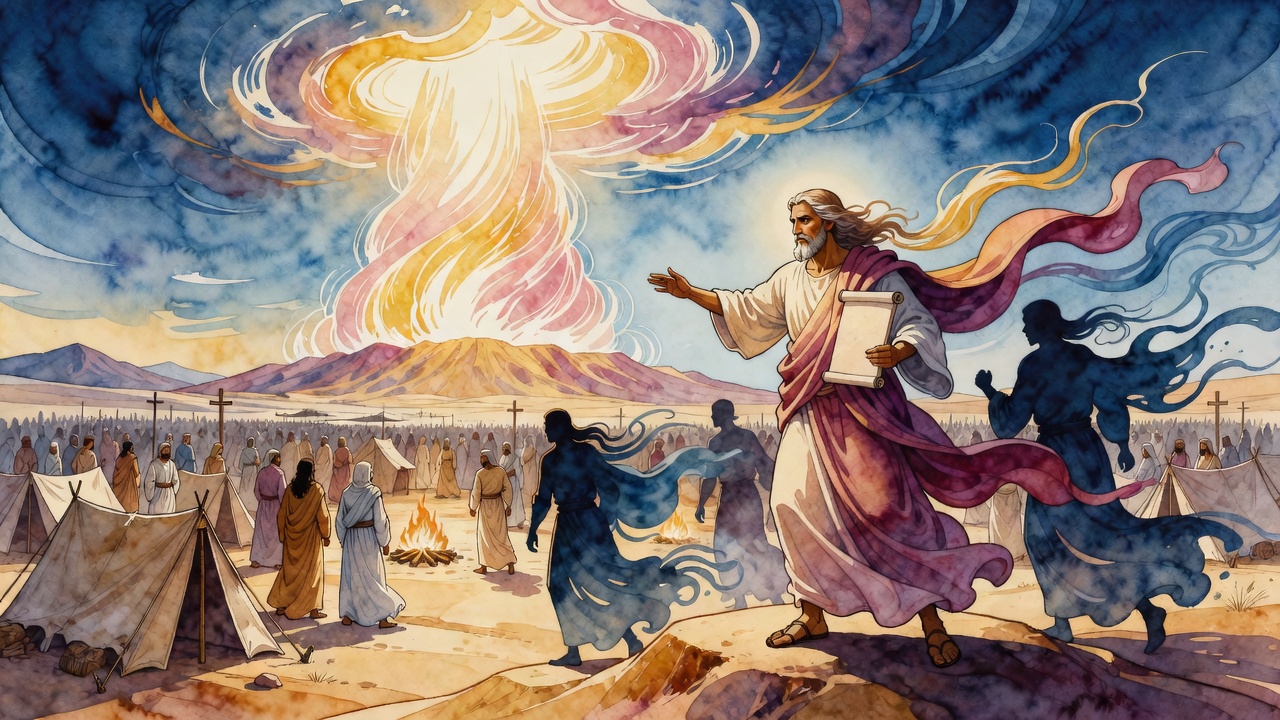
Jose went and gathered them. Men came off the terraces with the scythes still in their hands, blades dull from a season of ordinary work. Someone brought a threshing staff. The hour was set for noon, when the shadows go short and there is nowhere in the village to stand that is not fully lit.
Whatever any of them privately believed about the thing in the water, they came.
Ours Has Won, Ours Is Winning
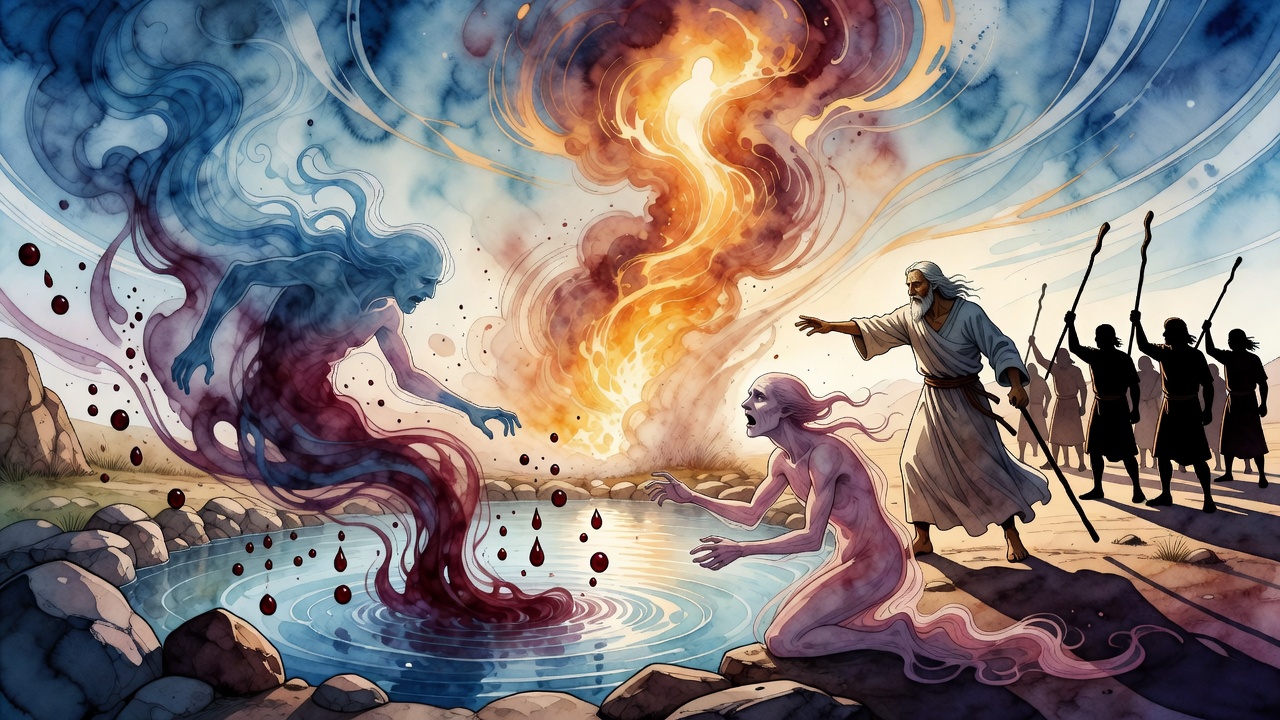
They came down on the spring at midday and shouted the words the spirit had given them.
Ours has won. Ours is winning.
Men who had never in their lives spoken to a spirit found that they knew perfectly well how to shout for their own side. The cry went off the rock and off the flat of the water and came back at them. Staves went up. The blades caught the overhead sun. They said it again, and then again, a whole village yelling a possessive pronoun at a hole in the ground until the hole gave way.
The stranger broke and ran.
The Clot of Blood on the Water
Nobody left. They stood over the spring with the tools still raised, waiting for the water to tell them something, and it did. A clot of blood came up and floated there, as it were, dark on the bright surface at the hottest hour of the day.
Then they went home.
They kept saying it afterward in that village, the way people keep saying the one impossible thing they all saw at once: we did not move from there until we saw the blood on the water. Children were still being told it years later by women filling jars at a spring that had gone back to being a spring.
The sages who heard the story took from it the part that cut hardest. A creature that was never made to need anybody had come begging farmers for staves and a shout. If that one needed help, they said, then people, who were made needing one another from the first day, need it past all measure. David had already put it in a line meant to be sung: may He send you help from the sanctuary, and sustain you out of Zion (Psalm 20:3).
The spirit kept its water. It had held the place for years without drawing blood, and it went on holding it, and the only reason it still had it was that a village came at noon with the wrong equipment and the right sentence.
← All myths