Hadrian Cannot Become a God While He Breathes
Hadrian told three philosophers he wished to make himself a god. Their tests, and his wife's question about his own soul, stopped the project.
Table of Contents
 Click for full size
An Emperor's Project
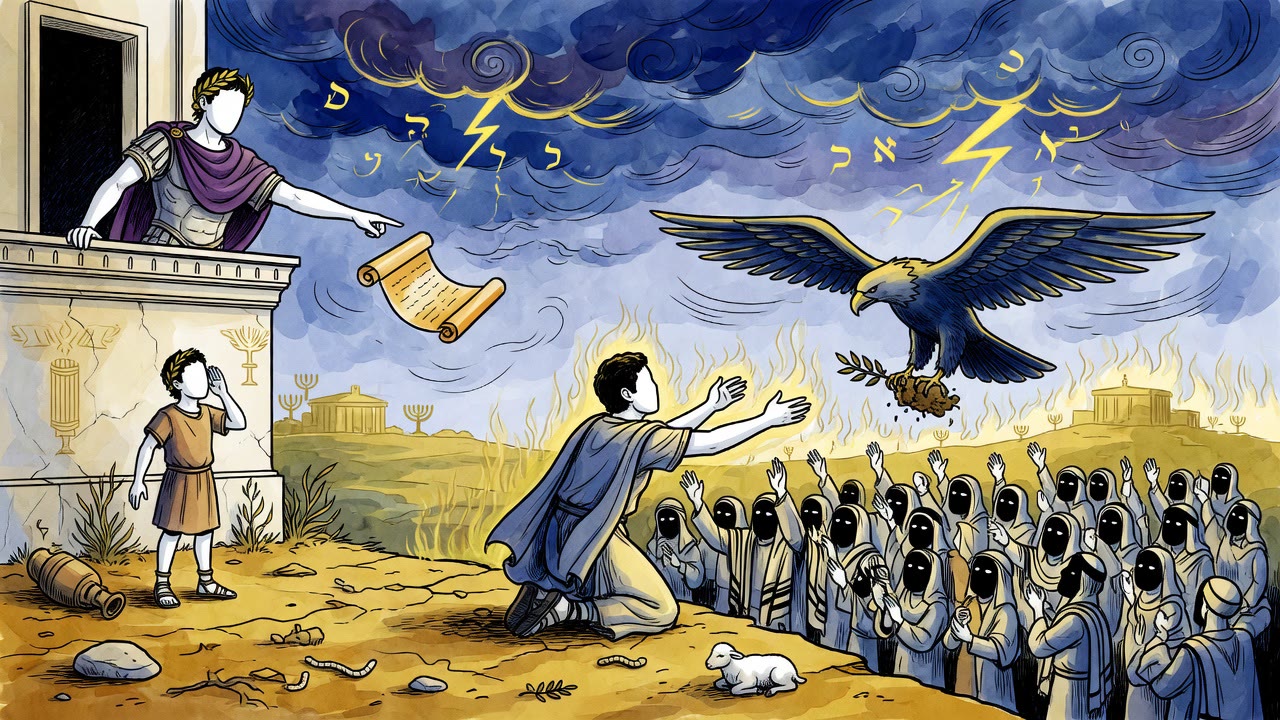
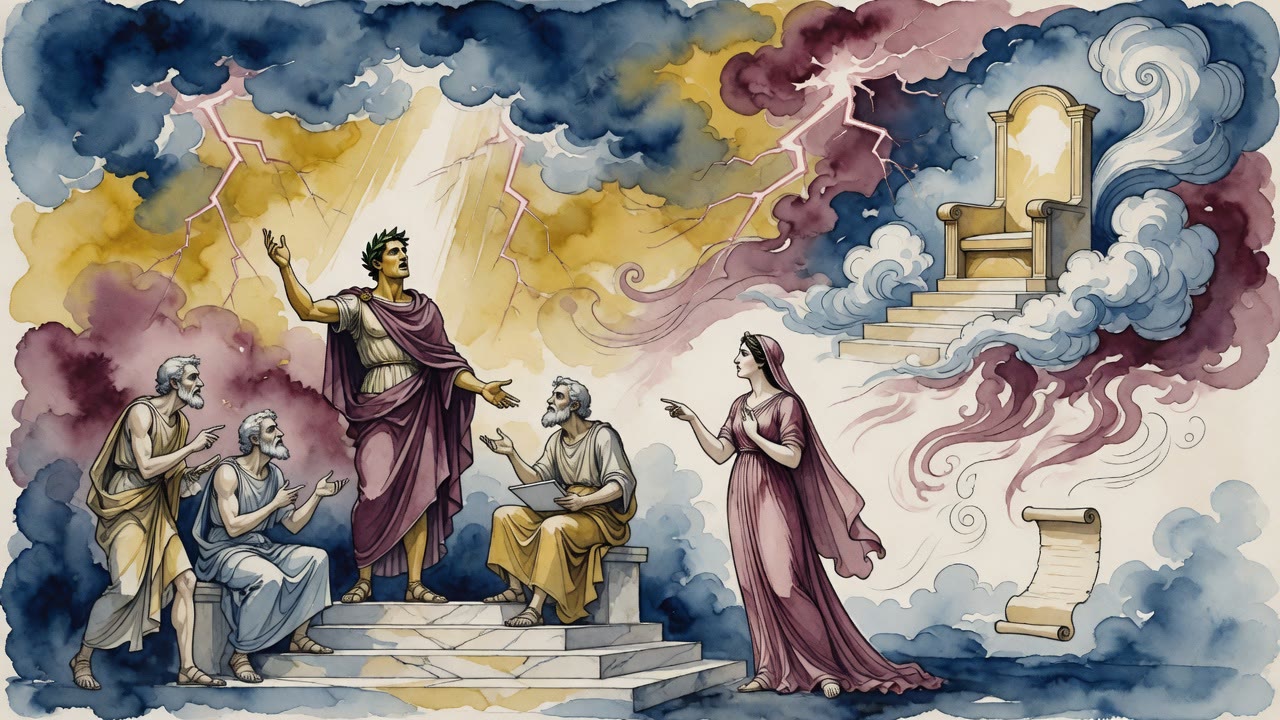
Hadrian kept three philosophers the way other men keep keys. He would not move a major piece without them. One day he set the piece down hard. "I seek to make myself into a god."
The room did not laugh. Emperors had tried stranger coronations. The three answered him in the pattern of Israel's old replies to idolaters, the pattern of Rabbi Eliezer, Rabbi Yehoshua, and Rabbi Akiva reading Jeremiah's challenge (Jeremiah 10:11).
"If your godhood can remove the heavens and the earth, we will serve it. If it can make heavens and earth, we will serve it. If it can remove this host and install another, we will serve it. If not, let it perish from the earth."
Hadrian went home distressed. Ambition had met a test that does not flatter purple cloth.
The Surety He Could Not Return
His wife found him darkened and asked why. He told her the philosophers had blocked his path to divinity. She said they had not spoken the sharpest word. "There is a surety with you from God. Give Him His surety, and then make yourself a god."
"What surety?" he asked.
"The soul," she said.
He understood the trap at once. If his soul departs, what remains to enjoy the title? "A man does not control the spirit to imprison the spirit" (Ecclesiastes 8:8). He could not govern the breath inside his own ribs. How then would he govern the heavens?
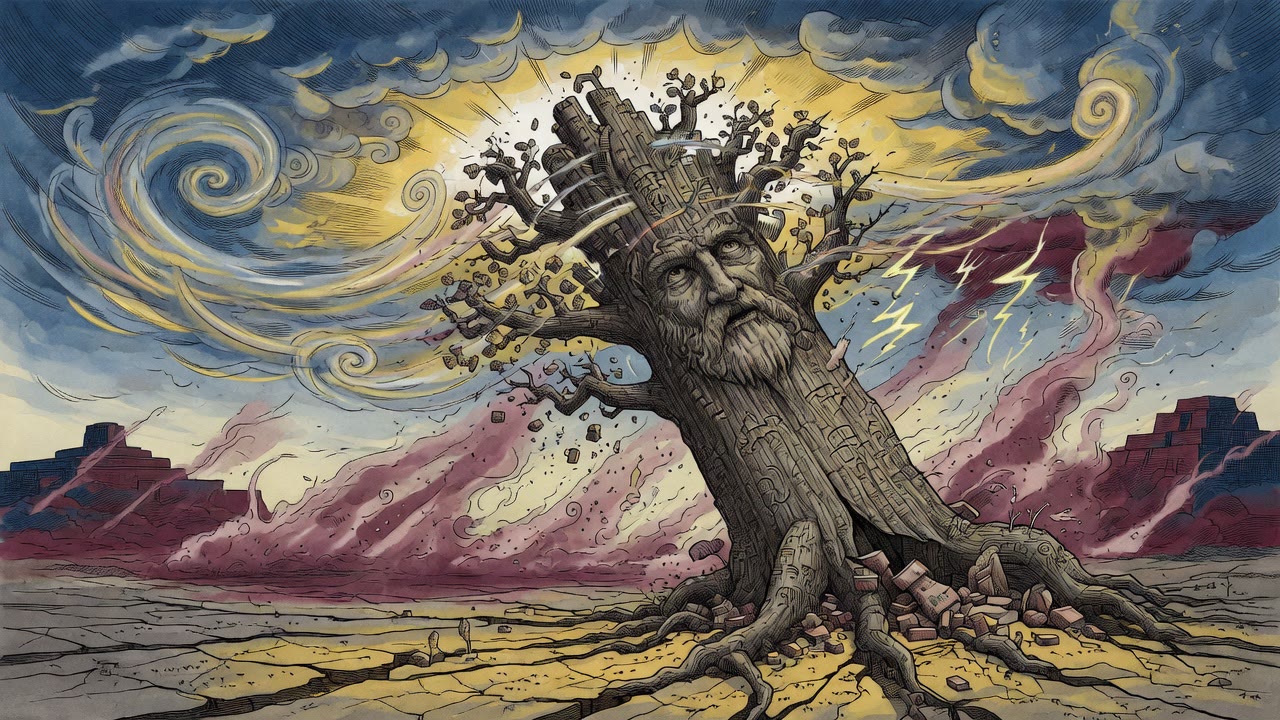
The project ended without a public festival. An emperor who cannot hold his own life as property cannot underwrite a cosmos.
Holy in Every Kind of Holiness
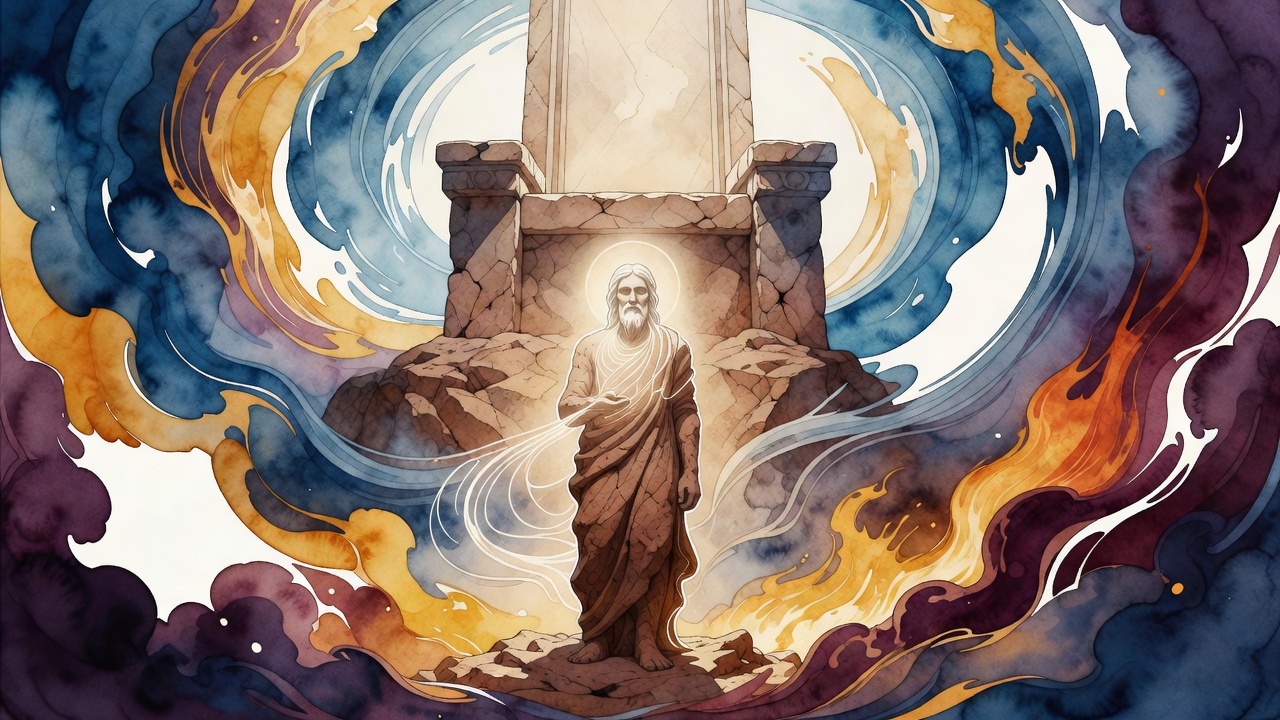
While empires toy with self-deification, Israel is commanded, "You shall be holy, for I am holy." The measure is God's own holiness in every matter. A verse in Joshua says, "For He is a holy God," and the Hebrew word for holy stands in the plural. Heretics came to Rabbi Simlai with the plural as proof of two powers.
"Fools of the world!" he answered. "The verse does not say they are holy gods. It says He is a holy God, one alone."
Rabbi Berekhyah in the name of Rabbi Abba lifts the plural into praise rather than multiplication. The plural crowns Him with every kind of holiness. Rabbi Aha bar Hanina counts them: speech in holiness, way in holiness, vision in holiness, praise in holiness, even the bared arm of redemption in holiness. One God, holy upon holy, not a committee of divinities and not a man in a purple cloak.
What Idolatry Offers a Tired Empire
Hadrian's wish is the empire version of a private fantasy: to stand above consequence. The philosophers answer with cosmology. The wife answers with mortality. Rabbi Simlai answers heretics with grammar that protects oneness. All three refusals guard the same border. Heaven is not a promotion available to the powerful.
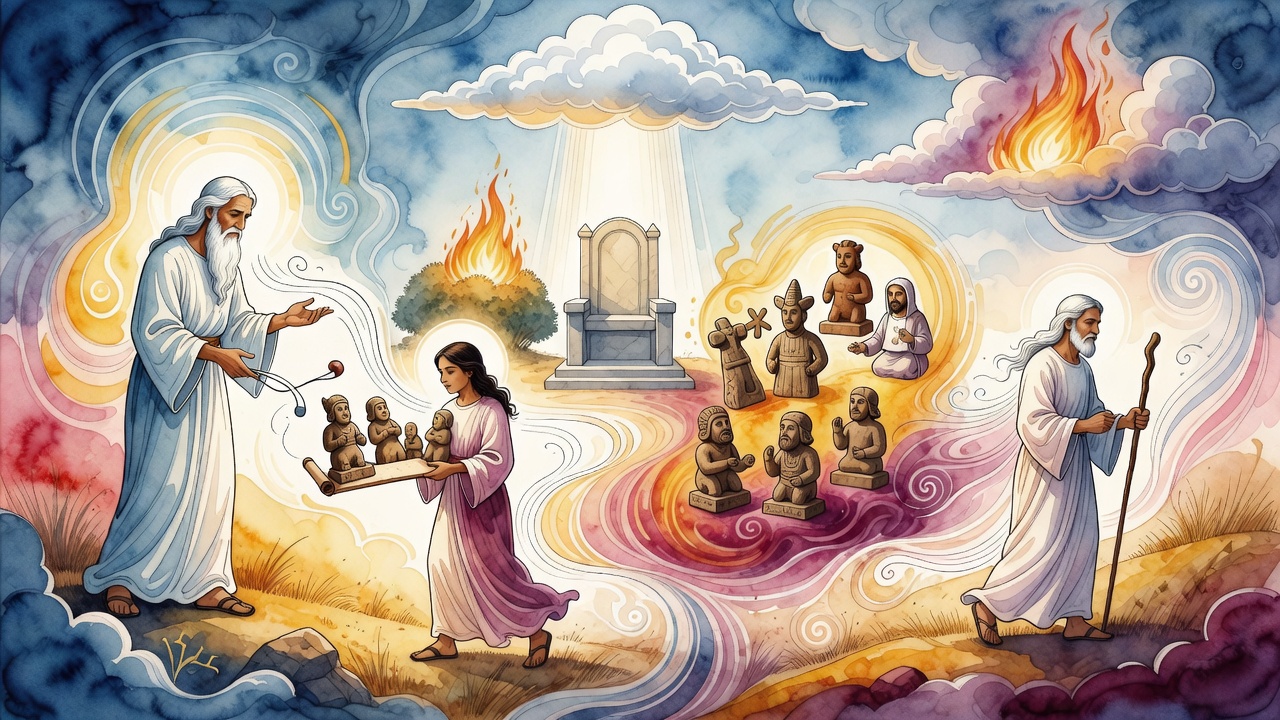
Nations say, serve this image. Israel is taught to answer with a demand no statue meets: move the sky, or make a sky, or replace the host of heaven. Short of that, the image is furniture with propaganda attached.
Breath Against a Crown
Night comes to the palace. The emperor breathes without commanding the breath. Somewhere a people small on the map recites that God is one and holy in every kind of holiness. The contrast needs no battlefield.
Men who made themselves gods in the old stories, Pharaoh among them, found their bodies turned against their claims. Hadrian at least heard his wife before the farce went further. The surety stayed with its Owner.
A crown can buy philosophers. It cannot buy the right to be the Source that lends them breath.
Rome excelled at turning men into monuments while they still ate dinner. Temples, coins, and oaths could manufacture a cult in a season. The Tanchuma's Hadrian scene interrupts the assembly line with a domestic question. Before an emperor annexes heaven, he must return the deposit he already cannot control. The soul is not a provincial tax. It is a surety held by another.
Jewish listeners under empire heard more than a clever queen. They heard permission to refuse the theater of divine emperors without needing an army. The tests of removing or making heavens are impossible on purpose. They train the mouth to demand cosmology from anyone selling godhood. Short of cosmos-making, the seller is a man with better marble.
Rabbi Simlai's fight with the minim protects the same border from another angle. Split the Holy One into powers and a market opens for rivals, including human rivals with crowns. One God, holy in every kind of holiness, leaves no vacancy for Hadrian's promotion. The philosophers, the wife, and the sage never meet in one room in history, yet the midrash seats their answers at one table: breath is borrowed, holiness is not a career, and the sky does not accept new landlords by decree.
← All myths