5 min read

God Brought Nimrod Down Like a High Tree

Nimrod stood like a green high tree over the nations until God dried him and raised the low, while Israel was told to keep no strange god inside the camp.

Curated by Arthur · Told by Maggid ·
Table of Contents
  1. The High Tree
  2. Brick Against the Name
  3. Low Trees and Dry Wood That Live
  4. The Axe Is Quiet Until It Is Not
God Brought Nimrod Down Like a High Tree Click for full size

The High Tree

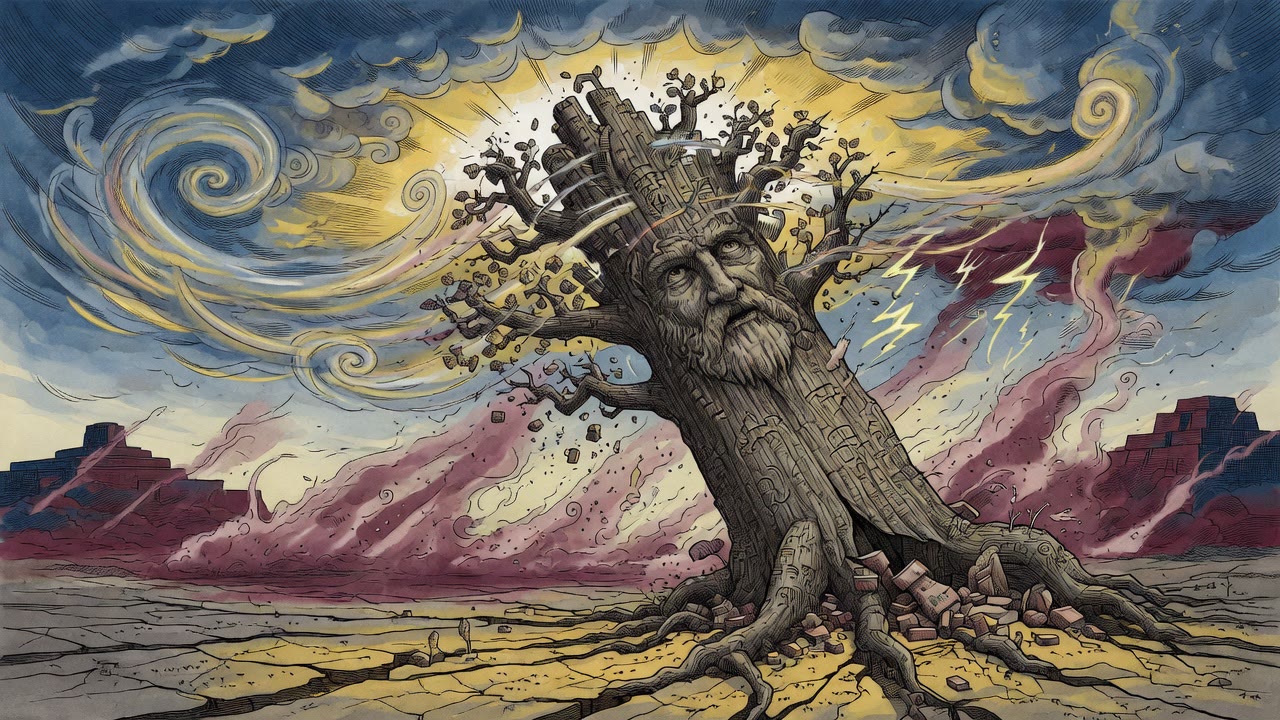
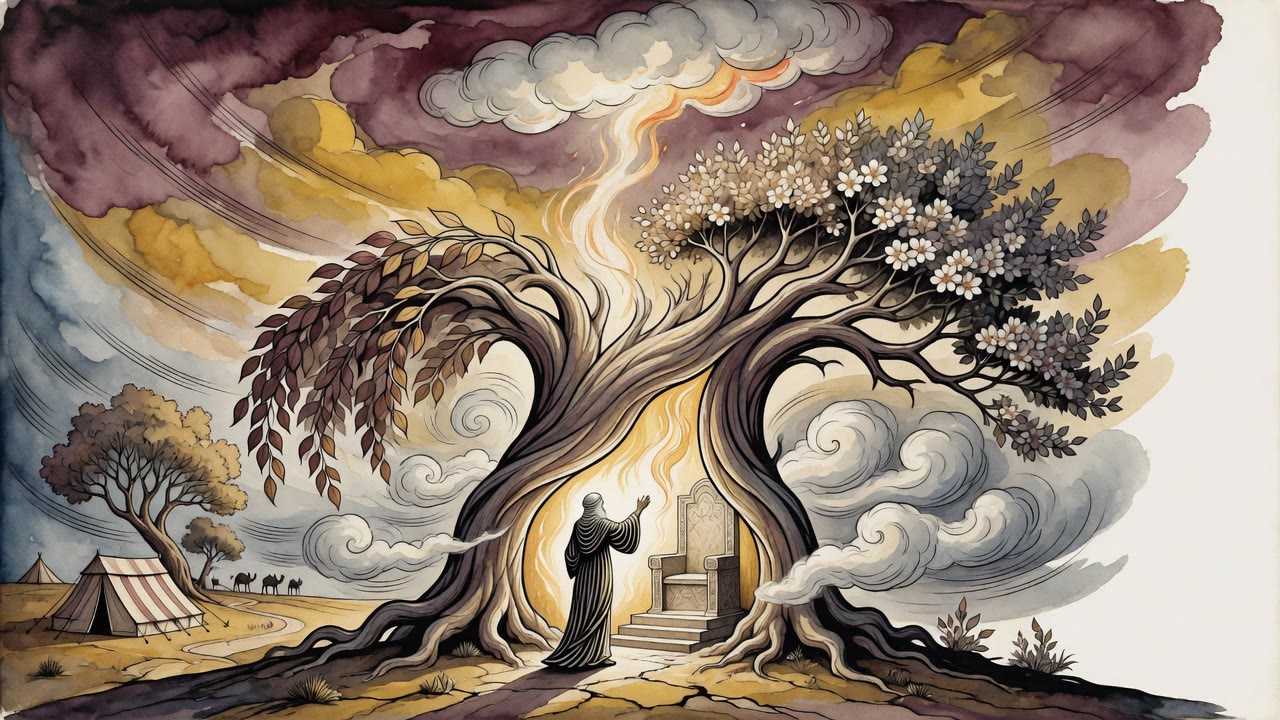
Nimrod stood the way a high tree stands when every other trunk looks small. Hunter. King. The name that gathers the building of the tower into one will. Nations looked up and measured themselves by his shade. The prophet later word already fits his shape. All the trees of the field shall know that the Lord brought down the high tree, exalted the low tree, dried the green tree, and made the dry tree flourish (Ezekiel 17:24).

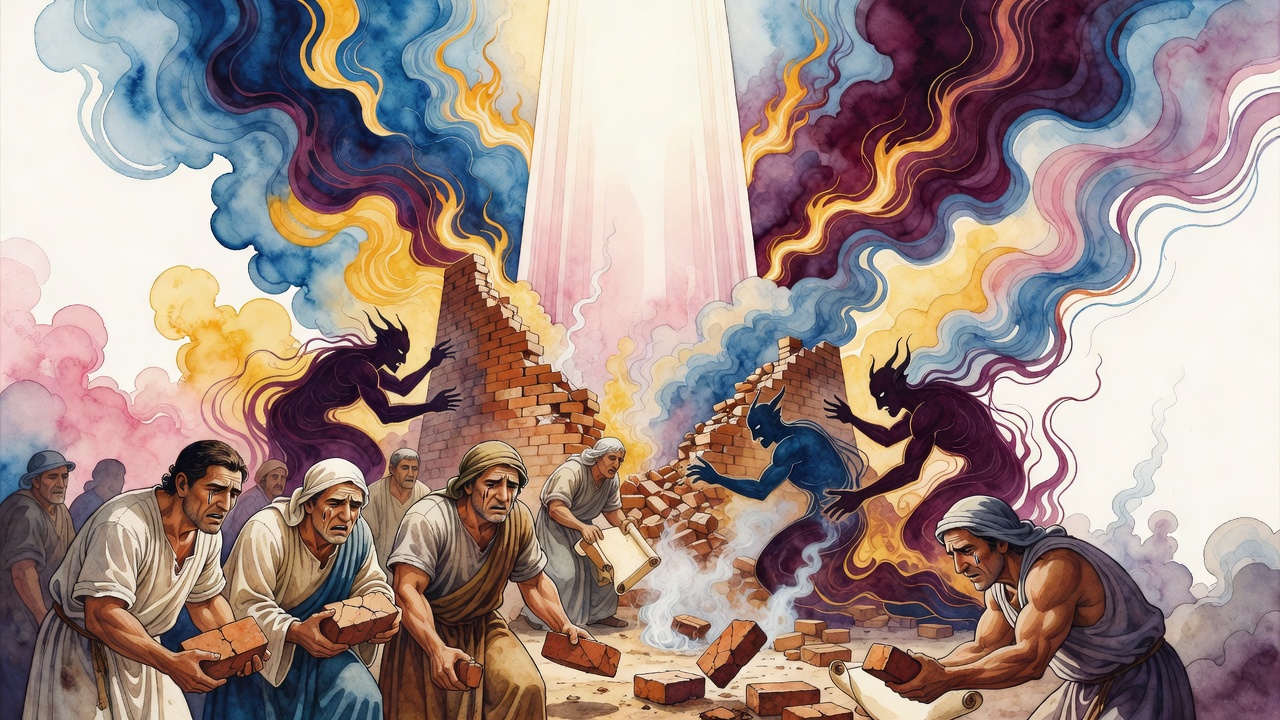
In the field of nations Nimrod is that high green thing. He thrives on height. He organizes brick and speech into a climb toward heaven that treats God as a rival roof to pierce. Men below him feel small and call the feeling realism.

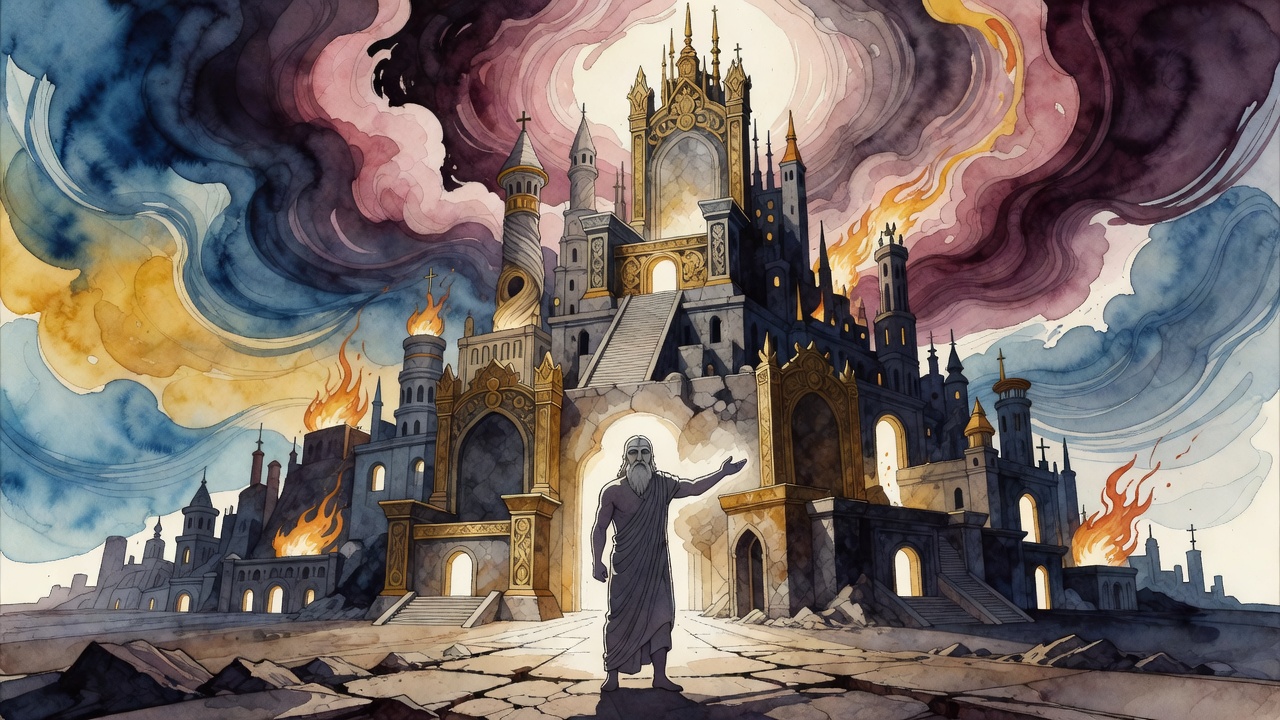
He walked the worksite as if the sky were a ceiling he could renegotiate. Foremen waited for his nod. The clay drank heat. The tower rose a little every day, and every day pride rose with it.

Brick Against the Name

The work of the tower was not only engineering. It was a refusal to scatter under the blessing that fills the earth. Men heated clay and stacked a path that tried to fix their name in the sky. Nimrod pride rode that labor. A green tree does not imagine drought. A high tree does not imagine the axe.

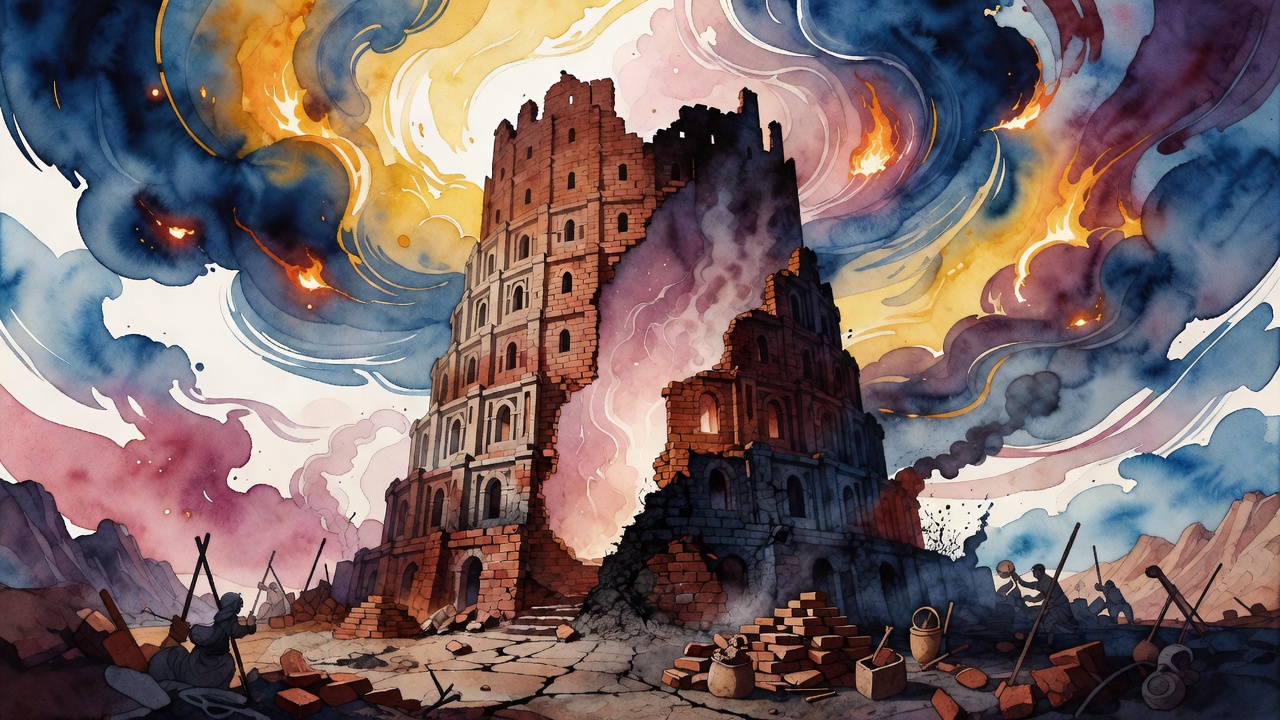
God did not need a storm of equal pride. He dried what looked endless. He brought the high thing low. Speech broke. Crews stared at mouths that no longer shared work. One man asked for brick and heard a word for water. Another cursed a tool and was answered in a tongue he did not own. The tower stopped being a spine and became a ruin.

Nimrod height did not protect him from that confusion. Height was the first thing the field was meant to unlearn under a God who does not share roofs with rivals.

Low Trees and Dry Wood That Live

The same verse that fells Nimrod lifts what was low and wets what was dry. Israel in the long story often looks like the low tree, the dry trunk in exile, the people without empire shade. The field of nations is meant to watch the reversal. Power that climbs against heaven dries. What clings to the Name can green again after winter.

Creation itself, in another teaching, begins with Israel already in view. A king orders ink and tablets for a son not yet born. Servants think the order absurd until they learn the king can read a future they cannot. Bereshit opens toward that future. The world is not built to flatter Nimrod tower.

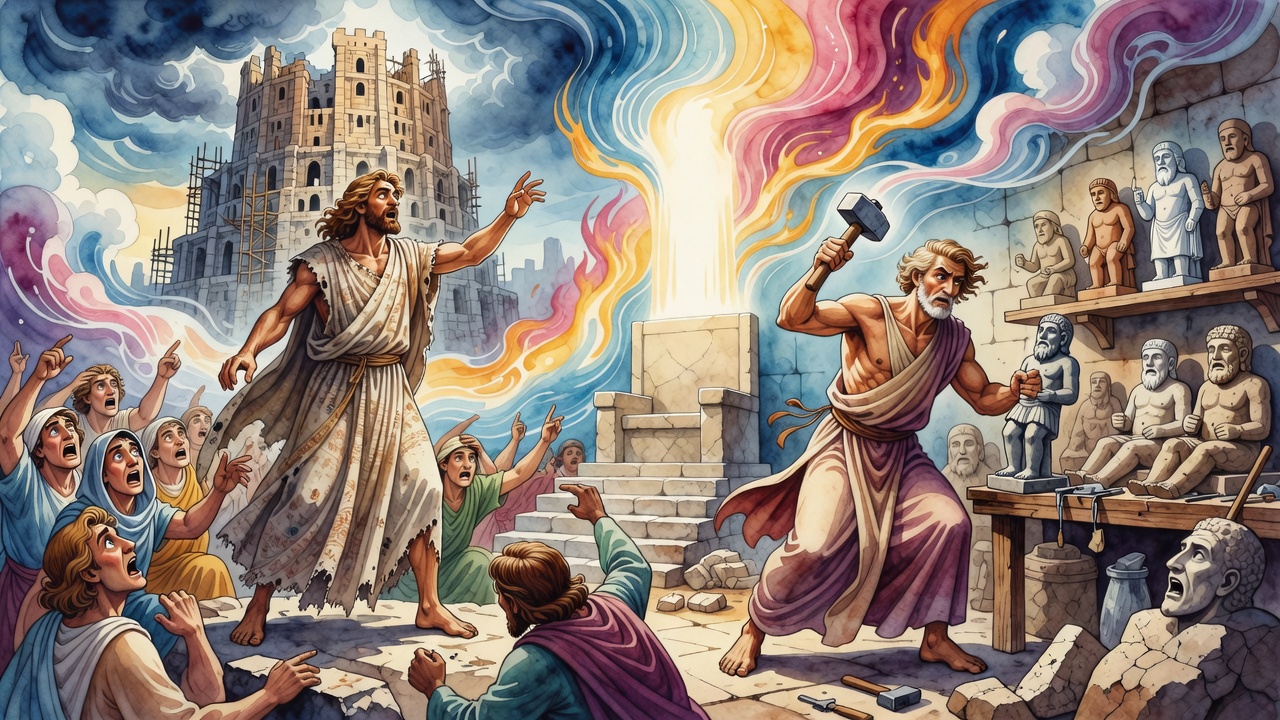
The command answers private towers too. There shall be no strange god among you. No asherah. No sun idol. No commerce of the heart that sells Torah time for a quieter greed. Idolatry is Nimrod habit in portable form, easy to carry and hard to put down.

The Axe Is Quiet Until It Is Not

Nimrod does not fall in one swing of a human sword in this reading. He falls when God decides the field must learn. The green dries. The high drops. The low rises. A child of Israel who feels small under empire shade is meant to hear that math. Height is not proof of right. Drought can reach a crown.

A boy carried water to the brickmakers and dreamed of climbing the finished tower just to say he had stood above every roof. That dream is Nimrod seed in ordinary hearts. The verse about high trees and low trees is not only about one king. It is about every heart that confuses altitude with truth.

After the languages broke, some men still bowed to portable heights, metal shapes, lucky stars, the quiet idol of a full storehouse. "No strange god among you" cuts those bows down to size. Israel is trained to live as a low tree that drinks from a Name, not as a green tyrant that invents its own weather. Teachers later would say the world was made with Israel merit in view, tablets ordered for a son not yet seen. Nimrod ordered bricks for a name already too large. One order serves a future people. The other serves a present pride. Only one order survives drought. Night after the scattering. Fires of separate camps. The low tree waits for water only God times.


← All myths
From the tradition

Sources

3 sources

The texts behind this telling. Some cards carry a translation of the source; others are our own retelling of it, and each card says which. Every card links out to the original.

Pirkei DeRabbi Eliezer 52:3Pirkei DeRabbi Eliezer

Retold in our words. Read the original at the link below.Pirke de Rabbi Eliezer, trans. Rabbi Gerald Friedlander, London (1916) · CC-BY

Our tradition wrestles with this too, offering some pretty powerful imagery to explain it.

Consider this from Pirkei DeRabbi Eliezer, a fascinating early medieval text filled with stories and interpretations of the Torah. It zeroes in on a verse, (Ezekiel 17:24): "All the trees of the field shall know that I the Lord have brought down the high tree, have exalted the low tree, have dried up the green tree, and have made the dry tree to flourish.”

What does it all mean?

The text doesn’t leave us hanging. It sees those “trees of the field” as representing the nations of the world. Okay, so far so good. But who are these specific trees? Well, the “high tree” that God brings down? That’s Nimrod.

Nimrod, as you might recall, was a mighty hunter, a king who, according to tradition, led the building of the Tower of Babel – a symbol of humanity's arrogance and attempt to reach God. He represents the height of earthly power, a power ultimately humbled.

And who is the “low tree” that God exalts? Abraham, our father. Abraham starts as one man, almost insignificant in the vast landscape of the ancient world. Yet, through his faith and his covenant with God, he becomes the patriarch of a nation, a beacon of monotheism, and an enduring symbol of spiritual strength. The ultimate underdog story. But the imagery doesn't stop there. What about the drying up of the "green tree" and the flourishing of the "dry tree"? Pirkei DeRabbi Eliezer interprets the "green tree" as the breasts of the wives of the nations. A slightly strange image, perhaps, but stick with me. It's about to get interesting.

The "dry tree" that flourishes? That’s Sarah.

Specifically, Sarah's breasts.

Now, we know Sarah's story. She was barren for many years, considered past the age of childbearing. Yet, God miraculously granted her a child, Isaac, in her old age. Her ability to nurse Isaac becomes a symbol of divine favor and evidence of the impossible becoming possible.

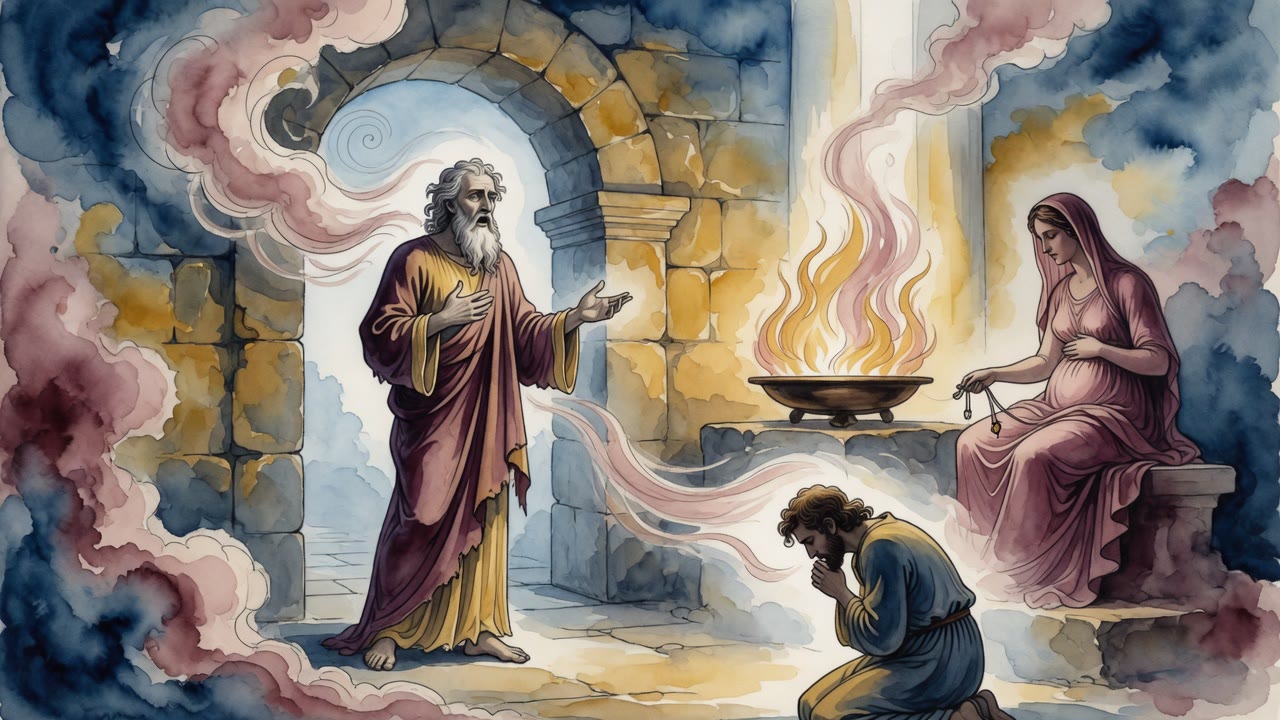
But the story goes even further! Pirkei DeRabbi Eliezer adds a remarkable detail: the other women of the world brought their children to Sarah to be nursed! "For Sarah gave suck to all their children in peace," the text says, referencing (Genesis 21:7), "'Who would have said unto Abraham, that Sarah should give children suck?'"

What a powerful image! Sarah, the once barren woman, now nourishes not only her own child but the children of others. It speaks to a universality, a sense of shared humanity, and the transformative power of faith. It's almost a vision of redemption, where even the most unlikely source can provide sustenance and blessing to all.

Maybe it's a reminder that power isn't always what it seems. That true strength can arise from unexpected places. That even in times of upheaval and change, there's a deeper pattern at play. A divine hand, perhaps, shaping the world in ways we can only begin to understand.

Full source
Sifrei Devarim 315:6Sifrei Devarim

Retold in our words. Read the original at the link below.Sifrei by Rabbi Shraga Silverstein · CC-BY

Sometimes the most famous commandment hides a quieter, stranger layer beneath it. Now, The first reading, this seems And one interpretation offered by the Sifrei is exactly that: "There will be none among you who serve idolatry." It reinforces the core tenet of monotheism. The text even brings in support from (Isaiah 27:9), stating, "With this shall Jacob's sin be atoned for … and asherah trees and sun idols shall arise no more." A clear call for purification and devotion to God alone.

The text then takes a sharp turn, offering an alternative reading that is downright utopian. Instead of focusing solely on religious purity in the sense of idol worship, it pivots to economic and spiritual purity. "There shall be none among you engaging in any kind of commerce whatsoever, (but all shall be free for Torah study)." Can you imagine a world without the pressures of the marketplace? A world where everyone is free to dedicate themselves to learning and spiritual growth?

This vision paints a picture of abundance so complete that the need for commerce simply vanishes. To support this, the text quotes (Psalms 72:16): "There will be an abundance (pisath) of grain in the land." The Sifrei elaborates, saying that the wheat will bring forth gluskaoth – delicacies! – and that the fullness of the palm (pas, as in pisath) of a hand will be enough. It goes on: "Its fruit will rustle like (the trees of) Levanon." The wheat stalks will rub against each other, shedding their meal on the ground, and you’ll simply gather a palmful, sufficient for your livelihood.

Imagine that: food so plentiful, so readily available, that you only need to gather what fits in your hand. No toil, no struggle, just an effortless provision directly from the land.

This isn’t just about physical sustenance, though. It’s about a spiritual abundance that arises when we remove the distractions and anxieties of earning a living. The implication is that when basic needs are effortlessly met, we're freed to pursue higher callings, to delve deeper into Torah, and to connect more profoundly with God.

The Sifrei Devarim isn't just giving us a legal interpretation here. It's offering a glimpse into a possible future, a Messianic vision where the material and spiritual realms are harmonized. It challenges us to consider what it truly means to prioritize our relationship with God and how that prioritization might reshape every aspect of our lives, even our economic systems.

So, what does this vision mean for us today? Are we called to abandon commerce entirely? Probably not literally. But perhaps we’re challenged to re-evaluate our relationship with work and consumption. Maybe the "strange god" isn't just an idol of wood or stone, but the relentless pursuit of wealth and material possessions that distracts us from what truly matters. Maybe, just maybe, a little bit of that utopian vision is within our reach, if we dare to prioritize the sacred over the secular.

Full source
Yalkut Shimoni on Torah 2:2Yalkut Shimoni on Torah

Translation of the source text.Torat Emet (Yalkut Shimoni) + Sefaria Community Translation · CC-BY-NC

Rabbi Yehuda bar Shalom said: It is not written here "from before" or "from the beginning God created," but "in the beginning" (Genesis 1:1), in the merit of Israel, who are called "beginning," as it is said, "Israel is holy to the LORD, the beginning of His increase" (Jeremiah 2:3). To what is the matter like? To a flesh-and-blood king who had no son, yet said, "Take writing tablets and inkwells for my son." Everyone said, "He has no son, yet he says, 'Take writing tablets and inkwells for my son.'" Then they returned and said, "The king is an astrologer," and so forth. Rabbi Yehuda ben Pazi expounded: Why with bet? To inform you that there are two worlds: this world and the world to come.

Full source