6 min read

Judah Confessed His Own Sin First, and Reuben Lived

Judah named his shame in the gate while Tamar waited for fire. That public mouth taught Reuben how to confess, and the blessing said he would live.

Curated by Arthur · Told by Maggid ·
Table of Contents
  1. What Reuben Could Not Say
  2. The Gate at Timnah
  3. Two Kinds of Heroic
  4. Let Reuben Live
  5. Be'erah in the Chains
Judah Confessed His Own Sin First, and Reuben Lived Click for full size

What Reuben Could Not Say

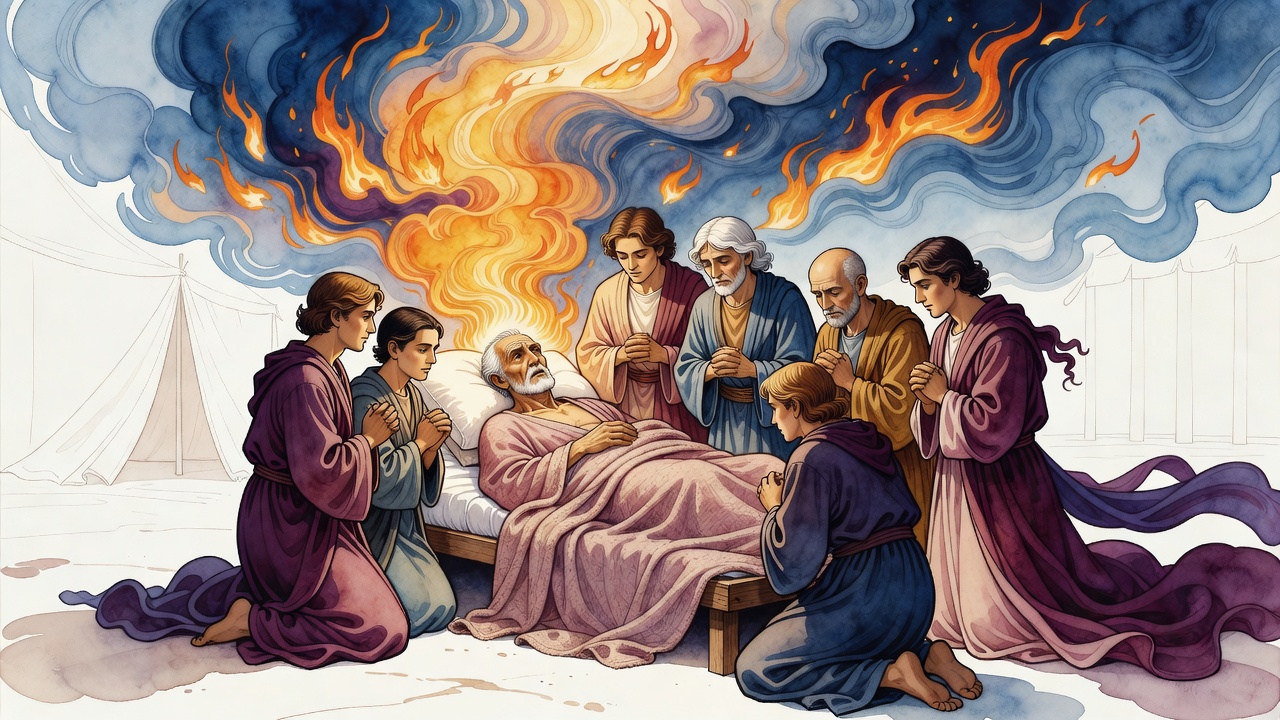
Reuben was thirty years old when he went into Bilhah's tent, and he knew better, and he went in anyway. She pulled away from him and he ran. That was years back now. He had done the sackcloth and the fasting where nobody could watch him, which is the cheap half, because the half that costs is the sentence said out loud in front of people who will remember it and repeat it and look at a man differently at meals for the rest of his life.

He could not find that sentence. He was Jacob's firstborn, and everything he still held rested on nobody making him say it plainly, so every year the words got heavier and further off, until he had built a whole life around the shape of a thing he would not name.

The Gate at Timnah

Then Judah did it first.

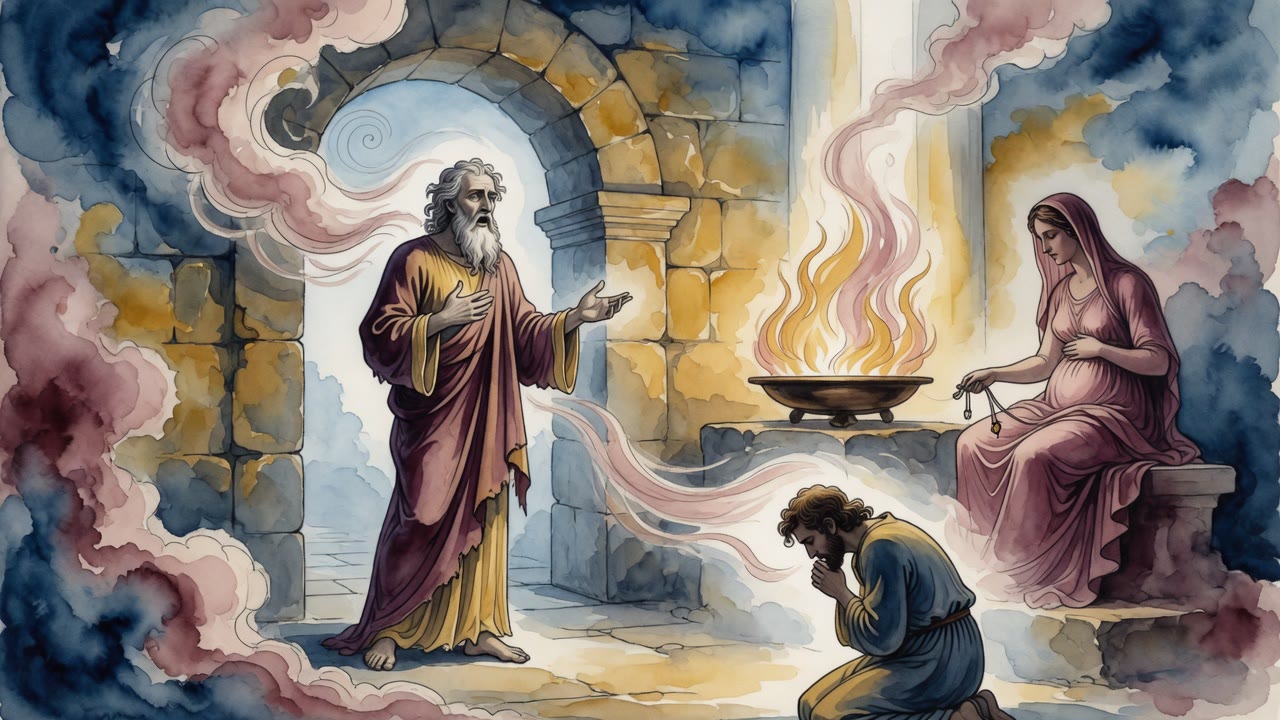
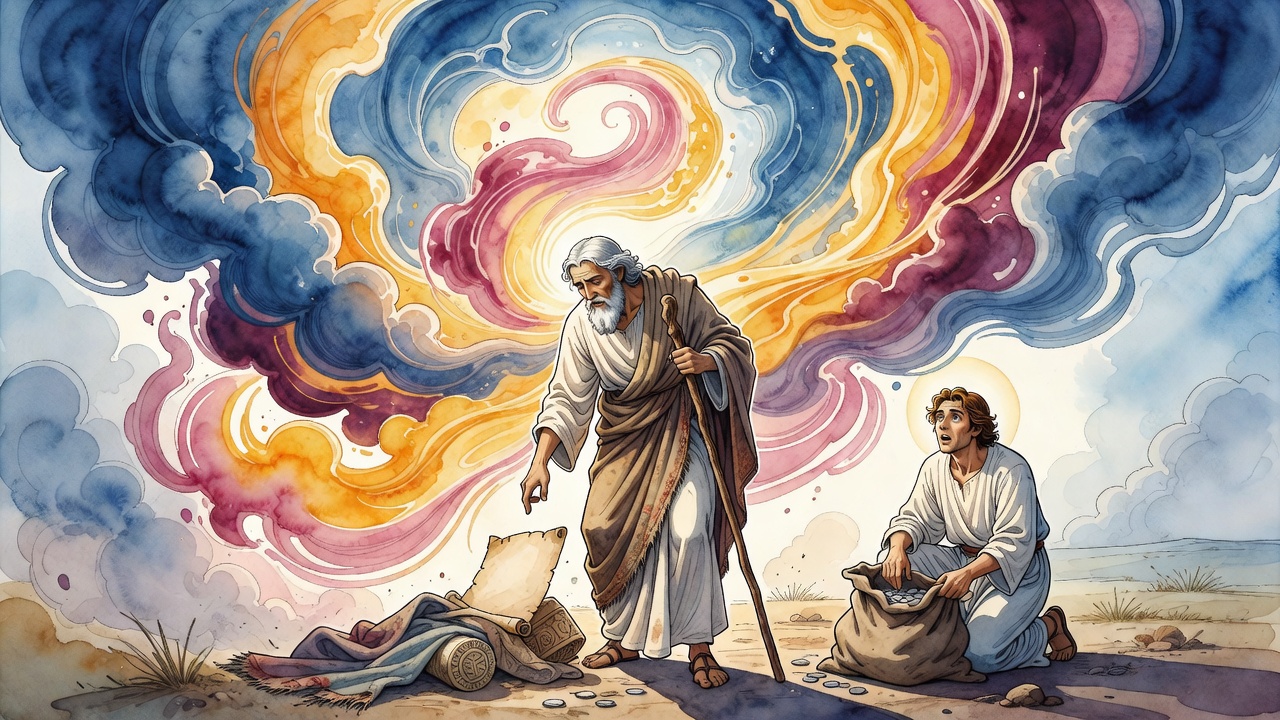
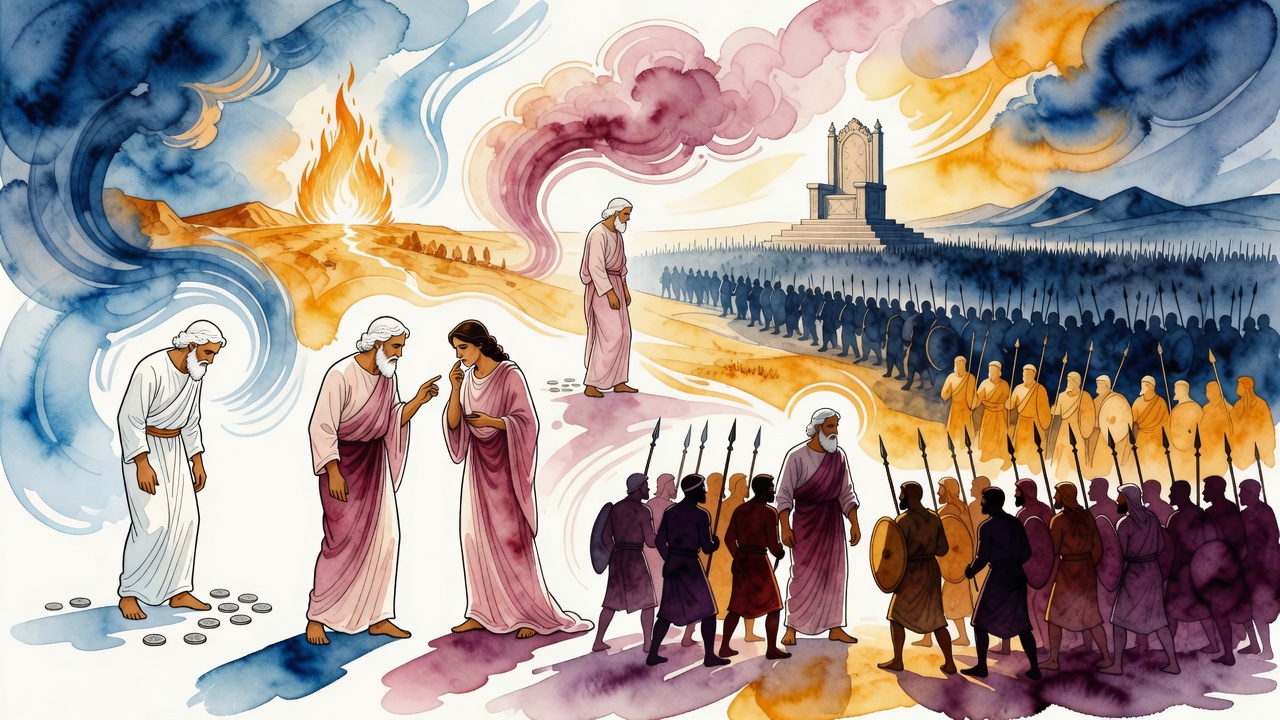
There was a widow in the family, Tamar, and Judah had sentenced her to burn for a pregnancy he could not account for. The wood was already stacked. But while she stood there she sent him three things, a signet and a cord and a staff, and said the man who owned them was the father of the child.

Judah stood in the gate holding his own seal. Nobody there could have made him speak. He could have put the seal inside his coat and let the fire do what he had already ordered it to do, and not one man in Timnah would have asked him about it afterward, because he was the man who gave the orders.

He said, "She is more righteous than I."

Then he had to keep standing there while the crowd worked out what he meant, which took a good deal longer than the sentence had.

Two Kinds of Heroic

The word reached Reuben by evening, the way that kind of word travels in a family.

He had been raised on one meaning of heroic and it was a battlefield meaning: men who fall by the sword, strong ones broken in the war, the sort of strength that only gets counted after it has been spent. None of it had ever been any use to him, since there was no field he could walk onto that would settle what he had done inside a tent.

But Judah had held the seal up in daylight in front of witnesses and had not died of it. That was the piece Reuben had been missing all those years. Not courage as an idea. The physical shape of it: where a man puts his feet, how loud he has to say it, what his face is supposed to do while he waits for a crowd to finish hearing him.

So Reuben said it. He said what he had done and whose tent he had done it in, out loud, with his father's house standing around him, and he did not soften it into the passive voice or spread the blame across anybody else. He had needed someone to go first. Judah had gone first, and the road through the gate at Timnah turned out to be walkable.

Let Reuben Live

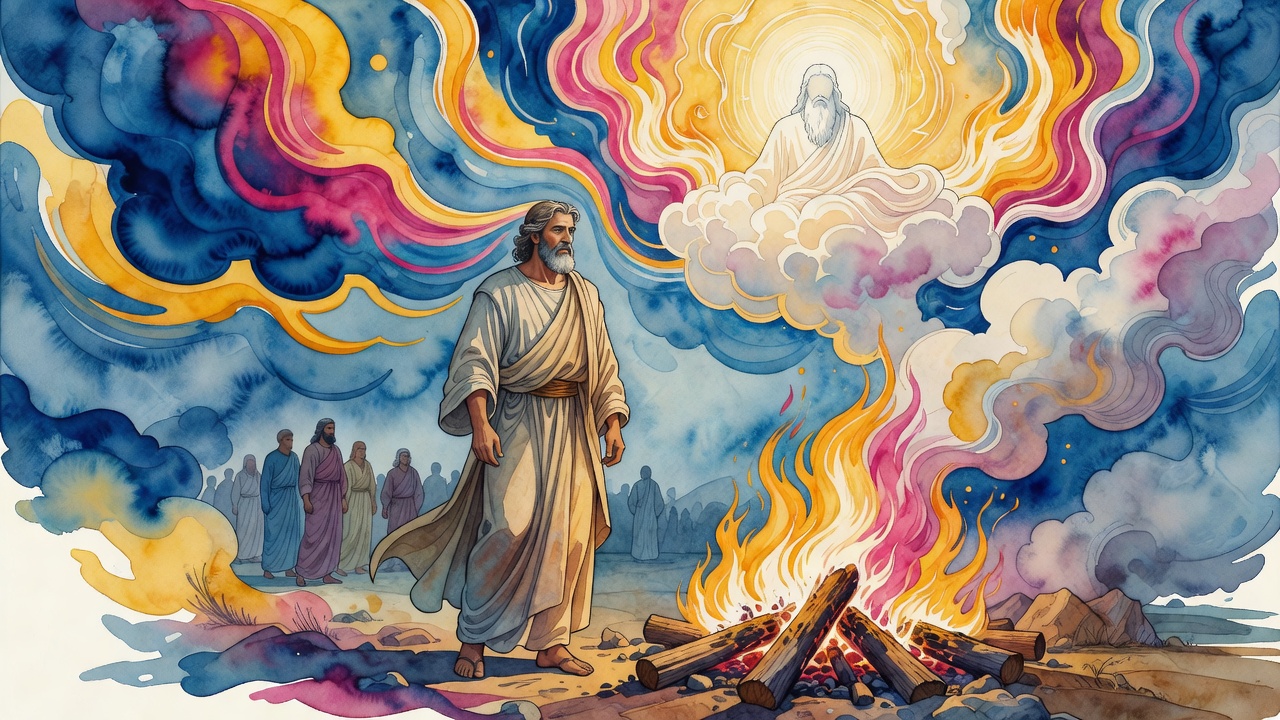
Decades later Moses stood in front of the tribes to bless them before he died, and he came to Reuben's name at the head of the list, and what he said about it was six words long. "Let Reuben live, and not die."

Next to the crowns and the harvests handed out to his brothers it is almost nothing. It was also the only sentence in the whole blessing that answered a specific question one specific man had been carrying since he was thirty, which was whether a firstborn who says the worst thing about himself in public gets to keep breathing afterward.

Judah's line took the crown. Reuben's line took the sentence about living. Both of them came out of the same practice, and both were paid for by a mouth that opened when silence would have been cheaper. Job's friends had a line for it. Wise men have told their sin and did not hide it from their fathers, and to those men alone the land was given.

Be'erah in the Chains

Centuries after that, Tiglath-Pileser of Assyria came through the country east of the Jordan and took the Reubenites, and the man at the head of the line was Be'erah, the leader of the tribe. They went out with rope on their wrists and the land behind them changing hands while it was still in sight.

An empire can move a body. It cannot take back a sentence spoken over a tribe by a prophet on the far side of the Jordan, and the sentence over that tribe was that it would live and not die. Be'erah walked east with his people. Behind him the fields his family had held for six hundred years were being counted by Assyrian clerks, and the only thing he was carrying out of the country had come down to him from a firstborn who once stood up in his father's camp and said the thing out loud.


← All myths
From the tradition

Sources

2 sources

The texts behind this telling. Some cards carry a translation of the source; others are our own retelling of it, and each card says which. Every card links out to the original.

Sifrei Devarim 315:6Sifrei Devarim

Retold in our words. Read the original at the link below.Sifrei by Rabbi Shraga Silverstein · CC-BY

Sometimes the most famous commandment hides a quieter, stranger layer beneath it. Now, The first reading, this seems And one interpretation offered by the Sifrei is exactly that: "There will be none among you who serve idolatry." It reinforces the core tenet of monotheism. The text even brings in support from (Isaiah 27:9), stating, "With this shall Jacob's sin be atoned for … and asherah trees and sun idols shall arise no more." A clear call for purification and devotion to God alone.

The text then takes a sharp turn, offering an alternative reading that is downright utopian. Instead of focusing solely on religious purity in the sense of idol worship, it pivots to economic and spiritual purity. "There shall be none among you engaging in any kind of commerce whatsoever, (but all shall be free for Torah study)." Can you imagine a world without the pressures of the marketplace? A world where everyone is free to dedicate themselves to learning and spiritual growth?

This vision paints a picture of abundance so complete that the need for commerce simply vanishes. To support this, the text quotes (Psalms 72:16): "There will be an abundance (pisath) of grain in the land." The Sifrei elaborates, saying that the wheat will bring forth gluskaoth – delicacies! – and that the fullness of the palm (pas, as in pisath) of a hand will be enough. It goes on: "Its fruit will rustle like (the trees of) Levanon." The wheat stalks will rub against each other, shedding their meal on the ground, and you’ll simply gather a palmful, sufficient for your livelihood.

Imagine that: food so plentiful, so readily available, that you only need to gather what fits in your hand. No toil, no struggle, just an effortless provision directly from the land.

This isn’t just about physical sustenance, though. It’s about a spiritual abundance that arises when we remove the distractions and anxieties of earning a living. The implication is that when basic needs are effortlessly met, we're freed to pursue higher callings, to delve deeper into Torah, and to connect more profoundly with God.

The Sifrei Devarim isn't just giving us a legal interpretation here. It's offering a glimpse into a possible future, a Messianic vision where the material and spiritual realms are harmonized. It challenges us to consider what it truly means to prioritize our relationship with God and how that prioritization might reshape every aspect of our lives, even our economic systems.

So, what does this vision mean for us today? Are we called to abandon commerce entirely? Probably not literally. But perhaps we’re challenged to re-evaluate our relationship with work and consumption. Maybe the "strange god" isn't just an idol of wood or stone, but the relentless pursuit of wealth and material possessions that distracts us from what truly matters. Maybe, just maybe, a little bit of that utopian vision is within our reach, if we dare to prioritize the sacred over the secular.

Full source
Sifrei Devarim 348:1Sifrei Devarim

Retold in our words. Read the original at the link below.Sifrei by Rabbi Shraga Silverstein · CC-BY

The book of Devarim, Deuteronomy, gives us a glimpse into this fascinating idea. It speaks of men being "heroic" – but not just in the way we might expect. It's not simply about physical prowess. It’s about something deeper.

The Sifrei Devarim, a collection of early rabbinic legal commentaries on Deuteronomy, explores this concept. It says, "And his men will be counted: 'heroic' in strength; 'heroic' in Torah." So, what does it mean to be "heroic" in both strength and Torah?

Well, “heroic in strength," as (Isaiah 3:25) says, refers to those warriors who unfortunately fall in battle. "Your men will fall by the sword, and your strong ones in the war." But the commentary takes it a step further. “Heroic in Torah," it says, echoes (Psalms 103:20): "heroic in strength, doing His word (Torah)." This suggests that true heroism lies in embodying the teachings, living a life dedicated to God's word. It's about the inner strength to follow the path of righteousness.

The passage continues, citing I (Chronicles 5:6): "Be'erah was his son, who was exiled by Tiglath-Pilneser, king of Asher. He was the leader of the Reuvenites. Thus, Reuven shall live and he shall not die." This seems to suggest that even in exile, in the face of immense hardship, the legacy and spirit of the tribe of Reuven – their essential character – would endure.

But here's where it gets even more interesting. The text connects this idea of heroism to confession, to acknowledging our mistakes.

(Deuteronomy 33:7) states, "And this ('heroism' of Reuven [in confessing his sin]) was due to Judah, who confessed (his sin [viz. Bereshith 38:26])." The bravery of Reuven in admitting his wrongdoing is linked to Judah's own confession. It's a powerful connection.

It's as if the act of confessing, of taking responsibility for our actions, is itself a heroic act. This idea is further amplified by a quote from (Job 15:18-19): "Wise men have told (their sin); they did not conceal it from their fathers. To them alone the land was given; no stranger passed among them." Those who confess their sins, the verse implies, are the true inheritors of the land. They are the ones who create a space of authenticity and truth.

So, what does this all mean for us today? Maybe it's a reminder that heroism isn't just about grand gestures or physical feats. It's about the daily choices we make. It’s about having the strength to live according to our values, to admit when we’re wrong, and to strive to be better. It's about recognizing that true strength comes not from avoiding mistakes, but from learning and growing from them.

Perhaps the greatest act of heroism is simply being honest with ourselves and with those around us. And maybe, just maybe, that's the kind of heroism that truly allows us to live and not die, to leave a lasting legacy of integrity and truth.

Full source