Ishmael Brought Idols When Abraham Spared the Rod
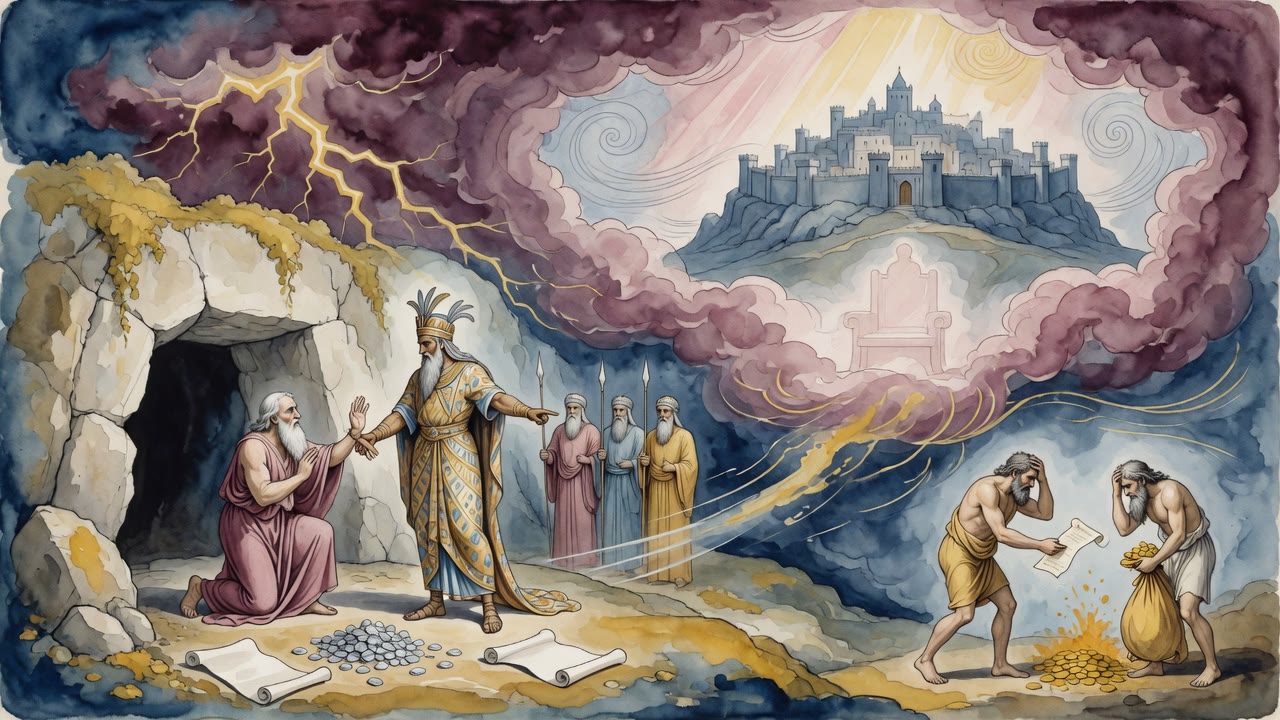
Ishmael was fifteen when he brought the idols home to play with. Abraham was rich in cattle and silver, and sent him out with a loaf and a waterskin.
Table of Contents
 Click for full size
Fifteen Years Old and Playing With Idols
Ishmael was fifteen when he started bringing the figures home.
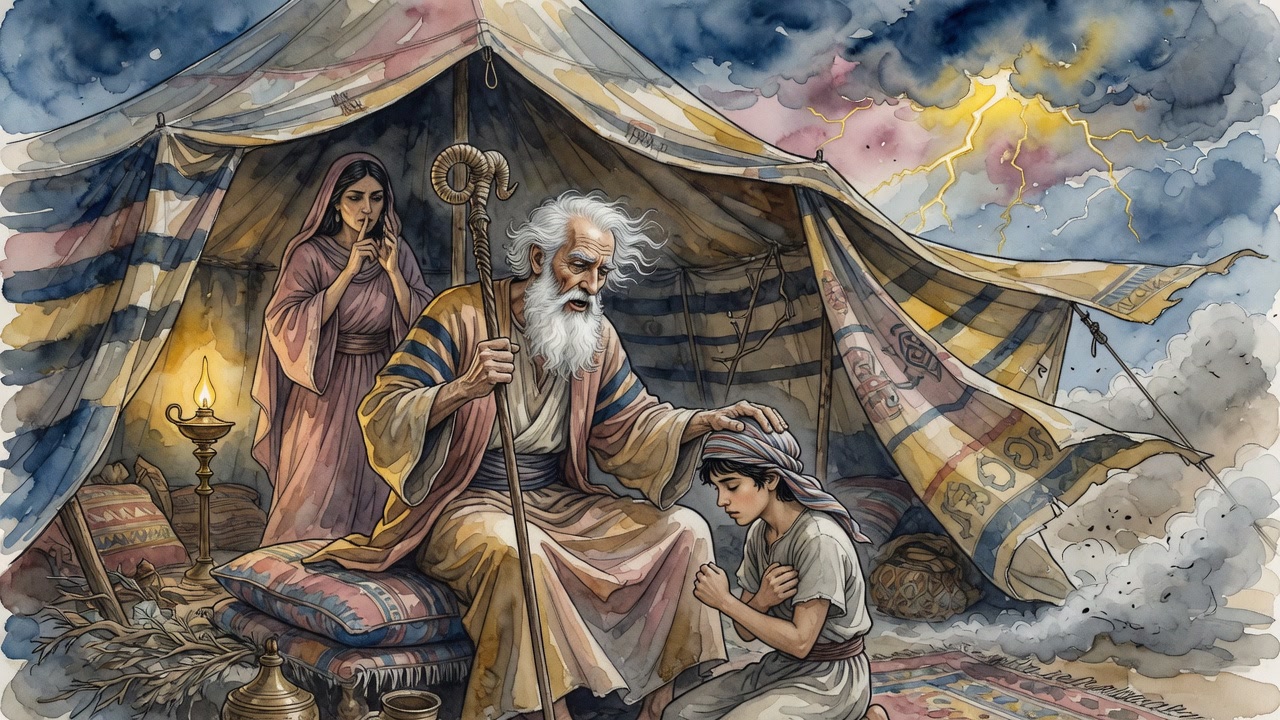
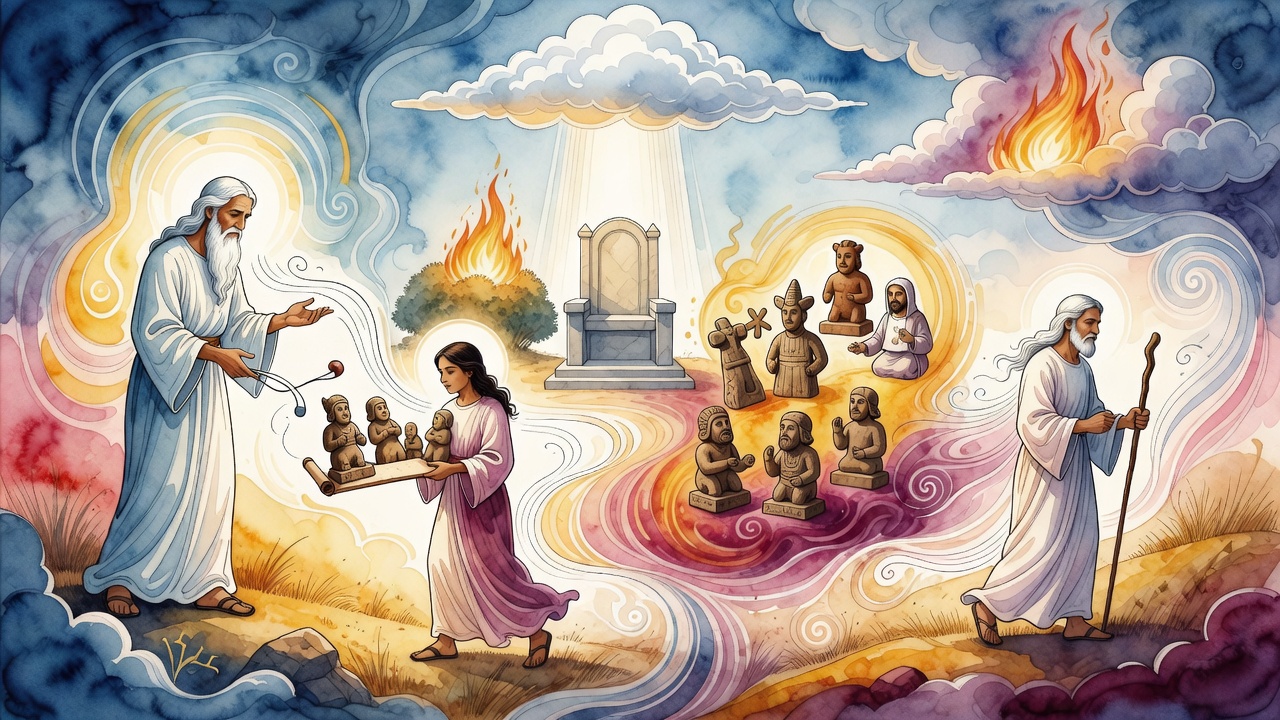
He had seen the neighbors do it and he liked the look of the thing, so he set them up somewhere in the house and played with them, and then he stopped playing with them and started bowing. Abraham saw all of it. He was fond of the boy and the boy was fond of him, and he never once took a rod to him or said a word about the figures, and the game went where a game like that goes.
Sarah was the one who walked in on it. Making sport, is what the record calls it, the same word Israel's own descendants would earn at the foot of a mountain, sitting down to eat and drink and getting up to make sport around a calf.
She went straight to her husband. "Throw out this slave woman and her son," she said. She was not thinking about Hagar. She was thinking about her own son, and about what a small boy copies.
It cut Abraham badly, and he did not obey her until God told him to. Listen to her voice, God said, in everything she tells you, which is how the household learned that in matters of prophecy the husband stood below the wife.
He Went Out With a Loaf and a Waterskin
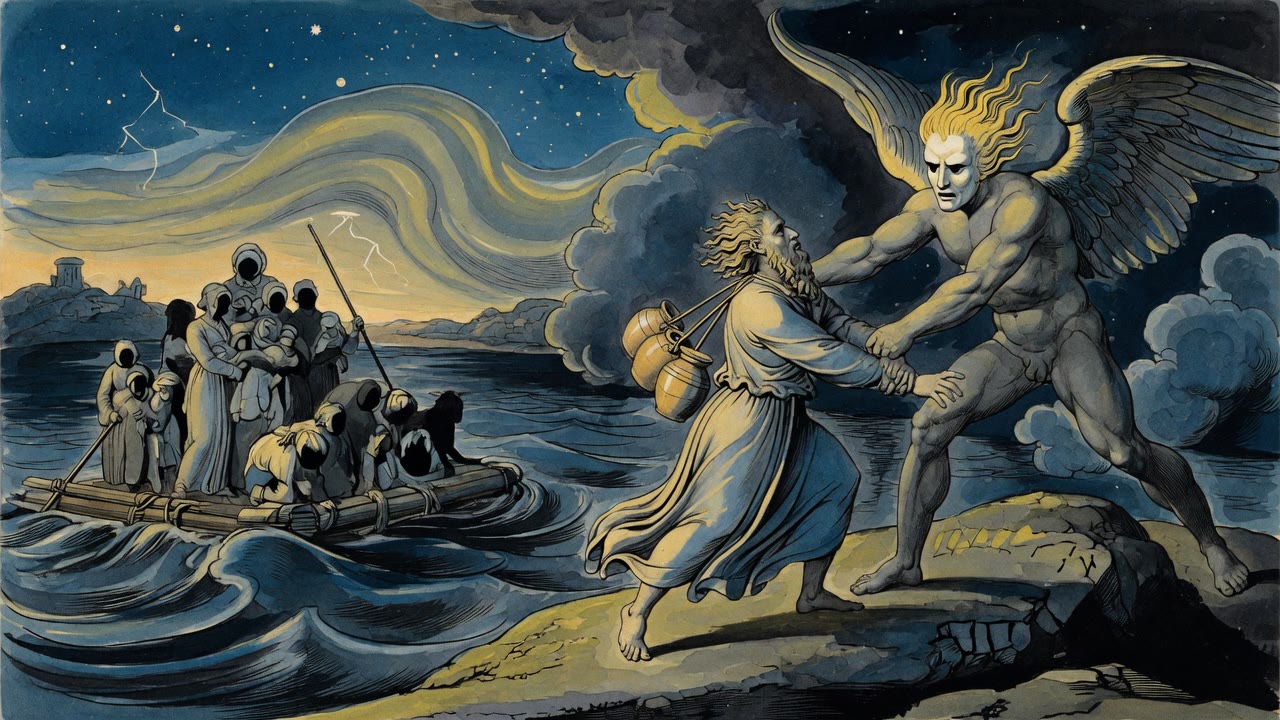
Abraham got up early. He gave Hagar bread and a skin of water and sent the two of them into the desert of Beersheba.
The inventory is the whole story. This was a man very rich in cattle, in silver and in gold. He could have sent his own wife and his own son off with a herd, a driver, a purse, a tent. He sent them off with lunch. That is not a man dividing an inheritance. That is a man who cannot stand the sight of somebody anymore.
Ishmael grew up out there. When he was grown he took to sitting at the places where roads cross, waiting for travelers, and he robbed them and killed them, a wild ass of a man with his hand against every man and every man's hand against him.
It went the same way in the next generation. Isaac loved Esau and would not correct him either, and Esau ran five transgressions through one afternoon: a betrothed girl, a killing, a denial that the dead rise, a denial of the root of the whole thing, and a birthright sold cheap and then despised. Afterward he sat down to wait for his father's funeral so he could kill Jacob at the graveside. When Jacob ran for it, Esau went to Ishmael's house to learn more.
The Presence does not stay in a house with an idol's mark on it. As long as Lot lived with Abraham the word did not come, and it came the day Lot left. As long as Jacob lived under Laban's roof God said nothing to him at all, though He had promised to be with him, and the moment Jacob was ready to leave the voice came back: go home to the land of your fathers, and I will be with you.
David Walked Out of Jerusalem Barefoot
Absalom is what happens over a longer stretch.
David never once, in the whole of that boy's life, asked him why have you done this. Not once. So Absalom took ten of his father's concubines onto a roof in front of the city, and tried to kill his father, and put him on the road out of his own capital walking barefoot and crying with his head covered, and got thousands of Israelites killed in a wood to settle it.
Trouble in a man's own house is worse than the war of Gog and Magog. Of that war the psalm only asks why the nations are in an uproar. About a son, David wrote, LORD, how many are they that trouble me.
He did it again with Adonijah. His father had never grieved him a day in his life by asking why have you done so.
Bathsheba Turned Her Son Over the Post
Bathsheba did not make that mistake.
She bent Solomon over the whipping post and beat him with a rod, and she talked the whole time she was doing it.
"What, my son? And what, son of my womb? And what, son of my vows?"
Everybody knows your father fears God, she was saying, so if you go bad they will not say he failed. They will say you are my son and look what she raised. When the other women of your father's house fell pregnant they never went near the king again. I went to him, so what I carried would come out strong and well made. The rest of them made vows for a son fit to be king. I vowed for a son who would be wise in Torah and worthy of prophecy.
Then, still holding the rod: wine is not for kings. It is not for kings to drink wine or for princes to ask where the strong drink is. A man who has been handed every secret in the world does not sit down and get drunk.
He became wiser than any man alive.
The Scroll Went Up and Made a Complaint
And when Solomon was old his wives turned his heart, exactly the way she had told him it would happen.
So the Torah went up and lay down before the Holy One and said, Master of the Universe, Solomon has cancelled me. He has made me a forgery. You wrote in me that a king shall not multiply wives to himself, and he has a thousand. You wrote that he shall not multiply silver and gold, and he has made silver as common as stones in Jerusalem. You wrote that he shall not multiply horses, and he has forty thousand stalls of them.
The answer came back: Solomon and a thousand like him will pass off the face of the earth, and not one letter of you will be cancelled.
There is a rule about the firstborn: if a man's father did not redeem him, he has to go and redeem himself. Teaching works the same way. A son whose father never taught him has to sit down and teach himself. Ishmael was fifteen and had nobody. Solomon had a mother with a rod in her hand, and it bought him a lifetime, and not one hour more than that.
← All myths