Parshat Kedoshim4 min read

Holiness Spoken to the Whole Camp at Once

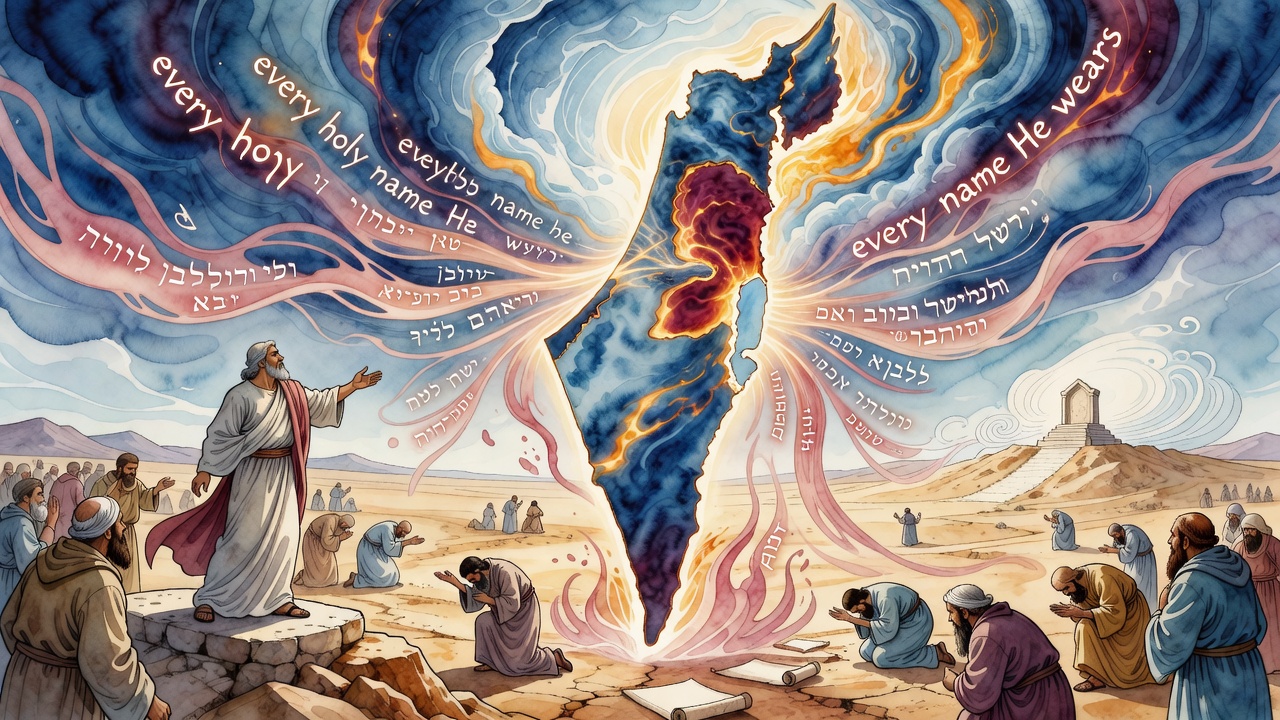
Shoulders touched, babies fussed, elders leaned on staffs. A woman there understood she would be tested at the loom and the oven, not only at the altar.

Curated by Arthur · Told by Maggid ·
Table of Contents
  1. Why This Parashah Needed Every Ear
  2. Heretics Count Powers in a Plural Word
  3. Holiness That Can Be Copied in Works
  4. What the Crowd Carried Home
Holiness Spoken to the Whole Camp at Once Click for full size

Why This Parashah Needed Every Ear

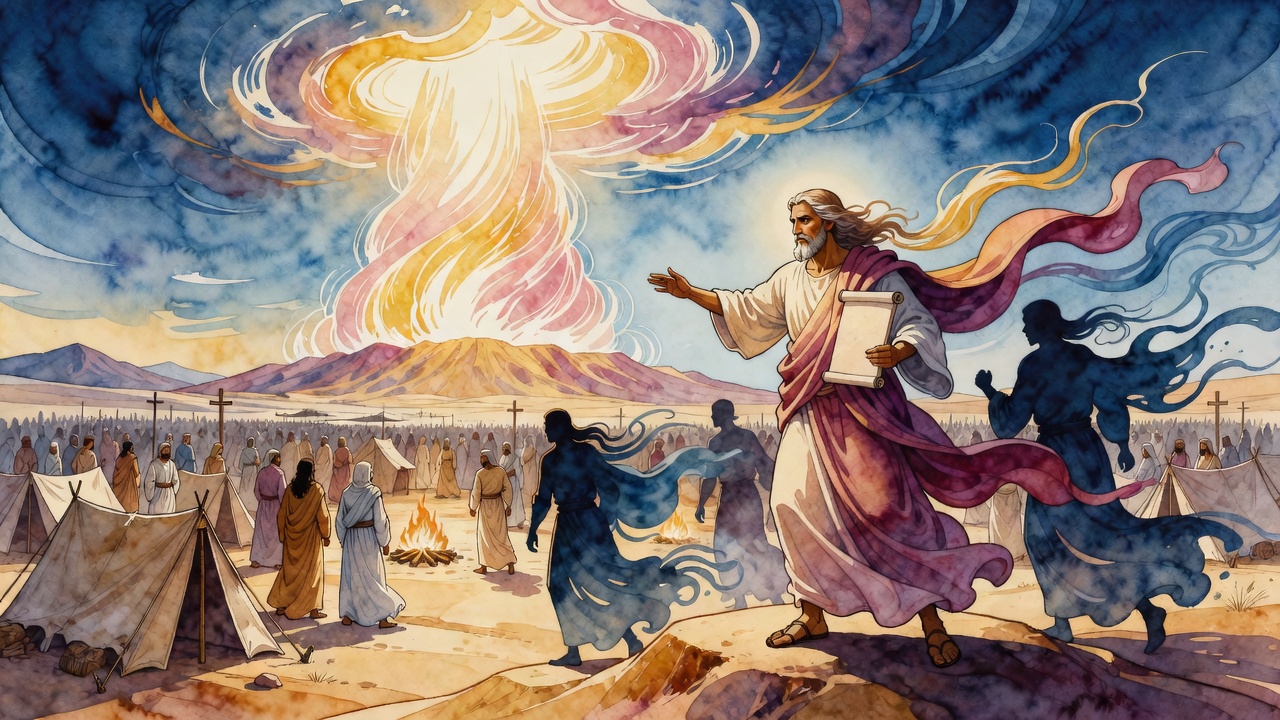
Moses did not receive a private memo. Speak unto the whole congregation of the children of Israel, and say unto them, You shall be holy (Leviticus 19:2). Other portions run in ordinary address. This one demands the camp assembled, shoulders touching, babies fussing, elders leaning on staffs.

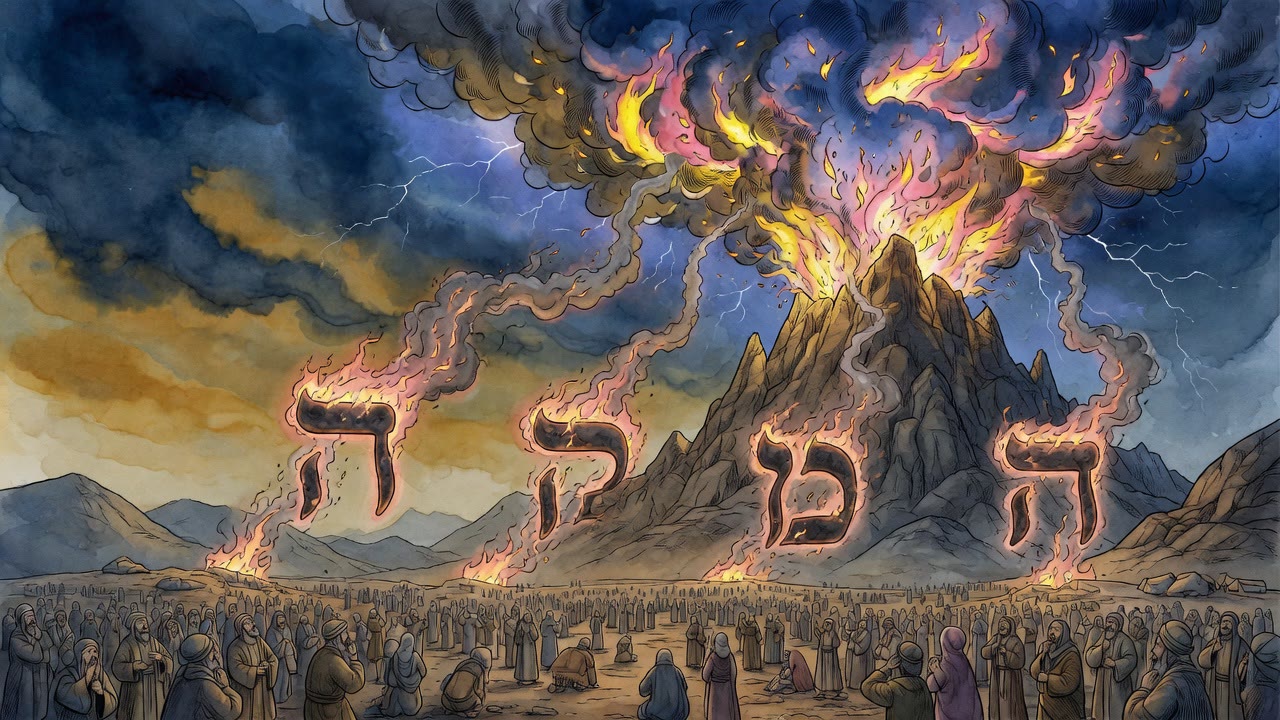
Why the crowd. Because this speech carries the weight of the Ten Commandments folded into daily life. I am the Lord your God appears here as it appeared at Sinai. Do not turn to idols answers You shall have no other gods. False oaths, Sabbaths, parents, murder, theft, adultery, coveting, each finds its echo in the holiness chapter.

A man at the edge of the assembly realized he could not claim the Decalogue as mountain thunder and ignore the neighbor-laws as optional polish. Holiness was being given to everyone without being diluted. Everyone heard. Everyone was implicated.

Dust rose from so many feet. The cloud over the Mishkan (the portable sanctuary Israel carried through the wilderness) did not move. Heaven wanted a people, not a committee of specialists, to inherit the demand Be holy, for I am holy.

Heretics Count Powers in a Plural Word

Later, heretics cornered Rabbi Simlai with a verse that seemed to split heaven. Joshua says He is a holy God, and the word for God sits in a form that delighted dualizers (Joshua 24:19). Do you not say He is one power, they mocked. See, at least two.

Simlai answered without flattery. You idiots. Had it said they are holy, you would have a claim. It is written He, singular. The grammar that looked like a crack was a door that closed on their faces.

Rabbi Berekhyah in the name of Rabbi Abba pressed further. Holy in the plural categories means He is holy in every kind of holiness. Speech in holiness. Way in holiness. Appearance in holiness. Praise in holiness. The uncovering of His arm in holiness. Multiplicity of perfections, not multiplicity of gods.

The heretics wanted arithmetic. The sages gave saturation. One God so thoroughly holy that language strains and still refuses to become polytheism.

Holiness That Can Be Copied in Works

You shall be holy is not a command to become divine essence. It is a command to walk in patterns that answer the Holy One's patterns. Parents feared. Sabbaths kept. Idols refused. The poor left edges of fields. The assembly heard ethics as liturgy.

A woman listening understood that holiness would be tested at the loom and the oven, not only at the altar. A young man understood that idolatry begins as a glance and ends as a second master. The whole congregation was the right audience because sin is social and so is sanctity.

When the heretics later tried to pry the God of Israel into two powers, they attacked the same unity the assembly had stood under. Kedoshim without oneness collapses into spiritual fashion. Oneness without Kedoshim collapses into a creed that never touches the neighbor.

Simlai's bluntness protected the camp's original hearing. The God who spoke to everyone at once is not a committee of holy beings trading shifts.

What the Crowd Carried Home

They dispersed with a sentence short enough to remember and large enough to organize a people. You shall be holy. Behind it, the Ten Words hummed. Ahead of it, centuries of argument with dualizers waited. The midrash keeps both scenes in one file because they guard the same claim.

Holiness is public. Oneness is nonnegotiable. Grammar matters when souls are at stake. An assembly that heard together can correct a later age that tries to split the Speaker.

Night after the proclamation, fires burned lower. Someone repeated the words to a child who had only understood the press of bodies and the fear in adult faces. The child did not yet know about heretics. The child knew the camp had been told to be different together.

That togetherness is the first defense against two-power talk. A people addressed as one congregation under one God already has the shape of the answer Simlai would one day snap at fools.


← All myths

From the tradition

Sources

2 sources

The texts behind this telling. Some cards carry a translation of the source; others are our own retelling of it, and each card says which. Every card links out to the original.

Midrash Tanchuma, Kedoshim 3Midrash Tanchuma

Retold in our words. Read the original at the link below.Townsend 1989 translation of Midrash Tanhuma, S. Buber Recension · CC-BY

(Lev. 19:2:) “Speak unto the whole congregation of the Children of Israel, and say unto them, ‘You shall be holy.’” What reason did He have to speak this parashah in an assembly? Why did He not say, “Speak unto the Children of Israel,” as in the rest of the parashiot, rather than “[Speak] unto the whole congregation of the Children of Israel?” Because all of the [ten] commandments are included within it. How? In the commandments it is written (in Exod. 20:2 = Deut. 5:6), “I [am] the Lord your God”; and here (in Lev. 19:2), “I [am] the Lord your God.” In the commandments it is written (in Exod. 20:3 = Deut. 5:7), “You shall have no [other gods beside Me]”; and here (in Lev. 19:4), “Do not turn unto idols.” In the commandments it is written (in Exod. 20:7 = Deut. 5:11), “You shall not take [the name of the Lord your God in vain]”; and here (in Lev. 19:12), “You shall not swear falsely by My name.” In the commandments it is written (Deut. 5:12), “Guard the Sabbath day”; and here it is written (in Lev. 19:3), “You shall keep My Sabbaths.” In the commandments it is written (in Exod. 20:12 = Deut. 5:16), “Honor your father and your mother”; and here it is written (in Lev. 19:3, cont.), “you each shall fear his mother and his father.” In the commandments it is written (in Exod. 20:13 = Deut. 5:17), “You shall not murder”; and here it is written (in Lev. 19:16), “you shall not stand over the blood of your neighbor.” in the commandments it is written (in Exod. 20:13 = Deut. 5:17), “you shall not commit adultery”; and here it is written (in Lev. 19:2), “You shall be holy.“ In the commandments it is written (in Exod. 20:13 = Deut. 5:17), “you shall not stea”l; and here it is written (in Lev. 19:11), “You shall not steal.” In the commandments it is written (in Exod. 20:13 = Deut. 5:17), “you shall not bear [false witness against your neighbor]”; and here it is written (in Lev. 19:16), “You shall not go around as a slanderer among your people.” In the commandments it is written (in Exod. 20:14 = Deut. 5:18), “You shall not covet”; and here it is written (in Lev. 19:13), “You shall not oppress your neighbor, and you shall not rob him.” Here all of the [ten] commandments are included within [it]. It is therefore stated (in Lev. 19:2), “Speak unto the whole congregation [of the Children of Israel].”

Full source
Midrash Tanchuma, Kedoshim 4Midrash Tanchuma

Retold in our words. Read the original at the link below.Townsend 1989 translation of Midrash Tanhuma, S. Buber Recension · CC-BY

(Lev. 19:2:) “You shall be holy.” See what is written (in Josh. 24:19), “for He is a holy God (in the plural).” What is the meaning of this verse? It provides an opening for the heretics (minim), in that it seems to them like two powers. The heretics asked R. Simlay, “What is the meaning of ‘for He is a holy God?’ Do you not say that He is one power? See from this verse, that there are [at least] two powers.” He said to them, “You idiots! Had it said, ‘[for] they are holy,’ you would have spoken [well. But] it is written, ‘[for] He (in the singular).’” And [regarding] that which it says, “holy God (in the plural),” R. Berekhyah said in the name of R. Abba, “What is the meaning of ‘He is a holy [God] (with holy in the plural)?’ That He is holy in all categories of holiness.” How? R. Aha bar Hanina said, “His speech is in holiness, as stated (in Ps. 60:8), ‘God spoke in His holiness (i.e., in the holy place, the Temple).’ His way is in holiness, as stated (in Ps. 77:14), ‘Your way, O God, is in holiness (i.e., in the holy place).’ He is seen in holiness, as stated (in Ps. 63:3), ‘So I have beheld You in holiness, (i.e., in the holy place).’ His praise is in holiness, as stated (in Exod. 15:11), ‘Who is like You, glorious in holiness?’ The uncovering of His arm is in holiness, as stated (in Is. 52:10), ‘The Lord has uncovered His arm of holiness.’” Ergo (in Josh. 24:19) “He is a holy God (with holy in the plural),” because He is holy in all categories of holiness.

Full source