God Cinches Israel Like a Belt and Calls Them by His Own Names
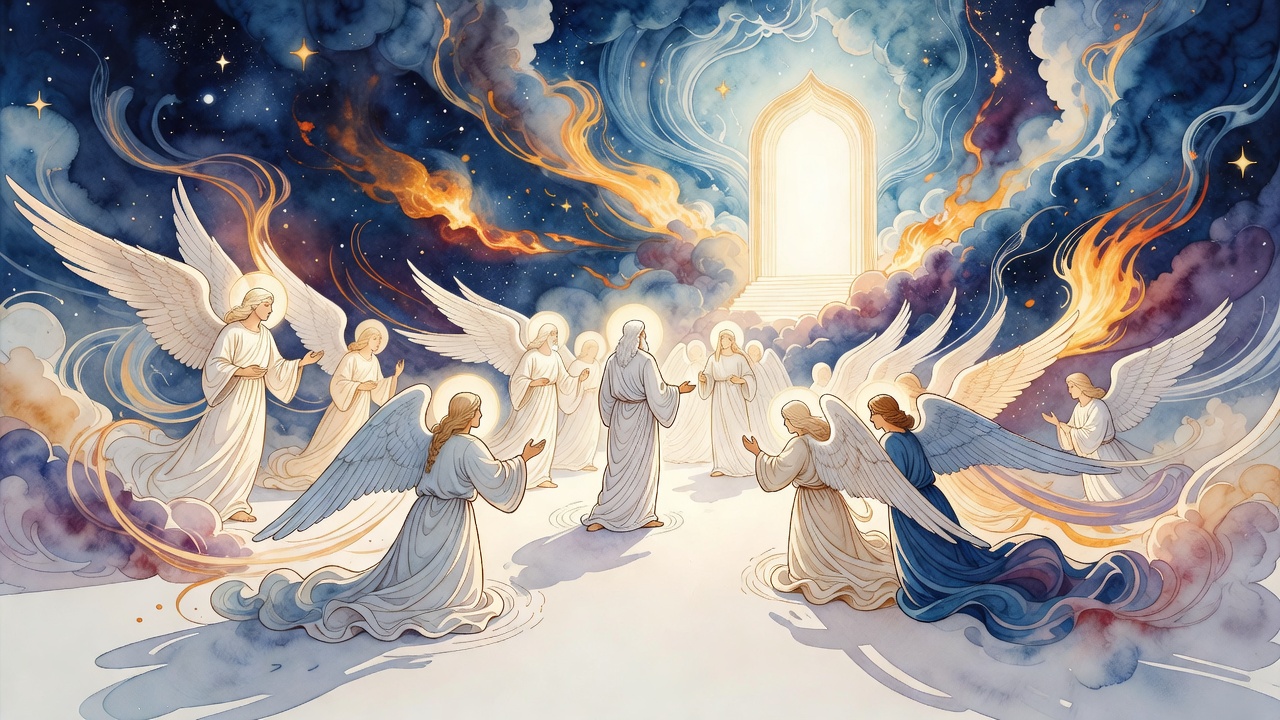
Moses heard the angels praising and brought the words down as a whisper. When Israel says them, the angels' wings droop and their own song stops.
Table of Contents
 Click for full size
A Belt With No Air Between
"You shall be holy, for I am holy." The question is not whether the command is fair. The question is how mortal skin can wear what the seraphim cry three times over the Throne.
The Holy One answers with a body image. He has bound Israel to Himself as a belt is cinched to a man's loins, so tight that no air can pass between them. Holiness is not a costume rented for festivals. It is pressure at the waist, nearness that leaves no gap for a second allegiance.
Names No Mortal King Lends
A king of flesh and blood does not let subjects wear his name. When one man wants to ruin another, he hurls a borrowed imperial title at him like a curse. The name brings no life. It brands the victim with stolen grandeur and leaves him smaller.
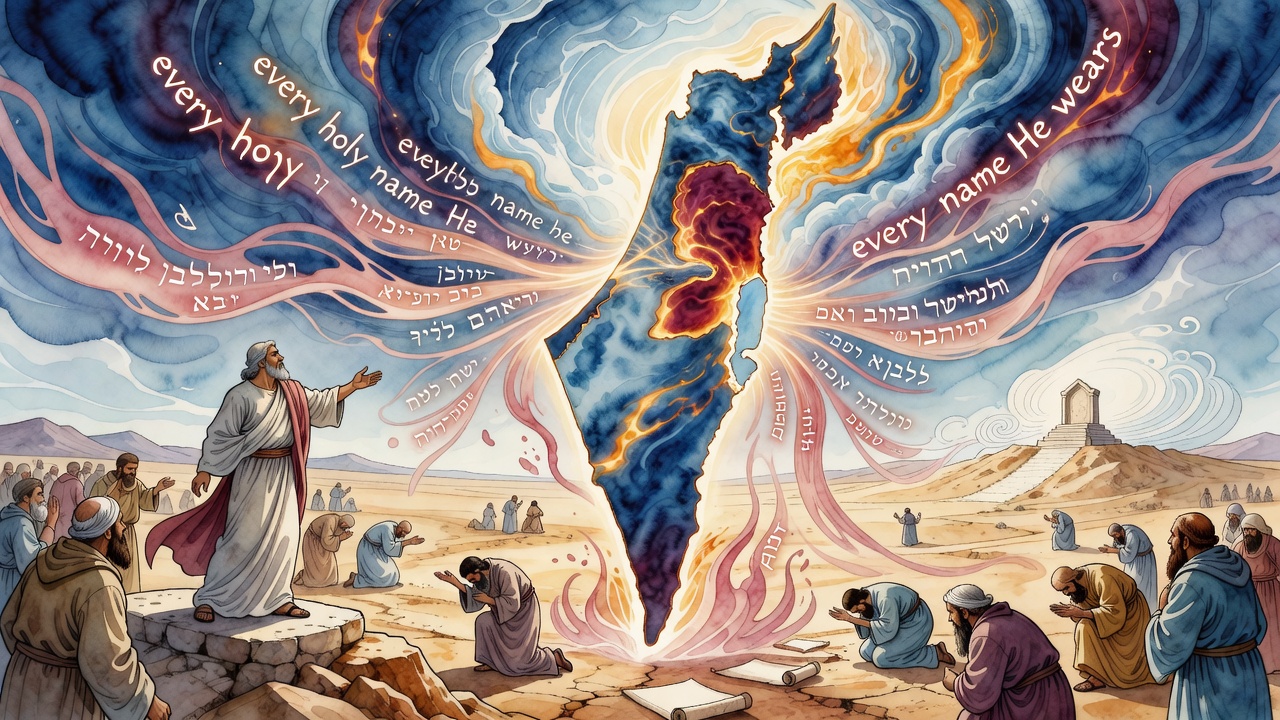
With the Holy One the motion runs the other way. Every name He wears, He drapes upon Israel. He is called God, and He called them gods: "I said, you are gods" (Psalms 82:6). He is called wise, and named them a wise and understanding people. He is called beloved, and set them beloved at His table. He is called chosen, and chose them. He is called pious, and gathered them as His pious ones. The seraphim cry "Holy, holy, holy," and He turns to His people and says, "You shall be holy."
In this world they are called holy. In the world to come, the one who remains in Zion shall be called holy still.
Joy That Leans Forward
Another verse seems to celebrate, and the sages stop the party. Scripture does not say Israel already rejoiced in its Maker as a finished past. It says, "Let Israel rejoice in its Maker," a verb that leans toward a dawn not yet lit. The Holy One looks at a people still unfinished in gladness. Israel did not yet rejoice fully in My world, so how can the boastful seize celebration now?
To the loud and the early dancers the Psalmist speaks Heaven's warning: do not boast. Premature rejoicing is arrogance wearing festival clothes. The truest joy waits for the hour when the Maker Himself is Israel's gladness, and no laughter rings hollow the way the flood generation's harps once did.
Wings That Droop When Israel Speaks
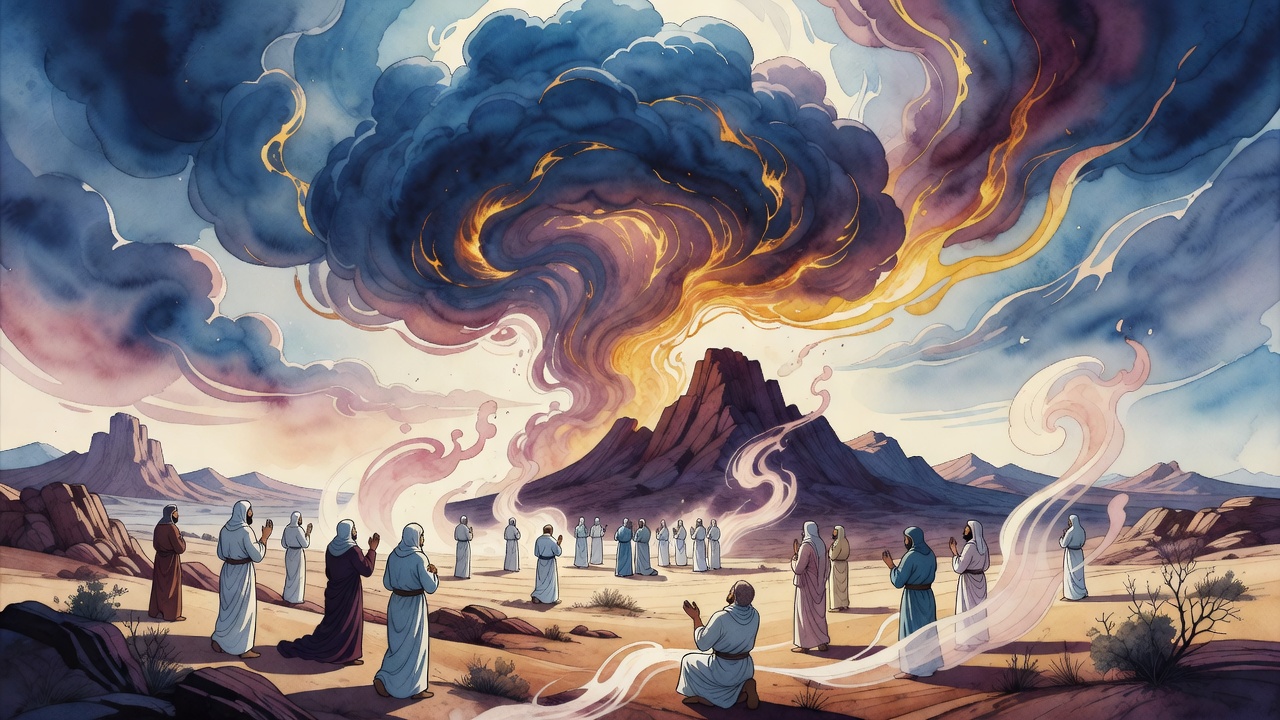
Moses went up and heard the angels praising, "Blessed be the glory of the Lord from His place." He came down and taught Israel to say, in a whisper, "Blessed be the name of His glorious majesty forever and ever."
Rabbi Shmuel bar Nahmani watched the wings. When Israel praised, the wings of the ministering angels drooped. They stopped their own song. Human mouths below took the shift. The morning stars, seed of Jacob, sang, and the children of God shouted, but the order of the music can reverse. Israel is not only named with God's titles. Israel can hush the wings of heaven for a span of praise.
Two Vineyards and a Whispered Name
Rabbi Mani counted two hundred forty-eight words in the Shema, matching the parts of a human body. Keep what is Mine in recitation, the Holy One said, and I will keep what is yours. David asked to be kept as the pupil of an eye. The answer came back as commandment that lives: keep My words and live.
Rabbi Simeon ben Halafta told of two men, one in the Galilee with a vineyard in Judea, one in Judea with a vineyard in the Galilee. They met on the road and agreed to watch each other's land where they already stood. So the exchange of care runs between Heaven and Israel. Names draped down. Praise rising up. A belt cinched. Joy still deferred until the Maker is the feast itself.
Holiness is not a private mood. It is a shared wardrobe and a shared watch over vineyards that do not grow in the same climate.
The mortal king hoards his title because he is small enough to be threatened by imitation. The Holy One multiplies His names across a people because nearness is His method. The belt does not choke. It closes the gap where air used to mean distance. Between the seraphim's thrice-holy cry and a whispered line after the Shema, Israel learns both how high the name sits and how low the mouth must go to carry it without theft.
Names travel. A borrowed imperial title ruins a man because it is theft dressed as honor. A draped divine name lifts a people because it is gift dressed as demand. Holiness is the demand half. "You shall be holy" is not a compliment. It is a work order issued to bodies that now wear titles once reserved for the Throne's own vocabulary.
The angels' wings droop not because Israel is stronger than seraphim, but because the Holy One accepts the lower praise as a shift change. Moses brought the whisper down the mountain the way a man carries fire in a cup, careful not to spill, careful not to claim he lit it. Blessed be the name of His glorious majesty forever and ever. Soft enough not to compete with the public Shema, strong enough to stop wings mid-beat.
Joy waits because the belt is already tight. Nearness without finished gladness is the condition of a people still in history. The boastful want the festival now. Heaven wants the Maker to be the gladness, not the wine. Between the cinched belt and the deferred rejoicing, Israel learns to carry holy names without turning them into early applause.
← All myths