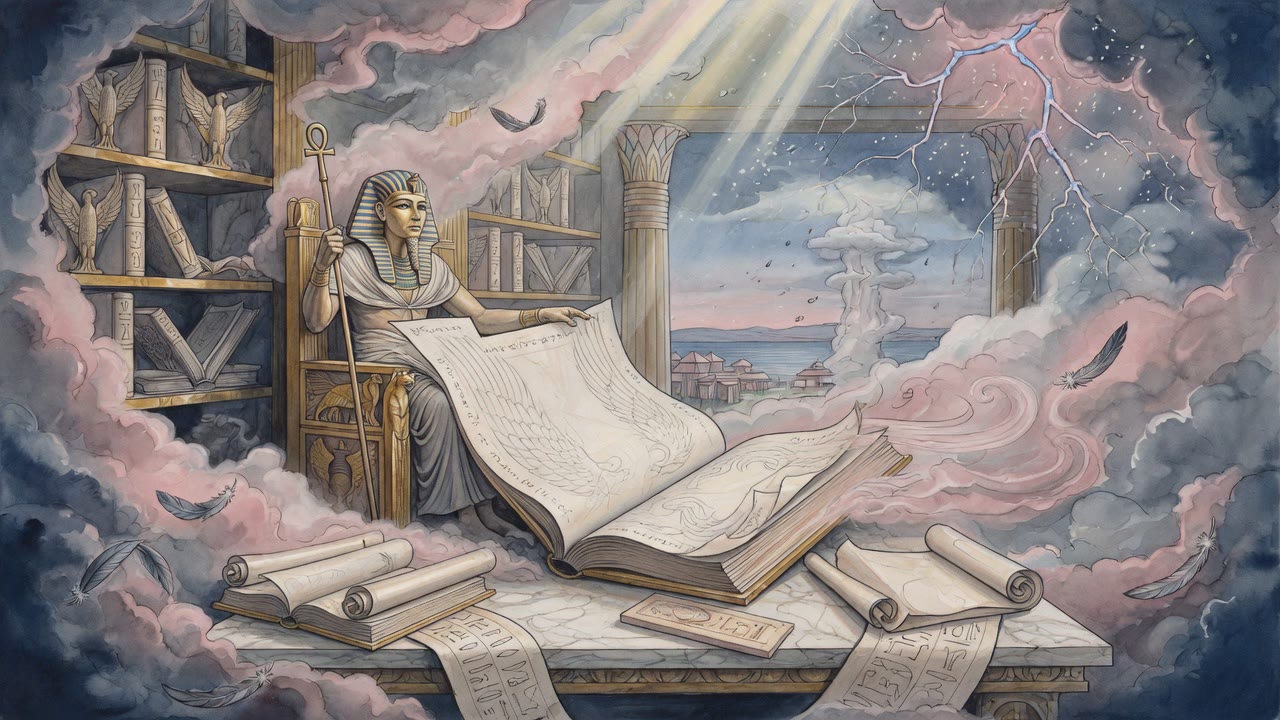
The Book That Named Ninety-Seven Impure Forces
A closed booklet held names no one should speak. Ninety-seven forces of impurity hid in two Torah words, and Gehenna (afterlife of judgment) shook for the.
Table of Contents
 Click for full size
The Booklet They Would Not Open Twice
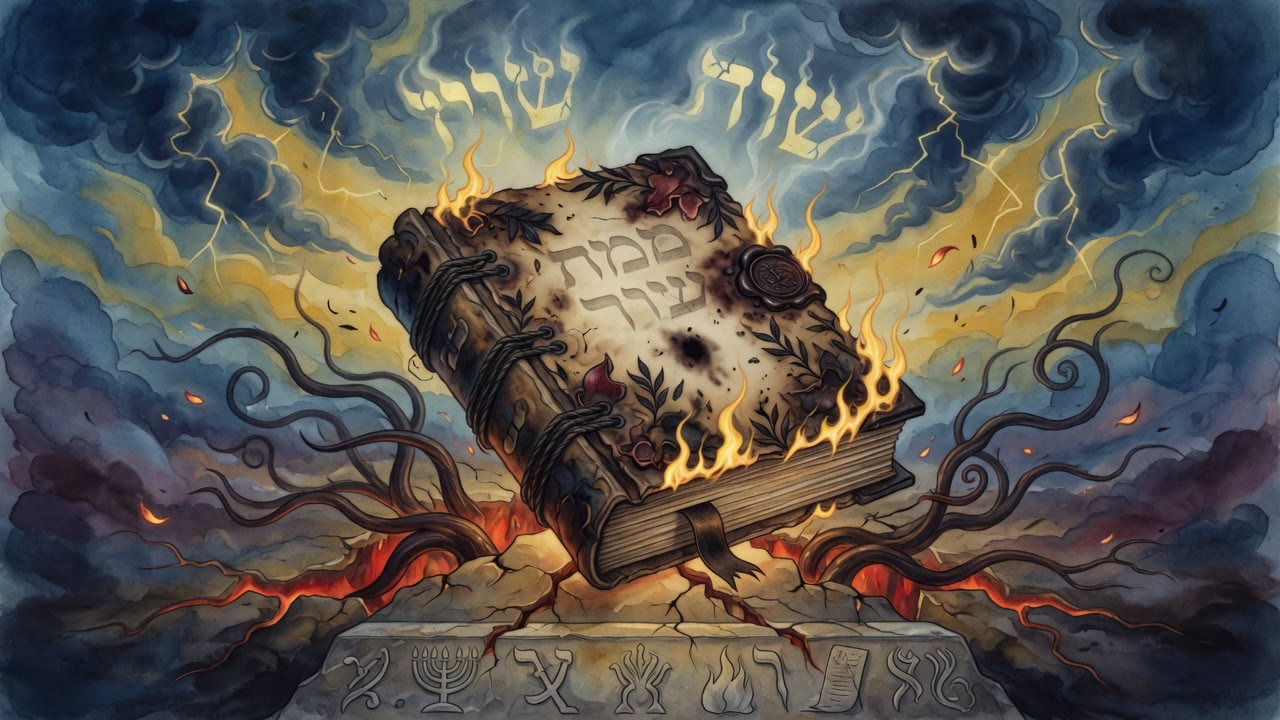
Rav Tavyomi set the thin booklet on the table and kept his palm flat on the cover. Ink had already dried on the first leaf. Someone had written a title that made the room colder: names from the side of impurity. Outside, a dog barked once and went silent. The student who had found the pages in a folded scrap waited for permission to read. The master shook his head. Naming is not the same as teaching. A trail can be marked without becoming a road.
They called that trail Sefer Tziyoni, a name later collectors would store like a warning label. One version pointed toward dangerous catalogues. Another pointed toward a printed Torah commentary by Rabbi Menachem Tziyoni in Cremona. The first book lived as rumor and boundary. The second lived as paper a printer could sell. Both wore the same family name. Only one of them should never be recited aloud. The student flexed his fingers as if the letters might still climb into his hands. Rav Tavyomi watched the motion and slid the booklet an inch farther from the edge.
"If the names were meant for every mouth," he said, "they would already hang in the marketplace like onion strings." The student flushed. He had imagined power, a key ring for nights when fear thickens. What he held was a fence post someone had yanked up and carried home without knowing which field it guarded.
Two Words That Open a Hidden Catalogue
The danger did not begin with invention. It began with Torah phrases already sitting in plain sight. In Parashat Naso, readers of Yalkut Reuveni counted ninety-seven forces of impurity and tied them to two roots built on tzav and tzavah. One phrase names the creeping creature in (Leviticus 11:29). The other names the swelling belly in the ordeal of the suspected wife (Numbers 5:22). A word about an unclean animal and a word from a bitter-water trial became hinges. Swing them carefully and a catalogue appears. Swing them carelessly and the room fills with what the catalogue was meant to fence out.
Rav Tavyomi did not recite the ninety-seven. He taught the hinge. Creeping things move low, close to dust. The ordeal of the wife is about a body under accusation, a belly that may swell, a community that wants certainty. Impurity, in these sources, is never only dirt. It is pressure on a life: the animal that crawls where boots crush, the household that panics when trust breaks, the force that feeds on loosened speech.
He made the student write the two verses from memory, then cover them with his sleeve. "Count to ninety-seven without looking," he said. The young man lost the count at forty and again at seventy. Numbers that large pretend to be knowledge. They are also a warning that the list is longer than a single night of curiosity can hold without damage.
The Enticer Who Does Not Need a Demon
Meanwhile, on the plain of law, another pressure worked without special books. Sifrei on Deuteronomy watches the enticer who turns a person from the commandments. The verse does not only mean a grand idol on a hill. It means the whisper that makes a negative command feel flexible: steal once, lie once, covet once. It also means the softer failure, the neglected positive command, the mitzvah left undone until the day thins out. Temptation does not always arrive with horns. It arrives as a slight lean away from the path you already know.
The student who wanted the names of impurity wanted power over the lean. Rav Tavyomi answered with a harder discipline. Guard speech. Guard the low creeping places of habit. Guard the household when jealousy thickens the air. The ninety-seven are not a toolbox for the curious. They are a map of how a person is pulled off the road one small step at a time.
He told of a man who never opened a forbidden booklet and still ruined a week: a postponed charity, a sharp joke about a neighbor, a glance that turned into a plan. "You want a catalogue of forces," the master said. "Start with the ones already renting space behind your teeth."
Gehenna Asks for Fuel
Far below any study hall, fire has a voice. In the old reading of the Psalms, God asks Gehenna why it seethes. The place of purification does not answer with abstract theology. It shakes with anger at the vile things the wicked say about Israel. Slander is fuel. Malice spoken in the marketplace feeds a realm that never cools. God asks what would calm it. Gehenna (the realm of judgment after death) answers with a demand that freezes the blood: fill me with those who transgress against Israel.
Here the booklet and the fire meet. Names of impurity are not toys because words already stoke the lower world. A catalogue of destructive forces is most dangerous when a mouth is already practicing destruction. The sealed page and the open insult are cousins. One hides. One publishes. Both traffic in powers that prefer the human tongue as their doorway.
The student pictured Gehenna's answer as a furnace door swinging wide. He put his hands under the table so no one would see them shake. Rav Tavyomi nodded once, as if the tremble itself were part of the lesson.
What the Master Left on the Table
By evening the student had stopped asking to copy the list. Rav Tavyomi lifted his hand. The cover stayed shut. He sent the finder to wash and to recite ordinary words of Torah until the taste of secret knowledge left the mouth. Cremona would one day print a different Sefer Tziyoni, a commentary for readers who wanted light, not a key ring for the dark. The notice of the impurity names would survive only as a trail, a record that such a book was once attributed, found, and fenced.
Ninety-seven is a number you can count on your fingers many times over. The sources keep it precise so you will not pretend the threat is vague. Creeping things and bitter water and the enticer's whisper and Gehenna's fury all point the same direction. Impurity has names. The wise refuse to make those names a song.
Before sleep, the student checked the table. The booklet was gone, locked, or burned; he never learned which. He remembered the two hinges and the sealed cover and the fire that feeds on slander. That was enough curriculum for one life.
← All myths