5 min read

Hillel Washed the Body That Hosted His Soul

Hillel left his students for the bathhouse, calling his soul a guest, while Gamliel refused to break a vow until wine cleared from his blood.

Curated by Arthur · Told by Maggid ·
Table of Contents
  1. The Statues in the Circus
  2. The Guest Inside the House
  3. Bread on the Road to Keziv
  4. Wine Until the Promontory

Hillel rose from the bench while the lesson still hung in the air. His students looked up. He wrapped his cloak and turned toward the door as if the study hall had finished with him.
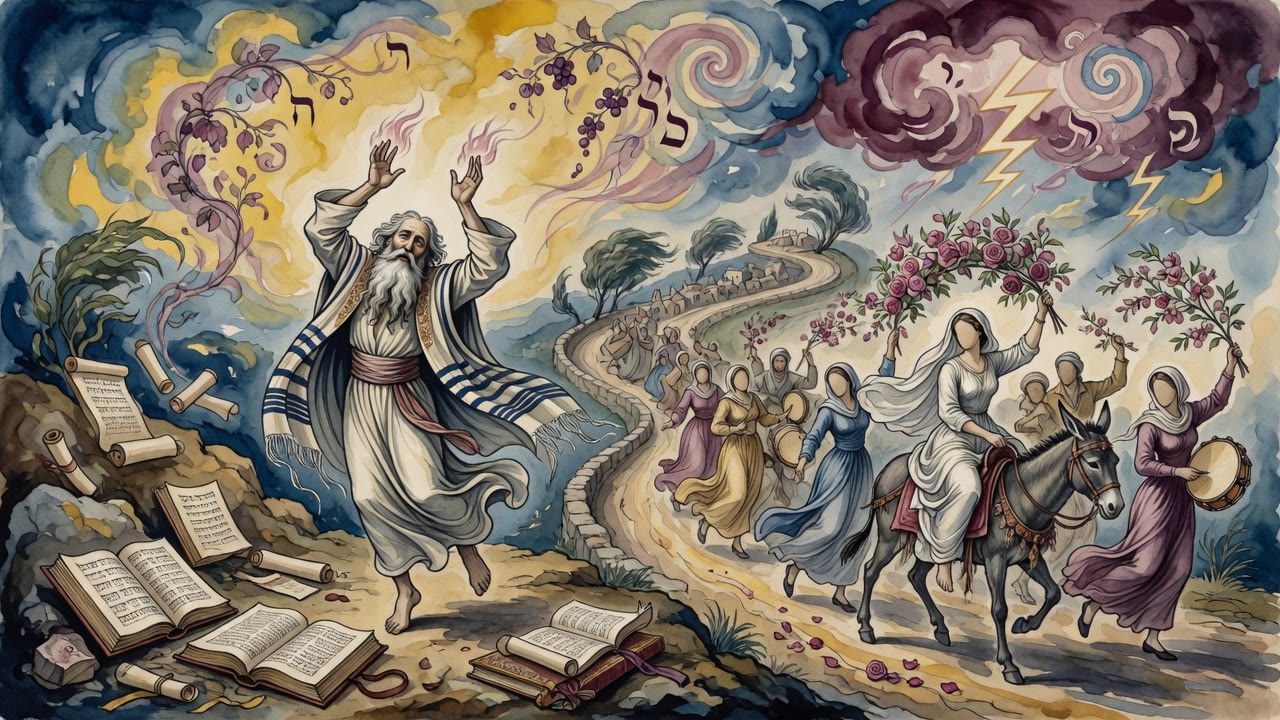
Hillel Washed the Body That Hosted His Soul Click for full size

"Where are you going?" one asked.

"To perform a mitzvah (a commandment)," Hillel said.

They followed him with their eyes. A mitzvah meant alms, or judgment, or the kind of duty that left a mark on the street. He answered before they could invent a nobler errand.

"To bathe in the bathhouse."

The Statues in the Circus

Steam met him at the threshold. Stone under his feet held the day's heat. He stripped the road dust from his shoulders the way a careful man removes mud from a borrowed coat.

Later his students cornered him with the old doubt still on their faces. "Is that a mitzvah?"

Hillel pointed them toward the theaters and circuses where kings set their images in painted stone. Men appointed over those statues scrubbed the marble, washed the dust from carved eyes, and took wages for the work. The city raised them for polishing what only looked like power.

"They are paid to wash the likeness of a king," Hillel said. "I was made in the likeness and image of God, as it is written, 'For in the image of God, He made man' (Genesis 9:6). All the more so."

He did not argue for luxury. He argued for reverence. A body that carried the divine image was not a tool to be worn down and discarded. It was a charge. Neglect was not humility. Neglect was insult to the One who stamped the clay.

Water ran over his arms. He pressed his palms flat against his own ribs and felt the guest still breathing inside.

The Guest Inside the House

Another day he left again. The same question rose from the benches.

"Where are you going?"

"To perform an act of kindness with the guest inside the house."

"Every day you have a guest?" they asked, half laughing.

Hillel stopped them with a plain answer. "And is this wretched soul not a guest inside the body? One day it is here. The next day it is not here."

The soul (neshamah, נשמה) sat in him like a traveler who might leave before dawn. Hosts do not starve a guest. Hosts do not leave a guest unwashed on a cold floor. Kindness to flesh, in his mouth, was hospitality to the temporary resident who made the house a living house.

"The man of kindness does good for himself" (Proverbs 11:17) no longer sounded like self-flattery. It sounded like care for the only lodging the soul had been given for this stretch of years.

He ate. He rested. He washed. Each act was a small table set for a visitor who could not stay forever.

Bread on the Road to Keziv

Years and miles away, another sage walked the coastal road with the same stubborn attention to the body and the hour. Rabban Gamliel traveled from Akko toward Keziv. His servant Tavi went ahead. Rabbi Ilai followed behind.

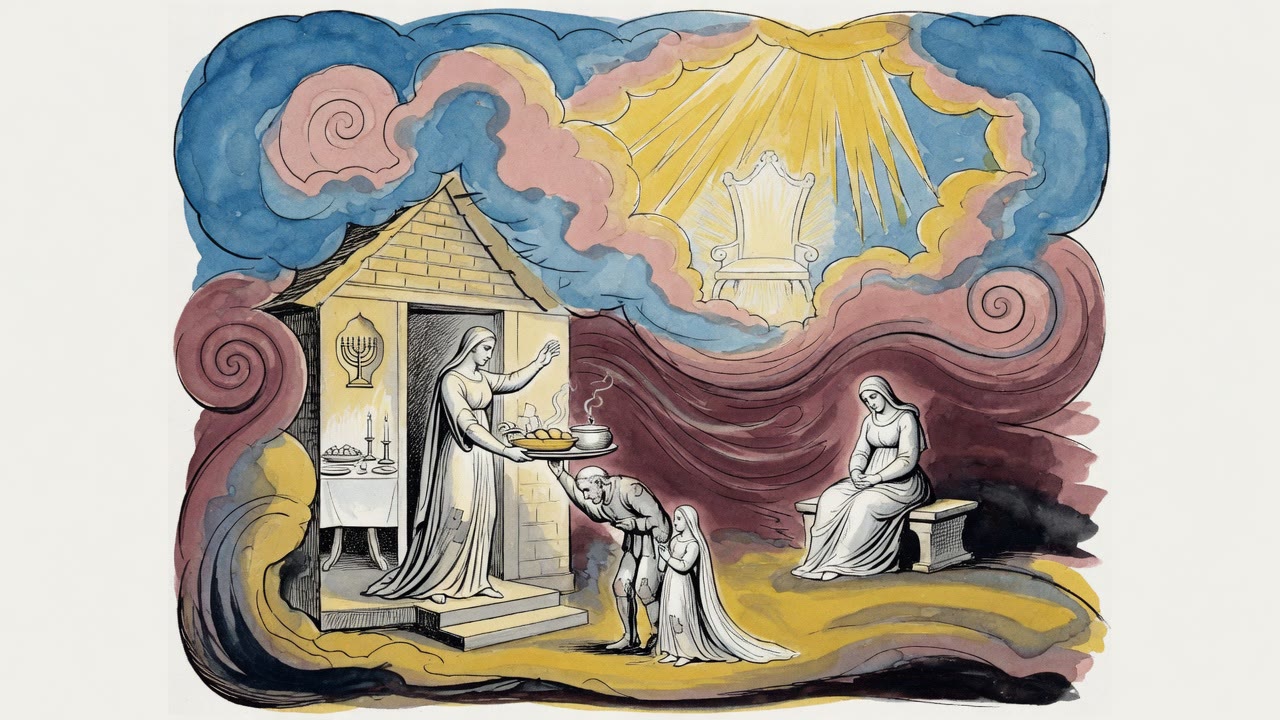
A loaf lay in the dust near a stranger. Gamliel did not step over it as if food were trash. He called the man by a name no one had spoken aloud.

"Mabegai, take the loaf."

Ilai tested the stranger. "What is your name?"

"Mabegai."

He had never greeted Gamliel before. He came from the towns of huts. The loaf passed into living hands. Later teachers would argue whether bread left on a road should be lifted or left for fear of sorcery, but on that road Gamliel refused to let food die in the dirt when a mouth stood ready.

They reached Keziv. They ate. They drank. A man came asking to have a vow dissolved, his face tight with a promise he could no longer carry.

Wine Until the Promontory

Gamliel turned to Ilai. "Do you think I drank a quarter-log of Italian wine?"

Ilai confirmed it. The measure still worked in his blood. Sacred speech is not a quick errand after a cup.

"Stroll with us," Gamliel told the man, "until the effects of my wine wear off."

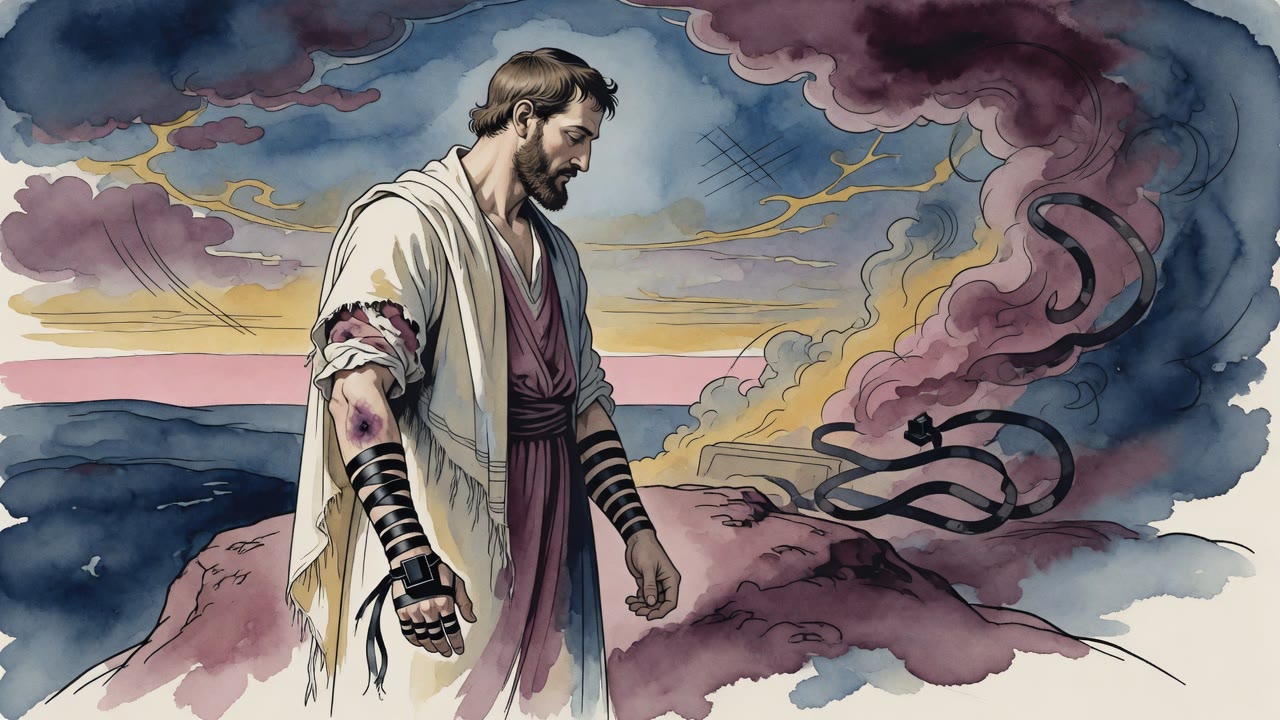
They walked. The sea wind cut the heat from their skin. At the Promontory of Tyre, Gamliel dismounted. He wrapped himself in his tallit. He sat. Only then would he open the case of a vow, because a ruling spoken while wine still rides the tongue is a wound dressed as law.

He would not dissolve a vow while intoxicated, while riding, or while standing. The body had to be steady. The cloth had to mark the hour as serious. The man who sought release waited on two feet until the sage's blood ran clear enough for heaven's language.

Hillel washed because the image of God should not go foul. Gamliel waited because the mouth that binds and loosens should not speak through fumes. Both refused to treat flesh as an afterthought when holiness was at stake.


← All myths
From the tradition

Sources

2 sources

The texts behind this telling. Some cards carry a translation of the source; others are our own retelling of it, and each card says which. Every card links out to the original.

Vayikra Rabbah 34:3Vayikra Rabbah

Retold in our words. Read the original at the link below.The Sefaria Midrash Rabbah, 2022 · CC-BY

They had a knack for seeing the sacred in the mundane, and Vayikra Rabbah (Leviticus Rabbah), a collection of rabbinic teachings on the book of Leviticus, is full of such gems. to one particular passage, Vayikra Rabbah 34, which uses the verse "The man of kindness does good for himself" (Proverbs 11:17) as a springboard for exploring what it truly means to be kind – and to care for oneself.

The passage begins by introducing us to Hillel the Elder, a prominent Jewish sage of the 1st century BCE. It recounts a fascinating exchange between Hillel and his disciples. As Hillel takes his leave, his disciples, curious as ever, ask where he's going. "To perform a mitzva," Hillel replies. A mitzva, of course, is a commandment or good deed. Intrigued, they press him: "What mitzva is this?"

Brace yourselves. Hillel's answer is beautifully unexpected: "To bathe in the bathhouse."

"Is that a mitzva?" they ask, perhaps with a touch of incredulity. Hillel's response is a masterclass in seeing the divine image in the human form. He explains, "If the statues of kings that are placed in theaters and circuses, the one who is appointed over them scrubs them and washes them, and they provide him with sustenance, and moreover, he is exalted among the prominent leaders of the kingdom; I who was created in the likeness and image [of God], as it is written: 'For in the image of God, He made man' (Genesis 9:6), all the more so."

Wow. Hillel is saying that if we lavish care on inanimate objects that represent earthly power, how much more should we care for our own bodies, which are made in the very image of God? Taking care of ourselves, then, isn't selfish; it's a recognition of the divine spark within us. It’s an act of reverence.

The passage continues with another anecdote about Hillel. Again, he's leaving his disciples, and again, they ask where he's going. This time, he says he's off "to perform an act of kindness with the guest inside the house."

"Every day you have a guest?" they inquire.

Hillel's answer is profound: "And is this wretched soul not a guest inside the body; one day it is here, the next day it is not here." He sees his own soul, his very life force, as a temporary visitor within his body. Taking care of his physical needs, then, becomes an act of hospitality towards this precious, fleeting guest. What a beautiful way to frame self-care!

The passage then shifts its focus slightly, offering another interpretation of (Proverbs 11:17): "The man of kindness does good for himself, and one who abuses his flesh is cruel." Rabbi Alexandri suggests this refers to someone who has a reason to celebrate but doesn't invite their relatives due to poverty. Rabbi Naḥman adds a cosmic perspective. He connects this to the verse "For it is due to [biglal] this matter" (Deuteronomy 15:10), noting that biglal sounds like galgal, meaning "cycle." The idea is that fortunes rise and fall; those who have means now may become needy later, and vice versa. Moses cautions, "If your brother will become poor."

In other words, being generous and kind – especially when you have the means – is not just about helping others; it's about participating in a larger cycle of giving and receiving, a cycle that ultimately benefits everyone, including yourself. The mitzva of giving tzedakah (charity) isn’t just altruism, it is recognizing our shared fate.

Perhaps it's a reminder to be kind to ourselves, recognizing the divine image within. Or maybe it's an encouragement to be generous and compassionate, understanding that our fortunes are intertwined. Maybe both. The rabbis, through these stories and interpretations, invite us to see the world – and ourselves – in a new light, to find meaning in the everyday, and to live a life of kindness, both inward and outward. And isn't that something worth striving for?

Full source
Vayikra Rabbah 37:3Vayikra Rabbah

Retold in our words. Read the original at the link below.The Sefaria Midrash Rabbah, 2022 · CC-BY

Our story begins with a loaf of bread on the road, and it takes us on a journey filled with divine insight, legal intricacies, and a little bit of wine!

The tale, found in Vayikra Rabbah 37, follows Rabban Gamliel as he travels from Akko to Keziv. His servant, Tavi, walks ahead, and Rabbi Ilai follows behind. They encounter a loaf of bread lying on the road, near a non-Jew. Rabban Gamliel instructs the gentile, "Mabegai, take the loaf."

Rabbi Ilai, curious, asks the man his name. "Mabegai," he replies. Rabbi Ilai presses further: "Have you ever greeted Rabban Gamliel?" The answer is no. "Where are you from?" "From these towns of huts."

From this brief encounter, we learn several things. First, that leavened bread – chametz – belonging to a gentile is permitted after Passover. Second, that Rabban Gamliel, through a touch of ruach (spirit) hakodesh, a divine spirit, knew the gentile's name was Mabegai. And third, a lesson in basic respect: one shouldn't simply pass by food left on the ground. the prevailing thought was that you should pick it up.

However, Rabbi Yaakov bar Zavdi, in the name of Rabbi Abbahu, adds a layer of caution: initially, yes, one should pick up the food. But in their time, one might pass it by due to concerns about sorcery. Someone might have intentionally left it there with harmful intentions for whoever picked it up.

The group then arrives in Keziv. After eating and drinking, a man approaches Rabban Gamliel, seeking to have a vow dissolved. Rabban Gamliel turns to Rabbi Ilai, asking, "Do you think I drank a quarter-log of Italian wine?" A log being a liquid measure in Jewish law. Rabbi Ilai confirms he did. Rabban Gamliel then tells the man, "Stroll with us until the effects of my wine wear off."

They walk until they reach the Promontory of Tyre. There, Rabban Gamliel dismounts his donkey, wraps himself in his tallit (prayer shawl), and sits down. This moment teaches us several things: that a quarter-log of wine can indeed cause drunkenness, that a journey can help sober one up, and, crucially, that one shouldn't issue a halakhic (legal) ruling while intoxicated.

And from Rabban Gamliel's actions, we further learn that one cannot dissolve a vow while intoxicated, while riding, or while standing. It must be done while seated and properly attired in a prayer shawl. The setting matters; sobriety and respect are essential for such serious matters.

So, what "opening" – what legal loophole, if you will – did Rabban Gamliel suggest to the man seeking to dissolve his vow? In the laws of vows, an "opening" refers to an unforeseen negative consequence of the vow, one that wasn't realized at the time it was made. The existence of such a consequence can provide grounds for annulling the vow.

Rabbi Yochanan offers an interpretation, drawing on (Proverbs 12:18): "There is one who expresses like stabbings of a sword, but the tongue of the wise is a cure." He explains that one who carelessly makes vows deserves to be "stabbed with a sword" – metaphorically speaking, of course! The remedy? To seek out wise sages who can dissolve the vow. Rabban Gamliel, it's suggested, was probing whether the man understood the gravity of making vows. If he didn't, Rabban Gamliel would be willing to annul it. This emphasizes the importance of understanding what you're committing to, as echoed in Moses' caution to Israel: "If a man articulates a vow." The text equates vows with valuations, implying we should exercise similar caution with both.

This story, seemingly simple on the surface, reveals layers of wisdom about Jewish law, human nature, and the importance of acting with awareness and intention.

Full source