Three Empires Reached the Temple and One Asked for a Statue Inside It
Alexander offered gold for a statue of himself between the sanctuary and the Holy of Holies. The High Priest offered him a generation of children instead.
Table of Contents
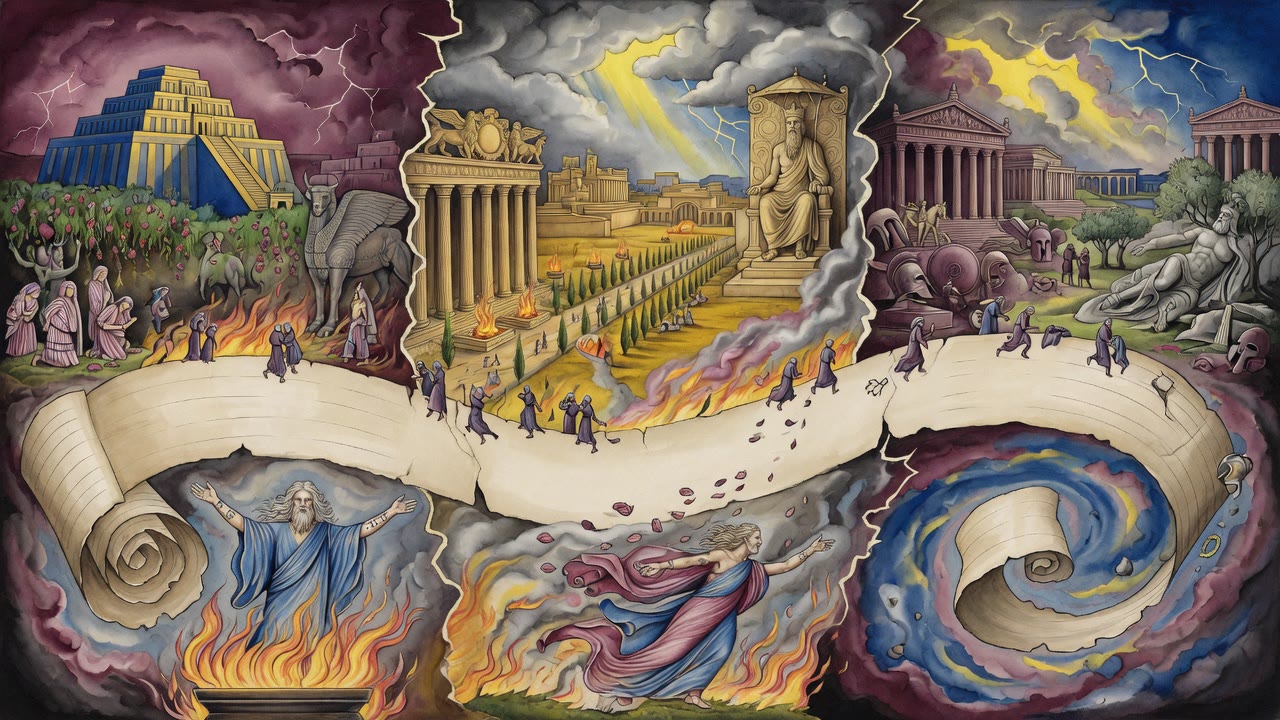
The exiles came back under a Persian decree and put the house up again. Ezra and Zerubbabel brought a second wave of captives home, the towers went up very high and very strong, and the new building held more than the old one, so that men who remembered the first house thought it small.
 Click for full size
Then Haggai died, and Zechariah died, and Malachi died, and no prophet stood up after them. What was left in the house was an echo of a voice out of heaven, and after that anyone who wanted an answer had to go and ask the sages.
Three empires came at Israel in the years after that, and each one wanted to leave something of its own standing inside that building.
A Man With a Drawn Sword Stood Over Alexander's Bed
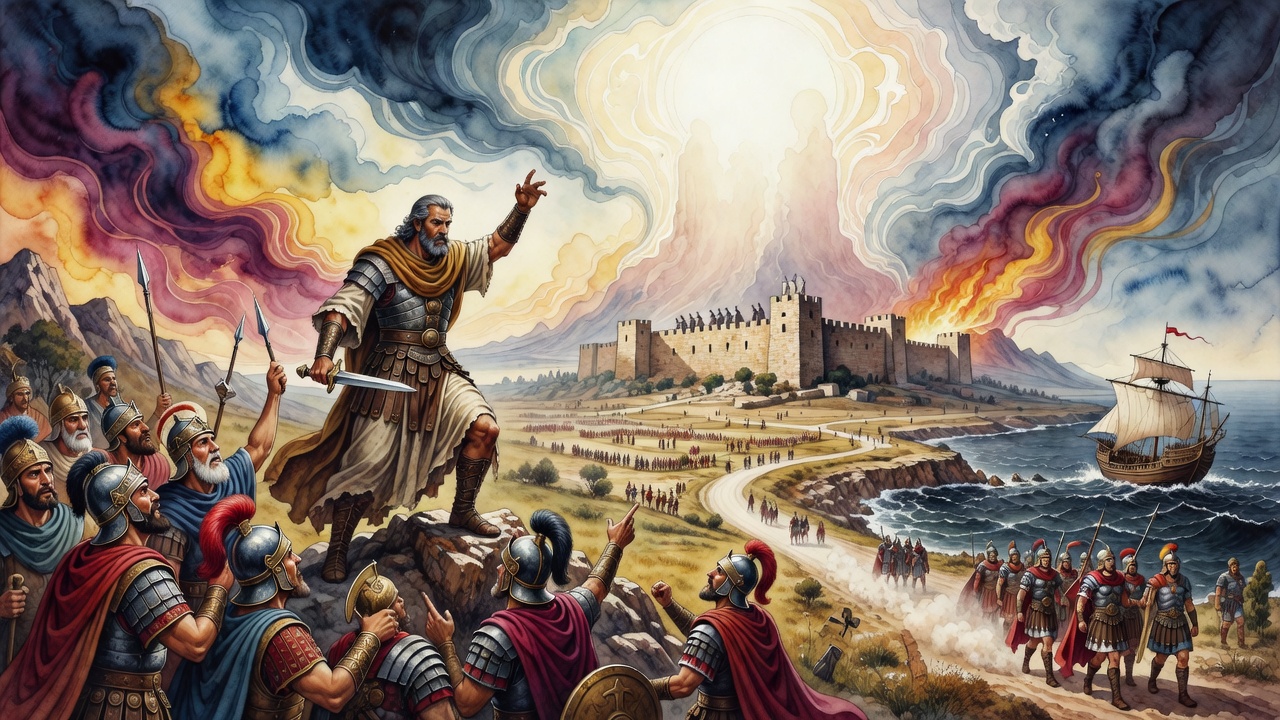
Alexander of Macedon came down the coast taking cities. Egypt, then Edom, then Acco, then Ashkelon, then Gaza. In Alexandria he killed twice as many Jews as had once walked out of Egypt. Then he turned inland toward Jerusalem, because the Jews had sworn a covenant with Darius and he meant to burn the city for it.
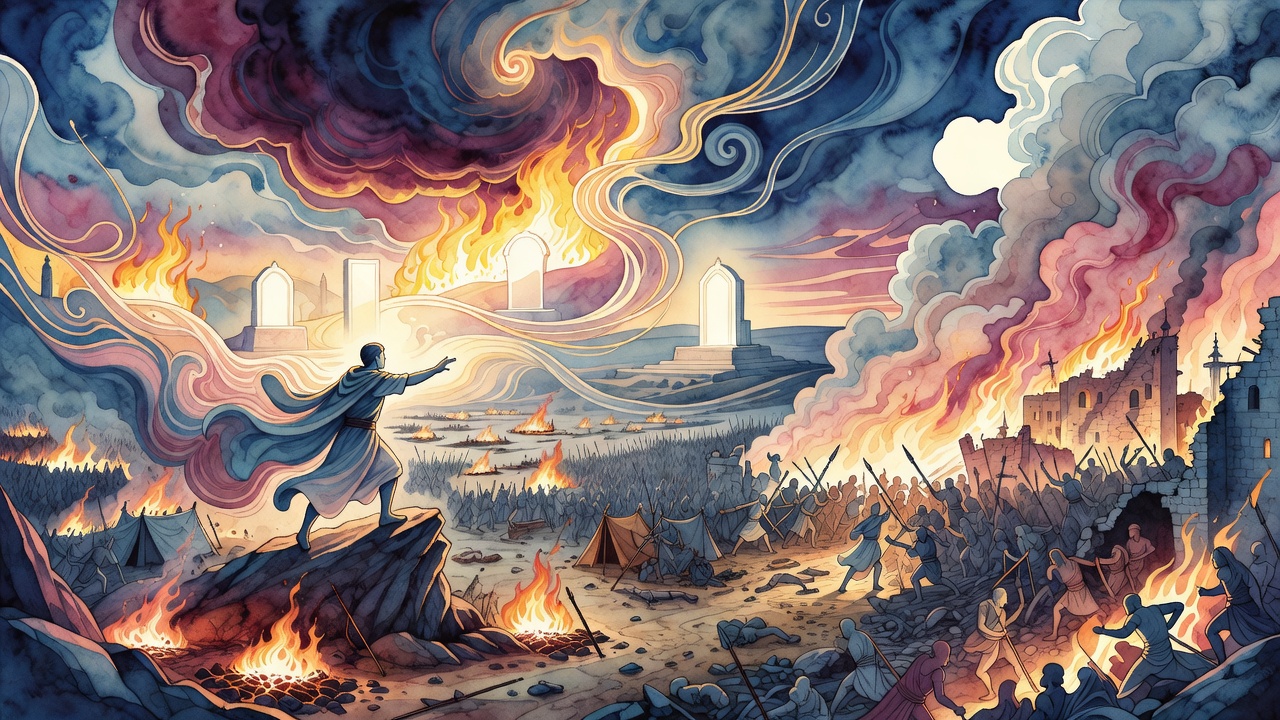
That night he opened his eyes in his tent. A man stood over the bed in white linen with a drawn sword in his hand, and the blade looked like lightning on a wet day. He raised it above the king's head.
"Why will my lord strike his servant?"
"God sent me to bring down kings and nations in front of you, and I will walk ahead of you and help you. Know this as well. You are going to be killed, because your heart is set on going to Jerusalem to harm God's priests and God's people."
"Pardon the sin of your servant. If it is evil in your eyes I will turn around and go home."
"Do not be afraid. Go to Jerusalem. When you come to the gate of the city you will see a man dressed in white like me, with a face and a shape like mine. Get down at once and put your face on the ground in front of him, and do whatever he tells you. The day you go against his word is the day you die."
The Priest Came Out of the Gate in White Linen
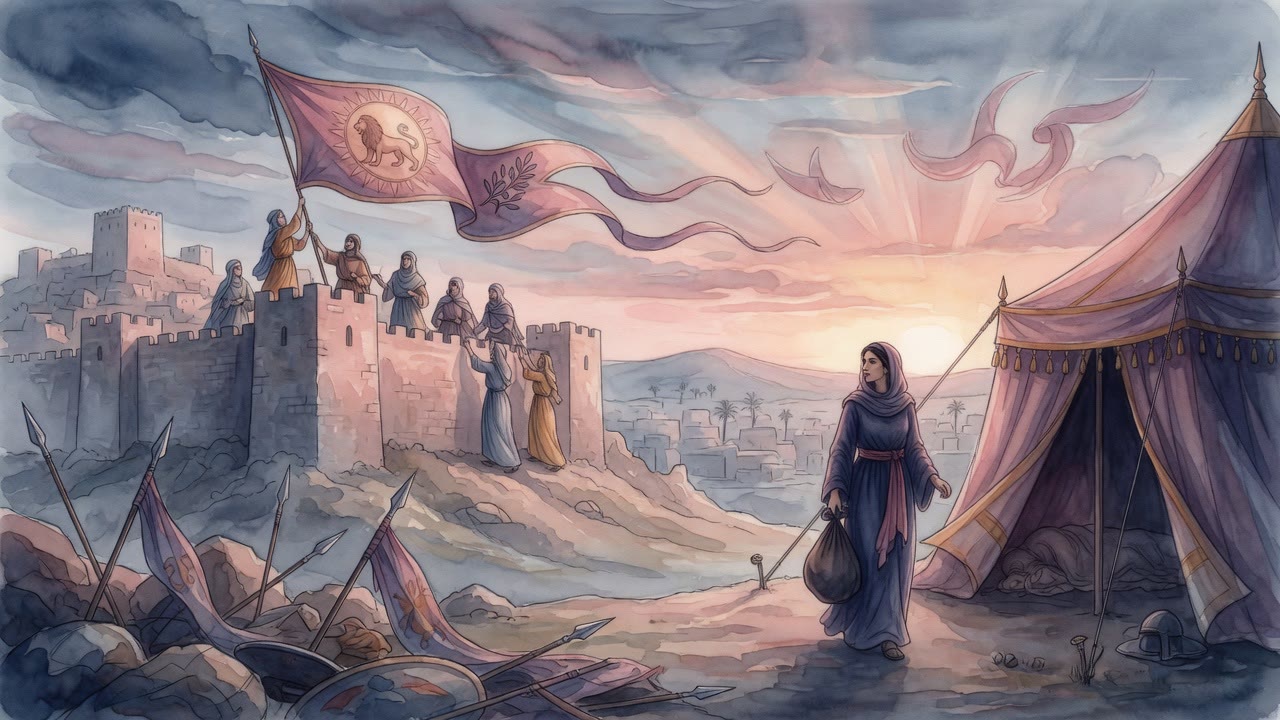
Word reached the High Priest that the king was coming up in a rage. He was badly frightened and so were the people with him. He put on white linen and walked out through the gate and stood in front of the city with the whole population behind him and nothing in his hands.
Alexander saw him, came off the chariot before it had properly stopped, and went down on his face in the road.
His generals were furious. "Why are you bowing to a man who could not stand up in a fight?"
"Because the one who walks in front of me and puts the nations under me has a face and a shape like this man."
He Asked for a Statue and the Priest Named the Children
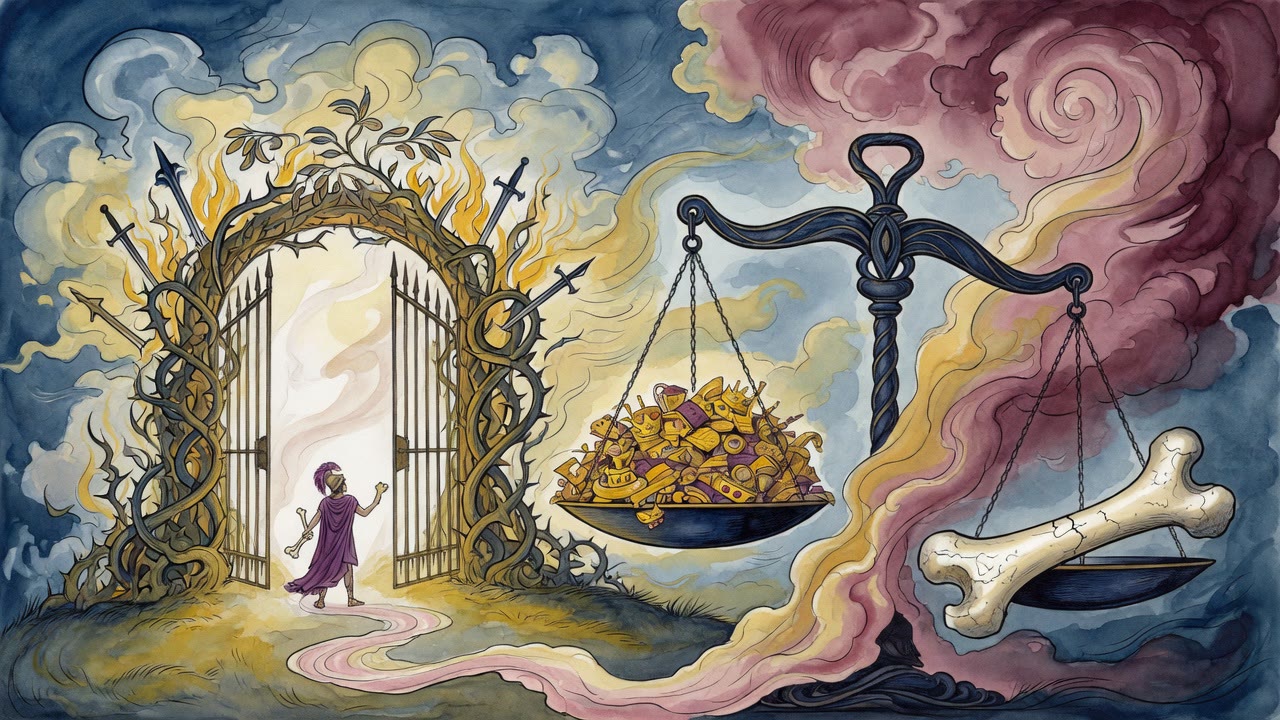
Inside the house Alexander made his offer. He would pay the workmen a great deal of gold and they would set his statue between the sanctuary and the Holy of Holies, so that his image stood in this great house as a memorial of him.
The priest did not refuse the gold and did not accept the statue.
"Give the gold for the upkeep of God's priests and for the poor of His people, and I will have you remembered exactly as you want. Every son born to a priest this year will be called by your name, Alexander, and you will be named in this house whenever they serve in it. But a carved image or any likeness may not be set up in the house of our God."
The king paid. A generation of priests grew up in Jerusalem answering to a Macedonian name, and no stone image ever stood behind the curtain.
Then he asked whether he should go to war against Darius. The priest brought out the book of Daniel and showed him the ram that gores on every side and the young goat that runs at the ram and tramples him. "You are the goat. Darius is the ram." Alexander went and killed Darius and took Persia, ruled twelve years, and on his way home divided everything he had taken among four of his commanders. One of them was Antiochus, who got Asia.
Rome Wrote to Judah as an Equal
Out of Antiochus came the persecution, and out of the persecution came the Hasmoneans. The fourth beast in Daniel's vision, the one that devoured and crushed and trampled, had by then beaten Antiochus and his hundred and twenty elephants and put him under tribute.
Rome sent Judah Maccabee a letter. Its princes had heard of his battles and were glad of them, and asked whether he would be their friend rather than a friend of the Greeks who had afflicted him. The covenant ran both ways. On sea or on land, if war came against Rome the Jews would help with everything they had, and if war came against the Jews Rome would do the same, and neither side would sell the other's enemy a weapon or a sack of wheat.
The land had about eight months of quiet.
Nicanor Bared His Arm at the Same Gate
Nicanor came at the head of Demetrius's army and then did not fight. He embraced Judah, set out two chairs, and sat down and talked with him. He grew fond of the man. He told Judah that someone like him ought to take a wife and have children, and Judah married and had children. Then a letter came from the king: send me Judah in chains or you die yourself.
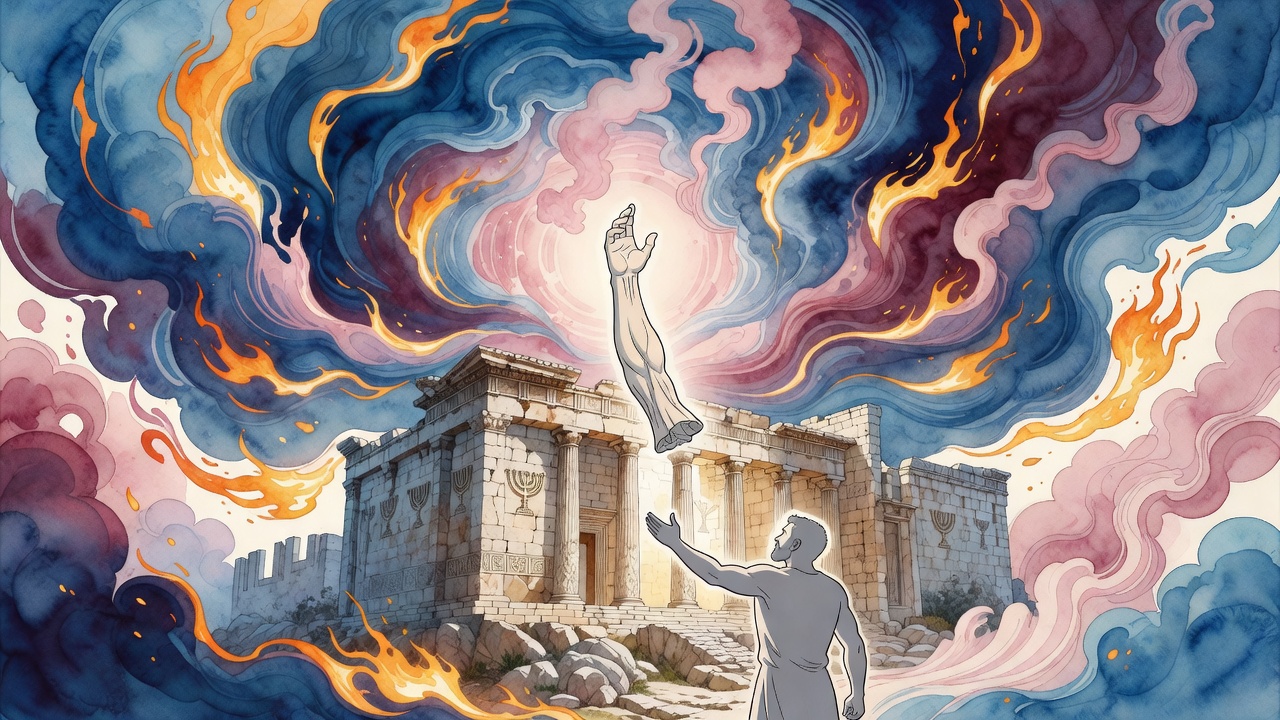
Judah went out of the city by night. Nicanor walked into the Temple and told the priests to produce him. They swore they had not seen him since the day before yesterday. So Nicanor spat toward the building, stretched out his right hand, pulled back his sleeve to bare the arm, and swore he would pull the house down and not leave one stone standing and dig out the foundations underneath it.
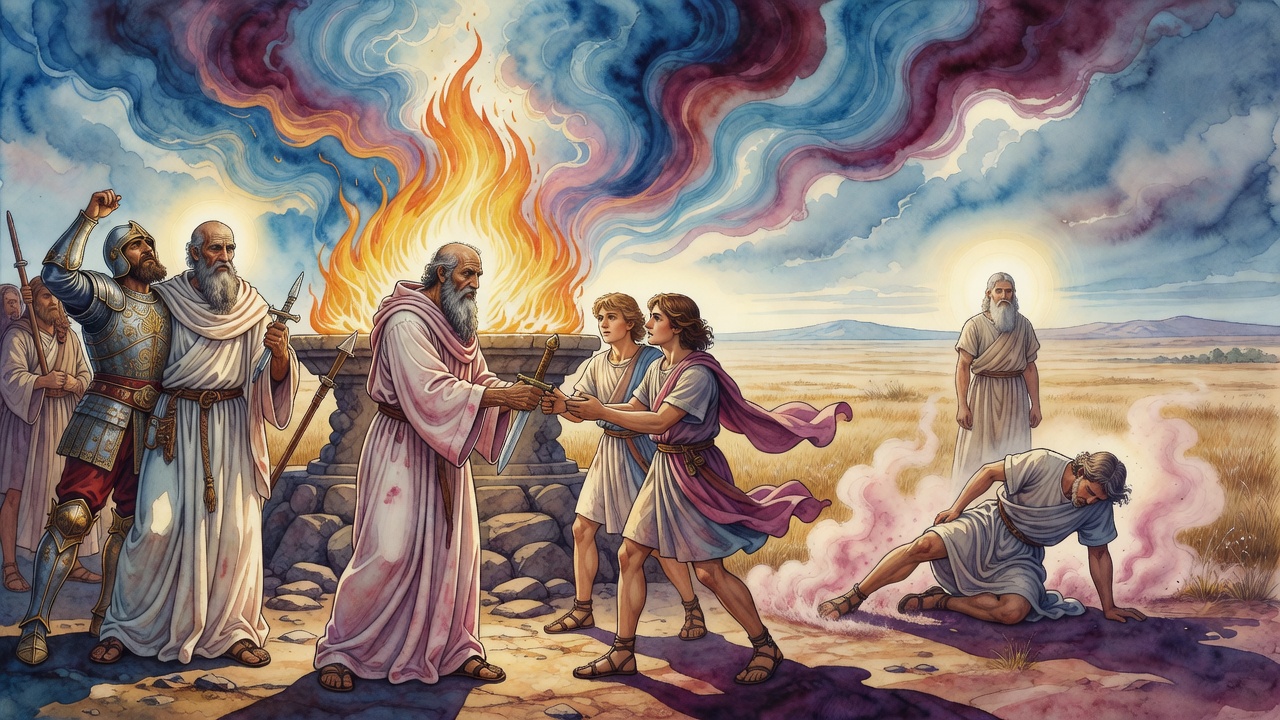
The priests went out between the porch and the altar and cried up at heaven that here was God's throne and here was His footstool and all His service, and that the man had made himself an abomination and should die as one.
They met in the field. Judah saw him with his sword out and shouted "At you, Nicanor," and ran at him, and Nicanor turned to run and was caught and cut in two on the ground. Thirty thousand of his army fell. They took his head, and they took the right arm he had stretched out, and they hung both of them up in front of the gate.
The gate has been called by his name ever since. Alexander had climbed down off his chariot at that spot and put his face in the dirt.
← All myths