David Asked God to Test Him the Way Abraham Was Tested
David wanted his own name in the blessing beside Abraham's. God told him what Abraham had gone through to get it there. David said, test me too.
Table of Contents
 Click for full size
Barefoot Up the Ascent of Olives
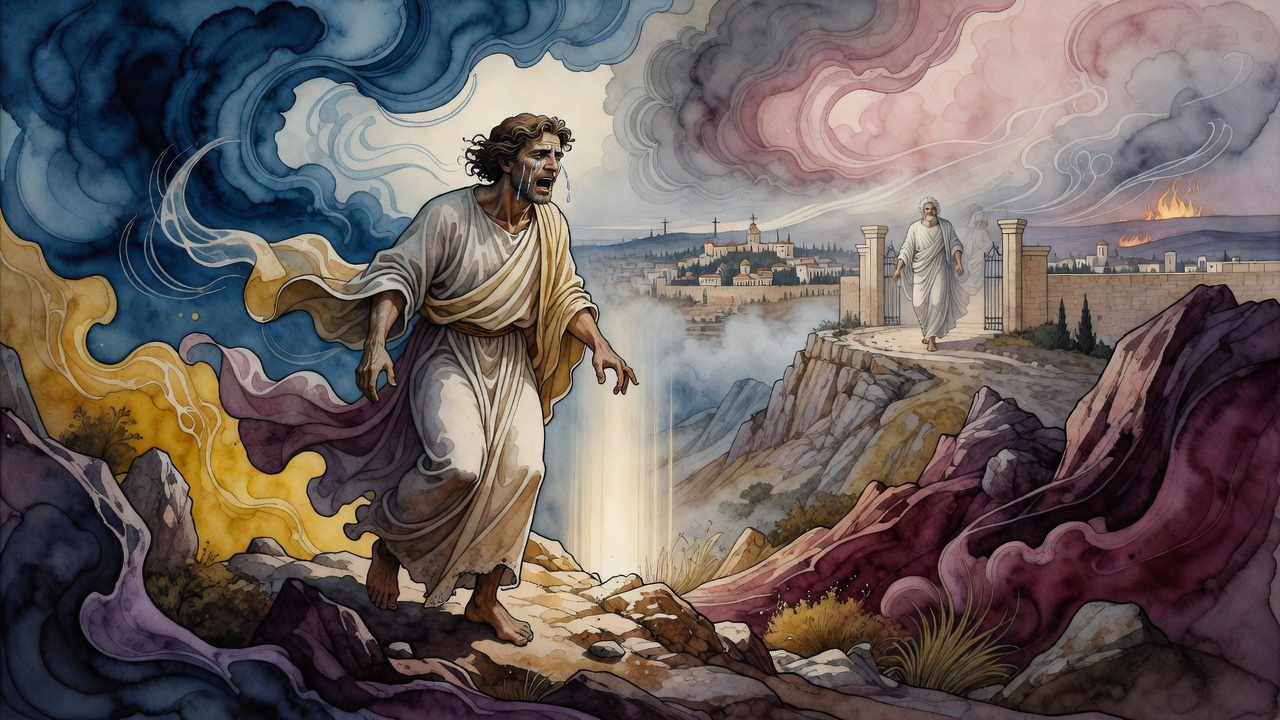
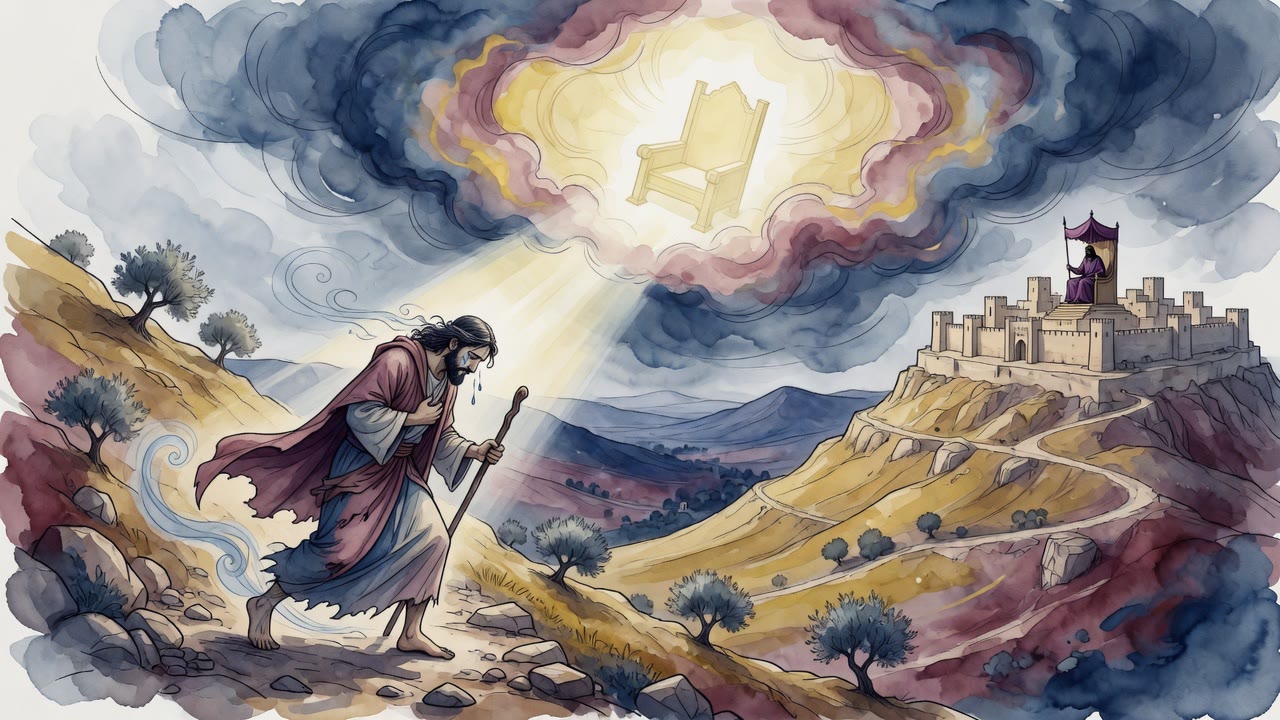
David went up the hill out of his own city with his head covered and no shoes on, crying as he climbed.
Behind him the gates were open to his son. In front of him was the road down to the river and whatever waited past it. The men who came with him covered their heads too, and the whole column went up the slope weeping, which is not how an army leaves a capital.
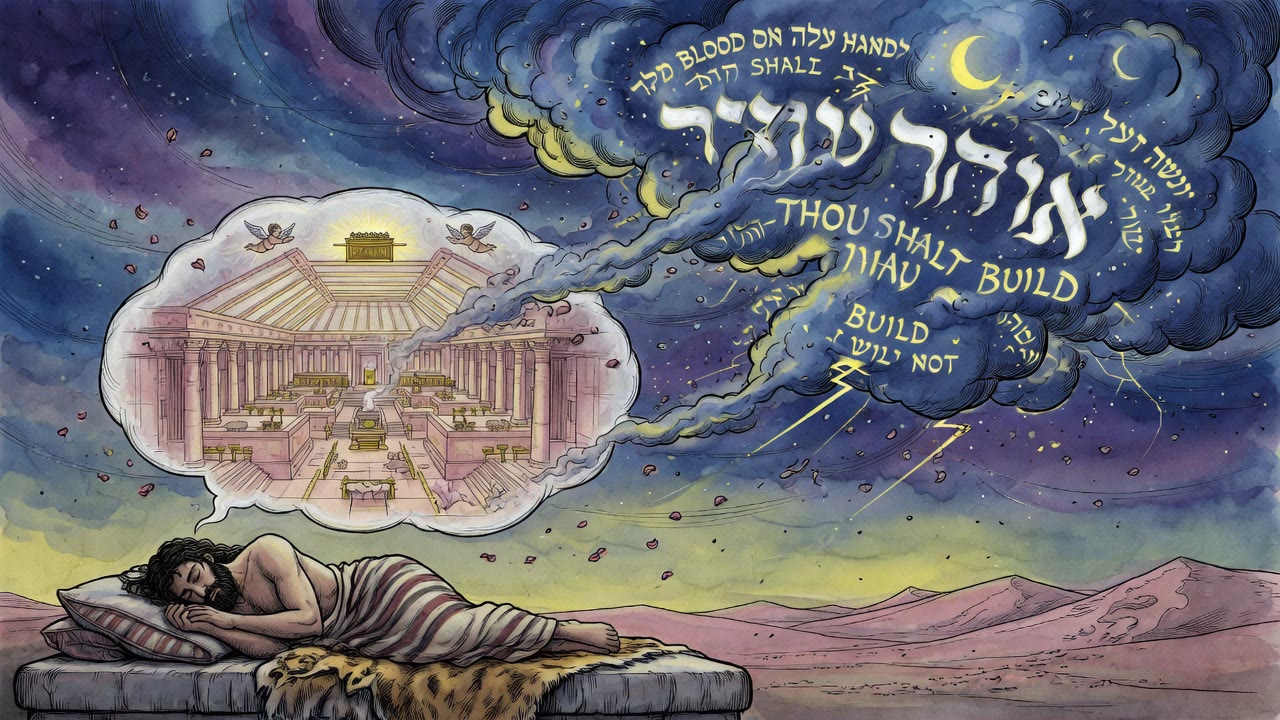
Something else had gone out of him on the way. Prophecy. He had lain down and it had stopped, and when he woke there was no spirit on him, only his own senses, only a middle-aged man on a hill listening to how many people wanted him dead.
He prayed anyway. Not toward a sanctuary, because there was no sanctuary. He prayed at a bare hill with nothing standing on it, and he said afterward that the answer had come back to him from that hill.
He had asked for this. That was the part nobody walking with him knew.
Why Abraham's Name and Not Mine
It had started with a question about a blessing.
The words people said when they stood up to pray ended on one name, and it was not his. Shield of Abraham. David had built the city, taken the giant, gathered the singers, written the songs the whole nation used to talk to God, and when the nation opened its mouth the name that came out belonged to a man who had been dead for centuries.
"Why do they say the shield of Abraham," he asked God, "and not the shield of David?"
The answer came back in one sentence.
"I tested him ten times."
The Ten Things That Made a Shield
Ur first, and the furnace, and Abraham walking out of the fire alive with nothing but the word of the God nobody in that city worshipped.
Then leave. Leave the country, leave the house, go where I show you. Then again, go.
Then Sarah taken out of his tent by a king, and then taken again by another king in Gerar, and both times he stood outside a palace he could not enter and waited to find out whether he still had a wife.
Then Hagar and the boy sent off into the desert with bread and a skin of water, and Abraham up before dawn to hand it to her himself.
Then a night ride against four kings with three hundred and eighteen men, to get a nephew back who had chosen the wrong valley.
Then a voice telling him to walk in front of it and be perfect, with no explanation of what perfect meant.
Then a vision of what would happen to his descendants, kingdoms standing on their necks, generations of it, shown to him while he was still counting stars.
Then: take your son, your only son, the one you love, Isaac.
The nations of the world had a question of their own about all this. Why did God's love that man so much, they wanted to know, that He pulled him out of a furnace and out of the hands of nine kings and out of every trouble he ever walked into.
God answered them too. "I tell him to sacrifice his son. He listens to Me and trusts Me. So I am a shield over him."
Test Me, and Try Me
David heard all of it and did not step back.
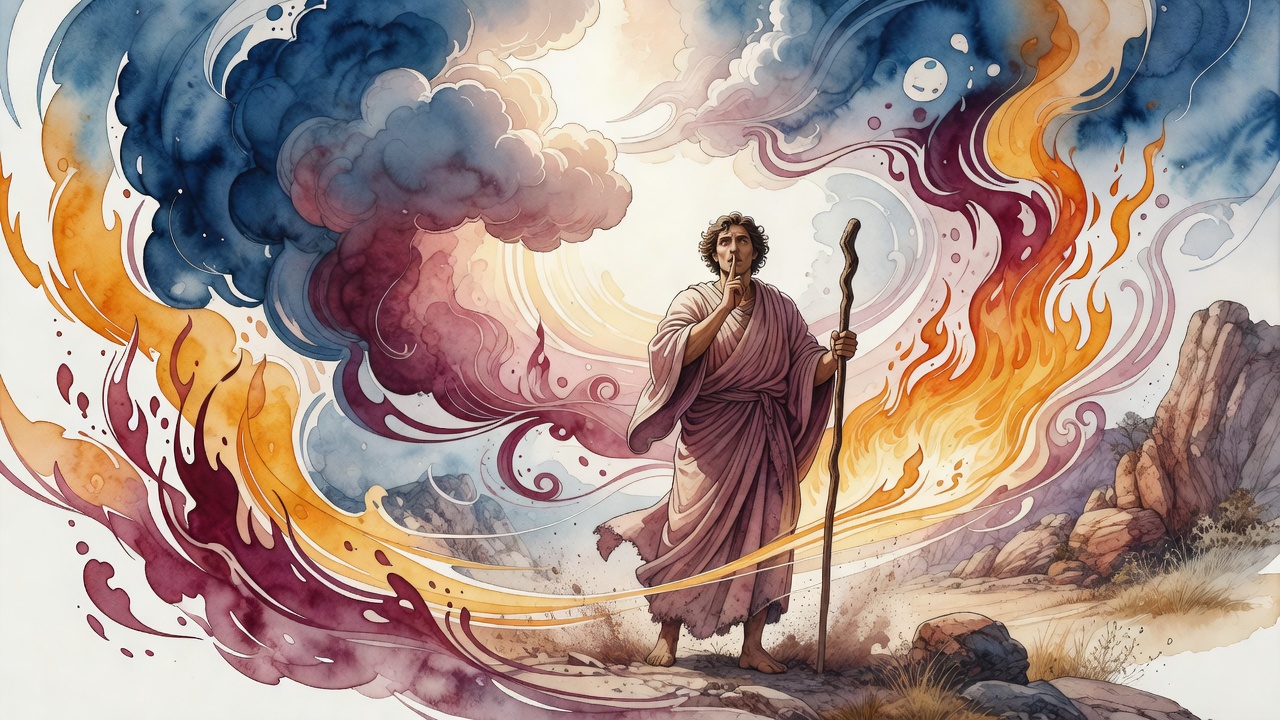
"Test me," he said. "Try me."
So one evening he got up from his bed and walked on the roof of the king's house, and from the roof he saw a woman washing, and she was very beautiful, and he sent to ask who she was, and was told whose daughter she was and whose wife she was, and sent for her anyway.
Then there was a letter, carried by the woman's husband to the front, instructing the commander to put the man who was carrying it in the worst of the fighting and pull back from him.
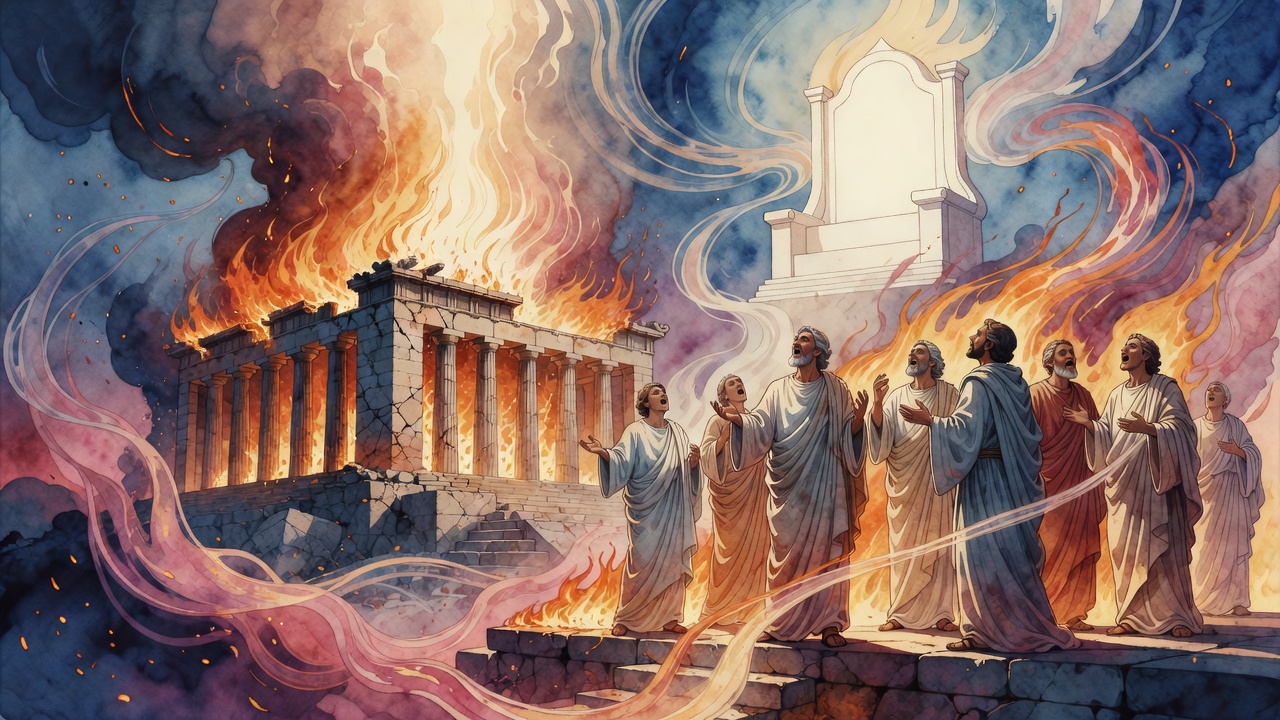
He did not stand up to it. He had asked for the same fire that made Abraham a shield, and he went down in the first hour of it.
Nathan Says He Will Not Die
The prophet came and told him a story about a poor man's one lamb, and David was still king enough to be furious about the lamb, and then Nathan told him who the story was about.
Whatever David said next, the answer to it was: "The Lord has put away your sin. You will not die."
He did not die. Other things happened instead. The sword did not leave his house, and years later it came out of his house in the shape of his own son with an army behind him, which is how a king ends up on a hill above his city with his shoes in his hand.
That was where he lay down and slept and lost the prophecy, and where the word that held him up was still Nathan's, spoken years earlier, that he would not die.
And he asked for one more thing. Not for the blessing that ends on Abraham's name, the one every mouth says standing up. A different one, later, quieter, after the prophets have been read out. Say the shield of David there.
They say it there.
← All myths