5 min read

Israel Asked for Rain and Received Quiet Dew

The people beg God to come like rain. Prophets rewrite the prayer to dew, then to a name engraved on divine palms forever.

Curated by Arthur · Told by Maggid ·
Table of Contents
  1. Come Like Rain
  2. Seal, Crown, Palms
  3. Two Verses Too Short for a Book
  4. Asaph's Torah
Israel Asked for Rain and Received Quiet Dew Click for full size

Come Like Rain

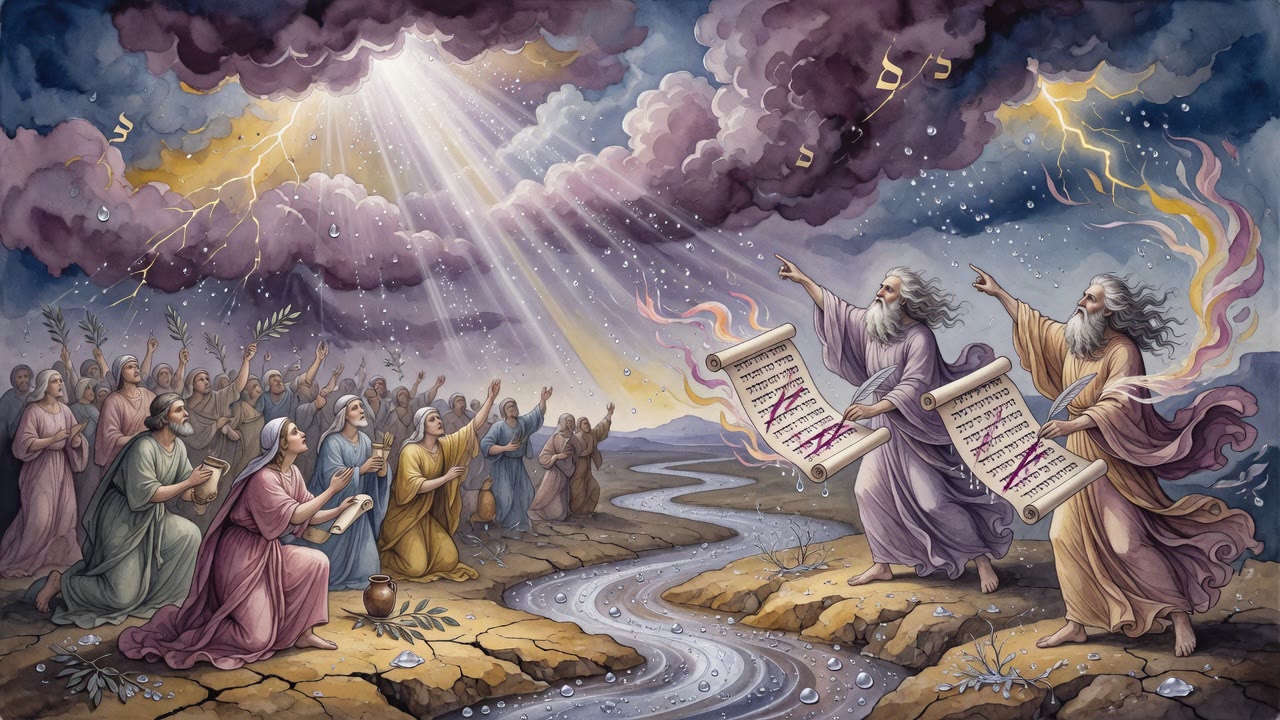
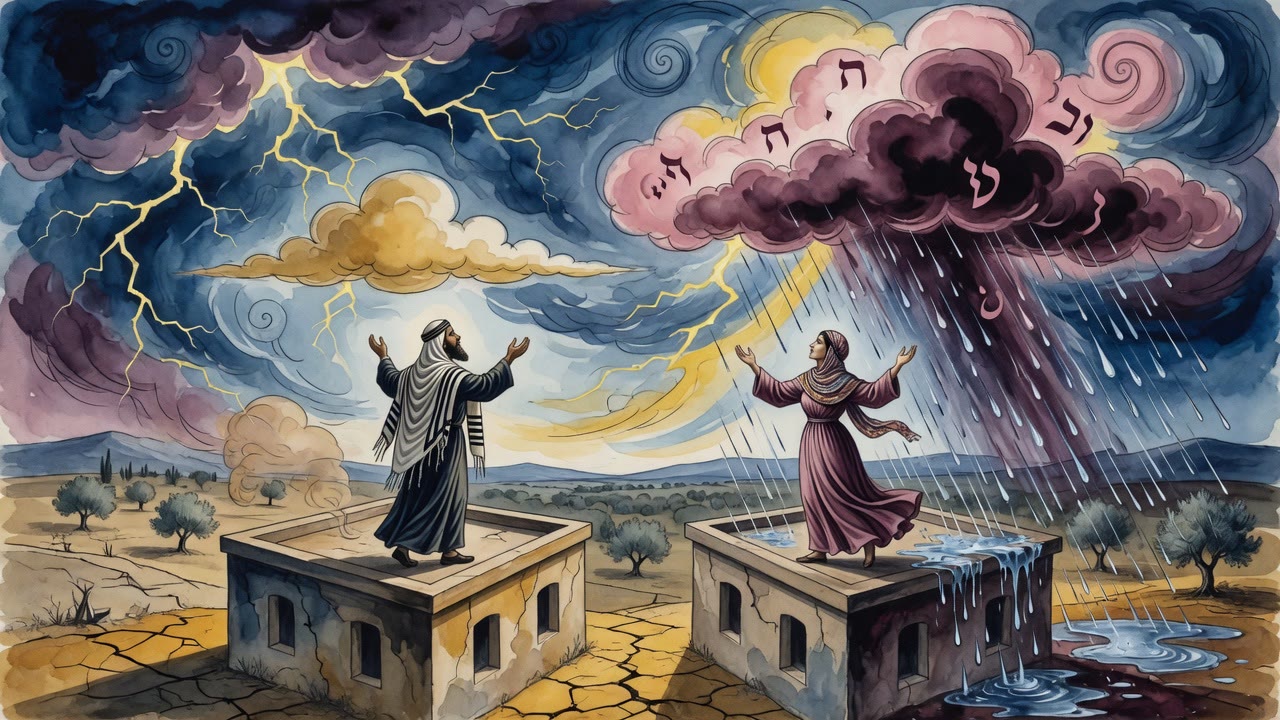
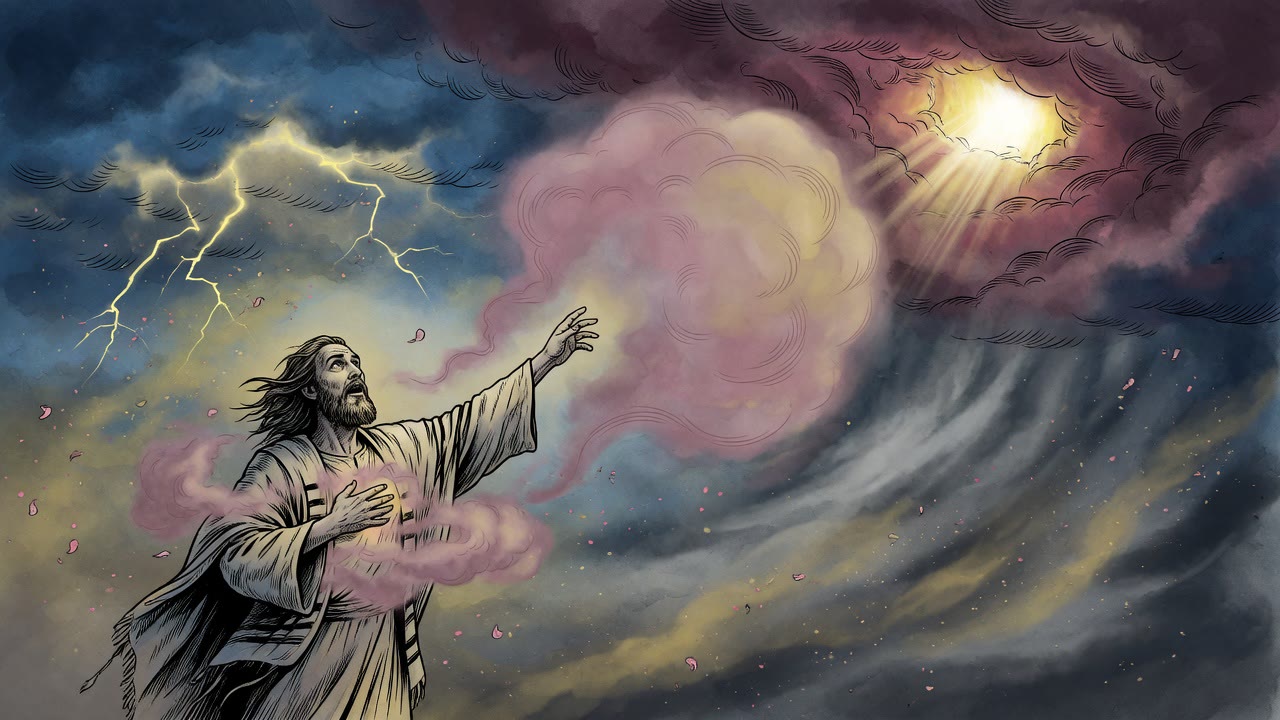
Israel spoke a longing that sounded holy. "He will come to us like the rain" (Hosea 6:3). Rain fills cisterns. Rain greens fields. The people wanted God the way dry ground wants a storm. They could already smell the first drops in the request. They could already hear the thunder and call it intimacy.

The prophets heard the cost inside the metaphor. Rain stops travelers, floods roofs, ruins wine-treaders and sailors. Roofers curse the same sky farmers bless. A gift that hurts half the world is a clumsy prayer. They rewrote the request. "I will be like dew for Israel" (Hosea 14:6). Dew arrives without closing the road. It settles quiet, almost secret, and still feeds the leaf.

The people had asked for drama. Heaven preferred a kindness that does not strand the wayfarer. The correction is not a scolding of desire. It is a refinement of image until the desire can be granted without wreckage.

Seal, Crown, Palms

A second request rose from the Song. "Place me as a seal upon Your heart, as a seal upon Your arm" (Song of Songs 8:6). Again the feeling was right and the image incomplete. A heart can be covered. An arm can hide under cloth. A seal in those places is not always seen. Love that wants to be permanent still chose a hiding place.

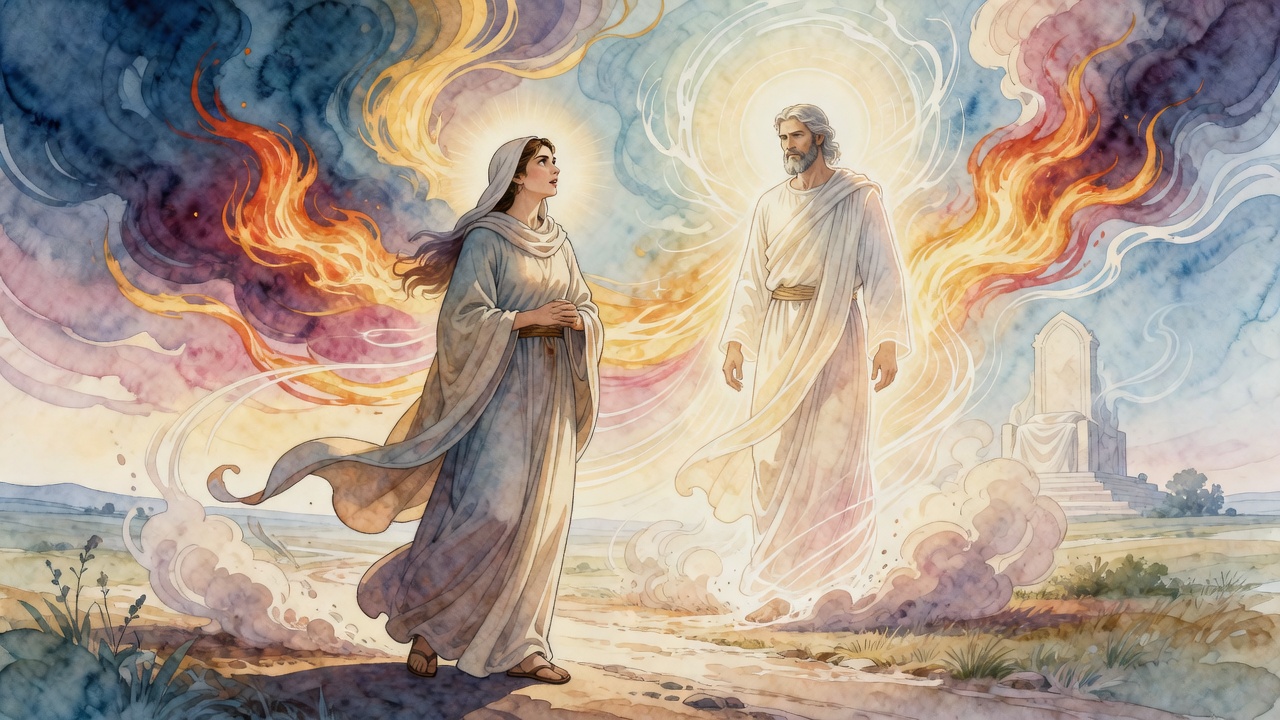
The prophets offered a better line: "You shall be a crown of splendor in the hand of the Lord" (Isaiah 62:3). Visible. Lifted. Held. Rabbi Simon ben Kuzit in the name of Rabbi Levi still found a flaw. Earthly crowns fall. They tarnish. They leave a king's head. God Himself closed the bargaining: "I have engraved you upon My palms; your walls are continually before Me" (Isaiah 49:16). A person does not forget his own palms. "Even these may forget, yet I will not forget you" (Isaiah 49:15).

The prayer moved from storm to dew, from seal to crown, from crown to engraving. Each step shed a little theater and gained a little permanence. Israel kept speaking. Heaven kept editing until the words could carry forever without bruising the speaker.

Two Verses Too Short for a Book

Beeri, father of Hosea, prophesied only two verses, too few for their own scroll. They were set into Isaiah: the warning against chirping diviners and the charge to seek Torah and testimony (Isaiah 8:19-20). Brevity did not cancel the call. A short prophecy can still cut if the edge is true.

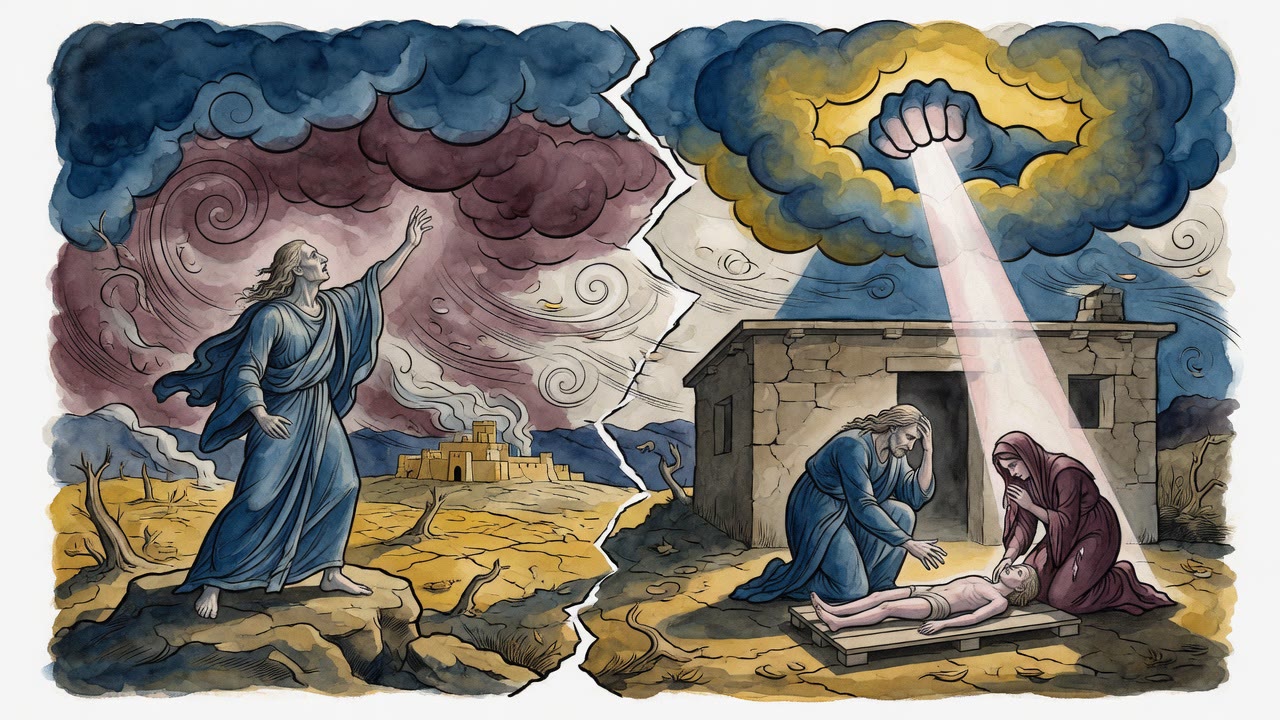
A man who lost his son among graves was mocked by a wiser voice: the living are not sought among the dead. So a people must not inquire of lifeless gods on behalf of the living God. Idolatry has no dawn. It cannot light itself, so it cannot light anyone else. Torah was given in thick darkness at Sinai, yet it became Israel's day. The short prophecy still draws that line hard enough to cut.

Beeri's two verses sit inside another prophet's book the way dew sits on a leaf that asked for rain. Small. Placed. Enough. The people who want a storm of revelation are offered a compact light that does not need its own scroll to be real.

Asaph's Torah

Asaph opened a psalm: "Give ear, O my people, to my Torah." Israel bristled. Another Torah? We already stood at Horeb. The complaint sounds faithful and is half a refusal. Asaph answered the scoffers who say Prophets and Writings are not Torah. Daniel confessed that the people sinned by not walking in the Torahs given through the prophets. When Asaph sings "my Torah," and Solomon says not to forsake his Torah, they mean the whole sacred library is one revelation.

So the rewritten prayers are not soft edits by nervous poets. They are Torah correcting Torah's students. Rain becomes dew. Seal becomes engraving on palms. A two-verse prophet still forbids the graveyard of idols. Whoever nullifies the words of Torah is as one who denies the Holy One, because the Torah was given so Israel would labor in it day and night. Whoever keeps it is counted as if he received it fresh from Sinai.

The people who wanted a storm received a quieter nearness that does not forget them even when they forget how to ask. Dew on the leaf. Name on the palm. Two verses in another man's book. Amen in a study house that still answers. All of it is the same refusal to leave Israel without a word that can be lived.


← All myths

From the tradition

Sources

3 sources

The texts behind this telling. Some cards carry a translation of the source; others are our own retelling of it, and each card says which. Every card links out to the original.

Shir HaShirim Rabbah 6:3Shir HaShirim Rabbah

Retold in our words. Read the original at the link below.The Sefaria Midrash Rabbah, 2022 · CC-BY

It seems that even the ancient Israelites weren't immune to this! to a fascinating passage from Shir HaShirim Rabbah, a collection of rabbinic interpretations on the Song of Songs. Here, we find a discussion about how the Israelites’ requests of God were… well, a little misguided.

Rabbi Aivu tells us that there were two specific requests where the people of Israel missed the mark, prompting the prophets to step in and offer a correction.

First, the people said, "He will come to us like the rain" (Hosea 6:3). Seems innocent enough. But the prophets weren't so sure. They responded, essentially, "Are you sure about that? Rain, while life-giving, can also be a huge pain!": rain disrupts travel, damages property, and can generally make life difficult for many. Wayfarers, seafarers, roof repairers, wine stompers – according to the prophets, they all suffer from the rain! The prophets then corrected the request, suggesting a gentler image: “I will be like dew for Israel” (Hosea 14:6). Ah, dew. Refreshing, gentle, and far less disruptive.

The second request was even more interesting. The Israelites asked, "Place me as a seal upon Your heart, as a seal upon Your arm." (Referencing (Song of Songs 8:6), of course!). Again, a beautiful sentiment! But the prophets weren't convinced. Why? Because, as they pointed out, the heart is sometimes covered, hidden from view, and an arm can be covered by clothing. A seal in these places isn’t always visible. So, what would be a better way to express this desire for closeness and constant remembrance? The prophets suggested: “You will be a crown of splendor in the hand of the Lord” (Isaiah 62:3).

But the story doesn't end there! Rabbi Simon ben Kuzit, in the name of Rabbi Levi, takes it a step further. He suggests that even the prophets' correction wasn't quite perfect. Why? Because earthly crowns, worn by mortal kings, are temporary. They can fall off, be removed, or simply lose their luster over time.

So, what’s the right way to ask for this enduring connection?

“Behold I have engraved you upon My palms, your walls are always before Me” (Isaiah 49:16). This, He says, is the perfect metaphor, because as it is impossible for a person to forget their own palms, so too, “even these may forget, but I will not forget you” (Isaiah 49:15). God's promise is of a permanent, unshakeable bond, something far more profound than a temporary seal or even a king's crown.

What's so powerful about this passage is the reminder that even our most heartfelt desires sometimes need refinement. We might think we know what we want, but true wisdom lies in understanding the deeper implications and striving for a connection that transcends the superficial. It challenges us to examine our own prayers and requests, asking ourselves if we’re truly seeking lasting meaning or just a fleeting moment of comfort.

Full source
Vayikra Rabbah 6:6Vayikra Rabbah

Retold in our words. Read the original at the link below.The Sefaria Midrash Rabbah, 2022 · CC-BY

The ancient rabbis grappled with these questions, poring over scripture to understand the nature of prophecy itself. to their fascinating discussion, found in Vayikra Rabbah 6, a midrashic (rabbinic interpretive commentary) collection that interprets the Book of Leviticus.

Rabbi Simon starts us off with an intriguing observation. He points out that Be’eri, the father of the prophet Hosea, only prophesied two verses. So few, in fact, that they weren't enough to constitute their own book and were tacked onto Isaiah. These verses are "When they say to you" (Isaiah 8:19) and its counterpart (Isaiah 8:20). Interesting. Does the brevity of his prophecy somehow diminish Be’eri's status?

The discussion really takes off with Rabbi Yoḥanan. He proposes a fascinating rule: "Every prophet whose name is mentioned and the name of his father is mentioned, he is a prophet, son of a prophet. Every prophet whose name is mentioned and the name of his father is not mentioned, he is a prophet and his father is not a prophet." So, if we know both the prophet's and his father's names, we're dealing with a prophetic lineage. But if only the prophet's name is known, then the father wasn't a prophet himself.

Rabbi Elazar, citing Rabbi Yosei ben Zimra, brings evidence from (Ezra 5:1): "Zechariah son of Ido, prophets…prophesied." The plural "prophets" implies that both Zechariah and his father Ido were prophets.

But it's never that simple, is it? The Rabbis offer a counter-argument, drawing from (Amos 7:14). Amos tells Amatzya, "I am not a prophet, and not the son of a prophet." The Rabbis argue that just as Amos denied being a prophet even though he was, so too, his father denied being a prophet even though he was. So, whether the father is mentioned or not, he could still be a prophet!

To further complicate things, the text points out a seeming contradiction in how Isaiah is described. In II (Kings 20:1), he's "Isaiah son of Amotz the prophet," while in II (Kings 19:2), he's "Isaiah the prophet, son of Amotz." The resolution? He was a prophet, son of a prophet, regardless of how it's phrased.

Then, the discussion shifts to interpreting (Isaiah 8:19): "Should a people not seek its own God?" The Rabbis understand this as each nation worshipping its own god. "Hametzaftzefim" – these are those who chirp (diviners). "Vehamagim" – these are those who roar (soothsayers).

Rabbi Levi offers a powerful parable to explain the latter part of the verse, "On behalf of the living to the dead." Imagine someone who lost their son and starts searching for him among the graves. A wise person points out the absurdity: "Your son whom you lost, is he alive or dead?…You fool! It is the way of the dead to be inquired about among the living, but are the living inquired about among the dead?" Similarly, we should seek guidance from the living God, not from lifeless idols. As (Jeremiah 10:10) states, "The Lord God is truth." Rabbi Avin explains that truth is that God is the living God and King of the universe. In contrast, the gods of the idolaters are dead, as (Psalms 115:5)–6 describes: "They have mouths, but cannot speak. They have eyes, but cannot see. They have ears, but cannot hear."

The passage then explores (Isaiah 8:20), "By the Torah and by the testimony." The Torah warns us about matters that have "no dawn." Rabbi Yoḥanan says that God tells Israel to tell the idolaters that idolatry has no dawn, like an object that gives no light. Reish Lakish adds that if idolatry can't illuminate itself, how can it illuminate others?

Rabbi Abba bar Kahana connects this to the darkness that plagued Egypt (Exodus 10:22). He contrasts this darkness with the Torah, which was given amidst darkness (Deuteronomy 5:20). The nations who didn't receive the Torah are shrouded in darkness (Isaiah 60:2), while Israel, who embraced it, will have God's light shine upon them (also Isaiah 60:2).

This passage isn't just about the lineage of prophets or the interpretation of verses. It's about choosing life over death, light over darkness, and the enduring power of the Torah to illuminate our path. Where do you seek your light?

Full source
Midrash Tanchuma Buber, Re'eh 1:1Midrash Tanchuma Buber, Re'eh

Translation of the source text.Midrash Tanchuma (Buber), Public Domain, on Sefaria · CC-BY-SA

"SEE, I (am setting before you), etc." (Deuteronomy 11:26). This is what Scripture says: "And to this people you shall say: Thus says the LORD: Behold, I set before you the way of life and the way of death" (Jeremiah 21:8). And it is written: "A Maskil of Asaph. Give ear, O my people, to my Torah" (Psalms 78:1). And it is written: "Only take heed to yourself, etc., the day that you stood before the LORD your God at Horeb, etc." (Deuteronomy 4:9–10). This is to tell you that anyone who nullifies the words of Torah, it is as if he denies the Holy One, blessed be He; for He gave the Torah only so that Israel would be occupied with it day and night, as it is said: "And you shall meditate on it day and night" (Joshua 1:8), and it is written: "But his delight is in the Torah of the LORD, etc." (Psalms 1:2). And anyone who occupies himself with the Torah and fulfills it, it is as if he received it from Sinai. Therefore it is written: "And you shall make them known to your children, etc., the day that you stood before the LORD your God" (Deuteronomy 4:9–10).

When Asaph came, he began to say: "Give ear, O my people, to my Torah, etc." (Psalms 78:1). And likewise Solomon said: "For I have given you good doctrine; do not forsake my Torah" (Proverbs 4:2). Israel said to Asaph: Is there then another Torah, that you say "Give ear, O my people, to my Torah"? We have already received it from Sinai! He said to them: The transgressors of Israel say that the Prophets and the Writings are not Torah, and "we do not believe in them," as it is said: "And we have not obeyed the voice of the LORD our God, to walk in His Torahs which He set before us by the hand of His servants the prophets" (Daniel 9:10). Behold, the Prophets and the Writings are Torah, as it is said: "Give ear, O my people, to my Torah" (Psalms 78:1).

Full source