David Asked God Not to Answer the Prayers of the Nations
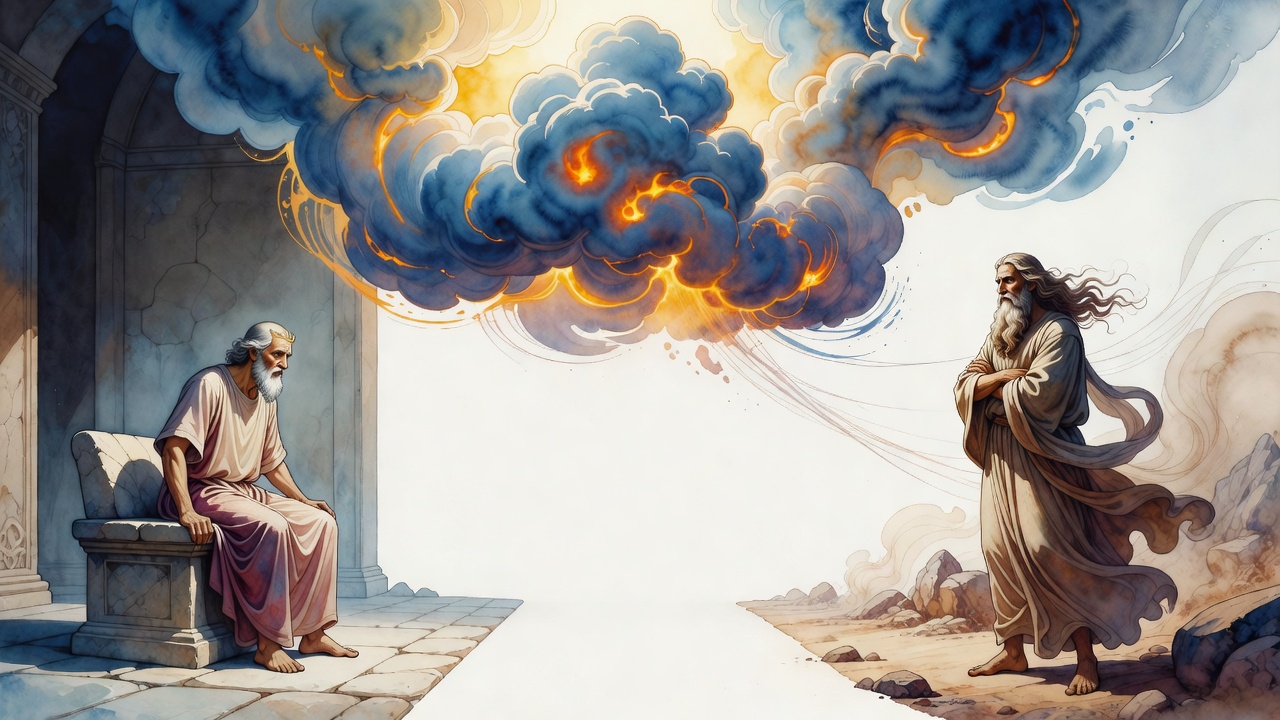
A carved god stands in the room, close enough to touch and dust. Heaven is five hundred years away on foot. Only one of the two answers when a man calls.
Table of Contents
 Click for full size
The Thing in the Room That Does Not Answer
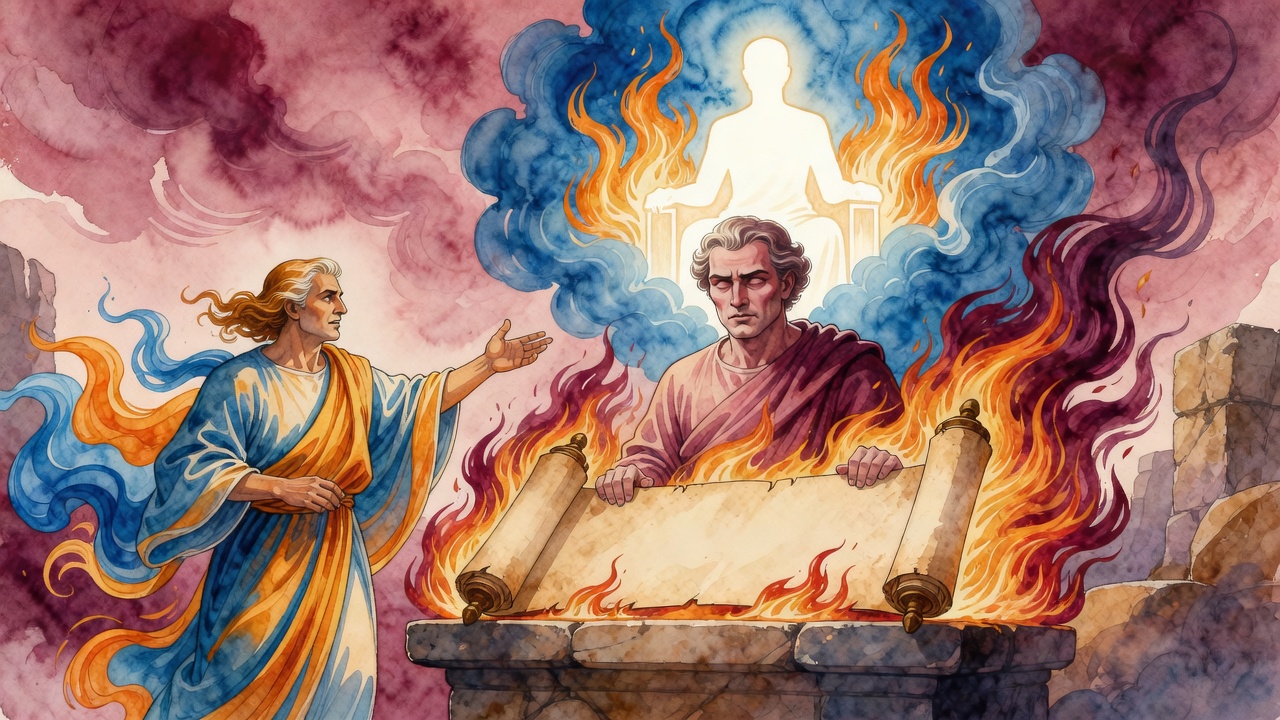
A man cuts a god out of wood, carries it home, and stands it against the wall of his own house.
It is right there. He can touch it. He wipes the dust off its face with his sleeve. When the harvest fails or the child stops breathing he goes and stands in front of it and shouts, and the room stays exactly as quiet as it was before he opened his mouth.
Rabbi Yehuda ben Rabbi Simon put the two things side by side and got the shape of it. Idols are near and far. God is far and near.
Five Hundred Years of Walking
Far is not a figure of speech here. Rabbi Yehuda gave the number. From the ground a man is standing on to the floor of the first heaven is five hundred years of walking.
Nobody is meant to attempt it. That is the point of the measurement. A man could set out the day he learns to walk and die of old age with the sky no closer than it was when he started.
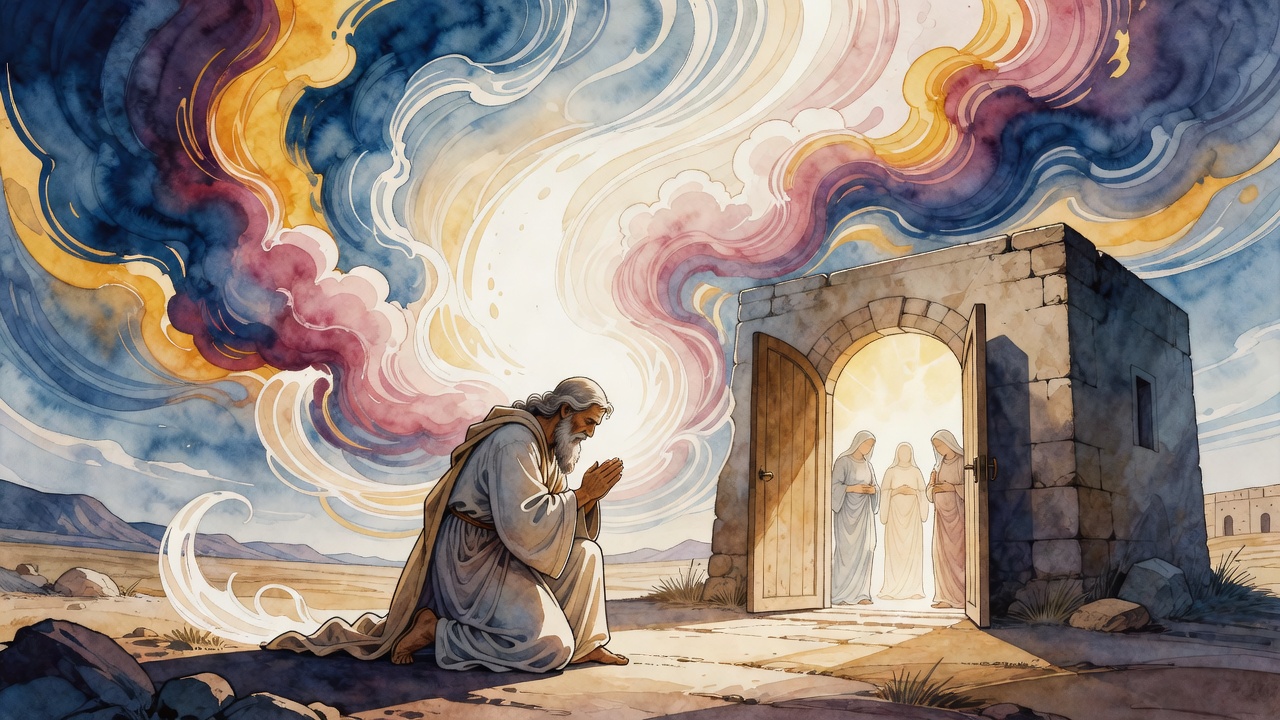
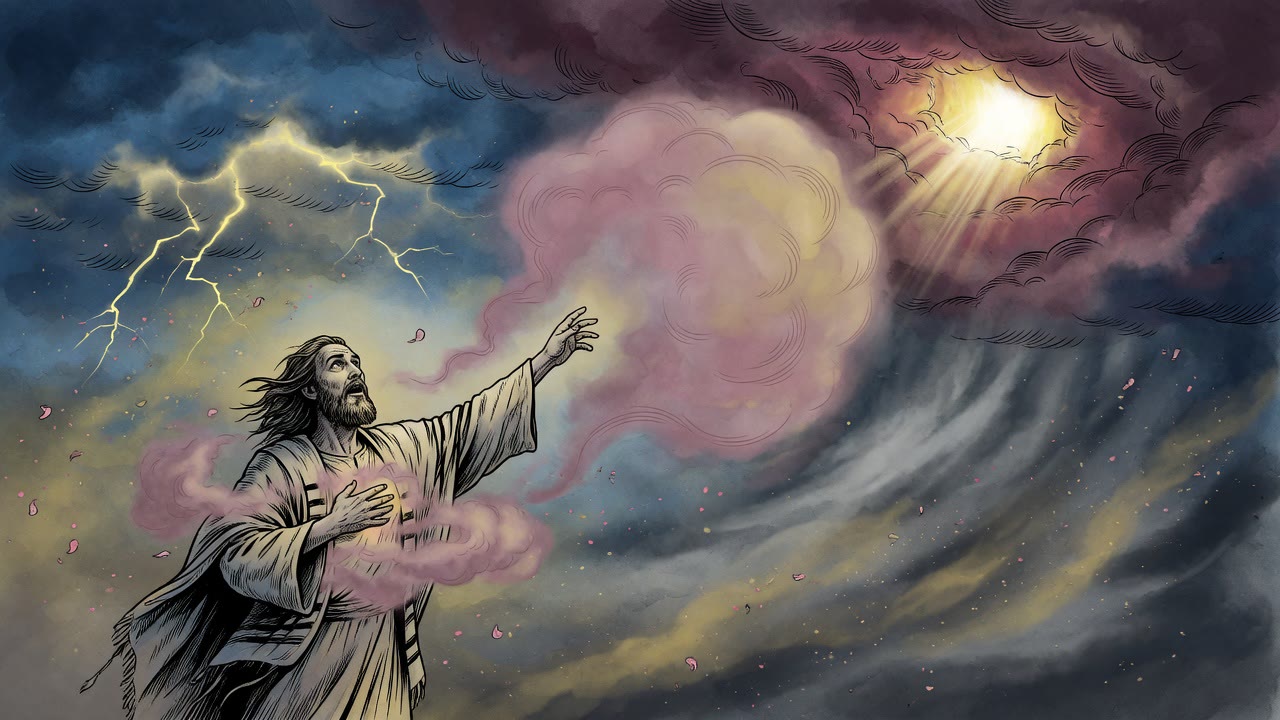
And a man stands still in a room and works something out silently inside his own chest, and it has already been heard. No distance is crossed, because there was never any distance to cross. All flesh comes to the one who hears prayer, and the coming has nothing to do with feet.
What David Asked For
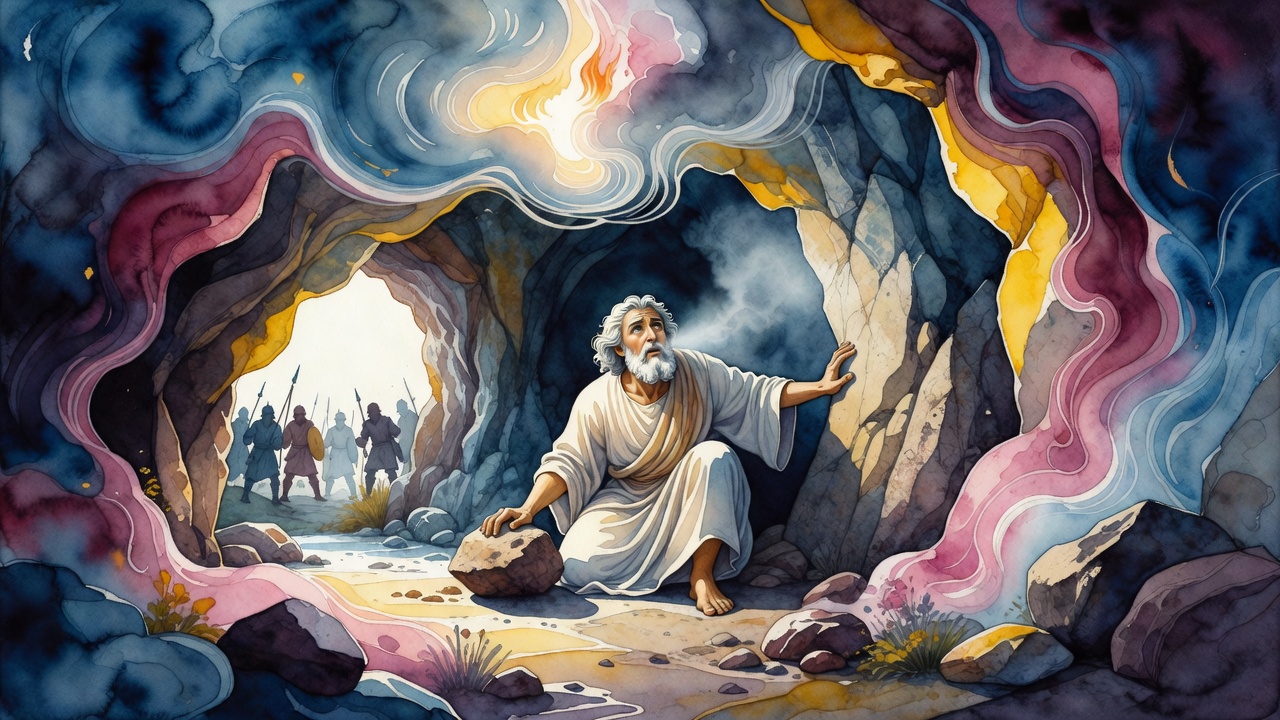
David stood before the Holy One with a request, and it was not a generous one.
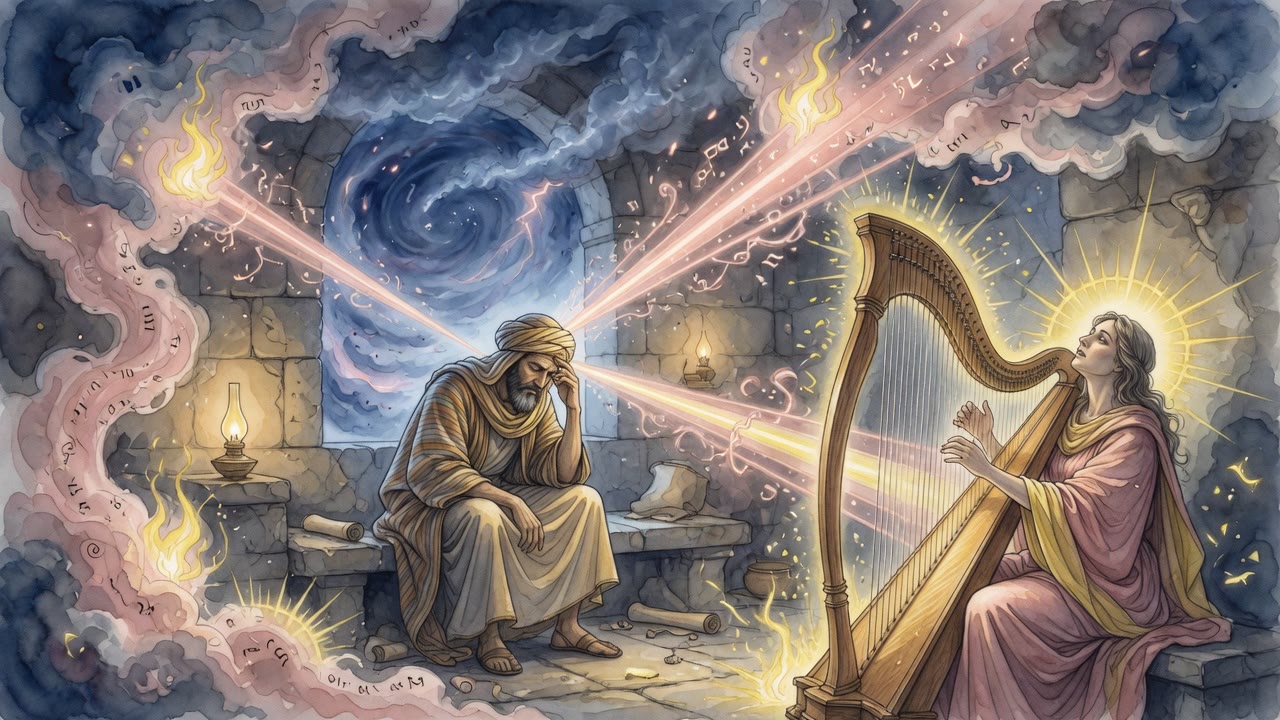
"Master of the universe. When the nations of the world come to pray in front of You, do not answer them."
He had a reason and he laid it out. They do not come wholeheartedly. They go to the carved thing first. They stand in front of it and shout and nothing happens, and then the trouble gets worse, and only when it is bad enough do they turn around and come to You. Do not answer them either.
He even had the verse for it, and he bent it to get what he wanted. They cried out and there was no savior, and to the Lord, who did not answer them. The words can be tilted half a degree so that the second half stops being a report and becomes a petition. Lord, do not answer them.
"But when Israel calls," David said, "answer us straight away."
The reply did not touch the first half of the request at all.
"What is this you have said, answer me when I call? As you live, I will answer you before you call Me. Before they call, I will answer. I have no other nation but you."
The Gate That Is Sometimes Locked
Rabbi Hanina bar Pappa was still bothered by something in David's own words. Let my prayer come to You, Lord, at a time of favor. Why would a man ask for a favorable time unless there were unfavorable ones?
He took it to Rabbi Shmuel bar Nahman, who did not soften the answer.
The gates of prayer are sometimes open and sometimes locked. The gates of repentance are always open.
The ritual bath in a town has a keeper and a door, and the door has a bolt on it, and a man who arrives at the wrong hour stands outside in the street. The sea has no bolt. A man can walk into the sea at any hour of the night with nobody watching him do it. The hand that takes back the penitent is the sea, not the bathhouse.
Rav Anan would not have it. The gates of prayer are never locked either, he said, and he had the verse where God is near in all our calling to Him, and calling is prayer, and before they call, I will answer.
Rabbi Hiyya the Great answered the whole argument with instructions instead. Hope in the Lord, be strong, let the heart take courage, and hope in the Lord again. "Pray, and pray again," he said, "and there will come a time when it is granted."
There is one way to force the matter, and Rabba bar Abbahu named it. Say the Shema, and let nothing at all come between the end of it and the standing prayer. No pause. No word to anybody standing nearby. Nothing at all in the gap, because there is not supposed to be a gap. A man who does that may be certain his prayer has been heard.
The Man Who Looked Away
Rabbi Menashya, grandson of Rabbi Yehoshua ben Levi, put the same nearness inside an ordinary street.
A man walks past something he should not be looking at, and his eyes want it, and he does not let them feed. That man, Rabbi Menashya said, will be permitted to greet the Divine Presence.
The proof is two lines apart in the same prophet. One line describes a man who shuts his eyes against seeing evil. The next line tells him what those same shut eyes are going to be given.
Your eyes will behold a king in his beauty. They will see a distant land.
The distance never closes. Five hundred years of sky stays exactly where it was. But a man who turns his head away from one thing in the street on an ordinary afternoon is told he will be shown the far country, and he does not have to take a single step to get there.
← All myths