4 min read

Jacob Burned the Idols Before He Returned to Bethel

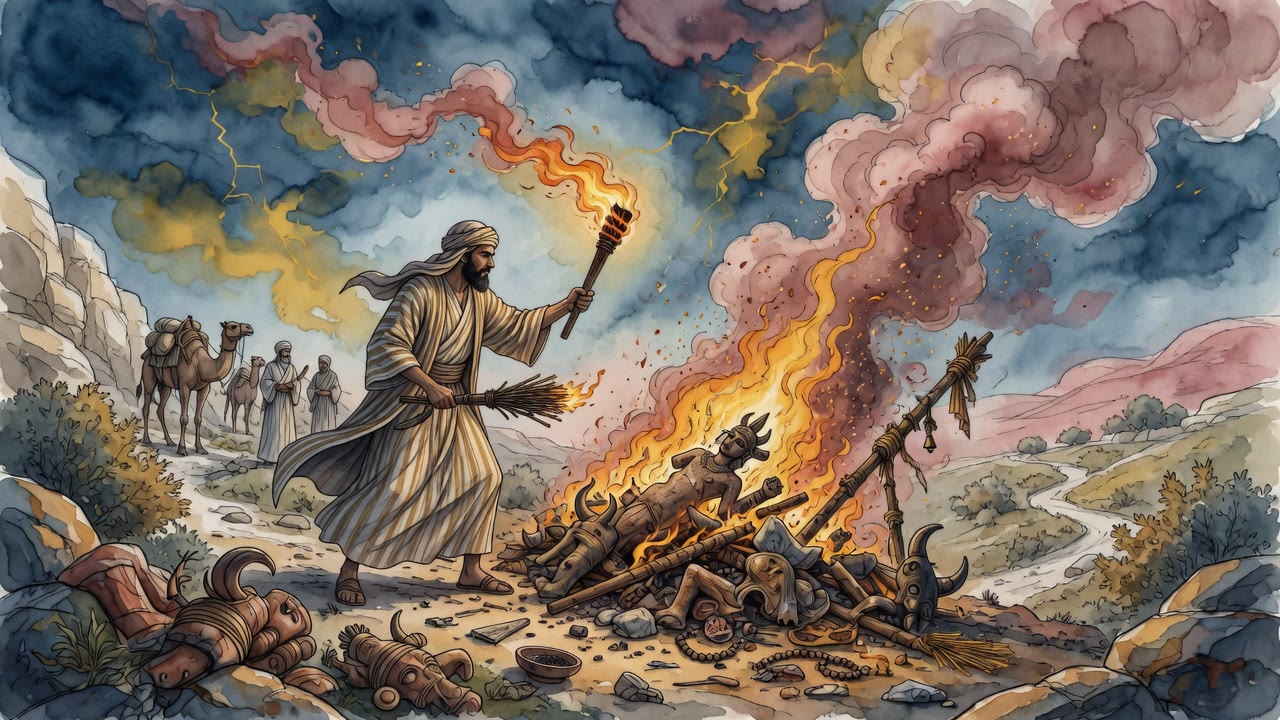
The Torah says Jacob told his household to put away their foreign gods. The Book of Jubilees says he buried them, burned them, and scattered the ash in a river.

Curated by Arthur · Told by Maggid ·
Table of Contents
  1. The Order Before the Journey
  2. What the Book of Jubilees Did With the Oak
  3. Why Joseph's Birth Made Jacob Ready to Leave
  4. Bethel and the New Name

The Order Before the Journey

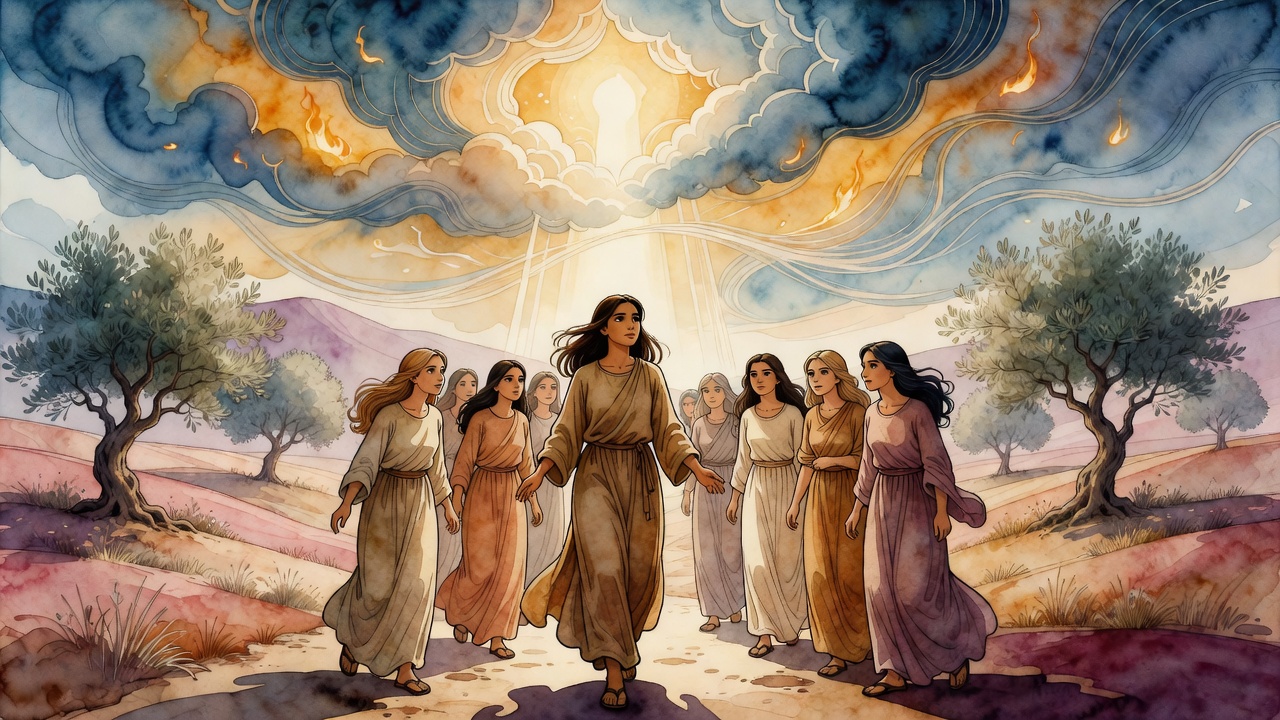
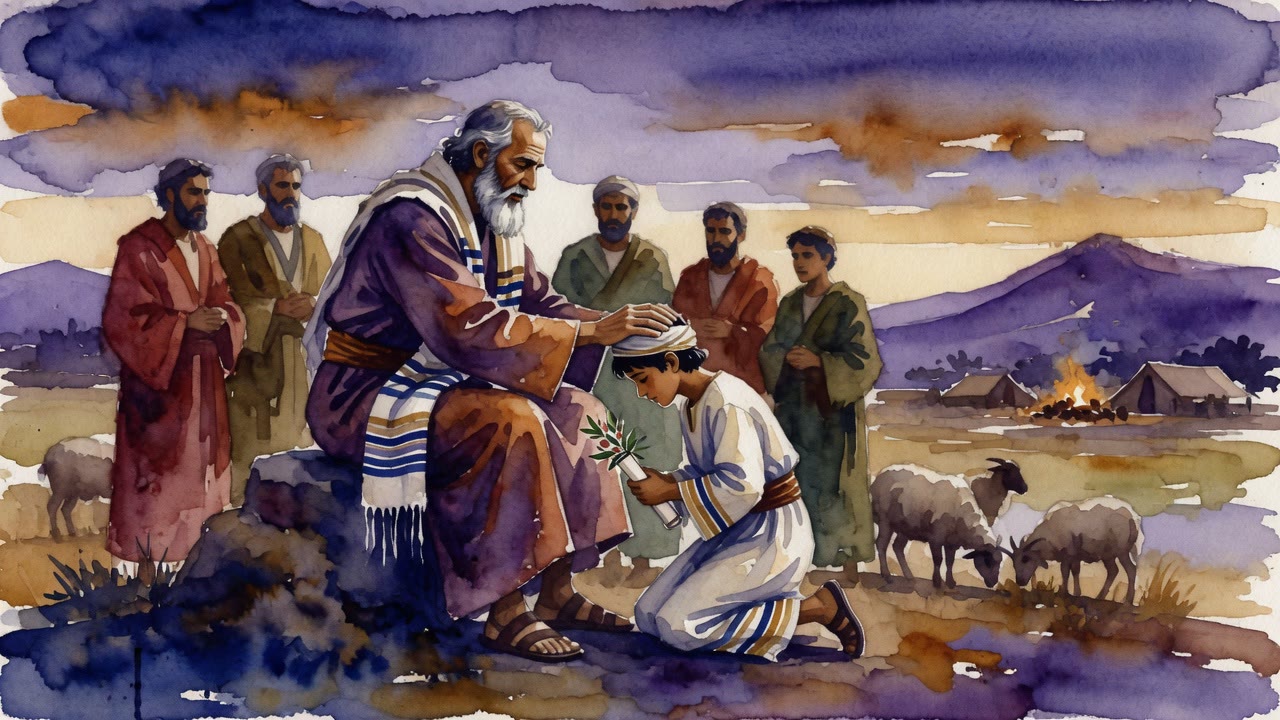
Jacob had been in Laban's country for twenty years. His wives had come from that country, his children had been born there, and his household had accumulated the habits and the objects of a Mesopotamian household. When God told him it was time to return to his father's land, Jacob called his household together and gave them an order: put away the foreign gods among you. Purify yourselves. Change your garments. We are going to Bethel, and I will build an altar to the God who answered me in the day of my distress.

The Torah records the compliance. The people gave Jacob everything: the foreign gods, the earrings that had been acquired in Aram, all of it. Jacob took what they gave him and hid it under the oak tree in Shechem. That is where the Torah leaves the objects. Hidden. Not destroyed.

What the Book of Jubilees Did With the Oak

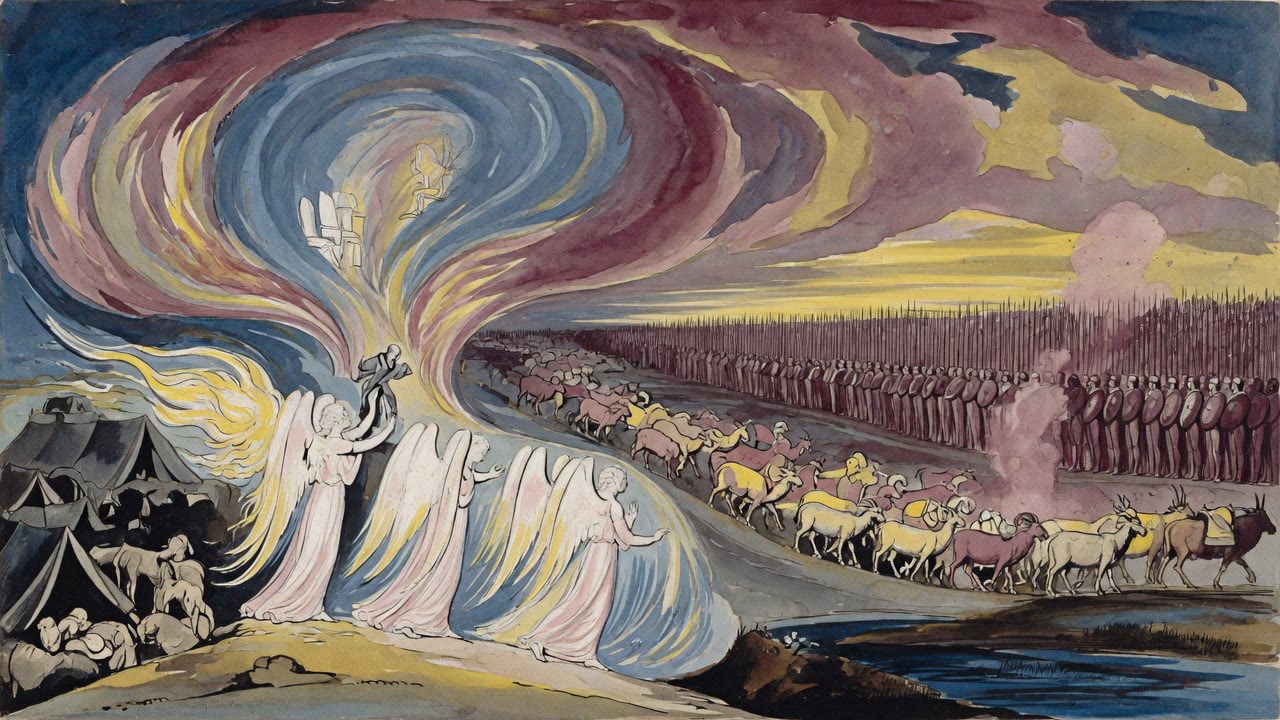
The Book of Jubilees did not leave the idols under the tree. It said Jacob gathered everything the people brought him and he burned it, and he broke what would not burn, and he ground what remained to dust, and he scattered the dust in a river. There was nothing left. Nothing that could be dug up in the next generation by someone who remembered where the oak was. Nothing that could be retrieved and reinstated. The Jubilees version of Jacob understood what a buried idol is: a preserved idol. He destroyed them completely because he understood the difference between removing a thing from sight and removing a thing from existence.

The earrings went into the fire with the figures. Jewelry that had been worn in a foreign land during the years of Laban's household carried the associations of those years. Jacob did not keep them as souvenirs.

Why Joseph's Birth Made Jacob Ready to Leave

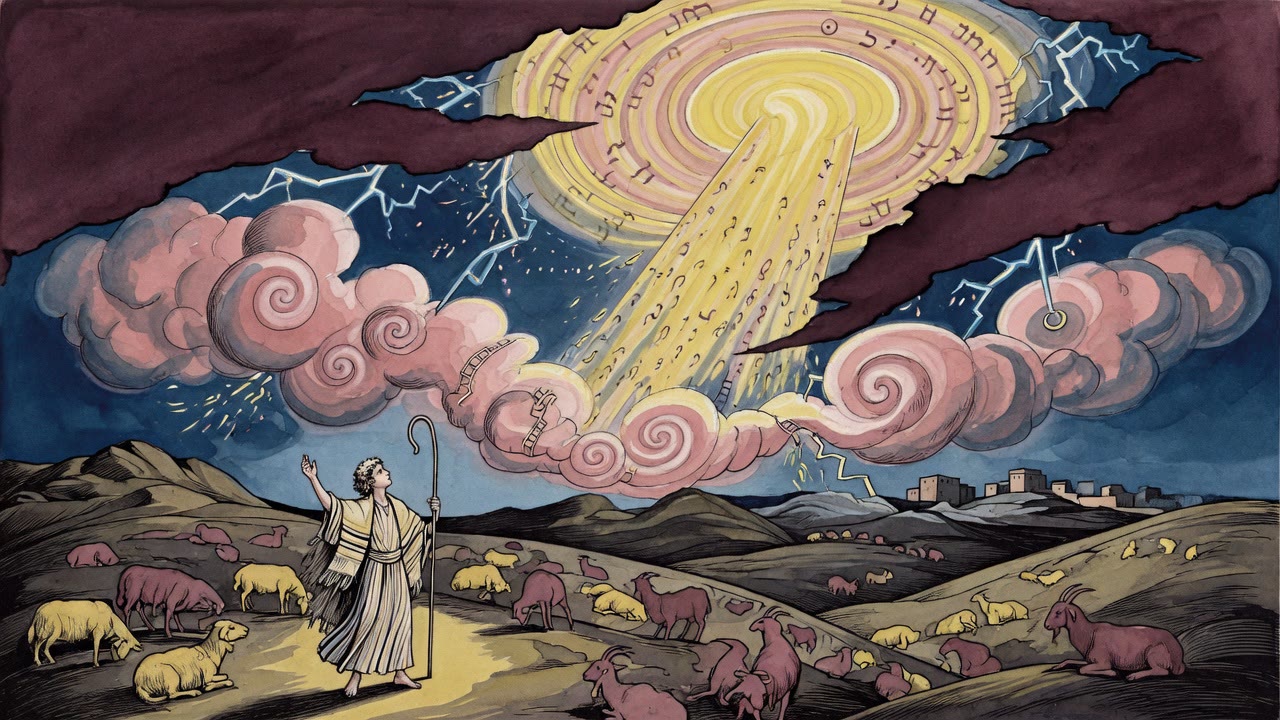
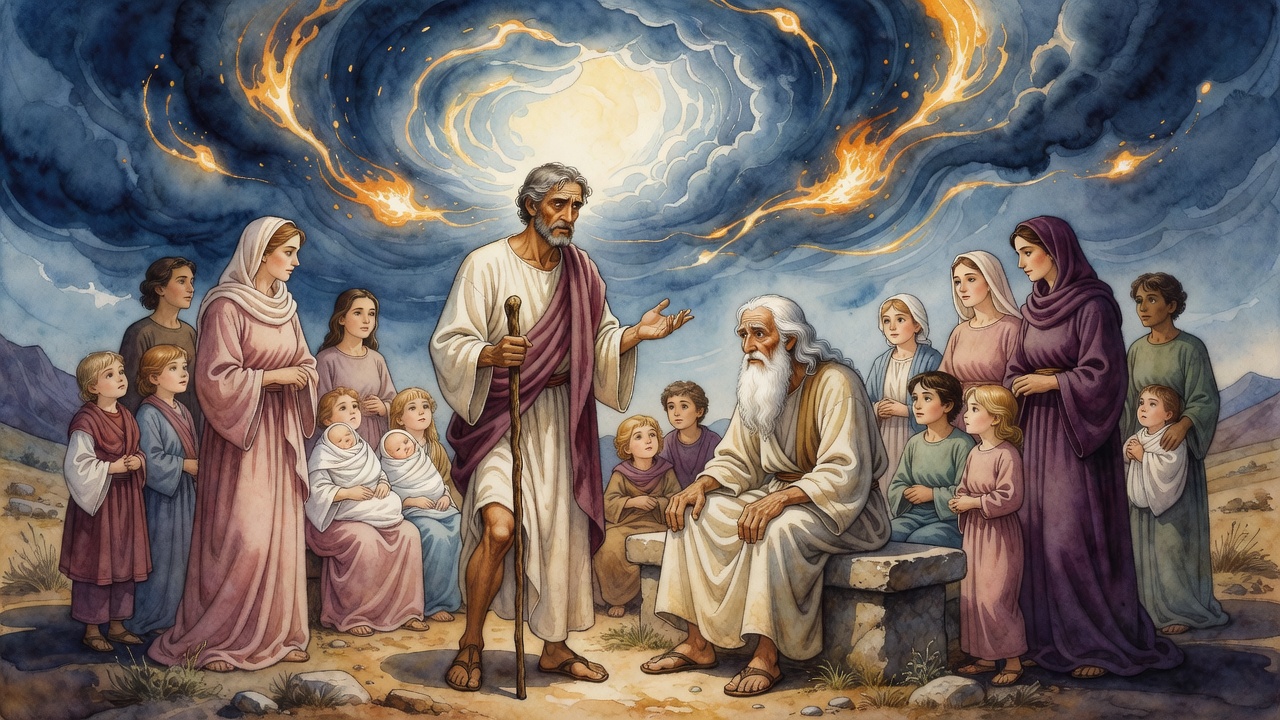
Jacob had been waiting in Laban's country for a specific reason, one that the text of Genesis does not state but the tradition supplied: he knew that Joseph's birth was the event he had been waiting for. He had an intuition, what the tradition calls a ruach hakodesh, a holy spirit, that Joseph's line would eventually bring about the reckoning with Esau's descendants. Once Joseph was born, Jacob no longer had a reason to stay.

The timing was not sentiment. It was calculation. Jacob had spent twenty years in Laban's country, and he had been watching for the birth that would tell him the future was in order. Joseph arrived, and Jacob told Laban he wanted to leave. The confrontation with Laban over wages and livestock that followed was the delay, the negotiation, the last chapter of the Mesopotamian interlude. Then God told Jacob directly that Laban's heart had turned against him and that it was time. Jacob departed with everything he had built and everything he had been waiting for.

Bethel and the New Name

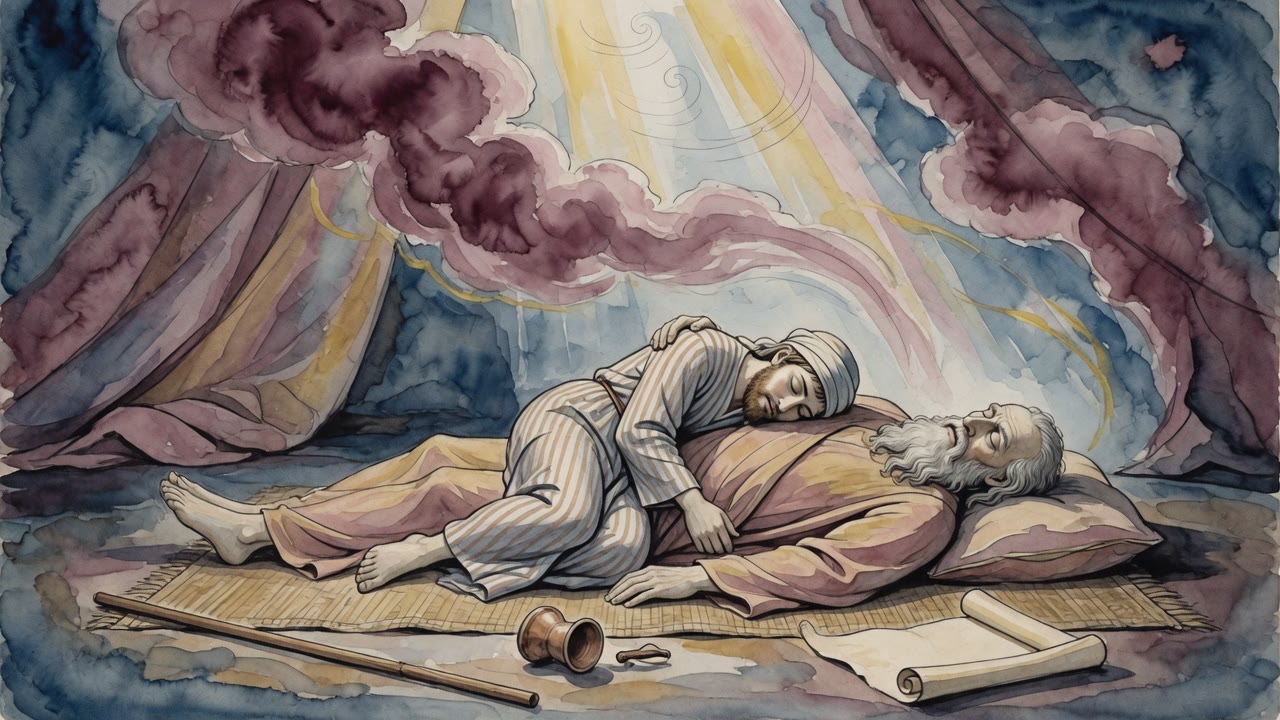
When the purified household arrived at Bethel, God appeared to Jacob again at the same place where, decades earlier, a young man fleeing his brother had slept on a stone and dreamed of a ladder. God renewed the promise. The name that had been given at the Jabbok was confirmed here, in the place where it had first been implied. Jacob set up a stone pillar and poured oil and wine on it as an offering. He named the place Bethel, house of God, for the second time. The first naming had been the act of a frightened young man who woke up terrified from a dream of heaven. This naming was the act of a man who had burned his household's foreign gods in a river and climbed back to the place where the ladder had stood.


← All myths

From the tradition

Sources

4 sources

The texts this telling draws on, in full. Open a card to read inline, or expand it for a wider, quieter read.

Book of Jubilees 31:4Book of Jubilees

Book of Jubilees turns to Jacob Destroys Foreign Idols Before Returning Home.

The Book of Jubilees, a text considered canonical by the Ethiopian Orthodox Church and valued by many for its insights into ancient Jewish thought, tells us that Jacob gathers his family and says, "Let us arise and go up to Bethel, where I vowed a vow to Him on the day when I fled from the face of Esau my brother, because He hath been with me and brought me into this land in peace." It’s a powerful moment of recognition. Jacob acknowledges the divine protection that has guided him through all his trials.

There's a catch. Before they can return to Bethel – literally "House of God," a place of sacred significance – Jacob demands a purification. "Put ye away the strange gods that are among you." for a second. After all that Jacob had been through, his family was still holding onto their idols! It’s a stark reminder that shedding old beliefs and practices isn’t always a clean break. Sometimes, we cling to familiar comforts, even when we know they don't serve us.

So, what happens to these idols? Well, the family doesn’t just toss them in the trash. Jubilees continues, "And they gave up the strange gods and that which was in their ears and which was on their necks, and the idols which Rachel stole from Laban her brother she gave wholly to Jacob."

Wait, Rachel? Yes, that Rachel. The one we also read about in (Genesis 31:19), who famously swiped her father’s idols. It seems that even after all this time, she was still holding onto them. This detail, included in Jubilees, adds a layer of complexity to her character. It suggests a possible struggle between her loyalty to her family and her growing faith in the God of Jacob.

And what does Jacob do with these discarded idols? He doesn’t just bury them. The text says, "And he burnt and brake them to pieces and destroyed them, and hid them under an oak which is in the land of Shechem." The burning and breaking – these are acts of deliberate destruction, a symbolic rejection of the old ways. Hiding them under an oak in Shechem marks a definitive end to their power.

Why an oak tree, though? Trees often symbolize strength, longevity, and connection to the earth. Perhaps burying the idols beneath an oak was a way of ensuring they would never resurface, a way of rooting out the old beliefs and planting something new in their place.

What can we learn from this story? It’s more than just an account of ancient idol disposal. It's a story about transformation, about the messy process of letting go of old beliefs and embracing a new path. It’s a reminder that even those closest to us may be confronting their own internal conflicts, clinging to familiar comforts even as they strive for something more. And it’s a evidence of the power of intentional action, of deliberately dismantling the things that hold us back from fully embracing our own journeys. What idols might we need to confront in our own lives? What oaks await?

Full source
Legends of the Jews 6:149Legends of the Jews

He was just waiting for Joseph to be born so he could finally head home. Why? Because Jacob had a sense – a ruach (spirit) hakodesh, a holy spirit – that Joseph's line would eventually bring about the downfall of Esau. So, upon Joseph's birth, Jacob declared, "Now I need not fear Esau or his legions."

How exactly did Jacob know it was time to go?

Well, the story goes that Rebekah, Jacob's mother, sent her nurse, Deborah – the daughter of Uz – along with two of Isaac's servants, to urge Jacob to return home. Fourteen years of service were up, after all. Can you imagine the anticipation? The longing for home?

So, Jacob approaches Laban, his father-in-law, and says, "Give me my wives and my children, that I may go unto mine own place, and to my country, for my mother has sent messengers unto me, bidding me to return to my father's house." Basically, "I'm outta here, hand over my family!"

Laban, naturally, wasn't thrilled. He responds with a bit of flattery and a touch of… well, let's call it manipulation. "O that I might find favor in thine eyes! By a sign it was made known unto me that God blesseth me for thy sake."

What was Laban's "sign"? Ginzberg, in Legends of the Jews, tells us it was a treasure he found the day Jacob arrived! Laban figured that Jacob was some kind of good luck charm. It's fascinating, isn't it, how people interpret blessings? He sees Jacob as the source of his good fortune.

And honestly, Laban did have a point. The text suggests that God had been working wonders in Laban's house thanks to Jacob's piety. As the text suggests, shortly before Jacob arrived, a plague was ravaging Laban’s cattle, and it stopped with Jacob’s arrival. Also, Laban hadn't had any sons before Jacob came, but during Jacob's time in Haran, sons were born to him. The Zohar tells us of the power the righteous have to bring blessing into the world, and Laban was certainly benefitting.

So, what do we take away from this? It’s a story about family, about destiny, and about recognizing – or perhaps misinterpreting – the blessings in our lives. It makes you wonder: what signs are we looking for? And are we always seeing them clearly?

Full source
Legends of the Jews 6:151Legends of the Jews

Jacob, after years of hard work, had finally begun to prosper. But instead of joy, his success bred envy in the hearts of Laban and his sons. Their annoyance, their vexation, became palpable. You could practically cut it with a knife.

Then, God speaks.

"Thy father-in-law's countenance is not toward thee as beforetime, and yet thou tarriest with him?" (Legends of the Jews). It's a direct message, a divine nudge. "Return unto the land of thy fathers, and there I will let My Shekinah (the Divine Presence) rest upon thee, for I cannot permit the Shekinah to reside outside of the Holy Land."

The Shekinah, that radiant, indwelling divine presence. Think of it as God's palpable nearness. The idea that this presence couldn't dwell outside the Holy Land is fascinating, isn't it? It emphasizes the unique sanctity attached to that place.

So, what does Jacob do? He doesn't waste any time. He needs to speak with Rachel and Leah, his wives. But he has to be careful. He sends Naphtali, described as a "fleet messenger" in Legends of the Jews, to discreetly summon them.

Imagine the scene. Jacob chooses the open field as their meeting place. Why? Because there, in the vast expanse of nature, no prying ears could overhear their crucial conversation. A secret meeting, heavy with implications.

It’s a moment of transition, a turning point. Jacob is being called back to his homeland, back to his destiny. But he can't just leave. He needs his wives on board.

What secrets will be revealed in that field? What choices will they make? We're on the cusp of a major shift, a new chapter in Jacob's life, guided by divine decree and fraught with human complexity. And it all started with a feeling that familiar smile wasn’t quite so warm anymore. Have you ever felt that?

Full source
Targum Pseudo-Jonathan on Genesis 35:2Targum Pseudo-Jonathan on Genesis

"Put away the idols of the peoples which are among you, which you took from the temple of Shekem, and purify you from the uncleannesses of the slain whom you have, and change your raiment." Targum Pseudo-Jonathan (Genesis 35:2) reveals a detail the plain text leaves vague: the idols in Jacob's household had been taken as plunder from the sack of Shechem.

Think about what that means. After Simeon and Levi killed the men of the city, some of Jacob's household picked through the temple and carried away the sacred objects of a foreign cult. The idols had come home with them as trophies. And they had stayed.

Three commands to purify

Jacob gave three commands at once. Remove the idols. Wash from the impurity of contact with the dead. Change your clothes. It is a complete decontamination protocol, physical, spiritual, and ritual.

The rabbis noticed the order. You cannot go up to Bethel with idols in your baggage. You cannot meet the Holy One while still wearing the dust of the slain. And you cannot wear the same clothes in which you did questionable things and expect the sacred to settle on you. Before the ascent, the purge.

The takeaway: return to God requires leaving something behind. And the things you have to leave are usually the things you should have left long ago.

Full source