Jacob Dreamed a Ladder That Showed Him Every Empire to Come
Two angels went up the ladder and two came down. Every kingdom that climbed it stood a little lower on the rungs than the one before.
Table of Contents
 Click for full size
A Stone Under His Head on the Road North
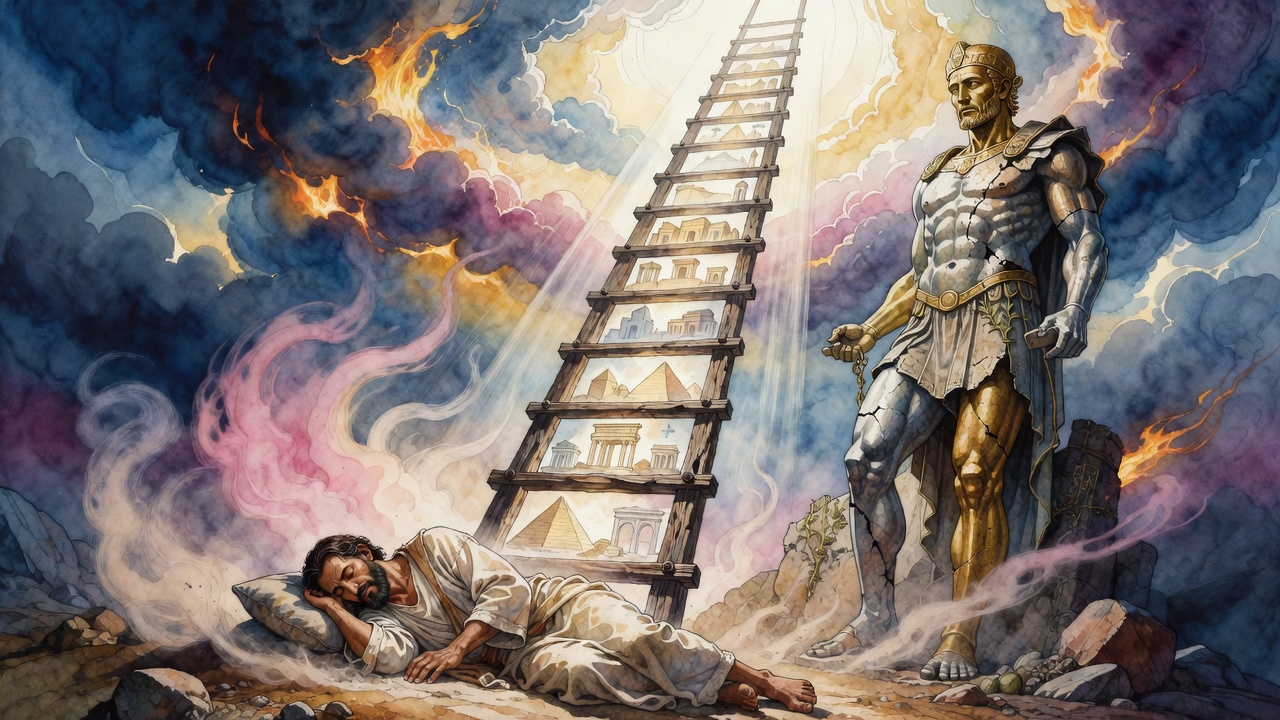
Jacob ran until the light went. His brother had sworn to kill him, his mother had pushed him out the door toward Haran, and the country he was crossing had no walls in it anywhere. He took a stone, put his head on it, and slept the way a man sleeps when there is nothing left to guard.
Then he dreamed the ladder.
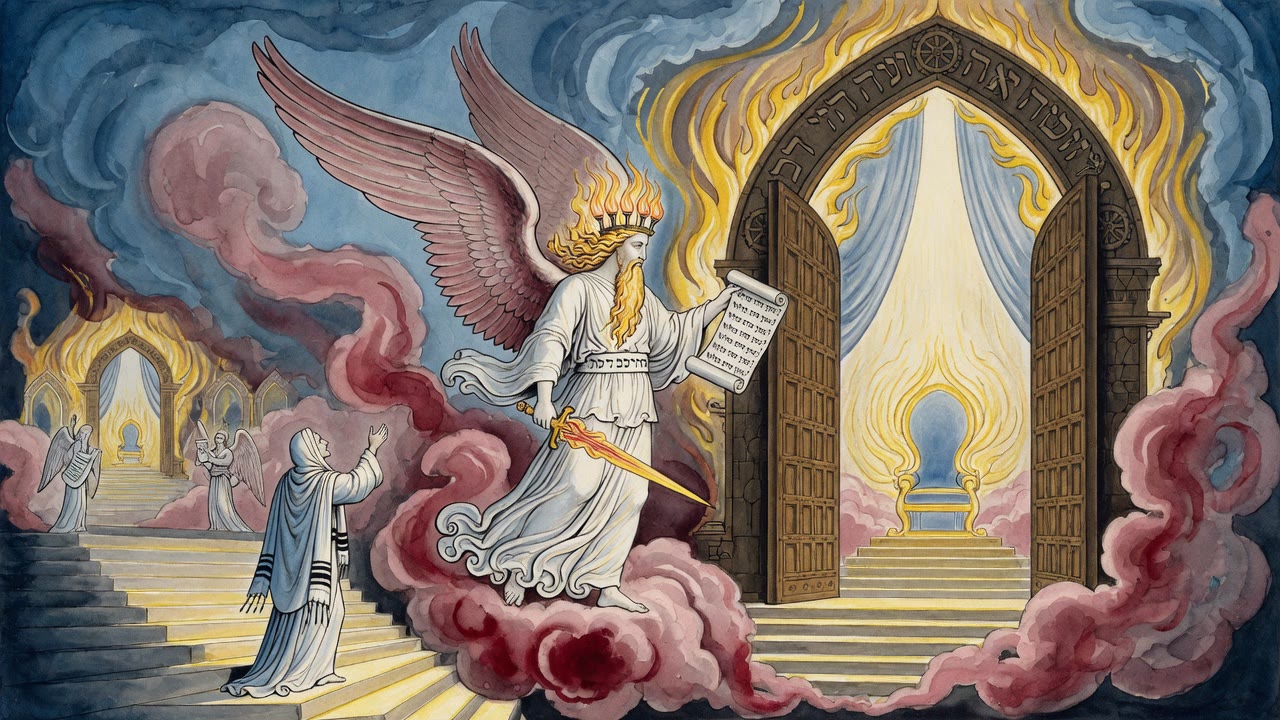
It stood on the ground with its top in the sky, and angels of God were going up it and coming down it. Two climbing. Two descending. Not a crowd. Four.
Every Climber Stood Lower Than the Last
They were the angels of four kingdoms, and each kingdom's rule would end when its angel came down.
The order of the words matters. They went up first and came down after, so the climb was real, an ascent and not a fall. But the second angel could not reach the rung the first had held, and the third could not reach the second's, and the fourth stood lower still.
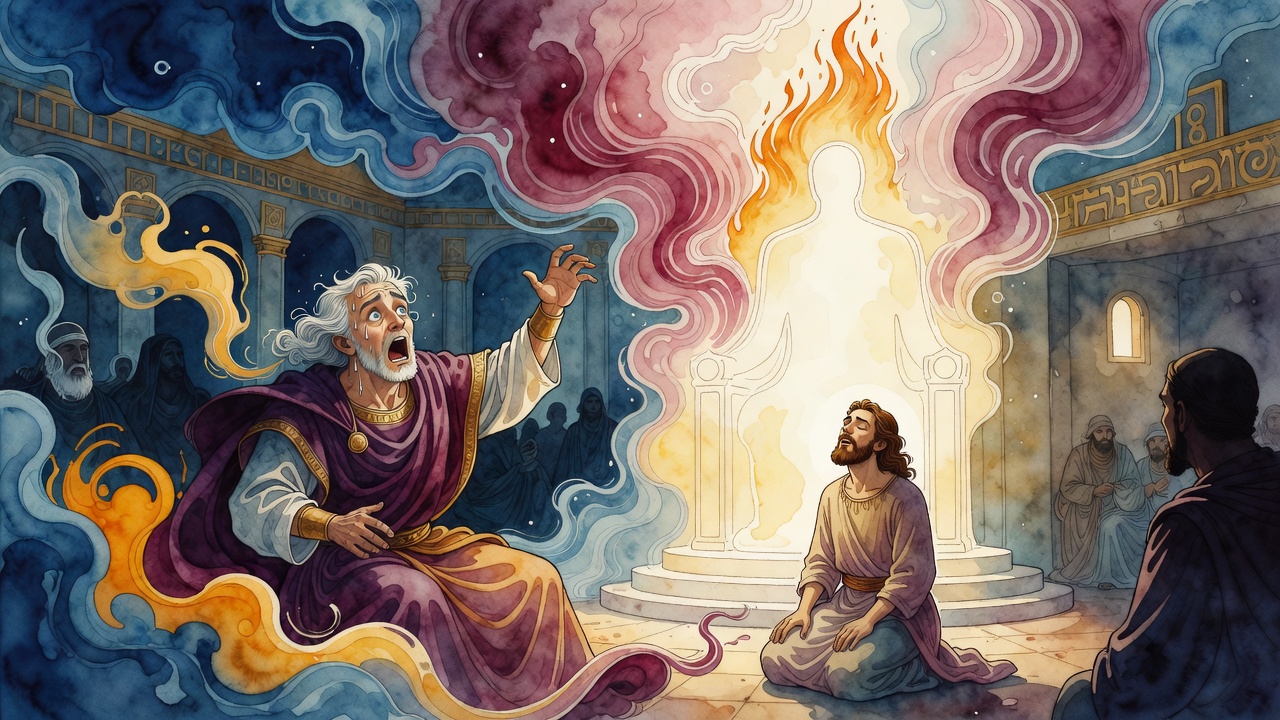
A thousand years later a king in Babylon woke sweating from the same shape. Nebuchadnezzar saw it standing on the ground with a face: head of fine gold, chest and arms of silver, belly of bronze, legs of iron, and feet where iron and wet clay had been pressed together and would not hold. Daniel told him what the gold was. "You are the head of gold." After you a kingdom lower than yours. After that a third one, of bronze. And at the end a thing with brittle toes, part of it strong and part of it ready to crumble under its own weight.
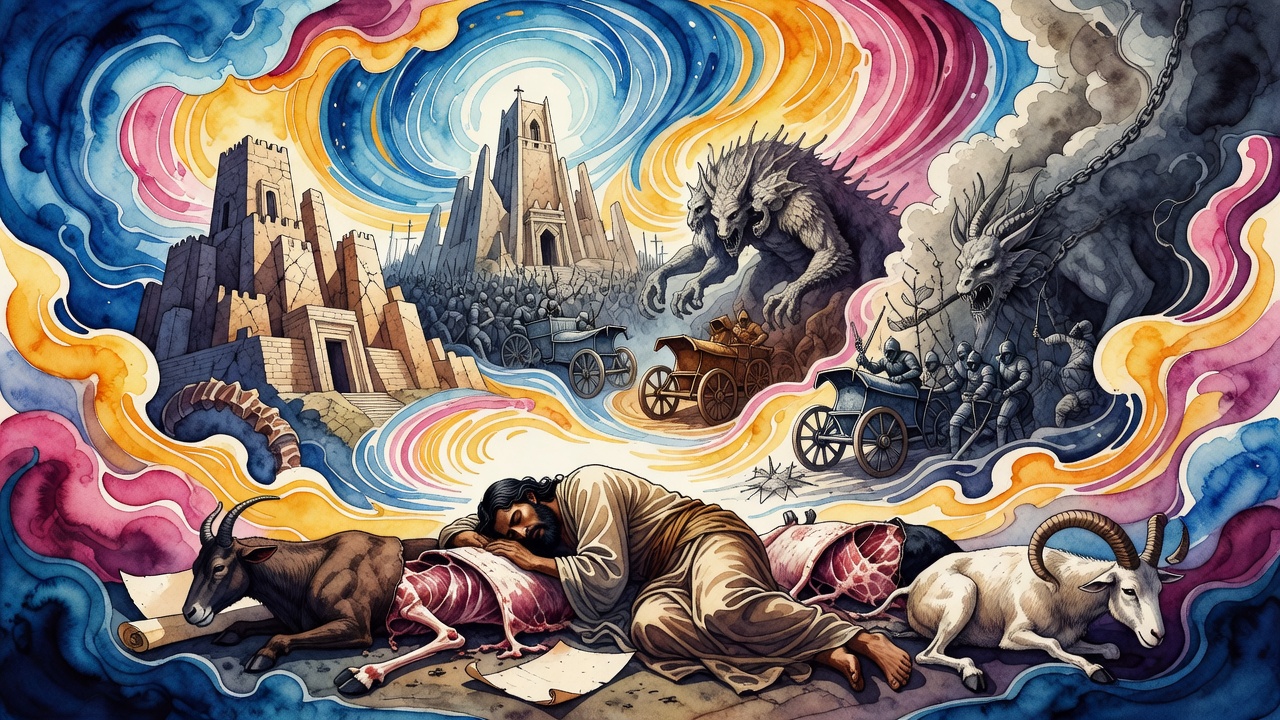
Jacob was asleep on a rock in open country, and the dream showed him the whole list of kingdoms still to come, every one of them set to rise over his children and then to fall.
Someone Was Standing Above the Rungs
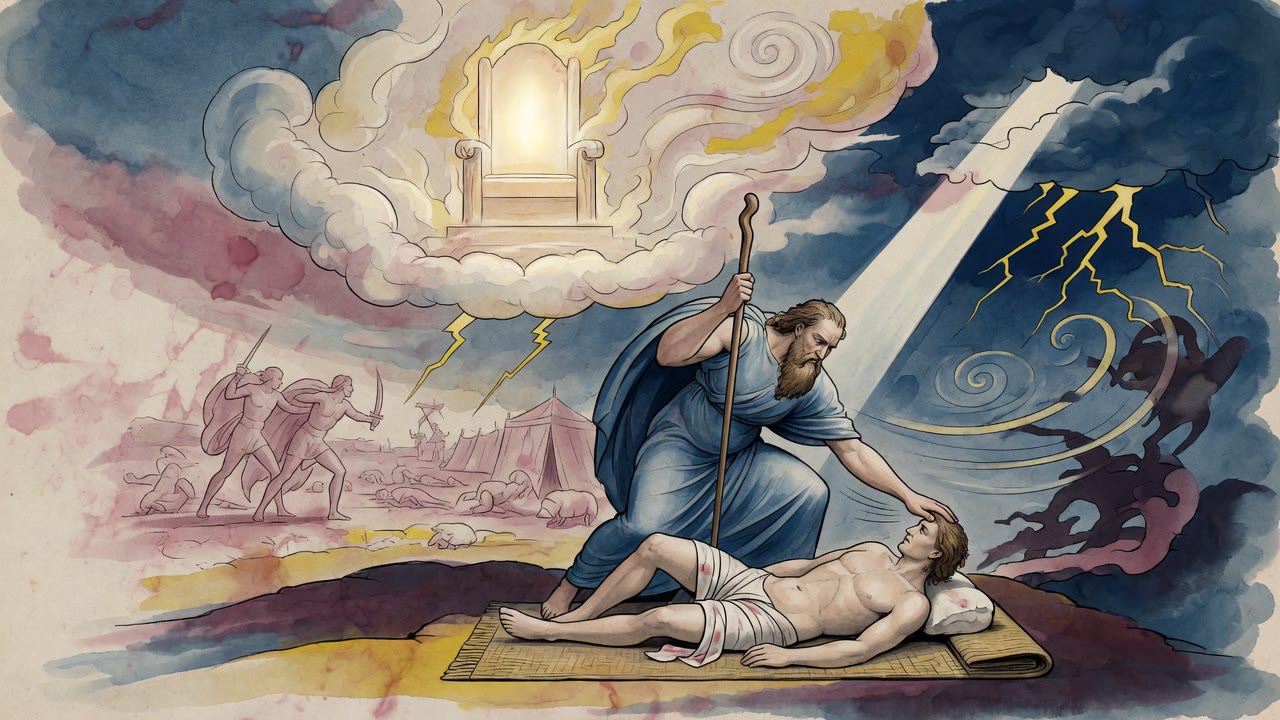
God stood over him at the top of it and spoke about land, and offspring, and going with him wherever he went and bringing him back to this ground.
That was the part the ladder was built to say. The metals wear out. The angels come down. In the days of those kings the God of heaven will raise a kingdom that will never be broken and never handed to another people.
Jacob woke terrified. He stood the stone on its end, poured oil over it, and named the place Bethel, and then he kept walking north, because the man being shown the end of history still had to get to Haran before the food ran out.
Three Questions at a Well in Haran
He found shepherds sitting with their flocks around a covered well and asked them the ordinary question a traveler asks.
"My brothers, where are you from?"
"We are from Haran."
Rabbi Yosei bar Hanina turned that answer over for a long time and said they were not naming a town. Haran and haron af, the burning anger, are one breath apart. We are running from the wrath, the shepherds were saying, in the voice of every generation that would be driven out of somewhere.
"Do you know Laban son of Nahor?"
Do you know the one who is going to wash your sins white as snow, Rabbi Yosei heard under it, because Laban is white.
"We know him."
"Is he at peace?"
"He is at peace, and here is Rachel his daughter, coming with the sheep."
Rachel Came Up the Road With the Flock
By what merit is he at peace? By hers.
A voice is heard in Ramah, wailing and bitter weeping, Rachel weeping for her children, and she will not be comforted, because they are gone. Restrain your voice from weeping and your eyes from tears. There is hope for your future.
All of that was folded into a shepherd pointing down the road.
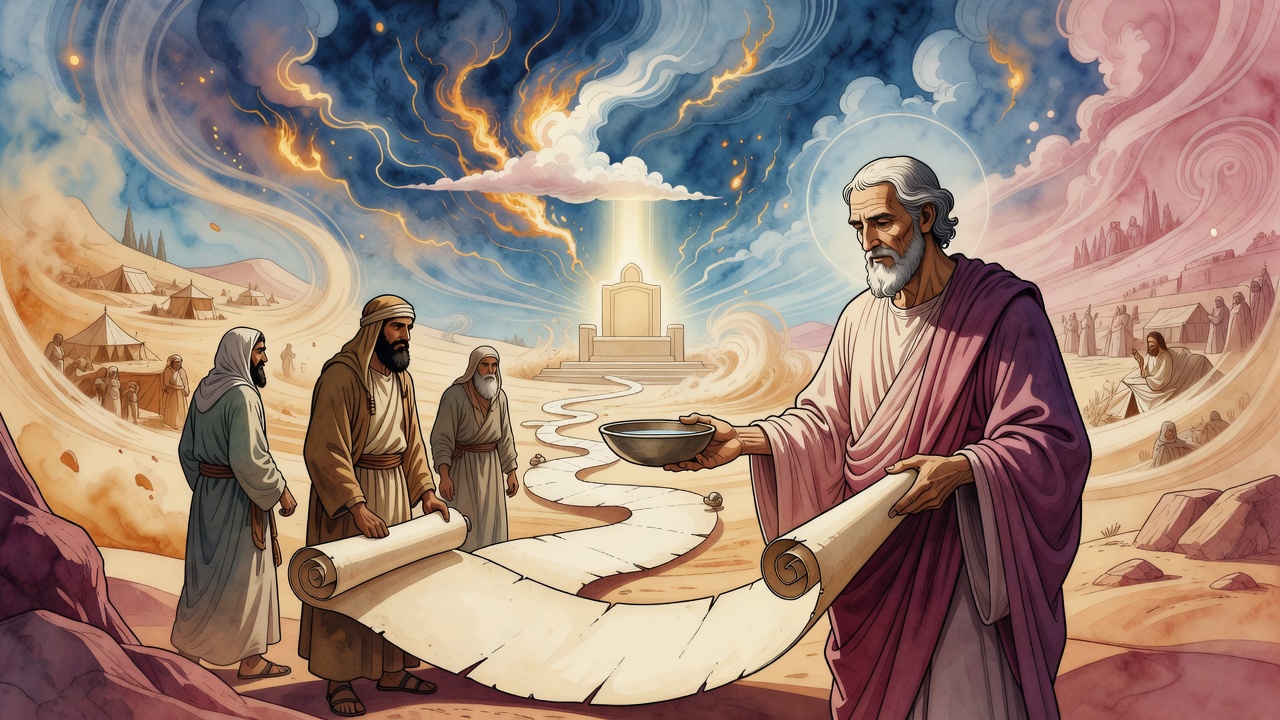
Jacob stood at the well with a night of empires still behind his eyes. He had asked three plain questions of three tired men, and every answer had been about a captivity a thousand years off, and the last one walked toward him out of the dust with her father's sheep and did not know she was the answer.
← All myths