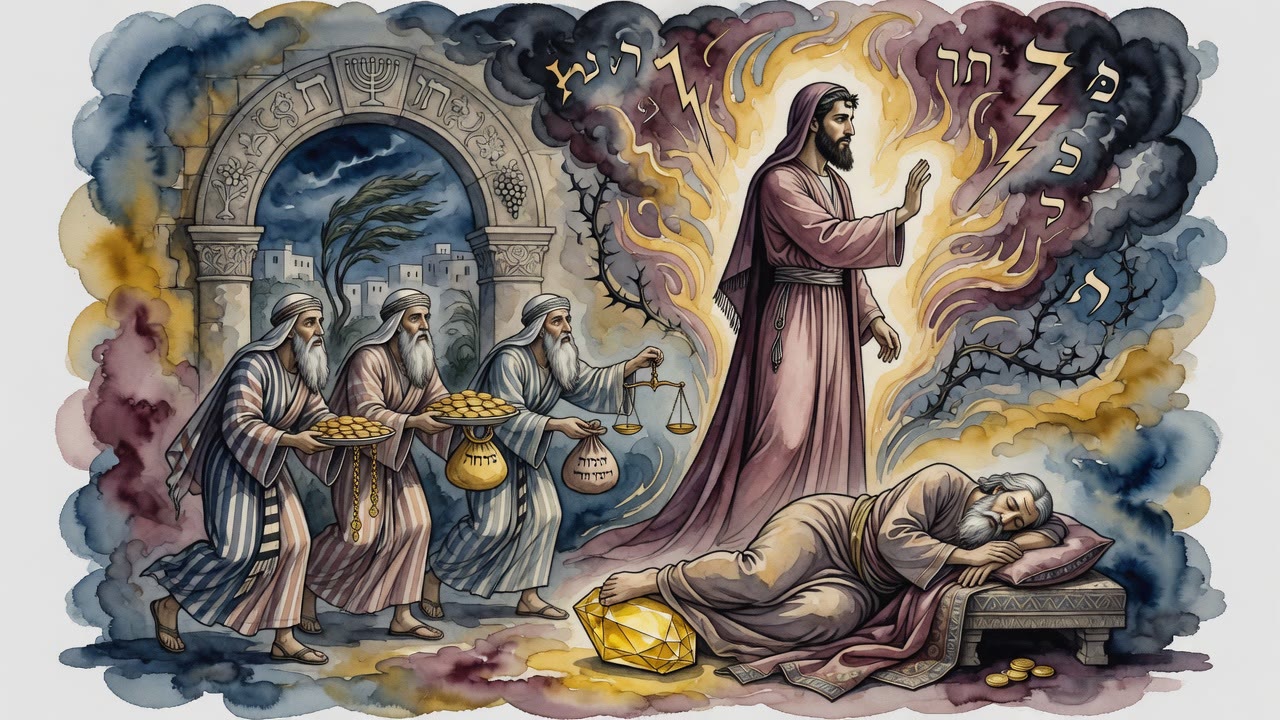
Jacob's Feet Rose Light After the Night at Beth El
He was running from a brother who had promised to kill him. He lay down on open ground, and the stones under his head began to fight over him.
Table of Contents
The stones started arguing before Jacob could get to sleep.
 Click for full size
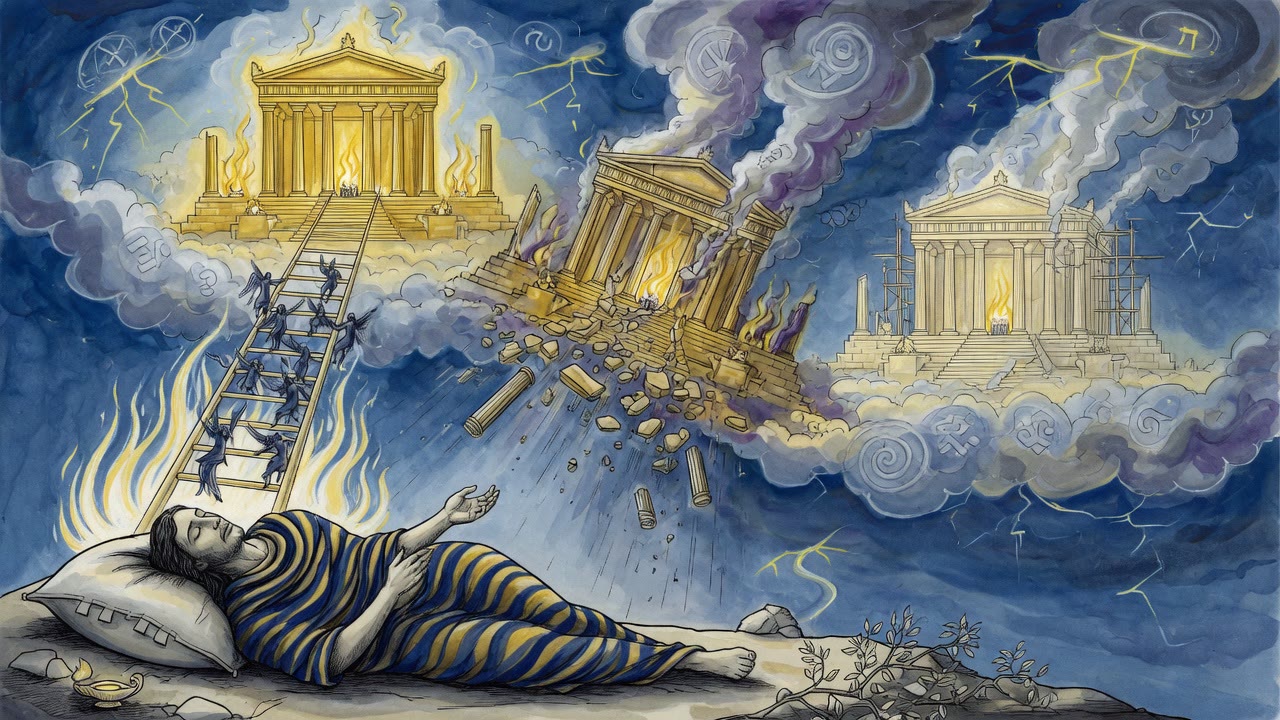
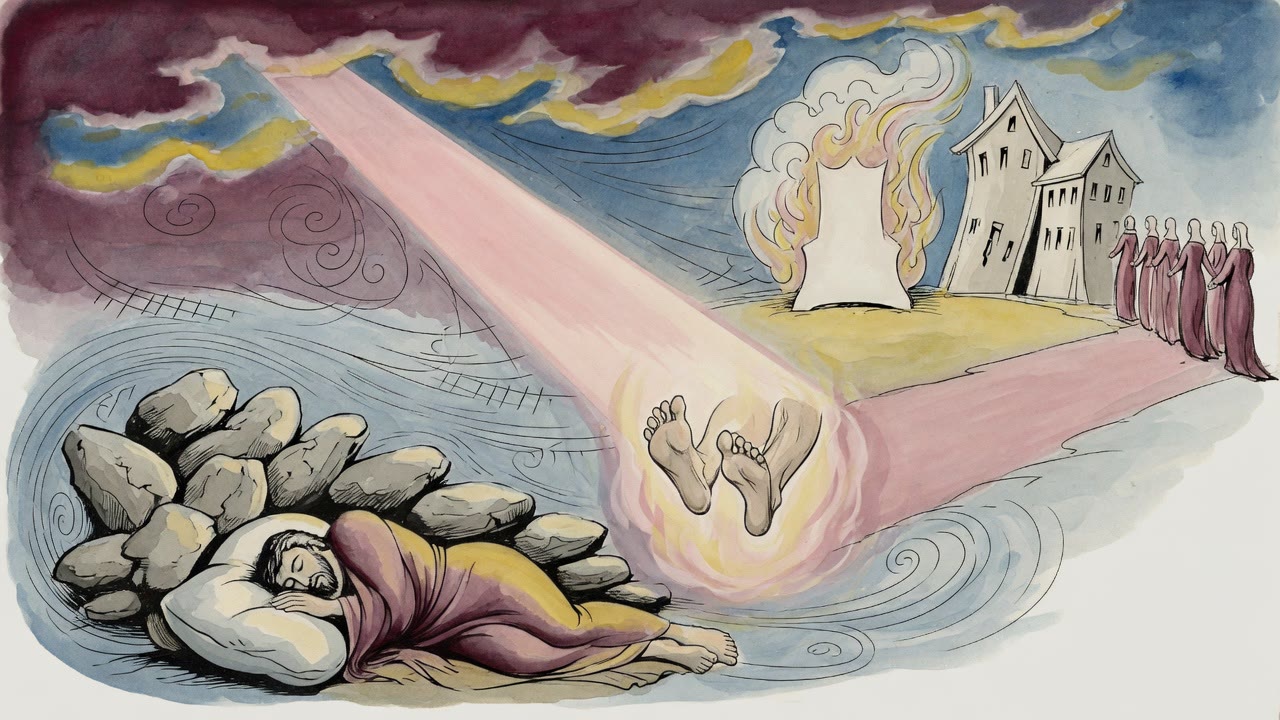
He had reached the place at sundown with nothing. No tent, no servant, no animal, no bread past what was in his hand. His brother Esau had sworn to kill him for a stolen blessing, and Jacob had gone east that same week with a staff and the clothes he stood in. He scraped a few stones out of the dirt, pushed them under his head, and lay down where the light ran out.
Then the quarrel. "Let the righteous man rest his head on me," one said. "On me," said the next, and shoved. Cold rock knocking against cold rock in the dark over the right to hold up a fugitive's skull. Jacob lay still and let them fight it out. A miracle settled it. The stones fused into one stone, and every one of them got what it wanted at the same time.
The Ladder Came Down Where He Slept
On that single stone he dreamed a ladder standing on the ground with its top in the sky, and angels climbing it and coming back down all night without stopping. God stood over him and gave him the dirt he was lying on, and children as many as the dust of it, and a guard on every road he walked, and a way back.
He woke in the dark and was frightened. "God is in this place," he said, "and I did not know it."
He rose before the sun and pulled the stone out from under his head, stood it upright like a pillar, and poured oil down the side of it until the oil ran into the dirt. He called the place Beth El, the house of God. The night before it had been a patch of open country he stopped at because he could no longer see the path.
He Lifted Up His Feet
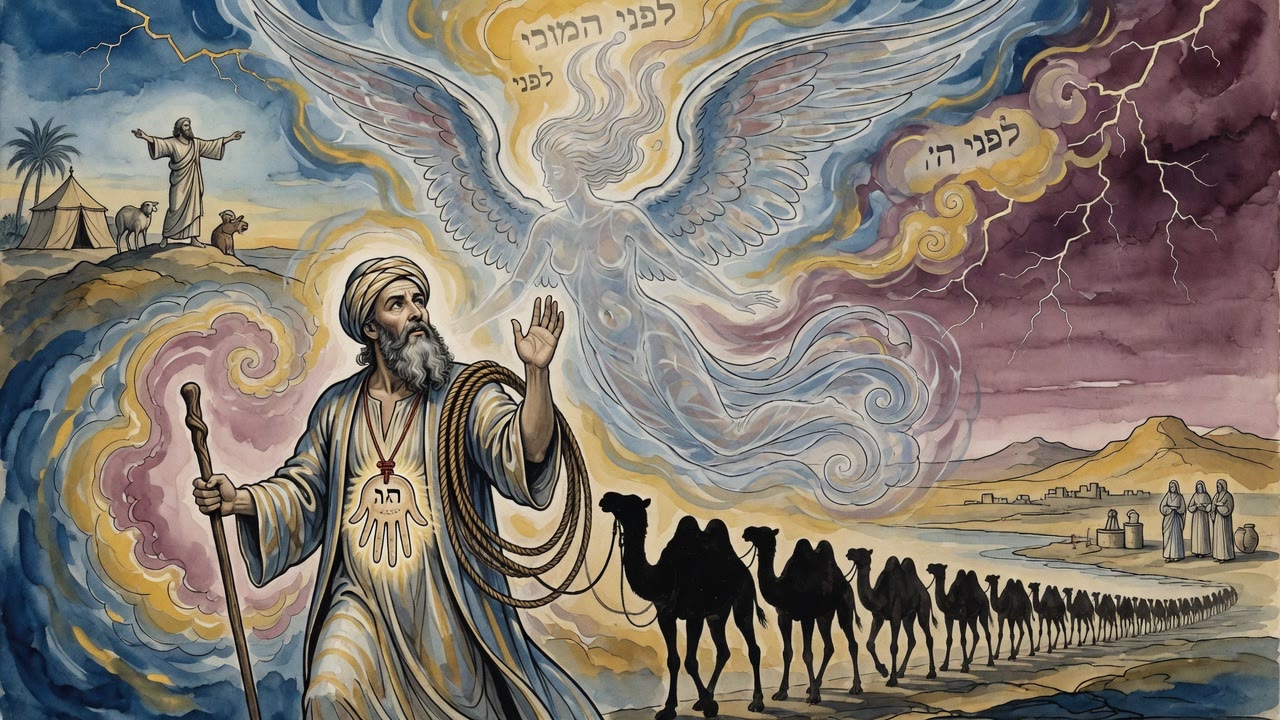
In the morning he lifted up his feet and went, and the going was nothing like the day before.
Nobody had handed him a donkey overnight. He was still a man alone with one staff walking toward strangers, still counting how many days Esau's temper might hold. But his heels came off the ground before he told them to. The dust that had dragged at him all the way from Beer Sheva let go of his sandals. Whatever had been said over him at that stone had gotten under his feet and decided to carry him a while.
The House He Was Walking Toward
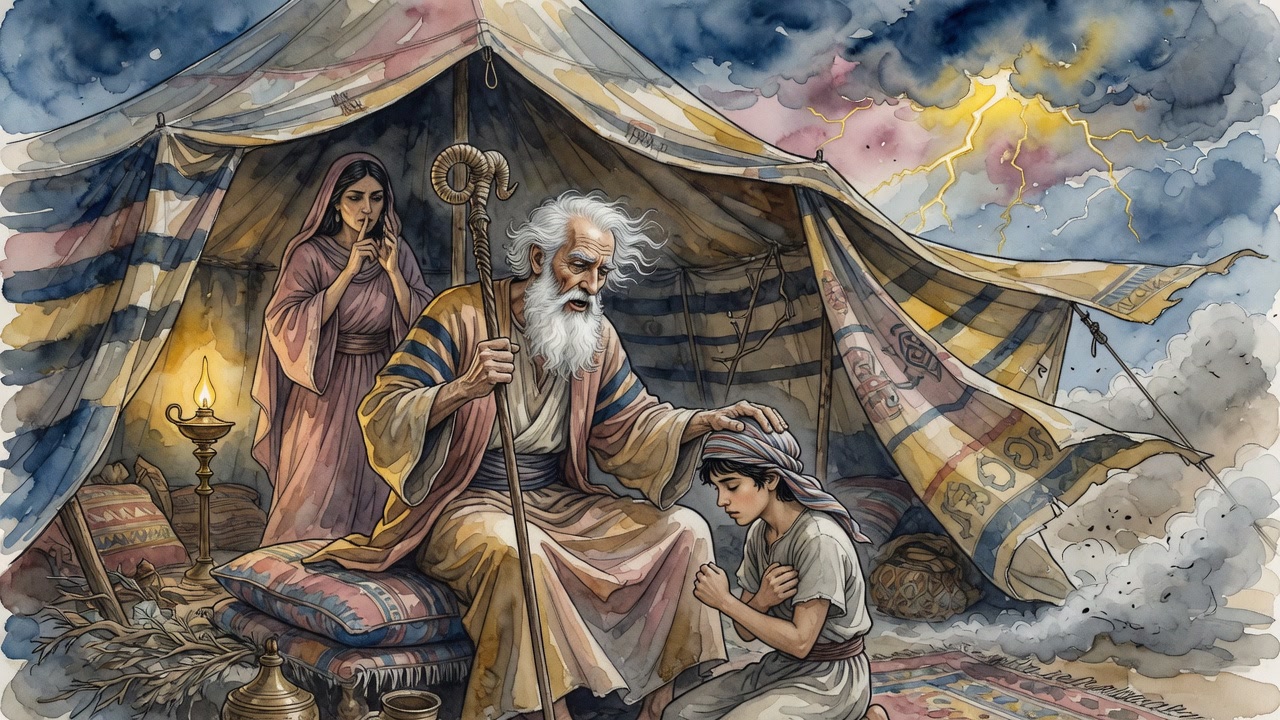
His mother had aimed him there. Rebecca had heard what Esau said about waiting for their father to die and moved the same afternoon. "Get up and run to my brother Laban in Haran," she told Jacob, "and stay with him until your brother's anger turns away from you." Then she sent the son she loved into the one household she knew was full of liars, because she had been raised in it.
Her father Bethuel cheated people. Her brother Laban cheated people. Rebecca grew up watching both of them work and took none of it into herself, and the tradition keeps saying her name beside theirs so no one forgets how far she walked from her own front door.
She had been born on the day Abraham came down from the mountain where he had bound Isaac for slaughter. Sarah died of that day. Isaac was thirty-seven years old and had no mother, and he waited three years for the girl in Haran to grow old enough to marry. So the man walking east now was the child of a wedding that started with a grave and a birth on the same afternoon.
The Stone at the Well
He came out of the hills to a well in open pasture with three flocks lying beside it and a great stone across its mouth. Shepherds sat waiting. Nobody watered anything until all the flocks came in and enough men gathered to roll the stone off together.
"My brothers, where are you from?" Jacob asked them.
"We are from Haran."
"Do you know Laban?"
"We know him. That is his daughter Rachel coming now with the sheep."
Jacob walked to the well and rolled the stone off the mouth by himself, and watered his uncle's flock, and kissed Rachel and wept out loud in front of the shepherds. Two nights earlier a heap of stones had fought over the honor of holding his head. Now a stone that took a crew of men came away in his hands like a lid.
Twenty years in Laban's house were waiting on the other side of that kiss. Wages changed ten times, a bride swapped in the dark, rods peeled in a watering trough, and a night by a river that would leave him limping with a new name. None of it had happened yet. Behind him the oil was still running down a standing stone, and his feet came up light the whole way in.
← All myths