Parshat Toldot5 min read

Esau Married Mahalath After Jacob Took the Road North

Two Hittite wives had made Isaac's camp bitter for decades. Then Esau stood near enough to the tent to hear the rule he had already broken.

Curated by Arthur · Told by Maggid ·
Table of Contents
  1. Two Hittite Wives in Isaac's Camp
  2. Bless Me Also, My Father
  3. The Charge Esau Was Not Meant to Hear
  4. The Road to Ishmael
  5. Mahalath Entered a Full Camp
Esau Married Mahalath After Jacob Took the Road North Click for full size

Two Hittite Wives in Isaac's Camp

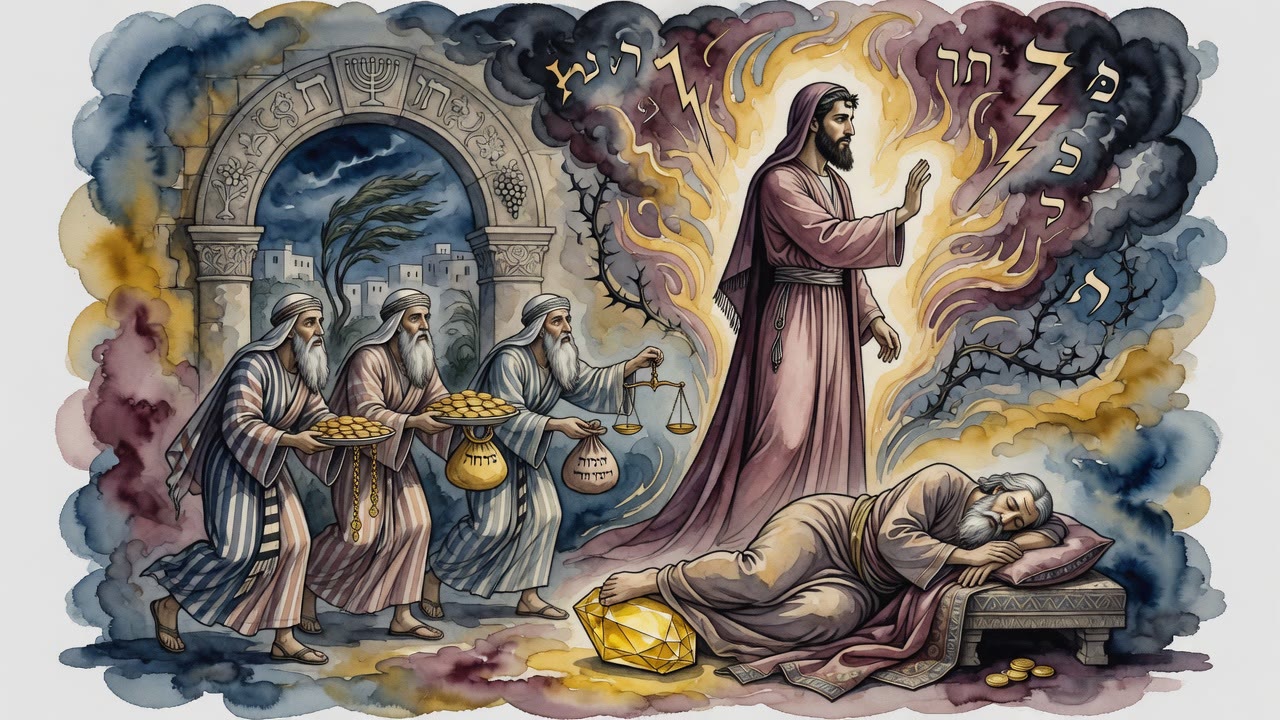
Esau was forty when he took Judith and Basemath out of the daughters of Heth and brought them home to his father's tents. They were a bitterness of spirit to Isaac and to Rebekah. That is the whole account of it, and it went on for decades.

Esau hunted. He carried the game home himself and cooked it the way his father liked it, and Isaac loved him for it. Rebekah loved Jacob, who stayed in the tents. The camp had been split along that line since the boys could walk.

Years back Esau had come in from the field starving and sold his birthright to his brother for a bowl of red stew. Then he ate the stew, stood up, and walked out. He had never once gone back to look at what he traded.

Bless Me Also, My Father

Isaac went blind. He called Esau in and asked for venison, one good dish before he gave the blessing, and Esau took his quiver and went out to the field.

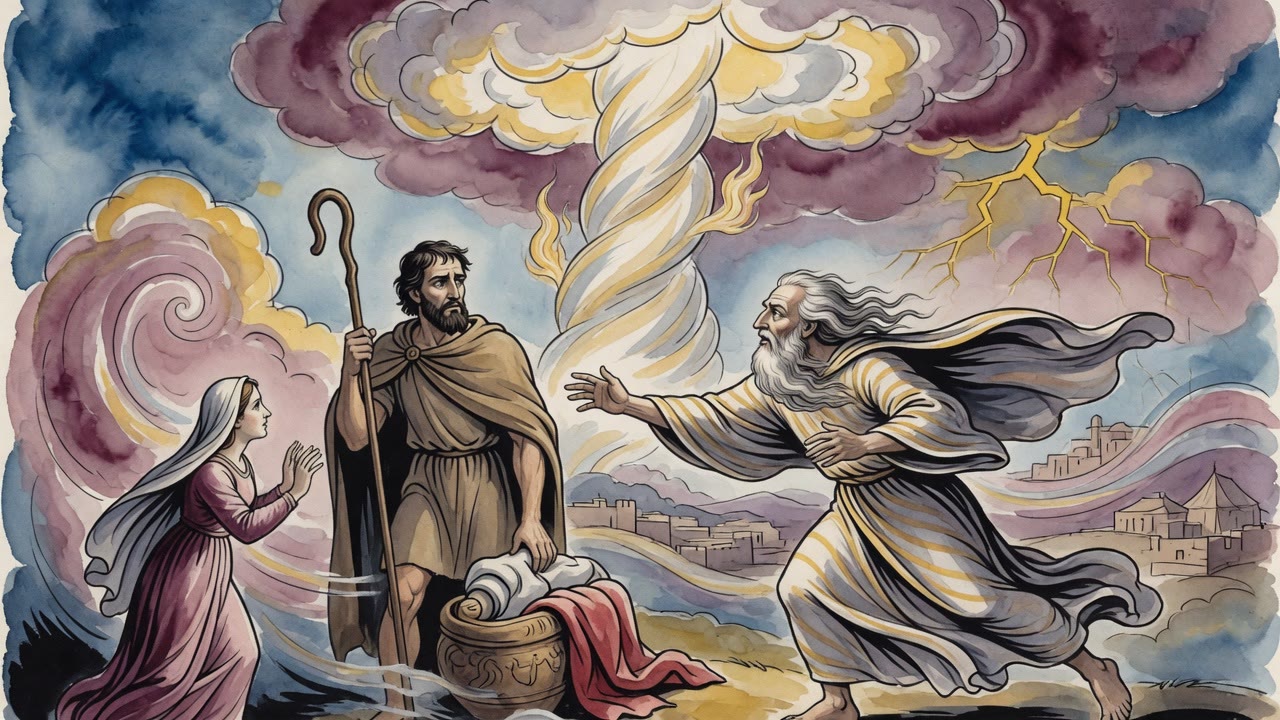
He came back with the meat cooked and found his father shaking. Jacob had already been there in goatskins, smelling of the field, and had gone out again with the blessing wrapped around him.

Esau cried out. A great cry, and a bitter one.

"Bless me, even me also, my father."

"Your brother came with cunning and has taken your blessing."

"Is he not rightly named Jacob? Twice now he has supplanted me. He took my birthright, and now look, he has taken my blessing." Then, lower: "Have you not reserved a blessing for me?"

Isaac gave him what was left over. A living off the fat of the earth and the dew of heaven, and a sword to live by, and service to his brother until the day he broke the yoke off his own neck. Esau took it and began counting. The days of mourning for his father were coming. After that he would kill Jacob.

The Charge Esau Was Not Meant to Hear

Rebekah found out, the way mothers find out. She sent for Jacob and told him to run to Haran, to her brother Laban, and stay there until his brother's heat went out of him.

Then she went to Isaac and said nothing at all about murder. She said she was weary of her life because of the daughters of Heth, and that if Jacob took a wife from them there was no point in her living.

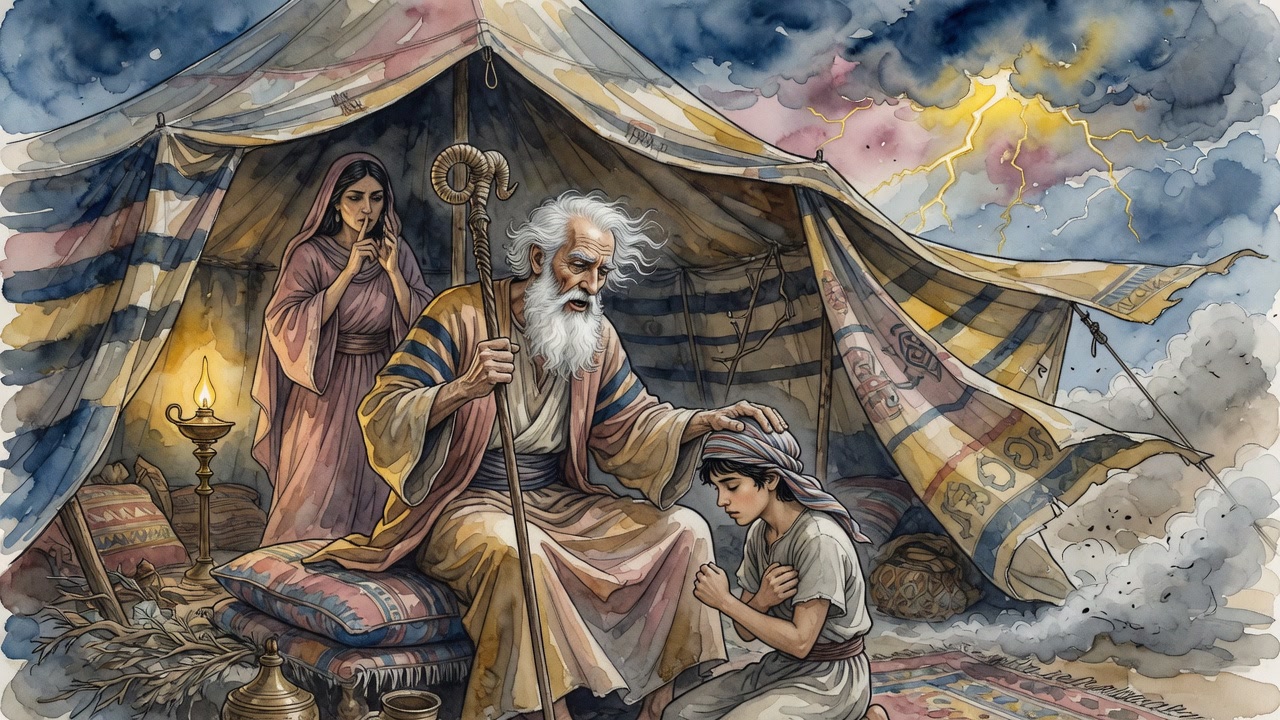
So Isaac called Jacob and charged him. Get up, go to Padan of Aram, to the house of Bethuel your mother's father, and take a wife from there, from the daughters of Laban your mother's brother.

Then the rest of it, the part that could not be taken back a second time. God would give him the blessing of Abraham. Him, and his sons with him, so that the gift went out to children who did not exist yet. And God would give him the land he was only camping in, the land already handed over to Abraham, who had owned one burial cave in it and had been carried into that cave himself. Heaven called the whole country given anyway.

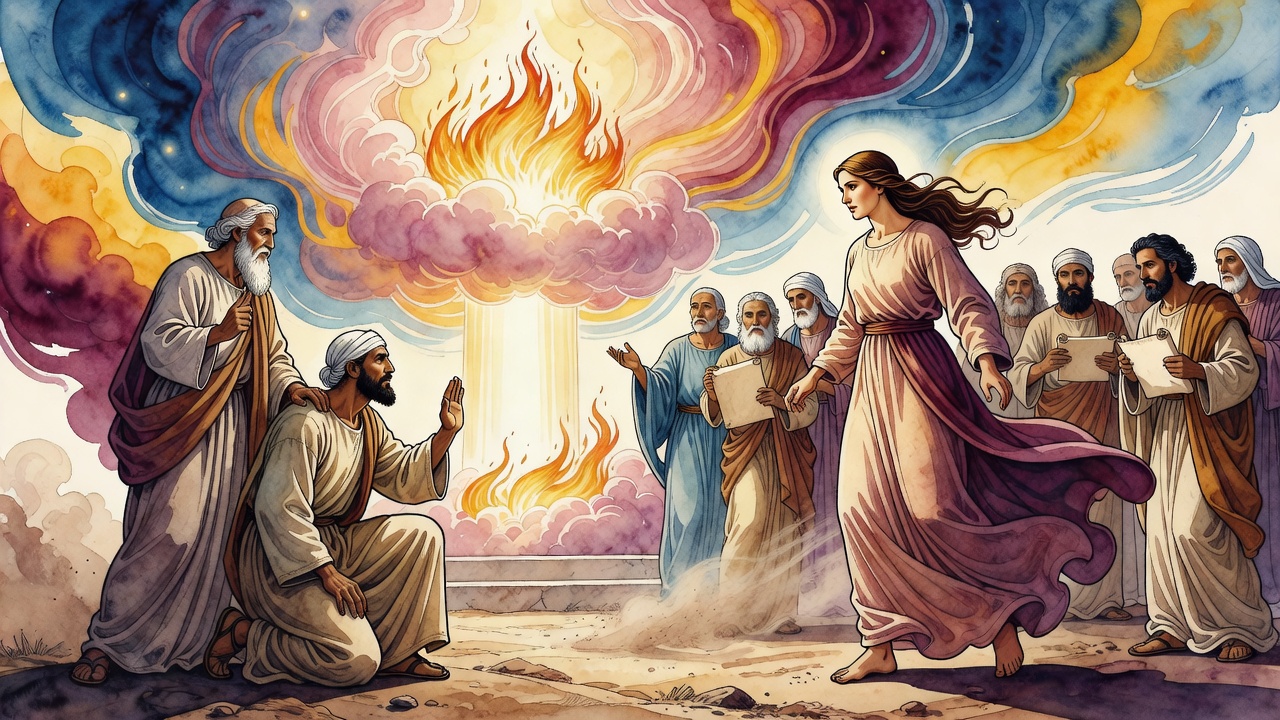
Esau was near enough to hear it. He heard the sending. He heard the charge that came with it: you shall not take a wife of the daughters of the Canaanites.

The Road to Ishmael

He had two of them in his own tents, sixty paces away, asleep.

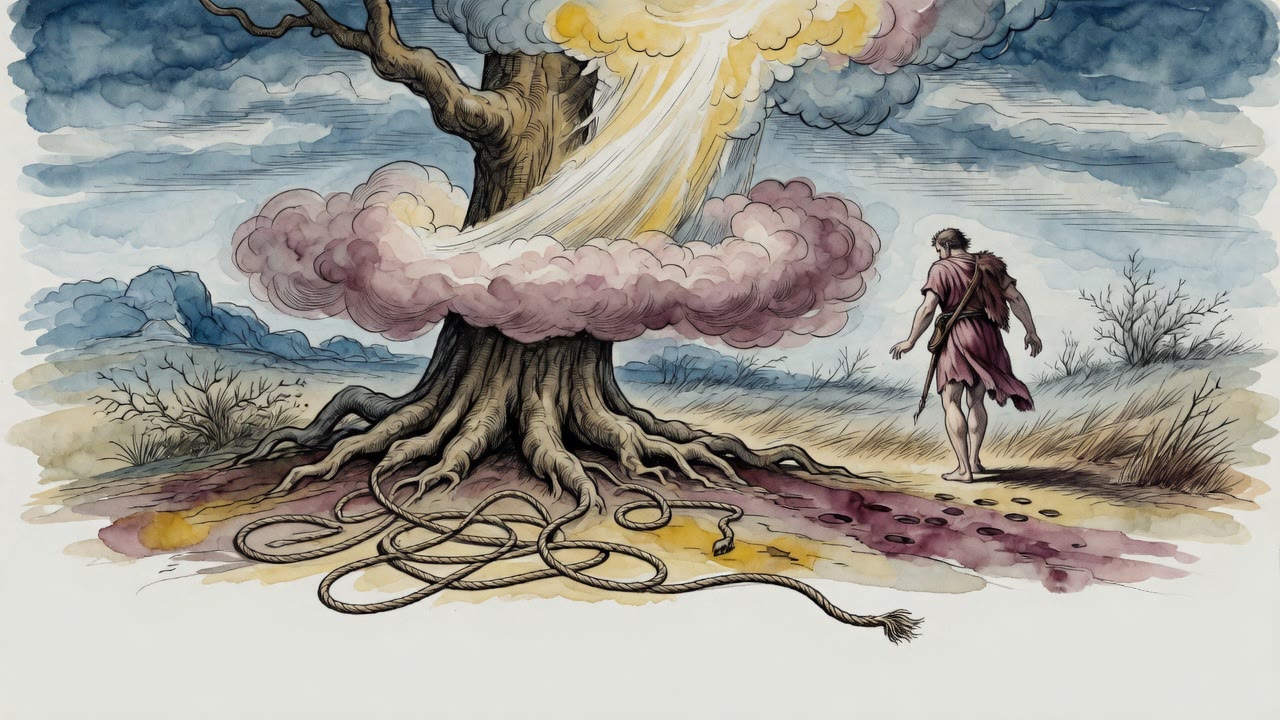
He could not put them out. A man does not unmarry. He could not go north after his brother, because north was the road Jacob had just taken with everything on his back, and Esau was the reason he was on it.

So he went sideways. Out past the settled country to Ishmael, his father's half-brother, the other son of Abraham, the one who had been sent off into the wilderness with a skin of water and had built a nation there anyway. That house had daughters. That house had Abraham's blood in it, which was the whole point.

He took Mahalath, who is also called Basemath, daughter of Ishmael the son of Abraham, full sister of Nebaioth by the same mother. He got the lineage exactly right. He could have recited it to his father without a mistake.

Mahalath Entered a Full Camp

He did not send Judith away. He did not send Basemath the Hittite away. He brought a granddaughter of Abraham into a camp that already held both of them and set her up there in addition to his other wives.

Isaac was still blind. Rebekah was still weary of her life. Nothing in the tents smelled any different in the morning.

Somewhere north of all of it Jacob was sleeping on open ground with a stone under his head, carrying a promise made out to sons he had not fathered yet. Esau stayed where he was, married correctly at last, standing outside a covenant with a granddaughter of Abraham in one tent and two daughters of Heth in the next, holding the sword he had been told he would live by.


← All myths
From the tradition

Sources

4 sources

The texts behind this telling. Some cards carry a translation of the source; others are our own retelling of it, and each card says which. Every card links out to the original.

Targum Pseudo-Jonathan on Genesis 28:2Targum Pseudo-Jonathan on Genesis

Retold in our words. Read the original at the link below.The Targum of Jonathan ben Uzziel, trans. J. W. Etheridge, London, 1862 · Public Domain

The verse is plain, and the Targum Pseudo-Jonathan keeps it that way. "Arise, go to Padan of Aram, to the house of Bethuel thy mother's father, and take thee from thence a wife from the daughters of Laban thy mother's brother" (Genesis 28:2).

Isaac, convinced by Rebekah's argument about the daughters of Heth, sends Jacob north. Not just north, back. Back to the family Rebekah herself came from. Back to the house of Bethuel. Back to Laban, his mother's brother, who has daughters.

The full circle

The rabbis loved the symmetry here. A generation earlier, Abraham had sent his servant Eliezer to that same region, Padan Aram, to find a wife for Isaac. Eliezer returned with Rebekah (Genesis 24). Now Rebekah, grown and wise, sends her own son on the same road to the same family. Jacob is making his mother's journey in reverse.

Pseudo-Jonathan preserves the detail carefully: the house of Bethuel thy mother's father, the daughters of Laban thy mother's brother. The wife must come from inside the covenantal family, not because of biology, but because of shared vision. The women of Heth worshipped stone and idol. The women of Padan Aram, for all their flaws, knew the God of Abraham.

The hidden purposes

There are actually three purposes tucked into this journey. One: find a wife, the stated reason. Two: escape Esau's murderous plot, the reason Rebekah has kept from Isaac. Three: build the twelve tribes of Israel, the reason neither parent yet knows. Padan Aram is where Leah, Rachel, Bilhah, and Zilpah wait, and where eleven of Jacob's twelve sons will be born.

The takeaway: sometimes you leave home for one reason and discover you were sent for three. Pseudo-Jonathan's Jacob walks out of his father's tent thinking he is going to find a wife. He is actually going to become a nation.

Full source
Targum Pseudo-Jonathan on Genesis 28:4Targum Pseudo-Jonathan on Genesis

Retold in our words. Read the original at the link below.The Targum of Jonathan ben Uzziel, trans. J. W. Etheridge, London, 1862 · Public Domain

Before Jacob left Beersheba for Haran, Isaac did something that could not be undone. He transferred the blessing of Abraham, the promise of land, seed, and covenant, from father to son (Genesis 28:4).

The Targum Pseudo-Jonathan highlights that the blessing is not for Jacob alone. It is for Jacob and his sons with him. The covenant skips forward in the same breath in which it is handed down. Isaac is already thinking about the twelve who will come, and the land they will inherit.

Pay attention to the phrasing: "the land of thy sojourning, which He gave unto Abraham." Abraham never owned Canaan in any legal sense beyond a burial cave at Machpelah. He walked its hills as a guest. But the Targum calls it the land God already gave him, because from Heaven's perspective, the deed was signed the day God first spoke to Abraham in Haran (Genesis 12:1). The gift was recorded above before it was realized below.

This is the pattern of every covenantal promise in the Hebrew Bible. It arrives as a word before it arrives as a fact. Abraham received the land as a word. Isaac passed it down as a word. Jacob now carries it as a word into exile, and he will return forty years later to the same hills that were his the whole time he was away.

The takeaway: the covenant travels faster than the footsteps of the one who carries it. Jacob was already home before he left.

Full source
Targum Pseudo-Jonathan on Genesis 28:6Targum Pseudo-Jonathan on Genesis

Retold in our words. Read the original at the link below.The Targum of Jonathan ben Uzziel, trans. J. W. Etheridge, London, 1862 · Public Domain

Esau was watching. The Targum Pseudo-Jonathan on (Genesis 28:6) lingers on what he noticed: not only that Isaac blessed Jacob, but that Isaac sent Jacob to Padan Aram with a very specific instruction, do not take a wife from the daughters of Canaan.

For Esau, this was a revelation with teeth. He had already married two Hittite women who made life bitter for Isaac and Rebekah (Genesis 26:34–35). He had assumed the marriages were merely his own taste. Now he heard, through the crack in the tent door, that the covenant came with a prohibition he had already violated.

The Aramaic paraphrase draws attention to the moment of moral clarity Esau receives too late. The blessing had a fence around it. The fence was: the mothers of the covenant must come from the covenant. Sarah had been brought from Aram. Rebekah had been brought from Aram. Now Jacob would walk the same road Rebekah's servant had walked a generation before (Genesis 24:4).

Esau's response in the next verses, marrying a daughter of Ishmael, reads less like repentance and more like a man trying to patch a hole after the water has already poured through. He cannot unmarry his Canaanite wives. He can only add a cousin from the outer edge of Abraham's family and hope it counts.

The takeaway: the rules of the covenant are not invisible. They are written into the way the patriarchs actually lived. Esau saw them only when the blessing passed him.

Full source
Targum Pseudo-Jonathan on Genesis 28:9Targum Pseudo-Jonathan on Genesis

Retold in our words. Read the original at the link below.The Targum of Jonathan ben Uzziel, trans. J. W. Etheridge, London, 1862 · Public Domain

When the warning finally reached Esau, do not marry a Canaanite, he did what a man who has already lost tries to do. He went sideways to find a wife who might count.

The Targum Pseudo-Jonathan on (Genesis 28:9) preserves an unusually precise genealogy. Esau went to Ishmael and took Mahalath, who is Besemath the daughter of Ishmael bar Abraham, the sister of Nebaioth from his mother, in addition to his other wives. Two names for one woman, because midrashic tradition records her renaming. Mahalath meaning "forgiven," since a groom's sins are forgiven on his wedding day. And the note that Nebaioth was her full brother, not merely a half-brother, to fix her lineage precisely within the house of Ishmael.

The Targum refuses to soften what is happening. Esau has taken a new wife besides his other wives. He is not replacing the Canaanite women. He is adding Mahalath on top of them. The Hittite wives still fill the tent, still embitter Isaac and Rebekah, still poison the inheritance Esau has already forfeited.

This is the portrait of a man who has learned part of a lesson. Esau understood that the daughters of Abraham's extended house counted for something. He did not understand that marrying one more wife does not cancel the two he already had. The covenant does not work by addition.

The takeaway: partial repentance is not repentance. You cannot patch a covenant violation by adding a correct marriage on top of two incorrect ones.

Full source