5 min read

Rebecca Sewed Goatskin for Jacob's Marble Arms

Isaac's hands found goat hair where he expected Esau. Rebecca had sewed the hides and walked Jacob only to the door, then left him to his Creator.

Curated by Arthur · Told by Maggid ·
Table of Contents
  1. The Blind Father's Room
  2. To the Doorway Only
  3. The Voice and the Hands
  4. Fat of the Earth, Dew of Heaven
  5. After the Smell of the Field
Rebecca Sewed Goatskin for Jacob's Marble Arms Click for full size

The Blind Father's Room

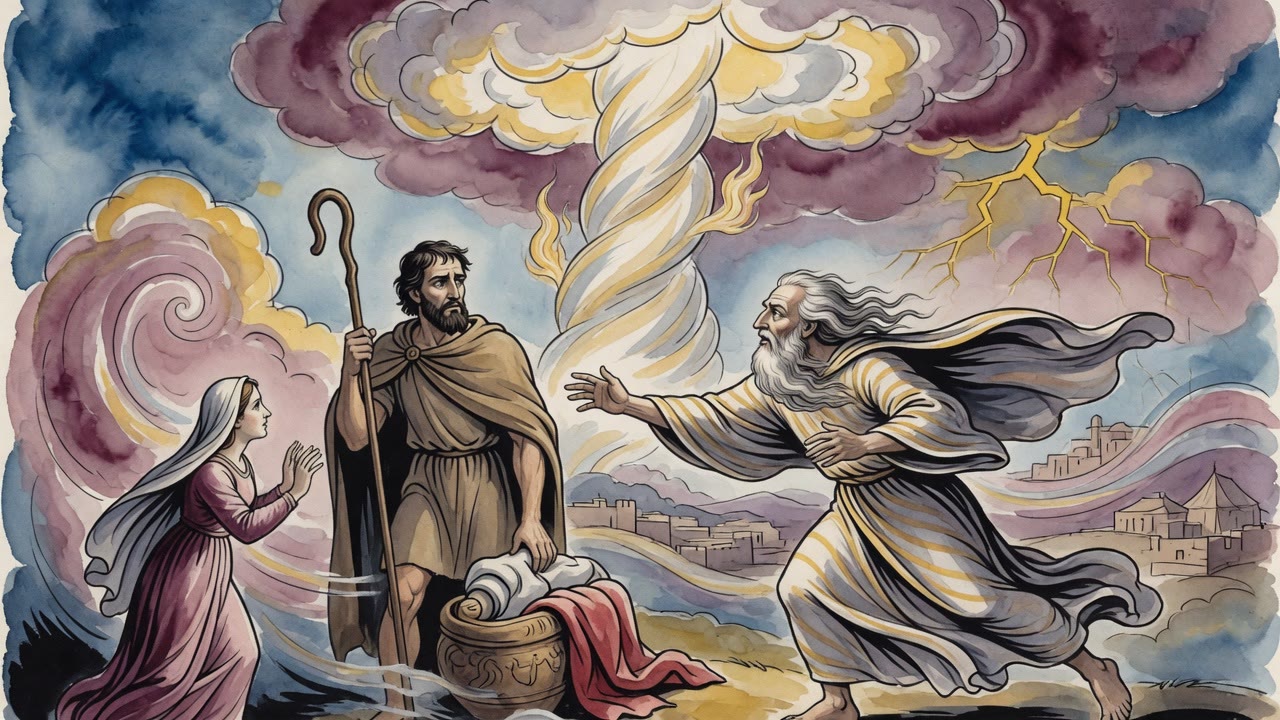
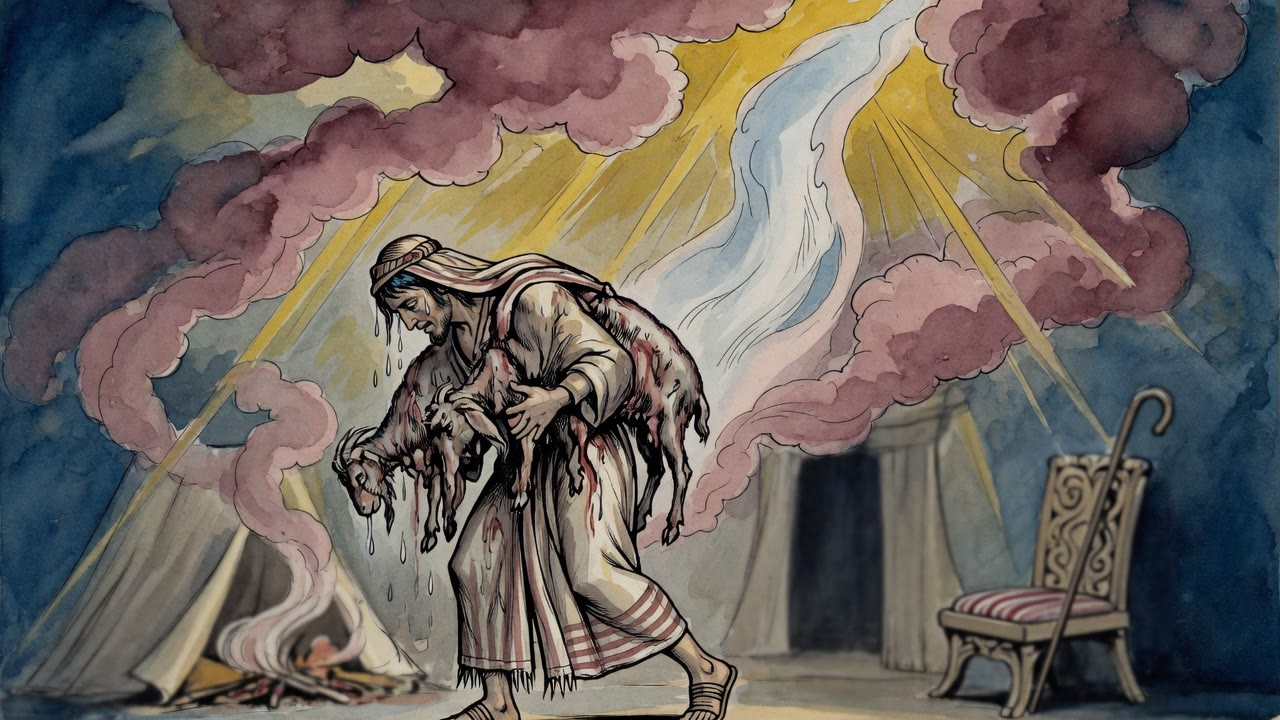
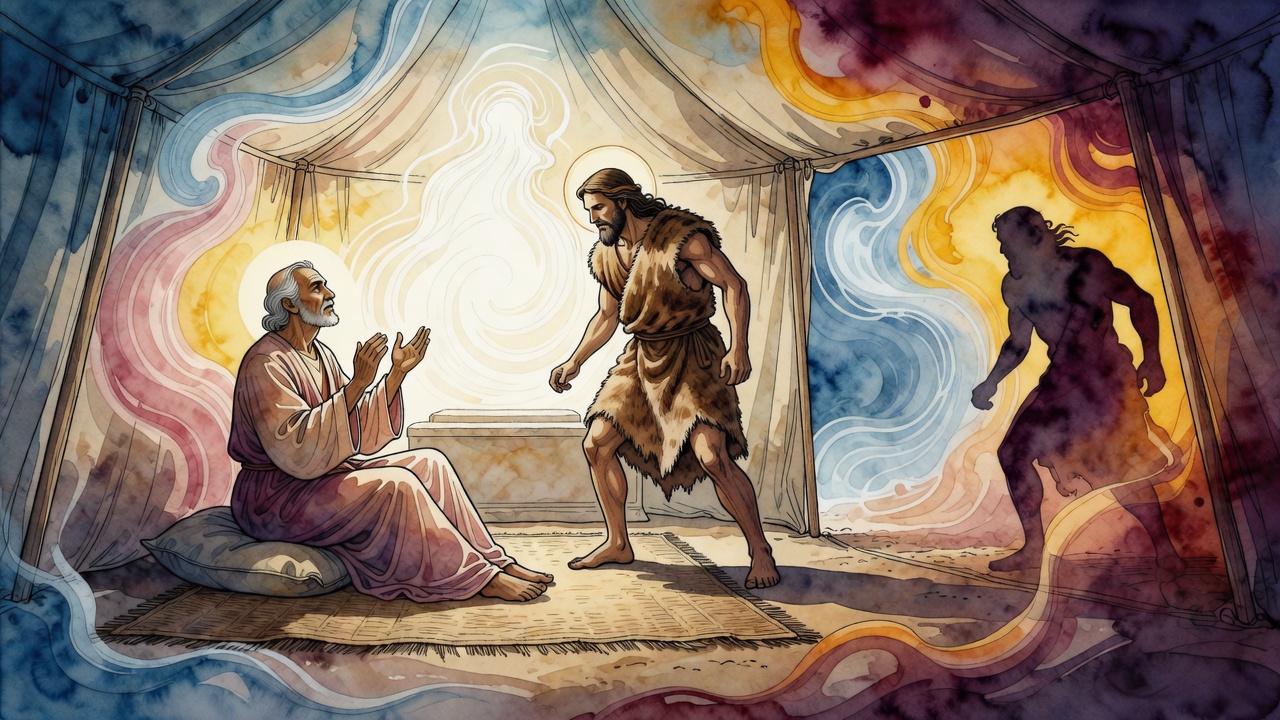
Isaac's eyes had gone dark. He asked for game and a meal and a blessing for the son he loved as a hunter. Outside the tent, Rebecca moved faster than doubt. Two goat kids. A dish that smelled like the field. Hides for arms that did not need disguising so much as translating.

Rabbi Yohanan stares at the logistics. Were the arms of Jacob not like two pillars of marble? How do you place kid skins on marble columns? Rebecca sewed. She made sleeves of hair large enough for a patriarch's strength. In another reading the animals of that age were simply vast, hides long enough without needlework, cinnamon trees tall enough for goats to climb, a world still oversized with miracle.

She worked with a needle while Isaac waited for a son who was still in the field with a bow. Time was a knife. She did not drop it.

To the Doorway Only

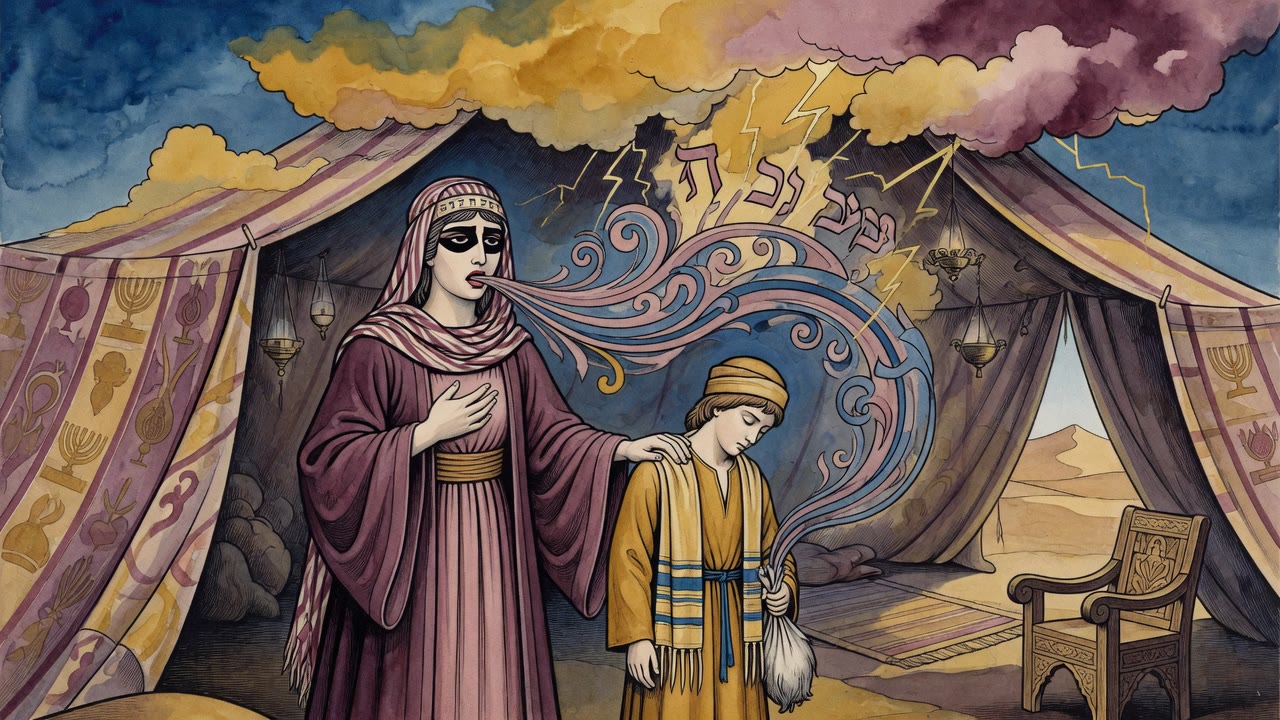
She put the delicacies and the bread into Jacob's hands and walked with him to the entrance. There she stopped as if a line had been drawn in the dust.

To this point I was obligated to you. From here on, your Creator will stand with you.

No more coaching. No more sewing. The mother who had felt two nations fight under her ribs now refused to cross the last threshold. Jacob went in alone with stolen weather on his skin and his brother's name waiting in his mouth. Her obligation ended at wood and shadow. His began in a blind man's hearing.

He almost turned back. The goat hair itched. The voice in his throat did not match the arms. He went anyway, because the oracle in her body had already chosen a younger future.

The Voice and the Hands

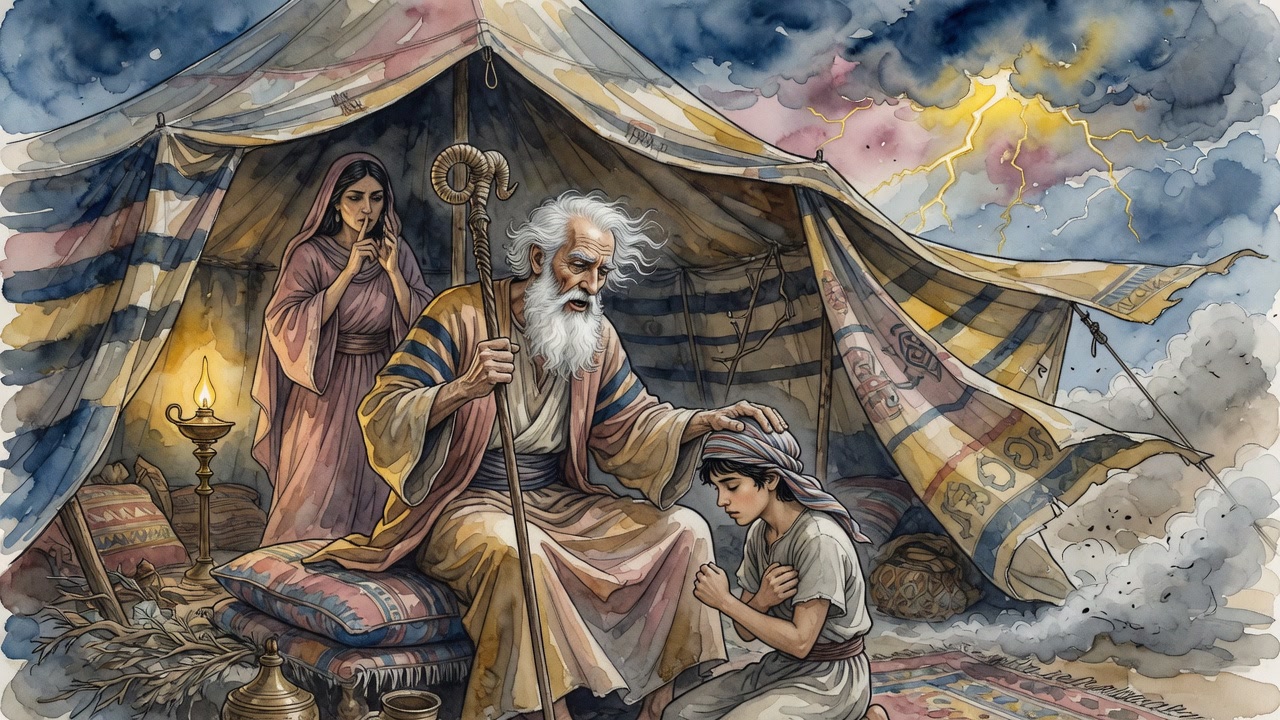
Isaac heard Jacob's voice and felt Esau's arms. The contradiction did not stop the blessing. Hands decided what ears doubted. The room filled with the smell of the field that the Lord had blessed. Jacob knelt under words meant for another body and took them into himself like heat.

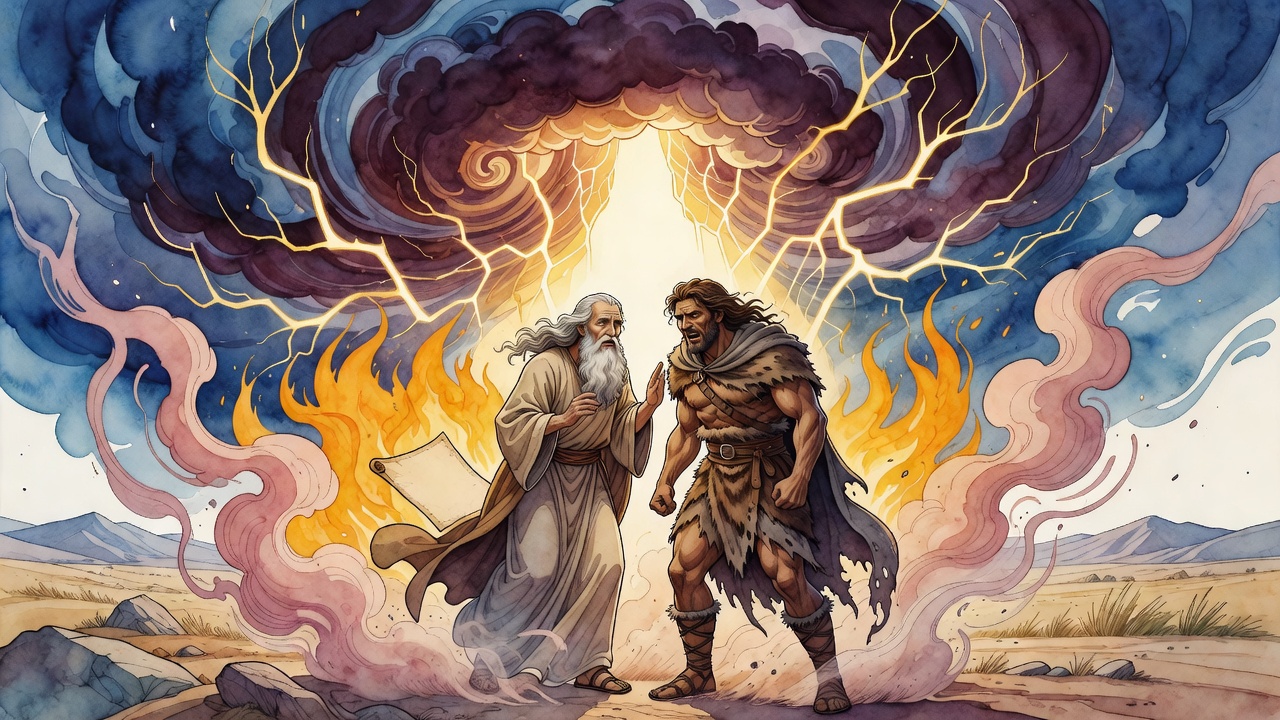
When the true hunter returned with real game, Isaac trembled a great trembling. The midrash will not let that tremor be only private fear. It is the shake of a future rearranging itself in a blind man's bones. Who then is the one who hunted game and brought it to me? The question landed like a second blindness.

Esau's cry came after, a great and bitter cry the Torah itself records without softening. The blessing room had room for only one first place.

Fat of the Earth, Dew of Heaven

Later the tradition weighs what Esau still received. Behold, from the fat of the earth will be your dwelling, and from the dew of the heavens above. One reading hears Italy and Rome in the fat, Beit Guvrin in the dew. Another hears fat cats of the earth whose wealth still depends on dew they do not command.

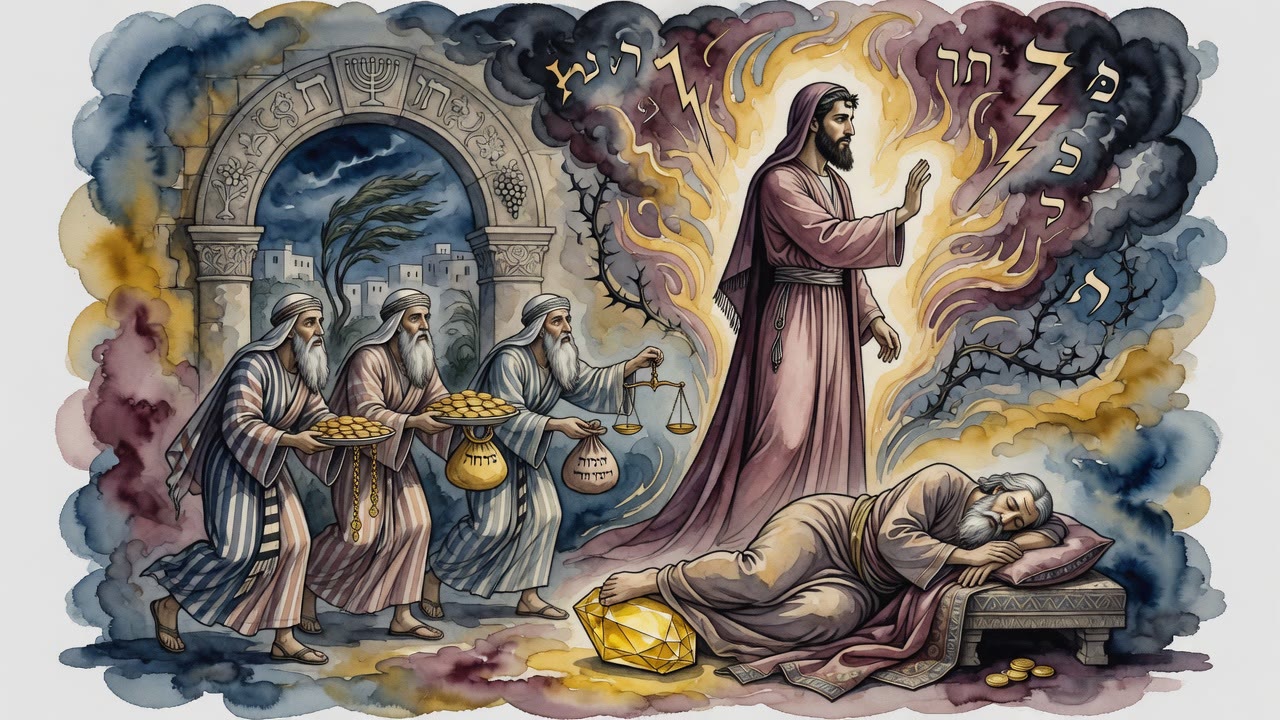
Antoninos sent to Rabbi Yehuda HaNasi when royal treasuries ran dry. The rabbi took the messenger to a garden, uprooted large radishes, planted small ones, and said nothing. Antoninos understood. Replace the great officials. Fear refills coffers. Even the fat of the earth answers to a dew of politics and dread. Esau's blessing was real and still secondary, a wealth that could be rearranged by a wiser hand.

Jacob carried the primary words into exile. Esau carried the secondary ones into a long empire of force. Both left the tent changed.

After the Smell of the Field

Jacob left the room with oil on his head and goat hair on his arms. Rebecca's doorway sentence followed him farther than any sleeve. Your Creator will stand with you. He would need that standing when Laban smiled and when a ladder rose in a dream and when a man wrestled him until dawn.

The marble arms under the goatskin did not become soft. They became a story Israel would tell whenever a quiet son walks into a room wearing a loud brother's weather, and heaven does not correct the hands in time. Isaac trembled. Rebecca released. Esau wept. Jacob ran.

Somewhere outside, the goats that had given their skins grazed without knowing they had helped steal a future. The midrash keeps the odd detail because the body matters: how much hair, how much arm, how far a mother walks before she stops. Theology here has a needle in it, and a doorway, and a blind man's fingers reading the wrong son correctly for heaven's purposes and wrongly for a father's love.

Jacob felt the goat hair pull when he bent to enter. Isaac sat propped with old strength, nose working, hands ready. Come close, he said. My son. Which son, the room asked without words. Jacob answered with Esau's name and waited for lightning. Lightning did not come. Fingers traveled the sewn sleeves, found the hair, and rested. The voice is the voice of Jacob, Isaac said, but the hands are the hands of Esau. Then the blessing poured anyway, fatness and dew and lordship over brothers, words too large for a stolen hour and still binding once spoken.

Outside, Esau's feet were already turning home with real meat. Inside, Rebecca's needlework finished its job. A mother's craft and a father's blindness and a younger son's fear braided into a single irreversible minute. That is the five-second core the midrash dresses with marble arms and giant goats: the second when hands believe what ears refuse.


← All myths

From the tradition

Sources

3 sources

The texts behind this telling. Some cards carry a translation of the source; others are our own retelling of it, and each card says which. Every card links out to the original.

Bereshit Rabbah 65:17Bereshit Rabbah

Retold in our words. Read the original at the link below.The Sefaria Midrash Rabbah, 2022 · CC-BY

Take the story of Jacob, disguised as Esau, receiving Isaac's blessing. It's a pivotal moment, full of deception and destiny.

Okay, hides of goat kids. That sounds… itchy.

Rabbi Yoḥanan raises a fascinating point in Bereshit Rabbah. He asks: Were the arms of our patriarch Jacob not like two pillars of marble? Strong, substantial! So how could mere goat hides just be "placed" on them?

His answer? Rebecca, crafty and resourceful as she was, likely sewed those hides together. She needed enough material to cover those impressive arms! This little detail, often overlooked, gives us a glimpse into the sheer size and strength attributed to our ancestors.

But then, Rabbi Huna, citing Rabbi Yosei, offers an alternative perspective. He recalls that during the festival of Sukkot, the two daily offerings that Israel would sacrifice were so large that they were placed on young camels, and their legs would still drag on the ground! And that cinnamon trees in the Land of Israel were so tall that goats and gazelles could reach the top and eat from them. Maybe, just maybe, the goat hides were large enough to cover Jacob's arms without needing any sewing. Perhaps animals and even plants were just… bigger back then.

This leads to another question. Rabbi Ḥanina chimes in: Don't we still slaughter calves in the Land of Israel? Don’t we still hew olive trees and cultivate fertile soil on the mountains? Why don't we see animals and trees of that immense size today?

His conclusion, echoed by Rabbi Mona, is that these were miraculous acts. Something extraordinary was at play in those early generations. Radal, a commentator, agrees that these large trees and animals must be miraculous. It’s not just about the physical size, is it? It's about the potential, the abundance, the sense of wonder that permeated the world in those formative years.

And then we have the final, poignant moment: "She gave the delicacies and the bread that she prepared into the hand of Jacob her son" (Genesis 27:17). Bereshit Rabbah expands on this, telling us that Rebecca accompanied Jacob to the very entrance. There, she declared, "To this point I was obligated to you, from here on, your Creator will stand with you."

Wow.

Talk about a powerful send-off. It's a mother's blessing, a release, and a profound statement of faith. Rebecca knew she could only guide him so far. After that, Jacob was in the hands of something greater.

So, what are we left with? Goat hides, giant animals, and a mother's unwavering belief. And that even in moments of deception and uncertainty, there's always the possibility of something miraculous.

Full source
Bereshit Rabbah 67:6Bereshit Rabbah

Retold in our words. Read the original at the link below.The Sefaria Midrash Rabbah, 2022 · CC-BY

"

It sounds pretty good. But the sages of Bereshit Rabbah, a classic collection of rabbinic interpretations of the Book of Genesis, dig a little deeper. They ask, what does it really mean?

"Behold, from the fat of the earth will be your dwelling" – according to one interpretation, this refers to Italy. More specifically, and perhaps a little pointedly, to Rome. Why Rome? Well, Jewish tradition often views Rome as being descended from Esau. So, already, we're framing this blessing in a particular light.

What about "and from the dew of the heavens from above"? This, Bereshit Rabbah suggests, is Beit Guvrin – a city in Judea.

But there's another layer! "Behold, from the fat of the earth" can also be understood as referring to the "fat cats" of the earth. Those who are wealthy and powerful. But here's the kicker: what makes the earth fat in the first place? The dew! So, even their wealth ultimately depends on something beyond their control, something that comes from above.

Now, to illustrate this point, Bereshit Rabbah gives us a story. A little parable, if you will.

Antoninos, who some identify as the Roman Emperor Marcus Aurelius Antoninus, sent an emissary to Rabbeinu Yehuda HaNasi – that’s Rabbi Judah the Prince, the compiler of the Mishnah, a central figure in Jewish law and thought. The emissary came with a problem: "My royal treasuries are depleted! What can we do to fill them?"

Rabbeinu Yehuda HaNasi doesn't give a direct answer. Instead, he takes the emissary into a garden. And there, he begins uprooting large radishes and planting small ones. Big beets, replaced with small ones. The same with lettuce. And then he simply says, “Give me an answer.” Implying that the answer was self-evident.

The emissary is confused but returns to Antoninos. "Where is the response?" Antoninos asks. The emissary replies, "He didn't give me anything! He didn't say anything! But… he took me to a garden and uprooted large radishes and planted small ones."

Antoninos, being a shrewd ruler, understands immediately. He begins dismissing high-ranking officials and appointing new ones. And suddenly, the coffers start to fill up again.

How? Because both the dismissed officials and the newly appointed ones, fearing Antoninos, paid higher taxes! They wanted to stay in his good graces, or get into them, and that fear translated directly into revenue.

So, what’s the takeaway? Even those who seem to dwell in the "fat of the earth," even those who hold positions of power and wealth, are ultimately dependent on something else – in this case, fear and political maneuvering. The "dew" that makes their earth fat isn't just literal dew; it's the underlying dynamics, the power structures, the things they can't fully control.

It's a reminder that appearances can be deceiving, and that even the most blessed (or seemingly blessed) existence has its dependencies and vulnerabilities. It also demonstrates the incredible wisdom and cleverness of Rabbeinu Yehuda HaNasi, who could convey such a powerful message without saying a single word. A message that still resonates today.

Full source
Bereshit Rabbah 67:1Bereshit Rabbah

Retold in our words. Read the original at the link below.The Sefaria Midrash Rabbah, 2022 · CC-BY

What was that trembling? And why is it so significant?

Our sages, delving into the depths of the text, find layers of meaning in that tremor. Bereshit Rabbah, a classic midrashic (rabbinic interpretive commentary) collection, unpacks this moment, connecting it to another seemingly unrelated instance of trembling in the Book of Ruth. It all hinges on a verse from (Proverbs 29:25): "A man’s trembling sets a snare, and one who trusts the Lord will be exalted."

The midrash asks us to consider the trembling that Ruth caused Boaz. Remember the story? Ruth, the Moabite widow, follows Naomi to Bethlehem and, on Naomi’s advice, approaches Boaz on the threshing floor at night. When Boaz wakes up, he’s understandably startled! The Book of Ruth says, "He trembled and recoiled" (Ruth 3:8).

The midrash points out, Boaz could have reacted very differently. He could have cursed her, seeing her presence as a transgression. That trembling, Bereshit Rabbah suggests, "sets a snare" – it could have led to a negative outcome. But Boaz, trusting in God, chose a different path. He blessed Ruth, saying, "May you be blessed to the Lord, my daughter" (Ruth 3:10).

So, what does Ruth have to do with Isaac?

The midrash draws a parallel. Just as Ruth's presence caused Boaz to tremble, Jacob's deception – tricking his father into giving him the blessing meant for Esau – caused Isaac to tremble violently. "Isaac was overcome with great trembling," the Torah tells us. And just like with Boaz, that trembling "sets a snare." Isaac, rightfully feeling betrayed, could have cursed Jacob.

But here's the crucial point: "One who trusts the Lord will be exalted." Despite the deception, despite the profound shock, Isaac, ultimately trusting in a higher power, blessed Jacob. He affirmed the blessing, saying, "Indeed, he shall be blessed." Isaac, in his moment of vulnerability and betrayal, chooses blessing over curse. He recognizes, perhaps dimly, that a divine plan is unfolding, even if he doesn't fully understand it.

The Zohar, the central text of Kabbalah, offers even deeper insights into Isaac's spiritual state at this moment. It suggests that Isaac's near-blindness wasn't just a physical ailment, but a spiritual one as well. He was so focused on his preconceived notions, on his preference for Esau, that he was blind to Jacob's true potential.

This episode reminds us that even in moments of profound uncertainty and even betrayal, we have a choice. We can react with anger and resentment, or we can choose to trust, to bless, and to see the possibility of good even in the midst of confusion. It's a powerful lesson, drawn from the trembling of an old man and the wisdom of our tradition. How will we choose to react when our own world starts to shake?

Full source