Parshat Toldot6 min read

Jacob Wept While He Carried the Goats to Blind Isaac

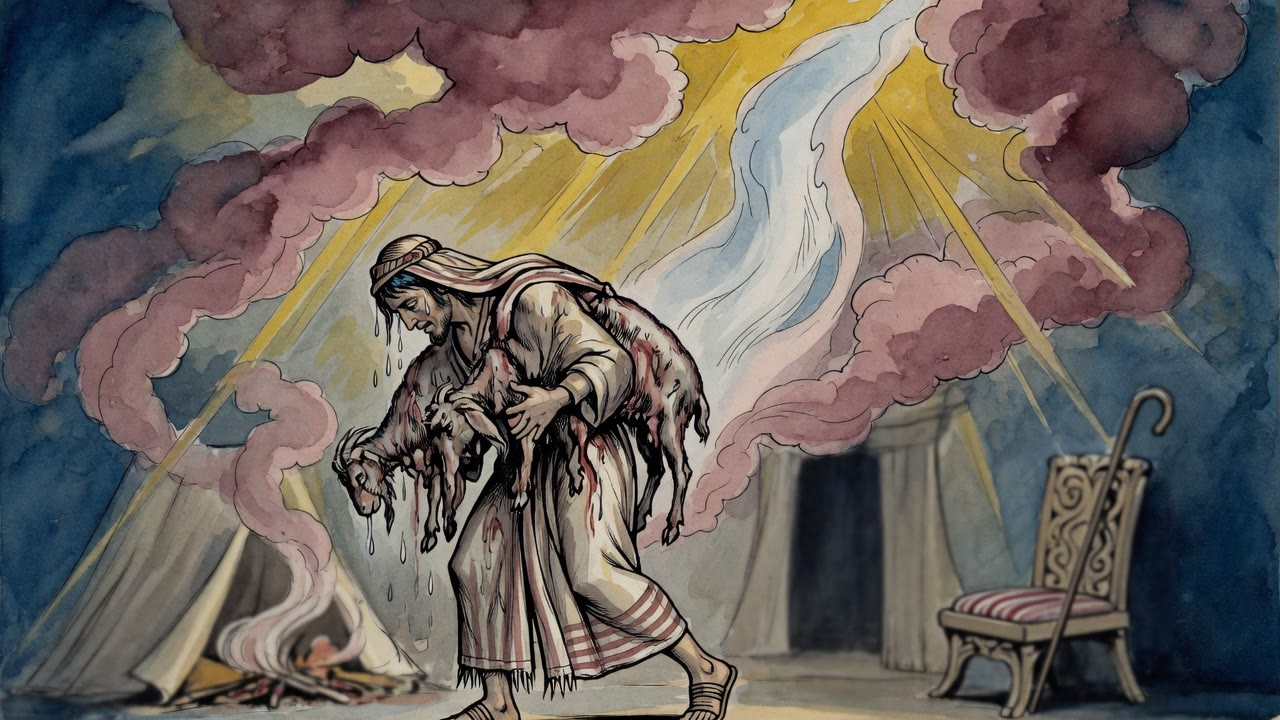
His mother told him to fetch two goats and lie to his blind father. Jacob's hands shook, his body bowed, and the tears would not stop.

Curated by Arthur · Told by Maggid ·
Table of Contents
  1. His Mother Pulled Him Into the Tent
  2. The Argument About the Goats
  3. The Old Man Who Could Not See
  4. The Curse That Turned Back
  5. Esau's Bitter Cry

His Mother Pulled Him Into the Tent

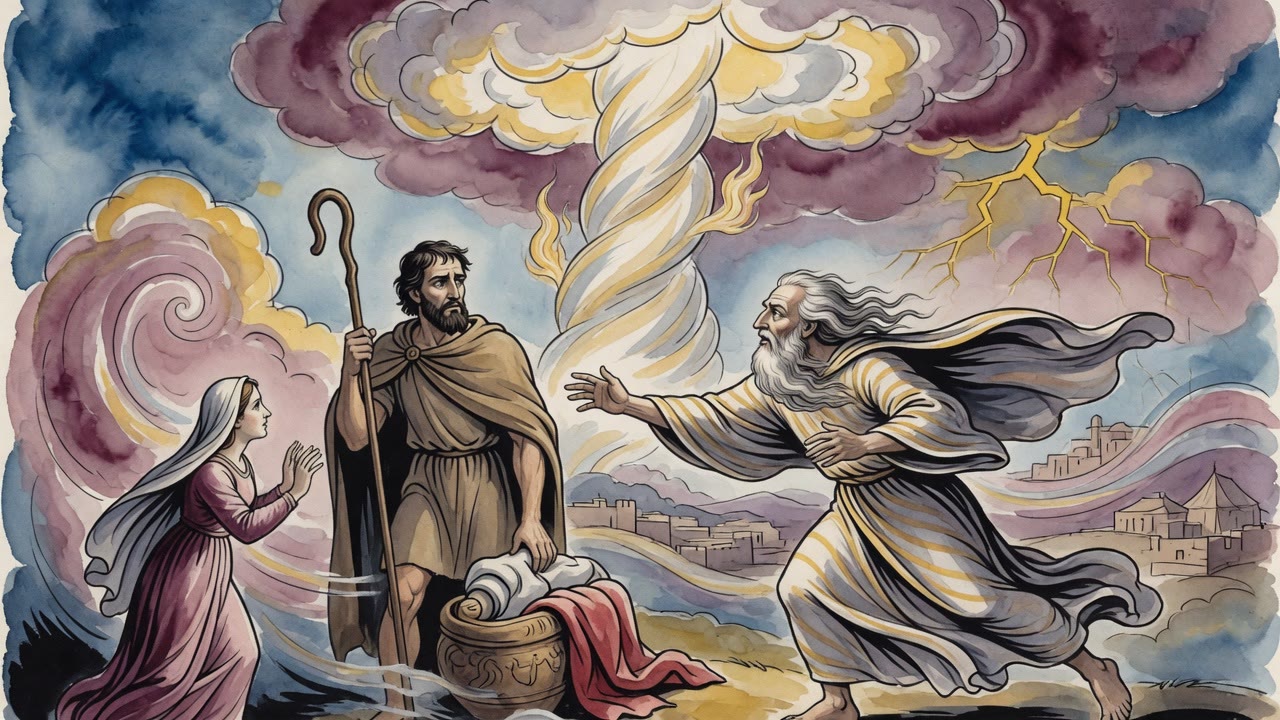
Rebekah caught him by the wrist before he reached the doorway and drew him into the shadow at the back of the tent, where the old man could not hear. Her voice dropped. "Go to the flock," she told him. "Fetch me two good kids of the goats, the best two, and I will make the savory meat your father loves" (Genesis 27:9).

Jacob stood very still. Down the slope his father lay in the larger tent, blind, waiting for the elder son to come back from the hunt. Esau was out on the hills with his bow. The smell of the flock came up on the wind, the warm animal stink of the pens, and Jacob's stomach turned, because he understood exactly what his mother was asking him to walk into.

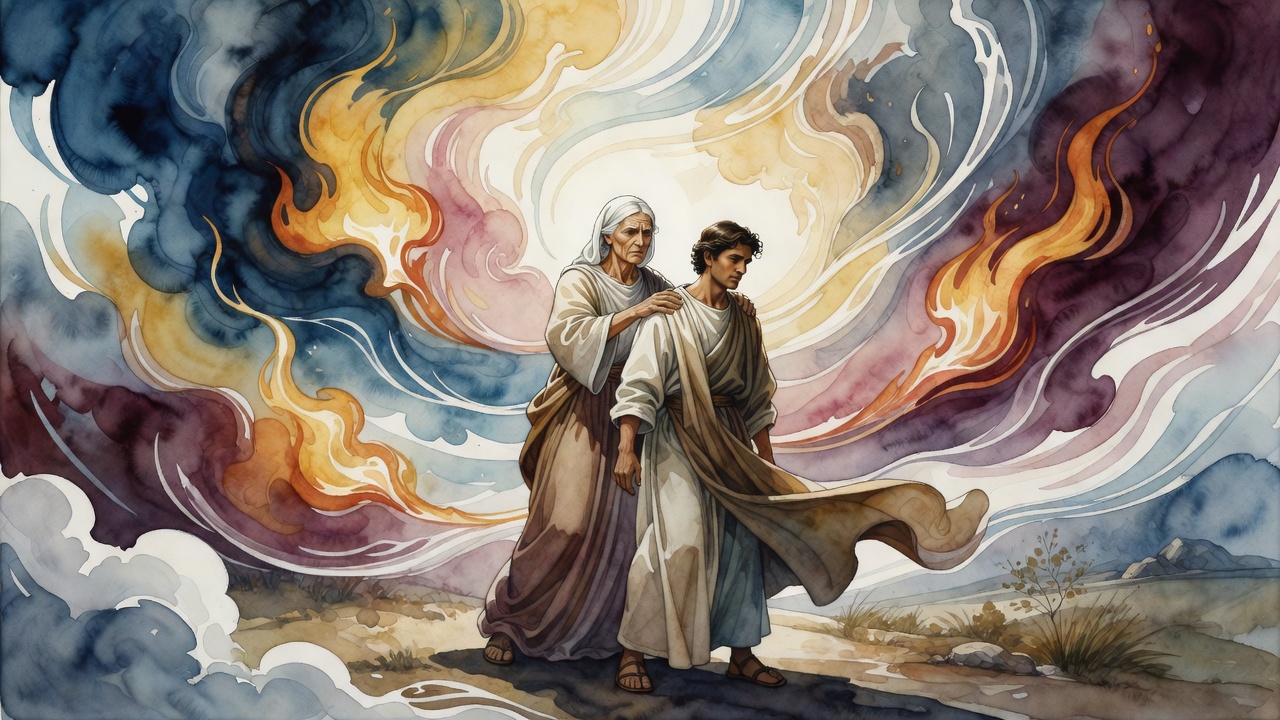
His body bowed under it. He felt the bend come into his shoulders the way it comes into a man carrying a load too heavy to set down. He did not want to do this. He did not want to lie to the old man who could no longer see his face. He did not want to take what belonged to his brother. The tears came before he had said a single word, and they did not stop.

The Argument About the Goats

Rebekah saw the weeping and answered it the only way she knew, with a reason. The two kids were hers to give, she said. Her marriage contract, her ketubah (the written terms of a wife's portion), entitled her to two young goats from the flock every single day. So the animals he carried up the hill would be taken from what was already owed to her. No theft in that. Take them.

He still wept, but he went. Two kids of the goats, one held under each arm, their small hooves kicking against his ribs. One of them, his mother had said, was for the Passover offering and one for the offering of the festival, and Jacob carried them up the slope like a boy carrying his own punishment.

His mother had told him more than that, words meant to soothe a conscience that would not lie quiet. These same two goats, she promised, were not only the meal that would win a blind man's blessing. They were the pattern of two goats that would stand one day before the people on the holiest day of the year, the pair set apart so the sin of a whole nation could be laid on their backs and carried away. The lie he was about to tell would be paid for in advance, she was telling him, by a holiness that did not yet exist. Jacob kept climbing. The tears ran down into the corners of his mouth.

The Old Man Who Could Not See

Isaac lay where the light could not help him. His eyes had failed years before, and the reason was older than his old age. When he was a boy, bound on the wood of the altar under his own father's knife, the angels above had wept to see it, and their tears had fallen into his open eyes and dimmed them. He had carried that dimness ever since. Now it made him helpless before his own kitchen.

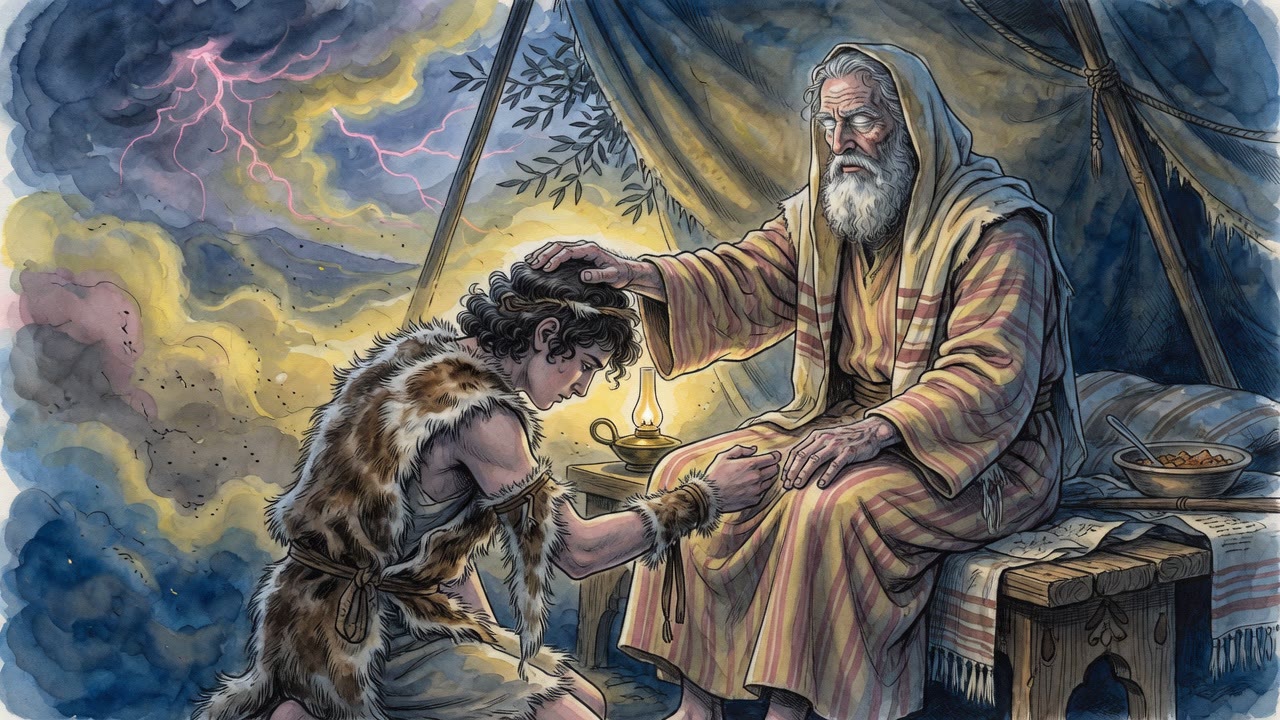
Rebekah dressed Jacob for the deception. She took Esau's garments, the fine ones she had kept folded in the house, and she put them on her younger son. These were no ordinary clothes. The oldest tellings say they were the garments of light, the radiant skins first worn by Adam in the garden, passed down hand to hand across the generations until they came to rest on the back of a hunter. Then she bound the goatskins onto Jacob's smooth arms and neck, so that an old blind hand reaching out to touch his son would feel hair, and be fooled.

Jacob carried the dish in. The smell of cooked kid filled the tent. He spoke, and his own voice frightened him, because it was his voice and not his brother's. The old man's hand came up and groped along his arm, slow and trembling, reading the false hair, and Jacob held still and let himself be touched and lied with his whole body while the water stood in his eyes. The blessing came down on his bowed head.

The Curse That Turned Back

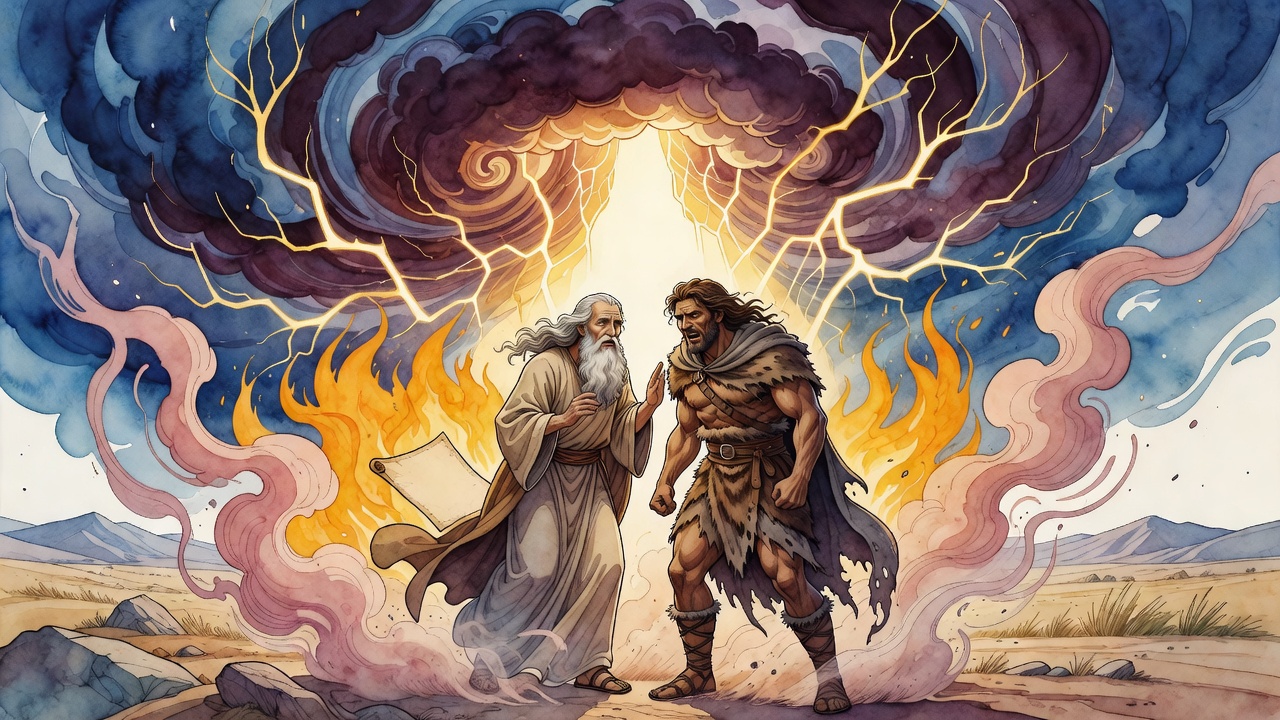
Then Esau came home from the hills with his real venison, and the truth tore through the tent. Isaac began to shake. He understood that he had laid the blessing on the wrong head, that the hands had been the hands of one son and the voice of another, and a black anger rose in him. He opened his mouth to curse the son who had cheated him.

The curse never left his lips. He was stopped, reminded of what he himself had already spoken into the blessing: cursed be every one that curses you (Genesis 27:29). Any curse he hurled at Jacob now would swing back through the air and strike his own face. The old man sat with that. He was not yet ready to say that the blessing truly belonged to his younger son, and he asked, in the dark behind his ruined eyes, for some surer sign that the heir before him was the right one. Only when it came did he speak again, heavily, the words dragged out of him. "Yea, he shall be blessed" (Genesis 27:33).

Esau's Bitter Cry

Esau heard it. He lifted up his voice, and what came out was an exceeding great and bitter cry (Genesis 27:34), a sound that went through the tent walls and out across the hills he hunted, the cry of a man who has come home to find that everything owed to him has been carried off by his own brother under cover of cooked goat and borrowed clothes.

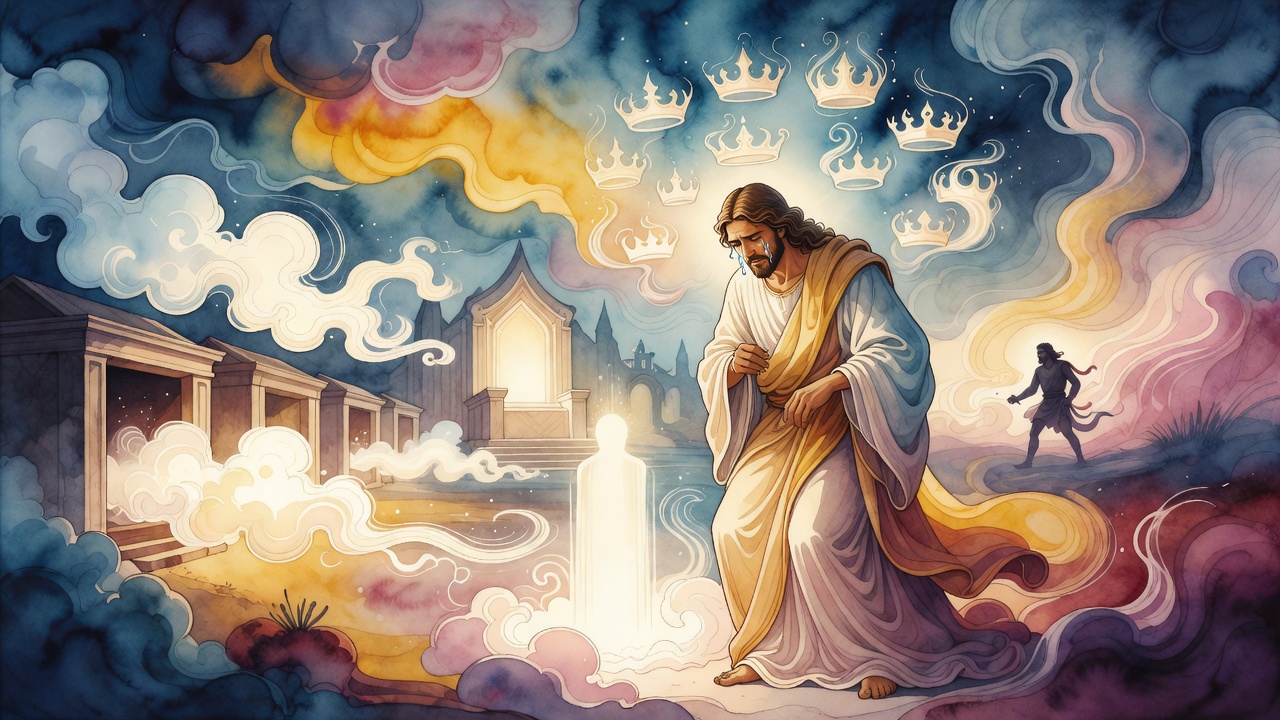
And Jacob, who had won, was the one who had wept the whole way through it. He had not climbed the hill grinning. He had climbed it bent and crying, carrying two small goats that were heavier than they looked, knowing exactly what he did, and doing it anyway because his mother stood behind him and the future stood somewhere ahead.


← All myths
From the tradition

Sources

5 sources

The texts this telling draws on, in full. Open a card to read inline, or expand it for a wider, quieter read.

Legends of the Jews 6:59Legends of the Jews

It's a painful scene. He was in tears, his body bowed with the weight of it all. He didn’t want to do it!

Rebekah, driven by her own convictions, was insistent. Her plan involved tricking the aging, blind Isaac into thinking Jacob was Esau. And part of that deception involved preparing a Passover meal. Now, this wasn't the Passover we know today celebrating the Exodus from Egypt. This was a ritual meal, a significant blessing ceremony.

So, Rebekah instructs Jacob to fetch two young goats, two kids. One, she explains, is for the Passover sacrifice, and the other for the festival sacrifice. You can almost hear the reluctance in Jacob's voice as he questions this.

Here's where Rebekah’s reasoning gets really interesting. She tries to soothe Jacob's troubled conscience. She tells him that her marriage contract, her ketubah, actually entitles her to two kids daily. It's a fascinating glimpse into the legal and social customs of the time. Was she being entirely truthful? Maybe. Maybe not.

But she doesn't stop there. She adds a powerful promise. "These two kids," she says, "will bring good unto thee, the blessing of thy father, and they will bring good unto thy children, for two kids will be the atoning sacrifice offered on the Day of Atonement." In other words, these animals weren't just for a meal; they were a conduit for blessing, a means of atonement, a connection to the sacred.

Think about the weight of that statement. Rebekah is essentially saying that this act, this deception, will ultimately lead to good, to forgiveness, to a future blessed by atonement on Yom Kippur, the holiest day of the year.

It makes you wonder, doesn't it? Can a wrong action, even one born of good intentions, truly lead to a righteous outcome? Can deception ever be justified, even if it paves the way for blessing? And what does it say about Rebekah, so determined to secure her son's future, that she's willing to bend, perhaps even break, the rules to do it? These are questions that echo through the ages, questions we still confront today.

Full source
Book of Jubilees 26:10Book of Jubilees

Book of Jubilees turns to Jacob Disguised in Goatskins Fools Blind Isaac.

Isaac is getting old, his eyesight’s failing. He knows his time is drawing near. So he calls for his eldest son, Esau. “Hunt for me,” he says, "and make me savoury meat, and bring it to me that I may eat and bless thee before the Lord before I die." (Jubilees 26:1). It's a big moment, a patriarchal blessing about to be bestowed.

Rebecca is listening. And Rebecca has a plan.

She loves Jacob more. The text doesn’t explicitly say why here, but the implications are clear. Perhaps she recognized something special in him, a spiritual quality that Esau lacked. Whatever the reason, she's determined that Jacob, not Esau, will receive Isaac's blessing.

So, while Esau is out hunting, Rebecca summons Jacob. "My son," she says, "obey my voice in that which I command thee: Go to thy flock and fetch me two good kids of the goats, and I will make them savoury meat for thy father, such as he loveth, and thou shalt bring (it) to thy father that he may eat and bless thee before the Lord before he die, and that thou mayst be blessed." (Jubilees 26:2-4).

Talk about a power play!

Now, Jacob isn’t exactly thrilled with the idea. He's hesitant, and who can blame him? He knows his father's blind, but not deaf or without a sense of touch. "Mother," he says, "I shall not withhold anything which my father would eat, and which would please him: only I fear, my mother, that he will recognise my voice and wish to touch me." (Jubilees 26:5).

Can you feel the tension? It's a high-stakes gamble. Jacob is afraid of getting caught, of being cursed instead of blessed. But Rebecca, driven by her own agenda, seems willing to do whatever it takes.

Why does this story resonate so deeply? Perhaps it's the universal themes of family dynamics, parental favoritism, and the lengths people will go to secure what they believe is rightfully theirs. Or maybe, it's that nagging question of destiny versus free will. Did Rebecca truly believe Jacob was meant to receive the blessing, or was she simply manipulating the situation to her liking? The Book of Jubilees doesn't offer easy answers. It just lays bare the complexities of human relationships, leaving us to ponder the motivations and consequences of their choices.

Full source
Legends of the Jews, VI. Jacob, Isaac Blesses JacobLegends of the Jews

The story of Isaac blessing Jacob instead of Esau is definitely one of those moments. It’s a story filled with deception, family drama, and a bit of divine intervention, and it's far more complex than it might seem At first.

In Legends of the Jews, Esau’s marriages to Canaanite women were a constant source of grief for both Isaac and Rebekah. But why? Well, these marriages weren't just about differing social circles. They represented a clash of values, a deep-seated conflict between following God's path and embracing idolatrous practices. Rebekah found it distasteful, but Isaac, it seems, was particularly sensitive to it. The text suggests men are not as resilient to disagreeable circumstances as women. Interesting. And that's not the only reason Isaac's sight was failing. The Legends of the Jews (Ginzberg) also tells us about the tears of angels, shed when Isaac was bound on the altar by his father Abraham. These tears, the story goes, weakened his eyes. But there's also a more symbolic reason offered: Isaac's love for Esau, despite his wickedness, blinded him. It's like a "bribe" of filial affection, and as the saying goes, "A gift blinds the eyes of the wise."

Here's a twist: Isaac's blindness, despite being a hardship, actually turned out to be a blessing in disguise. It kept him at home, shielding him from the shame of being known as the father of the wicked Esau. And, crucially, it paved the way for Jacob to receive the blessing. It’s as if God was arranging events, guiding them toward a specific outcome. Like a physician tricking a sick man into drinking water he thinks is wine to make him feel better.

As Isaac approached the age his mother had reached when she passed away - one hundred and twenty-three - he began to think about his own mortality. According to Jewish tradition, it’s proper to prepare for death when you approach the age at which your parents passed. He decided it was time to bestow his blessing upon his elder son, Esau. He called for Esau, but the Holy Spirit intervened. The text says that even though Esau disguised his voice to sound sweet, Isaac shouldn't trust him, because there were seven abominations in his heart. Isaac, however, remained spiritually blind to Esau's true nature.

On the eve of Passover, Isaac instructed Esau to prepare a special meal, saying, "Tonight the whole world will sing the Hallel unto God." The Hallel (הלל) are Psalms of praise and thanksgiving recited on Jewish holidays. Isaac wanted to bless Esau before he died. But again, the Holy Spirit interjected, "Eat not the bread of him that hath an evil eye."

Why the fuss over food? Well, the text suggests that Isaac's blindness made him crave especially flavorful dishes. But there's also a deeper meaning here. Food, in this context, becomes a symbol of blessing and connection. And the Holy Spirit is warning against accepting blessings from someone with impure intentions.

Meanwhile, Rebekah, through divine inspiration, knew what Isaac was planning. But it wasn't simply love for Jacob that motivated her; it was a desire to prevent Isaac from making a terrible mistake. She instructed Jacob to deceive his father, to present himself as Esau and receive the blessing.

Jacob, understandably, hesitated. He feared incurring his father's curse. But Rebekah reassured him, saying she would bear any curse that might fall upon him. She even invoked her marriage contract, claiming it entitled her to two kids daily, one for the Passover sacrifice and one for the festival sacrifice and they would bring good unto him.

To complete the deception, Rebekah dressed Jacob in Esau's clothes, special garments that had been passed down through generations, even from Adam himself! These garments were priestly raiment, befitting the firstborn. And since Jacob had bought the birthright from Esau, Rebekah believed he was entitled to them. The text describes Esau as always wearing them in front of his father because he saw Isaac as a king.

When Jacob entered Isaac's chamber, he spoke hesitantly, trying to avoid a direct lie. But Isaac grew suspicious. He questioned Jacob's speed and decided to feel him. It's a moment of intense tension, fraught with the potential for discovery and disaster.

As Isaac touched Jacob, God intervened, sending angels to support him. Isaac noticed the hairy hands and declared, "The voice is Jacob's voice, but the hands are the hands of Esau." These words, contain a prophecy: as long as the voice of Jacob is heard in houses of prayer and learning, the hands of Esau will not prevail against him. Isaac, still hesitant, was shown that even the sinners in Israel would turn penitent, and then he was ready to bless Jacob.

Isaac then smelled the fragrance of Paradise clinging to Jacob. The archangel Michael fetched wine from Paradise. Filled with the Holy Spirit, Isaac bestowed upon Jacob a tenfold blessing, a blessing that echoed God's own blessings. Dew from heaven, fatness of the earth, plenty of corn and wine – all symbols of abundance, prosperity, and divine favor. And with each blessing from Isaac, a corresponding blessing was bestowed by God himself. Even Rebekah joined in, adding her own blessings.

As Jacob left his father's presence, he was transformed, bathed in celestial dew and filled with strength. He was also unknowingly saved from a deadly encounter with Esau, thanks to a revolving door that concealed him at the last moment.

So, what are we to make of this story? It's a complex and morally ambiguous tale. Deception is involved, but so is divine intervention. It raises questions about fate, free will, and the nature of blessing. Was Jacob destined to receive the blessing all along? Did Rebekah's actions undermine Isaac's authority? Or was she simply acting as God's agent, ensuring that the divine plan unfolded as it should? It's a story that continues to resonate with us today, prompting us to confront these timeless questions.

Full source
Legends of the Jews 6:73Legends of the Jews

The scene is set: Isaac, old and blind, intends to bless his elder son, Esau. But through a clever ruse orchestrated by his mother, Rebekah, Jacob receives the blessing instead. Imagine Isaac's horror when he realizes he’s been tricked! According to Legends of the Jews, Isaac was initially inclined to curse Jacob for his deception.

God intervened. He reminded Isaac that his blessing contained a powerful clause: "Cursed be every one that curseth thee." As Ginzberg retells it, any curse Isaac hurled at Jacob would boomerang right back at him!

Yet, Isaac wasn’t quite ready to accept that the blessing truly belonged to Jacob. He needed confirmation, divine assurance that his younger son was indeed the rightful heir, now possessing the birthright. Only then, with a heavy heart, did Isaac utter, "Yea, he shall be blessed."

Esau? His reaction was one of utter devastation. The text describes it as an “exceeding great and bitter cry.” Can you picture it? A primal scream of anguish and betrayal.

Now, here’s a fascinating connection, a thread woven through the tradition of Jewish tradition. According to the Legends of the Jews, Esau’s anguish had repercussions far beyond that moment. As a form of divine retribution, a descendant of Jacob, Mordecai, would one day echo that very same "loud and bitter cry." And who caused Mordecai's grief? None other than Haman, the Amalekite, a descendant of – you guessed it – Esau. It’s a powerful reminder that actions, and the pain they inflict, can reverberate through generations.

The story doesn't end there. In his fury, Esau spits out his resentment. "Thy brother came with wisdom," Isaac says, "and hath taken away thy blessing." Esau retorts, "He took away my birthright, and I kept silence, and now that he takes away my blessing, should I also keep silence? Is not he rightly named Jacob? for he hath supplanted me these two times."

The name Jacob, Yaakov in Hebrew, itself becomes a point of contention. It's derived from the word akev, meaning "heel," suggesting he who grabs at the heel, he who supplants. Esau sees his name as a constant reminder of Jacob's deceitful nature, a symbol of their fractured relationship.

This story isn't just about sibling rivalry and stolen blessings. It's about destiny, divine will, and the enduring consequences of our choices. It prompts us to consider: How do we react when we feel cheated? How do our actions impact future generations? And what does it truly mean to be blessed?

Full source
Legends of the Jews 6:61Legends of the Jews

The familiar story is this: Isaac, old and blind, intends to bless his elder son Esau. But Rebekah, favoring her younger son Jacob, arranges a deception. She dresses Jacob in Esau's clothes and covers his smooth skin with goatskins, hoping to trick Isaac into giving Jacob the blessing meant for his brother. It's a high-stakes gamble, fraught with ethical complexities.

As Ginzberg retells it in Legends of the Jews, Rebekah leads Jacob, now disguised, to Isaac's chamber. "Henceforward may thy Creator assist thee," she says, a poignant farewell as she sends her son into the lion's den. The weight of the moment is palpable.

Jacob enters, addressing Isaac with, "Father." The response comes, "Here am I! Who art thou, my son?" Now comes the tricky part. Jacob replies, trying to work through the treacherous waters of truth and falsehood, "It is I, thy first-born son Esau." He's trying to avoid a direct lie, but the words still taste like ashes in his mouth.

Isaac, suspicious, notes, "Thou art greatly in haste to secure thy blessing. Thy father Abraham was seventy-five years old when he was blessed, and thou art but sixty-three." Jacob, flustered, blurts out, "Because the Lord thy God sent me good speed." That's the slip.

According to Ginzberg, Isaac immediately picks up on the anomaly. Esau, he believes, would never invoke the name of God. He decides he must feel this son before him to be certain.

Imagine the sheer terror gripping Jacob at Isaac's words: "Come near, I pray thee, that I may feel thee, my son." A cold sweat, Ginzberg writes, covers his body, and his heart melts like wax. It's a moment of intense vulnerability and fear.

But here's where the legend takes a turn towards the miraculous. God, seeing Jacob's distress, intervenes. "Then God caused the archangels Michael and Gabriel to descend," Legends of the Jews recounts. One seizes his right hand, the other his left, while God Himself supports him, lest his courage fail. Can you picture that? Divine assistance in the face of human failing.

Isaac feels him, and the goatskins do their job. "The hands are the hands of Esau," he says, but then, with a chilling ambiguity, "The voice is Jacob's voice." These words, according to the legend, are more than just an observation. They are a prophecy.

As Ginzberg tells it, Isaac prophesizes that "so long as the voice of Jacob is heard in the houses of prayer and of learning, the hands of Esau will not be able to prevail against him." It's a powerful statement about the enduring strength of Jewish tradition and learning.

Isaac continues, "Yes, it is the voice of Jacob, the voice that imposes silence upon those on earth and in heaven." This is a reference to the power of Jewish prayer. Midrash Rabbah tells us that even the angels may not raise their voices in praise of God until Israel has finished his prayers. The voice of Jacob, the voice of the Jewish people, holds a unique and powerful place in the cosmos.

So, what are we to make of this complicated scene? It's easy to judge Jacob and Rebekah for their deception. But perhaps the legend invites us to look deeper. It's a story about destiny, about divine intervention, and about the enduring power of the Jewish voice. It reminds us that even in moments of profound ethical ambiguity, faith and tradition can offer strength and guidance. And maybe, just maybe, a little bit of divine help.

Full source