Rebecca Took the Curse So Jacob Could Be Blessed
Jacob feared a father's curse more than a brother's rage. Rebecca claimed the curse for herself, dressed her smooth son, and sent him in for the blessing.
Table of Contents
 Click for full size
The Smooth Son Stalls
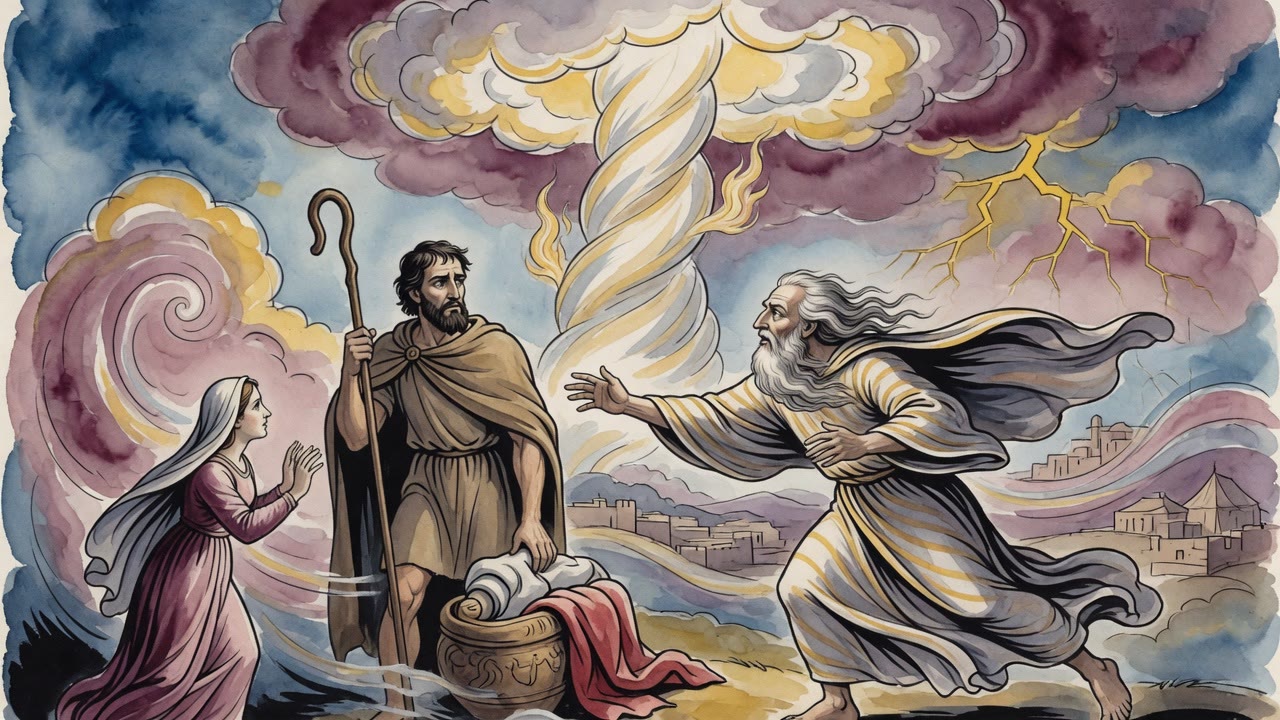
Isaac sent Esau for game and a blessing, voice thin with age and hunger for the taste of the field. The bow left the tent. The future seemed settled by birth order and a father's appetite. Rebecca heard and moved first, because she remembered a pregnancy that fought inside her and a word that the elder would serve the younger. She called Jacob and laid out the plan without romance: two kids from the flock, savory meat, his father's love captured by taste and touch before the hunter returned with blood on his hands.
Jacob did not fear Esau's bow in that moment. He feared Isaac's hands. Esau was hairy as a field beast. Jacob was smooth as a man of tents. "I shall appear before his eyes as an evildoer," he said, "and shall do a deed which he had not commanded me, and he will be wroth with me, and I shall bring upon myself a curse, and not a blessing." The younger twin understood that a father's word could cut both ways, and that stolen blessing might arrive as poison if the touch failed.
Upon Me Be Thy Curse
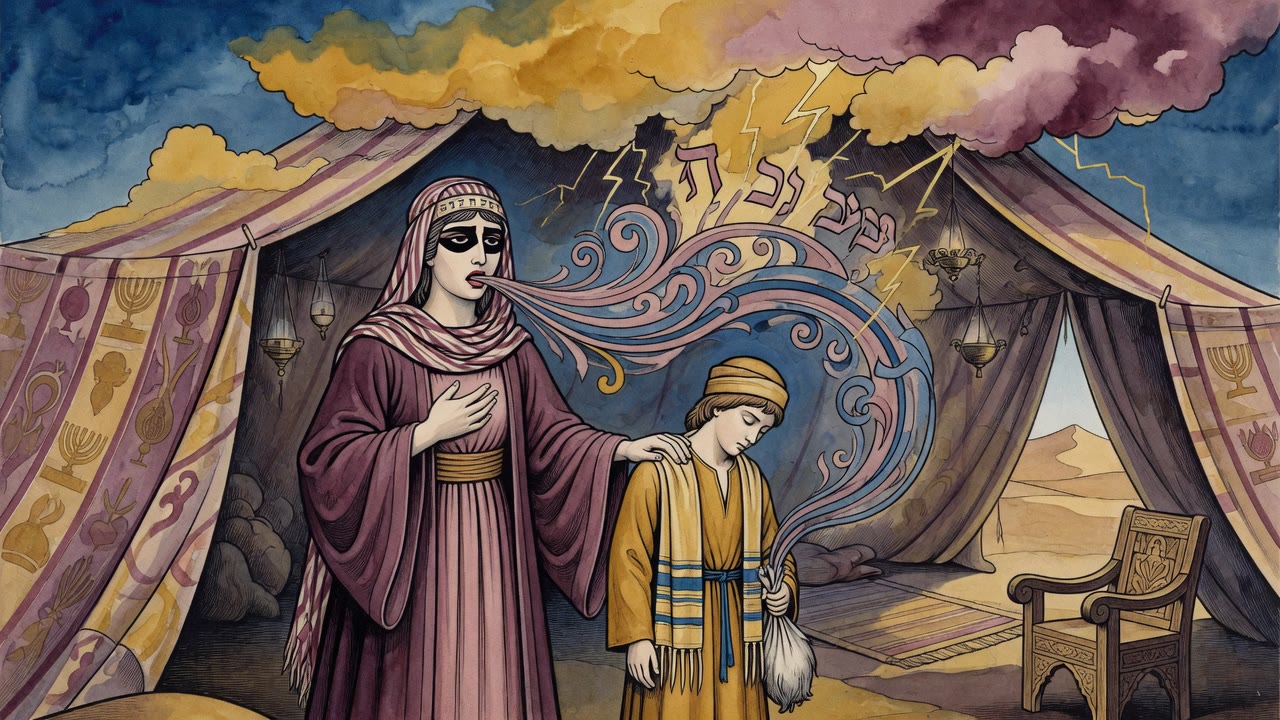
Rebecca did not argue theology or fate charts. She took the risk into her own body as if curse were a garment she could wear for him. "Upon me be thy curse, my son, only obey my voice."
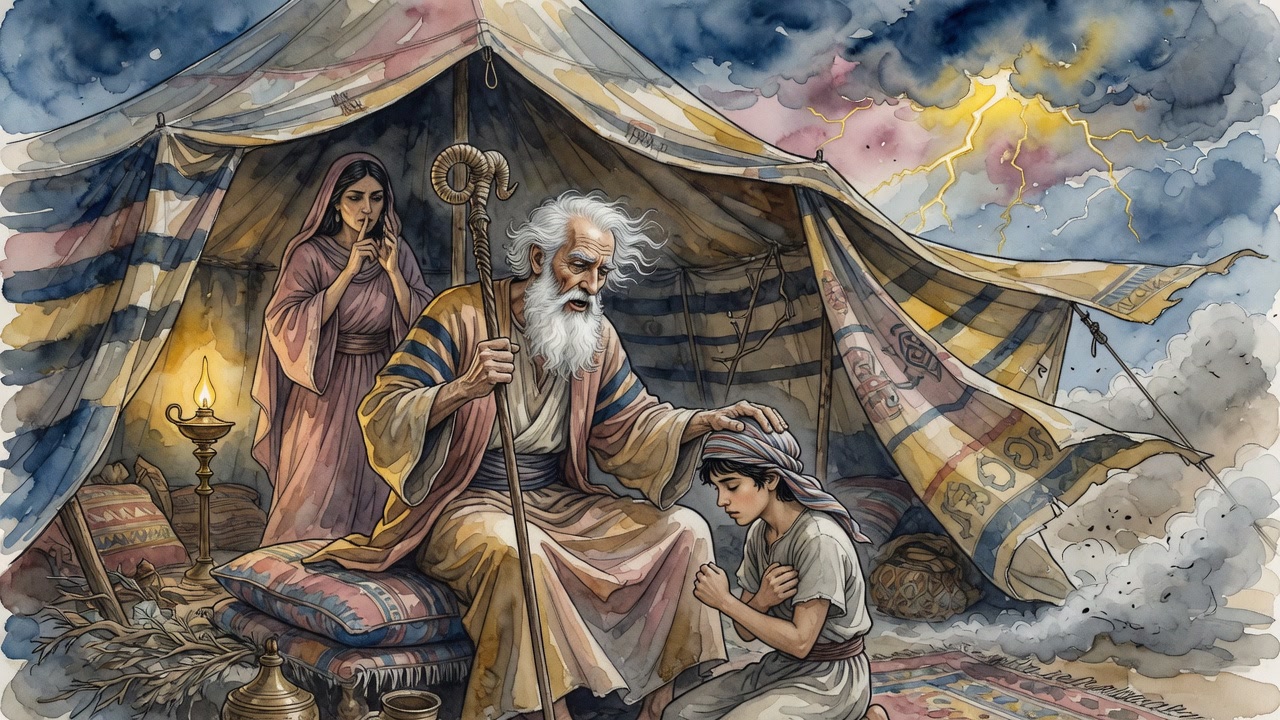
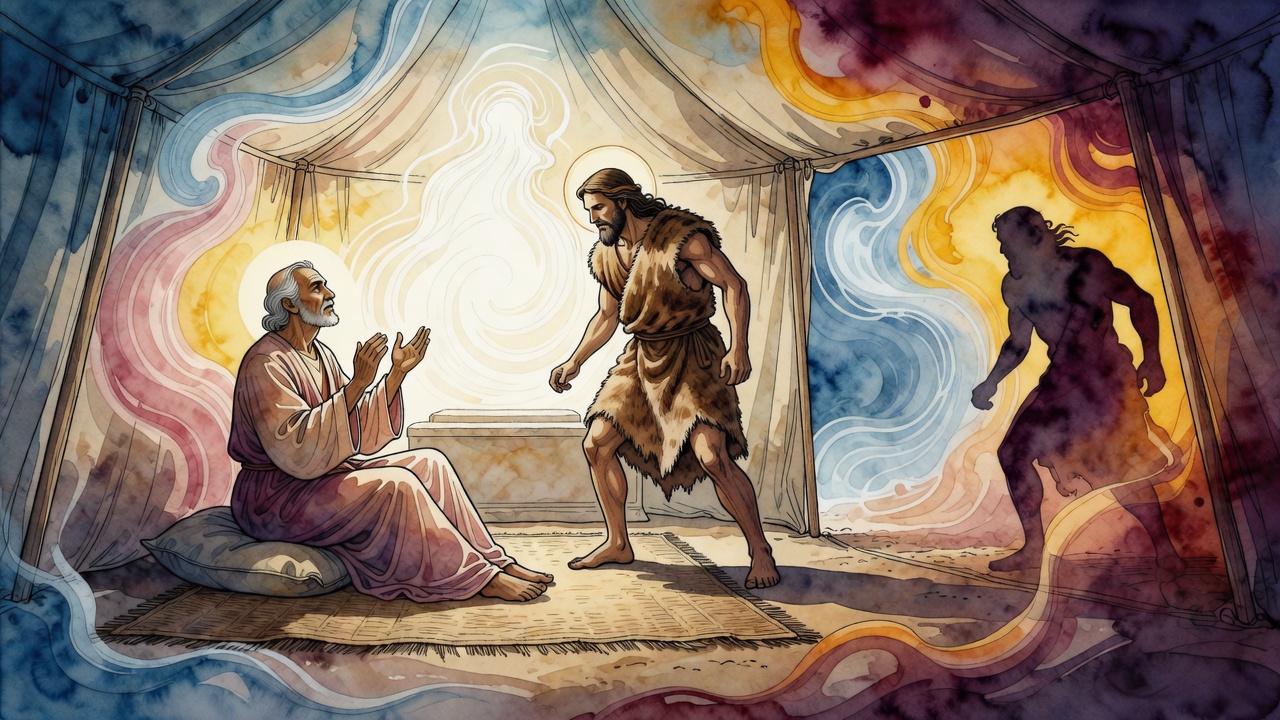
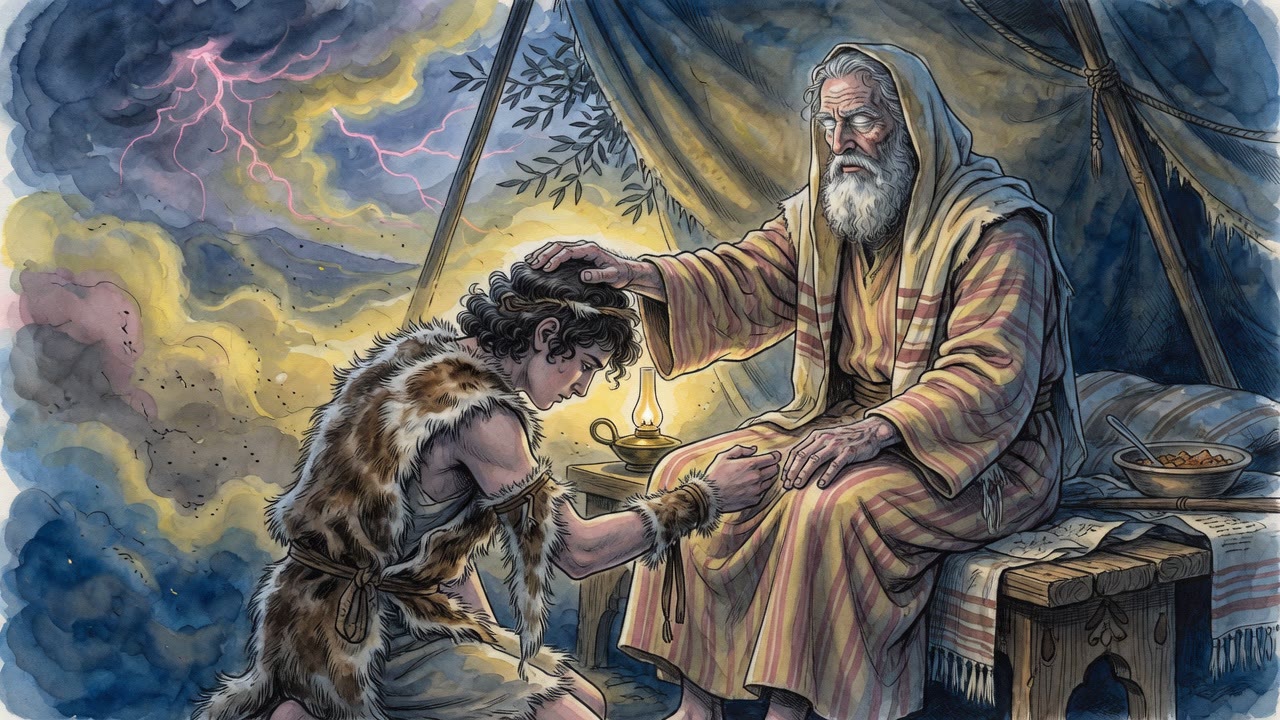
Jacob obeyed because her voice had always been the sharper law in that tent. He fetched two good and fat kids. Rebecca made the meat as Isaac loved it, spices and fire doing the work of a hunt. She dressed Jacob in Esau's garments, still thick with the smell of the field, and laid the skins of the goats on his hands and neck until smooth became rough under a blind man's fingers. The younger son walked into the dim room wearing his brother's smell and his mother's vow, heart loud enough he thought Isaac must hear it.
What Isaac Had Already Said
Isaac had not been blind in counsel even when his eyes failed for faces. He had warned Jacob against the daughters of Canaan, holding up Esau's marriages as a wound that never closed in the house. "They have embittered my soul with all their unclean deeds," he said of those wives. "For all their deeds are fornication and lust, and there is no righteousness with them." The covenant, in his mouth, needed a different seedbed than the local altars.
He also poured love on Jacob without disguise when they spoke in daylight. "I, my son, love thee exceedingly, and my heart and my affection bless thee every hour of the day and watch of the night." The blessing Jacob took in costume was aimed along a path Isaac already favored in the light. Rebecca forced the hour before Esau's stew could claim it. She did not invent the preference. She refused to let delay and appetite rewrite the oracle of the twins.
Esau Counts the Cost
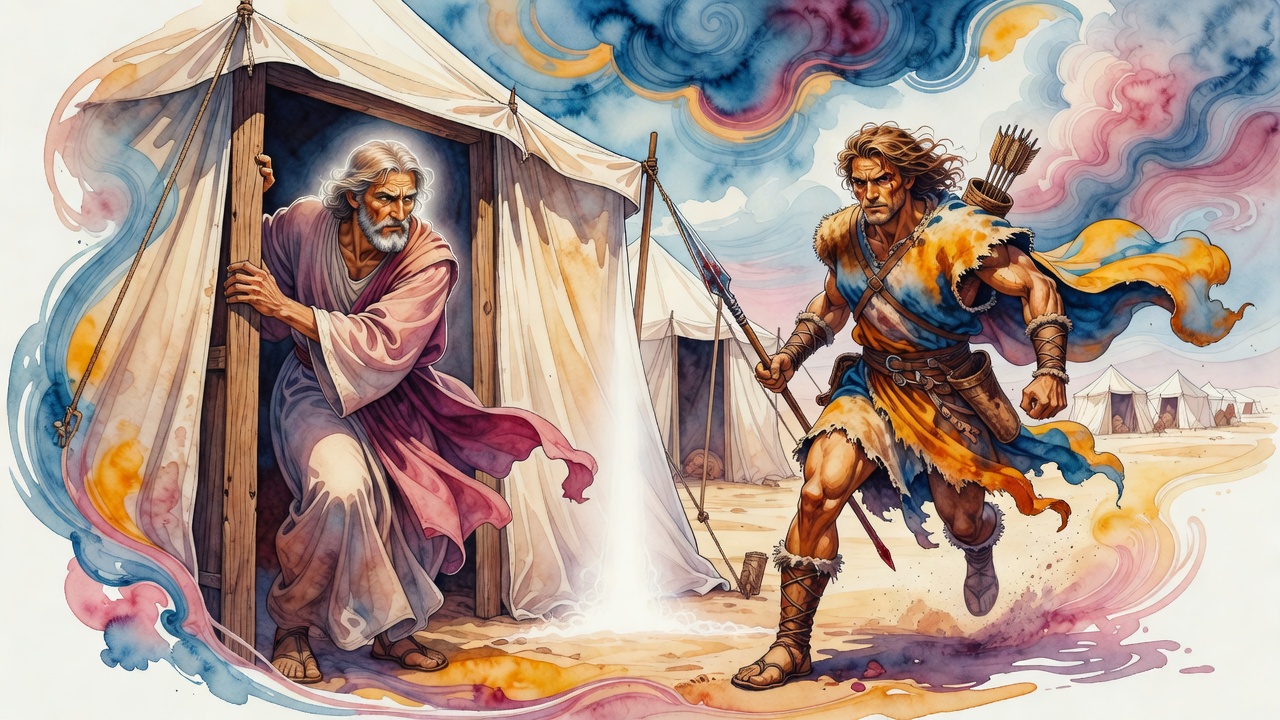
When the hunter returned, the cry in the tent was large enough to shake the house posts. "Bless me, even me also, O my father," became a sound the servants would remember longer than any wedding song. Later tradition lets Esau speak a hard peace that is not peace. He would love Jacob above all flesh, he said, for he had no other brother in all the earth. The love came with iron in it. "This is no great merit for me if I love him; for he is my brother, and we were sown together in thy body, and together came we forth from thy womb." And again: "If I do not love my brother, whom shall I love?"
He begged that Jacob be exhorted concerning him and his sons, for he knew Jacob would be king over him and his seed. He asked for restraint from the brother who held the blessing and the future. The kingdom had already shifted in the dark of Isaac's room, and Esau's tears could not shift it back, only name the cost.
A Mother Who Knew Her Year
Years on, Rebecca told Jacob she had seen in a dream the day of her death. One hundred and fifty-five years completed, a number as exact as a ledger. She sat opposite him in strength, not infirm, color still in her face, and he laughed at the prophecy because her body still looked whole. Death in a dream seemed a story for weaker women. She had once taken a curse onto herself so a blessing could land on the son she chose for the covenant line. She later took the knowledge of her end without flinching while her son could not believe the calendar of her flesh.
The goat skins fell away. The blessing stayed on Jacob like oil that would not wash off. Esau's tears stayed too, salt on the floor of a father's tent. Rebecca's vow stayed longest of all, a mother standing between a curse and the son she would not let bear it, then standing between her own death and a son's disbelief, always the one who saw the hour before the men in her house did.
← All myths